Best Films of 2018

2018 has been a great year for cinema, and as the year comes to an end we’ve selected our 10 Best Films of the Year
– click on the film title to see our review.
So, in no particular order…

the stop-motion animated feature with an all-star cast, telling a tale of a boy as he sets out to change the fate of his best friend.

an understated but powerful social drama, exploring universal themes of family and belonging.

a stunning piece of work that captures working class life and a musical passion.
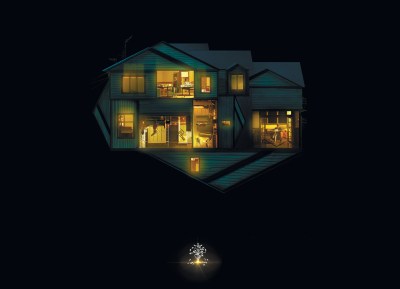
subverting expectations, one of the standout horror films of the year.

a re-imagining of the cult horror classic, where grindhouse gore is tempered with arthouse sensibility.

a visceral, bruising story of redemption.
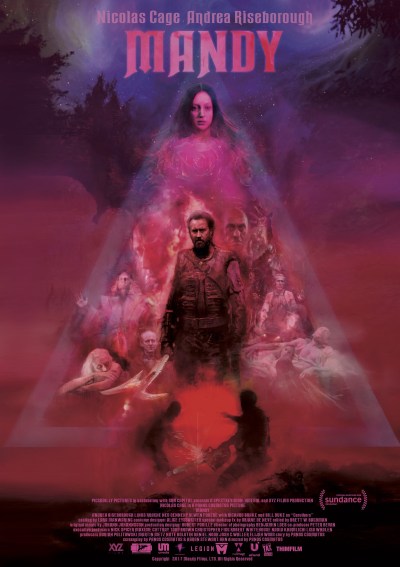
a tale of revenge filled with bloody vengeance and laced with fire.

an unflinching examination of race relations in 1970s America, as socially relevant in today’s turbulent world.

an almost documentary-like look at youth, female friendship and skateboarding culture.
and our film of the year…

a tense, gripping thriller through a fractured mental state.
An honourable mention to the films from the previous awards season, with their UK cinema release in 2018
Shoplifters

2018
Director: Hirokazu Kore-eda
Starring: Lily Franky, Sakura Ando, Mayu Matsuoka, Jyo Kairi, Miyu Sasaki
Words – Joe H.
Winner of the Palme d’Or at the 2018 Cannes Film Festival, Shoplifters is an exploration of relationships from director Hirokazu Kore-eda; known for exploring themes of family and belonging in a career spanning more than two decades and over a dozen feature films, including the acclaimed After Life, Nobody Knows and Our Little Sister.
Shoplifters centres around a three-generation family who together do just about enough to get by, working low-paid jobs and carrying out a well-practiced shoplifting routine which brings food to the table. They rely on shoplifting to make ends meet as they cope with a life of poverty on the fringes of society, at no point however does their struggle seem to dampen their attitude, there’s warmth and an upbeat approach to life even in these bleak circumstances. They all live together in a house big enough for no more than two people, but they share space and everything they have, never feeling the presence of another is an inconvenience.
After one of their shoplifting sessions, they come across and open their doors to a little girl who seemingly has no one to care for her – at first reluctant to shelter the girl, they agree to take care of her after learning of the hardships she faces. The family dynamic shifts but they all live happily together, until an unforeseen event upsets the delicate balance they have created.
It is slowly revealed that not all the individuals in this family are related, but their relationships with each other prove to be something just as strong (if not more so) as that of a traditional family unit – their relationships have been forged through hardship and shared experiences, all that matters is that they are together.
Gradually, we discover the circumstances that brought them to where they are, we learn about each of them, becoming more involved in their lives – we see each of their flaws and learn of their past, each has a story that shaped them, but it’s hard to imagine a more caring family.
It builds to a defining moment where one decision completely reshapes their lives, resulting in a test of their relationships nobody could prepare for.
The naturalistic interactions of the cast makes for some genuine characters who we become evermore attached to the more time we spend with them, and there are some particularly impressive mature performances from the child actors. By the end you find yourself emotionally invested in all of them – their mistakes, while foolhardy are understandable, as life is never simple.
Shoplifters is an understated but powerful exploration into the meaning of family, what it means to care for another, and a true meaning of a relationship. A stunningly moving film.
Sorry To Bother You

2018
Director: Boots Riley
Starring: Lakeith Stanfield, Tessa Thompson, Armie Hammer, Jermaine Fowler, Steven Yeun, Danny Glover, Terry Crews, David Cross (voice), Patton Oswalt (voice)
Words – Nathan Scatcherd
I want to be able to recommend Sorry to Bother You wholeheartedly. Its brand of dark absurdist comedy should be right up my proverbial street, with a wild left turn about midway through which, on paper, seems equal parts surreally hilarious and horrifying, a mix I often go for. But while the film announces its first time writer-director Boots Riley (known outside of this for his activism, and his music as MC for hip hop outfits The Coup and Street Sweeper Social Club) as a bold voice who undoubtedly has real film-making talent, it comes off as just unfocused enough to ultimately feel unsatisfying.
The story takes place in a world which, at least initially, is just slightly left-field from our own. Lakeith Stanfield is Cassius ‘Cash’ Green (hur hur), who is living in his uncle’s garage with his girlfriend, a performance artist and sign-twirler named Detroit (Tessa Thompson). Unemployed and several months behind on rent, he takes a job as a telemarketer for a company with apparently two distinct tiers – those doing ‘small time’ sales on the main floor, and the mysterious ‘Power Callers’ on the upper floor, who appear to sell far more expensive products for astronomically higher wages. Cash struggles in the job until an older colleague (Danny Glover) teaches him how to use a ‘white voice’, which is exactly what it sounds like; the voice of a white man (David Cross), conveying an air of affluence and chumminess which increases his sales by a large degree. Soon he is invited upstairs with the Power Callers… and the Gilliam/Gondry-esque strangeness which has been building steadily through the first act ramps up and blossoms into some genuinely bizarre territory.
There is much here to admire, but the film’s satirical swipes at corporate culture, ‘selling out’ and modern day capitalist wage-slavery feel a little too scattershot to land consistently. It seems to want to take on all of these things while commenting on race, class, television, the superficiality of the art world, and unethical medical experimentation, subsequently feeling a little overstuffed (and overlong). Good satire needs a firm, clear target; you have to know exactly what you want to eviscerate. Sorry to Bother You feels like it suffers from the ‘first film’ problem of taking on too much – throwing everything at the wall at once, landing some shots but whiffing others.
Riley has made a film with verve, style and some moments of enjoyably twisted humour, and the performances are strong across the board. Lakeith Stanfield and Armie Hammer particularly impress as two completely opposing forces – Stanfield the relatable, down to earth struggler and Hammer the comically overblown face of monstrous capitalism, a coke-snorting sociopath. It’s a shame the film can’t seem to settle on a subject to really focus its absurdist ire on, and as such ends up feeling somewhat corpulent.
Sorry to Bother You is genuinely impressive as a first film in particular, and it undoubtedly has a lot on its mind, but therein actually lies its (admittedly quite admirable) problem; it wants to say more than it reasonably can while still remaining cogent.
Cult Corner: A Lizard in a Woman’s Skin
1971
Director: Lucio Fulci
Starring: Florinda Balkan, Stanley Baker, Leo Genn, Jean Sorel, George Rigaud, Anita Strindberg
Words – Nathan Scatcherd
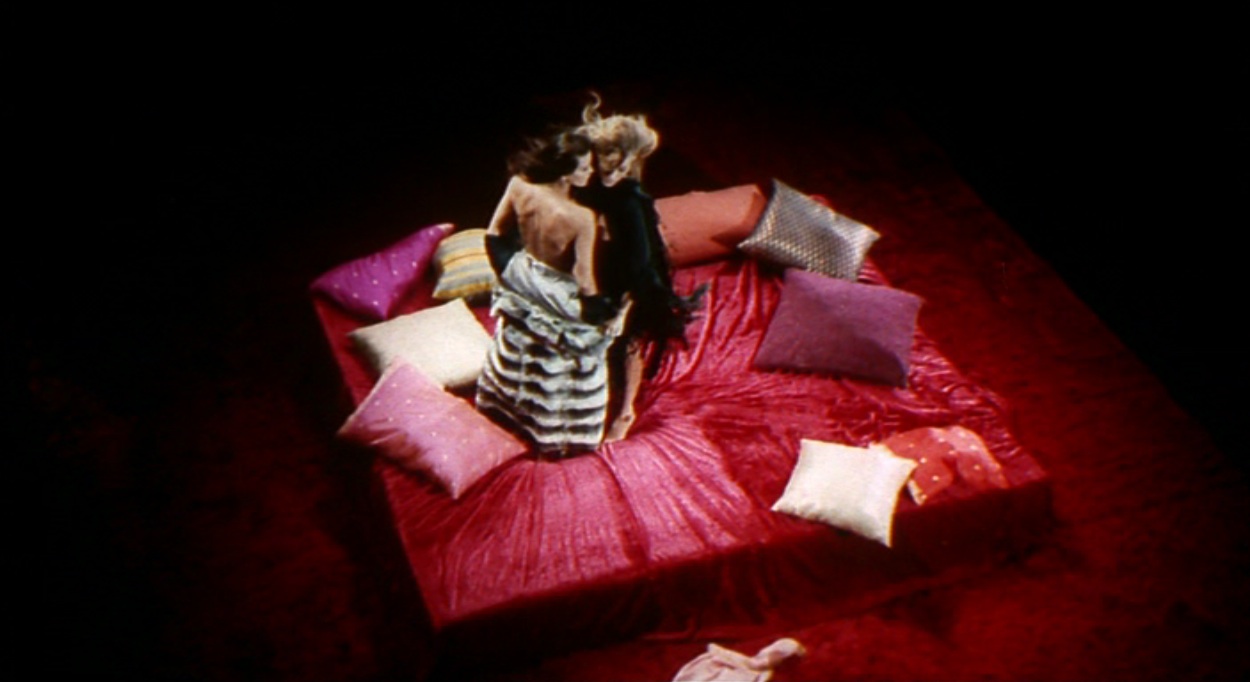
A little-seen entry in the filmography of Italian director Lucio Fulci (his better known films include The Beyond, Don’t Torture a Duckling and Zombi 2), A Lizard in a Woman’s Skin carries the classic giallo hallmarks of eroticised violence, women in trouble, melodramatic psychodrama and lots of dodgy dubbing. It operates on the level of a sleazy fever dream, only loosely tethered to the concept of logic, and fans of 70s euro-thriller weirdness will find plenty to enjoy.
The film’s plotting is comically overwrought and labyrinthine, but the essential setup revolves, as giallo films so often do, around the violent death of a woman.
Carol Hammond (Florinda Balkan) experiences a vivid dream of killing her neighbour, and finds upon waking that the woman in question has indeed been murdered. Carol’s life subsequently begins to fall apart in appropriately nightmarish fashion, and the film cedes several scenes to her psychotherapist (George Rigaud) for some vague analysis of her psyche’s dark undercurrents.
The story involves a pair of insane acid-head hippies and – infamously – a room full of vivisected dogs (more on this later), featuring some genuinely startling imagery and moments which carry a surreal slow-motion dread.
The script is entertainingly perplexing at points, and its dialogue made all the more unintentionally amusing by some very plummy English dubbing for its multinational cast (the film is set in London but features Italian, French, Argentinian and German actors). That said, a couple of actual Brits do appear; one of whom is Stanley Baker, of Zulu fame, apparently just picking up a paycheque as all working performers must.
The clash between the more natural-sounding audio of genuine UK actors and the silly comedy value of the RP dub work on the otherwise non-native English speakers only adds to the movie’s endearingly baffling tone. There are occasional confusing moments in which the dubbing is just thrown out altogether, and the film reverts to Italian with English subtitles, before dubbing is resumed once more.
The score by the immortal Ennio Morricone is comprised of fittingly schizoid funk – lurching and psychedelic, it often sounds like the soundtrack to a psychotic break.
Lizard’s main mark on underground cult film history has to be the aforementioned ‘dog scene’, which caused a legal furore upon the film’s release. The scene involves several dogs, still alive but split down the middle and wired up to machines in some bizarre medical experiment, their glistening organs on display.
While undeniably upsetting imagery, it’s also honestly impressive effects work from SFX legend Carlo Rambaldi, and at the time it was considered so convincing as to potentially be a case of genuine animal cruelty. Rambaldi had to present the dog models used in the film before a judicial court to prove no actual animals had been harmed. Personally, I’d argue that this is actually a compliment on Rambaldi’s craftsmanship, and the scene remains a very well-done example of the visceral gruesomeness that can be achieved with rubber, animatronics and fake blood.
By giallo standards, Lizard is actually fairly low-key, oscillating between its surreal horror/erotic thriller trappings and a more subdued realism, but this only makes it feel more off-kilter and unpredictable as a whole. It suffers from some laggy pacing, and its plotting is so bonkers it’s questionable as to what the hell is actually happening for much of the runtime, but ultimately the film stands as an entertaining oddity even in a filmography such as Fulci’s, which is full of oddities already.
Must See Movies: December
At Reel Steel we want to make sure you’re getting the most of your cinematic enthusiasm, so each month we put together our short list of some of the best new releases, from popcorn munching explosion fests to the often weird and wonderful.
Take a look at the trailers below and see this month’s recommendations…
Sorry To Bother You
released Friday December 7th, 2018
Cassius Green finds himself on the way to the top after he discovers a magical key that leads to material glory. His success grabs the attention of CEO Steve Lift, who draws him into a surreal no-morals corporate world.
The directorial debut from Boots Riley, Sorry To Bother You is a a fresh, vivid and boldly satirical comedy starring Lakeith Stanfield (Get Out, Atlanta), Tessa Thompson (Annihilation, Thor: Ragnarok) and Armie Hammer (Call Me By Your Name).
The Old Man and The Gun
released Friday December 7th, 2018
The Old Man and The Gun is based on the true story of Forrest Tucker – from his audacious escape from San Quentin prison at the age of 70, to an unprecedented string of bank robberies that captured the public’s imagination and left authorities dumbfounded.
From director David Lowery (A Ghost Story, Ain’t Them Bodies Saints), this charming film is the latest in the iconic career of actor Robert Redford.
The House That Jack Built
released Friday December 14th, 2018
Matt Dillon plays serial killer Jack, who leads us through his thought processes behind his increasingly more depraved acts of murder which he names “incidents”.
Following Jack over 12 years as he viscerally illustrates the murders that establish him as a ‘sophisticated’ serial killer, he gains confidence and flair, working towards his own twisted masterpiece.
After it’s controversial screening at the Cannes Film Festival, director Lars von Trier (Melancholia, Dogville, Dancer In The Dark) returns with a jaw-dropping serial killer thriller that explores violence and art, and violence as art.
If you’ve missed some of the film highlights of the year, you can see a selection of the Best Films of 2018 from the Showroom Cinema this month – from Isle of Dogs, to BlacKkKlansman and more:
showroomworkstation.org.uk/best-of-2018
Skate Kitchen

2018
Director: Crystal Moselle
Starring: The Skate Kitchen
Words – Joe H.
In the first narrative feature from Crystal Moselle, director of acclaimed documentary The Wolfpack, we follow the real life all-female skateboarding crew called Skate Kitchen, in an almost documentary-like look at youth, friendship and the sometimes misrepresented skateboarding culture.
A lonely suburban teenager stuck at home with her overprotective mother, Camille is glued to Skate Kitchen’s online posts, and eventually builds up the courage to go and meet the group – then she begins to roll with the crew, behind her mum’s back.
Camille’s life changes dramatically when she befriends the group of skateboarders, as she journeys deeper into the New York City subculture, she goes against her mother’s wishes but begins to understand the true meaning of friendship.
Like everyone going through their teenage years, she’s learning about herself and figuring things out, and the Skate Kitchen crew offers her a sense of place and a feeling of belonging – there are moments where these young women talk about sexism, tampons, “gaslighting”, and sexual preferences.
However Camille learns that friendships can be tricky, as she falls out with a member of the group when she develops a crush on her ex, and just as quickly as she joined the group she finds herself cast out.
Skate Kitchen is about relationships – with friends, family, and a first love.
It rides the dividing line between fiction and non-fiction through the real-life all female crew from which the film gets its title and cast. There’s joy and humour found through these interesting characters, at times feeling so natural, fluid and unscripted, it’s a testament to the director.
The soundtrack is a key element to this feature – the graceful and almost poetic shots of the crew effortlessly breezing through the streets of New York are accompanied perfectly by a mix of upbeat and evocative tracks.
There are dream-like sequences as we follow the skaters rolling through the city streets – all that matters is that they are together, feeling infinite.
Its naturalistic style feels like a documentary, through its dialogue and character interactions – it’s relatable yet distinctive.
Skate Kitchen is an authentic, gripping look at youth, female friendship and skateboarding culture, capturing the experience of women in male-dominated spaces, telling a coming-of-age story of a girl who learns the importance of friendship and self-discovery.
Assassination Nation

2018
Director: Sam Levinson
Starring: Odessa Young, Hari Nef, Suki Waterhouse, Abra, Joel McHale, Bill Skarsgård
Words – Nathan Scatcherd
If you’re lucky, every once in a while you’ll come across a film which completely blindsides you. A film you’re maybe interested in, sure, but it nonetheless manages to reveal itself to be so much more than you’re expecting or even hoping for.
Somewhat dropped in the late November release space between the huge money-making tentpole movies and the Christmas-time family oriented fare, Assassination Nation is in danger of being missed out on entirely by a lot of people. Those people are very unfortunate.
This is utterly fearless, incendiary film-making and one of the best things I’ve seen all year; an uncompromising, genuine experience. It’s certain to divide people, which as ever, is no bad thing – it will certainly spark conversation and, at the very least, I can’t imagine anybody being ambivalent about it.
Its story concerns a group of young women who, in the wake of a hacking outbreak revealing the personal lives of everyone in their town of Salem, Massachusetts (an appropriate setting considering the film’s ‘witch hunt’ theme), decide to fight back not only against the increasingly unhinged violence and terror of their immediate surroundings, but ultimately against 21st century American society itself.
I don’t want to get too deeply into plot specifics, as I honestly feel this film deserves to be experienced with only a base amount of knowledge. What I will say is that it is an absolutely scathing, venomous day-glo nightmare taking vicious well-aimed swipes at social media, homophobia, transphobia, modern hypocrisy in the digital age and the patriarchal systems which uphold the denigration and abuse of women in particular.
It is at once an extremely dark comedy and a feminist horror movie with a shocking streak of ultra-violence.
When I say that I’m talking less about blood and offal and more about emotional violence; the ways human beings can be utterly disgusting to each other, wearing pleasant masks and living secret lives completely counter to their outward selves, in a way which has never been more widespread than it is now in the age of the smartphone.
Assassination Nation is a seething ‘fuck you’ to the ugliest facets of modern society, told through a hyper-kinetic ultra-modern lens, with central millennial characters who are allowed to be occasionally unlikeable and vapid and self-interested, but, in the end, painfully, recognisably human.
To briefly play the comparison game: it’s Spring Breakers meets The Purge meets your average Instagram feed, and the result is an electrifying, terrifying, ultimately empowering ride through Hell, offering – maybe – a glimpse at the other side… but only if the values currently held in Western society are fucking burned down.
This movie is a modern exploitation masterpiece, and watching it feels like getting away with something. I am, in the best possible way, astonished it exists.
Suspiria (2018)
2018
Director: Luca Guadagnino
Starring: Dakota Johnson, Tilda Swinton, Mia Goth, Chloe Grace Moretz, Jessica Harper
Words – Carly Stevenson
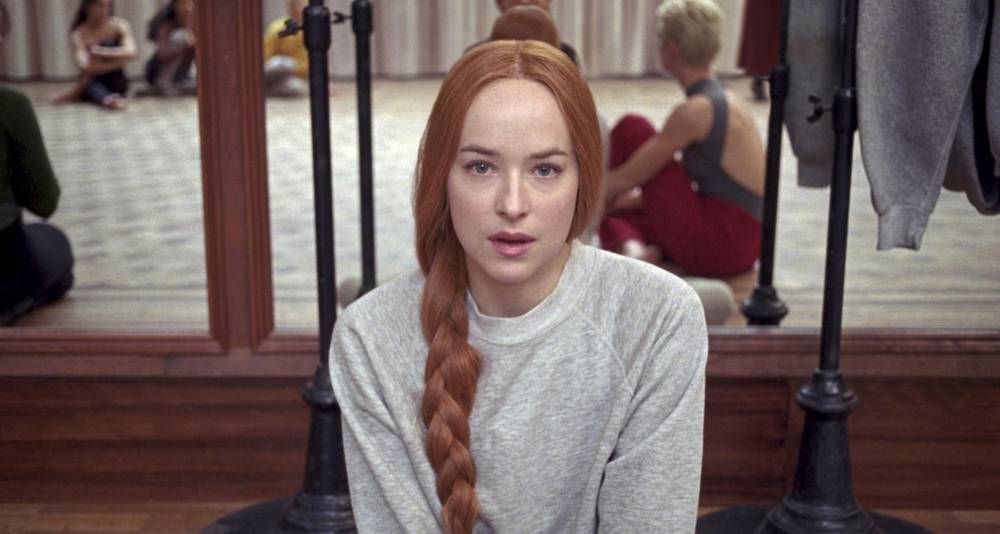
Luca Guadagnino’s bold reimagining of the 1977 cult classic is equal parts gorgeous and grotesque. Suspiria (2018) takes the bare bones of Argento’s original film and adds new layers of flesh. The result is a luridly visceral and provocative Danse Macabre about memory, guilt and rebirth that simultaneously speaks to and departs from its iconic source text.
Set in West Berlin during the Cold War (specifically, the same year that Argento’s film was released), Suspiria is preoccupied with both the physical body and the body politic. When American dancer Susie Bannion (Dakota Johnson) arrives in Germany to audition for a place at the prestigious Markos Dance Academy, she is taken aback by how bleak and violent the surrounding urban landscape is. Nestled in the shadow of the Berlin Wall, the academy serves as a microcosm of a divided nation; the power struggles within the matriarchal institution mirror (an apt word choice) those without. It quickly transpires that the academy is home to a coven of witches who intend to lure the talented Susie into their ranks.
As the plot unfolds, three dancers fall victim to the dark forces at work in the bowels of the academy. In one particularly unnerving sequence, Olga, a Russian dancer who publically accuses Madame Blanc (Tilda Swinton) of witchcraft, finds herself trapped in a hall of mirrors as she attempts to leave the academy. While Susie performs a frenzied dance routine in another room, Olga’s body is brutally broken and contorted by an unseen, supernatural force.
Despite its frequent displays of body horror, Suspiria is an unapologetically highbrow film. Grindhouse gore is tempered with art-house sensibility and this aesthetic confrontation will undoubtedly leave some critics confused as to whether they should applaud its ambition or sneer at its ‘pretentiousness’.
Like Madame Blanc’s revival of Volk – the post-war interpretive dance she created – Suspiria is “A piece about rebirths – the inevitable pull that they exert, and our efforts to escape them”. This excerpt of Blanc’s dialogue tells us everything we need to know about Guadagnino’s vision and the relationship between his Suspiria and its precursor.
Although Argento’s dizzying colour palette is muted, the arresting visuals remain intact and Thom Yorke’s haunting score is truly the pièce de résistance that intensifies the disorientation created by the camera’s balletic movements.
Suspiria certainly succeeds in casting a kind of spell on its audience in that it demands to be seen again. Guadagnino’s film captures the sense of something unfamiliar at the heart of the familiar – that which Freud called Das Unheimliche – and it is precisely this mastery of the uncanny that makes Suspiria such an interesting piece of cinema. The most obvious manifestation of this (un)familiarity is the spectacle of Tilda Swinton in heavy prosthetics playing both Dr Klemperer, a male psychoanalyst, and Helena Markos, the coven’s decrepit leader. The casting of Swinton in three roles not only creates a sense of the uncanny, it suggests that the film has something more to say about women and power that it (and, indeed, this review) has time to unpack.
See our retrospective feature on the original 1977 Suspiria film >here<.
Suspiria (1977)

1977
Director: Dario Argento
Starring: Jessica Harper, Stefania Casini, Alida Valli, Joan Bennett, Flavio Bulci, Miguel Bosé, Udo Kier
Words – Nathan Scatcherd
It’s generally agreed that Suspiria is something of a touchstone in horror cinema. One of the better known giallo films (Italian horror/thriller cinema, commonly featuring slasher movie elements and darkly psychosexual themes) and considered by many to be Argento’s masterpiece, it’s a film of distinct fairy tale wooziness, charged with an unsettling dreamlike atmosphere as we follow young ballet dancer Suzy Bannion (Jessica Harper) inside the Tanz Dance Academy in Freiburg. She – and we – subsequently descend into a surreal Technicolour fever orchestrated by a coven of sinister witches running the school; a world bathed in primary colours and streaked with blood.
The film is perhaps best known for these striking visuals, making use of a widescreen anamorphic lens and deliberately heightened, over the top colour palette to saturate everything in vivid shades of purple, blue, yellow and – of course – lots of red. In classic giallo fashion, plot and characterisation take a back seat to overwhelming atmosphere; in this case, a sense of having disappeared into an inescapable dream of witchcraft and unravelling sanity.
The intensity of the colours keeps everything in a state of off-kilter unreality, while the fuzziness of the plotting and the strangeness of the (mostly dubbed) dialogue add to the sustained feeling of unease. Even during scenes where there are simply two characters talking to each other, the slightly offputtingly unnatural dialogue and the baroque, kaleidoscopic visual excess in every frame combine to keep everything just a bit ‘off’.
The film’s gruesome murder sequences are staged and shot like perverse art installations, Argento clearly thrilling in showing off some fairly nasty gore effects in albeit very artful fashion. The film is full of indelible images of nightmarish violence: an unfortunate victim trapped in a room full of barbed wire; a shot of a girl with a noose around her neck crashing through glass.
The film adheres very much to the giallo practice of mostly perpetrating its violence upon its female characters, although Suspiria slightly softens the dodgy misogyny of this by having the violence carried out not by a man but by other women; the coven who have taken Suzy into the school and who proceed to terrorise her while killing her new schoolmates.
Of course I have to mention the score, by Italian prog rock band Goblin. It’s been recognised over the years as a key component of the film, becoming a staple for horror fan record collectors, and it really is invaluable in helping to solidify the film’s enveloping weirdness.
The album opener (and title track) is a perfect audio representation of the movie’s strange power all on its own. Twinkling keys give way to warbling synths, ominous echoed percussion and unhinged chanting, and the effect is that of being put under a very deep, dark spell.
The new Suspiria, in cinemas this month, appears to be very much its own beast – a reinterpretation rather than a straight remake, using the framework of the ’77 movie but going off in a different direction with the material. It will be interesting to see how it compares to its namesake, considering how singular the ’77 Suspiria really is.
Must See Movies: November
At Reel Steel we want to make sure you’re getting the most of your cinematic enthusiasm, so each month we put together our short list of some of the best new releases, from popcorn munching explosion fests to the often weird and wonderful.
Take a look at the trailers below and see this month’s recommendations…
Widows
released Friday November 9th, 2018
Following a failed job, the widows of a criminal gang decide to follow their husbands’ footsteps, and take their fate into their own hands and forge a future on their own terms.
A modern-day thriller set against the backdrop of crime, passion and corruption, with an all-star cast lead by Viola Davis (Fences, The Help), and directed by Steve McQueen (12 Years A Slave, Hunger).
Suspiria
released Friday November 16th, 2018
A darkness swirls at the centre of a world-renowned dance company, its artistic director, an ambitious young dancer, and a grieving psychotherapist.
Some will succumb to the nightmare, others will finally wake up.
A re-envisioning of the classic 1977 horror, from director Luca Guadagnino and starring Dakota Johnson, Tilda Swinton, Mia Goth, Jessica Harper and Chloe Grace Moretz.
See our look at the original 1977 Suspiria film >here<.
Shoplifters
released Friday November 23rd, 2018
After one of their shoplifting sessions, Osamu and his son come across a little girl in the freezing cold. At first reluctant to shelter the girl, Osamu’s wife agrees to take care of her after learning of the hardships she faces.
Although the family is poor, barely making enough money to survive through petty crime, they seem to live happily together until an unforeseen incident upsets the delicate balance the family have created, revealing hidden secrets and testing the bonds that unite them.
Winner of the Palme d’Or at the 2018 Cannes Film Festival, Shoplifters is an understated but powerful social drama with universal themes of family and belonging.
 REEL STEEL
You must be logged in to post a comment.