Hive

Director: Blerta Basholli
Cast: Yllka Gashi, Çun Lajçi, Kumrije Hoxha, Aurita Agushi, Adriana Matoshi, Molikë Maxhuni, Blerta Ismaili
Words – Rhiannon Topham.
At the heart of writer and director Blerta Basholli’s triple-Sundance-winning drama Hive is a message of hope in a time of tragedy and terror. Hope that resilience and strength against the odds will pay off. Hope for justice for past traumas, both individual and collective. Hope for a better future.
Based on the true story of Fahrije Hoti (played by Yllka Gashi), Hive is set in a patriarchal Kosovan village where many women (Fahrije included) are grieving for husbands who are still missing after the end of the war. Fahrije maintains her husband’s beehives but struggles to keep her household afloat on the modest income from selling honey at the local market.
She and other widows in the village band together for support, but there is frequent resistance to suggestions for advancing their positions and prospects. One idea is to obtain driving licences so they can access better employment opportunities, to which one woman says: “There is no way I will allow myself to become the gossip of other people.”
Within this is the crux of the issue the women face – a deeply entrenched misogyny that is frustratingly unforgiving, exposing the women to vitriolic condemnation and being labelled as ‘whores’ for something so harmless as learning to drive. Such social pressures and taboos are reproduced in the home as much as outside it, as Fahrije knows all too well when her own daughter brandishes her a ‘whore’ for simply trying to gain some sense of financial security.
Fahrije and her peers start a small business selling homemade ajvar, a red pepper condiment that is a staple of Balkan cuisine. The women painstakingly make every jar, which Fahrije loads into her car and takes to the supermarket where they have their own shelves. It’s a small glimmer of hope for people who have endured so many years of tension and grief. That is, until, someone – who, it doesn’t matter – breaks into their workshop and smashes most of the jars that were full and ready to sell. The ajvar paste, thick and red, is strewn across the floor like a sea of blood. It’s a shocking and bold sight, bravely evocative of the bloodshed at the centre of Hive’s domestic drama.
Basholli treats the subject matter with great empathy and care, allowing the immense sorrow that surrounds Fahrije and her friends the time and space it needs. But there are also moments of staunch humanity, especially in the strength the women find together and the solace they find from their friendship and new business venture. Knowing the real Fahrije Hoti is thriving makes the characters’ jubilant celebration of their success at the end of the film even more enjoyable.
The Worst Person in the World
Director: Joachim Trier
Cast: Renate Reinsve, Anders Danielsen Lie, Herbert Nordrum
Words – Rhiannon Topham.
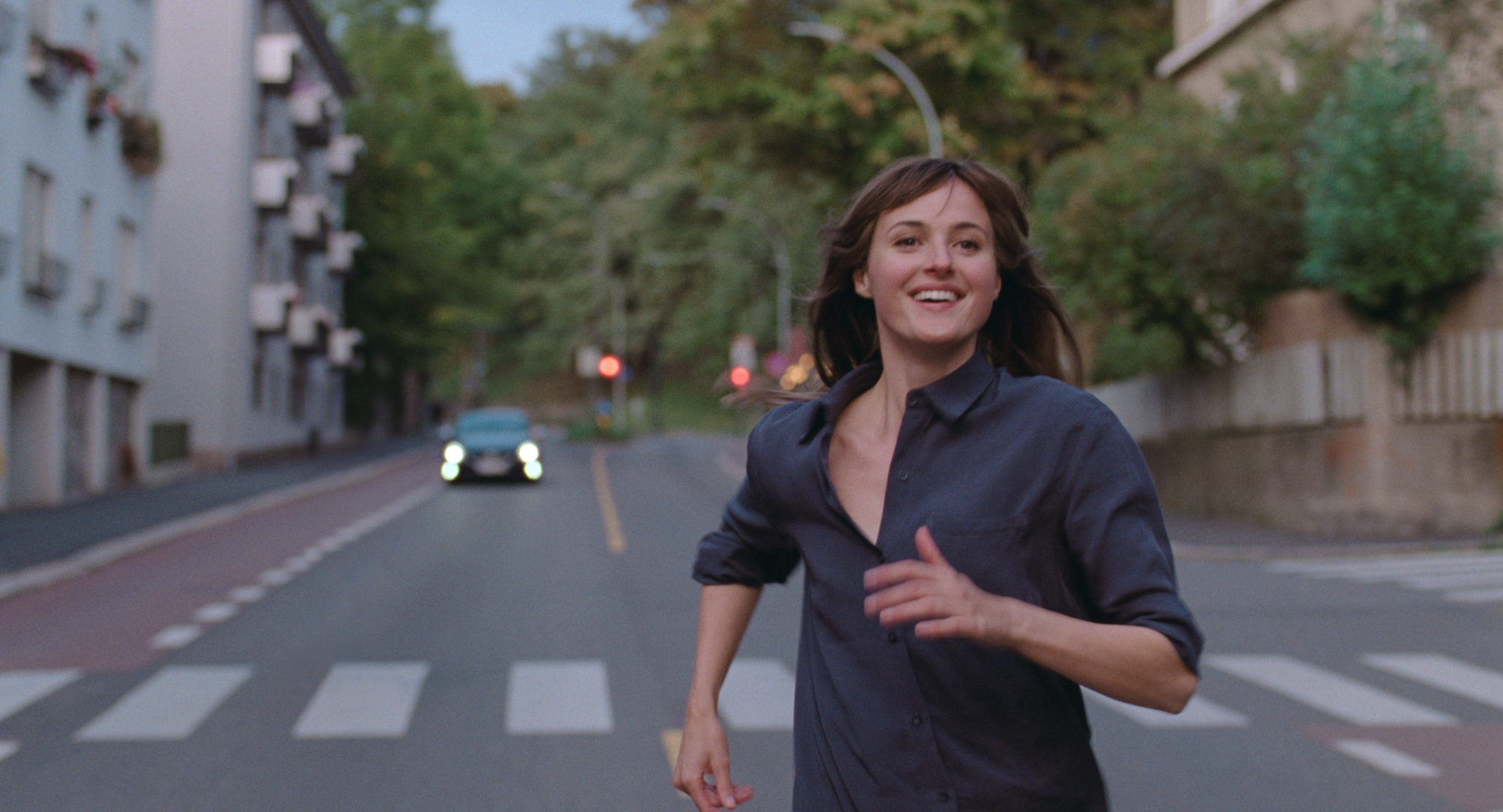
Joachim Trier’s latest feature, The Worst Person in the World, offers a relatable and (dare I say it) refreshing take on drama, romance, comedy and elements of tragedy in the context of modern society.
The film’s protagonist, Julie (played by a spellbinding Renate Reinsve) feels a sense of restlessness in her life that is heightened as she progresses through the youthful liberty of her twenties. Her thirties are approaching, but she doesn’t feel like she’s found her place in the world yet. She finds inspiration in multiple places and industries, but never enough to pursue anything beyond the thrill of nascent interest.
Divided into 12 chapters (plus a prologue and epilogue), The Worst Person in the World is segmented as a montage of Julie’s life as she grapples with several internal conflicts: who to settle down with; what career to pursue; whether to keep giving her estranged father another chance; how to find a purpose in life without sacrificing pleasure or excitement for the new and undiscovered. “I feel like a spectator in my own life,” she says to her older lover Aksel (Anders Danielsen Lie), as she realises she needs to prioritise self-love before she can commit to romantic love.
Both of Julie’s main love interests throughout the film present her with different experiences of how love can be received and felt. Askel, a celebrated cartoonist, wants to start a family with Julie and makes this explicitly clear. Julie isn’t sure she wants children at all, and it’s during this period of ambiguity that she meets Eivind (Herbert Nordrum) at a wedding she gatecrashes. Like Julie, Eivind hasn’t quite figured out his long-term prospects, and their desire for one another is palpable.
Trier is as interested in the intensity of these relationships in their early stages as the mundanity and monotony of a reality that, just like her confused career aspirations, was never going to match up to that first rush of electricity.
Julie, of course, is not literally ‘the worst person in the world’. But this title and her character speak to the audience in myriad ways. How can we retain our agency and autonomy, without coming across as selfish and self-possessed? Indeed, is it wrong to be those things if it ultimately results in self-discovery? Julie may prioritise her own desires and pleasures, but she is also strikingly compassionate and willing to shed her defensive armour if it means reaching a place of acceptance and mutual understanding, no matter how uncomfortable that may be.
Feeling like a terrible person because pursuing our personal interests may come at the emotional expense of the people we care about is a prospect that many of us, particularly women, are often too scared to face. But we know that what may seem harsh on the surface is rarely so straightforward. Life and love are beautiful and ugly, tragic and comedic, exciting and frightening; all manner of contradictions simultaneously. The Worst Person in the World captures this complexity in a way so few feature films have before.
Titane

2021
Director: Julia Ducournau
Cast: Agathe Rousselle, Vincent Lindon, Garance Marillier, Bertrand Bonello, Myriem Akheddiou, Lais Salameh
Words – Rhiannon Topham.
Titane, Julia Ducournau’s Palme d’Or-winning body horror film, is not for everyone. It is certainly not recommended for anyone prone to squeamishness, or for those interested only in films which show you everything at face value without any subtext at all. Like Ducournau’s feature debut Raw, Titane is not concerned with social pleasantries, but rather subverting these conventions in the context of a female body and experience seldom, if ever, shown on screen.
The film follows Alexia (an extraordinary leading debut performance from Agathe Rousselle), a woman who had titanium plates fitted into her skull following a car crash during her childhood. As an adult, her sexual attraction to cars culiminates in her work as an exotic dancer at auto shows, writhing and grinding on the vehicles that most excite her. She emits a menacing and cold persona, made all the more apparent when she murders a particularly aggressive and persistent fan who follows her after a show.
Besides strapping herself into the rear seats of a car and bouncing around in a simulated sexual experience, the only thing that seems to get Alexia off is, well, offing humans. Though she does engage with men and women, ultimately these encounters meet fatal ends. When she learns she is pregnant, literally leaking oil, Alexia’s already unhinged demeanour becomes even more untethered. After one catastrophic night, Alexia goes on the run and disguises herself as the grown form of Adrien Legrand, a boy who went missing 10 years ago.
Alexia’s metamorphosis into Adrien (strapping her swelling body with a binder, cutting her blond mullet and smashing her nose against the sink in a public bathroom) signals the film’s transition from gruesome and absurd horror-comedy to melodrama. Adrien is reunited with his bereaved fire chief father Vincent (Vincent Lindon, in a perfect casting), who believes unrelentingly that the mute and dishevelled figure before him is his long-lost son.
Hidden behind Adrien’s muteness is Alexia’s restrained rage, which could unravel at any moment. But a symmetry and something akin to kinship develops between Adrien/Alexia and Vincent. While Alexia binds her breasts and stomach, an increasingly excruciating process, Vincent self-administers injections, presumably steroids, to slow the ravages of time. Both are grappling with their somatic agency by trying to control the uncontrollable and repress the changes that are occurring in their bodies against their will. Their subliminal needs don’t measure with what their bodies are capable of, and their lack of exposure to familial affection makes any attempt at tenderness a painful and uncomfortable experience. This relationship between Alexia/Adrien and Vincent is forged by the characters’ intense emotions and corporeal contrasts, anchored by Vincent’s unconditional love for his son regardless of whether Adrien reciprocates those feelings.
What makes Titane so different—and no doubt shocking to many—is Ducournau’s refusal to frame Alexia as a victim, or to justify her violence as some sort of revenge for her past. Alexia is unrelatable to the extreme, downright detestable for most of the film, and her unorthodox sexual proclivities make her even more difficult to pigeonhole. She’s a character with very few redeeming characteristics, one who uses violence for no other reason than her deep-seated motivations. Alexia isn’t what she seems, but neither are Adrien and Vincent. They are frail characters in myriad kinds of pain, but don’t want you to know it.
The world of Titane is one of confusion and camouflaged vulnerability, where sumptuous visuals and body language often do the talking instead of dialogue. It’s cinema at its most fearless and striking, and I can guarantee you’ve never seen anything quite like it.
C’mon C’mon
2021
Director: Mike Mills
Cast: Joaquin Phoenix, Woody Norman, Gabby Hoffman
Words – Rhiannon Topham.
The films of Mike Mills are almost the complete antithesis of the big blockbuster; gentle and paced, genuinely humane with an abundance of emotional complexity, but with one or two big Hollywood actors to carry the narrative. His latest, C’mon C’mon is no exception.
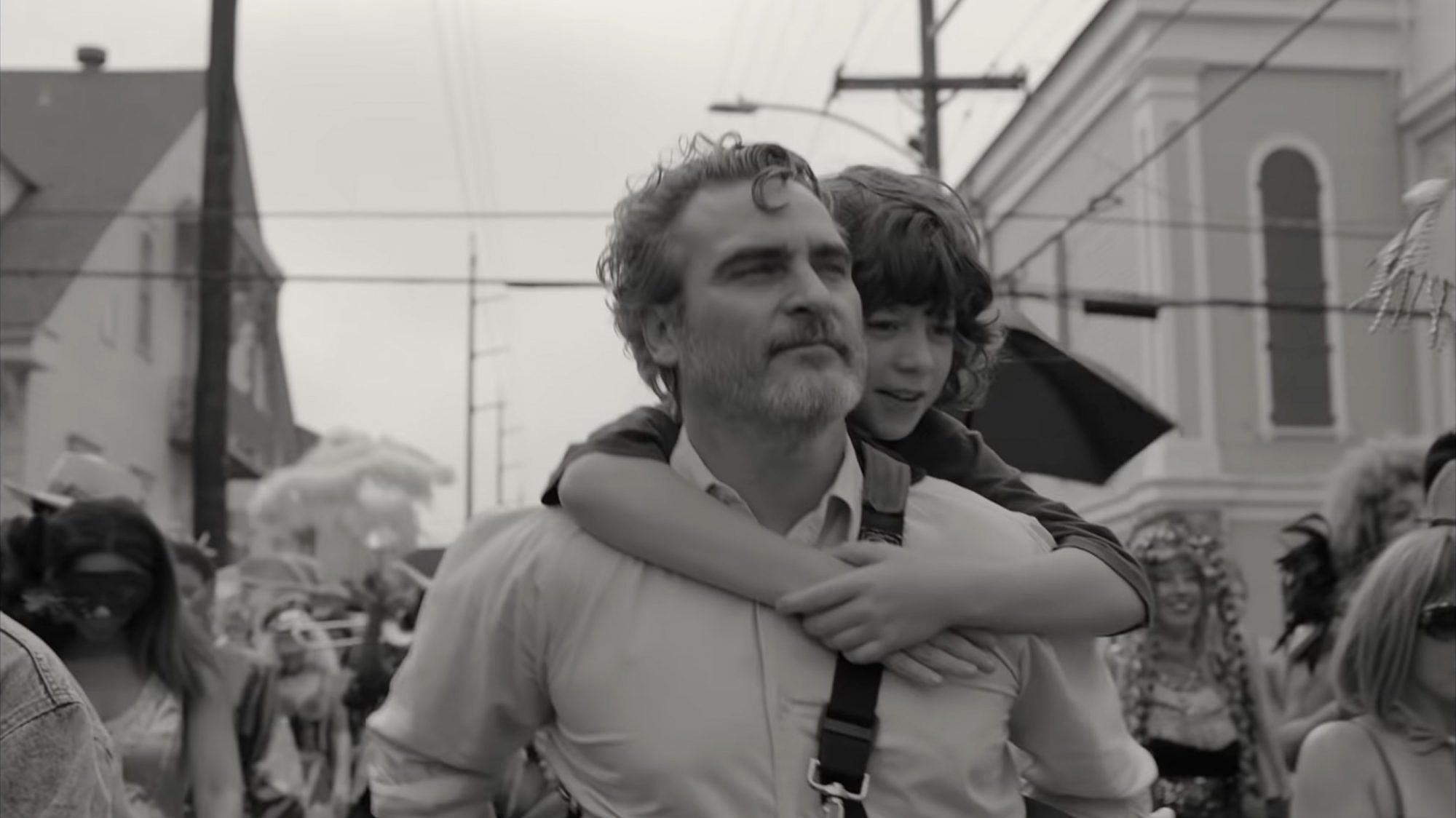
It follows the growing bond between Johnny (Joaquin Phoenix), a radio journalist living in New York, and his nephew Jesse (Woody Norman), an imaginative nine-year-old living in California. Johnny offers to look after Jesse for a while so that his sister, Viv (Gabby Hoffman), can take care of Jesse’s father who is struggling with mental illness. The relationship between Johnny and Viv has been strained since the death of their mother, and by accepting their individual and familial shortcomings, this connection is rebuilt over the course of the film.
Shot in a sumptuous black and white, the film is a stylistic triumph. The beaches and palm tree-lined avenues of California are treated with the same muted melancholy as the loud, intense cityscape of New York, showing how untethered emotions can be unaffected by time and place. By levelling these contrasts and stripping away the distractions of colour, the focus of the film is shifted to the importance of sound, and specifically the power of listening. This gives it an almost documentary feel, as every frame serves to tell you something on a personal, societal or global level.
As a radio journalist, Johnny is currently working on a project that involves interviewing young people across the country and asking what the future looks like to them. The answers he receives are profound and reflective of the state of the world today, the inherent difficulties of being socialised among so much animosity, and the hurdles involved in forging your own identity in modern society. Despite his eccentric personality and nascent wisdom, Jesse refuses to be interviewed, and instead uses Johnny’s equipment to immerse himself in the sounds of the natural and man-made environments in the cities they visit together.
There is a real warmth and appreciation of difference in C’mon C’mon, anchored by the vulnerable performances of the three main actors. Phoenix particularly shows his incredible diversity as a performer and his capacity for capturing a specific kind of inner wound. Norman is a revelation as Jesse, tapping into every feeling with his whole body and soul. Ultimately, this is a film about being tolerant and accepting of our flaws and differences, no matter how frustrating the process may be. It is a poignant and heartfelt reflection on parenting and human relationships, and is a recommended tonic to the often overwhelming barrage of ‘content’ available today.
Petite Maman

2021
Director: Céline Sciamma
Cast: Joséphine Sanz, Gabrielle Sanz, Nina Meurisse, Stéphane Varupenne
Words – Rhiannon Topham.
Céline Sciamma’s follow-up to the masterful modern classic Portrait of a Lady on Fire is the beautiful, simple 72-minute drama Petite Maman. It opens with the protagonist, eight-year-old Nelly (Joséphine Sanz), going from room to room saying goodbye to the inhabitants of the care home where her beloved grandmother has just died. We have only just met her, but already Nelly’s compassion is a sign that she will try to make sense of this loss by supporting her mother Marion (Nina Meurisse) in any way she can.
Nelly and her parents drive back to her grandmother’s home so that they can organise her belongings and move everything out. She is excited to locate the hut in the adjoining woods that her mother used to play in as a child, and eventually finds it while she explores as her parents put the contents of a whole life into cardboard boxes. But when Nelly wakes up in the morning, Marion has suddenly vanished, leaving the young child alone with her father (Stéphane Varupenne) who seems to not quite know what to say or do to assuage the grief.
Later that day while out playing in the woods again to pass the time, Nelly encounters a young girl (Gabrielle Sanz, actor Joséphine’s twin sister) who looks just like her, pulling a large branch over to the hut. She waves Nelly over to help and reveals that her name is, Marion.
Sciamma allows this blossoming friendship the space to flourish, and never overtly indicates whether it is a ghost story, an act of science fiction or purely a figment of Nelly’s imagination. Equally, she doesn’t specify if young Marion will always be found in an identical but fresher-looking house on the other side of the woods, or if her existence will cease once Nelly’s father puts the last box in the back of a moving van. It doesn’t really matter, because Petite Maman uses a familiar, youthful playfulness spliced with calmness and reflection in order to unpack the complexities of human life and emotion.
It shows that love, loss, family and friendship can be interconnected in myriad ways. The tension between physical absence but emotional presence is stretched across the equidistance between the past and the future. Petite Maman is a beautiful tale of a young girl simply trying to understand her mother so that she can be there for her during a difficult time, mixing surrealism with realism, child-like appeal with very adult contemplations on morality. It has something for every viewer, not least the reminder that our parents were once children with nascent curiosities and innocent worldviews.
Dune

2021
Director: Denis Villeneuve
Cast: Timothée Chalamet, Rebecca Ferguson, Oscar Isaac, Jason Momoa, Stellan Skarsgård, Josh Brolin, Javier Bardem, Dave Bautista, Zendaya, Charlotte Rampling
Words – C.J. Abbott
When it was first announced Denis Villeneuve would tackle Dune, expectations were immediately at cosmic levels. Following his breath-taking science fiction debut with Arrival, and staggering continuation with Blade Runner 2049, it seemed certain Dune was in safe hands. The story of Dune in cinema stretches back decades, before Alien, before Star Wars, before 2001: A Space Odyssey, there was only Dune.
Originally written by Frank Herbert in 1965, the book has become legend, cementing itself as the foundation of modern science-fiction. Considered a bible for the genre, a big-screen adaptation was quickly deemed impossible. Many filmmakers did try, and indeed fail, to capture the essence of the piece. From Alejandro Jodorowsky’s unmade psychedelic epic to David Lynch’s inspired but misguided 1984 release, Dune has always been an untameable beast for filmmakers. Villeneuve had an unfathomable mountain to climb, but if anyone could reach the summit, it was him.
Thankfully, after five years of waiting, after delays, questions regarding sequels, and enduring a global pandemic, Dune has arrived. From the moment the first frame hit the screen, all tensions, expectations, and concerns were buried beneath the sands of Arrakis. Not only has Villeneuve captured the essence of the novel, but he has crafted one of the most ambitious and truly awe-inspiring epics in years.
It is that – epic, in the true sense of the word. The scope of the film blows the mind, everything is on a galactic scale, from the planet-sized Spacing Guild ships, to the monolithic Arrakeen architecture, to the lumbering Harrkonnen soldiers, cinema hasn’t felt this grandiose in quite some time.
Taking place thousands of years into a distant future, humanity has returned to the days of imperial rule, governing houses, and aristocratic decadence. In a universe of plenty, only one world produces spice – Arrakis. This is the substance that allows for interstellar travel, making it the most valuable resource in the galaxy. For 80 years House Harkonnen has ruled Arrakis, their Dune, but by imperial decree, they must relinquish control. House Atreides has been gifted the world, to ensure the production of spice continues. Young Paul Atreides, played by Timothee Chalamet, is the son of Duke Leto, Oscar Isaac, the head of House Atreides, and soon finds himself thrust into a world of deception, betrayal, and, of course, giant sandworms.
Greig Fraser oversaw the cinematography of the film, known for his work on Rogue One, Vice, and Zero Dark Thirty. He has managed to capture the scope of the Dune universe expertly, through the use of biblically scaled wide-shots. Angling the characters, ships, building the vastness of Arrakis and beyond. One of the more esoteric elements of the book was Paul Atreides’ visions, a seemingly nightmarish undertaking on a visual level. Yet, Fraser stripped back the complexity of the description to reveal something beautiful and unknowable. Villeneuve and Fraser gave Dune a crisp visual style that made the world seem alien and familiar, an instantly understandable vision of the future.
This was aided by some incredible sound design, from the booming bass of the Harkonnen warships to the whispered breeze of the sand, every aspect was given meticulous detail and love. Best of all, the portrayal of The Voice, the ability to command others through word, was expertly realised. The sound of the chilling words had an almost horrific tone, terrifying in their strangeness.
All this was held on the shoulders of Chalamet, who goes from a quietly fierce boy to the beginnings of a warrior god over the course of its two-and-a-half-hour runtime. In the role of Paul, Chalamet is in almost every scene, bearing the brunt of the project. Once again, he proves himself to be one of the most capable and versatile actors working today, giving Paul the nobility and leadership the character demands. He wasn’t alone though, as the entire cast brings everything into their parts. Rebecca Ferguson stars as Lady Jessica, the mother of Paul and Bene Gesserit. She is both cold and warm, struggling to reconcile her teaching Bene Gesserit with her mother’s love for Paul. By far, Ferguson gives the most heartbreaking performance in the film, as she slowly watches her boy change before her eyes.
Oscar Isaac is equally impressive as Duke Leto, Paul’s father. He is both wise and loving, a symbol of the very best this harsh world has to offer. In many ways, Leto is the voice of reason, a man betrayed for his kind heart, manipulated due to admiration. On the other hand, completely opposed to him is Stellan Skarsgard’s Baron Vladimir Harkonnen, the brutish and beastly head of Arrakis’s former masters. He is enormous, literally. Each scene with his presence is uncomfortable as his grotesque mass floats through the film. He is a villain that simply just needs to be in a room for the viewer to feel the intimidation.
All this comes together to create a piece that is not only impressive but genuinely important. A film that Hollywood desperately needs to succeed. The combination of intelligent filmmaking with a franchise mentality. Dune leaves the audience wanting more, actually needing more, finishing well before the original book comes to a close. This is a story that is half-finished but still feels narratively satisfying. If and when Part Two ever releases to wrap up the story, if it is at the same level of quality Part One is, this will go down as one of the best franchises in decades.
The Power of the Dog

2021
Director: Jane Campion
Cast: Benedict Cumberbatch, Kirsten Dunst, Jesse Plemons, Kodi Smit-McPhee, Frances Conroy, Keith Carradine, Thomasin McKenzie, Genevieve Lemon
Words – Rhiannon Topham.
Jane Campion is a master of atmospheric melodrama. Her latest, The Power of the Dog, is an incredibly textural wild west based on Thomas Savage’s novel of the same name. It follows prosperous cattle ranch owners Phil (Benedict Cumberbatch) and George Burbank (Jesse Plemons) in 1925 Montana, a hyper-masculine environment where anything remotely effeminate is performatively derided by Phil while George looks the other way.
The equipoise between the brothers, who at first sleep in single beds beside each other in the same room, is disrupted when they meet Rose (Kirsten Dunst), a widowed restaurant/hotel owner who George marries after a short courtship. The brothers are polar opposites in almost every way; Phil is the quintessentially ornery and reticent cowboy, striding across the plains in his stirrups, bathing only in a nearby creek when nobody’s looking, whereas George is clinically clean, well-presented and timid in nature. Theirs is a combative kind of harmony, ripe for sociological analysis. So, when Rose and her son Peter (Kodi Smit-McPhee), who represents just about everything Phil despises, move into the Burbank family home, the paradigm shift is colossal for all involved. Phil took pleasure in upbraiding George’s anti-rancher disposition but appreciated the status quo of their collaboration; Peter’s unabashed interest in the intricacies of flora and fauna seems to physically unsettle him.
Unless you’re familiar with the source material, it’s extremely difficult to predict how the simmering tension and capriciousness will culminate. Campion doesn’t give anything away about the origins of Phil’s hostility, the Burbank family secrets bubbling just beneath the surface or when, how and to whom the manipulation coming from all directions is going to aim its final deadly shot. We’re always expecting a situation to erupt into a hideous brawl, or for something or someone to make an ominous entrance over the mountains Phil spends so much time looking longingly towards. The performances are subtle and finely-tuned, grounded by moments which temporarily displace you from the escalating agitation on the Burbank ranch.
Campion suspends us between apprehension, expectation and an almost celestial sense of some invisible force pushing, pulling and wringing the nascent unhappy family. There are elegant reflections on chosen and given family, the roles we play in our everyday lives and the intricate face-saving involved in seemingly meaningless interactions–all among a harsh but beautiful frontier with a main character energy of its own. We hear a lot about ‘slow-burners’, but don’t let the pace of The Power of the Dog put you off. Everything suddenly clicks in the final scene, and it is so worth the wait.
Lamb
2021
Director: Valdimar Jóhannsson
Cast: Noomi Rapace, Hilmir Snær Guðnason, Björn Hlynur Haraldsson
Words – Rhiannon Topham.
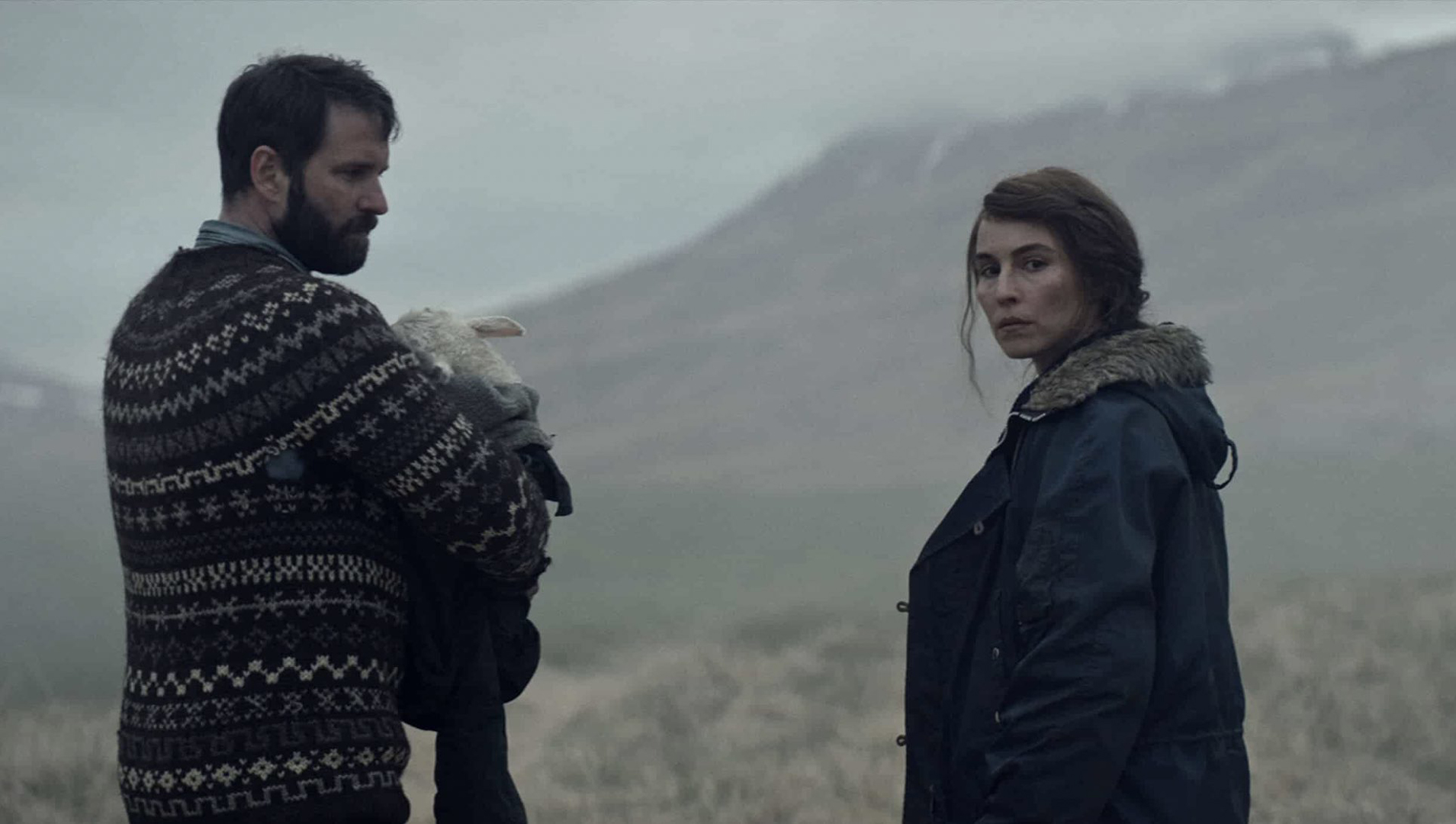
Valdimar Jóhannsson’s feature-length debut Lamb continues the great A24 tradition of menacing animals messing with the human state of mind. The film centres around María (Noomi Rapace) and Ingvar (Hilmir Snær Guðnason), a young childless couple who own a sheep farm in pastoral Iceland. Among the sprawling landscape, they spend all day, every day harvesting crops, tending to their flock and hardly exchanging so much as a glance at one another. There is great sincerity and dolour involved in every moment; a Christmas dinner is had without any kind of festive cheer or visible satisfaction.
Things change when one of their ewes births a supernatural calf, though we don’t see anything of her form past her perfectly-formed lamb head for about 20 minutes after she arrives. We know something is up though. The instant she is born, María’s face reads disbelief, terror and something akin to adoration. The scene cuts to her carrying the child away—what will she do with her? It cuts again to María watching over the lamb-baby as she sleeps soundly in a small metal tub, swaddled in blankets.
The couple affectionately name the baby Ada and tend to her as she rests in a crib dragged from the barn next to their own bed. When we do finally see the child’s body, it’s when María scoops her up from the ground in a misty field after the ewe who birthed Ada has seemingly kidnapped her and attempted to flee. María’s rage directed at the ewe, paired with the ready-made but untouched crib brought out of storage, implies that her maternal affections have been previously thwarted in some way, and Ada offers the potential of a new beginning.
Stylistically the film includes a lot of handsome frames-within-frames, often from the outside looking in when capturing the sheep (ponderously gazing out of a window, ‘when will my husband return from war’ style) and vice versa for the humans. This is a clever choice to establish power, boundaries and perspective, and suits the richness of the bucolic colour palette. However, intentionally or not, a frustration can be found with María and Ingvar never once acknowledging Ada’s form and the mystery surrounding her sudden entrance into their lives. The only person to acknowledge it is Ingvar’s brother Pétur (Björn Hlynur Haraldsson), and even then it is only fleeting before he too becomes entranced by Ada. Pétur is inserted purely to disrupt the happy family facade, and it doesn’t work—the character is a needless addition to the plot and his ‘listen to me, I’m the voice of reason’ nonchalance feels shallow. Lamb sets out to do too much while asserting to do very little, the result is a film that barely amounts to anything, even with an ostensibly absurd twist in the vein of Robert Eggers’ The Witch and similarly bleak examples of monstrous modern surrealism.
Passing

2021
Director: Rebecca Hall
Cast: Tessa Thompson, Ruth Negga, André Holland, Alexander Skarsgård
Words – Rhiannon Topham.
It’s always interesting when an actor turns their hand to directing. Passing is Rebecca Hall’s directorial debut and is an adaptation of Nella Larsen’s 1929 novel of the same name. Set in 1920s Harlem, it follows two mixed-race childhood friends when they meet by chance in a white-dominated Manhattan area after many years apart. They both now live fairly comfortable middle-class lives in adulthood, but Irene (Tessa Thompson) still identifies as African-American while Clare (Ruth Negga) is ‘passing’ as white.
Clare is delighted by this unexpected reunion whereas Irene is ambivalent. Irene’s disquiet is anchored when she meets Clare’s wealthy white husband (Alexander Skarsgård, who else could there be to play a truly despicable man and husband?) who wastes no time in demonstrating his hideous racist opinions. He doesn’t just dislike Black people, he hates them. He expresses these views casually, because Irene herself can passively pass as white. Remember, this is Manhattan, and Irene wouldn’t have been allowed anywhere near the lavish tearoom where she bumps into Clare. It’s obvious that if this gathering had included Irene’s Black husband (André Holland) and children, the show of civility would be rather different.
With a 4:3 aspect ratio, sharp black and white colour palette and objectively stunning costumes, Passing certainly looks the part of a Harlem Renaissance adaptation. Thompson and Negga also put in sterling performances as the two protagonists, skirting around the emotional awkwardness of a friendship fraught with moral ambiguity. However, besides the stilted script and vagueness surrounding Irene’s sexuality (a fundamental feature in the source material), a glaring issue with this film is the pacing. Clare is drawn back to Irene through loneliness and desperation to reclaim a part of herself she chose to leave behind to pursue wealth and social standing.
The progression from their first meeting through to their increased interaction in Irene’s townhouse and then final act plods along without addressing any of the glaring questions about who Clare is to Irene and vice versa, or how their husbands play pivotal roles in their identities. The closing scene is incredibly rushed and you are left wondering why things came to pass in such a way, given the sparse context and emotional involvement.
The script does little to provide substance to how any of the characters are feeling at any point throughout the film. Silence can often be a powerful method to demonstrating discontent and Thompson subtly shows how the growing unease of Irene’s internal monologue starts to afflict her physically and mentally. However, the moments of quietness are generally not complemented by any kind of narrative progression or development. For example, there isn’t enough polarity between the friends’ domestic deference, particularly the contrast between Irene’s sense of duty to her family and Clare’s eagerness to be away from her husband at any given opportunity.
The subject matter is brave and interesting, and in writing, directing and producing Passing, Hall has shown great promise as a filmmaker. It’s just a shame it doesn’t offer much more than superficial tension and elegance.
Sundown

2021
Director: Michel Franco
Cast: Tim Roth, Charlotte Gainsbourg, Samuel Bottomley, Albertine Kotting McMillan, Iazua Larios
Words – Rhiannon Topham.
A group of four British people (two adults, two teenagers) are vacationing in a plush villa that overlooks the sea somewhere sunny. They clearly live a very comfortable life as they have servants bringing them cocktails as they lounge by their infinity pool. Suddenly, the woman receives a phone call from back home with some upsetting news about her mother. She is distraught and orders everyone to pack their bags so they can get on the first flight home. At the airport, the man, Neil (Tim Roth) says he can’t find his passport and has to return to the resort to find it, that he will get the next flight back to London once he’s retrieved it.
That’s about all we know of Michel Franco’s Sundown for the first 10 minutes or so. It takes a substantial amount of time to even learn anyone’s name (the mother, Alice, is played by Charlotte Gainsbourg, and the teenagers are her children), or to find out where this is all taking place (Acapulco).
The film follows Neil not as he returns to the resort for his passport, but as he relaxes into a more modest hotel by the beach, his passport safely in the inside pocket of his carry-on case where it’s been the whole time.
The narrative unravels so slowly, it’s like a crack in a wall slowly splintering. Tim Roth plays Neil with a contagious serenity, his quiet introspection anchored by very minimal dialogue that takes a ‘tell, don’t show’ approach to storytelling over the course of the 83-minute run. It’s only through Neil’s casual conversations with his new love interest, a bodega assistant called Berenice (Iazua Larios), that we find out that Alice is his sister, not his wife, the teens his niece and nephew. Neil spends his days drinking beer slumped in a chair on the seafront, his nights dining out with Berenice, his phone switched off and shut in a drawer. Oh, and the siblings are absolutely stinking rich heirs to a meatpacking business.
Because of this brevity, we never really find out why Neil decided to stay in Acapulco, or why he refused to go home to England for his mother’s funeral, or why he signed over his half of the family business to his sister. There is a revelation at the end that serves as some explanation, but the viewer is mostly encouraged to piece the story together themselves and come to their own conclusions.
The sparseness and lack of affectation allows for a meditation on the frailty of human existence and all that torments us: love, loss, family, health, having too much time, not having enough time. It upends your expectations of the privileged-middle-aged-man-in-a-crisis trope Franco could quite easily have slipped into, and Roth plays it to perfection. Neil’s in nirvana sitting in his plastic chair, staring out into the horizon with an existential half-smile on his face and the tide lapping his bare feet, entirely detached from the baser urges, at peace with his own hollowness.
 REEL STEEL
You must be logged in to post a comment.