Must See Movies: September

At Reel Steel we want to make sure you’re getting the most of your cinematic enthusiasm, so each month we put together our short list of some of the best new releases, from popcorn munching explosion fests to the often weird and wonderful.
Take a look at the trailers below and see this month’s recommendations…
The Miseducation of Cameron Post
released Friday September 7th, 2018
Cameron Post (Chloe Grace Moretz) looks the part of a perfect high school girl.
But after she’s caught with another girl in the back seat of a car on prom night, Cameron is quickly sent to a conversion therapy centre that treats teens “struggling with same-sex attraction”.
At the facility, Cameron is subjected to outlandish discipline, dubious “de-gaying” methods, and earnest Christian rock songs – but this unusual setting also provides her with an unlikely gay community.
For the first time, Cameron connects with peers, and she’s able to find her place among fellow outcasts.
Winner of the Grand Jury Prize at the 2018 Sundance Film Festival, The Miseducation of Cameron Post is a coming-of-age story exploring identity.
Climax
released Friday September 21st, 2018
From director Gaspar Noe (director of the critically acclaimed Enter The Void) comes a hypnotic, hallucinatory, and visceral depiction of a party that descends into delirium over the course of one night.
In Climax, a group of young dancers gather in a remote and empty school building to rehearse, but as the troupe begins an all-night celebration, events turn nightmarish as the dancers discover they’ve been drinking alcohol spiked with LSD.
Following their journey from jubilation to chaos and full-fledged anarchy, we observe crushes, rivalries, and violence amid a collective psychedelic meltdown.
Starring Sofia Boutella (Atomic Blonde) and a cast of professional dancers, Climax is Gasper Noe’s most brazen and visionary statement yet.
Skate Kitchen
released Friday September 28th, 2018
In the first narrative feature from Crystal Moselle (director of documentary The Wolfpack), we follow Camille, an introverted teenage skateboarder who meets and befriends an all-girl skateboarding crew called Skate Kitchen.
She becomes part of the in-crowd, has a falling-out with her mother, and falls for a mysterious skateboarder guy – but managing relationships prove to be trickier to navigate than a kickflip.
Writer/director Crystal Moselle immersed herself in the lives of these real-life skater girls and worked closely with them, resulting in the film’s documentary-like authenticity, which combines poetic, atmospheric filmmaking and hypnotic skating sequences.
Capturing the experience of women in male-dominated spaces, telling a story of a girl who learns the importance of camaraderie and self-discovery.
– SPECIAL EVENT –

Sensoria Festival returns for 2018 with film screenings and music performances across Sheffield, which include a screening of the documentary CODA – an insight into the Japanese composer Ryuichi Sakamoto (producer of the soundtrack to The Revenant), and a screening of the 1926 animation The Adventures of Prince Achmed featuring a live score performance.
Thursday September 27th – Saturday October 6th
Mary Shelley

2018
Director: Haifaa al-Mansour
Starring: Elle Fanning, Maisie Williams, Douglas Booth, Joanne Froggatt, Tom Sturridge, Bel Powley
Words – Carly Stevenson
Not unlike the sorry creature of Mary Shelley’s visionary novel, director Haifaa al-Mansour’s biopic is a flawed creation that was conceived with good intentions: Elle Fanning gives a sincere performance as the eponymous author, who, stifled by domesticity and haunted by the absence of her illustrious mother (Mary Wollstonecraft, author of A Vindication of the Rights of Woman), turns to popular Gothic novels for comfort before eventually writing her own.
Early on in the film, Mary is seen reading Eliza Parson’s The Castle of Wolfenbach – an influential early work in the Gothic genre that predates both Ann Radcliffe and Matthew Lewis. This small detail demonstrates al-Mansour’s depth of research and a commendable attempt to contextualise Mary Shelley’s writing within a literary tradition.
Showing women writers reading other women writers – particularly writers like Parsons, whose work was dismissed on account of its perceived vulgarity – is a powerful image that sends a positive message about the significance of popular art.
The treatment of Percy Shelley and Lord Byron is decidedly less positive. The former is portrayed as a selfish, hypocritical reprobate whose radical views and literary achievements, including his collaborative involvement in Mary’s writing (and vice versa), are downplayed to fit the ‘bad husband’ narrative. Likewise, Byron is shown to be a two-dimensional, misogynistic fop whose only interests are wine and women. There are perhaps some shades of truth to these unsympathetic portraits and some embellishment is to be expected, however, a nuanced approach would have been far more interesting.
Complex lives deserve complex characterisation, yet the filmmakers seem more interested in perpetuating myths than challenging them.
The characterisation of Mary is, thankfully, more considered. She is autonomous, passionate and fiercely bright – all the qualities we would expect a proto-feminist author to possess. Unfortunately, this portrayal is somewhat undercut by the way that the film insists on interpreting Frankenstein as a response to grief.
This assumes that the work of fiction is the product of the author’s unrestrained emotion, rather than a self-aware and deliberate act of creation that engaged with some of the most important scientific and philosophical debates of the century.
Mary Shelley disappoints because it takes the unconventional lives of Mary Shelley and her circle and frames them within a conventional romance story.
Although the cinematography is elegant, the cast are capable and the subject is inherently fascinating, al-Mansour’s biopic assembles all the right parts, but fails to bring them fully to life.
Crouching Tiger, Hidden Dragon

2000
Director: Ang Lee
Starring: Zhang Ziyi, Chow Yun-Fat, Michelle Yeoh
Words – Daniel McMonagle
It took a Taiwanese-born director who had previously helmed an adaptation of Sense and Sensibility and the overlooked Civil War Western Ride with the Devil, to bring wuxia to a mainstream audience at the turn of the millennium.
Ang Lee was something of an outsider in his native country, who spent most of his adult life as an immigrant in the US. It is perhaps for this reason that he was able to successfully celebrate aspects of Chinese cinema whilst appealing to a Western audience.
Set against the backdrop of the Qing Dynasty in the 19th Century, Crouching Tiger, Hidden Dragon follows Wudang swordsman Li Mu Bai (Chow Yun-fat) and Yu Shu Lien (Michelle Yeoh) on their quest to recover a sword known as the Green Destiny, which has been stolen by a mysterious, highly-skilled masked outlaw.
What ensues is a tale about love, honour, betrayal and the disavowal of tradition, told as much through Yuen Woo-Ping’s legendary fight choreography as it is through dialogue. It is during these gravity-defying fight sequences that characters are developed and true intentions are revealed through the art of combat.
Arguably the best character arc belongs to Jen Yu (Zhang Ziyi), whose rejection of patriarchal values and progress as a combatant in her own right brings a strong, feminist message to the plot. Likewise, the main antagonist Jade Fox (Cheng Pei-pei) embodies female rage, rebellion and determination, which she evidently passes on to her successor.
The commercial success of Crouching Tiger, Hidden Dragon paved the way for more wuxia epics such as Hero and House of Flying Daggers, both of which star Zhang Ziyi, and is now seen as a classic in the martial arts genre.
Framed by beautifully-shot widescreen vistas, sweeping music and balletic fight scenes, it is no wonder that Lee’s romantic epic has stood the test of time.
You can see a 35mm film screening of Crouching Tiger, Hidden Dragon on Celluloid Saturday during the Widescreen Weekend at the National Science and Media Museum in October.
Details here:
https://www.scienceandmediamuseum.org.uk/whats-on/widescreen-weekend/crouching-tiger-hidden-dragon
No Country For Old Men

2007
Directors: Joel Coen, Ethan Coen
Starring: Josh Brolin, Javier Bardem, Tommy Lee Jones, Woody Harrelson, Kelly Macdonald
Words – Nathan Scatcherd
In a filmography which – it could comfortably be argued – boasts several absolutely essential films, The Coen Brothers’ 2007 adaptation of Cormac McCarthy’s novel No Country for Old Men stands as one of the all-timers.
The plot, very basically, concerns hunter Llewelyn Moss (Josh Brolin) coming across a bag full of drug money left in the Texas desert after a deal gone wrong, and subsequently being relentlessly tracked across the dusty expanse by Javier Bardem’s dispassionate hitman Anton Chigurh.
However, this bare bones set-up is actually more of a framework for a wider rumination on fate and coincidence; the ripple effect of violence; and the efforts of good men in a mad world they increasingly struggle to recognise.
To say more of this last point: despite much of the film focusing on Moss’ attempts to escape the psychopath pursuing him, the heart of the film belongs to Tommy Lee Jones’ weary Sherriff Bell, an older man horrified by the casual inanity of violence and its apparently escalating influence on the world at large.
The blunt, spare moroseness of McCarthy’s writing is perfectly adapted in the film’s opening, as Bell tells us, the audience, about a haunting conversation he once had with a young murderer about the flippant randomness of his crime. As we hear Bell’s words over scenes of the arid, sand-blasted desert landscape, you can almost feel the sense of having brushed up against the edge of civilisation; the Texan desert as a classic Western ‘lost frontier’ which has staged its fair share of offhand bloodshed, barely noticed and (probably) unpunished.
No Country for Old Men is ultimately a film concerned with the cost of violence and the apparent moral regression of the modern world; themes commonly found in classic Westerns. In fact, the film as a whole has been held up as a prime example of the ‘Neo-Western’ (films which follow the codes and conventions of the traditional Western genre, but are given contemporary settings).
The Neo-Western, like its traditional generic forebear, is very particularly an American genre. Westerns/Neo-Westerns are inextricably wrapped up in the country’s mythology and focused on the idea of a mythical old West, complete with the romanticised stoicism and firm, unshakeable moral standards of the era. Shortcomings of the modern West are held up against an idealised, and perhaps only ever imaginary, version of ‘the way things used to be’.
The Coens’ film is not only one of their best works – it’s also one of the best Neo-Western examples of recent memory, managing to both indulge in and subvert genre tropes to powerful effect.
Sherriff Bell is an image of old-fashioned ‘man of the law’ Americana, with his cowboy hat, hard-worn demeanour and righteous attempts to bring the mess caused by Moss and the money to a relatively peaceful resolution, and perhaps in the process restore some sense of order to a world he sees slowly being engulfed in bloodshed all around him. Chigurh – played with utterly unnerving dead-eyed calm by Bardem – is representative of a new kind of America, if not a new kind of world at large; one Bell doesn’t recognise from his youth. A world full of nihilism and moral decay; a world in which sometimes the striving of decent folk can be made nought through random chance, and the actions of bad men who never get their comeuppance.
It’s a bleak, stark view, somewhat at odds with the Coens’ usual fundamental optimism. That’s not to say the film is entirely devoid of (very) dark humour or moments of visceral beauty.
The cinematography, by the great Roger Deakins, is astonishing in how it captures wide, lonely stretches of desert just as well as it frames a motel room as some kind of oppressive pressure chamber, in one of the film’s most nail-bitingly tense scenes.
In the end, No Country for Old Men is a film that can only be described so much before one has to commit the critical faux pas of simply saying “it just needs to be seen”.
You can catch a 35mm film screening of No Country For Old Men on Celluloid Saturday during the Widescreen Weekend at the National Science and Media Museum in October.
Details here:
https://www.scienceandmediamuseum.org.uk/whats-on/widescreen-weekend/no-country-old-men
Cult Corner: Friday The 13th

1980 – 2009
Words: Oliver Innocent
Comprising eight films between 1980 and 1989 (and a further four entries in the decades that followed), Friday the 13th is one of the defining franchises of the ‘80s.
Rivalled in popularity only by the Nightmare on Elm Street series, the Friday movies perfectly encapsulate ‘80s horror with teen-friendly tales of sex and violence, groundbreaking practical effects, cool soundtracks, and a truly iconic villain. This closely adhered to and extremely reliable formula would ensure fright fans flocked to see the latest entry year after year.
Indeed, the original Friday the 13th’s plot of teens getting slaughtered in inventive ways in the woods and cabins of the supposedly cursed Camp Crystal Lake would be repeated in almost every sequel with little to no variation. Rather than being a hindrance, this lack of variation is perhaps the series’ biggest asset.
The fans know what they want to see, the filmmakers deliver what the fans want, and the studio has another big hit on their hands. Everyone’s a winner. Apart from the critics who hated the original, that is. They’re going to absolutely loath every single sequel as, in essence, they are being forced to review the same movie over and over.
But who cares what critics think anyway?
This series isn’t meant to be innovative, trying to shake the very foundations of the genre. Its success is due to its dependability. It takes what works about the previous instalments and repeats it. Sure, this means a lot of the movies blur into one, but that’s just part of their charm.
These are the kind of horror movies you stick on if you just want a fun easy watch that’s sure to cheer you up. The comfort food of horror, if you will. You don’t have to think, you don’t have to concern yourself with any socio-political metaphors, you just have to sit back, relax, and watch some indestructible guy in a hockey mask wander around the woods killing vacuous teens in increasingly outlandish style.
So, if that sounds just like what the doctor ordered (metaphorically speaking of course, I don’t think they prescribe Friday the 13th on the NHS), grab your popcorn, turn out the lights, and come join us at Camp Crystal Lake as we take a look back at one of the most famous franchises in horror movie history…
Kicking off the decade in style, the first Friday the 13th scared up big business at the box office thanks to its successful appropriation of slasher granddaddy Halloween’s stalk and slash/teens in peril formula, coupled with more extreme scares and gorier murders.
Courtesy of effects maestro Tom Savini (Dawn of the Dead), the over-the-top slayings (knife through the neck, axe in the face, decapitation by machete etc) laid down the blueprint for the series’ penchant for penning more and more elaborate (read; ridiculous) ways of offing people. However, even compared with the gore of one of its contemporaries like The Evil Dead, the violence portrayed in Friday the 13th is pretty tame.
Backed by major studio Paramount, Friday the 13th is an odd mixture of independent exploitation-style gratuitous sex ‘n’ violence and straightforward, mainstream-friendly Hollywood scares. To be sure, despite the fact there’s plenty of blood and boobs on display, there’s nothing exceedingly grim or nasty about the film like the tree rape, fountains of bodily fluids, and demonic-dismemberment of the aforementioned The Evil Dead.
Neither too offensive nor too bloodless, Friday the 13th strikes just the right balance to endear it to both hardcore horror fanatics and more mainstream audiences looking for a fun thrill ride. A surprisingly effective cocktail that not only allowed it to take the box office by storm, but also engendered a pop cultural phenomenon that helped define ‘80s horror.
But what of the original movie itself?
Certainly, it’s no classic of the genre like, say, the original A Nightmare on Elm Street. It’s not even the best Friday the 13th movie either. However, it does hold up surprisingly well, and there’s no denying it’s effectiveness as an entertainment machine.
The direction’s pretty solid, the characters – although obvious stereotypes – are fun, the scares work (particularly the end chair-jumper where the supposedly drowned Jason leaps from the lake), it has a classic horror score, and Camp Crystal Lake is a memorably creepy setting. It also features a very young, pre-fame Kevin Bacon.
What lets it down is the absence of an iconic villain. For the majority of the movie we are left guessing who the killer may be, the murders taking place as first-person POV shots a la the opening of Halloween. It finally transpires that the killer is one Pamela Voorhees, a vengeful mother whose son drowned thanks to the negligence of Crystal Lake’s horny teen counsellors.
Although suitably adept at killing said horny teens, when compared with the almost indestructible white mask-wearing monster of Halloween, a middle-aged woman with a penchant for striking sweaters (seriously, what is it with deranged killers and knitwear?) just doesn’t seem that menacing.
This would be (almost) rectified in Friday the 13th Part 2…
see Part 2 of our retrospective look at Friday the 13th >here<
Cult Corner: Friday The 13th (2)
1980 – 2009
Words: Oliver Innocent
Released the year following Friday the 13th, Part 2 is the movie where Jason Voorhees takes centre stage as the killer in question.
He’s not, however, the same Jason we would come to know and love. Part 2 sees Jason finding his feet as the series’ central icon. In contrast to later entries he’s fast on his feet and more of a wild man living off the land than an indestructible killing machine.
He also seems pretty green around the gills when it comes to this whole business of killing teens, falling off chairs when trying to be stealthy and cowering in fear when the heroine brandishes a chainsaw at him. The most noticeable difference, however, is that Jason wears an Elephant Man-style sack over his head as opposed to the now iconic hockey mask.
Apart from the identity of its killer, Friday the 13th Part 2 is almost an exact replica of its predecessor, with the same setup of teens getting killed at a soon to be opened summer camp being copied almost verbatim. With better pacing and more likeable characters it could be argued that it actually improves upon the original.
It’s certainly one of the standout entries, boasting a cosy yet creepy campfire tale atmosphere and some of the series’ most memorable imagery. There’s Jason’s macabre displaying of his mother’s decomposing head on an altar; a wheelchair-bound victim hurtling down a flight of stairs with a machete impaled in his head; and the final jolt of an unmasked Jason leaping through a window (look out for window smashing, it’s a staple of the series).
Friday the 13th Part 3 marks the point in the series where everything gets bigger, cooler, sillier, and more, well, ‘80s.
For a start, it’s now in 3D, automatically making everything more over-the-top. Adding an extra layer of cheese to proceedings, the 3D gimmick is milked for all its worth with yo-yo’s, snakes, pitchforks, juggling balls, and eyeballs popping out all over the show.
However, even viewed now in its 2D form, the brandishing of objects at the screen doesn’t seem that out of place in a film where the killer can crush a man’s head with his bare hands. Indeed, in contrast to Part 2’s lithe wild man, this Jason is a hulking brute with a neck the width of a tree trunk, superhuman strength, and the ability to survive a mortally fatal axe-wound to the head.
This is also the first Jason to don the infamous hockey mask, Friday the 13th now finally boasting a truly iconic villain.
The filmmakers really let their villain flex his muscles in this entry, upping the body count with the introduction of non-essential characters like a store owner and his wife, and a biker gang scripted in as nothing but disposable cannon-fodder.
Adding to the insanity is a disco-style theme that kicks off the credits, an annoying boy-who-cried-wolf character who pretends he’s been murdered to provide cheap scares at regular intervals, and a barmy dream sequence ending where Mrs Voorhees leaps out of the lake.
Perhaps the quintessential Friday movie, Friday the 13th: The Final Chapter (don’t let the title fool you, there’s still eight more to go!) pretty much encapsulates the essence of the franchise in 91 glorious minutes.
If you only watch one Friday the 13th movie, make sure it’s this one. Right from the outset it’s clear that, this supposedly being the last entry, the filmmakers wanted to give the fans something really special. And what better way than dialling everything up to 11?
Opening with helicopters, ambulances and police cars at the crime scene of the previous movie, The Final Chapter’s modus operandi is plain to see; bigger is better.
There’s double the violence, double the action, two groups of victims (the usual teens and, surprisingly, a family unit complete with pre-teen child and dog), and more window-smashing than you can shake a stick at. Just to show how serious it is at giving you more bang for your buck, there are even identical twin sisters for Jason to kill!
It’s also notable for the return of Tom Savini to the series. He provides some truly excellent effects work here, such as Jason cutting a guy’s throat with a surgical bone saw before promptly twisting the poor bloke’s head around 180 degrees. Perhaps the standout effect though is Jason’s demise. Bringing things full circle by destroying the character he created, Jason’s death scene provides a fitting ‘end’ to the series. Suitably gory and over-the-top, Jason is whacked in the face with his own machete and then slides down the blade while his eyes roll and his tongue writhes.
The movie’s reputation is further bolstered by the inclusion of 2 famous faces in its cast list. First up there’s ‘80s child star Corey Feldman, he of Gremlins and The Goonies fame. Feldman plays Savini-inspired horror mask-maker Tommy Jarvis, one of the series’ few recurring characters (albeit played by different actors in each of the 3 movies he appears in). He also stands out as the first prominent role awarded a pre-teen child and is the one who gets to ‘kill’ Jason.
Second up is Crispin Glover who would pop up as Marty McFly’s dad the following year in Back to the Future. Unsurprisingly Glover is a tour de force of weirdness, bestowing on us one of Friday the 13th’s most iconic moments; the dance. Hilarious, surreal, and almost inhuman, Glover’s dance to ‘80s rockers Lion’s (best known for The Transformers: The Movie theme) Love is a Lie really has to be seen to be believed. Just search for Crispin Glover dance scene on Youtube to bask in its cheesy glory.
The Final Chapter turned out to be another big success for Paramount. Perhaps too big as, figuring their hockey mask-wearing cash cow was far from dry, promptly resurrected the franchise the following year with Friday the 13th Part V: A New Beginning…
see The Final Chapter of our retrospective look at Friday the 13th >here<.
or revisit Part 1 >here<.
Cult Corner: Friday The 13th (3)

1980 – 2009
Words: Oliver Innocent
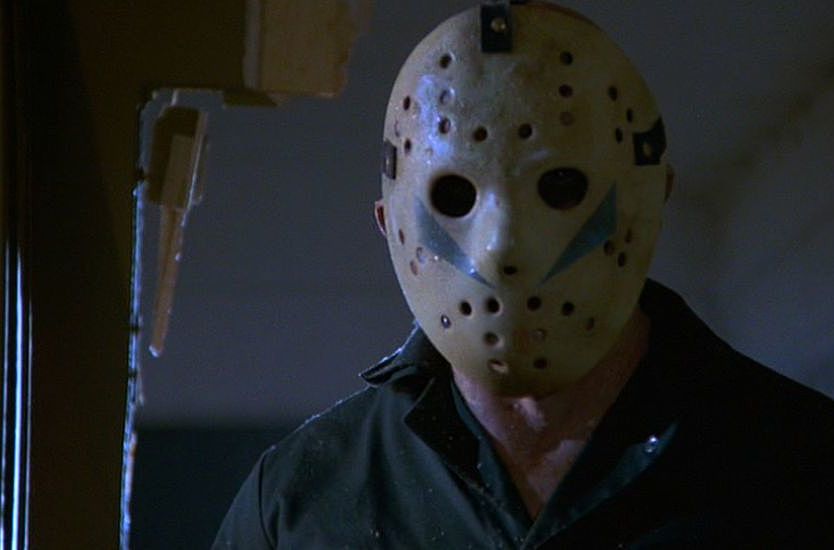
Often seen as the nadir of the series, Friday the 13th Part V enraged long time fans as – Spoiler alert – Jason isn’t actually the one doing the killing this time round.
In one of the most disappointing denouements in horror movie history, it turns out the guy in the hockey mask is just ambulance driver Roy Burns avenging the killing of his super annoying, chocolate bar-munching son.
Perhaps Part V would’ve been met with a better reception had audiences been privy to the fact it was a copy cat killer from the outset. A mystery whodunit could’ve been an interesting take on Friday the 13th.
Instead there’s just a tacked-on Scooby-Doo-style reveal at the end. The film’s further cheapened by an extremely trashy, seedy feel (even for this series) with even greater levels of drug use, sex and violence.
It’s not all bad, though. Unintentional or otherwise, there’s still a lot of humour, especially the hilariously stereotypical characters such as the foul-mouthed redneck mother and son who live out in the woods. The house for troubled teens makes for an interesting diversion from the usual camp counsellor angle. Plus, there’s also a great opening dream sequence with Corey Feldman reprising his role from the previous movie, looking on in horror as Jason emerges from the grave.
After the misstep of Part V’s M.I.A Jason, things got seriously back on track with Friday the 13th Part V1: Jason Lives.
Delivering on the unfulfilled promise of its predecessor of an undead Jason returning from the grave, Part VI is a fan favourite, not to mention one of the standout entries of the entire series. Self-aware, more action-oriented and featuring killer tunes from Alice Cooper, this entry is a fun blast from start to finish.
Meta before meta horror became a thing, Part VI lovingly sends up the series with genre-savvy dialogue (the cemetery caretaker looking directly at the camera and stating that “some folks sure got a strange idea of entertainment” and a soon-to-be victim proclaiming she’s “seen enough horror movies to know any weirdo wearing a mask is never friendly”) and the most over-the-top kills yet (triple decapitation anyone?).
There are some great visual gags such as a shot of a victim’s American Express card floating away in a puddle (don’t leave home without it!), not to mention one of the series’ most memorable title sequences which sees Jason’s homage to 007 as he walks in profile before turning and slicing the screen, turning it from black to red. Classic Universal horror also gets referenced as Jason’s grave is dug up and he’s brought back to life by a bolt of lightning, a la Frankenstein.
This sense of fun is further perpetuated by thrilling action set-pieces including car chases, a spectacular camper van crash, and a tense showdown between Jason and the local law enforcement.
Capped off with a memorable climax which sees Jason trapped at the bottom of the lake, it’s easy to see why this film remains many Friday fans’ choice cut.
Its sequel, Friday the 13th Part VII: The New Blood is another fan favourite, mainly due to it boasting what most would consider the most awesome version of Jason ever committed to celluloid. A truly great design, this Jason is a monstrous walking corpse, his exposed bones visible beneath his rotten flesh and tattered clothes.
Portrayed by stuntman Kane Hodder for the first of four times, it’s clear why he’s considered the definitive Jason. In contrast to Part VI’s deadpan zombie, Hodder infuses the character with a hitherto unseen explosive rage which reveals itself in his visibly heavy breathing (making him look perpetually peeved), and the force with which he dispatches his victims.
Indeed, Part VII features what is perhaps the most brutal, iconic kill of the series; the sleeping bag kill. This is the one where Jason drags a helpless victim from their tent and whacks them against a tree while they’re still in their sleeping bag.
While most of the film’s kills are neutered by the censor’s cutting, the sleeping bag kill actually benefits from the snip. Before the cutting Jason slams the victim against the tree multiple times, but after the censors were through it’s only once. This actually works in the movie’s favour as it reinforces the volatile power of Hodder’s Jason, that he can destroy a victim with a single swipe against a tree.
The reason this entry works so well is that it embraces the inherent overblown nature of the Friday series, and exaggerates some of the already over-the-top elements even further. The kills are ridiculous (death by party horn!), the heroine has psychokinetic powers allowing her to bring a roof down on Jason’s head with the power of her mind (it’s often lovingly referred to as Carrie vs. Jason), and at one point there’s three sex scenes occurring simultaneously.
There’s also an amazing final showdown showcasing great effects and stunt work as Jason falls through a staircase, is crushed by a roof, and is set on fire (a record for the longest uninterrupted on-screen burn at the time).
The ending also boasts an impressive explosion and the unmasking of Jason, revealing his monstrous decomposing features.
The last Friday the 13th movie of the ‘80s and perhaps the most underrated, Friday the 13th Part VIII: Jason takes Manhattan gets a bad rep.
This is predominantly down to its misleading title and marketing which promised Jason stalking the Big Apple when, in fact, most of the action takes place on a cruise ship. Due to budgetary restrictions, only the last half hour actually takes place in New York.
While it’s disappointing we didn’t get a full movie’s worth of Jason terrorising New York, Jason terrorising a cruise ship isn’t such a bad consolation prize. It’s undeniably pretty cool seeing Jason stalking the ship’s dark corridors and secluded cabins, and the trapped at sea in a raging storm scenario lends the movie a nice old school horror feel.
Jason takes Manhattan boasts some iconic kills too. There’s death by electric guitar, hot sauna stones through the chest, and drowning in a garbage can of what looks like raw sewage. Most memorable of all, however, is the one where Jason literally knocks a bloke’s block off, sending his head plummeting from atop a building into the trash below.
Back for a second time, Kane Hodder proves once again why he’s the definitive Jason as he hacks and slashes with panache, imbuing the silent killer with plenty of character and a bad to the bone attitude to boot. What’s not quite as impressive is Jason’s look. Gone are the exposed bones and zombified features of The New Blood, and in its place is a less intricate, slimy pale lake monster design in keeping with this entry’s watery themes.
Of course, this being the eighth entry in the series and with a title like Jason takes Manhattan, it’s absolutely ridiculous and not much about it makes sense.
You can now somehow get from Crystal Lake to the ocean in a ship, so a landlocked lake has become an estuary; so many years have elapsed since the first movie that the year should now be around 2002 even though everything is still so ‘80s; the heroine keeps having visions of Jason as a little boy and he appears to turn back into a boy after being destroyed by toxic sewage at the film’s climax.
If you’re willing switch off and embrace the silliness, the film’s inherent ridiculousness just adds to the fun.
Fast forward 4 years to 1993; the ‘80s were over, Paramount had sold the Friday the 13th rights to New Line Cinema, and the big horror franchises seemed to have died with the ‘80s, Halloween coming to a close in 1989 with Halloween 5: The Revenge of Michael Myers, and Nightmare on Elm Street ending in 1991 with the critically-derided Freddy’s Dead: The Final Nightmare.
Could the newly resurrected Friday the 13th series return horror to the glory gory days of the ‘80s with Jason Goes to Hell: The Final Friday? In a word; no.
If you thought Jason takes Manhattan was disappointing, just wait until you get a load of Jason Goes to Hell.
Sure, most of the Friday movies are quite juvenile, but this one has the kind of plot that only seems cool to those 13 and below, and they shouldn’t even be watching this kind of movie. It involves Jason getting blown to pieces following an FBI sting then body-hopping, possessing victims as a demonic worm passed mouth to mouth!
It’s absolutely barmy but sadly, despite a few in-jokes (“Planning on smoking a little dope, having a little premarital sex and getting slaughtered?”), it ultimately lacks the same conviction to camp fun as its predecessors.
It’s a messy blend of fun-poking dialogue, extreme gore, David Cronenberg-style body horror, demonic possession, and action revenge-thriller which never seems to coalesce into a unified whole.
It also never really feels like a proper Friday the 13th movie due to the fact that Jason – at least the hockey mask-wearing, machete-wielding monster we know and love – only has a minute amount of screen time.
In striving to do something completely new, the movie completely disregards what the fans want. They don’t want to see possessed people acting like Jason, they want the real deal. Didn’t the filmmakers learn anything from A New Beginning? Even though it wasn’t actually Jason, at least that one had a guy in a hockey mask doing the killing.
Impressive effects work and creature designs courtesy of KNB, some creative kills and action sequences ensure it’s an okay B-movie when you’re in the right mood.
The best part, however, is the ending where Freddy Krueger’s clawed glove pulls Jason’s mask into the ground, sewing the seeds for a clash of the horror titans that would take ten long years to materialise.
Big, dumb and set in outer space, 2001’s Jason X proved to be a much-needed shot of fun while providing a nice stopgap slice of Jason action to tide fans over until the much-anticipated Freddy vs. Jason was unleashed.
Following a fast-moving opening sequence (featuring a David Cronenberg cameo) where Jason ends up cryogenically frozen, the action fast-forwards to the distant future where he’s awakened on a spaceship.
A blast from start to finish, Jason X is a fun rollicking space adventure that thankfully never takes itself seriously. It embraces the futuristic cheesiness with badass androids, holograms, reconstructive surgery performed by tiny ant-like robots, and dodgy fashion choices.
This also extends to the kills with Jason making full use of the sci-fi setting. He smashes someone’s face to pieces after shoving their head in a vat of liquid nitrogen, hacks an alien to bits in a virtual reality game, and reprises the sleeping bag kill when, in a standout scene, he visits the virtual eighties.
It’s also notable for being the last time Hodder was to don the infamous hockey mask. He once again does a fine job here, it’s just a shame the design isn’t great with Jason looking a little too human compared with the impressive rotting zombie designs of the past few entries.
However, all is forgiven when, after being blown to smithereens, he’s resurrected as Uber-Jason. A mixture of demonic zombie and shiny killer machine, Uber-Jason’s design cannot be faulted and is definitely one of the best things about the movie.
Then finally, after years of waiting and much speculation, Freddy vs. Jason arrived hot on the heels of Jason X.
But does this clash of the ‘80s horror titans live up to the hype? For the most part, yes it does. The end battle where Freddy and Jason literally tear each other to shreds in glorious fountains of blood and viscera is worth the price of admission alone. It truly is a ‘80s horror fan’s dream come true.
It certainly isn’t perfect though. The fact that Kane Hodder, the ultimate Jason, wasn’t cast to go mano a mano against Robert Englund’s ultimate Freddy is pretty unforgivable. It also suffers from making Jason a bit too sympathetic and stupid, mis-casting him as something of an anti-hero to cheer on against Englund’s sadistically evil Freddy.
Despite Jason doing most of the killing and the universes melding really well, it feels a lot more like a Nightmare on Elm Street movie than it does a Friday the 13th movie with the majority of the action taking place around Elm Street and Springwood as opposed to Crystal Lake.
Despite these minor gripes, Freddy vs. Jason delivers. We get an awesome battle, plenty of blood and gore, and vacuous teens being despatched with aplomb. It also boasts a good sense of humour, and features great direction from Ronny Yu who had previously helmed the equally brilliantly-deranged Bride of Chucky. It’s safe to say it’s the best monster mash since Godzilla fought King Kong, and it’s a hell of a lot better than Alien vs. Predator.
The box office success of 2003’s The Texas Chainsaw Massacre remake lead the way for a glut of slasher movie remakes. Friday the 13th jumped on board the remake bandwagon in 2009 with a back to basics origin/straightforward Crystal Lake massacre-centred movie.
Jettisoning years and years of convoluted, conflicting back story was both a blessing and a curse.
On the one hand, it allowed for a new generation of horror fans to be introduced to Jason afresh without having to catch up on 11 movies before seeing the new one. However, on the other, it felt like a disservice to the long time fans who’d persevered through the highs and lows of the entire series waiting to see where the story would be taken next.
This isn’t to say the movie doesn’t pay respect to what’s come before, though. On the contrary, it pays homage to its forebears with nods to some of the series’ most memorable moments.
The entire opening act feels like a greatest hits compilation, going from the decapitation of Jason’s mother, to Part 2‘s sack head Jason slaughtering the movie’s first batch of teens, and finally the donning of the infamous hockey mask a la Part 3.
Following this relentless non-stop opening, the movie slows down and settles us in by introducing the next batch of disposable teens. This is where it starts to fall a bit flat. Sure, there are still the hilarious stereotypes, prerequisite bloodletting, and a truly vicious version of Jason, but it’s not nearly as ridiculous as it should be. The kills are unimaginative, there’s no bad hairdos or fashion disasters, and there’s a distinct lack of cheesy tunes.
In moving with the times and going for a more gritty approach, it loses that joyous ‘80s silliness that buoyed even the worst of the original series.
After the remake’s decent if unspectacular stab at Jason, the 13th Friday has yet to materialise.
There have been rumours of a direct sequel to the remake, a brand new ‘80s-set reboot, and even a found footage take on the series. Fans did get a very faithful multiplayer video game in 2017 which allowed you to play as Jason or his victims.
However, this turned out to be very short-lived as an ongoing legal battle over the Friday the 13th rights between original writer Victor Miller and director Sean S. Cunningham prevented any new game content being produced.
It unfortunately also has bigger implications with the future of the entire franchise now at stake. So sadly, it doesn’t look like we’ll be getting that long awaited 13th movie any time soon.
Hopefully, like Jason Voorhees himself, the franchise won’t stay dead too long…
revisit Part 1 of our retrospective look at Friday the 13th >here<
or look back at Part 2 >here<
Must See Movies: August
At Reel Steel we want to make sure you’re getting the most of your cinematic enthusiasm, so each month we put together our short list of some of the best new releases, from popcorn munching explosion fests to the often weird and wonderful.
Take a look at the trailers below and see this month’s recommendations…
Sicilian Ghost Story
released Friday August 3rd, 2018
In a small Sicilian village at the edge of a forest, Giuseppe, a boy of 13, vanishes.
Luna, his classmate who loves him, refuses to accept his mysterious disappearance.
She rebels against the code of silence and collusion that surrounds her, and to find him she descends into the dark world which has swallowed him up and into her own mind, in the hopes of finding him and bringing him back to her.
Inspired by mysterious, true events of a Mafia kidnapping, seamlessly blending reality with fantasy in this dark and vivid fairy tale.
The Escape
released Friday August 3rd, 2018
Tara (Gemma Arterton) loves her children deeply and to all those around her, her life is seemingly perfect.
But Tara feels trapped, living a life that is no longer hers. Her feelings of desperation become so overwhelming that she has to run away, to find the life she really wants.
Built around a remarkable central performance from Gemma Arterton, The Escape is a perceptive, deeply compassionate portrait of a woman discovering who she really is.
BlacKkKlansman
released Friday August 24th, 2018
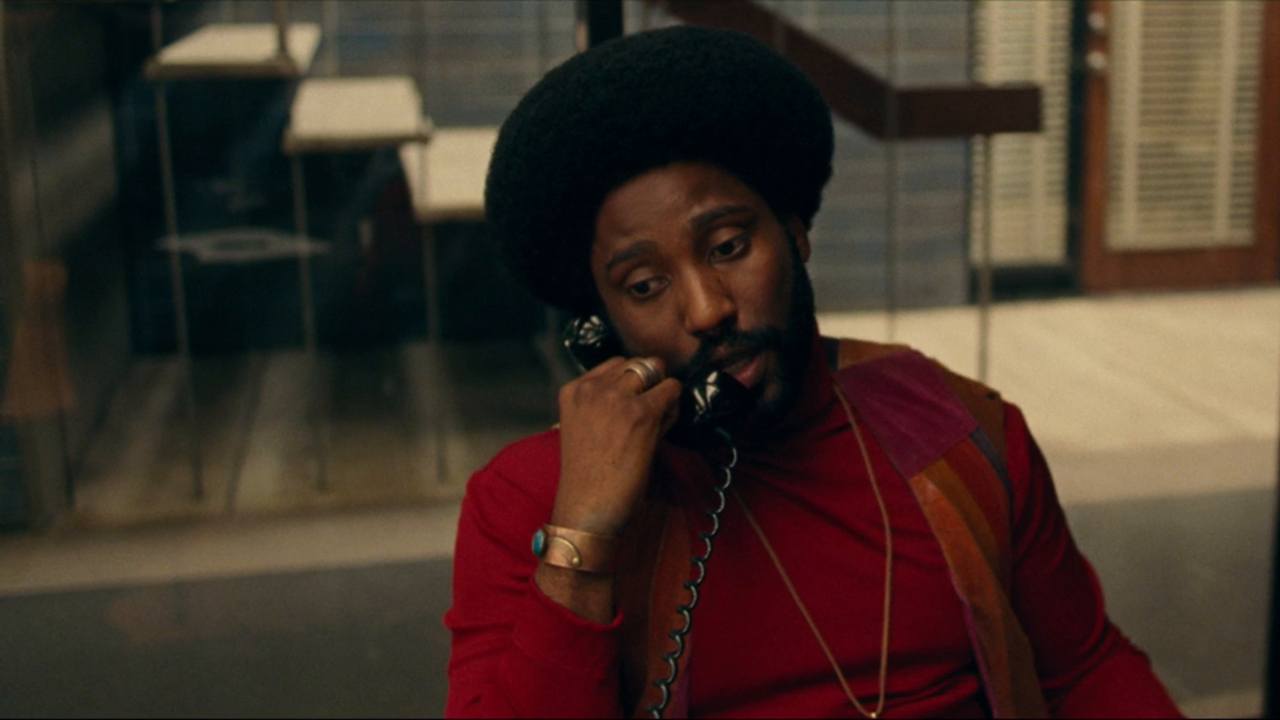
From director Spike Lee comes the incredible true story of Ron Stallworth – the first African-American detective on the Colorado Springs Police Department.
It’s the early 1970s, a time of great social upheaval as the struggle for civil rights rages on.
Undaunted, Stallworth (John David Washington) resolves to make a name for himself and a difference in his community. He bravely sets out on a dangerous mission: infiltrate and expose the Ku Klux Klan.
Posing as a racist extremist, Stallworth contacts the group and soon finds himself invited into its inner circle.
As the undercover investigation grows, Stallworth’s colleague, Flip Zimmerman (Adam Driver), poses as Ron in face-to-face meetings with members of the hate group, gaining insider’s knowledge of a deadly plot.
Together, Stallworth and Zimmerman team up to take down the organization.
BlacKkKlansman offers an unflinching, true-life examination of race relations in 1970s America that is just as bracingly relevant in today’s tumultuous world.
– SPECIAL EVENT –
August bank holiday Sunday will see the iconic Back To The Future Trilogy come to Sheffield’s historic Abbeydale Picture House.
All 3 films – one day – one ticket.
Sunday August 26th.
Details here – bit.ly/2KZqMc4
A Prayer Before Dawn
2018
Director: Jean-Stephane Sauvaire
Starring: Joe Cole, Panya Yimmumphai, Pornchanok Mabklang, Vithaya Pansringarm
Words – Joe H.
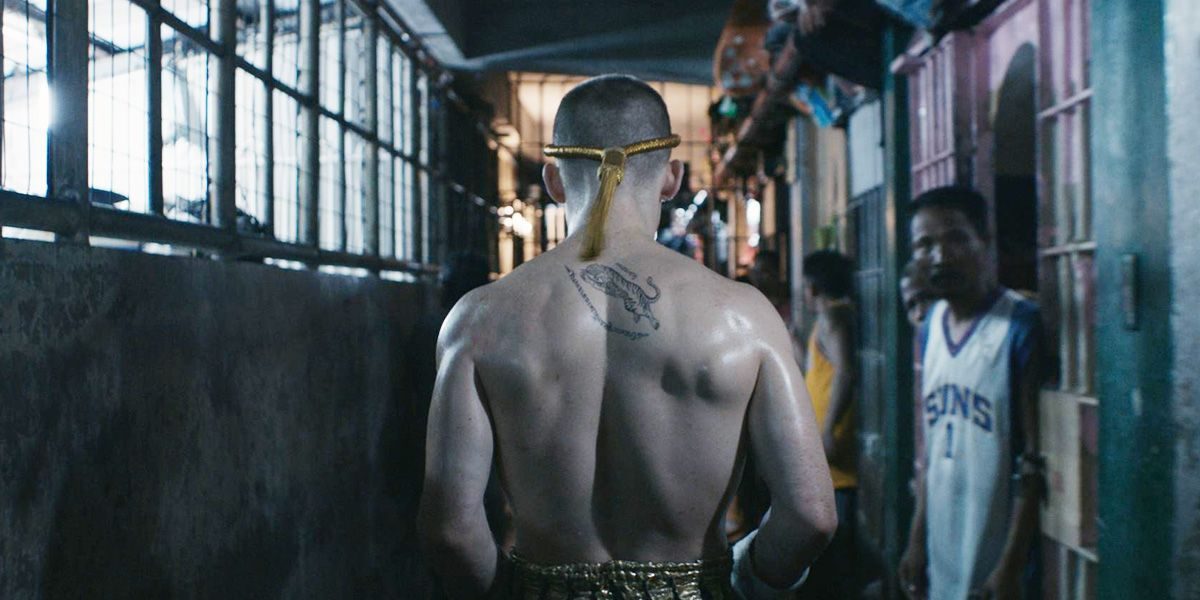
Based on the international bestselling memoir of the same name, A Prayer Before Dawn tells the true story of Billy Moore, a young boxer from Liverpool who is imprisoned in Thailand for drug offences.
We are introduced to Billy (Joe Cole) as he is preparing for a fight – it’s a ceremony like process, quiet, calm, patient, completely at odds with what’s to come.
We see following this his life is spent between Muay Thai fights and drug use, existing less in the tourist side of Thailand but more its dark underbelly.
His life changes with an arrest at his home – as we next see Billy upon his arrival at prison.
He stands out as he enters, unable to speak Thai he is shepherded through processing and tries to understand instruction through the actions of others.
He enters his cell, there’s around 30 inmates in a room not big enough for half that, and he’s immediately singled out, put through a kind of hazing for new arrivals as the inmates test him.
It’s clear he has to tread carefully, he’s at the mercy of those around him as they make painfully clear one night against another inmate.
Through the corruption of guards and rife drug use in the prison he is able to feed his drug habit, paying his way through the prison currency of cigarettes, on some level ingratiating himself with some of those around him through shared drug use, but the threat posed by other inmates never leaves.
He discovers a separate unit in the prison where inmates train in Muay Thai (the national sport of the country), he manages to take a place with them to train, which becomes both an outlet for the stress of prison life and a fight against his own personal demons.
He makes an impression, as the prison warden offers him the opportunity to fight in competition against a fighter from another prison (tournaments in the Thai prison system have been an annual fixture for many years), with the time leading up to this fight becoming a test of his resolve.
At no point in the film, is any of the Thai language subtitled – this was a bold decision but absolutely the right one, through this we are made to feel right there with our main character, feeling out of place and intimidated in this harsh and unforgiving environment.
The fight scenes are exhaustingly bruising – there’s no fancy editing, with the camera alongside the fighters you feel right there in the ring with them as they exchange blows.
Comparative elements can be drawn to films such as the French prison drama A Prophet – a raw, brutal story of prison life, and with one of the highlights of 2018 in You Were Never Really Here – at times largely dialogue-free and portraying a temperamental mental state, an evocative soundtrack that isn’t overused, with the sound of the environment cutting through moments of silence and acting just as much as part of the film’s score.
However with this film being based on a true story, there’s added weight here – being filmed in an actual Thai prison with a cast of real inmates.
The strength of this film rests on the performance of its lead actor, Joe Cole, who has previously been seen on screen as the headstrong drummer in the ill-fated punk rock band in Green Room, and Charlie Brooker’s Black Mirror.
When actors in the early stages of their career take on a role that pushes them to a physical and mental limit it can be a defining moment – Tom Hardy in Bronson, Michael Fassbender in Hunger (each being standout prison dramas), you can really see what potential there may be.
Joe Cole’s performance is worthy of all the recognition it receives and deservedly should lead to more interesting roles for this promising young actor.
This film is a visceral and emotionally raw drama through a journey of self-acceptance and redemption, and when it comes to looking back at 2018 should absolutely be considered one of the best films of the year.
Back To The Future Trilogy

1985 – 1990
Director: Robert Zemeckis
Starring: Michael J. Fox, Christopher Lloyd
Words – Christian Abbott
There are few films to reach the ‘must-see’ status of the Hollywood canon, far fewer for an entire series – Back To The Future is one of those few.
Released in 1985, it was an overnight instant classic, beloved by audiences from then and to this day. Science-fiction is often seen as a love or hate genre with little grey area to explore, Back To The Future is an exemption to this – it is true a rare jewel in cinema, a timeless classic that will continue to endure for decades to come.
The original opens with one of the most iconic character introductions of all time – seeing Marty stumble through the door of Doc’s garage as he pokes and plays with his amazing (insane) inventions. Not only does it brilliantly show us the childish wonder of Marty, but the mad charm of Doctor Emmet Brown. It is now impossible to talk about time travel, let alone depictions in cinema, without talking about Back To The Future.
Of course the two are played brilliantly by Michael J. Fox and Christopher Lloyd, respectively. One of cinema’s most iconic duo’s, one completely of its time and all the better for it. They captured the imagination and hearts of a generation and endure to this day as some of Hollywoods most endearing characters.
When Robert Zemeckis, director and writer, first came up with the idea, he was venturing into an aspect of science-fiction so many other filmmakers would rather avoid.
Time travel can often be a slippery slope of a convoluted narrative and plot holes. Yet, he found a way of not only making it simple – but fun. It’s an absolute blast, the sort of story you’d dream about being part of as a kid, coupled with fancy dress to boot. Witnessing Marty first go back to the 1950s is still a sight to behold, with that, it’s the same but different feeling capturing the moment.
Seeing Marty try to undo his mistakes in the past by helping his own parents fall in love sounds wonderfully insane on the page – and it is on screen. Hollywood has struggled to capture the same sense of charm as it does in this original. The mere idea of fading away after your past has been changed has far reached beyond the frames of this film – as has most of the iconic imagery. From the DeLorean to the self-tying shoes, it all precedes the films with immense cultural weight.
Of course the head-spinning time altering goodness doesn’t end there. Following the staggering success of the first film, Zemeckis began work on two back-to-back sequels which were released in 1989 and 1990. The ambition of these films is gargantuan – an interwoven narrative that goes from the Wild West to the distant future (2015…).
The title lines have new meaning in the sequel as Marty heads to a utopian/dystopian future of Jaws 19 and a premonition of a Trump-like presidency.
Alongside that was the aforementioned Wild West – an unlawful time of guns, crime and pink cowboy suits. Seeing Marty attempt to behave like what he thought a cowboy should is still hilarious to this day. And, getting to see the DeLorean ride the rails and charge through the desert is still an awesome sight.
The extent of how these films have permeated our culture is sobering. From sketches to parody, to references to musical inspiration – Back To The Future is all around us and will continue to be so for long after today.
Some call these films one of the best franchises in cinema history, to call it that would be to simply state the obvious. You have either seen Back To The Future or you haven’t – you’re all the more for having done so.
Back To The Future brings us back to a time when Hollywood was more innocent, most playful and more risk-taking. It could only have been made exactly when it had. When asked about the potential of a remake, Zemeckis replied simply but eloquently… “Oh God, no”.
I think I speak for us all when I say… thank you, for everything.
A screening of the Back To The Future Trilogy will be taking place at Sheffield’s historic Abbeydale Picture House.
All 3 films – one day – one ticket.
Bank Holiday Sunday August 26th.
Details here – bit.ly/2KZqMc4
 REEL STEEL
You must be logged in to post a comment.