Must See Movies: February 2019
At Reel Steel we want to make sure you’re getting the most of your cinematic enthusiasm, so each month we put together our short list of some of the best new releases, from popcorn munching explosion fests to the often weird and wonderful.
Take a look at the trailers below and see this month’s recommendations…
Burning
released Friday February 1st, 2019
Adapted from a short story by the critically-acclaimed author Haruki Murakami, Burning follows the story of deliveryman Jongsu, who is out on a job when he runs into a girl who once lived in his neighbourhood. She asks a favour of him while she takes time away, and upon her return, introduces him to someone she met during her trip.
As the group spend more time together, Jongsu slowly gets to know this new visitor, in this beguiling and mysterious story.
If Beale Street Could Talk
released Friday February 8th, 2019
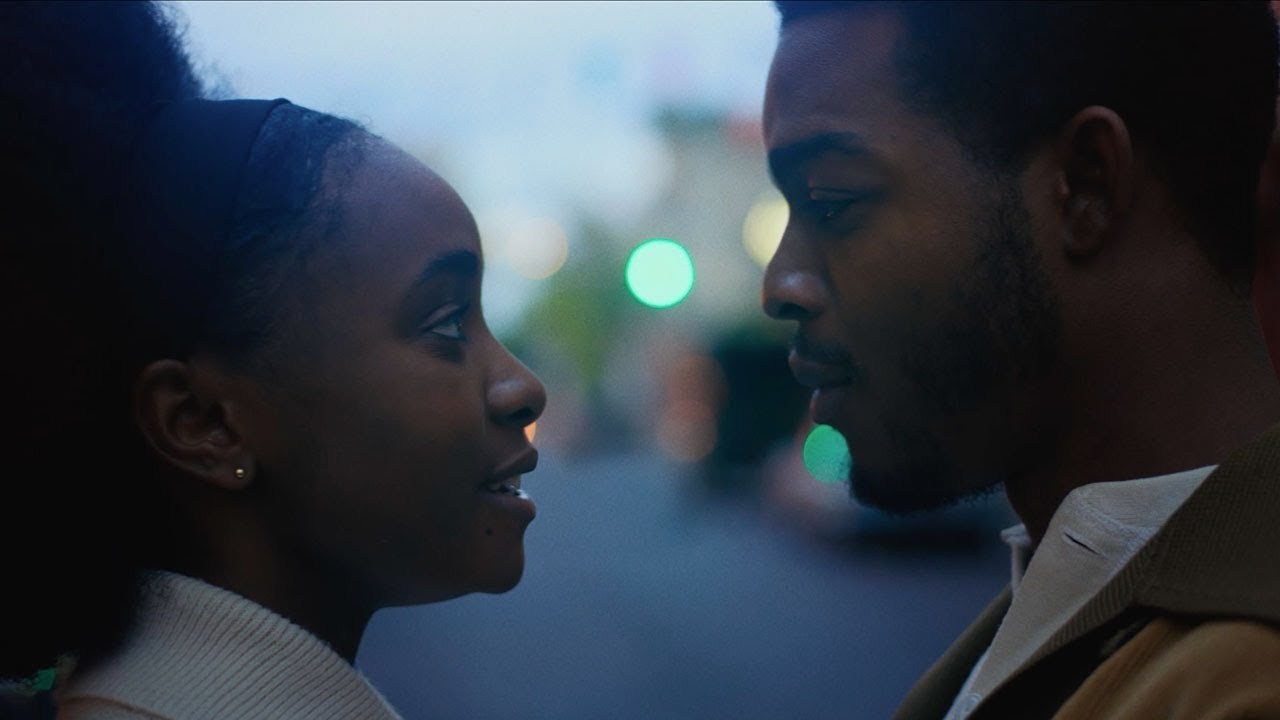
In early 1970’s Harlem, Tish is in love with Fonny, the father of her unborn child.
When Fonny is falsely accused and arrested for a crime he did not commit, Tish and their families look to clear his name as they dream of a future together.
A story about love persisting in the face of racial oppression and injustice, Academy Award winner Barry Jenkins (director of Moonlight) brings his adaptation of James Baldwin’s acclaimed novel to the screen.
If Beale Street Could Talk is both BAFTA and Oscar nominated for Adapted Screenplay and Best Original Score.
Capernaum
released Friday February 22nd, 2019
After running away from his neglectful parents, a streetwise 12-year-old Lebanese boy named Zain sues his parents for bringing him into the world.
The circumstances that have brought him to this point take us on a journey through his poverty-stricken upbringing in Beirut where he lives with his family, forced to live by his wits in order to survive the dangers of the city streets.
Capernaum is a tribute to the resilience of the human spirit, employing a cast of non-professional actors and filmed on the streets of the Lebanese capital, this is a compassionate and unforgettable film.
Capernaum is both BAFTA and Oscar nominated for Best Foreign Language Film.
2019 Oscars and BAFTAs in review

We’ve rounded-up our reviews of films that have been nominated for awards this season
– click on the film title to see our review.
More reviews of award nominated films will be added as they get their UK release.
Best Film
Oscar and BAFTA nominated
Oscar nominated
Best Director
Oscar and BAFTA nominated
BlacKkKlansman (Spike Lee)
Cold War (Paweł Pawlikowski)
The Favourite (Yorgos Lanthimos)
Best Animated Feature
Oscar and BAFTA nominated
Spider-Man: Into the Spider-Verse
Best Foreign Language Film
Oscar and BAFTA nominated
Shoplifters (Japan)
Cold War (Poland)
Best Documentary
Oscar nominated
Hale County This Morning, This Evening
Best Original Score
Oscar and BAFTA nominated
Isle of Dogs (Alexandre Desplat)
BlacKkKlansman (Terence Blanchard)
Oscar nominated
Black Panther (Ludwig Goransson)
the Oscars will take place on Sunday February 24th, you can see the full list of nominated films >here<.
the BAFTAs will take place Sunday February 10th, you can see the full list of nominated films >here<.
and you can see our own selection of the Best Films of 2018 >here<.
Beautiful Boy

Director: Felix Van Groeningen
Starring: Timothee Chalamet, Steve Carell, Amy Ryan, Maura Tierney, Jack Dylan Grazer, Zachary Rifkin, Kue Lawrence
Words – Rhiannon Topham
When I came out of the screening for Beautiful Boy, I overheard a woman behind me say “when he [Steve Carell] is fretting about where his son is at the beginning, it reminded me of all the times I snuck out as a teenager and how much it must have worried my parents.”
This struck me as quite an innocent interpretation of the harsh and brutal tale of addiction and familial destruction we’d just seen.
Maybe that was director Felix Van Groeningen’s point – we can’t all understand what a disease as unrelenting as methamphetamine addiction feels like, or what it does to a parent watching their child deteriorate before their eyes, but we can empathise with the imperishable love we have for our loved ones in spite of the anguish they cause.
Beautiful Boy is based on author and journalist David Sheff’s book of the same name, as well as his son Nic’s personal account of his battle with meth, Tweak. It’s these two parallel narratives, interwoven and simultaneously disconnected, which give the film its depth and intimacy.
Yet it also seems to be what inspired the non-linear, chopped up depiction of the story – intentionally jagged and disconcerting as Nic would have experienced his mental and physical decline, but unintentionally difficult to follow for audiences. Some scenes are inexplicably thrown in as if to appease the sheer sufferance the main characters with memories of Nic’s happy, healthy and ‘beautiful’ childhood, others as if to provide a apt cutaway to the next unconnected scene.
Timothée Chalamet does a sterling job in his portrayal of Nic’s fragility and the proverbial line he tows between emotional and financial reliance on his father and the desire for independence, every purse of the lips a portrait of his commitment to depicting the vicious circle of Nic’s constant disappointments to himself and his family, and a reminder that this actor has whatever ‘it’ is to storm Hollywood the way he has.
But Steve Carell really deserves the credit for bringing the heart and soul needed to carry the film out of the depths of despair and into more optimistic, and then realistic, ground. As Nic’s dad David, Carell respects the sad reality that innumerable families have to live with – that although living with and loving an addict can become all-consuming, and this can be bewildering and painful and overwhelming, ultimately the cure to addiction lies with the addict themselves.
Oldboy
2003
Director: Park Chan-wook
Starring: Choi Min-sik, Kang Hye-jung, Yoo Ji-tae, Oh Dal-Su, Ji Dae-han
Words: Nathan Scatcherd.
Oldboy has – in the years since its release – become one of the prime examples of ‘extreme’ Asian cinema to really be embraced by Western audiences.
Part two of director Chan-wook’s ‘vengeance trilogy’ (preceded by Sympathy for Mr Vengeance, and followed by Lady Vengeance), and adapted from Garon Tsuchiya and Nobuaki Minegishi’s manga comic book, the film is a twisted, operatic neo-noir revenge thriller possessed of a relentless propulsive energy.
As with many of the best noir films, the story is based on a central mystery to be unravelled. A mouthy businessman named Oh Dae-su (Choi Min-sik) is kidnapped by an unknown figure and held in a cell without explanation or human contact. He survives on dumplings and pure rage, at first trying to question his faceless captor as to why he has been imprisoned, then simply attempting to keep hold of his slipping sanity as time marches on.
He gradually develops something of a routine to life in his cell, all the while devoting his energy to an escape tunnel, all thought focused on eventual vengeance.
After fifteen years, multiple suicide attempts, and lots of single-minded shadow-boxing, his escape tunnel turns out to be fruitless and unnecessary; he is suddenly released into the outside world with the same lack of explanation surrounding his initial kidnapping. He sets about trying to uncover the reason (and perpetrator) behind his capture, meeting a beautiful young sushi chef named Mi-do (Kang Hye-jung), and… to say anymore would spoil the film’s twists and turns for those who have yet to experience it for themselves.
Suffice to say that as the mystery unravels, some very dark avenues are explored, leading up to a hauntingly ambiguous ending.
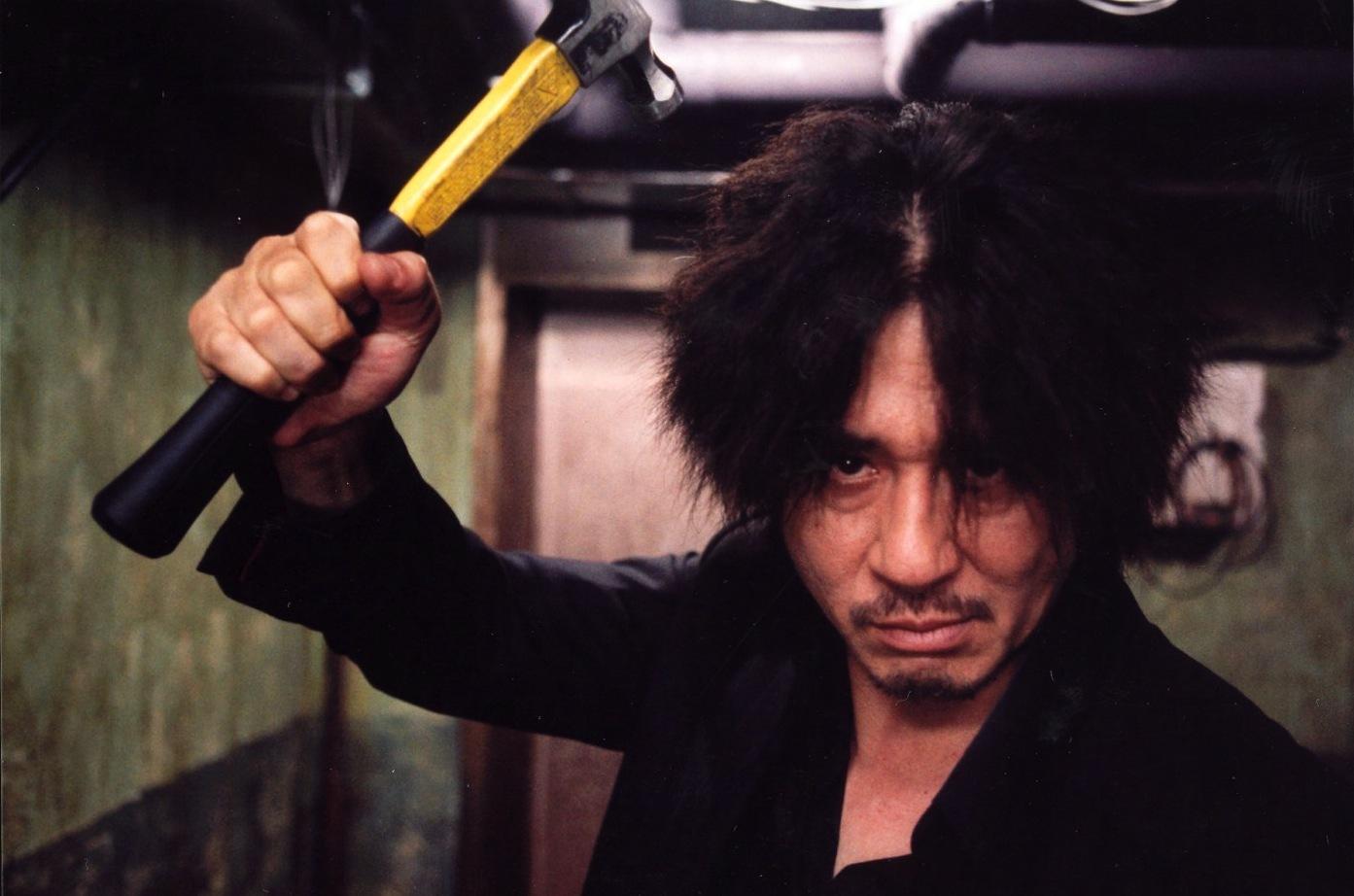
The film is held together by a furiously committed central performance by Choi Min-sik, in a role which demands a lot both physically and emotionally. Much has been made of the film’s two arguable ‘standout’ moments – Dae-su eating a live octopus (with no CGI – that’s a real octopus being devoured onscreen, which has understandably upset quite a few people, but don’t worry; Min-sik is a Buddhist and said a prayer for the poor creature), and a bravura single-take hallway fight scene in which Dae-su takes on a crowd of goons with a claw hammer.
However, these ‘big moments’ shouldn’t detract from the film’s arguably most impressive, and most subtle, achievement. This is its pacing; the way it perfectly judges the unfolding of a gripping and genuinely shocking mystery, with at least one twist which first-time viewers who haven’t spoiled anything for themselves will surely not see coming, and will be suitably horrified by.
–
A Nightmare On Elm Street / Dream Warriors
1984 / 1987
Director: Wes Craven / Chuck Russell
Starring: Heather Langenkamp, Robert Englund, John Saxon
Words – Oliver Innocent
From its earliest antecedents in folklore and fairy tales, the fuel for scary stories has always been bad dreams. The demons that haunt Man’s dreams have become some of the horror genre’s most enduring characters; think vampires, werewolves, ghosts, and Freddy Krueger.
Since its conception, horror cinema has drawn upon the nightmare – its otherworldliness, sense of no escape, all encompassing darkness, and terrifying bogeymen – to scare, surprise, and throw audiences off balance.
Take, for instance, the 1920 silent classic The Cabinet of Dr Caligari. With its dreamlike, skewed German Expressionist sets, and ending where everything is revealed to have actually been a dream, it set a precedent for the genre to follow.
In fact, so ingrained had it become that by the time A Nightmare on Elm Street was released in 1984, the nightmare – invariably in the form of a false scare culminating in a character waking screaming bolt upright – was now cliché. What Elm Street did so well was centre the film on the nightmare.
Unlike Caligari where we are led to believe this fantasy world is the characters’ reality until the rug is pulled, Elm Street weaves dreams and reality in such a way it becomes difficult to distinguish where one ends and the other begins.
Expertly directed by genre master Wes Craven, A Nightmare on Elm Street certainly lives up to its name. Craven taps the nightmare for all it’s worth, playing on our primal fear of dreams. We’re at our most vulnerable when we’re asleep, both physically and mentally. It’s also where we’re most alone as we’re left to fight the demons of our mind single-handedly. But what if those demons aren’t just in our mind? This is the question Craven poses and answers in terrifying fashion as he introduces us to one of horror cinema’s scariest, most iconic villains.
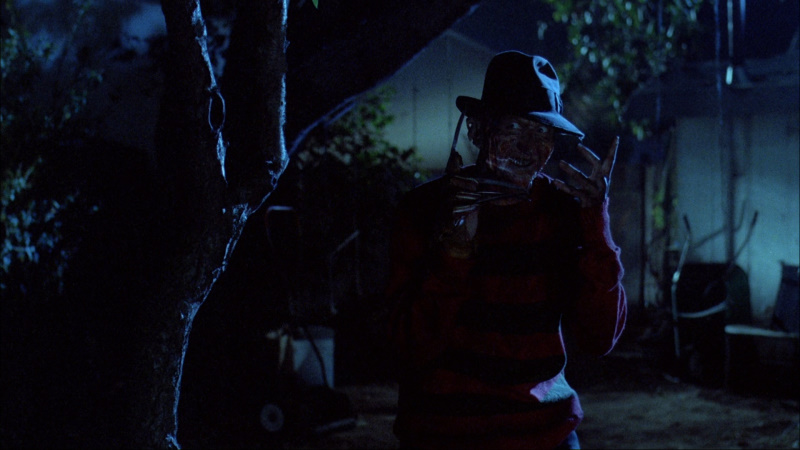
Burnt faced with a dirty old fedora, green and red-striped sweater, and a razor-fingered glove, Freddy Krueger cuts a striking figure. He’s also got attitude and a depraved sense of humour to boot. Played with gleeful abandon by horror legend Robert Englund, Freddy ushered in a new breed of horror villain. No longer faceless or silent like Michael or Jason, he paved the way for villains with personalities and penchants for one-liners like Chucky from Child’s Play.
Taking its cue from slasher granddaddy Halloween, Elm Street centres on a group of suburban teens picked off one by one by a seemingly indestructible bogeyman. However, unlike Michael Myers, Freddy has a disturbing motive. A child killer burnt to death by vengeful parents, he returns from the grave to exact his revenge by killing his murderers’ remaining kids.
Whereas most slasher teens are nothing but good looking cannon fodder, the kids in Elm Street are likeable, well-developed characters left to fend for themselves in a world of ineffectual adults. Despite boasting a very young Johnny Depp, dispatched in gloriously gruesome fashion via a fountain of blood erupting from a bed, the real star of the show is Heather Langenkamp’s Nancy.
Perhaps the ultimate final girl, Nancy is one of ‘80s cinema’s strongest, most resourceful heroines. Determined not to be another of Freddy’s victims, she takes him on single-handedly in a final act that plays out like a horror precursor to Home Alone. She outwits him, bringing him out of the dream world and luring him into home-made booby traps, before finally turning her back on him and renouncing the fear that gave him his power.
With a great cast, inventive concept and effects, memorable heroine and iconic villain, Elm Street proved a big box-office draw.
Unsurprisingly it didn’t take long for a sequel to materialise. 1985’s A Nightmare on Elm Street 2: Freddy’s Revenge turned out to be an enjoyable if unspectacular entry that disappointingly dropped the entire original cast, save Englund’s Freddy.
This was all to be rectified in 1987 with the release of A Nightmare on Elm Street 3: Dream Warriors.
While it doesn’t completely retcon the sequel – the events of Elm Street 2 could still have happened – it’s comparable to 2018’s Halloween in that it’s a direct sequel to the first movie, which sees the return of the original heroine, and director (this time as writer/producer).
Unlike its predecessors, Dream Warriors is an unashamedly commercial entertainment machine and it’s all the better for it. Upping the action and humour whilst downplaying the series’ darker aspects, Dream Warriors shoots for mass appeal acceptance and succeeds spectacularly. The most notable shift towards this more commercial approach is the addition of more overt fantasy elements.
A staple of ‘80s cinema, fantasy films like The Neverending Story proved big box-office draws. Dream Warriors appropriates the fantasy movie format with a classical tale of a band of misfits – in this case troubled teens with unique dream powers led by Nancy – who embark upon a quest to defeat evil.
The lean towards a more fantastical approach is also a great showcase for the movie’s groundbreaking effects. Encompassing practical makeup, animatronics, visual, and stop-motion effects, Dream Warriors treats us to a cavalcade of imaginative images. There’s a huge Freddy snake, a chest of souls and, in a tribute to fantasy effects master Ray Harryhausen, a stop-motion skeleton. The dreamscapes are more over-the-top this time too, with imagery like a flaming pit lined with skulls straight out of a heavy metal album cover.
This is also the movie where Freddy comes into his own as a wisecracking comical villain and pop-cultural icon. His kills are a lot more creative this time around, personalised to prey upon each character’s specific weakness and punctuated by a scathing yet hilarious one-liner. The most memorable example being the “cut to primetime, bitch!” line before he smashes a TV-obsessed teen head-first into the TV set.
Topped off with a fist-pumping theme song courtesy of hair metal titans Dokken, it’s easy to see why Dream Warriors is such a fan favourite and is generally considered the best of the Elm Street sequels.
A Nightmare On Elm Street 3: Dream Warriors –
Princess Mononoke

1997
Director: Hayao Miyazaki
Words – Christian Abbott.
Ghibli fans are like a loving mother, they would never pick a favourite. All are equal in their eyes, each different, each unique, each loved. Yet, there seems to be this vocal minority rising-up that challenge this view. Some declare that actually, there is one that tips the scales. One that is darker, more mature, and more intense, while still remaining completely Ghibli – that one, is Princess Mononoke.
Now, to be fair, they could have a point, after all this is a tale of war and sacrifice. There are full-blown battles here and many lives at stake. We follow Ashitaka, a warrior who is protecting his villiage from a demon-like-monster. In doing so he is cursed and has to venture to the forests to the west. Quickly he is caught in the middle of a war between humans, led by Lady Eboshi, and the forest, with Princess Mononoke.
Yet, this fully retains what makes a Ghibli film – Ghibli. This is a grand, sweeping adventure and remains the studios most epic story to date. The surprising truth is that while the stakes are higher, the characters remain utterly believable; they are as compelling as they are entertaining to watch. Everyone here is enriched by the ambiguity the narrative has provided them. This is by far some of Hayao Miyazaki’s (writer and director) strongest writing.
Miyazaki’s distinctive style is some of his strongest here, with each character, each creature feeling wholly unique and instantly recognisable. But it isn’t just the characters, the landscapes and vistas of the world he has created are breath-taking and detailed, vast and mysterious. Everything feels so lived in and alive, bursting with life – which makes the violence all the more shocking and upsetting.
The impact of this film can still be felt today. With its release back in 1997, it was an enormous hit in the Western World – still being one of the highest grossing Japanese animations to date.
As with all films from this legendary studio, the film is as fresh-feeling today as it was over 25 years ago – a testament to the dedication and love of the craft Miyazaki and everyone else at Studio Ghibli put into their films. With its level of nuance and ambiguity, the maturity and confidence in its interpersonal character storytelling and impact as a piece of genre-fiction, Princess Mononoke is one of the greats. Period.
_
_
Spirited Away
2001
Director: Hayao Miyazaki
Words – Christian Abbott.
Asking someone to choose a favourite Studio Ghibli film is like asking someone what their favourite song is. It is an ultimately pointless question, as much like music, Ghibli’s filmography feels subjective to mood and emotion.
However, as with all this, there does appear to be one that tops them all. Searching into Google, “best animated film”, you will be faced with countless lists ranging from the wonderful to the weird. Yet, almost consistently, one stands alone that has both, one that given its relatively modern release (nearly 20 years ago), feels timeless and ever-present. One that despite the shameful lack of wide releases for world cinema in the UK, most have heard of it – and even seen it (and love it). That one is Spirited Away.
Released back in 2001, it brought Studio Ghibli into the 21st Century with the same immense joy and imagination the studio had built since the release of Nausicaä of the Valley of the Wind back in 1984. Hayao Miyazaki returned to write and direct, continuing to bring his unique adventures alive in the way, not only he can, but animation in general. Miyazaki truly captures the medium and plays with it. If you can think of it, you can draw it, and Miyazaki demonstrates that best here.
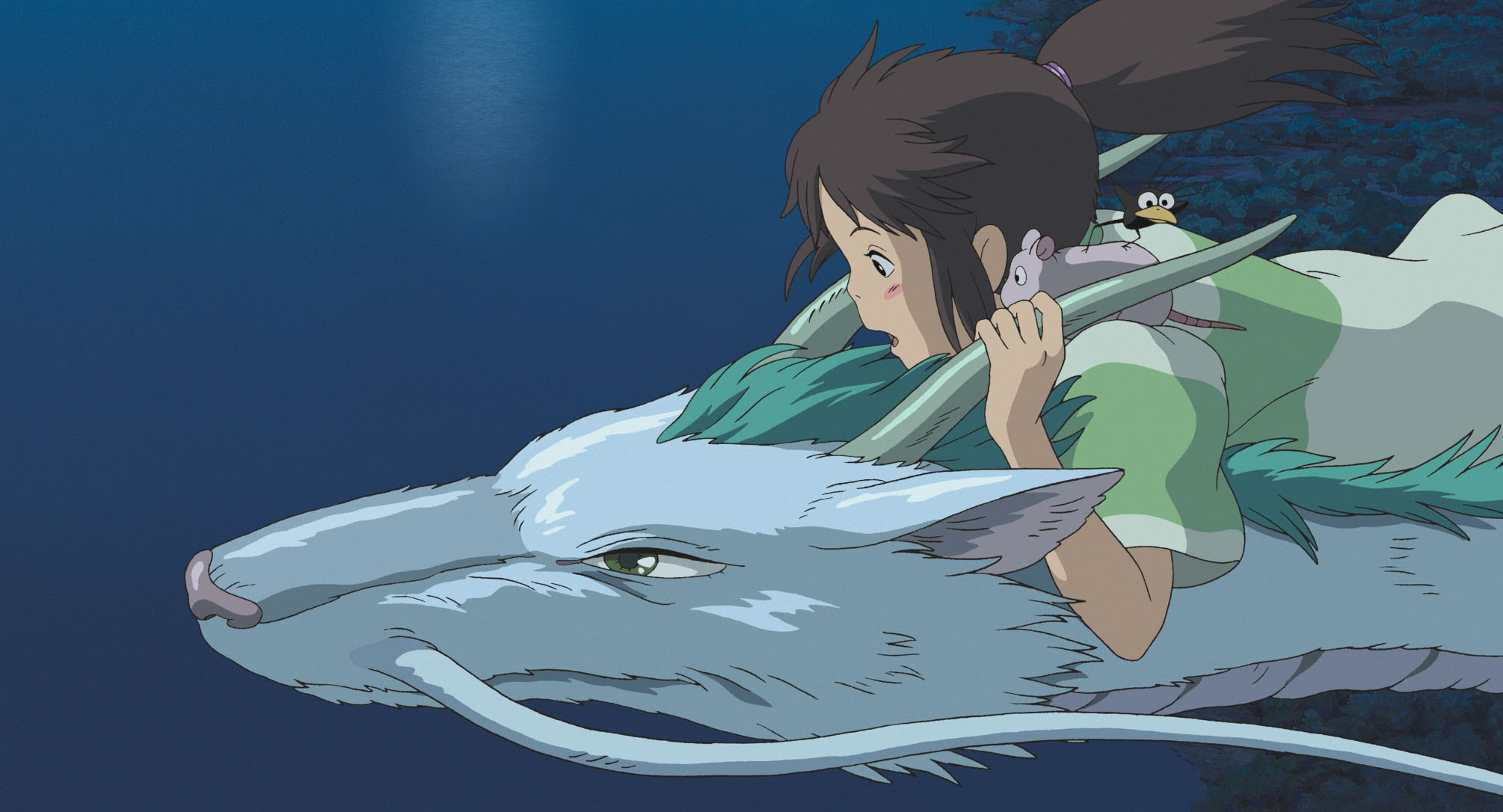
Inspired by the daughter of his friend, producer Seiji Okuda, who came to visit his home each summer, this is the tale of Chihiro, a girl whose family has just moved away from the city and everything she knows. While she journey’s towards her new home with her parents, they stop to find somewhere to eat, but what she stumbles upon is a world of curiosity, strange characters and magical creatures.
To say any more would be to spoil the adventure, but how could you even describe the visual storytelling in word? With each scene, the world grows and grows, becomes stranger and stranger and all you want is to see what manner of beasts and spirits will be next. It could easily come across as absurd, but like through the eyes of Chihiro, we view it all with child-like acceptance.
Something this film could never lack, is charm. You could watch the film 100 times and still pick up on little details and small moments of genuine surprise. It is often said that the truly great films that stand the test of time, are ones that no matter how many times you watch them, you never tire of them. Spirited Away is one of those exceptional films that no matter how many times you watch it, it just gets better.
Choosing a favourite Ghibli movie is hard, and to be honest redundant, but if you choose this, you could never be called wrong.
_
_
The Favourite

Director: Yorgos Lanthimos
Starring: Olivia Colman, Emma Stone, Rachel Weisz, Nicholas Hoult, Mark Gatiss, Joe Alwyn, Jenny Rainsford
Words – Rhiannon Topham
The Favourite is horrible. By horrible, I mean the filthy, wicked kind of horrible which makes prudes feel queasy. By horrible, I mean the sort of crude material that forces my mum to look away and cover her eyes lest she witness something ‘saucy’.
By horrible, I mean it’s stupendously brilliant.
Much like the director’s first English language film The Lobster, Yorgos Lanthimos’s latest cinematic endeavour reifies the concept of love as a tragi-comedy of ludicrous proportions, a farcical rollercoaster journey of absurdity and twisted wit. And, just as discipline and expectation underpinned behaviours in The Lobster, so too does the relative de rigueur control the passions of The Favourite’s love triangle of fierce females.
Yet where The Lobster is a classic potpourri of abstract witism, The Favourite is a miasma of debauchery and period idiosyncrasy. It combines unapologetic profanity with regal mise en scene but, despite its jocular narrative, it’s by no means comic relief.
Olivia Colman’s frail Queen Anne is shackled by her own sadness and insecurity, and is practically bed-ridden by agonising gout in her legs, followed by a loss of mobility in her limbs later on. It’s also revealed in a touching display of vulnerability that the 17 rabbits she keeps in her bedroom are an attempt to fill the emotional lacuna left by the loss of 17 children in the past.
Drama and melancholy stalk the halls of the grand royal residence where the wide-eyed Abigail (Emma Stone) arrives looking for work. Her cousin Sarah, Lady Marlborough (Rachel Weisz) practically shoots herself in the foot by taking young Abigail under her wing, a reluctant display of compassion which triggers the vicissitudes of her downfall from trusted advisor and vice ruler of the country to outcast and social pariah.
The coterie of male characters still exercise the commonplace patriarchy and tall-wigged fashion of the 18th century upper classes, but they’re portrayed as somewhat asinine compared to the triumvirate of status-hungry women.
It’s testament to Lanthimos’s deliciously twisted storytelling that, by presenting the (somewhat privileged) quotidian features in the luxurious tapestry of royal life, even this repulsive line-up of merciless narcissists seem beaten by their own savagery in the fight for power and fortune.
Must See Movies: January 2019
At Reel Steel we want to make sure you’re getting the most of your cinematic enthusiasm, so each month we put together our short list of some of the best new releases, from popcorn munching explosion fests to the often weird and wonderful.
Take a look at the trailers below and see this month’s recommendations…
The Favourite
released January 1st, 2019
Early 18th century England, a frail Queen occupies the throne, whose sense of paranoia is heightened by the competing voices of two subjects vying for her affection and favour.
From director Yorgos Lanthimos (The Lobster, The Killing of a Sacred Deer), starring Olivia Colman, Emma Stone and Rachel Weisz.
One Cut of the Dead
released Friday January 4th, 2019
Things go badly wrong for a director and film crew shooting a low budget zombie movie, when a real zombie apocalypse erupts.
One Cut of the Dead opens with a 37 minute single-take shot, then turns the zombie genre completely upside down.
Beautiful Boy
released Friday January 18th, 2019
Based on the best-selling memoirs by David Sheff and his son Nic Sheff, Beautiful Boy chronicles the true and inspiring story of survival, relapse, and recovery in a family coping with addiction over many years.
From director Felix Van Groeningen (The Broken Circle Breakdown), featuring two powerful central performances from Timothee Chalamet (Call Me By Your Name, Ladybird) and Steve Carell (Foxcatcher, The Big Short, Little Miss Sunshine).
Spider-Man: Into The Spider-Verse
2018
Directors: Bob Persichetti; Peter Ramsey; Rodney Rothman
Starring: Shameik Moore, Jake Johnson, Hailee Steinfeld, Brian Tyree Henry, Mahershala Ali, John Mulaney, Nicolas Cage, Liev Schreiber, Lily Tomlin
Words – Nathan Scatcherd
It’s a good time to be a Spider-Man fan right now. The character got one of the most emotionally impactful moments in Infinity War (you know the one), with his next solo film, Far From Home, due in July next year. The new Spider-Man PS4 game by Insomniac is excellent, featuring strong storytelling and motion captured performances alongside its more visceral thrills of web-slinging and villain-punching. And now, we have Into the Spider-Verse.
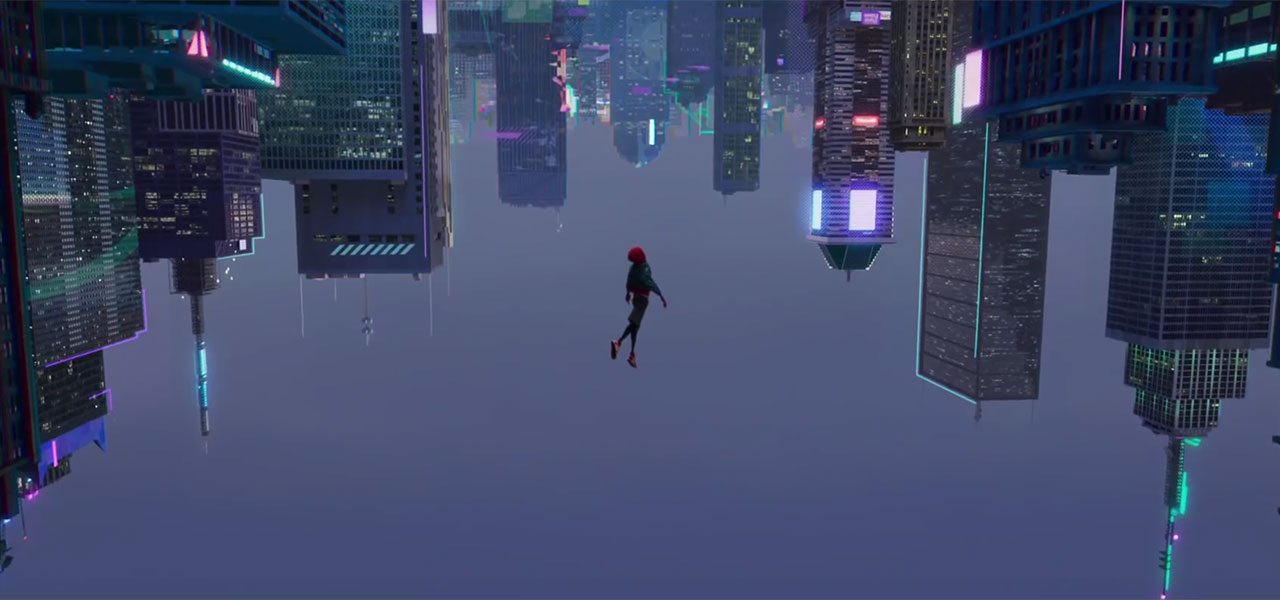
I’ll get this out of the way upfront; this film is not only the second best Spider-Man movie ever made (Sam Raimi’s Spider-Man 2 will always be the gold standard), it is easily one of the best superhero films ever made, full stop. This is an absolutely wonderful movie, packed with sharp humour and smart storytelling, tied together with a kinetic visual style which looks appropriately ripped from the pages of a comic book.
It primarily tells the story of Miles Morales, who made his comic book debut in the Ultimate Spider-Man series back in 2011. Morales is a teenager who idolises Spider-Man and – through events which won’t surprise fans of the comic, but I won’t spoil for everyone else – comes to gain spider-powers of his own and must step up as a new Spider-Man. There follows a story involving multiple Spider-people from various alternate universes, all reliant on the newly super-powered Miles to get back to their own dimensions.
The voice cast are all on top form, grounding the madcap visual style with genuine emotion and selling the comedy and pathos in equal measure. The most impressive thing the film achieves is this very balance; the humour (replete with winks and nods to other Spider-media) consistently lands, while never overpowering some real heart-rending moments and, ultimately, a sense of sheer ecstatic joy.
Into the Spider-Verse mines how much pure fun Spider-Man and the world he inhabits can be. Its tale of clashing dimensions and multiple Spider-folk moves along at such an infectiously lively pace, filled with such likeable and well-drawn characters, that it feels effortless.
For all the spectacle of Into the Spider-Verse, and for all the ways it honours the character and the mythos, this isn’t a film purely for those who love Spider-Man already. Those who do will no doubt adore it just as I did, while those who aren’t fans already may well find themselves converted by this.
The film’s ultimate message – that “anyone can wear the mask” – speaks to the best sides of all of us, collectively. It is an ebullient ode not just to Spider-Man, but to everyday heroism; to the capacity for nobility and compassion in everyone. It is perhaps the most uplifting, inspiring superhero film of the last decade.
 REEL STEEL
You must be logged in to post a comment.