Avengers: Endgame (spoiler-free review)

2019
Directors: Joe Russo, Anthony Russo
Starring: Chris Evans, Robert Downey Jr, Chris Hemsworth, Mark Ruffalo, Jeremy Renner, Scarlett Johansson, Josh Brolin
Words – Nathan Scatcherd
Since Iron Man all the way back in 2008, Marvel has enjoyed astonishing success with its shared cinematic universe experiment. Perhaps the ultimate legacy of the MCU will prove to be in how skilfully it has opened the eyes of mainstream film-goers – those who had previously never even heard of Rocket Racoon or Asgard – to this fantastic universe filled with its fantastic characters.
There are of course superhero films of worth that pre-date the MCU, but no other film series has so effectively and to such a broad audience made clear the fact that superheroes are vital and inspirational, and their stories can be viscerally thrilling and emotionally engaging in equal measure.
Compare today’s general perception of superheroes and comic books to that of twenty or even ten years ago, and the surge in popularity of these characters and concepts can clearly be tied to the MCU.
Now the time has come for the ‘endgame’ referred to by Tony Stark in Age of Ultron, and make no mistake; while the Marvel machine will of course keep on rolling (Spider-Man: Far From Home comes out in July, after all), this is an actual ending of sorts for the Avengers we have known and followed onscreen over the last decade.
The enraptured audience I saw it with were shrieking, clapping, crying in both sadness and joy throughout. A phone went off once, briefly. Half the room turned and stared daggers at the offending viewer, who ashamedly turned the thing off as it should have been the moment he walked into the room.
My point being that general audiences are more than just engaged with these characters. They love them, enough to actually be irritated about being momentarily distracted or taken out of the experience. As a kid who grew up feeling a little shy about his obsessive love of comic books, seeing a mainstream audience root for and connect with these characters and this universe in such a profound way warms my cold, black heart.
Endgame is the exact film it needs to be; hopeful, tragic, dark, moving, and ultimately satisfying in the way unique to longform, years-in-progress storytelling. There are so many payoffs and callbacks and nods to moments from the MCU’s history thus far that it is undoubtedly naked fan service. However crass that may sound, here it feels absolutely earned, and it works. I had tears in my eyes at several points, and there were moments particularly near the end that sent the entire room clapping and whooping.
Of course, the winking and nodding at longtime fans doesn’t mean the film is entirely predictable, merely appeasing the audience by giving us exactly what we expect at all times. Its plotting has an unusual but solid structure stemming from a very surprising opening, which effectively upends expectation simply by actually sticking to, and exploring the ramifications of, the idea of a world post-Infinity War. We spend enough time in the aftermath of the Snap that the weight upon the Avengers, and the cosmic importance of what they have to do to put things right, is very well conveyed.
Not every film can be The Big Lebowski and so not everything here is perfect – a side-plot involving Hawkeye and Black Widow doesn’t altogether land; there’s some noticeably choppy editing during a fight sequence towards the end; a couple of characters feel like they’re really only there to stand around and punch things during a huge action scene – but the cumulative effect of everything the film does right makes any shortcomings negligible.
Endgame works not only as a sequel to Infinity War, but as a glorious toast to these characters and the twenty one (!) films that preceded this one. As both celebration and elegy, it is a resounding success.
Rafiki – interview with director Wanuri Kahiu

A story of two young women forced to choose between happiness and safety, Rafiki is a vibrant and colourful film with stunning chemistry between its two leads.
The film was originally banned in Kenya for its bold approach to LGBTQ+ representation.
We interviewed director Wanuri Kahiu at the Showroom Cinema in Sheffield.
You can see our full film review of Rafiki >here<.
Reel Steel: I really enjoyed the film, I thought it was beautiful. It was based on a book, wasn’t it?
Wanuri Kahiu: It’s based on a book called Jambula Tree by Monica Arac de Nyeko, yeah.
RS: Where did you first come across it?
WK: My producer Steven Markovitz was trying to adopt modern African literature to film, so I started to read lots and lots and lots of stories because I knew I wanted to make a love story, and Monica’s was just the most gracious and kind and tender of all of the short stories and books I had read. So we then went and started trying to adapt it to screen.
RS: So what was the motivation behind adapting it? Was it wanting to tell this specific story on screen, or was it a combination of that and wanting to tell a love story in a different way?
WK: I just wanted to tell a love story, and I wanted to tell a tender love story. Because growing up, I hadn’t seen many versions of me or many versions of Africans falling in love on screen, and that became really kind of painful to feel like you don’t exist in cinema. So more than anything I wanted to add a story of love to cinematic history, especially coming from my side of the world.
RS: There’s a quote in the film which Kena says to Ziki about not being a typical Kenyan girl, was that quite a big thing that you wanted to represent? That there’s certain expectations – did you want to dismantle that?
WK: Yeah, for sure. I think that society kind of puts you in a box because of either your gender that you’re born into, the race or the religion that your family comes from, can be very kind of … it kind of takes away your liberty and your freedom to a certain extent to make your own choices and I wanted the girls to feel like they didn’t have to be put in this box. And even the idea of breaking down this box came from Ziki when she started saying “you could be so much more than a nurse if you wanted to be”.
You can think outside the box, you can be anything that you want to be, and you don’t have to subscribe to this idea in life that we’ve all been categorised into as women coming from that country. So it was definitely one of the ways that I wanted to break down barriers and give girls the right to imagine new lives or different lives.
RS: What have you found the reactions have been in the UK and other places that you’ve taken the film? Have audiences been surprised at the story?
WK: I think we’ve had really gracious and kind reactions to the film. There was a young woman who brought her father, and brought her girlfriend to meet her father for the first time to a screening. So it’s creating safe spaces in ways I never thought would happen, and that’s just glorious. In Cardiff there was a woman who came to watch the film because she said she wanted to understand how to be a more loving Christian, because she said there were gay people in her life that she loved and she just wanted to learn how to love them better, and was looking for ways and conversations to kind of start that, and that’s why she came to watch the film.
So people come with many different expectations and want to get so many different things from the film and it’s wonderful that the film is able to meet them at their need. We’ve had wonderful, genuinely wonderful responses.
RS: That’s really powerful, the fact that people are using the film to start their own conversations and engage in a bit of self-reflection really. Did you envisage that happening?
WK: No, you don’t – you can’t, how can you? Because you don’t know how anyone is going to react apart from yourself.
RS: Especially with everything that happened with the making of the film and after.
WK: The making of the film wasn’t part of the problem, it was the release of the film that was more complicated. But yeah, you don’t know what to expect, you don’t know how the film will affect anyone or how it will move or even if it will be popular or watched – you don’t know that at the beginning of the film. So for all of these things to happen it was truly, truly glorious.
RS: Religion plays such a big part of the film. I read an interview that you did where you said that homophobia is very un-African. Have you noticed any progression since the film and the whole conversation that it’s started?
WK: When the ban was lifted for seven days in Kenya, lots of people came to watch the film and then brought their families to watch the film and then came out to their families. Which is huge, because we come from quite a conservative and either Christian or Muslim country depending on where you are, and just the strength and the courage for people to come out, and for people to be able to use the film as a tool is extraordinary. And we also know the film was mentioned as part of the decriminalisation of homosexuality which is an ongoing case that is going to be decided in May. So yes, I think that the film is making differences and is being used and spoken about in really wonderful ways. I couldn’t have imagined it.
RS: Is that something you want to take forward with future projects?
WK: Well, that wasn’t the intention with this film, I was just trying to make art you know? And then that art resonated. I would love my art to continue to have resonance, but the reason that I create is because I’m an artist and because it’s my default to create and it’s the only way I make sense of the world. And I want to be better at that, I want to be better at creating work that is just beautiful and moving and has a place in the world but is also full of hope and joy, because that’s the only thing that I put on my work, is its ability to create hope and joy.
RS: That is amazing. Colour plays a really big part in the film, was that symbolic of the vibrancy of their relationship or was that something that you wanted to reflect of African culture?
WK: I think that the neighbourhood that we shot it in in Nairobi was quite colourful already – it’s really hard to escape colour in Nairobi. The way that we then used the colour was to say that this colour was a part of the noise of the world that they live in, and then when they were together we would bring down the colour slightly and make it more subtle and a little softer to represent their sense of freedom and their peace when they were together. So colour became very much a part of the language, but we knew that was going to happen when we started shooting it. We used the costume in the same way so that the girls started to look more and more — to correspond. To be, not similar, but they would match, they would reflect each other in a certain way as the relationship progressed and then they were in disharmony towards the end when things happen and we just wanted to be able to use the colour and the vibrancy of the colour and that particular neighbourhood to tell the story.
RS: Your AFROBUBBLEGUM movement – what’s next for that?
WK: One of the things that AFROBUBBLEGUM is doing is — we just termed the concept and then it kind of became a genre and other people have adopted it and are referring to their own work as AFROBUBBLEGUM because joyful, fun and it’s frivolous. So there is a festival called Africa Nouveau that happens every year that has taken AFROBUBBLEGUM as its chief concept, as the way it explains itself. So every year, for three days there is a celebration of joy and frivolity and fantastical elements of Africa and that is something that will carry on!
See our film review of Rafiki >here<.
You can find full listings of UK screenings of Rafiki here:
www.ayadistribution.org/upcoming-screenings
Mid90s

Director: Jonah Hill
Starring: Sunny Suljic, Lucas Hedges, Katherine Waterston, Na-kel Smith, Olan Prenatt, Gio Galicia, Ryder McLaughlin, Alexa Demie
Words – Christian Abbott
While being born in the 90s, I always considered myself a 2000s kid. One of my earliest memories is seeing the millennium come in, and all my experiences of adolescence came through the 10 years that followed. One discovery was my love of film, much like our impressive lead Sunny Suljic who play’s Stevie. My obsession became cinema and his, skateboarding.
The film follows 13-year-old Stevie in the summer heat of LA. We watch his journey as a lonely and troubled boy through many experiences he would never forget, and a group of friends he’ll never be able to.
Hill chose to shoot the film on 16mm in a 4:3 ratio, similar to other recent releases such as “A Ghost Story” and “Mommy”. It leads itself well here, firmly placing itself within the time and place of the narrative and often feeling like home video with immense nostalgic value. And nostalgia is the glue that holds this film together.
The direction here has been done with such authentic honesty and emotional resonance that it feels true to life. Every aspect from the aforementioned cinematography, to the 90s soundtrack and the completely naturalistic performances from a range of talented young actors, that you can see Hill is coming from a personal place.
Hill clearly wears his influences on his sleeve, and while the story of a boy becoming a man is something we have seen many times before, this is told in such a tight and effective manner it feels fresh and original. In fact, the film never indulges in itself, with a fast 85 minute runtime; it’s over all too soon.
This directorial debut is an impressive first outing. It can often go one of two ways when an actor decides to head behind the camera, but this shows a lot of promise and talent. It will be exciting to continue to watch Jonah Hill explore new narratives and build off this great foundation.
Rafiki

Director: Wanuri Kahiu
Starring: Samantha Mugatsia, Sheila Munyiva, Neville Misati, Nice Githinji, Nini Wacera, Muthoni Gathecha, Charlie Karumi, Jimmy Gathu, Vitalis Waweru, Githae Njogu
Words – Rhiannon Topham
Modern cinema is experiencing an exciting political renaissance. Daring narratives that tackle some of society’s most prevalent taboos are filling the lacunae left by the contextually hollow big blockbusters, bringing with them the lived realities of marginalised factions and hitherto ignored communities across a rich diversity of populations.
Enter Rafiki, an urgent message about love and gendered expectations in more secular parts of the world. Director Wanuri Kahiu’s nuanced tale of teen romance was banned in her native Kenya, where the film is set, rejected by the Kenya Film Classification Board for its “clear intent to promote lesbianism in Kenya contrary to the law”. This is a nation where the state does not recognise same-sex relationships in the law, and sodomy is a punishable offense of up to 14 years imprisonment – facts that make Rafiki’s unflinching commitment to LGBTQ+ intimacy all the more audacious.
The film follows tomboyish Kena in her conservative Nairobi neighbourhood, where she helps her father run his small convenience store, plays card games and football with her laddish friend Blacksta (who has eyes for Kena and tells her she’ll “make a good wife. That’s why I like you”) in her downtime and awaits important exam results that will allow her to start training as to become a nurse. She meets and falls in love with the ebullient and colourful Ziki, the daughter of her father’s rival in the race for local election, a partnership which piques the attention of nosey locals and garners a great deal of jealousy from Ziki’s friends.
As the two become entangled in a thorny web of unforbidden love and grapple with the dichotomous dilemma before them – to be happy and honest about their relationship, or to be safe and subtle, disguising their intimacy as friendship as the title alludes to (rafiki means ‘friend’ in Swahili) – they realise that traditional confines of what women, specifically Kenyan women, should want and who they should become not only contradict their self-perceptions, but they also clash with societal expectations of what the youth of today should achieve and strive for. When Kena and Ziki first find a moment to themselves, the former confesses that the latter is “not the typical Kenyan girl” – this, they concur, is the stay-at-home mother and homemaker, not the young professional or globetrotter they have in mind for themselves.
Between secretive smooches in an abandoned camper van, our young romantics are searching for something “real”. This is a central theme underlying the film as a whole, which confronts the difficulty of negotiating a fundamentally religious space populated by pious people while simultaneously trying to remain true to oneself. Religion is, of course, incredibly important in Kenyan culture, and as such is a major feature in Rafiki’s narrative. It’s because of this prevalence that Kahiu’s questioning of the path laid by religion for guiding the trajectory of one’s life (or an entire culture, in this instance) is particularly intrepid.
A colourful and sanguine testament to the talent of African art and culture, Rafiki is a welcome addition to the burgeoning LGBTQ+ canon which celebrates intimacy and womanhood in an environment seldom seen on screen.
See our interview with director Wanuri Kahiu >here<.
You can find full listings of UK screenings of Rafiki here:
www.ayadistribution.org/upcoming-screenings
Mad Max – 40th Anniversary

1979
Director: George Miller
Starring: Mel Gibson, Joanne Samuel, Hugh Keays-Byrne, Geoff Parry, Steve Bisley, Tim Burns, Roger Ward
Words – Rebecca Kirby
If like me, your first exposure to the Mad Max franchise came via Mad Max 2: The Road Warrior, it’s predecessor 1979’s Mad Max sure looks and feels like a very different movie.
Set in a dystopian near future where resources are scarce and law enforcement is stretched to the limit, rather than the scorched post apocalyptic landscape of The Road Warrior, the world hasn’t yet fallen apart for Mel Gibson’s Max Rockatansky. Here Max is a highway patrolman, a member of Main Force Patrol, facing the near impossible task of policing roads now owned by violent motorcycle gangs.
The MFP’s attempts to bring one such gang led by Bubba Zanetti (Geoff Parry) and Toecutter (Hugh Keays-Byrne) to justice leads to a brutal ambush on Max’s friend and colleague, Jim Goose. Horrified by the attack on Goose and increasingly frustrated with the ineffectiveness of the MFP, Max retires to live a quiet live with his wife, Jessie and baby son, Sprog. When an encounter between Max’s family and Zanetti and Toecutter ends in violence and horrific tragedy, Max is pushed over the edge and sets out for revenge.
Known for it’s iconic vehicle chases and crashes, which after 40 years still remain spectacular, Mad Max is a difficult movie to categorize. It’s a revenge movie that only plays out in the last 20 minutes of screen time. It’s an action movie where the action only happens in short, sharp bursts. It’s Ozploitation. It’s essentially a Western but with one key difference. The Wild West represented a frontier to be conquered and tamed, while the world that Max inhabits is regressing back to a wild lawlessness. Max cannot establish law and order when civilisation is on the verge of collapse. It’s telling that Max’s reaction to the death of his friend is not to seek revenge or to fight to bring the perpetrators to justice, but to walk away from the MFP and take care of his family.
It has a style and tone that is unique amongst the Mad Max series. The adrenaline rush of it’s successor The Road Warrior and the 2015 reboot Fury Road is replaced by an almost melancholy atmosphere, this being perhaps a reflection of director George Miller’s background as an emergency room medical doctor. It’s a much more stripped down experience, a simple tale of loss, revenge and the devastating impact of both. The hardened Max we encounter in The Road Warrior is born of pain and loss here. By taking vengeance for the loss of his family, Max loses much of himself. His final encounter with young gang member Johnny the Boy, who reluctantly killed Jim Goose after being coerced by Zanetti and Toecutter, is shocking in it’s callousness and even served to inspire the ‘Saw‘ series of movies. Max may well don his MFP uniform to chase down the gang members responsible for his devastating loss but it’s revenge not justice that drives him.
It’s this that maybe divided opinion of the film upon it’s release in 1979 and saw it banned in New Zealand until 1983 and in Sweden until 2005. The mixed reception still saw Mad Max win three Australian Film Institute Awards in 1979 and hold the record for the most profitable film ever made taking a Box Office of $100 million, entering the Guinness Book of Records at the time.
The influence of the Mad Max series in popular culture can be seen in everything from cartoon characters to video games, from movies to music videos but here is where it all began.
Must See Movies: April
At Reel Steel we want to make sure you’re getting the most of your cinematic enthusiasm, so each month we put together our short list of some of the best new releases, from popcorn munching explosion fests to the often weird and wonderful.
Take a look at the trailers below and see this month’s recommendations…
Mid90s
released Friday April 12th, 2019
Mid90s follows Stevie, a thirteen-year-old in ’90s-era LA, who spends his summer navigating between his troubled home life and a group of new friends he meets at a skate shop.
Keen to be accepted both by his older brother and the older skater crew who take him under their wing, this coming-of-age story brings a documentary-like authenticity alongside an evocative soundtrack.
Avengers: Endgame
released Friday April 26th, 2019
This is it, it has all come down to this…
After the events in Infinity War saw Thanos carry out his aim to “balance” the universe, the remaining Avengers must figure out a way to undo the damage caused and defeat Thanos once and for all.
Revisit our look at Infinity War >here<.
Eighth Grade
released Friday April 26th, 2019
Thirteen-year-old Kayla endures the tidal wave of contemporary suburban adolescence as she makes her way through the last week of middle school – the end of her thus far disastrous eighth grade year – before she begins high school.
A hilarious and heart-warming coming-of-age comedy-drama through the trials and tribulations of young adulthood.
Captain Marvel
2019
Directors: Anna Boden, Ryan Fleck
Starring: Brie Larson, Samuel L. Jackson, Ben Mendelsohn, Jude Law, Annette Bening, Lashana Lynch, Clark Gregg, Rune Temte, Gemma Chan, Algenis Perez Soto, Djimon Hounsou, Lee Pace, Chuku Modu, Matthew Maher, Akira Akbar
Words: Toni Stanger
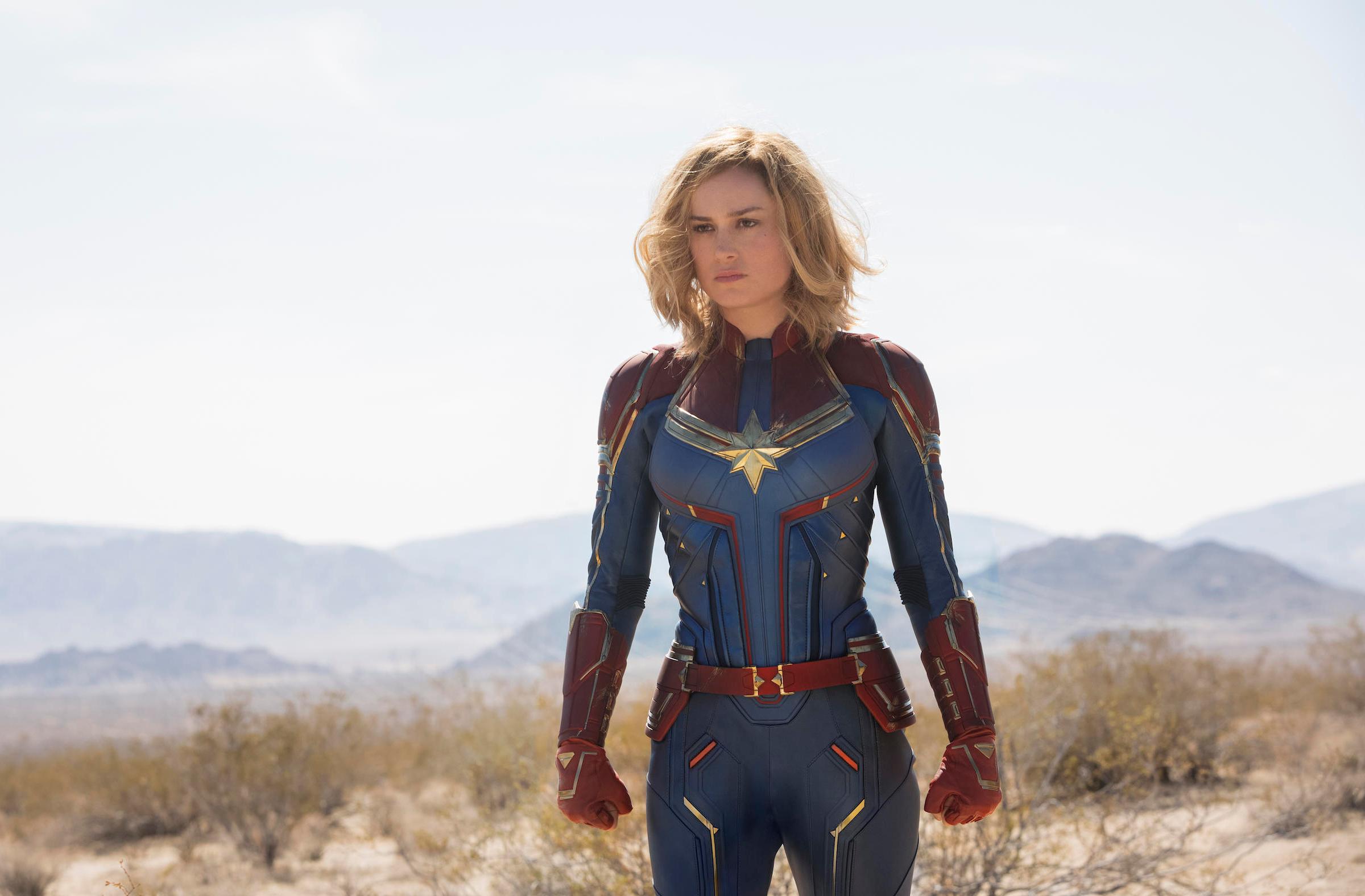
As the first female-fronted superhero film from Marvel Studios, it’s no coincidence that Captain Marvel arrived just in time for Women’s History Month and International Women’s Day. Being the first of its kind, Captain Marvel has faced unfair high pressure to perform better than other origin stories within the Marvel Cinematic Universe (MCU).
Since the release of its first poster, many men have been calling for Oscar-winning-actress Brie Larson to smile more (which she responded to perfectly). The worst backlash, however, came from a misinterpreted interview with Marie Claire. Larson noticed her press days were filled with white men and she wanted to diversify them in order to provide fresh perspectives from LGBT people and people of colour. Many men took this as a personal attack which resulted in them review bombing the film on Rotten Tomatoes before it had even been released. Larson had to clarify that she didn’t want to remove white men from the table, but add more people to it.
In Captain Marvel, there’s a very fitting scene where a man tells her to smile. As this was already in the film, an interviewer asked Larson if art was predicting life, but she said: “No, that’s just depiction of the female experience.” Despite the rising Girl Power attached to the film’s marketing, the film itself keeps this very subtle. It’s a subtlety that speaks to women on a personal level, one that some men might not even notice. But if they do, it really is telling of what the female experience is like and shouldn’t be hidden just because Captain Marvel is a powerful superhero.
We first meet Carol Danvers on the Kree planet of Hala where she is known as Vers (pronounced Veers). She remembers nothing from her past, but is plagued by dreams – or perhaps nightmares – of scattered memories. During the past six years, Carol has been training with the elite Starforce to defeat the Skrulls, an alien race of shape-shifters who have been at war with the Kree for centuries. During her sparring matches with mentor Yon-Rogg (Jude Law), she is often told to control herself as her emotions make her weak. Kree soldiers tend to remain impassive, but women are usually scolded by letting their emotions get the best of them in any situation. We get the feeling that Carol doesn’t like being told what to do.
Carol heads to the Kree’s Supreme Intelligence to find out if she’s ready to join Yon-Rogg’s team on their next mission. As the Supreme Intelligence takes on the form on the person you admire the most, Carol is puzzled when she comes face-to-face with the woman (Annette Bening) she sees in her dreams – a woman she doesn’t remember. Approved for the mission, Carol is captured in battle by Skrull commander Talos (Ben Mendelsohn), who digs around in her memories for a key detail they need. Writer-director duo Ryan Fleck and Anna Boden effectively give us a sneak into Carol’s past without lengthening the film’s runtime with filler. After putting up a good fight, Carol escapes and crash-lands on Planet C-53, also known as Earth.
It’s 1995. There are Blockbuster stores, dial-up internet, pagers and grunge fashion. There’s also Samuel L. Jackson reprising his role as S.H.I.E.L.D. Agent Nick J. Fury (with spectacular de-ageing effects). Still having both of his eyes, Captain Marvel serves as his origin story as well as Carol’s. Not knowing who she is or where she belongs, it’s here on Earth where Carol’s story really kicks off. Larson and Jackson take on a buddy-cop dynamic and their on-screen chemistry is electric. The 90s setting is a nostalgia-filled-dream as we get to laugh at Carol typing slowly on an old computer in an internet café. It’s also delightful to watch Fury embrace his inner cat lady with the introduction of Goose the cat who is adorable and full of surprises.
Larson is captivating as Captain Marvel, creating believable relationships with each cast member. The introduction of her best friend Maria Rambeau (Lashana Lynch) and her 11-year-old daughter Monica (Akira Akbar), who calls her “Auntie Carol”, is something very special. It’s refreshing to see a female friendship be explored instead of a romantic subplot, especially when romance tends to be included even when unnecessary. It’s also empowering that Maria reminds Carol of who she is, instead of a male love interest. It’s a breath of fresh air to take a step back from the male gaze, which is perhaps why Captain Marvel may resonate more with women than it will with men. Maria and Monica are both strong women whose roles are played perfectly.
There are excellent 90s music cues – ‘Only Happy When It Rains’ by Garbage stands out the most – but not all of them work. There’s a fight scene to No Doubt’s ‘Just A Girl’ where some moves are choreographed to the song, but not the sequence as a whole, which leaves it feeling misplaced. The music is something that could’ve really spiced up occasional moments of blandness, yet it fails to integrate it as well as the Guardians of the Galaxy films did. Instead, the directors seem to keep the overall feel similar to their previous works (Half Nelson, It’s Kind of a Funny Story) when the atmosphere should’ve been more fun and fulfilling.
Whilst Carol had her identity taken away from her, it never seemed to hinder her. When she falls down, she always gets back up. At the end, Carol Danvers knows who she is. But do we? She is a fairly guarded character, especially considering her Kree training, but we see the snarky, fun and loving sides of her personality come out throughout the film. Carol’s main character development comes from her finally learning how to harness her powers, but hopefully we’ll see more of her fun side shine through in Avengers: Endgame as she interacts with the other characters. Will we get banter with Tony Stark? We can only hope. There’s no denying that Captain Marvel is insanely powerful.
Whilst it could’ve been a lot more exciting, Captain Marvel holds attention with its twists, turns and effective characters. It’s a classic origin story that aligns well within the MCU. It serves as a great bridge to Endgame whilst delivering a solid introduction to one of the most powerful characters in the universe. It should be cathartic to watch Captain Marvel battle Thanos, who is one of the most evil and fleshed-out villains in the franchise. This is what we’ve all been waiting for.
Ladies and Gentlemen, Captain Marvel has finally arrived.
Must See Movies: March

At Reel Steel we want to make sure you’re getting the most of your cinematic enthusiasm, so each month we put together our short list of some of the best new releases, from popcorn munching explosion fests to the often weird and wonderful.
Take a look at the trailers below and see this month’s recommendations…
The Kindergarten Teacher
released Friday March 8th, 2019
When a kindergarten teacher discovers what may be a gifted five year-old student in her class, she becomes obsessed and tries to protect him from neglectful parents.
She soon finds herself risking her career and family to nurture his talent.
Captain Marvel
released Friday March 8th, 2019
As a galactic war between two alien races reaches Earth, Carol Danvers finds herself and a small group of allies at the centre of the conflict.
See her journey as she becomes Captain Marvel, one of the universe’s most powerful heroes.
An origin story ahead of the upcoming Avengers: Endgame released in April.
Us
released Friday March 22nd, 2019
Along the Northern California coastline, a woman returns to her beachside childhood home with her husband and their two children for a summer getaway.
After spending a day at the beach, the family return to their vacation home – but when darkness falls, they discover the silhouette of four figures outside.
Us pits an endearing family against a terrifying enemy: doppelgängers of themselves.
After sending shockwaves across contemporary culture and setting a new standard for provocative, socially-conscious horror films with his directorial debut, Get Out, Jordan Peele returns with another original nightmare.
– SPECIAL EVENT –
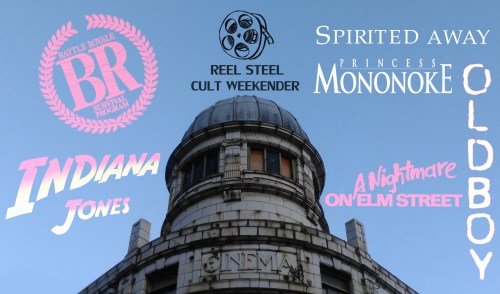
The Reel Steel Cult Weekender takes place Friday March 15th – Sunday March 17th at Sheffield’s historic Abbeydale Picture House.
Featuring cult and classic films across various genres, including Studio Ghibli on 35mm.
Details >here<.
A Northern Soul screening + Q&A
Thursday March 21st
A Northern Soul returns to Sheffield following its World Premiere at Sheffield Doc/Fest 2018, with a screening at Regather Works featuring a Q&A with the films protagonist Steve Arnott.
Details here:
https://regather.net/event/film-a-northern-soul-qa-with-sean-mcallister/
“Stunning work… An instant classic”
– Reel Steel
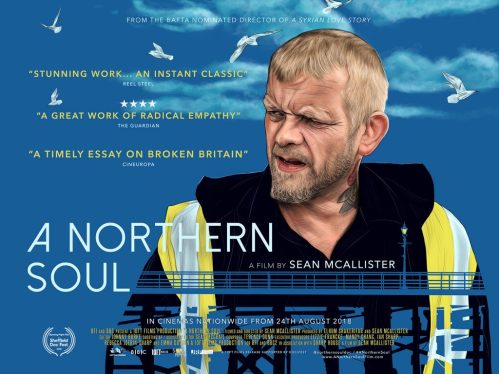
see our feature review of the film >here<.
Alien: 40th Anniversary

1979
Director: Ridley Scott
Starring: Sigourney Weaver, Ian Holm, John Hurt, Tom Skerritt, Veronica Cartwright, Yaphet Kotto, Harry Dean Stanton, Bolaji Badejo
Words: Nathan Scatcherd
Living as we do in the year 2019, it’s difficult to imagine the sheer force Alien must have had upon audiences when it was released back in 1979.
Coming seemingly from nowhere, as though sprung from one of its titular creature’s eggs, the film has had such a cultural impact since then that it’s easy to live in a state of ignorance, unaware of just how much singular influence this innocuous little “intergalactic haunted house thriller set inside a spaceship” (to quote Roger Ebert) has had on science fiction, horror movies, and popular culture in general.
What’s especially impressive is that it came not long after the sci-fi juggernaut that is Star Wars had just exploded onto the scene. Released just two years previously in 1977, Star Wars (A New Hope) was a bright, family-friendly affirmation of science fiction’s power to inspire wonder, and create a sense of huge scope and adventure.
Alien, while being as much a sci-fi film (insofar as it too is concerned with the usual genre trappings of space travel and yes, extraterrestrial life) went totally the opposite way. It’s dark, claustrophobic, bloody, and thick with scary, ominous atmosphere as opposed to flash and spectacle.
Alien’s real winning stroke lies in its stripped-back simplicity. It doesn’t waste any time and feels perfectly paced, with a simple plot which just nicely sets up the horror to come.
The crew of a mining vessel, ‘the Nostromo’ (owned by the shadowy Weyland-Yutani corporation), find what appears to be a distress signal; they investigate and unwittingly bring a very nasty alien life-form back onboard; people start dying and Sigourney Weaver’s badass warrant officer, Ellen Ripley, faces off against the creature while attempting to escape the ship.
That’s it – no branching subplots; no grand, operatic mythos. The film takes just enough time to build tension and mount a sense of dread that – at least for the first twenty minutes or so – it perhaps qualifies as something of a slow burn. However, this shouldn’t be confused with heel-dragging. The film steadily ramps up the feeling of being adrift in space, trapped and eventually hunted by something utterly without mercy. To again analogise it in terms of its titular creature, Alien is lean and fierce and isn’t f*cking around.
Of course, this isn’t to say that it’s devoid of atmosphere or style. In fact the opposite is true. Whereas sci-fi of the time was focused on making the future look futuristic, with a uniformly shiny aesthetic, imagining a world of tomorrow filled with gleaming robots and high-tech spacecraft, Alien’s vision of the future looks and feels much dirtier and oilier; more grounded and blue-collar. The Nostromo is an old, creaking hulk of a vessel, not at all some sleek starship, with a decidedly low-tech aesthetic. Simple, blocky computers beep and hum; pipes noisily belch steam; the place feels authentically lived-in and functional.
And as we all know, the Alien itself is one of the creepiest and most iconic creature designs of all time – although today it may be a little obvious in certain shots that, yeah, it’s a guy (Bolaji Badejo) in a suit, director Ridley Scott still uses shadow and reserved, teasing editing tricks to present the Alien in a palpably threatening and unsettling way. We’re never really allowed a good, clear look at it until the film’s final scenes, heightening the disorientation and terror that Ripley and the crew would be feeling and putting us right there with them.
Swiss surrealist HR Giger designed the Alien as a kind of overtly sexualised threat, with its deadly phallic tongue/second mouth and sleek, almost feminine body, and of course the infamous ‘Chestburster scene’ makes almost explicit the theme of forced pregnancy and birth which would go on to manifest itself even more in the sequels. Looking like a slick, oily cross-breed of the mechanical and the organic, the Alien is an enduringly fascinating thing just to look at, and be afraid of.
Alien wouldn’t be half the film it is without a compelling protagonist to root for, though. Although nowadays Weaver’s Ellen Ripley is so synonymous with the franchise that it seems a given that it was always going to be her as the film’s ‘final girl’ (to draw a parallel between Alien and slasher movie convention), what’s interesting when watching the film back now is how it doesn’t immediately, obviously cast her as such.
To audiences in ’79, it must have felt like any one of the crew could be its main ‘hero’, with Tom Skerritt’s captain Dallas a seeming red herring (his stoic, level-headed pragmatism marks him out as a classical masculine hero, a prime protagonist).
Ripley is more or less on the sidelines to begin with, gradually coming into her own and eventually proving through smarts and nerves of steel that she is as much a survivor as the Alien; a theme which is played on even more in the follow-up Aliens, where she makes the leap from ‘tough, capable survivor’ to ‘full blown action hero’.
Battle Royale

2000
Director: Kinji Fukasaku
Starring: Tatsuya Fujiwara, Aki Maeda, Tarô Yamamoto, Takeshi Kitano
Words: Katherine Guest
Battle Royale, a Japanese dystopian thriller, is a film in which violence is made into a spectator sport. More specifically, it is about children on children violence as a result of government legislation.
In the two decades since its release, the film has gained cult status globally and has been met with critical acclaim. Despite this, it was met with great controversy and did not have a cinematic release in the United States or Canada until eleven years after its initial release.
Based on the novel of the same name by Koushun Takami, Battle Royale is set following major economic decline and mass unemployment. It’s a satirical, yet bloody and horrible, portrayal of the Japanese government’s fear of and reaction to their malcontent youth. In an effort to restore discipline and cooperation in their young, the ‘BR Act’ is passed; each year, a class of school children is chosen at random. They are sent to an uninhabited island for three days where they are told to kill each other until there is one winner. This is an act of capital punishment on young people for their crimes of disobedience.
The horror of Battle Royale does not lie solely in its gore and violence (which it has in abundance). It explores or references a myriad of teenage issues amongst Class 3-B, who are the unlucky group marooned on the island for the duration of the film. Yes, the aim of the game is survival at the detriment of your friends and classmates. But despite this, the adolescents remain concerned with their friendship groups, unrequited crushes, unfaithful partners, and whether they or their classmates are virgins.
These are a very familiar set of issues interwoven with the contrastingly bleak reality of children forced to brutally murder each other for sport by a disdainful government. In turn, this makes the graphic violence between the children less alien to the viewer, and the dystopian world that much more unsettling.
Given Battle Royale’s cynical attitude to the Japanese government, it’s not entirely unsurprising that the film was criticised by a number of government officials upon its release. Many described the film as ‘crude and tasteless’, and members of the Japanese parliament (unsuccessfully) attempted to ban the film’s release. It was also accused of contributing to crime amongst the youth.
Ironically, this controversy only served to aid the film’s commercial success as the publicity garnered further interest in it. As the story involves children and the actors were largely teenagers themselves, the film was criticised as being harmful to the youth. Due to the film’s rating, under 16s could not view it in cinemas. Despite this, director Fukasaku actively encouraged younger teenagers to sneak into screenings – encouraging the same disobedience that is so grotesquely punished in Battle Royale.
Battle Royale is a blend of the brutal and the banal. It’s a coming of age film with a dystopian horror setting that has gained its cult following for being smart, savage, and thoroughly entertaining.
Who will survive?
Who will turn on their friends?
Who will lose their virginity before they’re brutally murdered?
Class 3-B are about to experience the worst three days of their lives.
 REEL STEEL
You must be logged in to post a comment.