Leeds International Film Festival 2019

The Leeds International Film Festival is one of the UK’s premiere platforms for new and world cinema.
Taking place every November at venues around the city, see our look at some of the films featured at the 2019 festival
– click on the film title to see our review.
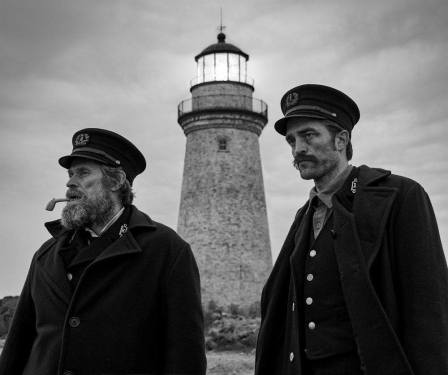
A visceral, hypnotic and hallucinatory tale.
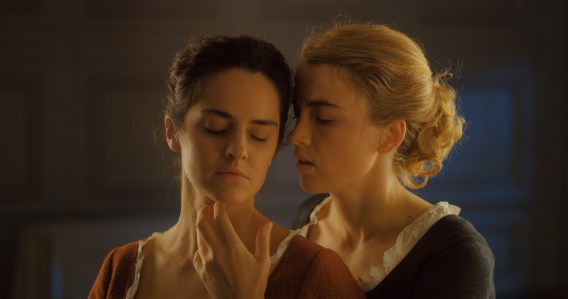
From the chemistry between the all-female cast to the masterful direction and prophetic script, every element works in harmony.
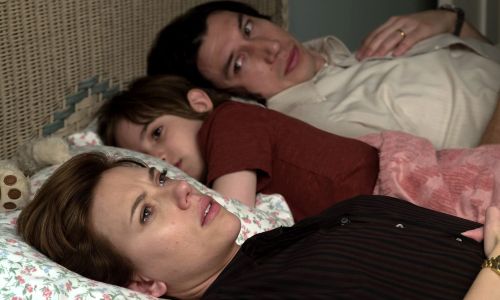
A story about breaking up, while trying to keep it together.
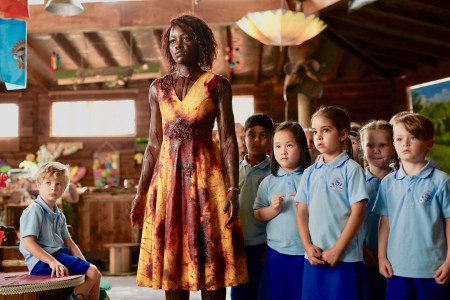
A bloody, imaginative and immensely enjoyable take on the zombie film.
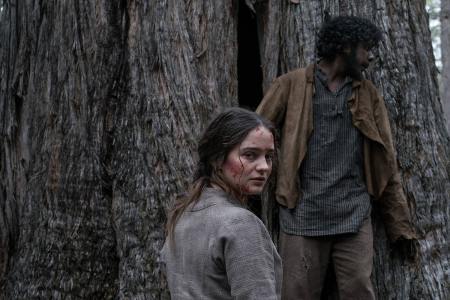
A film that is not only haunting and powerful, but vital.
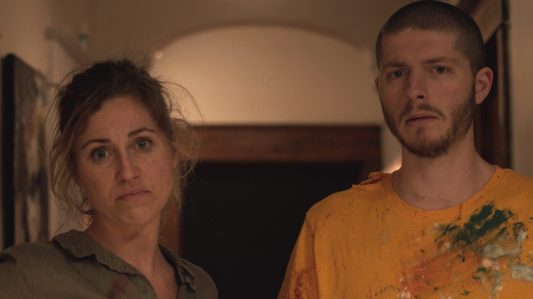
A sharp and moving feature – smart, touching and worth your time.

Showing a different side to the things that go bump in the night.
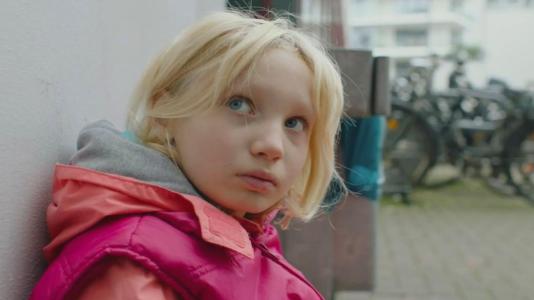
A unique moral dilemma with a standout performance from its lead.

An at once clinical and yet strangely tender story, Dogs Don’t Wear Pants is appropriately a film about contrasts.
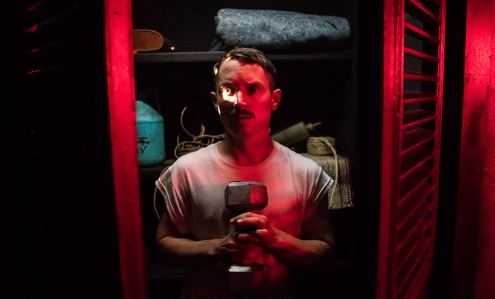
A grimy, bloody, off-kilter thriller with moments of pitch black comedy.
See the full Leeds International Film Festival 2019 programme here:
https://www.leedsfilm.com/film-festivals/leeds-international-film-festival/liff-2019-programme/
Must See Movies: November

At Reel Steel we want to make sure you’re getting the most of your cinematic enthusiasm, so each month we put together our short list of some of the best new releases, from popcorn munching explosion fests to the often weird and wonderful.
Take a look at the trailers below and see this month’s recommendations…
Sorry We Missed You
released Friday November 1st, 2019
Ricky and his family have been fighting an uphill struggle against debt since the 2008 financial crash.
An opportunity to wrestle back some independence appears with the chance to work as a self employed delivery driver, but it turns out the zero-hours job offers no support, no benefits and workers must meet unreasonable targets.
The family unit is strong but when Ricky and his wife are pulled in different directions, everything comes to a breaking point.
Director Ken Loach, writer Paul Laverty and the award-winning team behind I, DANIEL BLAKE, return with another vital story for our times – a powerful exploration of the contemporary world of work, the gig economy and the challenges faced by one family trying to hold it all together.
Marriage Story
released Friday November 15th, 2019
Marriage Story is a film about breaking up, while trying to keep it together.
A reflection of something we already know and recognise, perhaps have even felt and experienced personally, but seldom have the capacity to express or represent in a genuine or meaningful way.
See our review from the 2019 BFI Film Festival >here<.
The Nightingale
released Friday November 29th, 2019
This story follows Clare Carroll (Aisling Franciosi), a young Irish convict who seeks vengeance for the brutal murder of her family at the hands of the cruel Lieutenant Hawkins (Sam Claflin) and his men.
Clare enlists the help of an Aboriginal tracker named Billy (Baykali Ganambarr), who agrees to guide her through the bush in pursuit of Hawkins in exchange for payment.
Her initial hostility towards Billy softens as she acknowledges the parallels between their plights: both have had their family, homeland, language, freedom and dignity stripped away by the British.
The Nightingale from director Jennifer Kent delivers exceptional performances, in a film that is not only haunting and powerful, but vital.
See our review from Celluloid Screams 2019 >here<.
Nosferatu (1922)

1922
Director: F. W. Murnau
Starring: Max Schreck, Gustav von Wangenheim, Greta Schroeder, Alexander Granach
Words – Eleanor Smith
Nosferatu (1922), by German director F.W. Murnau, is a textbook example of the haunting beauty and mystery seen in classic, silent horror films.
This exceptional film has stood the test of time and as a result of its success, Nosferatu has paved the way for a century of horror films.
Modern audiences may not be left afraid after watching the film, but it’s difficult not to recognise the impact this film would have had on audiences upon its original release.
The enigma in Murnau’s storytelling makes Nosferatu a chilling figure, and our imagination makes events even more unnerving. Murnau’s technique of ambiguity would influence directors for decades across the 20th Century.
Even though based on Bram Stoker’s Dracula and sharing similarities to the story, such as the slaughter on the ship and the protagonist’s experience in the Count’s home – Nosferatu is an independant story in it’s own right.
Dracula films have a common denominator, of romanticising the Count – making him desirable for characters and audiences. Whereas for Nosferatu we are more repulsed by the character’s creepy appearance. Murnau’s constant intertwining of nature through the choice of cinematography – venus fly traps, spiders eating flies and a wolf roaming through the grass – reinforces the Count to be more of a pest in the night, rather than the sensual demon he’s so often portrayed as.
Yet, we still have a young naive girl, dressed in white, who is objectified as bait, in order to kill the monster. But, as this film was made nearly a century ago, we can look at future directors exploring the Dracula tale in adapting the female protagonist’s character to a less overused stereotype.
The film as a whole is beautiful, horror is explored from all angles. It has a certain magical element to it, that has captivated audiences since its release in 1922, and viewed today as a silent film adds to the menacing feel of Nosferatu’s character.
This film will always be a classic example of the mystery and enchanting beauty that the first horrors to appear on our screen had to offer.
Extra Ordinary
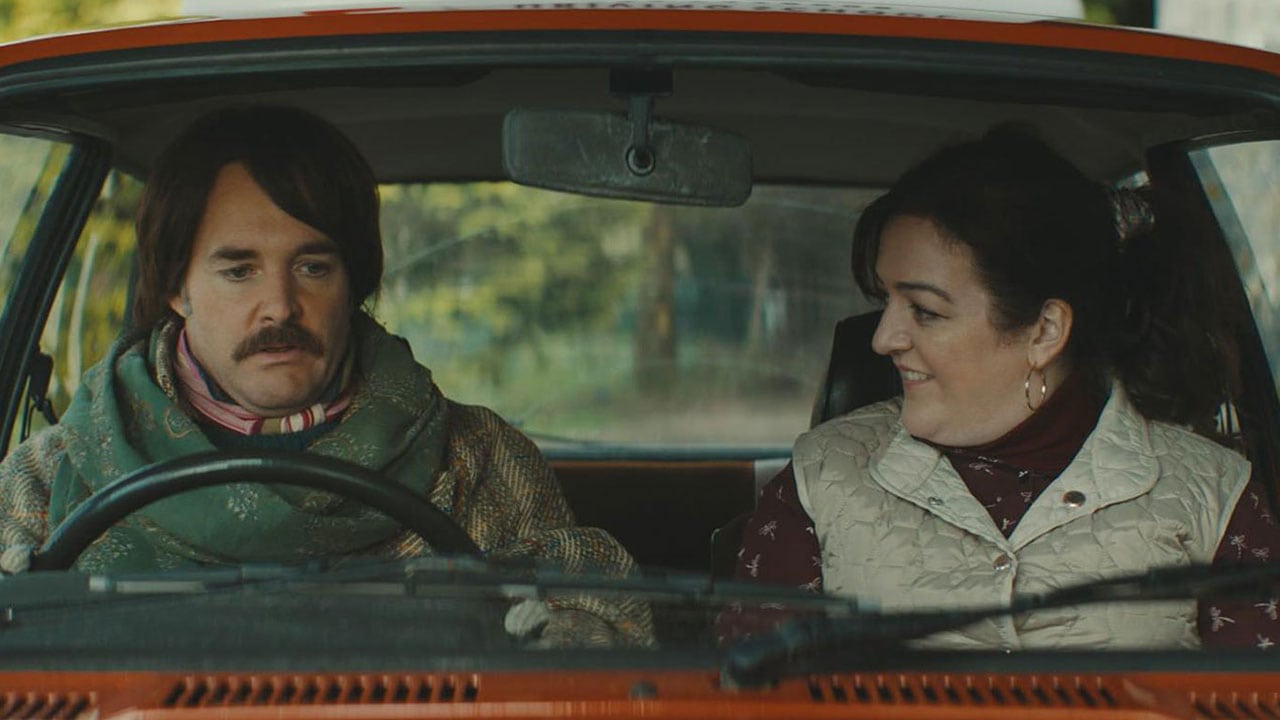
2019
Directors: Mike Ahern, Enda Loughman
Starring: Maeve Higgins, Barry Ward, Will Forte, Claudia O’Doherty
Words – Carly Stevenson
Rose (Maeve Higgins) is a driving instructor with an extraordinary talent: she can communicate with the dead. A kind widower named Martin (Barry Ward) tries to enlist her help when unexplained supernatural forces possess his teenage daughter, but Rose is reluctant to use her gift because of a family tragedy involving her late father, a dog and a puddle.
If you are trying to make sense of the last sentence, don’t bother. Just go and see this film.
Extra Ordinary has all the cosiness and warmth of a cup of tea or a knitted jumper, which is perhaps the opposite effect one expects from a film about unquiet spirits and satanic rituals, and yet, this wholesome horror comedy hits all the right notes.
Mike Ahern and Enda Loughman’s first feature bears the surrealist quality of The League of Gentleman, only without the creeping sense of unease. The ghosts in this film are belligerent, but in a local, domestic sort of way; they agitate, but they are not harbingers of doom. Even the film’s antagonist (Will Forte) is a camp, pantomime villain, complete with a spooky castle and a cape.
Consistently funny, confidently silly yet surprisingly tender, Extra Ordinary shows a softer side to the things that go bump in the night.
Little Monsters

2019
Director: Abe Forsythe
Starring: Lupita Nyong’o, Alexander England, Josh Gad
Words – Carly Stevenson
Lupita Nyong’o, Alexander England and Josh Gad star in this uplifting, indie zom-com about the terrifying responsibilities of child rearing.
After a recent breakup leaves him without a place to stay, washed-up musician Dave (Alexander England) crashes with his sister Tess and her allergen-prone son, Felix. Dave’s persistent use of ‘bad words’ and general inappropriate behaviour mean he’s no role model, but Felix clearly idolises him despite his many shortcomings. Tess, on the other hand, threatens to kick him out unless he starts pulling his weight around the house – starting with the morning school run.
Instantly struck by Felix’s beautiful and plucky teacher Miss Caroline (Lupita Nyong’o), Dave eagerly volunteers as a chaperone on the upcoming field trip to a farm. Needless to say, he is unprepared for what follows.
When a zombie outbreak at a nearby U.S. testing facility throws the trip into jeopardy, Miss Caroline and Dave lead the class to the gift shop, where they plan to hide and sing ukulele renditions of pop songs until the military arrive. Here, they encounter Teddy McGiggle (Josh Gad) – an alcoholic children’s TV personality who secretly hates kids.
Complications arise when Felix goes into anaphylactic shock after eating some snacks containing dairy. While Miss Caroline cuts her way through a hoard of zombies to get to Felix’s epi-pen, Dave realises that he needs to step up and take charge as a responsible adult. His character development from selfish man-child to superhero uncle is the beating heart of the story and his redemption feels earned, rather than forcedly sentimental.
Quite unlike any other film in its respective subgenre, Little Monsters is a bloody, imaginative and immensely enjoyable take on the zombie film with just the right balance of comedy and carnage, elevated by a charming performance from Lupita Nyong’o as the teacher we all wish we’d had at school.
The Nightingale

Director: Jennifer Kent
Starring: Aisling Franciosi, Baykali Ganambarr, Sam Claflin
Words – Carly Stevenson
In her second film, director Jennifer Kent (The Babadook) explores the horrors of colonialism with unflinching honesty. The Nightingale is a Gothic drama set mostly in the Tasmanian wilderness during ‘The Black War’: a period of violent conflict between British colonists and Aboriginal Australians in the mid-nineteenth century.
The film tells the story of Clare Carroll (Aisling Franciosi), a young Irish convict who seeks vengeance for the brutal murder of her family at the hands of the cruel Lieutenant Hawkins (Sam Claflin) and his men. Clare enlists the help of an Aboriginal tracker named Billy (Baykali Ganambarr), who agrees to guide her through the bush in pursuit of Hawkins in exchange for payment. Her initial hostility towards Billy softens as she acknowledges the parallels between their plights: both have had their family, homeland, language, freedom and dignity stripped away by the British. Indeed, both Clare and Billy belong to a conquered people, and yet, it is problematic to compare their different experiences of colonisation.
United by their mutual hatred of white men who abuse their power, Clare and Billy forge an unlikely friendship that is made all the more poignant by their shared affinity with birds: Billy’s real name is Mangala, Palawa Kani for ‘blackbird’, while Clare is haunted by memories of Hawkins calling her ‘his nightingale’ – an evocative symbol of the tragic story of Philomela in Greek mythology.
The performances from the two leads are exceptional, and Radek Ladczuk’s cinematography adeptly conveys the gradual dissolution of boundaries between these two characters through the smallest of gestures: an expressive glance, a tender joining of hands, Clare carefully inching her sleeping mat closer to Billy as he sleeps, all traces of her initial aversion extinguished. When they sing – Clare in Gaelic and Billy in his native tongue – we are reminded not of the discordance in their languages, but the harmony of their songs.
In many ways, The Nightingale is reminiscent of Jane Campion’s The Piano: both films are set in British-occupied parts of the Southern Hemisphere in the mid-nineteenth century and both have female leads who possess little or no agency in the foreign spaces they inhabit. The Nightingale could also draw comparisons to The Revenant in its treatment of themes such as wilderness, the frontier and the suffering of indigenous peoples.
Notwithstanding these comparisons, The Nightingale stands out for its in-depth exploration of the acts of complicity that prop up empires. Through the character of Clare, the film examines the conditions that compel oppressed people to oppress other oppressed people and in doing so, Kent has delivered a film that is not only haunting and powerful, but vital.
Color Out of Space

Director: Richard Stanley
Starring: Nicolas Cage, Joely Richardson, Q’orianka Kilcher, Tommy Chong, Madeleine Arthur, Julian Hilliard, Brendan Meyer
Words – Carly Stevenson
Adapted from the H.P. Lovecraft short story by cult director Richard Stanley, Color Out of Space is a stunning spectacle of cosmic body horror that perfectly captures the fear of the unknown we have come to associate with the Lovecraftian subgenre.
Set in the fictional town of Arkham, Massachusetts (affectionately known as ‘Lovecraft country’ by readers), the film centres around the Gardner family, whose quiet lives are thrown into disarray when a meteorite crashes on their farm and melts into the earth, with devastating effects on the surrounding flora and fauna. Vegetation sours, the alpacas become spooked and unidentifiable flowers bloom around the garden well, from which Jack – the youngest of the Gardner siblings – hears strange voices.
What’s more, the eerie purplish light that emanates from the remains of the meteorite seems to alter the DNA of anyone who get too close.
Nicolas Cage is thoroughly entertaining as Nathan, the zany father whose efforts to protect his family become increasingly unhinged as the plot progresses. Several appearances of the famed ‘Cage Rage’ are a welcome reprieve from the unrelentingly gross imagery and his over-the-top line delivery recalls the highlights of his performance in Vampire’s Kiss.
Richard Stanley succeeds in updating Lovecraft’s story for the 21st century by bringing ecological anxieties to the forefront.
Theresa (Joely Richardson) has cancer, which is why the Gardners swap life in the city for a rural homestead. Ironically, the decision to uproot their family in search of a less toxic way of life only brings them closer to dangerous radiation. Theresa’s recovery – along with Nathan’s dream of self-sufficient living – is thwarted by the arrival of the mysterious meteorite, and no amount of spell-casting from their daughter Lavinia (Madeleine Arthur) can protect them.
Furthermore, the film is narrated by Ward (Elliot Knight), a hydrologist who tries to warn the Gardners and their stoned squatter-neighbour Ezra (Tommy Chong) about the contaminated water supply and, in doing so, becomes embroiled in the ensuing chaos.
From start to finish, Color Out of Space is an EcoGothic nightmare that makes proficient use of psychedelic visuals, grotesque special effects and a synth-driven score to emphasise the weirdness of the source material.
A triumphant return from director Richard Stanley.
From the producers of Mandy.
Tone-Deaf
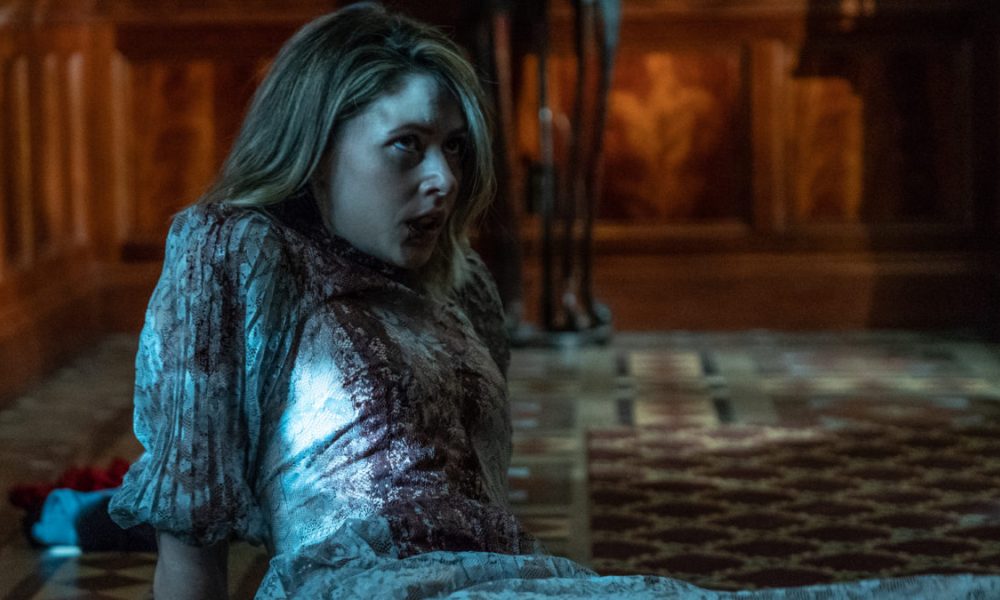
2019
Director: Richard Bates Jr.
Starring: Amanda Crew, Robert Patrick
Words – Carly Stevenson
Cross-generational conflict takes a grisly turn in Richard Bates Jr’s latest offering Tone-Deaf: a chaotic horror-comedy that interrogates the mounting tensions between ‘millennials’ and ‘baby boomers’ in contemporary America.
The plot focuses on newly single and unemployed Olive (Amanda Crew), who decides to ditch the city for a weekend and head to the rural South for some much-needed ‘me time’. However, her host Harvey (Robert Patrick) has other ideas. Embittered by the loss of his wife to suicide and in fierce denial about early-onset dementia, Harvey hates everything Olive seems to represent: laziness, self-indulgence and liberalism. Similarly, Olive is deeply disdainful of Harvey’s traditional values and intolerant attitudes, which, unbeknownst to her, fuel his vendetta against the younger generation.
The audience learn about Harvey’s deceased wife through a series of fourth-wall-breaking monologues, which are, ironically, a bit like Fleabag, but for bigots. Also ironic is the fact that Harvey shares this trauma with Olive, whose father took his own life when she was a child.
Unresolved grief seems to be the only common ground between the two protagonists and the film emphasises this parallel throughout, with interesting implications about how people choose to deal with loss (or not, as the case may be).
Harvey is a novice when it comes to murder, so he practices on a few unsuspecting locals before turning his attention to Olive at the end of the film. What ensues is a darkly comical cat-and-mouse scuffle between two characters who embody the most noxious stereotypes associated with their respective generations.
In contrast to the title, which implies an inability to perceive differences in pitch, Tone-Deaf is alert to the cadences of post-modernity. There is a certain ambivalence in its treatment of character that makes it difficult to root for anybody, which is, perhaps, the point.
Offbeat in humour, cynical in tone and inconsistent in its use of imagery, Tone-Deaf is unlikely to be a crowd-pleaser; however, its satirical take on the politics of aging is undoubtedly timely and Bates Jr. tackles this subject without condescending the audience.
Celluloid Screams 2019

Celluloid Screams, Sheffield’s annual horror film festival, is one of the UK’s premiere events for horror cinema from around the world.
Taking place every October, see our look at some of the films featured at the 2019 festival
– click on the film title to see our review.

Cross-generational conflict takes a grisly turn in this dark critique of the bizarre cultural climate of today.
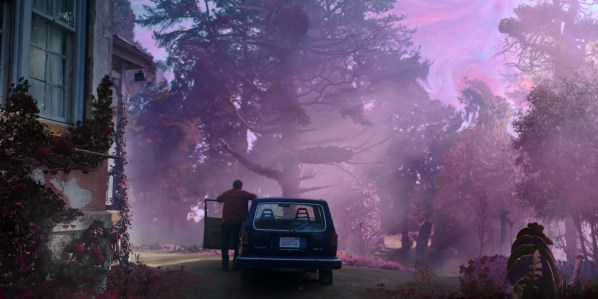
A stunning spectacle of cosmic body horror that perfectly captures the fear of the unknown.
Showing a different side to the things that go bump in the night, winning the Audience Award at this year’s Celluloid Screams.
With exceptional performances, The Nightingale is a film that is not only haunting and powerful, but vital.
a bloody, imaginative and immensely enjoyable take on the zombie film, and the perfect end to Celluloid Screams 2019.
Full info on Celluloid Screams can be found via their website:
2019 Festival Trailer:
The Peanut Butter Falcon

2019
Directors: Tyler Nilson, Michael Schwartz
Starring: Shia Labeouf, Dakota Johnson and Zack Gottsagan
Words – Eleanor Smith
It is fair to say that The Peanut Butter Falcon has been one of the most enjoyable, charming and emotional pieces of cinema this year. The film’s reflection on pure kindness, offers an inspiration to us all on how to behave, and also shows us the importance of friendship.
As Zach puts it, “are you a good guy or a bad guy?”
The story focuses on two individuals, both struggling with their lives. Zach (Zack Gottsagan) is a young man with down syndrome who breaks out of care to achieve his dream of becoming awrestler. Tyler (Shia Labeouf), a fisherman Zach befriends after escaping, is a grieving brother who has found himself lost and in a conflict with a pair of lowlife crab fishers.
Their unlikely friendship brings out the best in each other. As Tyler offers Zach the freedomand encouragement to believe that he can stand on his own two feet, without medical supervision. Similarly, Zach gives Tyler a reason to do good and gives back meaning to his life, we follow both of their stories and watch them equally becoming better versions of themselves.
Friendship and relationships is a key theme throughout the film and is explored from many different angles.
We see the brotherly bond form between Zach and Tyler, and the sparks of a romantic relationship between Tyler and Eleanor (Dakota Johnson) – the caretaker who is out looking for runaway Zach. There is a focus on the positive developments of the character arcs, as even Eleanor learns to better herself, as she begins to understand that Zach isn’t dependant on her and can look after himself.
This serves to highlight just how much The Peanut Butter Falcon is a breath of fresh air, as it shines a new light on the topic of down syndrome. We see Zach surviving and thriving in the outside world, without a roof over his head and without being pampered. We also witness him combatting the roughest and most challenging of sports, wrestling. This emphasises to Eleanor and us, the audience, that Zach isn’t weak but a strong bodied and minded person.
The terrific direction from Tyler Nilson and Michael Schwartz , as well as the moving performances from the cast really bring this beautiful narrative to life.
The Peanut Butter Falcon absolutely needs to be on your ‘next film to watch’ list.
 REEL STEEL
You must be logged in to post a comment.