Bond On Song
Words: J. Wood
As much of a part of cinematic cultural fabric as the Bond film itself is the song accompanying said film. Often ubiquitous around release, and always the topic of many heated debates for years to come; which Shirley Bassey effort rules the roost? Is Bond better with a more ‘traditional’ Bond theme or going in a different direction? Does the quality of a Bond film correspond with the quality of the song? These are just some of the debates I have had in the run up to Spectre. In preparation for this cinematic behemoth I have taken the time to listen back to all these songs and have ranked them for your listening pleasure.
24: Dr No (no song)*
Starting things off all the way back in 1962 Dr. No is the only film in the Eon series not to have a song (although On Her Majesty’s Secret Service has no official song per se). That being said, this is the film that introduced the world to Monty Norman’s iconic Bond theme, and there are at least three films in the series that would be better served having no song than the song they have.
23: Die Another Day (Madonna – Die Another Day)
Bond entered the 21st Century in appalling fashion with Die Another Day, a film that started promisingly but lost its way amidst the ice palaces, diamond faced henchmen and invisible cars. Worse than all this however was the attempt to modernise the franchise with Madonna’s appalling dance inspired song. A sequence in this film is bizarrely accompanied by The Clash’s London Calling, which although anomalous is the film’s best musical cue.
22: Quantum Of Solace (Jack White & Alicia Keys – Another Way To Die)
I recently rewatched the much maligned Quantum Of Solace for the first time in about 5 years, for the first time back to back with Casino Royale, and I liked it a lot more. What I was unable to reappraise was this awful song, one of the most ill-judged in the franchise’s history. The problems are numerous, not least that it is very un-catchy, and the styles of the very talented Keys and White simply do not mesh under any circumstances.
21: Moonraker (Shirley Bassey – Moonraker)
Synonymous with the concept of the Bond theme song, I surprisingly do not hold the works of Shirley Bassey in particularly high esteem. This is the weakest of her three efforts, coming in the Roger Moore era in which the quality of the tunes fluctuated every film. Bassey is not particularly a fan of this song herself, having come in as a very late replacement, and it shows in a song that doesn’t actually suit her musical style.
20: Spectre (Sam Smith – Writing’s On The Wall)
This one could be subject to change at about eight o’clock Monday night. When I first heard this I utterly hated it, I didn’t think it is a ‘Bond Song’ and would have preferred to hear a Radiohead or Elbow effort. Thinking about it more however, it is a better song than I first appraised it, and is a bit of a grower. If Spectre is an introspective Bond film this might work, but from all I’m hearing of it it isn’t in which case this probably won’t fit with the film.
19: Octopussy (Rita Coolidge – All Time High)
An interesting if incredibly flawed Bond film was accompanied by a Bond theme spectacular only by its blandness. In a film that is edgy and strange, with some elements that I consider to be even horror inspired, the music department copped out with as ‘Bond-by-Numbers’ song as there has been. These problems are exacerbated by Coolidge’s average rendition of said song, certainly one of the Moore era’s troughs.
18: On Her Majesty’s Secret Service (Louis Armstrong – We Have All The Time In The World)
This is not a Bond song in the traditional sense as it was not only the first song not to share its title with the film, and is also the only one not to play over the opening credits. The score to On Her Majesty’s Secret Service is sublime, and Louis Armstrong’s song a touching love song in keeping with Bond and Tracy’s love. That said its lack of pizzazz sets it aside from the Bond song canon in a surprisingly disappointing way.
17: The World Is Not Enough (Garbage – The World Is Not Enough)
Aside from the atrocity of Die Another Day I have always found the songs to the Brosnan era Bonds to be somewhat striving a little too hard to be ‘traditional Bond themes’, often choosing the wrong artist as well. This song truly epitomises this trend, as Garbage, a band I love, are nullified by the bland song they are singing. To rub salt in the wounds, Only Myself To Blame, David Arnold and Scott Walker’s alternative is an absolute gem.
16: Diamonds Are Forever (Shirley Bassey – Diamonds Are Forever)
Shirley Bassey’s second Bond theme, returning at the same time as Sean Connery to the franchise with a song that is more commonly known now as an advert song, or as something sampled by Kanye West. Diamonds Are Forever is not particularly well respected as a film in the overall Bond canon, and as a song it is not bad but nowhere near as good as Goldfinger, a song for me surpassed by both Thunderball and You Only Live Twice by 1971.
15: From Russia With Love (Matt Monro – From Russia With Love)
From Russia With Love is the very first Bond theme and strangely at the same time sets a tone but also sits apart from the series. In a pre-Beatles era this is probably the only song that came prior to the explosion of pop music, and even the early ‘classic’ themes after this embrace pop in some way. From Russia With Love is possibly the most serious, non-fantastical Bond film prior to Daniel Craig, and Monro’s song fits with this opinion.
14: The Man With The Golden Gun (Lulu – The Man With The Golden Gun)
One of the lesser of the Moore era troughs, this is probably as uninspired a song as All Time High from Octopussy, yet again falling into the trap of being an obligatory Bond song rather than trying to be interesting, again odd in a film with one of the series’ most interesting villains. Fortunately Lulu’s very strong delivery of the song raises it to mediocrity from sheer, painful dullness, but barely.
13: Goldeneye (Tina Turner – Goldeneye)
As I have previously stated the Brosnan era was typified by taking the easy option song wise and trying to ape the Shirley Bassey model, and Tina Turner was surely the obvious choice to capture the Bassey spirit. Goldeneye the song isn’t too bad, not strong but not weak by any standards, solid rather than spectacular, yet coming after the astonishing leap off the dam in the pre-credits sequence only underlines the ‘solid rather than spectacular’ feel.
12: Tomorrow Never Dies (Sheryl Crow – Tomorrow Never Dies)
With the exception of the George Lazenby tenure, this is the lowest placed ‘best song of an era’ just showing how little I like the music of Brosnan’s era. This puts a more modern slant on the grandiose traditions of the Bond theme and, unlike Tina Turner plays more modernly as well, with Crow’s vocals some of the best of her era. The problem, like many other themes, is that there is just a sense of ‘heard it all before’.
11: Skyfall (Adele – Skyfall)
I have an acquaintance who practically splutters with indignation at how well regarded this song is, often referring to it as a ‘pub singer’. I am of a different mindset. I enjoy the song despite its rather basic lyrics. Adele has one of the best voices in the music industry working today and uses her terrific set of pipes to bring a modern slant while harking back to the Bond themes of old, mirroring the achievements of the film perfectly.
10: Licence To Kill – (Gladys Knight – Licence To Kill)
Gladys Knight (without The Pips) seems an odd choice for Licence To Kill, a film at the time at odds with what Bond represented, and seeming rather too Bond like compared to the songs that preceded it. The fact is that despite her Motown voice and rather normal approach to proceedings Knight’s delivery is actually more frantic than it appears at first listen, in keeping with the Bond gone rogue theme of the film.
9: Goldfinger (Shirley Bassey – Goldfinger)
This is where the legend of the Bond song began, Bassey’s first effort truly defining the idea of Bond in the same way that the early Bond girls and megalomaniacal villains did, cementing the song into the well-established formula. I may not be a huge fan of the Bassey catalogue, and indeed this has pushed a couple of places higher on merit, but it really is a very powerful piece of music that is grandiose enough for its film.
8: For Your Eyes Only (Sheena Easton – For Your Eyes Only)
A surprisingly strong film coming towards the latter days of the Moore tenancy is accompanied by the finest of the ‘Power Ballad’ female songs (Sinatra and Simon’s songs are of a more gentle persuasion). The strength and power in the vocals correspond with the anger of the Melina Havelock character in the film just as Gladys Knight’s do with Bond’s vengeful self of Licence To Kill, and on top of that this really is a catchy number.
7: A View To A Kill (Duran Duran – A View To A Kill)
Duran Duran, like many of the 1980s New Romantic bands are either very good or terrible in my mind, yet A View To A Kill is one of their stronger numbers. Being the first Bond theme of the MTV era the now iconic Eiffel Tower video is part of the very fabric of the song, yet it always surprises me how well this pop song goes with Bond after years of ballad music, it’s just a shame that the film it accompanies is one of 007’s greatest duds.
6: You Only Live Twice (Nancy Sinatra – You Only Live Twice)
This is an average song for the most part, and earns its place so high on this list by virtue not of the singer but by the very close association it has to the John Barry score of the film. This is for me Bond film music at its very peak, ethereal, otherworldly and dreamlike, which I presume mirrored the Japanese setting in the 1960s to Western audiences. As I say the song is an uninspired one lyrically, but with the backing, inspiration wasn’t needed.
5: Live And Let Die (Paul McCartney & Wings – Live And Let Die)
With the exception of Ringo, Paul is my least favourite Beatle, I have often found his output to be uninspired and mundane, yet this theme to Live And Let Die goes against that opinion. McCartney brought rock to the table for the first time and with it crafted an epic Bond theme in completely new proportions for that time, using the quiet to loud shifts to really rouse an audience for an action packed 007 adventure.
4: Thunderball (Tom Jones – Thunderball)
The very pinnacle of the earliest Bond themes, there was nobody like Tom Jones to take the grandiose big band gauntlet laid down by Bassey and run headlong with it, creating one of the era defining songs. Personally I think Jones has the very best voice to appear on a Bond theme, and turns it up to eleven throughout, with the power of his final Thunderball a thing to truly behold. In terms of this style of Bond theme, this is yet to be surpassed.
3: The Living Daylights (A-ha – The Living Daylights)
My very favourite Bond film contains one of my very favourite Bond themes. Taking inspiration from its predecessor A View To A Kill this took a thoroughly modern pop band and used them very well. Granted A-ha are a totally different prospect to Duran Duran and can go theatrically over the top with a little more ease, yet this remains a catchy number that has every right to be considered one of the better Bond themes.
2: The Spy Who Loved Me (Carly Simon – Nobody Does It Better)
This is a wonderfully thoughtful song that perfectly captures the themes of The Spy Who Loved Me to perfection, capturing the fragility not of Bond but of Amasova, in my opinion the film’s true lead. This song is the reason that I rue so much the theme choice of The World Is Not Enough, as Only Myself To Blame does very much the same things as this song. Carly Simon’s delivery is complemented by one of the best Bond arrangements for a magical result.
1: Casino Royale (Chris Cornell – You Know My Name)
And so coming in at number one is Chris Cornell’s barnstorming work to reinvigorate Bond for Casino Royale. Part of the reason I love this song so much is the fabulous animated sequence that accompanies it in Casino Royale, based around the card motif. Cornell utilised his relatively unknown status, as well as a deep, insightful set of lyrics and fantastic guitar riff to bring Bond and place him very firmly in the 21st Century with a bang.
A Month of Alien: Alien 3

So what with Ridley Scott’s recent confusing/confused comments regarding the future of the Alien series (“Prometheus 2 isn’t going to lead into the Alien films, although it totally is and it’s actually called Alien: Paradise Lost, but it might still take another three movies anyway, and what’s an ‘Alien 5’?”), I thought it would be fun to run through the franchise – which becomes increasingly, fascinatingly messy and weird – reviewing each movie week by week.
By this I mean Alien, Aliens, Alien 3, Alien: Resurrection and OK, fine, I’ll do Prometheus as well (*sigh*, the things I put up with…). I’ll be reviewing each film in the version it was released, so no director’s cuts or assembly edits. Also I want to stick to the films which are ‘officially’ canon in the franchise – so no spin-offAliens vs Predator bullshit either. Sorry to all three of you who enjoy those movies.
All right, without further ado…
1992/ USA
Director: David Fincher
Starring: Sigourney Weaver, Charles Dance, Charles S. Dutton, Brian Glover, Ralph Brown, Danny Webb, Paul McGann, Pete Postlethwaite
Words: N. Scatcherd
If Alien and Aliens are generally considered to be – at the very least – ‘good movies’, then Alien 3 is the point where, for some, the franchise took a big dip in quality. Certainly, it received a much more lukewarm response both critically and commercially; to this day there are those fans of the series who consider Alien 3 to be underwhelming at best, and a frustrating slog at worst. However, I would argue (and you know I’m about to) that it’s actually an underappreciated gem, and would have been a fitting end to the Alien trilogy… if indeed it had been allowed to be a trilogy.
Plagued by production issues from day one, pieced together from the bits and pieces of various scripts (its tortured history has been covered in depth elsewhere, and could easily fill an article all on its own), Alien 3 maybe never stood a chance of being as widely praised as its predecessors. It was the directing debut of some young hotshot called David Fincher, and by all accounts, studio interference and financial pressure almost killed him creatively. Still, considering the almighty botch job it came close to being, it’s an impressively coherent, atmospheric achievement, and it holds up remarkably well as an attempted rounding off of the series and Ripley’s journey.
After the gung-ho Aliens, Alien 3 returned the series to its horror roots. Once again in stasis, Ripley crash-lands on the prison/foundry works Fiorina ‘Fury’ 161, which is populated by violent YY-chromosome male inmates (the majority of whom are English, specifically Cockney: the easy, stereotypical short-hand in American movies for ‘psychopathic criminals’). This in itself is a good set-up for a horror thriller, but of course, an Alien Facehugger has stowed away onboard Ripley’s shuttle, and soon she is plunged back into the nightmare she has been striving so hard to escape from.
The first thing to mention is the Alien itself – we’re back to just the one, stalking the grimy corridors and air vents of this claustrophobic prison – and how it’s actually a markedly different type to any we’ve seen so far in the series. Having gestated inside a dog, instead of a human, the Alien here is quadrupedal, slightly smaller and faster. This change in design is a clever one, as this new Alien seems able to strike quicker and with even more animal-like ferocity than any of the others we’ve seen, operating less on intelligence and more on bestial instinct.
In terms of visual design more broadly, Alien 3 employs a dirty, earthy aesthetic particularly suited to this story of a hellish prison (despite some admittedly wonky CGI). Replacing the cold blue and green hues of the previous films with fiery oranges and grubby browns makes the film – along with its themes of redemption and damnation, compounded by the loosely-explored kind of neo-Christianity practiced by the inmates – feel downright apocalyptic, as though the Alien is a demonic presence and Ripley a guardian angel, with Fiorinia 161 as either purgatory or Hell itself.
Of course, Alien 3 is really all about Ripley, and what has by this point become an almost symbiotic relationship between her and the Xenomorph race she continually finds herself fighting against.* She gets some of her most badass moments in this film – a particular standout is the way she coolly faces down Dillon (Charles S. Dutton)’s intimidating comment about his being a “murderer and rapist of women” with “really? Well, I guess I must make you nervous” – and she’s absolutely still the strong, intelligent survivor of the previous films. She is also shown as a sexual person, forming a romantic – or at least physical – relationship with Charles Dance’s medical officer, Jonathan Clemens. It may sound like an insignificant detail, but her suggestive admission to Clemens that he has been “out here a long time”, and her subsequent seduction of him, adds a kind of human vulnerability to her character ensuring that she doesn’t come off purely as a hard, single-minded warrior woman. She has very human desires beyond just survival.
One of the biggest problems some Alien fans have with the film is that Newt and Hicks are killed offscreen, during the credits sequence no less. While I understand why that pissed some people off, I would say that it actually serves the film in two big ways: it shows with shocking, casual bluntness how nobody is really safe from the Alien threat; and it also makes Ripley’s fight here all the more personal and painful. She had a shot at a family – a chance for lasting happiness despite all the horror she had witnessed, and it gets ripped away from her by another damn dirty Xenomorph. Another criticism commonly levelled at the film is that it’s ‘too slow’. This is particularly baffling, considering how its steady, mood-building approach is not much different to the structure of the first film. Even Aliens took its time with world-building and character introductions before getting to any action.
Overall, Alien 3 doesn’t deserve the kicking it often gets. It’s rife with atmosphere and is maybe the most character-centred film of the franchise, with some nice little additions to the Alien lore and an ending which (without saying too much) feels thematically appropriate and dramatically satisfying.
Of course… then came Alien Resurrection.
*It’s revealed that Ripley has an Alien Queen gestating inside of her, and with the ‘dog-Alien’ consequently refusing to attack her, she is technically – as she says herself – “part of the family.” The strange connection she has formed with her Xenomorph enemies is neatly summed up in one line of dialogue, as she tells the Alien “you’ve been in my life so long, I don’t remember anything else.” It’s a strangely powerful, mournful moment.
** A little side-note regarding something I’ve always really liked about Alien 3: one of its best sequences is of the Alien’s ‘birth’, as shots of its emergence into the world are intercut with the cremation of Newt and Hicks, all narrated by Dillon’s speech about “new life”. It’s expertly crafted editing and shot through with a real sense of doom and hopeless inevitability. This Fincher guy ain’t bad, y’know.
Legend
2015/ UK
Director: Brian Helgeland
Starring: Tom Hardy, Emily Browning, David Thewlis, Paul Bettany, Christopher Eccleston, Chazz Palminteri
Words: S. Nix
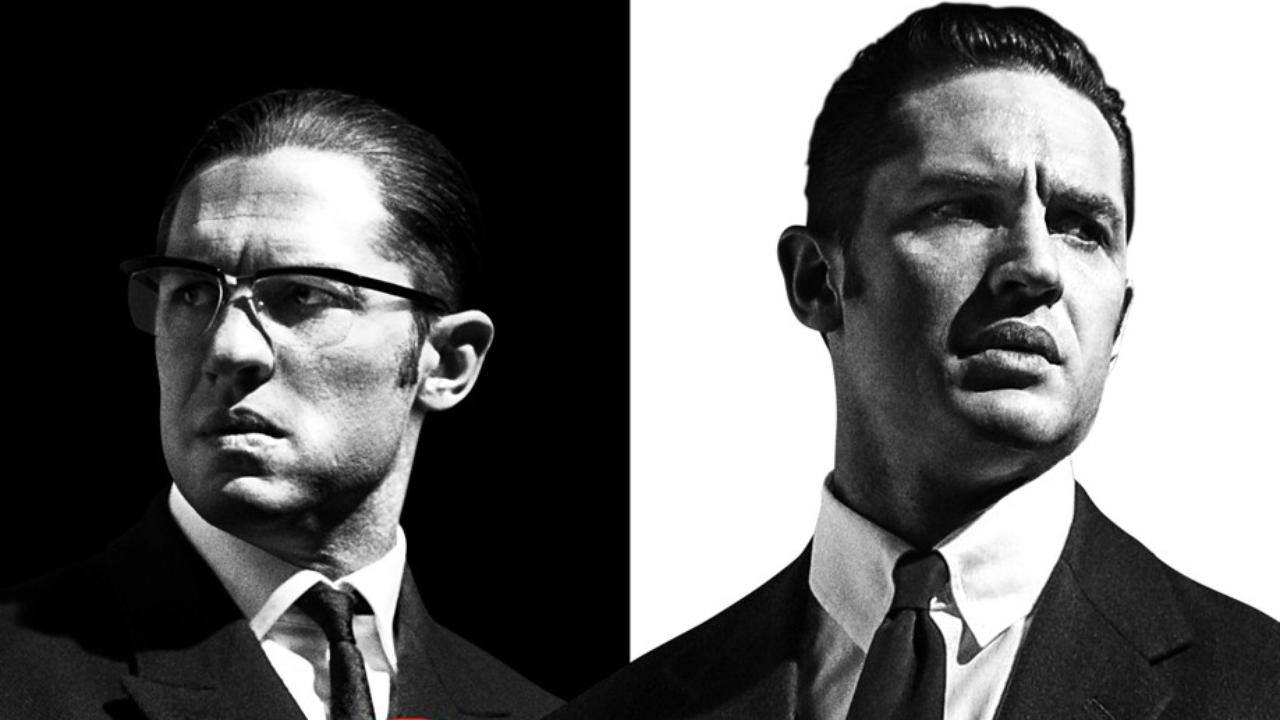
Part love story, part family drama and part gangster flick, Legend sees Tom Hardy take on the rolls of both of London’s most notorious gangsters, the Kray Twins; Ronald and Reginald. Twenty-five years after the release of The Krays in which the eponymous rolls were played by the Kemp brothers Martin and Gary, does Hardy’s portrayal bring anything fresh to the tale of London’s most infamous sons?
Set against the backdrop of swinging sixties the film focuses on Reggie Kray, his ongoing relationship with Frances Shea (Browning) and his struggle with the erratic behaviour of his certifiable brother Ronnie. As he struggles to run a club and (as he adamantly insists) a legitimate business, events spiral inexorably out of control despite his best efforts to live a life both Frances and Ronnie can be a part of. Meanwhile, the Krays are constantly under the keen surveillance of Detective Superintendent “Nipper” Read (Ecclestone).
Reggie is charming and likeable enough to begin with but by story’s end has tranformed into a pitiful wretch who has all but lost the audience’s support in a masterful performance by Hardy.
Likewise, the Bronson actor channels the necessary neuroticism in his portrayal of Ronnie Kray who makes every bad decision possible at each opportunity but he is not so smothered in insanity that the audience can’t glimpse a man who genuinely loves his brother and is tormented by his own mental illness.
Emily Browning’s Frances is a flower growing amongst the grime and the glamour of London’s East End, plucked by the whirlwind of violence and destruction that is Ronnie and Reggie Kray with tragic consequences. When her courtship of Reggie begins, as perfect as everything may seem, it’s evident to the viewer that nothing good will ultimately come of it, lending an ominous feel to a relatively light-hearted first hour and a half.
One gets the sense that only Hardy could pull off the feat of playing two twins whilst giving them their own distinct characters and making you completely forget they’re the same person. Of course, with a resumé including biopics such as Bronson (2008) and Lawless (2012) in which he plays a famously insane criminal and a Prohibition-era gangster brother respectively, Hardy is the obvious, if not the only choice to place faith in with such roles.
Legend is much more than a gripping crime thriller, though it is that. It’s a study into how far a man will go to save a fraternal and a romantic relationship whilst fighting against obstacles such as the law, mental illness and, ultimately, his own inner darkness.
The House Of The Devil

2009/ USA
Director: Ti West
Starring: Jocelin Donahue, Tom Noonan, Mary Woronov
Words: O. Innocent
Ti West’s retro indie horror, The House of the Devil (2009) is one of the most polarising scary movies of the 21st century. Critics loved its slow, deliberate build up of tension while the more casual filmgoer yawned in boredom as nothing exciting seemed to happen until the film was almost over. What the critics understood that the causal filmgoer didn’t is that this is the way true horror is meant to be. Look at Roman Polanski’s Rosemary’s Baby (1968) or Stanley Kubrick’s The Shining (1980); these films take their time to set the scene, to build a disquieting atmosphere, savouring the final terror for the climax. The problem is that over the years the horror genre has become increasingly fast-paced, getting to the juicy bits almost straight away, and therefore jettisoning the kind of slow burn suspense that made the likes of Rosemary’s Baby so downright creepy and unsettling. This kind of slam-bang approach to the genre isn’t necessarily a bad thing in itself (William Lustig’s Maniac Cop 2 (1990) is a prime example of hyperactive horror done just right), it’s just that audiences’ attention spans have consequently shortened, meaning that anything with a remotely leisurely build up of suspense is immediately dismissed as boring.
It was inevitable that, entering into a climate of low attention spans, fast-paced action and barrages of cheap jump scares, West’s intentions were bound to be misunderstood. What West wanted to do was take the genre back to the halcyon days of classic late ‘70s, early ‘80s independent horror, but modern viewers proved stubbornly unwilling to embrace the past. Thus, The House of the Devil has been consigned to the cult zone, that strange world which exists somewhere between mainstream cinema and underground film. It’s ironic then, that the film has proved to be something of a trendsetter. It was one of the first films of the new millennium to consciously model itself on the horror movies of yore, obsessing over and minutely imitating the tone, look and sound of late ‘70s and early ‘80s horror. Since its release there have been an increasing number of films looking back towards that particular period for inspiration. However, unlike, say, Adman Wingard’s You’re Next (2011) or David Robert Mitchell’s It Follows (2014), The House of the Devil’s appropriation of the codes and conventions of old school horror feels somehow more genuine. Where those later films feel very knowing, like they are almost winking at the ‘80s from a 21st century perspective, House seems like it could genuinely have come from that golden era.
The House of the Devil’s period touches are spot on, from the opening credits which hearken back to Tobe Hooper’s The Texas Chain Saw Massacre (1974) by suggesting that what follows is based on true events, to the grainy low-budget film stock and piano and synthesiser-driven score. But it’s the tone more than anything that aligns it with its genre forefathers. It’s that slowly rising, cloying sense of unease, that feeling of inevitable doom and shout at the screen don’t go in there moments that most bring to mind those 1970s classics of slow burn terror. At its heart the film is an old dark house movie with its central concept of a young girl babysitting in a strange house where some unspeakable evil lurks. Like Bob Clark’s Black Christmas (1974), John Carpenter’s Halloween (1978) and Fred Walton’s When a Stranger Calls (1979) before it, the film milks the babysitter in peril theme for all its worth, cranking the tension right up to eleven as the heroine goes wandering through the house’s dark corridors and mysterious rooms.
Of course, the whole premise is in danger of coming apart if the heroine is somebody we don’t care about. Luckily, actress Jocelin Donahue excels in the role of Samantha, the naïve but likable student who just wants some extra cash to afford the deposit for a place of her own, carrying the movie almost single-handedly. Also of note is Tom Noonan as the socially-awkward proprietor of the titular house, who may be hiding more sinister machinations for Samantha than the simple babysitting job would seem to suggest. If there’s one flaw with The House of the Devil, it’s that the build up is so gripping and engaging that the ending can’t help but be a bit disappointing. After all, this is a film with over an hour’s build up of tension so it’s unsurprising that the climax doesn’t quite live up to the grand expectations laid down up to this point. Nevertheless, West’s film is one of the few horror films of the 21st century that can truly lay claim to capturing the essence of the glory days of horror, showcasing a handle of tension and restraint lost on most modern directors. So, if you want a horror film that isn’t all noise and no soul, you could do a lot worse than tracking down a copy of The House of the Devil this Halloween.
Sicario

Director: Denis Villeneuve
Starring: Emily Blunt, Josh Brolin, Benicio Del Toro
Words: J. Wood
‘In Mexico, Sicario means Hitman’
The above quote has been plastered all across the marketing for Denis Villeneuve’s follow up to Prisoners/ Enemy (depending upon which territory you are in), and even appears as part of the opening frames, in which Villeneuve does an incredibly vague job of setting the scene. Even with this information you go into the film somewhat in the dark, unaware what the film is actually about, or whom the Sicario of the title is, and the film benefits a lot from this.
Emily Blunt stars as Kate Macer, an FBI kidnap specialist whose knack for getting the job done sees her catapulted into bigger things, and much darker things. Recruited by Josh Brolin’s brash yet secretive agent and thrust into an unholy trinity also involving Benicio Del Toro’s morally ambiguous Alejandro, essentially the immovable force of Kate’s morality meeting the immovable object of Brolin’s character’s realism, while the phantom like Alejandro feeds upon the chaos unfolding while never truly unveiling his own agenda. What starts off as an operation sold to Kate as a chance to get the cartels responsible for unnatural acts of violence, turns into something so much more dangerous and destructive, in a very Nietzschen way, and to describe the plot any further would be to do the film a huge disservice.
The film is ostensibly a thriller but plays out more like Conrad’s Heart Of Darkness as the narrative slowly meanders its way into the heart of its quarry, the US war on the cartels, and in this respect the film is more a drama, with moments of extreme and near unprecedented action and violence punctuating it but make no mistake, this is an edge of your seat thriller if ever there was one. I have seen, and understand comparisons made between this and Kathryn Bigelow’s Zero Dark Thirty, but while that film had a clear aim set out from the very start, this is a film shrouded in mystery, where the villains remain faceless entities for as long as is narratively possible, while the lines between good and evil are even further blurred.
It is all well and good to consider this film great from a narrative front, which it is, but the high technical standards to which this narrative is executed raise the bar somewhat and make this a clear frontrunner for the very best film of the year. Opening with a moment that shocks you into attention, before very cleverly bringing out from the nastiness in a hitherto unseen horror metaphor that works surprisingly well, the talky moments from then on in are perfectly punctuated by the relatively brief moments of action that if anything drive the plot more than the dialogue manages to. Johann Johannsson’s score is fairly minimalistic yet at the same time adds the perfect atmosphere to convey the dangerous unknown into which the film, and its protagonist are stepping.
This feels to be a perfect juncture at which to discuss the contribution to this film of the great cinematographer Roger Deakins, which is indeed enormous. Looking back at his career he really has pushed the boundaries of cinematography in a way that few will, and alongside Emmanuel Lubezki and Robert Elswit really is one of the finest D.Ps working today. This is a man who has been nominated for, and lost Oscars for such films as Fargo, True Grit, No Country For Old Men, The Assassination Of Jesse James By The Coward Robert Ford and Skyfall, yet for me this is his greatest achievement. From great sweeping vistas of the Texan and Mexico scrublands, to a car sequence in Juarez in which he somehow puts his camera right into the heart of the action, capturing both the stillness yet the danger of the moment, as a border-crossing traffic jam turns into a tense outlet of life or death instincts, with Deakins using his camera almost as the Hall of Mirrors scene in The Man With The Golden Gun, expertly misdirecting the audience as to where the danger is coming from. Later on in the film he brings great invention to the film’s one out and out action scene, filmed predominantly through the filters of night vision and thermal imaging, while one scene that sees soldiers preparing for action, just their silhouettes visible against the vivid late dusk of the desert setting is quite possibly the finest single shot I have ever seen on screen.
In few films would performances such as those given by the leading triptych here feel somewhat inferior to everything else going on but that is a testament to the power of the film’s script and direction rather than a slight on three very good actors. As the audience’s entry into the film Blunt quite possibly had the hardest job, to essentially be the character calling out all the dangers of the approach taken by others, and being the moral spine of an otherwise immoral or amoral film. Blunt’s steely determination marries well with the aspect of a character who is way out of her depth, and acts alongside Edge Of Tomorrow in touting her as a possible action star. Josh Brolin is surprisingly the lead who has the most trouble with the material, his character’s secretiveness proving a disadvantage as he fails to make the desired impact. It is however Benicio Del Toro who steals the film rather wonderfully as Alejandro. Right from his first appearance he constantly reminds you that he used to be an actor of great power with an eerie sense of danger, something he has lacked for some years now. The character is less a coiled spring than a snake in the grass, cold, calculating, inscrutable and unpredictable, making the performance all the more chilling.
Sicario is a film that takes a wonderfully thoughtful look at its subject, and those involved in its subject. The film is very matter of fact about all this, as I am sure the closing scenes will display. This is not a typical film in which the heroes overcome all evil by the closing credits, rather one where the protagonists barely make a drop in the ocean, and even that drop is questionable. I was stunned by the craftsmanship shown on Sicario, stunned at how cold and calculating it was and how little it flinched at the harsh realities of the subject. As one character remarks ‘you are not a wolf, and this is the land of wolves now’, I cannot remember many Hollywood movies ending on such bleak notes.
A Month Of Alien: Aliens
Words: N. Scatcherd
So what with Ridley Scott’s recent confusing/confused comments regarding the future of the Alien series (“Prometheus 2 isn’t going to lead into the Alien films, although it totally is and it’s actually called Alien: Paradise Lost, but it might still take another three movies anyway, and what’s an ‘Alien 5’?”), I thought it would be fun to run through the franchise – which becomes increasingly, fascinatingly messy and weird – reviewing each movie week by week.
By this I mean Alien, Aliens, Alien 3, Alien: Resurrection and OK, fine, I’ll do Prometheus as well (*sigh*, the things I put up with…). I’ll be reviewing each film in the version it was released, so no director’s cuts or assembly edits. Also I want to stick to the films which are ‘officially’ canon in the franchise – so no spin-offAliens vs Predator bullshit either. Sorry to all three of you who enjoy those movies.
All right, without further ado…
1986/ USA
Director: James Cameron
Starring: Sigourney Weaver, Michael Biehn, Lance Henriksen, Paul Reiser, Bill Paxton, Carrie Henn, William Hope, Jenette Goldstein
Sequels are tricky things. There must be an impulse – when following a film which is well-received enough to warrant a sequel in the first place – to just retry whatever worked the first time. Revisit the basic storyline, or some of the action beats; transpose the atmosphere or ‘feel’ of the original and attract as many rears in seats as possible, hoping nobody notices that what they’re watching is essentially just more of something they’ve seen already.
However, the best sequels don’t do this at all. They don’t rehash or ‘reimagine’, but rather they expand upon what came before, splitting off from their predecessor into new and exciting territory. It’s a rare breed of sequel that manages it, and Aliens is one of them.
‘Rescued’ from stasis after 57 years (!) of floating through space following the events of the first film, Ripley is hesitantly coerced by the Weyland-Yutani corporation into accompanying a team of military hardcases – the Colonial Marines – onto planet LV-426 (where the derelict ship and Alien eggs were discovered). The problem is, in the many years since Ripley survived her run-in with the creature aboard the Nostromo, LV-426 has been terraformed and colonised and is now home to human families; families with whom all contact has been suddenly and mysteriously lost (well, maybe not so “mysteriously” for the audience; no prizes for guessing what’s happened to our poor, doomed settlers).
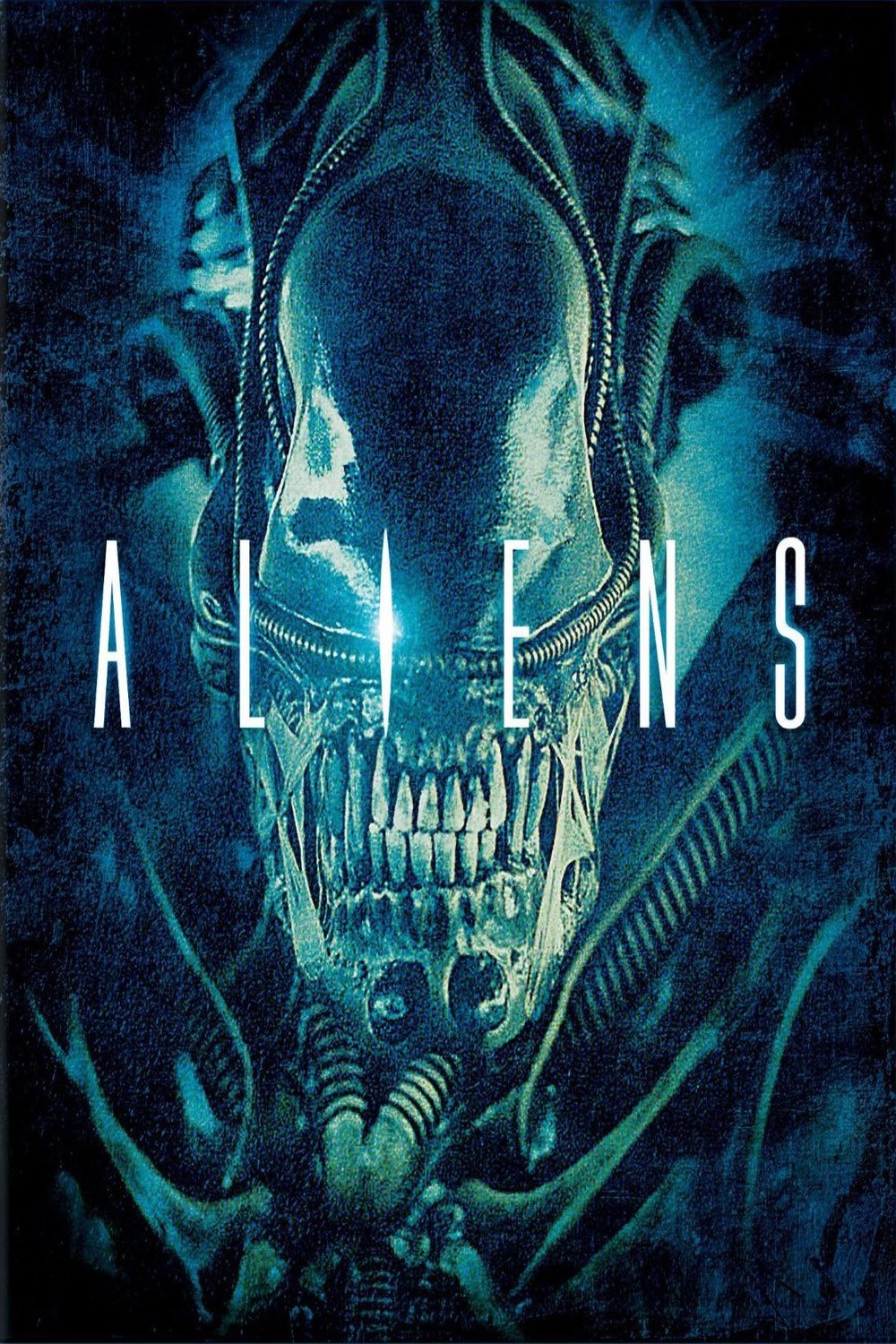
If Alien was a haunted house in space, then this is a good old-fashioned rollercoaster ride. Trading in claustrophobic horror for blazing-guns action, Aliens is its own beast with an entirely different feel than its predecessor. Even the title subtly announces how the set-up is very different this time around, with a large group (‘swarm’? ‘Hive’?) of Aliens – or ‘Xenomorphs’, as they are referred to here – versus the military, as opposed to a single Alien in an enclosed space picking off a crew of blue-collar ‘civilians’. Whereas Alien used its single creature to create a slasher-movie style ‘cat and mouse’ tension, Aliens is concerned with loud, popcorn action movie thrills.
Strange as it sounds, this feels like an entirely natural progression. The scene in Alien wherein Kane and Lambert come across a vast amount of eggs teased the fact that there were a lot more of these creatures than just the one which terrorised the Nostromo; and what with the introduction of the Marines, and the reveal that planet LV-426 is now-terraformed, there’s a lot added to the universe both films (and, of course, later instalments) take place in.
The Aliens are not as scary here – used as shoot-em-up cannon fodder, attacking in waves, with none of the silent, deadly dread of the original – but they make for entertainingly gruesome, and still excellently-designed, creatures for our military protagonists to mow down as they try to get off-planet. They’re mostly stock characters* – the brash loudmouth; the cigar-chewing Sergeant; the coolly aloof ‘rogue’ of the group (Corporal Hicks, played by a brooding Michael Biehn) – but the dialogue is sharp, and the film takes its time with introducing us to the ensemble (the first Alien appears almost exactly one hour into the movie), ensuring that even though who is and isn’t going to make it is fairly easy to predict, it’s fun to see how these characters react to the increasing chaos (particularly as Ripley quickly takes charge of the group along with Hicks).
In fact, the most interesting thing about Aliens is the development of its hero, Ellen Ripley, from the steely survivor of Alien to – by the end of Aliens – a kind of Amazonian warrior woman with strong maternal instincts. When the team find Newt (Carrie Henn), a terrified little girl who has hidden from the Aliens after having seen her family killed, Ripley immediately takes on a maternal role for her. She allows her usual steeliness to soften as she cleans Newt up, gets her to open up about what happened to her family, and does everything in her power to keep her safe; she even kills the monstrous Alien Queen in a battle of the matriarchs, using the exoskeleton-like ‘Power Loader’ to physically battle and dominate the Alien mother figure, protecting her new surrogate daughter and proving her alpha-female authority (Ripley’s entrance line as the Queen menaces Newt – “get away from her, you bitch!” – sums up how fearless she is when Newt is in danger).
Alien 3 goes on to do interesting things with Ripley, as the series returns more to its horror roots, but Aliens is the film which cements her personality.
*Two notable exceptions are Jenette Goldstein as the muscular, tough-as-nails Vasquez – as much an alpha-female as Ripley – and Lance Henriksen’s noble, yet somehow unnervingly calm android, Bishop. Paul Reiser is also particularly entertaining, as slimy Weyland-Yutani company man Carter Burke.
The Martian
2015 – USA
Director: Ridley Scott
Starring: Matt Damon, Jessica Chastain, Chiwetel Ejiofor
Words: C. Abbott
Even the most avid follower of Ridley Scott’s recent work would be hard pressed to defend the sliding quality of his filmography. Yet it is true that in nearly all of his work, he has an eye for a shot like no other. From the science fiction milestone of Blade Runner to the narrative torpor of Exodus: Gods and Kings, the cinematography has been a shining beacon within Hollywood. Scott is a filmmaker that struggles to distinguish a great script from a poor one. When he finds the right one, the results are always gratifying.
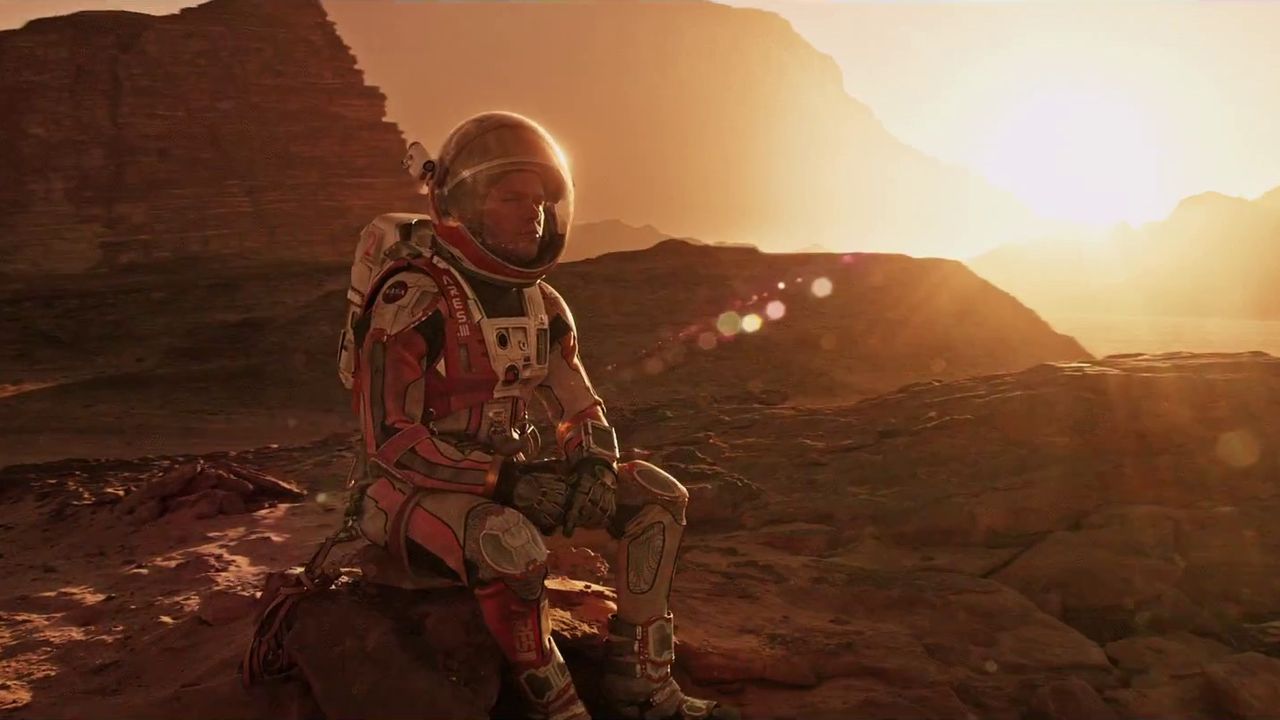
Set vaguely around 30 years from present day. We follow a team of astronauts on a manned mission to Mars. That is until a catastrophic storm forces the mission to see an abrupt end. However botanist Mark Watney is left stranded, alone, with nothing but the prospect of years of isolation and survival.
What we are left with is a film that plays as a Robinson Crusoe style tale of overcoming the seemingly impossible. Cast Away in space, with sprinklings of Moon, Gravity and Interstellar to boot. Watching Watney figure out how to survive a mounting series of obstacles is as entertaining as it is intriguing. The real meat of the story is found here. Where it lacks is the story back on Earth. We follow NASA as it tries to juggle the media and a make shift rescue back to Mars. The back and forth between Chiwetel Ejiofor and Jeff Daniels is its saving grace. But time and again we see shoddy attempts at tension building with dramatic pauses and implausible character interaction. One character in particular played disappointingly by Donald Glover makes you yearn for the isolated dunes of Mars. Yet all this is secondary to the performance of Matt Demon, easily one of his most enjoyable and engaging in years. His charisma powers the narrative forward, sometimes to a distracting degree but never annoying. He makes you root for his man, he makes you desperately want to see him make it home and that is the most commendable part of this film.
While it is true Drew Goddard’s screenplay or Andy Weirs novel is the backbone to this films accessibility, Ridley Scott does also deserve credit and it’s been too long since that can be said. He truly succeeds in capturing the emptiness and scale of this alien world. A film that takes place entirely in a sea of orange sand sounds like it would become tiresome to look at. But Scott manages to retain the sense of awe and excitement of exploring a new world should instil. That being said George Millar did achieve similar earlier this year by making endless desert consistently gorgeous. However he had the help of a lot more adrenaline that comes with muscle cars and explosions.
If nothing else this film should be seen to help reinvigorate a quality in humanity that this generation can’t participate in. Exploration. It’s time we headed to the stars, and Mars is the first outpost of many. As the films sees people put aside differences to aid Watney, we need to do the same and push into the final frontier. Interstellar wet our appetites for the stars and The Martian is continuing this resurgence of general fascination. For this reason, this is a film to see, enjoy and respect.
Madman
1982/ USA
Director: Joe Giannone
Starring: Gaylen Ross, Tony Fish, Harriet Bass
Words: O. Innocent
From its earliest incarnations the slasher film has always borrowed liberally from urban legends, those macabre tall tales of indeterminate origin that supposedly happened to a friend of a friend’s mother’s cousin twice removed. With their sinister content, designed to frighten or gross out, and underlying morality messages, these stories gelled perfectly with the slasher’s own exploitation machinations. One of the first films to combine the two was the ultra creepy proto-slasher, Black Christmas (1974) which takes as its basis the urban legend of ‘The Babysitter and the Man Upstairs’. Although there’s no babysitting in Black Christmas, the concept of a killer’s disturbing phone calls being traced to the upstairs of the same house receiving the calls is rendered truly terrifying. The same legend is also used to elicit maximum tension in the expertly crafted opening act of When a Stranger Calls (1979).
While the best known slasher films went on to create their own urban legends such as the curse of Camp Crystal Lake in Friday the 13th (1980), the dream demon Freddy Krueger in A Nightmare on Elm Street (1984) and the killer doll Chucky in Child’s Play (1988), lesser-known entries struggling with creative block raided the urban legend back catalogue for inspiration. The Burning (1981) takes the campfire tale of ‘Cropsey’, a disfigured madman said to kill those who wandered too far into the woods, as its central concept. In a standout scene from The House on Sorority Row (1983) the legend of ‘The Clown Statue’ is brilliantly realised as the statue in question is revealed to be the killer in disguise. The Clive Barker-penned Candyman (1992) offers an interesting variant on the ‘Bloody Mary’ legend as the eponymous spectre materialises when his name is spoken before a mirror five times. I Know What You Did Last Summer (1997) appropriates aspects of ‘The Hook’ as the film’s ultra hip teens discuss the legend before being stalked by a hook-handed killer. By the late 1990s urban legends had become such an integral aspect of the subgenre that a slasher film came along which explored the concept of urban legends themselves. The appropriately titled Urban Legend (1998) makes explicit the relationship between slasher films and these modern myths, the killer’s modus operandi being the reconstruction of urban legends as murder set-pieces.
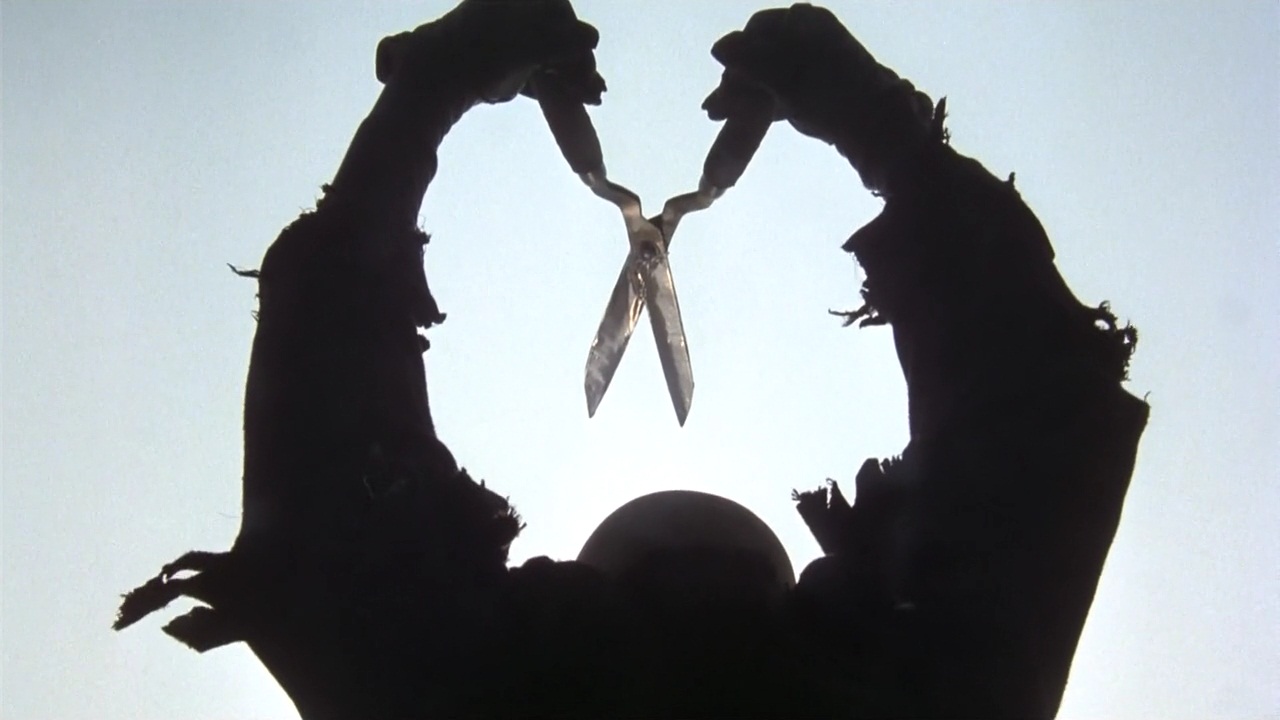
One of the most interesting examples of the relationship between slashers and urban legends is the little-seen Madman (1982), another variation on the ‘Cropsey’ legend (the filmmakers tweaked the original concept after they discovered The Burning was in production at the same time). Beginning with a campfire tale recounting the legend of Madman Marz, a maniacal fiend who killed his wife and child before being hanged by the locals and then disappearing without a trace, the film then segues into the usual body count formula as the summer camp staff are dispatched one by one. What raises Madman above many of its contemporaries, preventing it from being just another Friday the 13th cash-in, is its handling of the titular Madman. Rather than your average everyday woodland psycho, Madman Marz is instead positioned as a supernatural entity a la The Shape from Halloween (1978), a ghostly figure who can emerge from the deep dark woods anywhere, anytime – an urban legend made flesh. An eerie mood is established from the get go as the unsettling legend of Madman Marz slowly but surely begins to seep into reality. First spotted in silhouette hiding atop a tree, Marz’s appearances become increasingly sinister as he literally steps out of the shadows of myth and legend and makes a rather violent entry into the real world. For once in a slasher film the killer’s sudden appearances, superhuman strength and imperviousness to damage are entirely justified as Marz is positioned as a myth, and myths aren’t subject to the standard laws of reality. Mars is a great slasher villain, a hulking brute imbued with supernatural powers who boasts some of the most outrageously over-the-top kills of any celluloid psychopath (decapitating a woman by jumping on the bonnet of her car while she fixes the engine is particularly sensational). It’s easy to see where the inspiration for the ghostly killer Victor Crowley and highly exaggerated bloodletting of Hatchet (2006) came from. The perfect blend of slasher exploitation and spooky urban legends, Madman is definitely one of the best ‘80s slasher films you’ve never seen.
Solace

2015/ USA
Director: Afonso Poyart
Starring: Colin Farrell, Jeffrey Dean Morgan, Abbie Cornish
Words: R. Topham
Written as the follow up (of sorts) to 1995 classic Seven, Solace had a lot to live up to. A helluva lot. Although at a slight disadvantage because David Fincher wasn’t in the director’s seat, Solace just about manages to stay on the right side of ridiculous and offers a fresh take on the crime thriller, a genre which often produces unfathomably poor films. Ignore the bad promotional poster, because it’s actually a rather gripping watch.
Briefly, and not to give anything away, the plot goes as follows: two homicide detectives (Jeffery Dean Morgan and Abbie Cornish) on the hunt for a serial killer enlist the help of retired civilian analyst Dr John Clancy (Anthony Hopkins), a psychic who has eschewed from the outside world since the death of his daughter two years ago. The killings are so meticulously controlled, quick and clean that not a shred of evidence is left to work with. When Clancy starts envisioning the killer, he realises that he’s up against a man whose powers far surpass his own.
Stylistically, Solace channels the modernity of BBC’s Sherlock series, American Psycho and Fight Club. There’s lots of aerial shots, dramatic framing, somewhat overpowering music, and a bit of slow-mo thrown in for good measure. The camerawork can be shaky to the extent it’s dizzying, though I suspect this is done purposely to enhance the unstable and erratic nature of the characters and story as it unfolds.
Much like Seven, Solace delves into the complex concepts of human morality and mortality in a unique and intelligent way, regardless of your opinion of supernatural powers. It doesn’t rely on cheap motivational quotes about the deep-seated goodness of humanity to drive the narrative forward, neither does it just plod along without making any sense. It may seem farfetched that the world’s only two psychics just so happen to be in the same city at the same time, but their relationship is imperative to the narrative and is smartly interwoven.
What really cements Solace as a good thriller, however, is Anthony Hopkins being, well, Anthony Hopkins. The man is a masterclass in tense yet wise characters. Even as he approaches his 80’s, Hopkins proves good acting isn’t about age or appearance, or even the strength of a character on paper, but the quality of the performance. As Clancy he’s something of a Charles Xavier figure, and he perfectly embodies the tortured soul with a guilty conscience, the stubborn and stern old man that’s more compassionate than he appears to be.
Solace isn’t on par with Seven, because it never could be. But as the latest entry to the ever expanding catalogue of ‘original’ crime thrillers, it’s set an example of how to do the whole ‘psychic’ thing properly.
A Month Of Alien: Alien

So what with Ridley Scott’s recent confusing/confused comments regarding the future of the Alien series (“Prometheus 2 isn’t going to lead into the Alien films, although it totally is and it’s actually called Alien: Paradise Lost, but it might still take another three movies anyway, and what’s an ‘Alien 5’?”), I thought it would be fun to run through the franchise – which becomes increasingly, fascinatingly messy and weird – reviewing each movie week by week.
By this I mean Alien, Aliens, Alien 3, Alien: Resurrection and OK, fine, I’ll do Prometheus as well (*sigh*, the things I put up with…). I’ll be reviewing each film in the version it was released, so no director’s cuts or assembly edits. Also I want to stick to the films which are ‘officially’ canon in the franchise – so no spin-off Aliens vs Predator bullshit either. Sorry to all three of you who enjoy those movies.
All right, without further ado…
1979/ UK
Director: Ridley Scott
Starring: Sigourney Weaver, Ian Holm, John Hurt, Tom Skerritt, Veronica Cartwright, Yaphet Kotto, Harry Dean Stanton, Bolaji Badejo
Words: N. Scatcherd
Living as we do in the year 2015, it’s difficult to imagine the sheer force Alien must have had upon audiences when it was released back in 1979. Coming seemingly from nowhere, as though sprung from one of its titular creature’s eggs, the film has had such a cultural impact since then that it’s easy to live in a state of ignorance, unaware of just how much singular influence this innocuous little “intergalactic haunted house thriller set inside a spaceship” (to quote Roger Ebert’s review) has had on science fiction, horror movies, and popular culture in general.
What’s especially impressive is that it came not long after the sci-fi juggernaut that is Star Wars had just exploded onto the scene. Released just two years previously in 1977, A New Hope was a bright, family-friendly affirmation of science fiction’s power to inspire wonder, and create a sense of huge scope and adventure. Alien, while being as much a sci-fi film (insofar as it too is concerned with the usual genre trappings of space travel and yes, extraterrestrial life) went totally the opposite way. It’s dark, claustrophobic, bloody, and thick with scary, ominous atmosphere as opposed to flash and spectacle.
Alien’s real winning stroke lies in its stripped-back simplicity. It doesn’t waste any time and feels perfectly paced, with a simple plot which just nicely sets up the horror to come. I’m presuming if you’re reading this that you haven’t been living under a rock for the past three and a half decades, so you at least know the basic gist, but anyway: the crew of a mining vessel, ‘the Nostromo’ (owned by the shadowy Weyland-Yutani corporation), find what appears to be a distress signal; they investigate and unwittingly bring a very nasty alien life-form back onboard; John Hurt gets some terrible indigestion, people start dying and Sigourney Weaver’s badass warrant officer, Ellen Ripley, faces off against the creature while attempting to escape the ship.
That’s it – no branching subplots; no grand, operatic mythos. The film takes just enough time to build tension and mount a sense of dread that – at least for the first twenty minutes or so – it perhaps qualifies as something of a slow burn. However, this shouldn’t be confused with heel-dragging. The film steadily ramps up the feeling of being adrift in space, trapped and eventually hunted by something utterly without mercy. To again analogise it in terms of its titular creature, Alien is lean and fierce and isn’t fucking around.
Of course, this isn’t to say that it’s devoid of atmosphere or style. In fact the opposite is true. Whereas sci-fi of the time was focused on making the future look futuristic, with a uniformly shiny aesthetic, imagining a world of tomorrow filled with gleaming robots and high-tech spacecraft, Alien’s vision of the future looks and feels much dirtier and oilier; more grounded and blue-collar. The Nostromo is an old, creaking hulk of a vessel, not at all some sleek starship, with a decidedly low-tech aesthetic. Simple, blocky computers beep and hum; pipes noisily belch steam; the place feels authentically lived-in and functional.
And as we all know, the Alien itself is one of the creepiest and most iconic creature designs of all time – although today it may be a little obvious in certain shots that, yeah, it’s just a guy (Bolaji Badejo) in a suit, Scott still uses shadow and reserved, teasing editing tricks to present the Alien in a palpably threatening and unsettling way. We’re never really allowed a good, clear look at it until the film’s final scenes, heightening the disorientation and terror that Ripley and the crew would be feeling and putting us right there with them.
Swiss surrealist HR Giger designed the Alien as a kind of overtly sexualised threat, with its deadly phallic tongue/second mouth and sleek, almost feminine body, and of course the infamous ‘Chestburster scene’ makes almost explicit the theme of forced pregnancy and birth which would go on to manifest itself even more in the sequels. Looking like a slick, oily cross-breed of the mechanical and the organic, the Alien is an enduringly fascinating thing just to look at, and be afraid of.
Alien would be half the film it is without a compelling protagonist to root for, though. Although nowadays Weaver’s Ellen Ripley is so synonymous with the franchise that it seems a given that it was always going to be her as the film’s ‘final girl’ (to draw a parallel between Alien and slasher movie convention – but hey, that’s another article), what’s interesting when watching the film back now is how it doesn’t immediately, obviously cast her as such. To audiences in ’79, it must have felt like any one of the crew could be its main ‘hero’, with Tom Skerritt’s captain Dallas a seeming red herring (his stoic, level-headed pragmatism marks him out as a classical masculine hero, a prime protagonist… until he’s killed by the Alien in one of its most tense scenes, as he investigates the air ducts running through the ship). Ripley is more or less on the sidelines to begin with, gradually coming into her own and eventually proving through smarts and nerves of steel that she is as much a survivor as the Alien; a theme which is played on even more in Aliens, where she makes the leap from ‘tough, capable survivor’ to ‘full blown action hero’.
 REEL STEEL
You must be logged in to post a comment.