Bridge Of Spies

2015/ USA, India, Germany
Director: Steven Spielberg
Starring: Tom Hanks, Mark Rylance, Alan Alda
Words: R. Topham
Let’s be honest, the trailer for Steven Spielberg’s latest blockbuster drama didn’t sell Bridge of Spies to be any more than another archetypal high-budget production praising the American intelligence and bravery. Tom Hanks can barely hold back a smarmy smirk when shutting down a critic of the hypothetical ‘rule book’ of justice by pointing out “it’s called the Constitution” – the guy might as well be wearing a red, white and blue suit with a bald eagle perched on his shoulder. In fact the first time I saw the trailer, I expected it to be called ‘Standing Man’, there was that much emphasis on the line from Mark Rylance’s character. But I digress.
Thankfully, Bridge of Spies surpasses the low expectations generated by the trailer. It’s humorous, compelling and emotional right when it needs to be, and offers a new kind of espionage thriller based on true events during the Cold War, and teaches viewers the answers to some likely pub quiz questions – such as where U2 got their name from. Tom Hanks and Mark Rylance are both exceptional throughout as lawyer Jim Donovan and Soviet spy Rudolph Abel respectively. Donovan is the perfect role for Hanks; he’s not perfect by any means, but he’s loyal and optimistic. Mark Rylance, in particular, makes for mesmeric viewing with his typical nonchalance and insane ability to fit the character so perfectly he could pass for the real deal. He acts everyone off the screen by seemingly doing nothing at all.
It is, however, almost two and a half hours long. It could’ve been 20 minutes shorter had Spielberg tempered his incessant desire for sensationalism, but that’s not his style. His attention to detail is, undoubtedly, top notch. The repetition of what the character just said to exemplify the immense pressure of the operation and scenes such as Donovan giving up his overcoat to a gang of young boys in East Berlin are a nice touch, yes. But by the two hour mark these nice touches aren’t so welcome and you kind of resent them for prolonging the already overly elaborated narrative, and so the only factor stopping you from checking your watch every two minutes and praying for it to finally fucking finish is the high quality of the screenplay (kudos to the Coen brothers) and the deliverance of the script. The subject matter is interesting and shocking; but not so interesting and shocking that a feature length documentary wouldn’t have sufficed.
Steve Jobs
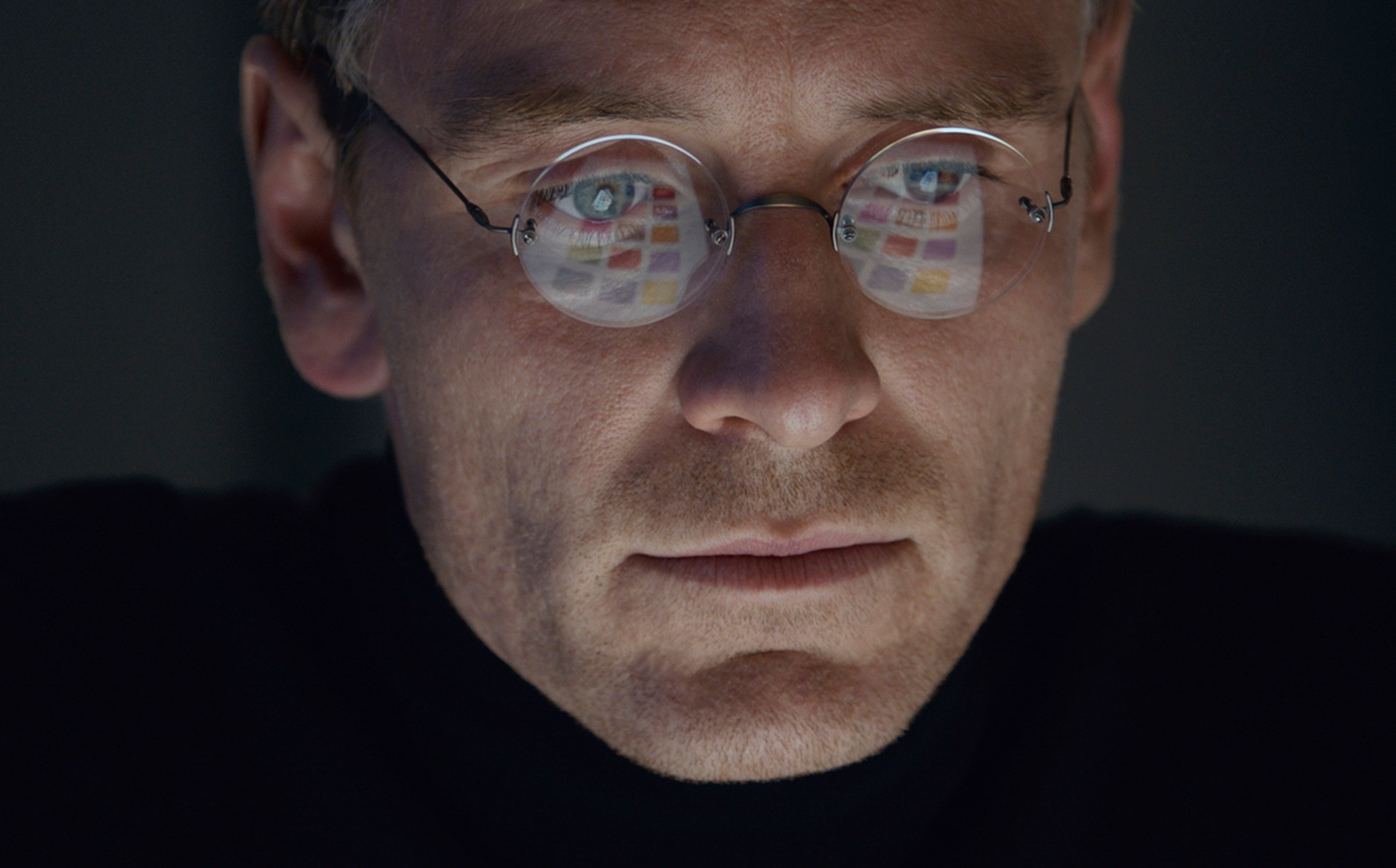
2015/ USA
Director: Danny Boyle
Starring: Michael Fassbender, Kate Winslet, Seth Rogen
Words: J. Wood
“It’s as if five minutes before every launch everyone goes to a bar, gets drunk and tells me what they really think”
The above quote, coming midway through the final act of Aaron Sorkin’s stage like biopic of Apple Computers founder Steve Jobs, outlines the supreme confidence of a writer who, like in his admittedly marginally better work on The Social Network, takes a subject inexorably linked to the somewhat dull world of technology and frames it with a narrative device so breathtakingly bold that it comes to define the film. This film spends two hours charting the behind the scenes goings on of three of Jobs’ product launches, over a thirteen year period, with only the briefest of flashback scenes to take the audience out of the drama.
The direction of Danny Boyle has a kinetic flashiness that compliments Sorkin’s writings just as much as that of David Fincher did, although this is a film that didn’t have as much need to be showy. Indeed the tracking shots through the labyrinthine hallways of various expo centres bear the hallmarks more of Martin Scorsese or Paul Thomas Anderson, but the glossy way in which the film is shot, even in the earlier scenes, filmed on Super 16 and Super 35 to match the periods being depicted, are unmistakably Danny Boyle. The Danny Boyle movie this reminded me most of, bizarrely, was 127 Hours, in the way Boyle and his team edit the expository like news footage as hallucinogenic like sequences to take the audience out of the droll, one note locations, much the same as he did to remove his audience, albeit momentarily, from James Franco’s tortured existence in the canyon.
In spite of the mastery and flair Boyle brings to proceedings behind the camera it is Aaron Sorkin whose stamp is most firmly on this film. Like David Mamet before him he just has an extraordinary way in scripting fractious relationships, often based around dispute and strife that is both extremely wordy, yet it has a verve and a point to it, unlike say a Quentin Tarantino like script. It is almost as if his scripts are poetry, a verbal game of Jenga or Kerplunk in that any mis-spoken word would lead to the whole thing crashing down. Having seen the film twice now I have been struck both times by how daring a move the strict three act structure is, pretty much revolving around the same core cast of characters each time, and how intriguingly it works.
In doing so there is something of a Cloud Atlas device going on in how certain relationships change for better or worse, whereas certain relationships stay the same throughout. For example there is a permanent grudging mutual respect between Jobs and Kate Winslet’s Joanna Hoffman, while Seth Rogen’s Wozniak is always belittled for wanting a modicum of credit. Conversely you see the gradual improvement in relationship between Jobs and his daughter Lisa in only three scenes, whilst John Scully goes from father figure, to Brutus, to forgiving redemption over three scenes. As for Jobs himself, he is portrayed fairly obviously as a genius, but the film is not afraid to accentuate his flaws, not just his denial of paternity but his bull-headed insistence of his own rightness in the face of all and sundry pointing out his mistakes.
The film is brilliantly acted, not least by Michael Fassbender, who, despite being given a character who is cruel, condescending and ruthless ensures that his magnetism as a leading man makes him an engaging, likeable central figure. Just watch the way he gets into a groove with the dialogue, not least in his second confrontation with Scully, or third with Wozniak, and see how he holds the screen with his sheer charisma. Even though it takes until the third act for any effort to be made for him to resemble Jobs, the change does not jar because the performance is just totally without deviation throughout, even though the film spans thirteen years, the film and Fassbender imply the character’s slight change and mellowing rather than layering it on with a trowel. Opposite him throughout is Kate Winslet, giving a supremely nuanced performance as Hoffman, the lightning rod for Jobs’ anger and frustrations, whose sturdy, immovable nature perfectly harnesses her maverick employer. It is the best I have seen Winslet for many years. Although the likes of Rogen, Daniels, Waterston and Stuhlbarg do not have the complexities of roles in the way Fassbender and Winslet have, their contributions are essential as their scenes with Fassbender are the lightning charges that power the film.
Steve Jobs should not have been this good, on paper making a film in this manner should not have worked. That said, Sorkin, Boyle, Fassbender et al are the types of names that could elevate the most uninspired, sub-par material to new heights, so working from the basis of something this different, they are able to produce a film as genuinely brilliant as this one.
The Lobster
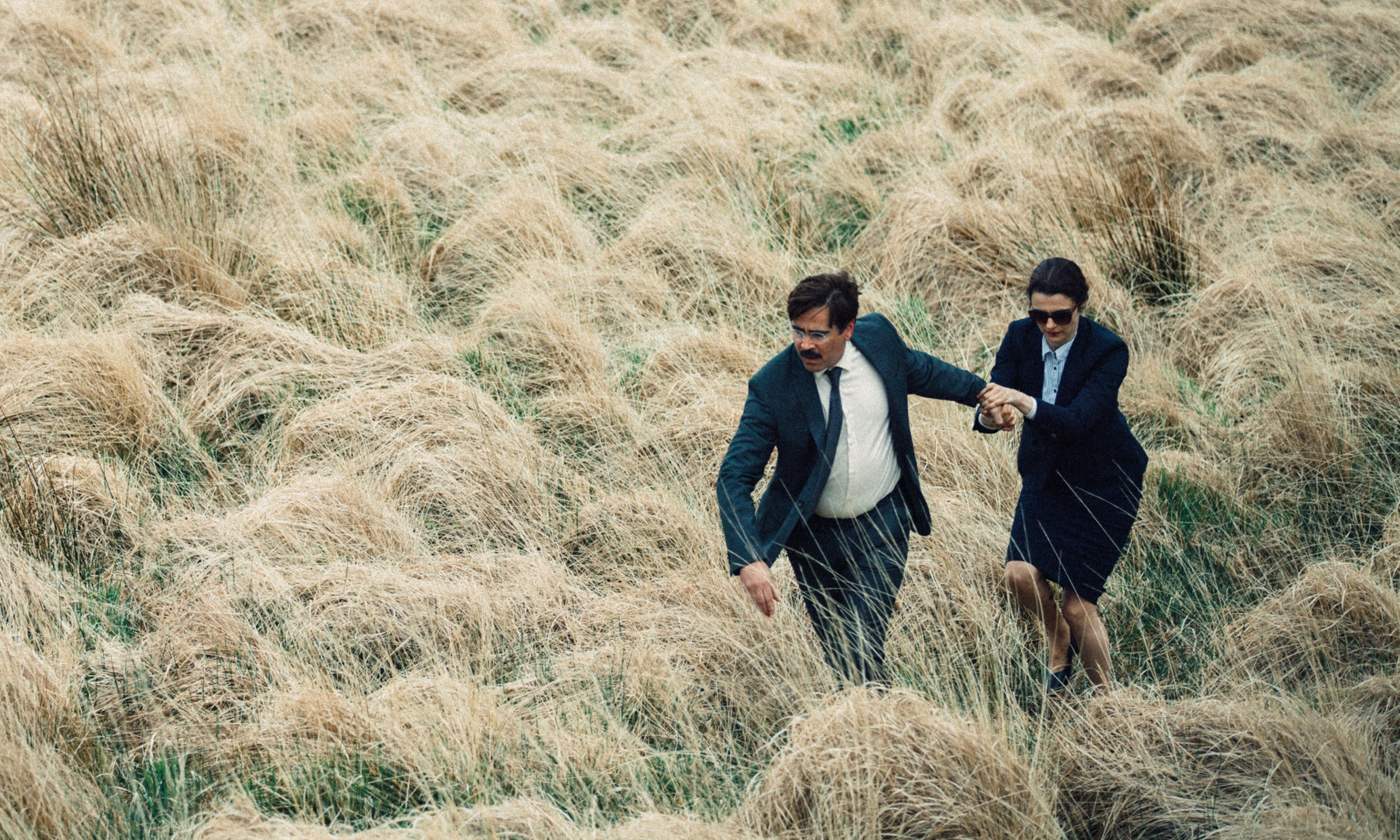
2015/ Ireland, UK, Greece, France, Netherlands, USA
Director: Yorgos Lanthimos
Starring: Colin Farrell, Rachel Weisz, John C. Reilly
Words: C. Abbott
The Lobster is one of those rare films that upon research will only provide more questions surrounding it. Whenever you describe the basic plot to someone their reaction will be that of “…right”. This is what defines the film; it is particular in its peculiarity. As such it is also the biggest strength and it’s most crippling weakness. There is no denying however that the film has a certain allure to it: the general awkwardness of the performances and stilted dialogue compound every frame into something that’ll be either rejected or embraced.
Taking place in an alternate world, vaguely set some years into the future, relationships are a necessity. Failure to be within one regardless of circumstance will lead you to an imposing hotel. You are given 45 days to find a partner and if you don’t succeed, on the 45th day you will be transformed into an animal of your choosing.
There you have it, enter the world of this abstract film: a world of societal conformity and obligation. Paralleling our own society, expressing the lengths we will go to not be alone and just how repressed people all can be. This is where the film shines in its examination of the human condition, our weaknesses and our strengths. We start to see how unusual and awkward we can be as both individuals and as a species.
That being said it isn’t without its problems. Entering the second act of the film we see the focus shift away from the hotel and move into the woods. It is here that the laws of this film’s universe are brought into question. Character motivations become increasingly unrealistic; however realism is something Yorgos Lanthimos was clearly not going for. There is more emphasis put onto the symbolism, composition and framing. Many times during scenes you’ll notice there is more going on than the basic narrative at the centre, leaving the viewer with a sense of: what have I just seen? This is ample reasoning for repeat viewings, something that would be a rewarding experience for those willing to tackle the intentionally non-standard stylings.
What is clear though is that everyone involved is on top form; the impressive cast give performances so brilliantly Napoleon Dynamite in stiltedness. Lanthimos has stayed true to form for those familiar with his previous works of Alps and Dogtooth. It may be challenging to some, but anyone willing to step into this world, the experience alone is worth it.
The Final Girls

2015
Director: Todd Strauss-Schulson
Starring: Taissa Farmiga, Malin Akerman, Nina Dobrev, Adam DeVine
Words: O. Innocent
Slasher films, by their very nature, have always been ripe for lampooning. Be it the bad acting and awful dialogue, the cheap low budget feel, or the excessive, almost aggressive obsession with sex and death, there’s just something innately ridiculous about these films that sets them up perfectly for a good old-fashioned send-up. One of the first slasher spoofs was Student Bodies (1981) which, coming right at the beginning of the slasher boom, concentrated on spoofing the early classics Halloween (1978) and Friday the 13th (1980). An unusual slasher spoof, April Fool’s Day (1986) fooled audiences into believing it was playing it straight until the final reveal when the killings are shown to be nothing more than an elaborate prank. Another surprising entry is Friday the 13th Part VI: Jason Lives (1986) which embraced the series’ funny side, lovingly satirising not only Jason and the subgenre, but also the classic Universal monster movies (Jason is resurrected via lightening a la Frankenstein (1931)) and even James Bond (the title sequence has Jason walking in profile before turning and launching his machete at the screen).
As the sun set on the golden era of the slasher film towards the end of the ‘80s the subgenre fell into self parody (most notably the Elm Street films where Freddy’s one-liners became more and more cringe-worthy as the series went on), essentially negating the need for out and out spoofs. Then suddenly, when the slasher film had seemingly been put to rest, along came Scream (1996) which, with its post-modern take where the teens know their slasher lore, both honoured the past and rejuvenated the subgenre ready for the 21st century. The Scream spoof, Scary Movie (2000), while funny in places, was completely superfluous as it parodied a parody. Apart from a few interesting self-aware takes such as Behind the Mask: The Rise of Leslie Vernon and Hatchet (both 2006), the slasher film, plagued by remake fever, started to go stale again as the major studios repackaged the likes of When a Stranger Calls (1979 & 2006), Prom Night (1980 & 2008) and The House on Sorority Row (1983 & 2009) for a new generation with decidedly mixed results. It Follows (2014) proved a welcome reprieve from these slick yet soulless rehashes with its menacing tribute to ‘80s slashers, although it ultimately failed to evoke that same sense of fun with its dour, downbeat atmosphere. The best deconstruction of horror conventions of recent years was, without a doubt, the Drew Goddard and Joss Whedon-penned The Cabin in the Woods (2011). However, while it did make reference to slasher films, its main source of inspiration was unsurprisingly cabin in the woods films like The Evil Dead (1981).
And now here we are in 2015 with yet another new angle on the slasher spoof with The Final Girls (2015). One of the most unashamedly fun films of the year, The Final Girls concerns a group of friends who, while attending a screening of ‘80s slasher Camp Bloodbath, get sucked into the movie and must first learn and then break the rules of the subgenre in order to stay alive. Hilarity ensues as the film riffs on the slasher’s bad dialogue, two dimensional characters, absurd situations, and strict adherence to a series of almost fixed in stone clichés, codes and conventions. The Final Girls isn’t just a point and laugh kind of spoof though, it’s surprisingly creative with its comedy. Take, for example, the overused flashback scene which is prompted by a character’s recounting of the old legend of the killer’s origins. This tired old convention is lovingly ripped to pieces as our characters’ world changes from colour to monochrome and they jump back in time to the ‘50s. It is clear The Final Girls is a film by slasher fans for slasher fans. The film isn’t, however, a slasher film itself; a fairly bloodless, sex free affair – much to the chagrin of some hardcore fans – it’s a comedy that deals with the fun of watching these films, not the horrifying, gross out aspects. There’s still much to love here, even if you are disappointed it doesn’t delve deeper into the slasher’s more exploitative side, as it perfectly encapsulates that nostalgic sense of pure guilty pleasure entertainment only films like Friday the 13th can provide. The camp setting is pure Camp Crystal Lake, the villain is an obvious homage to Jason Voorhees, and the dialogue is suitably stupid. It even finds time to reference hospital-based sequels such as Halloween II (1981). There’s also an emotional core to The Final Girls, usually absent in the films it’s spoofing, as our heroine gets to meet up with her late mother who was one of the stars of the film she’s now trapped in. The Final Girls isn’t your typical slasher spoof, then; it’s so much more. Funny, sad, clever and incredibly entertaining, The Final Girls is both one of the best comedies and genre efforts of the year.
Monday High-5: The Best of Steven Spielberg

Words: J. Wood
Ever since I started writing this weekly column I have kept abreast of the upcoming releases to decide upon topics and of course, when I saw that Steven Spielberg was releasing a new film I had to make his filmography a topic but, as this article has loomed, it has become more and more a burden, how do you cut Spielberg’s output down to five. So, in a break from tradition rather than do my five favourite Spielberg films I have decided to do my best Steven Spielberg film from each decade in which he has been making films (which handily happens to be five). The thing about Spielberg is that although he will be best remembered for ‘spectacle cinema’ and indeed is the directorial name even the most casual cinemagoer can bring to mind, I believe him to be an absolute master at serious cinema, and although there are a good number of his films I do not like, there are none I don’t admire what he was trying to do. So without further ado, here I go.
1970s – Jaws (1975)
This was the film that defined and created the term ‘blockbuster’ and, despite only being a 12 Certificate still scares the hell out of me today. This is quite possibly my favourite Spielberg film, although not necessarily the one I would call his best, and for such a young, inexperienced director is a work of remarkable confidence, composure and intelligence. Of course everybody knows the stories about the troubled shoot, the spiralling budget and of Bruce, the malfunctioning animatronic shark whose lack of functionality makes for some of the film’s best moments. Indeed Jaws would not be half the film it is without the Hitchcockian like ‘shark-eye-view’ shots necessitated by not having a functioning model, which aligned with John Williams’ iconic yet very simplistic score make for cinematic gold. Of course due to all the technical wizardry it is easy to forget just how well written Jaws is as a character piece, with Roy Scheider, Richard Dreyfuss and especially Robert Shaw owning the screen in the longer than you think fishing boat scenes towards the end of the film’s middle act. Indeed the acting is top notch throughout, with all the cast effortlessly creating real characters with real emotions reacting appropriately, if not always correctly to an unthinkable scenario. The defining moment for me will always be the boat wreck, when the body emerges. I have seen the film over twenty times and still jump at the very same moment. This is a blockbuster with a satisfyingly thought through final act unlike so many and I think, unlike a very prominent film critic some of our readers may be aware of, of course Jaws is about a shark.
1980s – Raiders of the Lost Ark (1981)
Indiana Jones is fantasy adventure cinema at its most pure form, a joyous, riotous thrill ride from beginning to end filled with exotic locations, brilliant chases and a bizarre plot driving the action. That the original trilogy is a string of brilliantly put together pieces of cinema on top of this only furthers just how fun they can be, and indeed I believe that at their best moments they are the most purely enjoyable films Spielberg has ever made. In a decade that also included E.T. choosing an Indiana Jones film was difficult, and choosing which one was even more so. Although my editor disagrees Indiana Jones is clearly better with Nazis, and although my childhood favourite was always The Last Crusade, Raiders of the Lost Ark just pips it for my 26 year old self. There is a sublime confidence about it as a piece of filmmaking, not just from the bravura opening temple sequence, but just the fearlessly breakneck speed at which Spielberg gets into telling his story. Moving from Nepal, to Egypt and beyond in a search for the Ark of the Covenant, there is just the right amount of religious undertone to the boys own adventure nature of the story. Boasting Karen Allen as the best companion Indy ever had, and in Belloq and Toht the finest adversaries he ever came up against, Harrison Ford played the role with sublime coolness, not least at the moment he ends a swordsman’s threat in the most casual manner. Why is this my favourite? Partly because it created the icon, introduced us to (another) iconic John Williams score, but mostly because, although I still think this misses the added sense of fun Sean Connery brought to The Last Crusade, its not half as much a miss as Marcus and Salleh were to Temple of Doom.
1990s – Schindler’s List (1993)
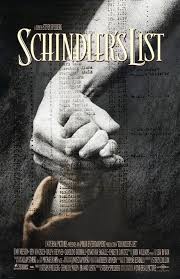
The very best movie Steven Spielberg has ever made and the film that, after the tepid receptions The Color Purple and Empire Of The Sun received, proved that there was a genuinely great director in Spielberg and not just a master emotional manipulator and purveyor of great spectacle. The great wisdom of this film is that it tackles a minute pocket of a vast horror of the 20th Century and, in doing so, gets right to the heart of the issue. Shot in gorgeous monochrome, save for the one girl in the red coat in the Krakow Ghetto, the payoff to a seeming anomaly being simply spellbinding, the film has a timeless feel that helps let it stand alone in Spielberg’s filmography. This is a film that does not rely on any bravura filmmaking tactics or clever techniques, just brave, bold storytelling. When Ben Kingsley, as Itzhak Stern is the weakest of the three main players it emphasises the quality of the acting. For my money Liam Neeson has never bettered his turn as Oskar Schindler, turning the character from a manipulative small time middleman out to exploit an oppressed people to someone so affected by the horrors he has seen that the smallest gestures break him, it is simply masterful to watch, as is Ralph Fiennes’ sadistic turn as pure evil camp guard Amon Goeth. The film has one sequence of such horrendous bravura, in which a trainful of Jews arrive at Auschwitz, their fates seemingly sealed. The entire sequence is supremely tense in the most unbelievable of ways that you forget that this is not some tent pole thriller but a drama about the lowest depths humanity can sink to. Some dislike the final scene, using it as a stick to beat Spielberg with for his toying with emotions but it, along with John Williams’ mournful score are perfect fits for a perfect movie.
2000s – Minority Report (2002)
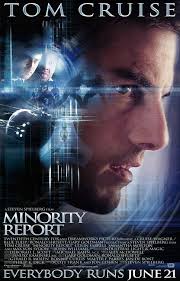
This is often remembered as just another Tom Cruise thriller from the time when his status still allowed him to command an audience single-handedly, but what it is instead is ‘The Best of The Rest’ Philip K. Dick cinematic adaptation after the peerless Blade Runner. Cruise stars as John Anderton, a surprisingly flawed character for a big summer movie, and part of a future Pre-Crime unit who goes on the run after being accused of a future murder. This is one of the few heroic roles in which I like the way Cruise is directed, with Spielberg choosing to expose the strange flaws to his personality that make him such a great villainous/creepy turn (Collateral/Magnolia), while never losing sight of the fact that this is a big budget summer movie, bread and butter to him. The film’s utilisation of Cruise works brilliantly to its advantage as his believability in the dependable leading man role to allow Colin Farrell and the brilliant Samantha Morton a sounding board for which to use to offer ‘braver’ performances. Morton especially is phenomenal in a very testing role and, while I would class my relationship with the output of Colin Farrell as ‘difficult’ there is a raw energy to his pursuer here that has dissipated over the years. Not to put this down but of the five films to make this list this is my least favourite, but that is not a disservice in the slightest, merely a major compliment to the others. There are very few directors who could make a two and a half hour feel so short, take subject matter like this and offset such depressive subject matter with exhilaration and get away with it, but then I guess that’s the quality that means Steven Spielberg can release a film over 40 years after his first and still get such wide and positive press for it.
2010s – Bridge Of Spies (2015)

I saw this a few days ago and walked out of the cinema pleased that not only had Spielberg come out of a relatively poor spell but he had also for me made his best film since 1993. This is a superbly written film, and it is surprising to see quite how at ease Spielberg’s filmmaking is at accommodating some of the quirkiness of the Coen Brothers, a trait he has steered clear of for much of his career. This is the kind of film I had worried Spielberg could make in his sleep to a three star standard, but this is pretty much as good as it gets. Utilising Tom Hanks in the way he ought to be, as the defiant everyman, almost the Jimmy Stewart of his generation, this is a performance of great resolution, of great morality, yet of great interest, the character is multi-faceted in spite of his rigid beliefs, and even manages to pull off having a cold to perfection. He is blessed with a fine supporting cast, not least in British theatre giant Mark Rylance, who gives a performance of such subtleties and nuances I cannot wait to rewatch this, simply because I just cannot believe that it is as good as I believe it to be. As a filmmaker Spielberg punctuates the main drama here with two or three extended sequences that are both inherent to the plot yet running tangentially from it, and this is where he has his fun. As always Adam Stockhausen designs the sets and look of the film wonderfully and, despite giving himself the opportunity to, Spielberg swerves away from his now traditional emotional manipulation of his audience, and this for me made the film all the more special.
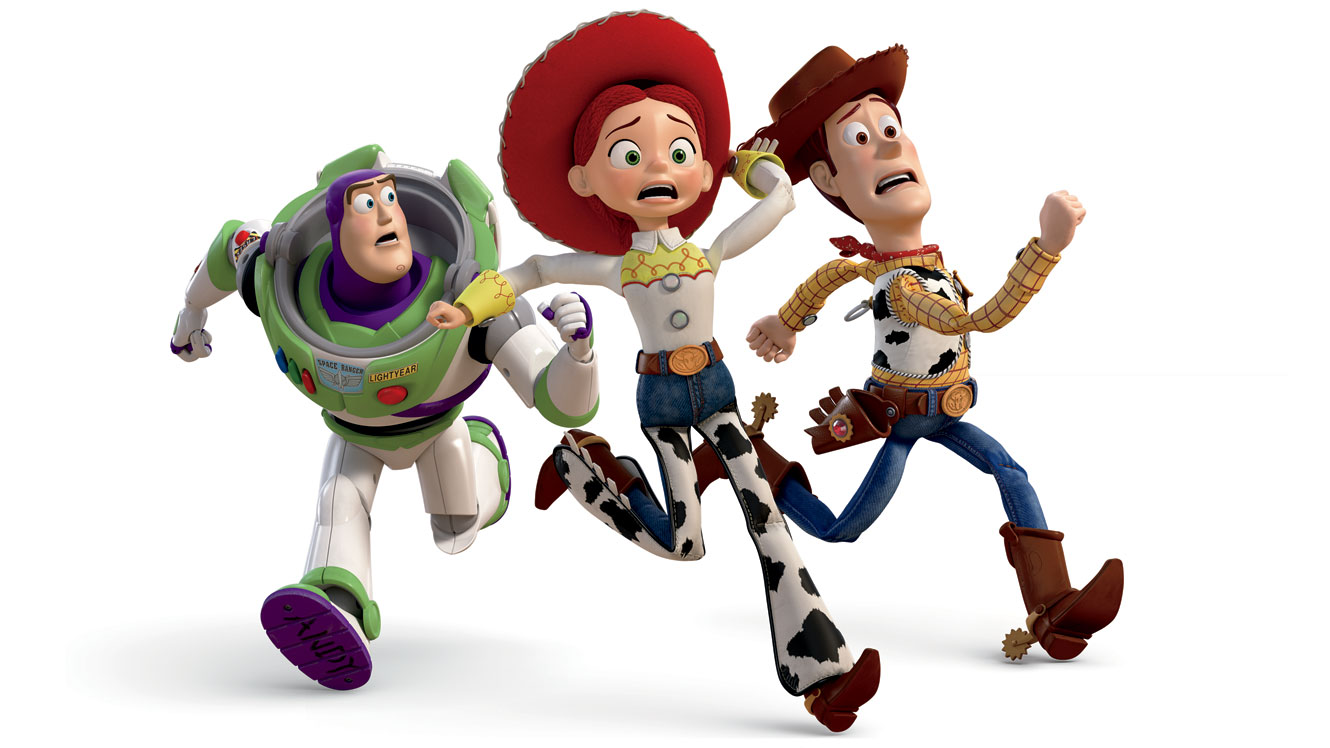
The Pick of Pixar
Words: J. Wood
I sit here writing this article on the day that Toy Story reaches the 20th anniversary of its premiere, feeling very old, so I’ll just let that sink in. In the two decades since that momentous beginning Pixar has become synonymous with excellence, magic and wonder as the finest purveyor of animated cinema anywhere in the world. Pixar so often pushes the boundaries, and we as a collective cinema going public should be so pleased that they do. When you look at a Pixar Top Five that does not include films as brilliant as Finding Nemo, Monsters Inc. and Ratatouille you get an idea of how great a back catalogue they have, and how difficult this list was for me to narrow down to just five films (more on that later). In anticipation of The Good Dinosaur, the studio’s latest release, which hits cinemas next week, here are my favourite Pixar movies.
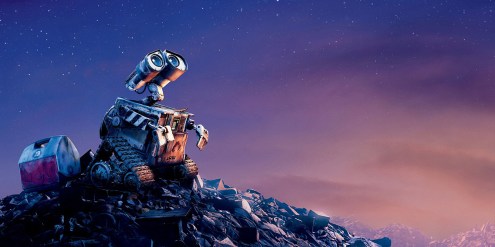
5: Wall-E (2008)
Owing a great debt to the science fiction films of the 1970s that I so love, Wall-E for me marked the first time Pixar made a film that was probably more suited to adult audiences than children, albeit remaining in the parameters of the U Certificate. It is a film of two halves, the first a near silent love story between two robots on a desolate, post-apocalyptic Earth, and the second a more slapstick comedy set aboard off world colony ships. I have often thought that Wall-E never quite got the credit or respect it deserved. If a live action film had been made of the script for the first thirty minutes at least, I would have expected to see it win numerous awards, yet this animation feels somewhat forgotten. I am not quite sure about the off-world sequences; they are brilliant, yet coming off the back of the stellar opening movement they just feel lightyears away from the film I had until two minutes earlier been watching, a not insurmountable problem but a tonal shift I struggle to adjust to. That aside the design team here did simply wonderful work on the post-apocalyptic landscape, and indeed on Wall-E himself, a beautifully cute piece of design that helps you warm to an otherwise alien story somewhat. Ben Burtt’s sound work is often praised, and here should be no exception, as it is his great skills used to add personality to Wall-E and Eve that elevate the film to a higher plain.

4: The Incredibles (2004)
I am a comic book reader. I am a huge superhero fan. I totally lap up any and all press regarding superhero comic book movies, and yet with the exception of Christopher Nolan’s The Dark Knight trilogy I would class The Incredibles as the finest superhero comic book movie of last decade. It may not have the serious, awards friendly implications of much of Pixar’s more lauded output (of which more later) yet it shows off the studio as a fantastic animation studio. Making fun, fast paced, cinematic films that are written as sharp as a tack, and extremely funny at the same time. I do like the almost Watchmen like premise of superheroes retired, living normal, mundane family lives despite having incredible powers, and even the children heroes, often such an annoying idea, work a treat here. With the exception of Samuel L. Jackson the film never felt the need to use big name Hollywood stars, and still proved to be a wonderful piece of cinema. Rewatching it again only recently I was struck by how much of it now appears to be a cliché, simply because so many films of the superhero genre follow a similar narrative route, yet how this film somehow managed to pre-emptively satirise much of this. Highlights include Jason Lee’s hilarious Syndrome, a villain who simply blows more modern, sub-par interpretations out of the water, and Edna Mode, outfitter to the heroes. Brad Bird, a great director of live action cinema, will be returning for The Incredibles 2, something to genuinely look forward to.

3: Inside Out (2015)
Pixar has employed some great directors throughout its twenty years of feature film production, but this summer Pete Docter proved once and for all that he is the cream of the crop, a man who quite happily takes the naturally daring attitude of the studio and amplifies it to unexpected levels. Inside Out is a film that seems to me to be aimed squarely at adults, with the bright, shiny characters seemingly a concession to the children. On a design level alone this film simply knocked me for six with its breath taking interpretation of the human brain as a world with banks and banks of Minority Report style memory balls, vast canyons of forgotten memories, and a whole industry backing up the internal workings of an eleven year old girl. To make the main characters the five key emotions of said girl was brave, bold and a total success, written in such a way as to have scenes of the girl in the real world as explanatory moments as to what effects the main characters actions are having upon her, as Sadness and Joy tussle and get lost, causing an emotion vacuum leading to an animated child character displaying symptoms of depression. In a family animation. The film never forgets to be funny, but also at the same time remembers that fear factor is also something worth thinking about in children’s cinema. The main cast all expertly encapsulate rigid character archetypes with aplomb and although even I do feel that some of the concepts introduced (abstract thought) veer a bit too much into philosophy, and the idea of going into other people’s minds is underused, missing a trick, this is a truly special film and a fine return to top form for an amazing studio.
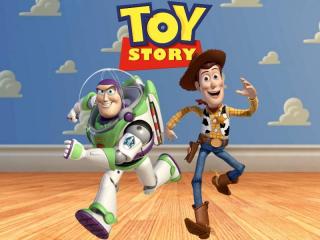
2: Toy Story / Toy Story 2 / Toy Story 3
(1995/1999/2010)
OK so I cheated a bit here but I’m sure you will forgive me. As you know I often try to avoid putting multiple films from the same franchise, or actor/director collaborations into these lists, but being asked to choose between the Toy Story films is tantamount to being asked to choose between your children. Each of them are special in their own particular way and, although they have a wide appeal to people of all ages, I find that they resonate most with children the same age as Andy is in that particular film. The first film is a life lesson in sharing, maybe acclimatising to getting a younger sibling and no longer being the centre of your parents’ attention. Toy Story 2 shows that there is a wider world out there to be explored, not feared, yet never losing sight of home while Toy Story 3 (my personal favourite) is all about letting go of childhood but still fully embracing the joys it gave you. Each of them is full to the brim with their own merits, be it the surprisingly horror inflected bedroom of Sid in the original, the Star Wars inspired joys of Emperor Zurg in the second and the heartbreakingly beautiful scene in the recycling compactor in Toy Story 3. Woody and Buzz are simply the two greatest animated characters ever and, in Tom Hanks and Tim Allen, are brought to life just perfectly. The wide ranging supporting cast are so cleverly written that there is nary a moment goes by throughout the trilogy without a laugh, and the sight gags are at times breathtakingly brazen. Each film is given the perfect antagonist(s) to aid the story, and if I ever were to have children these would be the first films I would show to them. I do have trepidation regarding the upcoming Toy Story 4 simply because the trilogy ended on such a perfect note, yet these three films are so brilliantly made that I have upmost faith in the film makers, and come on, who wouldn’t want to spend more time in the company of Woody, Buzz et al?
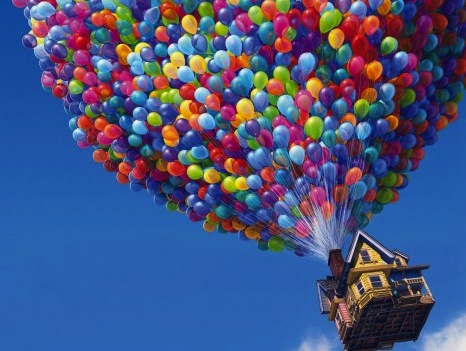
1: Up (2009)
My very favourite animated film of all time, Up is yet another symbol of just how brave a studio Pixar can be and just how great a fit director Pete Docter is for the studio. Up is an emotional rollercoaster of a film, one that breaks you with the bravura opening montage and spends the rest of the film putting you back together. Ostensibly the film is sold as an adventure film about a cantankerous old man who flies his house with a bunch of balloons to a magical land of talking dogs and brightly coloured birds, with a young Boy Scout accidentally in tow. What the film is actually about are the themes of overcoming loss and not letting life end for you, and how to handle rejection from someone who ought to be vital to your life. Both Carl and Russell have had hard deals in life. Carl’s story opens the film, with that astounding montage which depicts his whole life with his wife, taking in the devastation of being childless before heartbreakingly widowing him. This is after ten minutes. Russell is a little less obvious but he has clearly come from a broken home, and is in need of a father figure. Their bond is what makes the film, as both characters are perfect for one another, it just takes Carl almost the whole film to realise this. In some respects I understand why some claim the film’s action adventure heavy second half undermines the emotional intensity of the film’s message but I disagree, I believe it underlines it. Put simply, Russell has never been taught how to properly live life, whilst Carl has been unable to bear living life without his beloved Ellie, yet their shared experience jolts them into a life they either did not know or had left behind. The Charles Muntz character may not be the most interesting Pixar villain but he more than serves his purpose, whilst the talking dogs are scene-stealingly hilarious. Up is a film I could talk about for hours, a film that brings tears of sadness and easily replaces them with tears of laughter. It is one of the great films of the century thus far, and will long remain so.
Spectre

2015/ UK, USA
Director: Sam Mendes
Starring: Daniel Craig, Christoph Waltz, Léa Seydoux, Ralph Fiennes, Monica Bellucci, Ben Whishaw, Naomie Harris, Dave Bautista
Words: J. Senior
THE DEAD ARE ALIVE
This text ident at the start of Spectre the 24th entry in the James Bond franchise is actually a rather telling statement, and one which informs the majority of events in this film thereafter. Sam Mendes’ second, and last James Bond outing is not a film to be forgotten easily. And yet again, the director uses the tried and tested spy format to try and tell a story with more depth and anguish than ever before, whilst also sticking to the character’s roots and providing a gleeful celebration in all things 007. As Bond digs deeper into the sinister organisation known as SPECTRE you almost feel the fun factor escalating up to a rip-roaring 11.
If Skyfall was a good film with James Bond as the central character then Spectre is really just a good Bond film all round. Up until 2012 Daniel Craig’s Bond had been somewhat impressive but had seemed too far removed from his own fictional world, he was slightly too grounded in reality and the character felt adrift in an ocean of mediocrity. Casino Royale was a good start for the character’s regeneration, but the attempt to go one better with Quantum of Solace simply alienated Bond in a way which hadn’t been seen since Never Say Never Again. Without the staple of characters around Bond like M, Moneypenny, Q and some recurring villains, he was alone in a rather dull and uninteresting narrative world. Quantum, was probably intended to become Spectre, however it was so un-villainous by the end of that film that the franchise nearly stalled altogether. Skyfall brought Bond back to the table, introduced our supporting cast and a few nods to Bonds past. However, while it was fantastic, it still wasn’t quiet a James Bond film. Undeniably beautifully shot and high on intrigue, but lacking that balance between the darker and lighter sides of the character fans had been missing.
Spectre rectifies this from the get go. Daniel Craig finally seems to be enjoying his role here. He is able to switch from moments of humour and transition easily into an aggressive intensity at a moments notice. This is the real selling point of the film. It isn’t all doom and gloom, you can enjoy yourself whilst also being taken along for the ride that the plot whisks you away on. The film is high on action, dark and gritty but also takes time to play for laughs as well. Bond is at his best when he doesn’t take himself too seriously and it’s a joy to behold seeing Craig slowly realise this.
In the age of the shared universe and other MCU like iterations it’s easy to forget that James Bond has slotted in with this popular trait on the back of Skyfall. Spectre trades off of the latter’s strong character work and with a returning cast starts to expand its net further by bringing back the infamous Mr. White from Craig’s other Bond outings and introducing us to Dave Bautista’s solemn Mr. Hinx, who is sure to play a part in any future James Bond movies to come. Christoph Waltz’s big reveal in the film will also completely alter the course of Bond in the 21st Century. With such limited screen time his impact cannot be understated and will most definitely cause a seismic shift in any narratives going forward. James Bond’s world is now populated by a wide array of characters that mean different things to him, no longer the lone wolf, this Bond now runs with the pack. With friends, enemies and multiple Bond girls to boot.
Belluci is the woeful stereotype, whereas Seydoux the stark opposite of female stereotypes in Bond films. Striking a nice balance in gender power roles. You win some you lose some I guess?
Sam Mendes does well to also note that James Bond, no matter how entertaining, Bond has other effects on its audience than just escapism. He also uses these films as a political platform. Bond is a political symbol, the symbol of how Britain conducts itself in international affairs and how it shapes the world around it. Spectre takes time to criticise surveillance culture and also the privatisation of stoic British institutions. Andrew Scott’s C is attempting to privatise national security and is ear-marked from the off as a threat not only to Bond but the 00-programme entirely. Mendes outlining here the dangers of trusting international corporations with the running of our most beloved institutions whilst also weighing in on the post- Snowden debate at the same time. His James Bond films have been wonderfully self aware and have said much about the world around them taking on another level of depth and intelligence often lacking in big budget movies.
The pay off with Spectre is that it really leaves you wanting more. By its end we have a resolution to Bond’s personal arc in the film but are left with so many open plot threads that another Daniel Craig helmed 007 adventure is not an unthinkable notion at all. Whether he stays or goes there is no denying him this film’ success. It does however feel like a fitting send off, Spectre somewhat compiles all of his Bond films into one narrative and attempts to bring them under one cohesive plot. Craig could comfortably do more, but why would he or should he?
The interesting thing about characters like this is the Doctor Who like regeneration that takes place when a new actor takes on the role. Spectre ends in such a way that if say Damien Lewis, Michael Fassbender or Idris Elba were to assume the role of Bond they’d be well placed to take the character onto new ground, with a new set of motives and conflicts whilst keeping the character within his newly established world.
The dead are alive… messages and faces from Bond’s past arise to push him forward and drag him down. Craig’s Bond may have been firing bullets and tackling bad guys in his own Bond swan song, his character’s cinematic death. For better of for worse, we now have a Bond franchise that no longer rests of the laurels of one actor, director or creator. We have a rapidly accelerating James Bond juggernaut. If Daniel Craig is about to step off, I can’t wait to see who climbs on to take the wheel next.
A Month Of Alien: Prometheus

2012
Directed by: Ridley Scott
Starring: Noomi Rapace, Logan Marshall-Green, Michael Fassbender, Charlize Theron, Idris Elba, Rafe Spall, Sean Harris, Guy Pearce
Words: N. Scatcherd
Prometheus is a film which, from its inception, seemed like it was being made up on the spot. It was announced as a straight Alien prequel; and then as a story set in the same ‘world’ but having nothing directly to do with the Alien franchise; and then emerging as something between those two things, with Scott calling back to his original ‘79 film while attempting to spin things off into an altogether separate strand of mythology.
It could be argued that Scott and co were playing coy about how Prometheus fit into the series in an attempt to drum up mystique and speculation, but the finished film seems so sloppy and haphazard at points that it seems more like there were some opposing impulses at play; a desire for artistic freedom on one hand, and on the other, a begrudging acknowledgement of the studio’s need for fan-appeasement. The film wants to have its cake and eat it, trying to stand on its own feet as a new, sweeping sci-fi epic untethered by expectation, while also resignedly and limply nodding at the original film as though it feels obliged to.
Scientist Elizabeth Shaw (a miscast Noomi Rapace) and her boyfriend/fellow scientist Charlie (Logan Marshall-Green) discover ancient cave paintings which appear to show how a race of aliens – dubbed ‘Engineers’ – had a guiding hand in the development of early humanity (as it turns out, they actually created human life on Earth). So, our intrepid protagonists jet off with a crew of fellow scientific folk from various fields of research, all of whom have been hired by the Weyland corporation (this is indeed a prequel, taking place pre-merger before the company is ‘Weyland-Yutani’, as we know it from the rest of the Alien series), and of course things spin out of control as they delve into the fundamental questions of existence, and come face to face with makers who seem less than benevolent.
The film certainly looks good, at least. A particular standout is the almost dreamlike opening scene, wherein one of the Engineers appears to sacrifice his own DNA in the creation of human life. Also, the creatures here are particularly icky and frightening (a huge, monstrous kind of proto-Facehugger appears in one scene and is genuinely horrific). Scott certainly still has a flair for visual design, and on that count Prometheus is undeniably strong. It’s the storytelling that lets the film down, with some bafflingly lazy scripting and stilted dialogue. Supposedly intelligent characters behave in some scenes like total idiots just so the plot can progress in a certain way (the most irksome example being Rafe Spall’s biologist deciding that, when faced with an obviously hostile vagina-serpent creature, the best course of action is to treat it like a cute little puppy). There are also holographic visual recordings of the Engineers which appear seemingly at random, used as a lazy way of tossing off bits and pieces of backstory. They genuinely make no sense at all and feel entirely devoid of context (and don’t get me started on the ‘black alien goo’ which seems to do whatever the plot dictates it can at any given moment).
Perhaps the most frustrating thing about Prometheus is how self-important it feels. Scott seems to overestimate how interesting his plot actually is, teasing all these ‘Big Ideas’ about the creation of humanity; where we come from, why we’re here, and our ultimate destiny – but they’re all ideas which have been explored in more depth, and more entertainingly, elsewhere. The answers we do get feel ploddingly predictable, and by the end of the film there are only more questions raised. It’s no surprise that it was co-written by Damon Lindelof, co-creator and chief writer of the infamous TV series Lost, which was similarly nebulous and evasive when it came to what the ‘point’ was.
At its core, Prometheus feels like a lot of set-up with little pay-off; a two hour prologue for a movie which might actually do something interesting with the Alien series. Hopefully Alien: Paradise Lost (whatever it ends up being, and if it’s still even called that by the time it comes out) will take the glimmer of potential Prometheus offered and make good on it.
After all, isn’t it about time we had another decent Alien movie?
A Month Of Alien: Alien Resurrection
Words: N. Scatcherd
So what with Ridley Scott’s recent confusing/confused comments regarding the future of the Alien series (“Prometheus 2 isn’t going to lead into the Alien films, although it totally is and it’s actually called Alien: Paradise Lost, but it might still take another three movies anyway, and what’s an ‘Alien 5’?”), I thought it would be fun to run through the franchise – which becomes increasingly, fascinatingly messy and weird – reviewing each movie week by week.
By this I mean Alien, Aliens, Alien 3, Alien: Resurrection and OK, fine, I’ll do Prometheus as well (*sigh*, the things I put up with…). I’ll be reviewing each film in the version it was released, so no director’s cuts or assembly edits. Also I want to stick to the films which are ‘officially’ canon in the franchise – so no spin-off Aliens vs Predator bullshit either. Sorry to all three of you who enjoy those movies.
All right, without further ado…
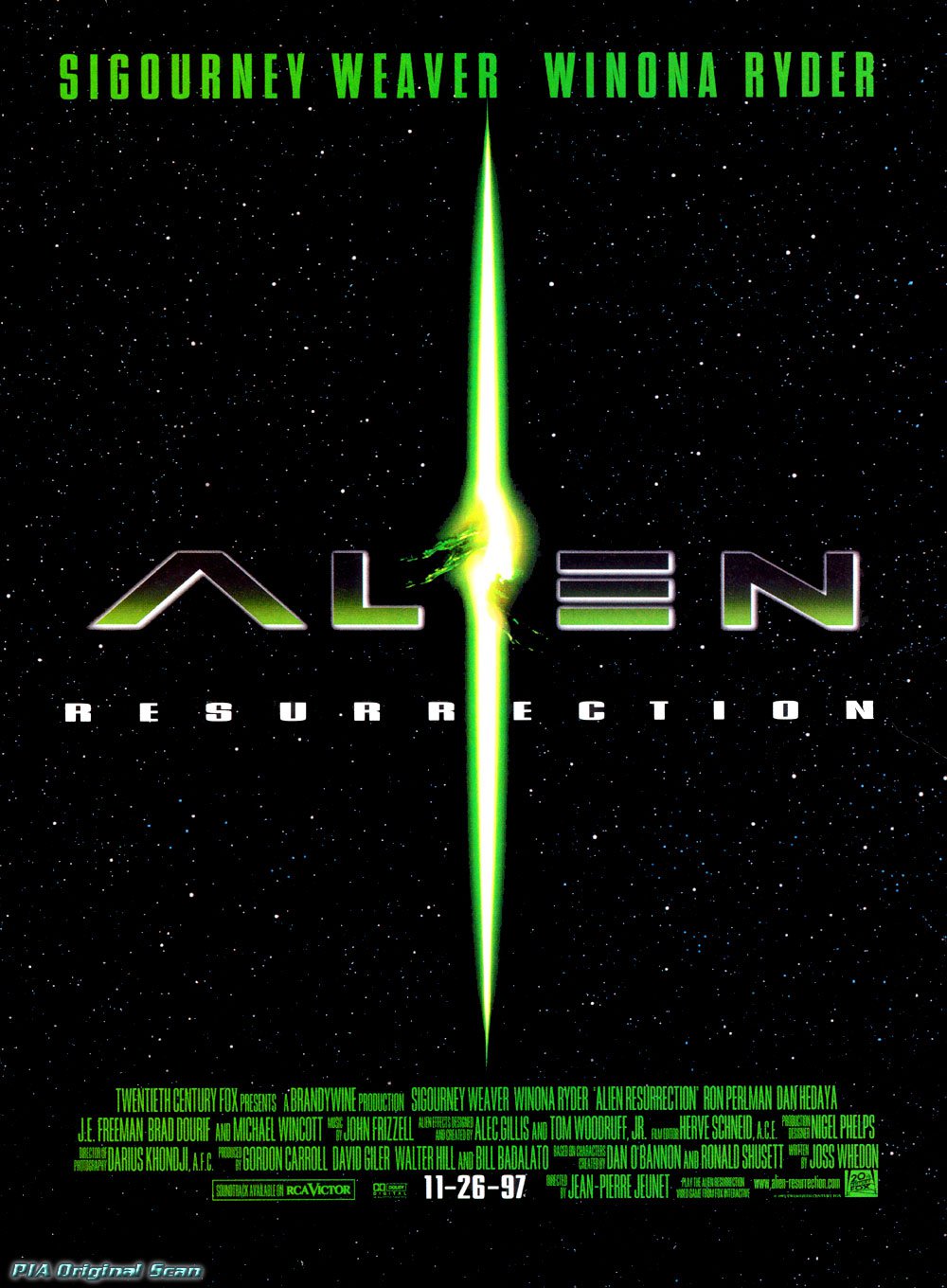
ALIEN: RESURRECTION
1997
Directed by: Jean-Pierre Jeunet
Starring: Sigourney Weaver, Winona Ryder, Michael Wincott, Ron Perlman, Dominique Pinon, J.E. Freeman, Brad Dourif, Dan Hedaya
After Alien 3, Fox Studios were faced with a bit of a predicament. The Alien series appeared to have come to a natural close, with Ripley sacrificing herself to destroy the Xenomorph threat, getting the heroic death she deserved and saving countless lives from the Alien Queen inside of her (and moreover, from the sinister machinations of the Weyland-Yutani corporation). But as ever, studio greed ruled that the financial success of the franchise meant that it had to continue, logic be damned. And so, despite the finality of Alien 3 – not to mention its generally perceived feebleness (stressing “generally perceived” – I’m actually quite fond) – Alien: Resurrection staggered into existence.
The fundamental problem with Resurrection is that it can’t even justify its own existence, beyond the obvious aim of making money. The series had already come to a neat end, and by this point there was nothing particularly interesting or vital to add. There is an entertaining and admittedly well-argued theory that Resurrection is actually all about how redundant it is, mocking itself in a way so beautifully, subtly satirical that I wish I bought into it (http://thespoilist.com/the-apologist-in-defence-of-alien-resurrection/). Alas, I feel like the theory is simply trying to do a favour for a bad movie.
The film takes place two hundred years after the events of Alien 3. Scientists have managed to clone Ripley and extract the Alien Queen embryo from her, because of course that’s a great idea. The clone, ‘Ripley 8’, is kept alive for reasons the plot doesn’t really bother to explain, and she exhibits some unusual qualities (super-strength; acidic blood; looking exactly like Sigourney Weaver but with none of her charisma). Yes, she’s part-Xenomorph – in fact, it isn’t clear how much of the original Ellen Ripley remains at all. The extracted Queen quickly matures and starts to breed; a motley crew of bounty hunter types* shows up with some people they’ve kidnapped – no questions asked – who as it turns out are for use as Alien hosts; and the Queen’s subsequent ‘children’ are tested on by nefarious scientists (chiefly, J.E. Freeman and Brad Dourif) who want to tame them for use as biological weapons. Anyway, shit predictably hits the fan and ‘Ripley 8’ sort-of teams up with the crew, as they attempt to destroy the ship and the Aliens onboard before it reaches its destination… Earth.
Now, as ridiculous and inconsequential as all of this sounds, there’s actually a silly, fun adventure romp hiding somewhere in that premise. The problem is chiefly one of tone. For a film to work on the most basic level, it needs a consistent ‘feel’. This is something Resurrection lacks, flitting between wannabe Aliens-style action and weirdly misjudged, humourous camp, with one scene (wherein ‘Ripley 8’ discovers the previous seven ‘failed’ clones) briefly veering into queasy body horror, and admittedly showing off some impressively nasty designs with its mangled, monstrous Ripleys. Director Jeunet’s distinctly French sense of humour and stylistic sensibilities may work well elsewhere, but they feel totally wrong for an Alien film, throwing out most of the horror at the series’ foundations but not replacing it with action that’s remotely compelling, or even believable characters we might care about. The film just feels messy, lazy and unsure of itself throughout, and any of the wild, over-the-top promise of the basic plot – with its clones, bounty hunters and pet Xenomorphs – is squandered in a turgid quagmire of identity confusion.
The performances are almost uniformly poor, with the aforementioned Freeman and Dourif both in sneering pantomime villain mode, along with Dan Hedeya as a hysterical, cartoonish general; and on the other hand, Winona Ryder woefully miscast and trying to play things straight. Even Weaver feels like she’s coasting here, perhaps dimly aware of how badly the film was betraying the legacy of its predecessors but too contractually obligated to pull out (she did co-produce the movie, but given how staunchly she had previously fought for artistic integrity in the franchise, I find it hard to believe she was fully onboard with the direction Resurrection went in).
The film gives ‘Ripley 8’ a kind of ambiguous morality, positing her as a wildcard who could turn on the humans as quickly as she kills her Alien ‘family’, but she’s so devoid of any real personality (functioning as a plot device rather than a character) that she just feels like an empty, tedious mockery of the ‘real’ Ripley. One very minor saving grace is that the bounty hunter crew is led by Michael Wincott, who is gifted with a truly fantastic voice. It’s like whiskey-drenched sandpaper, and I mean that in the best possible way.
The editing is at points so unnecessarily flashy that it’s distracting, and the actual picture looks desaturated and ugly (and I should mention I’m basing this review on the supposed crisp picture-quality of the Blu-Ray version). The previous films used a kind of stripped-back aesthetic to present a compellingly dark, low-tech future; here, everything feels over-designed and obviously manufactured, to the point where it looks strangely cheap. I confess to enjoying how gloopy and icky the Aliens are here, covered in a thick layer of ooze and helped by some good prosthetic-work. That said, I share the same problem many fans of the franchise do when it comes to this movie; the Alien Newborn, a kind of warped mix of human and Alien DNA spawned by the Queen (yet identifying with Ripley as its ‘mother’), is a deeply stupid and regrettable new strain of the species.
Resurrection? Should’ve stayed dead.
*Joss Whedon wrote the script (though he has firmly distanced himself from the finished film), and these characters feel like rough prototypes of the loveable crew of his TV series Firefly, which would burn brightly but briefly from 2002-2003 (by the way, if you’re reading this and you haven’t seen Firefly… well, why are you bothering with this drivel? Go watch Firefly).
The Best of Bond

Words: J. Wood
Daniel Craig is advertising vodka, Naomie Harris is advertising mobile phones, and Sam Mendes is set to appear as special guest on a live episode of Kermode and Mayo while TV Talk shows at the minute are full of Craig, Harris, Lea Seydoux, Christoph Waltz and Ben Whishaw. All this can only mean one thing, Spectre, the 24th James Bond film is finally upon us. Bond is one of those rare cinematic specimens that have somehow transcend to become a cultural phenomenon and, 53 years after the release of Dr No, the franchise seems as popular and in good health as ever. I myself am brimming with excitement at the prospect of Spectre’s release, hoping they capitalise on the great success of Skyfall rather than make the same mistakes made on Quantum Of Solace. Until then, I decided to have a look back at my favourite James Bond films, and share my thoughts with you.
7: You Only Live Twice

You Only Live Twice brought about some of the tropes of Bond that have made their way into popular culture so permanently. Of course anyone who has seen the Austin Powers movies will see much of what Mike Myers was riffing off within this film, and to label it a cultural yardstick would in my opinion be very accurate. It is as well a very good movie, and yet the first of the series that truly stepped well away from the vaguely plausible and into the absurd fun we now take 007 for. From the spaceship that eats other spaceships, to the volcano based lair, this film really does megalomania very well, rolling out the concept of S.P.E.C.T.R.E. from Thunderball. As Blofeld, one of cinema’s most iconic villains gets his most iconic rendering thus far, here by Donald Pleasance, and while the Bond girl is somewhat lacking, the setting of Japan is wonderful, whilst John Barry’s score still remains a highlight of the entire series.
6: Live And Let Die
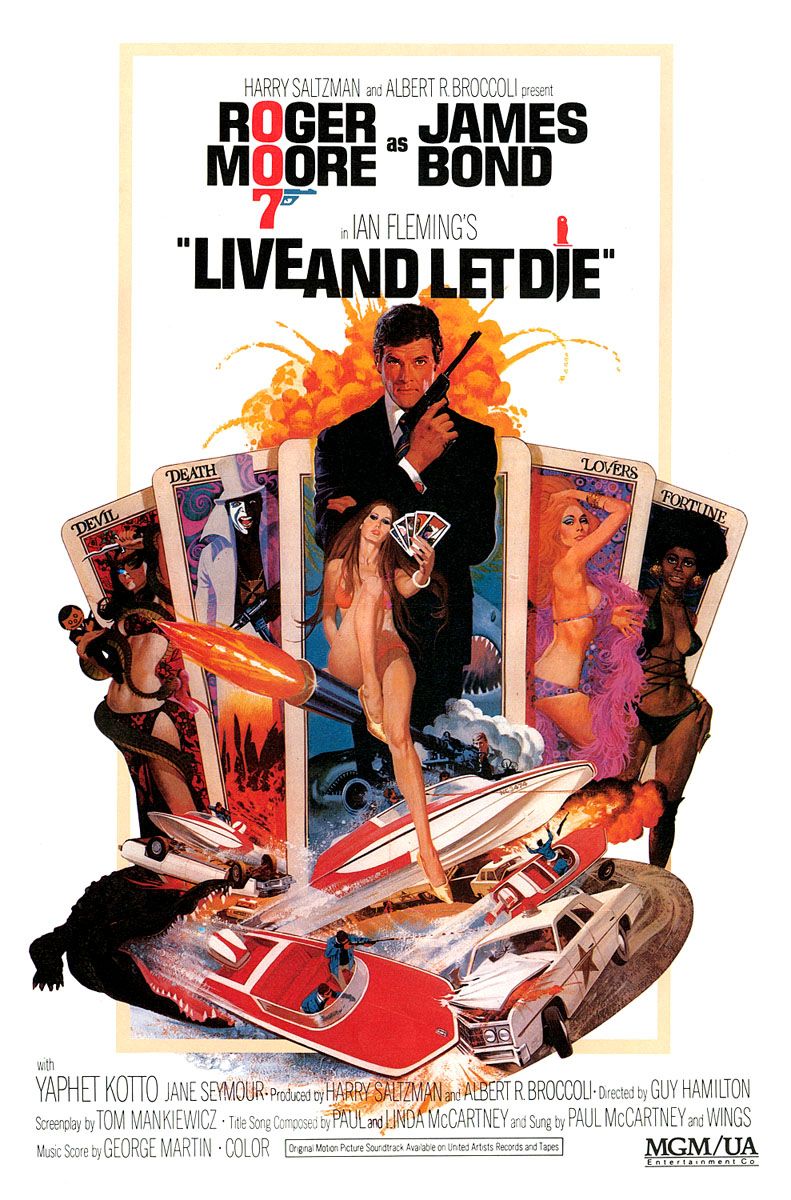
When I proposed this article to my editor, his only condition was that I consider Live And Let Die for inclusion, which only proved what a man of excellent taste he is. Roger Moore’s first outing as Bond is impressive, with Moore easing into the role and setting out his own particular take, which in the early movies was actually darker than I remember. Live And Let Die somewhat hints at a trend that the Moore-era occasionally came back to, in mirroring current cinematic trends, in this case Blaxploitation (see also Moonraker). The film has a refreshingly small scale plot, focussing on a Caribbean dictator trying to flood the heroin market in the USA, but it is within the bizarre, voodoo influenced atmosphere in which the film thrives. Some of the action sequences are long and laboured, but all in all a very enjoyable film.
5: Goldfinger

For many the quintessential Bond film, for me a dated work that still stands up thanks to being just about grounded enough. Boasting one of the very best villains the series has to offer in Gert Frobe’s Auric Goldfinger, and his henchman Oddjob, the series’ very best, Goldfinger is a film surprisingly light on action when looking back. Tilly Masterson’s vengeful fury over her sister’s iconic death (by gold paint) is very dark for the early era of the franchise and, while I myself do not hold Honor Blackman’s Pussy Galore in as high an esteem as many do, she is still an engaging character nonetheless. While I may have referred to You Only Live Twice as a trendsetter in Bond, Goldfinger, from the somewhat megalomaniacal plan to irradiate America’s gold reserves, Oddjob’s little iconic quirk (razor top hat), double-entendre Bond Girl name and the laser beam scene are what truly embedded this franchise deep into the public consciousness. For me the heart of this movie however is the golf game, a highly cinematic sequence despite how it sounds, with the chess like battle of wits between Bond and Goldfinger the real stand-out moment in this film.
4: Skyfall
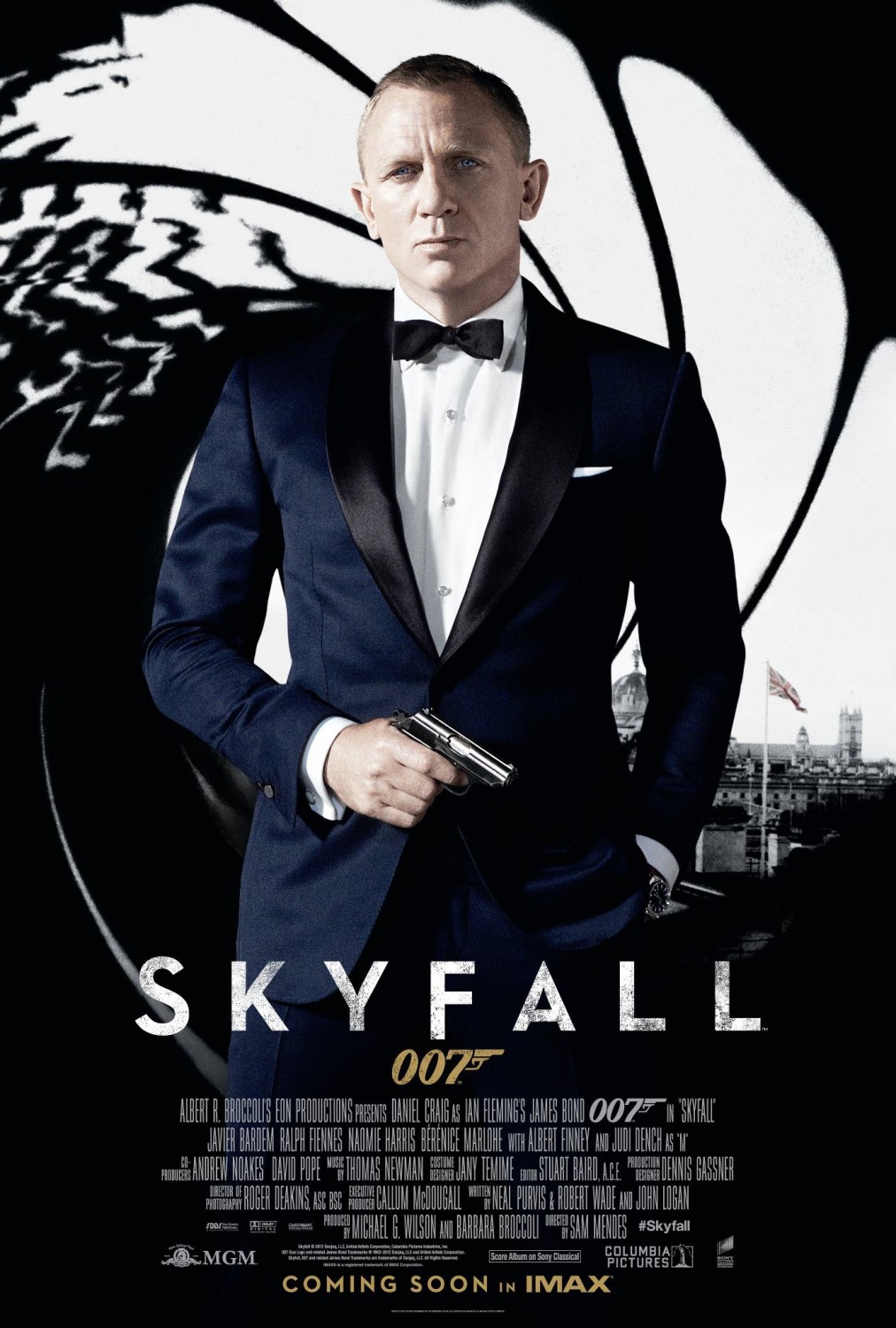
Sam Mendes triumphantly reignited the franchise just in time for its 50th birthday with this fantastic film that marries everything long-time fans love about Bond with the new world order of action cinema brought about by Paul Greengrass and Jason Bourne. Eschewing the traditional formula for something much more personal, and at the same time making full use of Judi Dench as M, Skyfall never lets up for air. Daniel Craig cements himself as a genuinely great James Bond with a tortured performance here, as a jaded Bond at odds with his mission while somewhat struggling to reconcile with the actions of his superiors. Javier Bardem unsurprisingly gives a brilliant performance as Silva, perfectly treading the fine line between dangerous and ridiculous, with his motivations refreshingly different from world domination, merely revenge. Up until this point in Craig’s tenure he had been without some of the mainstays of the Bond canon, yet the seamless inclusion of Ralph Fiennes, Ben Whishaw and Naomie Harris bodes well for the future of the franchise. While the ending may have divided some, it was for me a fantastic way to resolve this story.
3: The Spy Who Loved Me
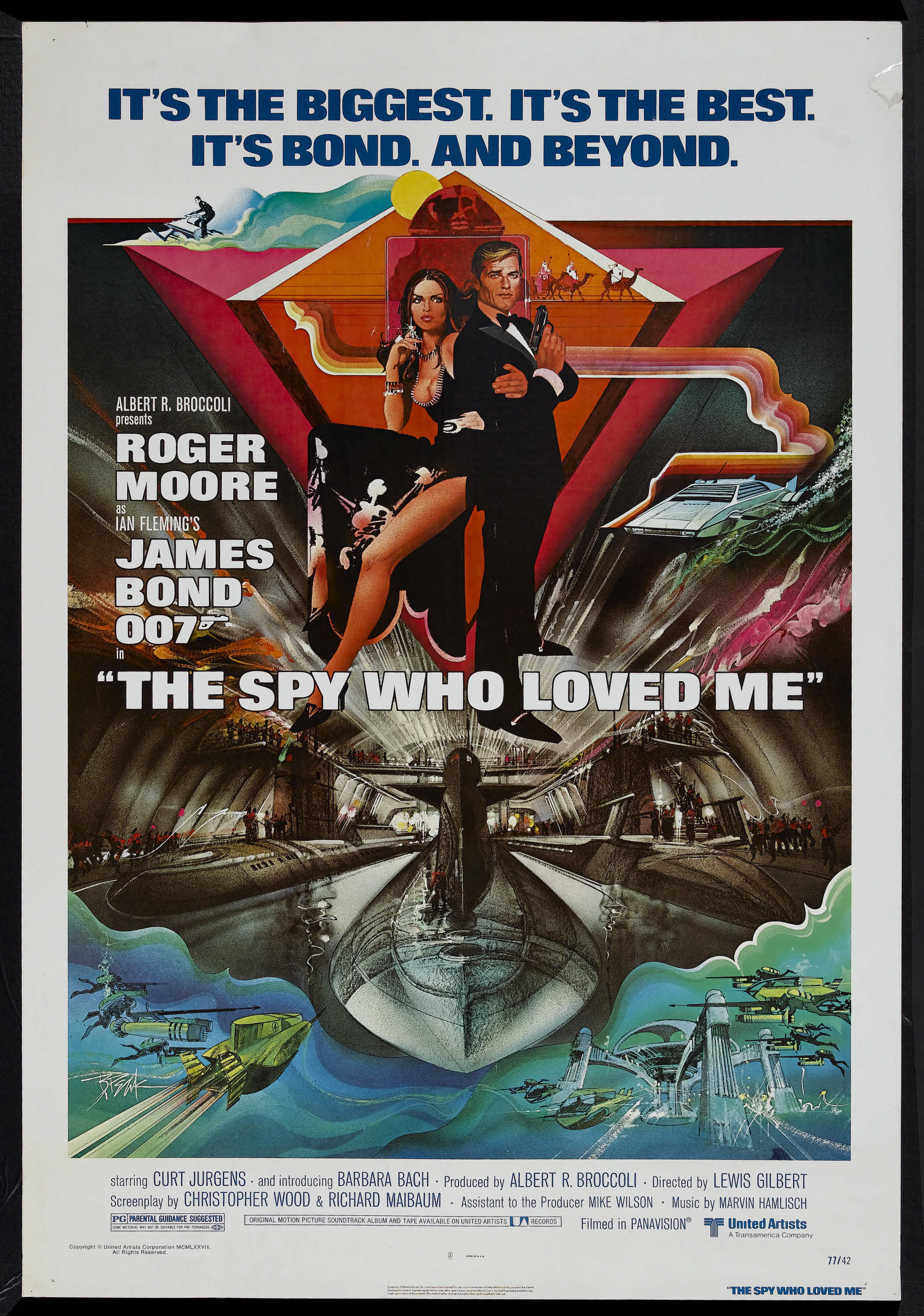
A surprisingly tender inclusion into the Bond canon, this is a film that is much greater than the basic outline of its plot. Stromberg may not go down in the annals of Bond history as a top tier villain, nor will his plot to enact nuclear annihilation on Earth and make a new society under the sea, but he is enough of a presence and his base truly is iconic within Bond. What sets The Spy Who Loved Me aside from many of the Bond films of its era is the way in which it treats its Bond girl Anya Amasova (Barbara Bach). She is almost co-lead in this picture and is a convincing spy, who is able to look after herself without Bond having to save her every two minutes, while at the same time there is the threat she poses to Bond given that he killed her former lover. She and Moore have excellent chemistry, with Moore giving for me his finest performance as Bond, mixing the suaveness with the danger just enough, prior to turning the role into a caricature in future films. This film also saw the first appearance of Jaws, and was the film that turned him into an iconic henchman, before Moonraker made him a laughing stock. Rewatching the fight scenes in and around the pyramids early on in the film, I was astonished quite how brilliant and cinematic they were, and must have been some inspiration for the Shanghai scene in Skyfall.
2: Casino Royale
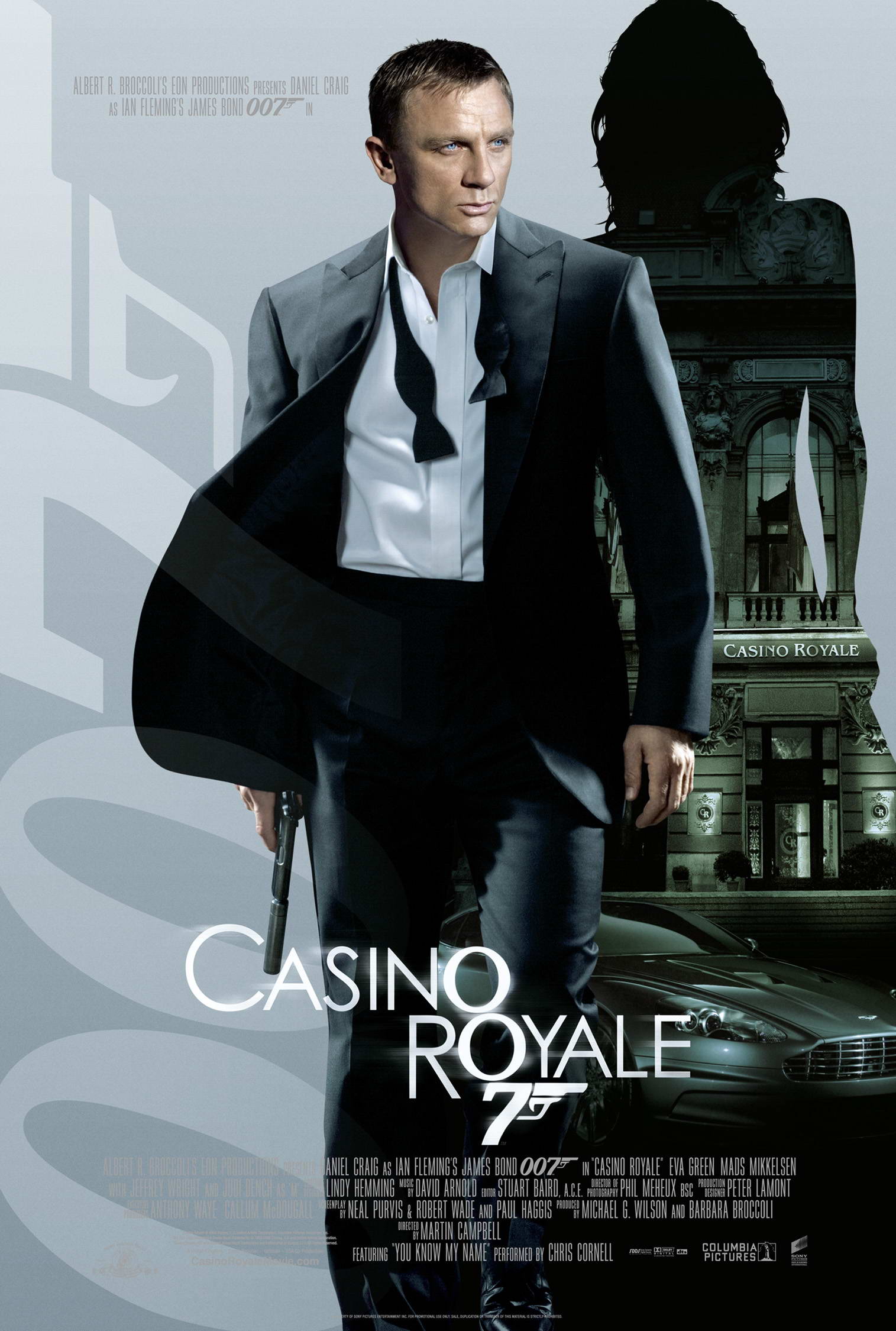
If anyone should want to know how to reinvigorate a struggling franchise they have only to watch this. Essentially a reboot, from the stark black and white opening that sees Craig’s Bond getting his Licence to Kill, the film sets Bond out for the 21st Century brilliantly. I read an article about Casino Royale on a site called Den Of Geek by a writer called Max Williams who theorised that this is three small films making one overarching narrative, which I wholly subscribe to. The film is packed full of memorable sequences, from the laws of physics defying parkour sequence, the plane chase at Miami airport, to the most excruciating torture moments seen in Bond history. What made this film succeed more than anything for me was the way that they made the poker aspect of the film so enjoyable. Essentially 40 minutes of people sat around a table playing cards, Mads Mikkelsen’s chillingly brilliant performance as a villain who oozes danger despite being shown as weak throughout makes these sequences work so well, the tension between he and Craig feels like it’s from a wholly different type of movie. Likewise Eva Green’s turn as Vesper Lynd defies what we have come to expect from Bond, embracing the sexiness and sultriness, while at the same time displaying a hitherto unseen fragility. Hers and Bond’s love seems genuine. Is the end a mess? Not at all, it’s just so clever that it is unexpected from Bond, and takes two or three viewings to fully appreciate.
1: The Living Daylights
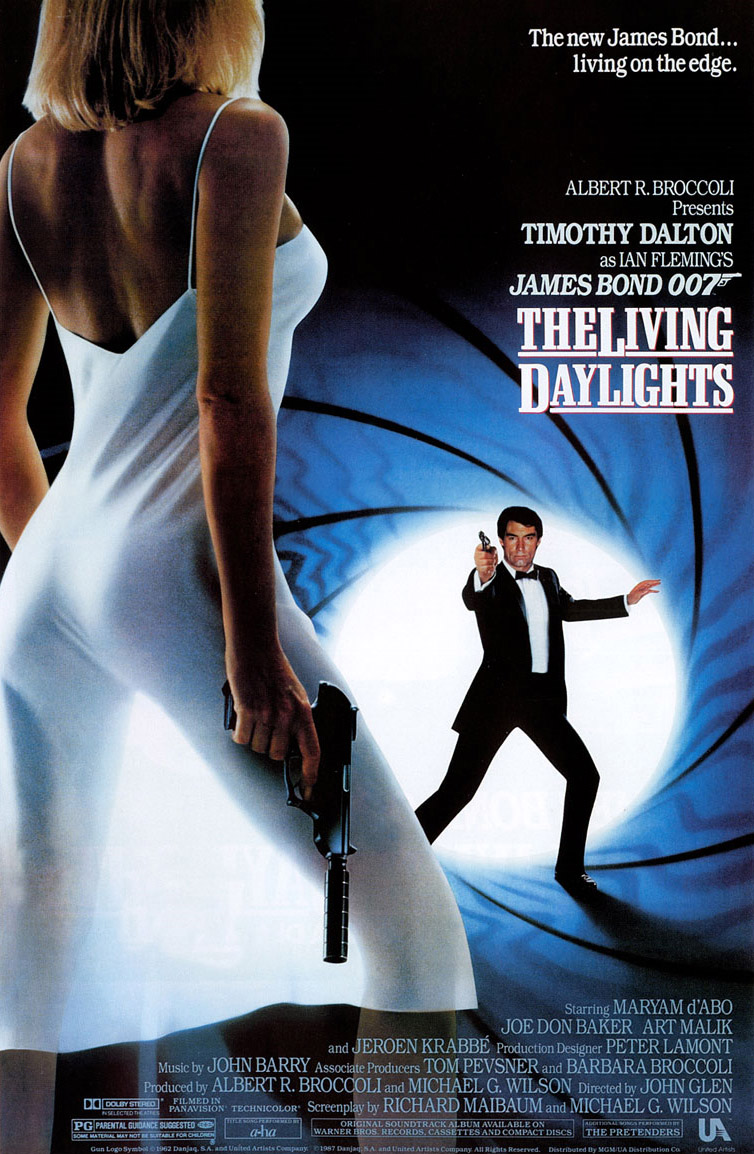
In spite of Daniel Craig’s finest efforts Timothy Dalton is still the finest Bond in my eyes, being the one who perfectly marries up the suaveness and charm with the tortured soul and threat of the character. This first outing was doubtless his best, set in a time where Bond as a franchise was beginning to show its uneasiness about its place in the world as the Cold War began to thaw. This is a film that deals almost entirely in defections, double agents and uneasy alliances. That a film can overcome the dual weaknesses of Jerome Krabbe and Joe Don Baker as villains says plenty for its strengths, as it globetrots its way from Gibraltar, in a fantastic pre-credits sequence, all the way to Vienna and Afghanistan, by way of Tangiers. I would call this the last good ‘traditional’ Bond film, prior to the harshness of Licence To Kill and the franchise stumbling throughout the 1990s in a Brosnan induced stupor. This is Bond at its most confident, willing to have a henchman dress as a milkman to cause utter chaos, depict sexual harassment in the workplace, and of course see Bond become the only person in history to use a cello as a toboggan. I love the film because it has such confidence, because it is so well made, and because it is willing to embrace its ridiculousness yet somehow not be defined by it.
 REEL STEEL
You must be logged in to post a comment.