American Honey

2016 – USA
Director – Andrea Arnold
Starring – Sasha Lane, Shia LaBeouf, Riley Keough
Words – C. Abbott
Many words are being spoken on the state of America today, politically and socially. While director Andrea Arnold doesn’t necessarily provide answers, she certainly contributes to the conversation. This is something of a reflective piece, a lucid experience that glides us through America from the perspective or perspectives of a continually disillusioned generation.
At the centre of it all is Star, played to perfection by newcomer Sasha Lane; she is a young single mother of two. Her life seems to be more close to survival rather than living at the point we meet her. She happens upon a group of travelling sales reps, seemingly led by Jake (Shia LaBeouf) whom all seem to live carefree, yet destructive lives. Without much consideration, she joins them as they travel they travel the States, seeing all the country has to offer, from impoverished families to dripping wealth.
The most surprising part of it all is how well Sasha Lane carries the narrative forward, as a complete unknown she shows incredible promise. Shia LaBeouf is on usual commanding form, chewing the scenery from scene to scene. His erraticism is as compelling as his determination, he’s an actor that consistently holds nothing back and has to be commended for it. Overall the performances were the highlight, raw and real, but messy and spontaneous. The direction over the actors seems improvised, setting them off like loose cannons and seeing what footage they have at the end of the day. It is befitting and suits the documentary style in the cinematography. Robbie Ryan who has worked with Arnold before on Fish Tank and last year’s Slow West among many other projects has really outdone himself here with the cinematography. This is a naturalistic and authentic look at contemporary America and he has really captured this tone.
Yet the film boasts a running time of 163 minutes, at nearly 3 hours long, it doesn’t seem justified. While the film is something of a snapshot into the life a young girl trying to find her place, the events are rather plotless, that is to say, meandering. It’s excessive and distractive, almost getting lost into its own world, perhaps with a different edit; this could have been a much tighter and rewarding experience. The messages it hopes to convey can get lost in a film that could have 30 minutes axed and the same experience would have been had. There is little catharsis, but perhaps that is the point. Right now there are little easy answers and the few we do get are often unfulfilling. It is a worthwhile exploration, a character study and social statement, but for many they won’t last long enough in its borderline glacial narrative to see these islands of merit.
Must See Movies: November
At Reel Steel we want to make sure you’re getting the most of your cinematic enthusiasm, so each month we put together our short list of some of the best new releases, from popcorn munching explosion fests to the often weird and wonderful.
Take a look at the trailers below and see what you think to this month’s recommendations!
Nocturnal Animals
released Friday November 4th, 2016
Susan (Amy Adams) receives a copy of an unpublished book written by her ex-husband, it tells a story which forces her to examine her past and confront some dark truths.
With a cast including Jake Gyllenhaal and Michael Shannon, this is a tense and haunting thriller from Tom Ford (acclaimed director of A Single Man).
Arrival
released Friday November 11th, 2016
When multiple spaceships arrive on our planet, an elite team lead by a linguistics professor is brought together to find a way to communicate with the extra-terrestrial visitors.
Dennis Villeneuve (director of Sicario, and the forthcoming Blade Runner sequel) brings a sci-fi epic where the future of mankind is in the balance, with a race against time to unravel the mystery and avert global war.
Fantastic Beasts and Where To Find Them
released Friday November 18th, 2016
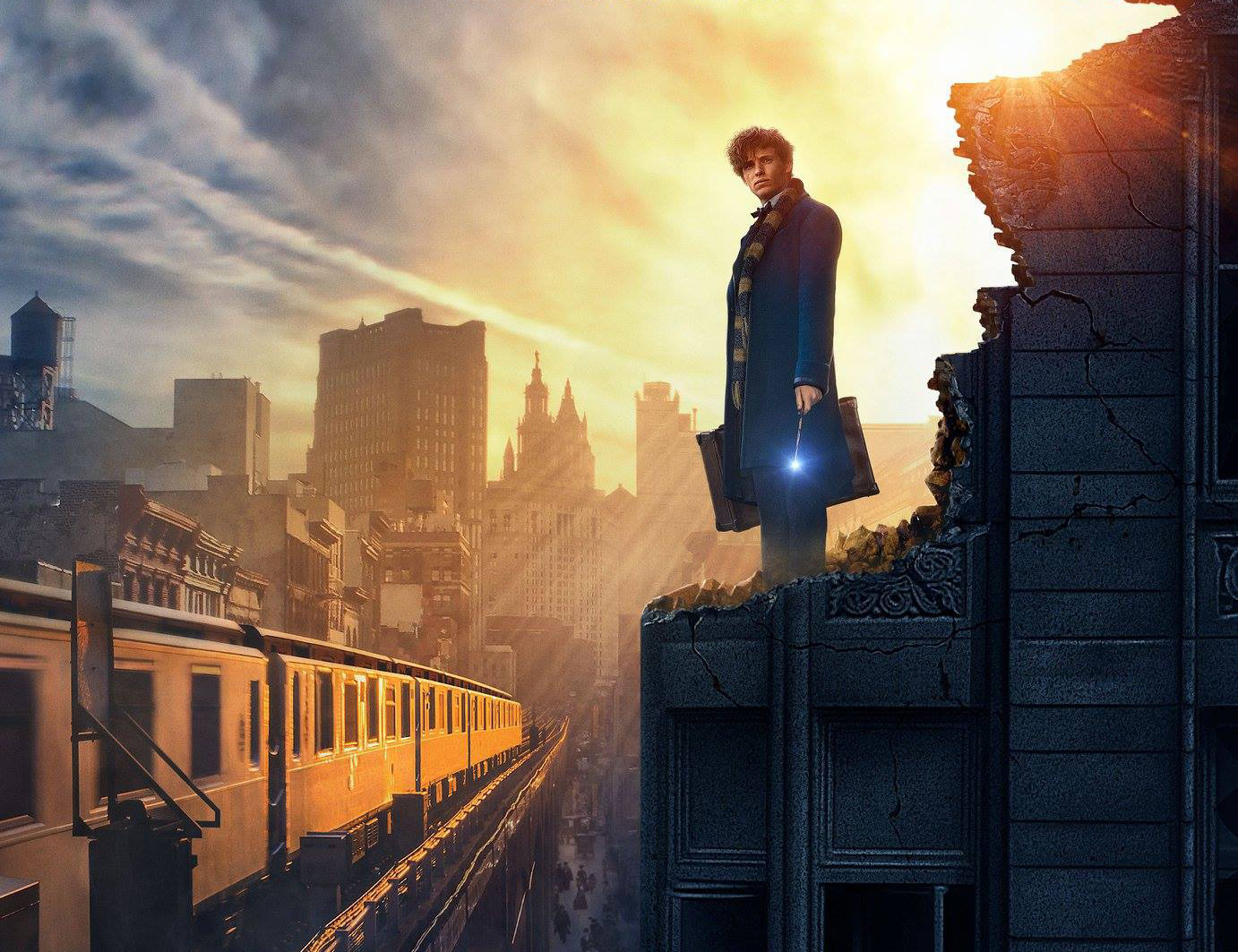
From writer J.K. Rowling comes a story set before the time of Harry Potter in 1920’s New York.
A young wizard arrives having completed a global trip to find an array of extraordinary creatures, however a misplaced magical case leads to the escape of some fantastic beasts, which could spell trouble for both ours and the wizarding world.
Cult Corner: Halloween III – Season Of The Witch

1982 – USA
Director: Tommy Lee Wallace
Starring: Tom Atkins, Stacey Nedkin, Dan O’ Herlihy
Words: O. Innocent
Halloween 3: Season of the Witch has got to be one of the most audacious sequels in horror movie history; jettisoning (almost) everything that made the first two Halloween movies such big box-office draws, it’s purporting to be a sequel while at the same time having absolutely nothing to do with it predecessors inevitably lead to critical and commercial woe. The result of producer John Carpenter (he gave up the directorial reigns after part one and distanced himself from the series completely until a producing credit on comeback Halloween H20), tired of further pursuing the Michael Myers-centred stalk and slash, wanting to broaden the scope of the series by having each subsequent film be a standalone feature centred around the concept of Halloween. This was a daring but ultimately stupid (at the time at least) move, Carpenter’s plan for more standalone Halloween films falling by the wayside while Halloween 3 fell into cult movie obscurity.
However, taken on its own merits as a standalone feature, Halloween 3 reveals itself to be a brilliant little horror thriller in its own right. It focuses on everyman hero Dr. Daniel Chalice who uncovers Irish toymaker and megalomaniac Conal Cochran’s dastardly plot to sacrifice America’s unsuspecting trick or treating kids by wielding the power of Stonehenge, a TV commercial with the most annoying jingle you’ve ever heard, and deadly Halloween masks! Utterly bonkers yet surprisingly unsettling, Halloween 3 definitely has to be seen to be believed. Aside from the barmy but chilling premise, perhaps the film’s biggest asset is its intense leading performance courtesy of cult movie icon Tom (The Fog, Maniac Cop, Night of the Creeps et al) Atkins. It’s to both the filmmakers and Atkins’ credit that his character isn’t just another cardboard cut-out hero. Playing it more down to earth, the guy isn’t perfect by any degree, bailing on his ex-wife and kids for the Halloween holidays for a jolly jaunt with a pretty young girl nearly half his age. Yet despite, or perhaps because of, his foibles, he’s still an endearing character we want to root for as he desperately tries to do the right thing at the haunting climax.
The directing and editing is also spot on, director Tommy Lee Wallace, obviously inspired by his Carpenter tutorage, going for a menacing, unsettling style with gliding, prowling camera pans juxtaposing short, sharp jump shocks. Carpenter once again provides another of his trademark synthesiser scores, perfectly setting a paranoid, disconcerting tone. Further upping the ante, there’s also some surprisingly nasty gore and controversial images such as a child’s head being crushed by a mask, bugs and snakes crawling out of the remains while his parents scream on, shocked and bewildered. Then there’s the nihilistic, gut wrenching ending – one of the most memorably chilling in the entire series – where Atkins screams down the phone for the last deadly commercial to be stopped, only for the screen to abruptly cut to black, leaving us with a bitter aftertaste as we contemplate the pitch-black consequences of Atkins simply being too late to prevent the final mass sacrifice. Not just another Michael Myers stalk and slasher then; Halloween 3 is a tremendous, weird, affecting one-off that is ripe for rediscovery. Be sure to add it to your viewing list this Halloween.
Doctor Strange

2016 – USA
Director – Scott Derrickson
Starring – Benedict Cumberbatch, Tilda Swinton, Mads Mikkelsen, Chiwetel Ejiofor, Rachel McAdams, Benedict Wong
Words – Joe H.
Over the years there have been some mind-bending Doctor Strange comic book stories that have redefined the boundaries of the Marvel Universe, with adventures not limited to our world or the realms of reality.
Dr. Stephen Strange is a neurosurgeon at the top of his game, with an ability only matched by his ego.
After a car accident nearly kills him and takes away the use of his hands, leaving him unable to perform operations, he puts everything he has into finding a treatment that will restore him to his former life.
It’s during his months of undergoing various operations with no success, that he learns of a man who years earlier had a seemingly miraculous recovery from similar injuries, which is where his search for a medicine that will heal him then takes him to Nepal.
Upon finding a mysterious enclave he meets the Ancient One (Tilda Swinton), who shows him that there are an infinite number of dimensions and that our own reality can be manipulated.
It’s during his training in the mystical arts he learns that the group is in a battle against unseen dark forces, and that former master Kaecilius (Mads Mikkelson) is set on destroying our world.
As he trains to become a sorcerer and learns to hold a new power in his hands, it isn’t long before Strange is forced to choose between his old life or one where he defends the world as one of the most powerful sorcerers in existence.
There are some impressive action set-pieces throughout this feature with a kinetic flow of sorcery and martial arts, amped up by some pretty spectacular special effects (at times feeling like an Inception based adrenaline rush), growing ever more mind-bending as the story goes on into a completely out of this world climax.
The journey of our central character does however feel as though it’s set in motion a little too quick and easy – after finding the man who recovered from similar injuries he seems far too ready to just divulge information to Strange about mystic healing (while obviously knowing what power and risk lies at the other side).
Some of the more die-hard Marvel fans may feel a little dissapointed, as this doesn’t quite stack up against other comic book blockbusters (especially in the year where we saw Captain America: Civil War), but as the mystic side of Marvel’s multi-dimensional cinematic universe is expanded, there are a couple of nods to the wider crossover stories here (an infinity stone, and a post credits scene featuring one of the Avengers), so it will be interesting to see how the character slots in to forthcoming superhero outings.
An alternative to the usual comic book fare in a year which has seen more superhero blockbusters than ever, it’s a pretty entertaining feature.
My Scientology Movie

2016 – USA/ UK
Director: John Dower
Words: N. Scatcherd
For those who may be unaware: Scientology is one of the most bizarre and controversial movements in recent history – a ‘religion’ based primarily on the writings of science fiction author L. Ron Hubbard, the followers of which buy their way up the hierarchy and promote teachings involving ancient alien races and psychic powers. It has a number of very high-profile followers, the most (in)famous being Tom Cruise, although it also counts celebrity figures such as John Travolta, Juliette Lewis and Beck among its patrons.
It’s a ripe subject for documentary film-making, and on paper, the famously laidback, disarming style of the BBC’s Louis Theroux should be perfect for it. He has a way of approaching people openly and politely, without any obvious guile, in a way which often relaxes his subjects to a point where their guard will slip a little, and they may say things or act in certain ways they wouldn’t around your ‘usual’ journalist. Of course, there is always an element of sly knowing with Theroux – not intended as a dig, I’m a fan of the man’s work – where you can tell his sheepish demeanour, complete with near-permanent ‘who, me?’ expression, belies a man who knows very well what he’s doing. However, My Scientology Movie feels sadly underdeveloped throughout, standing as less of a probe into a notoriously secretive, strange and occasionally outwardly hostile movement and more as a somewhat entertaining, but basically unilluminating exercise in surreality.
The bulk of the film focuses on Marty Rathbun, a former senior figure in Scientology who has since defected and is now treated as a bitter, untrustworthy, subversive enemy of the movement. He seems like a fairly laidback and softly-spoken person, but nevertheless, his own past involvement in Scientology’s more sinister machinations keeps him shrouded in a cloud of moral ambiguity. He helps Louis pick out an actor to portray Scientology’s current leader, David Miscavige, in a series of re-enactments portraying some public broadcasts Miscavige made defending himself and Scientology’s image, as well as the various instances of abuse he apparently perpetrated against followers. They also pick out an actor to portray Tom Cruise in a bizarre bit of ‘actors portraying actors’ post-modernism, but this curiously doesn’t really go anywhere.
The film’s main preoccupation remains on Rathbun and the actor – Andrew Perez – he and Theroux eventually pick to play Miscavige. The real Miscavige has by all accounts an explosively violent temper stemming from total self-righteousness, and to his credit Perez seems to tap into this with uncanny skill in the re-enactment exercises. It’s genuinely alarming to see how quickly he can snap from being an apparently fairly affable guy, to a monstrous bully who slams Theroux into walls and screams insults in his face while in character.
That said, while the documentary appears to be aiming for some kind of illuminating truth in these re-enactments, they often feel like aimless filler. The real Miscavige comes across in video footage as a confident, manipulative sociopath who is very good at telling gullible people with disposable income the things they are desperate to hear, but unfortunately Theroux is unable to ever meet the man. This has the effect of making Perez’ caricature little more than, well, caricature, as well as leaving Miscavige as a strangely abstract boogeyman figure, rather than fleshing out the undoubtedly more complex and nuanced human being behind the image.
Rathbun has some interesting anecdotes about his time as part of the movement, but he himself remains frustratingly difficult to get a real grip on. He seems as adept as Theroux at evasion and obfuscation, and honestly, by the end of the film there is a sense that we haven’t really learned a whole lot about the guy. Aside from him, there are only two or three other (brief) points of view in the whole documentary, and the lack of a wider field of opinions and experiences works to the film’s detriment. There are a few amusingly strange moments where Theroux and his crew find themselves being filmed by Scientologists who seem to be making their own counter-documentary, and an ominous pickup truck with blacked out windows appears to follow Theroux at one point, but the absurd nature of these encounters doesn’t quite distract from the sense that there just isn’t a lot of genuine substance to the whole thing.
It does at least make clear just how frightening Scientology is. The movement is commonly treated as a joke; seen as a bunch of rich people doing strange things in the service of strange ideals, but a fundamentally harmless bunch of nonsense. Well, surprise, it certainly appears to be a deeply manipulative and abusive cult. Of course, anyone with a brain in their head is going to see Scientology for what it actually is without this documentary’s help; it merely makes more explicit the idea that its members are brainwashed and its leaders are deeply amoral, power-hungry predators. My Scientology Movie seems to be solely concerned with saying to the viewer, ‘hey, did you know Scientology is really weird and sinister?’ which, frankly, inspires little more reaction than ‘well, duh’.
Lo and Behold, Reveries of the Connected World
2016 – USA
Director: Werner Herzog
Words: C. Abbott
Christian attended a special screening of the film with a live broadcast post-film Q+A with director Werner Herzog and British director/ comedian Richard Ayoade, at The Showroom Cinema.
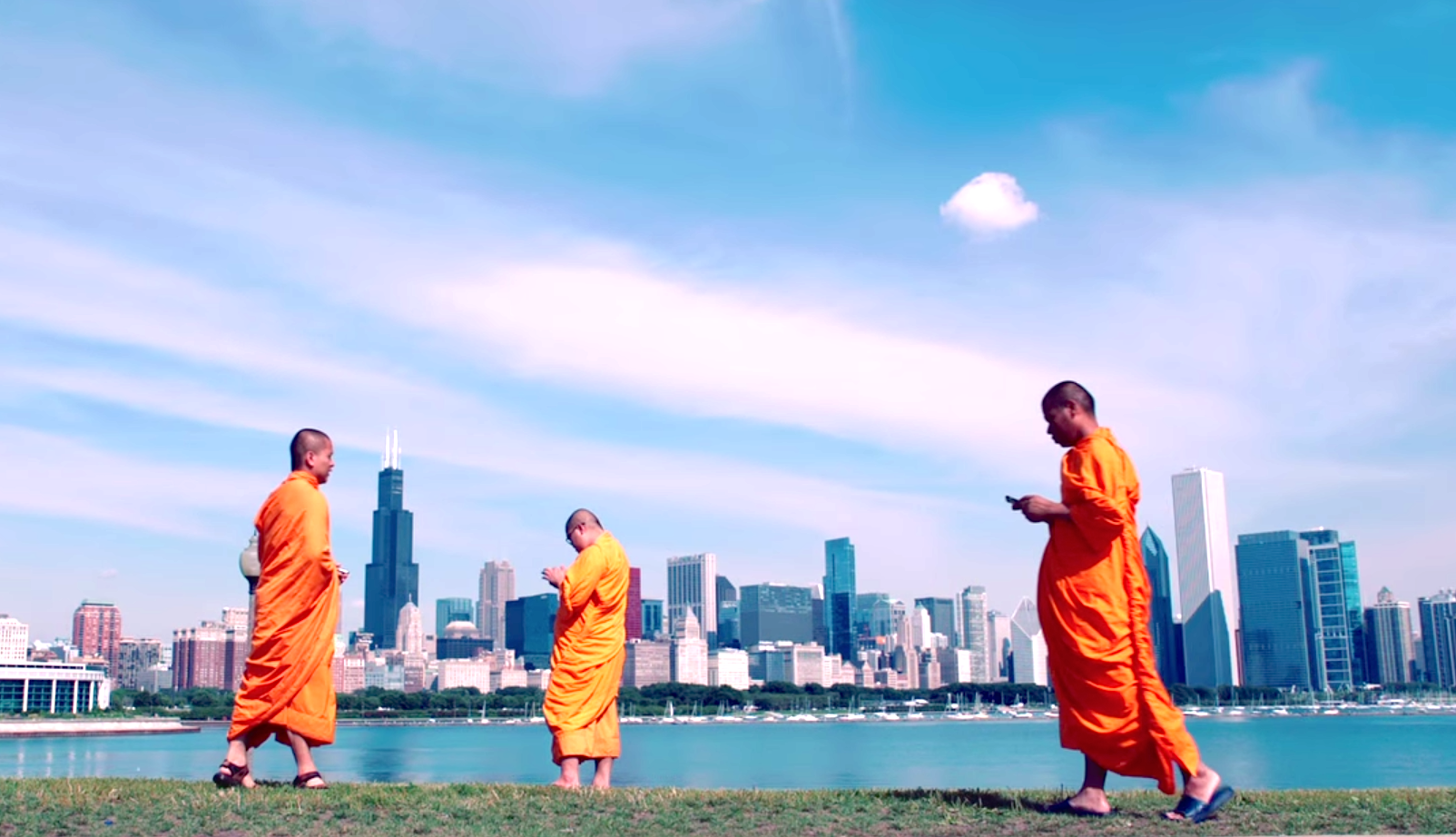
When tackling a Werner Herzog documentary there are at least a few things one should accept: cutting, dry remarks and assertions from the man himself, a lingering camera bordering on awkwardness and an almost alien gaze on humans as individuals. This is just throwing a stone and hitting some of what Herzog brings to his consistently unique observations of chosen topics, but all are present from the very opening here. This could be, on a personal view, his most compelling documentary yet. The birth and explosion of the internet and globalisation as a whole is one that continues to inspire and excite. We as a species are entering a new and entirely bizarre age of human interconnectivity, Lo and Behold, if failing at all else, achieves this sense of awe spectacularly.
Herzog here is taking a brief glimpse into the short but rich history of the internet and beyond. Everything from A.I. to Mars colonisation via The Internet of Things is covered. Looking at the opening scene again, which must be noted as the highlight of the film, showcases the very room the internet was born, and its very first communication. The intention was to send a message reading ‘LOGIN’ from one machine to another, sending the letters individually. On the letter ‘g’ however, the system crashed, resulting in the word ‘Lo’ being the original message. As such, the scientists at hand noted it as ‘Lo and Behold’. There is a feeling of wonderment and excitement in this story, human progress on the back of a coincidence. This feeling feeds its way through the majority of the film, yet it is not all propaganda for the merits of globalisation.
There is another element which is in many ways, is equally as fascinating as the former. The internet has brought up many downsides to human communication, being faceless gives a feeling of little consequence and therefore vitriol and abuse comes easy. Herzog shines a light on a few of the more horrendous stories of such manipulation. In other areas he looks at the fears people like Elon Musk have over the continued development of A.I., and how three generations from now human connection as a whole may no longer be needed in our lives. These facets of the documentary may seem unpleasant and even terrifying, where exactly is humanity heading? Herzog doesn’t linger however; the film has a brisk pace, perhaps too brisk in an effort to cover these weighty issues. Yet, as a general overview on modern technological society, it’s a must. For anyone with an avid interest on these issues and topics, the film will likely provide little new information, but the journey is an entertaining one. Herzog fusses his own, peculiar charm into the proceedings and it works as ever. It’s enjoyable, awe-inspiring, worrying and often awkward, exactly what you’d want.
As for the Q&A, it was brief but engaging, a microcosm of the film perhaps. In conversation with Richard Ayoade (a pairing made in a nerd heaven), his admiration and respect with every question shined through. A particular highlight was a question from the audience, regarding how much impact he has on the staging of the interviews within the film. Herzog’s response sums the man up perfectly. I’ll paraphrase: “I do not want to be a fly on the wall; I want to be a wasp. I sting.”
I, Daniel Blake

2016 – UK
Director – Ken Loach
Starring – Dave Johns, Hayley Squires, Dylan McKiernan, Briana Shann
Words – Joe H.
I, Daniel Blake is a return to the arena of social issues in British society from the acclaimed film director, Ken Loach.
The story opens to the scene of our central character trying to explain to an unqualified health adviser carrying out a welfare evaluation that he has been advised by his doctor that he should not be in work following a heart attack.
After having to answer a series of completely irrelevant questions with no opportunity to explain his condition, he is later notified that he has been declared ‘fit for work’, leaving him only with the option to appeal against the decision.
He immediately comes up against the officials of the jobcentre, who only ever insist that the rules must be adhered to and that everybody, regardless of individual circumstance, must follow the same process.
It’s during this that he comes across Katie and her two children, Daisy and Dylan, in a moment where a similar frustration is felt by the lack of understanding from those who are in place to enforce this one-size-fits-all system.
Daniel puts his own situation to one side as his compassion for Katie and her relocation to the north-east following homelessness comes through, as her near daily struggle with ‘eating or heating’ for herself and her family is revealed (a scene in a foodbank is heartbreaking as we see how much she has sacrificed for her children).
Forced to claim Jobseekers Allowance as the only means of income while he fights for the right to appeal against being denied sickness benefit, he must look for work he knows he can’t take, simply to appease the box-ticking of the Department for Work and Pensions.
As the story progresses we see how the situation Daniel and Katie each find themselves in increasingly takes it toll – with Daniel having to adjust to a sudden health condition and its financial impact, and Katie with simply wanting to provide more than a ‘survive’ living for herself and her children, while both try to negotiate their way through a system seemingly designed to move people off benefits by way of sanctions and penalties.
This is a well researched portrayal of the system from the point of the individual and the effect it has on them, covering a subject matter frequently discussed and used in politics, this is a film that could perhaps change opinion on those out-of-work who are so often refered to as ‘workshy’, with others maybe feeling the story plays out as it does simply for dramatic effect on screen.
As this writer (like many people) has personal experience with the benefits system in Employment and Support Allowance following a sudden change in health, the experiences portrayed with our central character from feelings of anxiety and frustration, set in place by a medical trauma and amplified through being trapped in a state of being unable to work yet struggling with a system supposedley there to help those in need is a plight that personally hit home (all the way down to the “shite music” on the benefits waiting line).
Film director Ken Loach and long-time screenwriting collaborator Paul Laverty have produced something so much larger than a feature film, it shows a part of our society where the ability to just survive is becoming increasingly desperate, it confronts unpleasant truths and is unapologetic in its uncompromising seriousness of the subject matter.
This is film-making of the highest order, with standout performances where you will rarely see the raw feelings and emotion of an increasingly hopeless situation conveyed so superbly.
This is the story of an honest and hard-working individual, who is ultimately failed by the system.
A startlingly moving drama on the state and society – one of the best films of the year.
Inferno

2016 – USA
Director: Ron Howard
Starring: Tom Hanks, Felicity Jones, Omar Sy, Ben Foster, Sidse Babett Knudsen, Irrfan Khan
Words: S. Nix
The third film to be based on a Dan Brown novels, after The DaVinci Code and Angels & Demons, sees protagonist and symbology professor Robert Langdon (Hanks) run around the picturesque cities of Florence and Venice with Dr. Sienna Brooks (Jones) in a race against time to prevent the outbreak of a virus that could wipe out half of humanity.
Billionaire Bertrand Zobrist (Foster) has a mind to cull the population to solve the snowballing problem of overpopulation by inventing a highly contagious virus – Inferno. Waking in a hospital bed in Florence with no memory, a dazed Langdon finds that he is involved up to his eyeballs in this plot but has no idea how, and before he can work it out is already on the run from a deadly assassin, the World Health Organisation and the Italian government. Stripped of his most useful tool – his mind – he needs the help of the brilliant Sienna Brooks whom he meets in hospital to make sense of everything and get to Inferno by following a breadcrumb trail of Renaissance art and lit.
Anyone who’s familiar with Brown and his work will have their expectations met and anyone else will find a pretty decent thriller. Langdon and Brooks run through the film breathlessly as all the pieces of the puzzle are put in place and the plot takes a few twists and turns before a climactic and pulse-racing rush to the cross the finish line. It all ends with a bittersweet but satisfying payoff and your knowledge of the Renaissance will possibly have grown as exponentially as the human populace has over the past century. This is based on a Dan Brown book after all and they tend to sometimes straddle the line between conspiracy thriller and history textbook. Anyone who didn’t know Dante from Botticelli soon will.
Overall? A fine addition to the collection that’ll keep you hooked with two very watchable leads in Hanks and Jones, an intriguing plot and some very poignant subject matter.
Under The Shadow

2016 – UK / Iran
Director – Babak Anvari
Starring – Narges Rashidi, Avin Manshandi, Bobby Naderi
Words – C. Abbott
Let’s get this out of the way with right now, if there’s a screening of this film near you – see it. It’s unusual for me to enter a screening completely in the blind, as part of this field of work one would expect a bare amount of research, even understanding, of what you’re about to see. Yet, this time there was none, I went on the recommendation of others. This usually turns out to be underwhelming, the so called hype of others is usually excessive. On this occasion however, it was met and exceeded.
Iranian cinema has produced some exceptional film from recent memory and beyond, this was my first experience of the horror genre from that country. We follow a mother and daughter during the bombings on post-revolution Tehran in the 1980s, whom become increasingly horrified by the war and a mysterious presence in their home. This set up is a unique one to say the least, and has more in line with contemporary East-Asian cinema than it does of the West. It feeds from a different breed of the genre, the slow-burn, fast paced narrative that is exactly what horror should strive to be. What I mean by this is the actual scares of the film don’t come quickly, but rather build up over time, making each more disturbing than the last. When you finally arrive in the last act, you’ve crossed the line from drama into the supernatural without even realising it. Working in favour of this is the running time, clocking in at only 124 minutes; the journey is brief but completely unforgettable.
Coming from first time theatrical director, Babak Anvari, with only a handful of short films under his belt, the results are very exciting, building anticipation to see what he does in the future. He has shown a complete understanding of narrative tension and framing. Each scene is set up in a way that slowly eases you into a feeling of complete desolation and total loss. Over the course the film the feeling of isolation takes over and hopelessness prevails. This is all bolstered by the two main performances by Narges Rashidi and child actor Avin Manshadi, both of which feel completely raw and real.
What I would recommend is going into this without watching the trailers or doing little research, the less you know the better and the payoffs will be more fulfilling. With that said this cannot be recommended highly enough, horror should be a reflection of our own anxieties and the stresses the real world is enduring. This is one of the few horrors in recent years that has managed to execute this so well. It’s chilling, terrifying, entertaining and brilliant.
Don’t miss this one.
The Girl On The Train

2016 – USA
Director: Tate Taylor
Starring: Emily Blunt, Haley Bennett, Rebecca Ferguson, Luke Evans, Justin Theroux
Words: C. Abbott
Upon entering the theatre to see this one the expectations were mixed to say the least. Hearing the murmurs of lacklustre changes from the book (which I have yet to read), yet excellent praise for the cast at hand, it seemed like one to be polarising at best. In truth, the results are simply too banal to justify any strong opinion. This year’s Gone Girl it ain’t.
Rachel (Emily Blunt) gets through her days by way of a bottle or two of vodka. She’s struggling to keep a grip on her life and continues to become increasingly obsessed with a couple. She witnesses something unusual about them during her daily commute and begins to uncover dark secrets about them, and herself.
The premise is solid, even great; an alcoholic protagonist is something different from the usual run of the mill fodder we continually see churned out. The cast matches this greatness in turn, yet are left with nothing to do. Emily Blunt clearly gave everything to her performance and it shows, she is a consistent delight to watch on screen and even in such dower and relentlessly bleak surroundings she manages to push through.
This however, is where the positives end. There are only so many ways one can criticise a thriller with no thrills, and it is in itself dull to hear it but there’s no escaping the fact that this film is simply boring. It’s tediously laborious to get through the various plot strands that all seem redundant and devoid of intrigue. The piecing together in the narrative is squandered by characters that are utterly lifeless. People stand in place as Emily Blunt shouts and spits the exposition at them.
There are unexpected twists along the way, and to disregard them would be unfair, but to care about them would be exhausting. By the time this glacial production hits the credits you’ll have forgotten most of it and as you close the door once home it’ll have entirely left your head. Skip it.
 REEL STEEL
You must be logged in to post a comment.