Must See Movies: March

At Reel Steel we want to make sure you’re getting the most of your cinematic enthusiasm, so each month we put together our short list of some of the best new releases, from popcorn munching explosion fests to the often weird and wonderful.
Take a look at the trailers below and see what you think to this month’s recommendations!
You Were Never Really Here
released Friday March 9th, 2018
An adaptation of the novel of the same name, You Were Never Really Here centres around a traumatized veteran, unafraid of violence, who tracks down missing girls for a living.
When a job spins out of control, his nightmares overtake him as a conspiracy is uncovered, leading to what may be his death or his awakening.
A gripping thriller and the Winner of Best Actor (Joaquin Phoenix) and Best Screenplay at the 2017 Cannes Film Festival.
The Square
released Friday March 16th, 2018
A museum curator hires a public relations team to build some buzz for their upcoming show, ‘The Square’, a daring new installation examining our duty to help others.
However, his own views on social responsibility are put to the test when he becomes the victim of a scam, while a shocking viral stunt cooked up by the museum’s PR agency is met with public outcry, sending him and the museum into an existential crisis.
Winner of the Palme d’Or Award at the 2017 Cannes Film Festival, The Square is a knife-sharp satire on art, culture and communication in the modern world.
Isle Of Dogs
released Friday March 30th, 2018
Isle Of Dogs tells the tale of when, by an executive order, all the canine pets of Megasaki City are exiled to a vast garbage-dump called Trash Island.
12-year-old Atari sets off alone in search of his dog ‘Spots’, and with the assistance of a pack of newly-found mongrel friends, he begins an epic journey that will decide the fate and future of the entire population.
From director Wes Anderson, who previously brought us Fantastic Mr Fox and The Grand Budapest Hotel, comes this all-star cast stop-motion animated adventure, in the style we have come to recognise as very much his own.
Lady Bird

2017 – USA
Director: Greta Gerwig
Starring: Saoirse Ronan, Laurie Metcalf, Tracy Letts, Lucas Hedges, Timothée Chalamet, Beanie Feldstein
Words – Josh Senior
Greta Gerwig turns the traditional ‘coming-of-age’ tale on its head in Lady Bird, her stunning and personal directorial debut.
At once a thoughtful and detailed study of a young woman finding her way in the world, Lady Bird also takes on a much more important role in society as well, as an Oscar nominated movie that comes from a first time female writer/director.
Gerwig initially came to mass acclaim for her acting/writing roles alongside her partner Noah Baumbach, for the films Frances Ha and Mistress America. She takes her kooky sense of humour and flare for dialogue and reapplies it here to her own passion project.
Lady Bird McPherson (Saoirse Ronan) longs to leave her suburban Sacramento home and move to the East Coast. However, before she does so she must navigate the final year of high school, a year which will push her to explore excess, morality, family values and her sexual desires. Along the way Lady Bird attempts to build a cool persona for herself, in the hope that the world may begin to see her in the way she sees herself. Yet, she finds that growing up is not going to always be on her terms and she might have to adjust to the real world in ways she never imagined before, a fact that her Mother (Laurie Metcalf) constantly reaffirms.
Her journey is hilarious, but filled with pathos and some razor sharp one liners… a true cinematic delight.
This is such a refreshing film, especially considering that the sub-genre in which it exists is over-stuffed with male driven films where female characters are often sidelined or objectified.
It’s a powerful story that grabs hold of you and makes you see that teenage girls go through all the things teenage boys go through, without preaching or accusing. Lady Bird expresses her own sexuality on screen as well, yet the narrative is never weighed down by this, nor does it give way to male dominance. Lady Bird’s relationships are almost sidelines to the wider view point of the film, and Gerwig deserves real credit for subverting this. Her character is not defined by the men in her life, she is quite the opposite.
It’s baffling almost that it has taken until 2017/2018 for someone to really portray female adolescence on screen in a pure and realistic way, and at a poignant time considering the state that Hollywood is currently in. Andrea Arnold achieved something similar in her film Fish Tank but Lady Bird goes one step further by its inclusion in the Awards Season ethos. Its mass acclaim and wide recognition really paves the way for more female directors and filmmakers of all types to create, produce and inspire. If it does pick up all the awards (which alongside Get Out, it really does deserve), then it will mark a huge sea change in American filmmaking and the industry as a whole, its nomination though is not to be disregarded or looked over. Whether it wins or nots, the mere fact that it was created will surely be enough.
Lady Bird is essential viewing, now just go and watch it, again and again and again… it really is that good.
Darkest Hour
Director: Joe Wright
Starring: Gary Oldman, Kristin Scott Thomas, Lily James, Ben Mendelsohn, Stephen Dillane, Samuel West, Ronald Pickup
Words – Christian Abbott
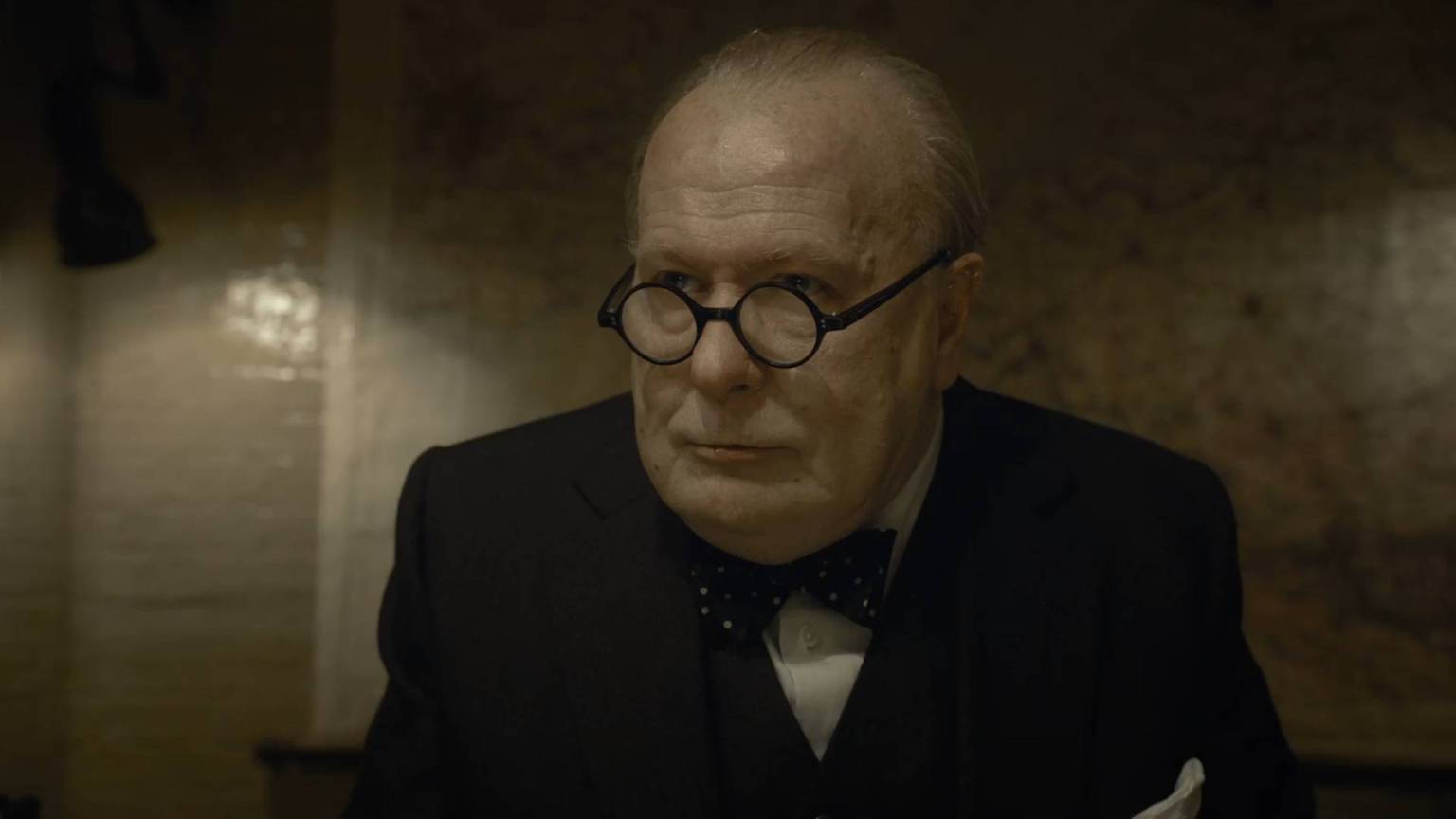
This is exactly the type of movie you’d expect to see this time of year. It boasts a talented director: Joe Wright, an excellent cast and a narrative of historical significance. Essentially, Darkest Hour is this year’s The King’s Speech only without the engaging and thought provoking plot.
Starting during the first months of World War II, the UK has lost confidence in their Prime Minister – Neville Chamberlain. Without the support of the party or the vote of the people, Winston Churchill must lead the country through the strife of impending attack and the perils of fighting for survival against the political establishment.
Joe Wright has directed this as tamely and safely as possible. There are no cutting insights into the man, Churchill himself, nor is there a new or intriguing angle to take this well-known tale. Instead it feels as though he directed this with a checklist of dos and don’ts. It’s a boring watch as we stodge through all the tropes and trails of this familiar story. The real shame here is that it should instil a sense of pride as we watch, ‘best of British’, but all that is felt is the heavy eyelids.
That isn’t to say the film is without merit. The performances are outstanding all-round, particularly Gary Oldman in the lead as Churchill. Oldman is completely transformed into this performance and not simply through makeup, but through subtle character ticks and quirks – rightfully so that the praise surrounding this film is almost entirely around his performance. Cinematography is serviceable, as is everything else.
That is the true fault of this film, because it isn’t bad, it isn’t great, it’s just fine.
Black Panther
2018
Director: Ryan Coogler
Starring: Chadwick Boseman; Michael B. Jordan; Letitia Wright; Lupita Nyong’o; Danai Gurira; Daniel Kaluuya; Martin Freeman; Forest Whitaker; Andy Serkis; Angela Bassett
Words: Nathan Scatcherd
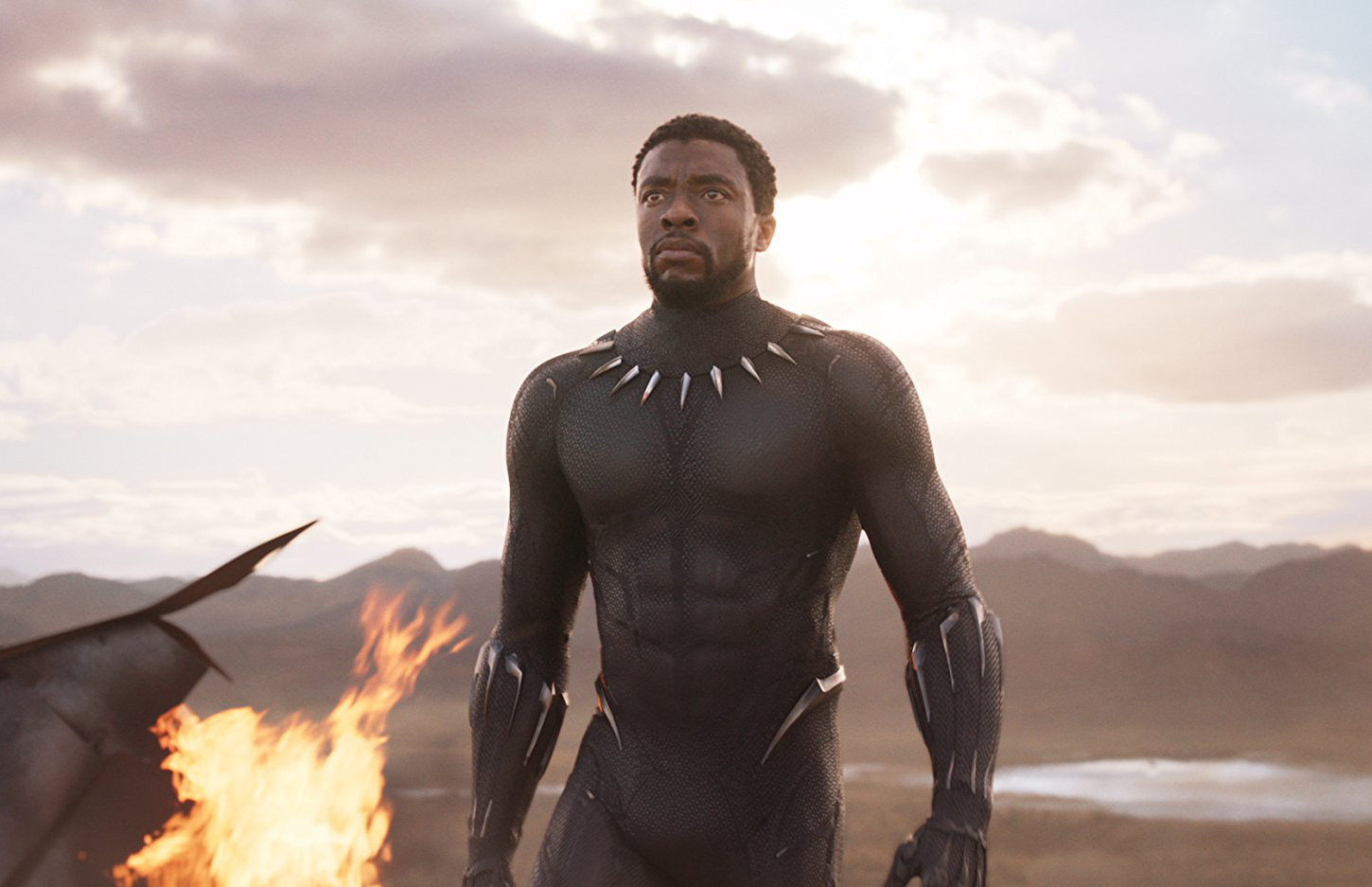
2016’s Captain America: Civil War is perhaps the apex (so far) of Marvel’s now decade-old, multi-film shared cinematic universe goliath; a film which really feels like a top-tier Marvel comic book come to life, at once sprawling and tightly focused, with its huge cast of characters woven into the plot neatly and each serving a distinct purpose – a film which not only saw the return of Captain America, Iron Man, The Winter Soldier, et. al, but also found time to casually introduce Tom Holland’s wonderful iteration of Spider-Man, and of course Chadwick Boseman’s Black Panther.
It’s a miracle that Civil War managed to cram so much in without ever making it feel, well, crammed in, and though Boseman was ultimately not in the film for a particularly long stretch, he served an important purpose and certainly made an impression as Prince T’Challa of the fictional African country of Wakanda.
He actually had a lot to project in that film; a reserved wisdom and cultural pride, and then when his father – King T’Chaka – is murdered by the villainous Helmut Zemo, the resultant emotional turmoil and the regal rigour of sudden impending kingdom (as well as getting some heart-pumping action hero moments, such as nonchalantly facing down the machine gun fire of a helicopter in his vibranium Black Panther suit).
His appearance had a lot of audience members – particularly black audiences – clamouring to see him in his own instalment, and two years later, Marvel have honoured the character with a strong, thoughtful entry unafraid of its socio-political concerns and unapologetically made for those audiences, who really shouldn’t have had to wait this long for such strong, fiercely proud representation.
However, it still remains wide enough in its scope and concerns (co-operation; progression; building bridges to those previously shunned) to appeal to everyone, feeling joyously inclusive and forward-thinking.
We pick up with T’Challa on the eve of his crowning as the Black Panther, king and protector of Wakanda, an afrofuturist paradise of sci-fi technology that would make even a certain Mr Stark blush. Amusingly, Wakanda poses itself as an impoverished Third World country to the rest of the world – who pretty much ignore it as such – in an effort to preserve their technological advancements and rich culture. It comes off as an effective melding of various real world African cultures, turning it into a nicely representative microcosm of the whole continent. T’Challa’s crowning is complicated by the emergence of Erik ‘Killmonger’ Stevens (Michael B. Jordan), who has his own personal history with Wakanda and believes himself worthy of the throne.
We won’t go into Killmonger’s backstory too much as it’s actually quite affecting to watch unfold, but Jordan gives a performance which walks a fine line between sympathetic and hateful; vengeful, wounded, and in the tradition of the best cinematic villains, not without a certain understandable angle. Andy Serkis reprises his Avengers: Age of Ultron role as slimy arms dealer Klaue all too briefly; he almost brings a Marvel version of the Joker with his manic, joyful approach to violence and mayhem. He’s one of the few Marvel cinematic villains who never succumbs to moping – come to think of it, the only one…? – appearing to genuinely love being a total bastard, and it’s a lively, infectious performance.
Black Panther’s women are one of its main strengths. Letitia Wright is a joy as Shuri, T’Challa’s genius sister who designs all of his Black Panther gear, and Danai Gurira as Okoye – leader of the female Wakandan warriors the Dora Milaje – exudes a self-assured toughness as well as delivering some occasional dry humour. Lupita Nyong’o shines as Nakia, a spy and T’Challa’s love interest, although her character does feel more or less there to fulfil a certain role; she is introduced as having her own agency, but quickly settles into a kind of female character all too familiar in superhero movies in particular; as ‘the girl’ to be ‘got’. But she is such a great screen presence that she almost manages to elevate her characterisation beyond this.
Black Panther is the first Marvel film in some time to be more or less completely divorced from its surrounding Avengers-centric movies, which is refreshing (characters are introduced and relevant events from Civil War referenced smoothly enough that you don’t even need to have seen Civil War to ‘catch up’ – Black Panther is its own story and understands the importance of good drama and well-drawn characters over franchise building and nodding to events and characters in other franchises).
In fact, where the film stumbles slightly is its adherence otherwise to the Marvel movies playbook; checking off the slightly shoehorned romance subplot and inevitable CGI punchfest at the end. The ideological disputes between the proud, tradition-based Wakandans and the violent, rage-driven Killmonger are so compelling in their Shakespearean drama that when this latter element in particular pops up it feels like producer-mandated checklist-ticking.
Still, it’s not enough to overpower what is a very solid film, and a culturally important moment in both black cinema and superhero movies. I for one am looking forward to returning to Wakanda for Infinity War… and beyond.
The Shape Of Water
Director: Guillermo del Toro
Starring: Sally Hawkins, Octavia Spencer, Michael Shannon, Doug Jones, Michael Stuhlbarg, Richard Jenkins
Words: Carly Stevenson
Widely praised as his best work since Pan’s Labyrinth (2006), Del Toro’s latest feature is a thoughtful retelling of the age-old Beauty and the Beast trope of fairy-tales and classic monster movies alike.
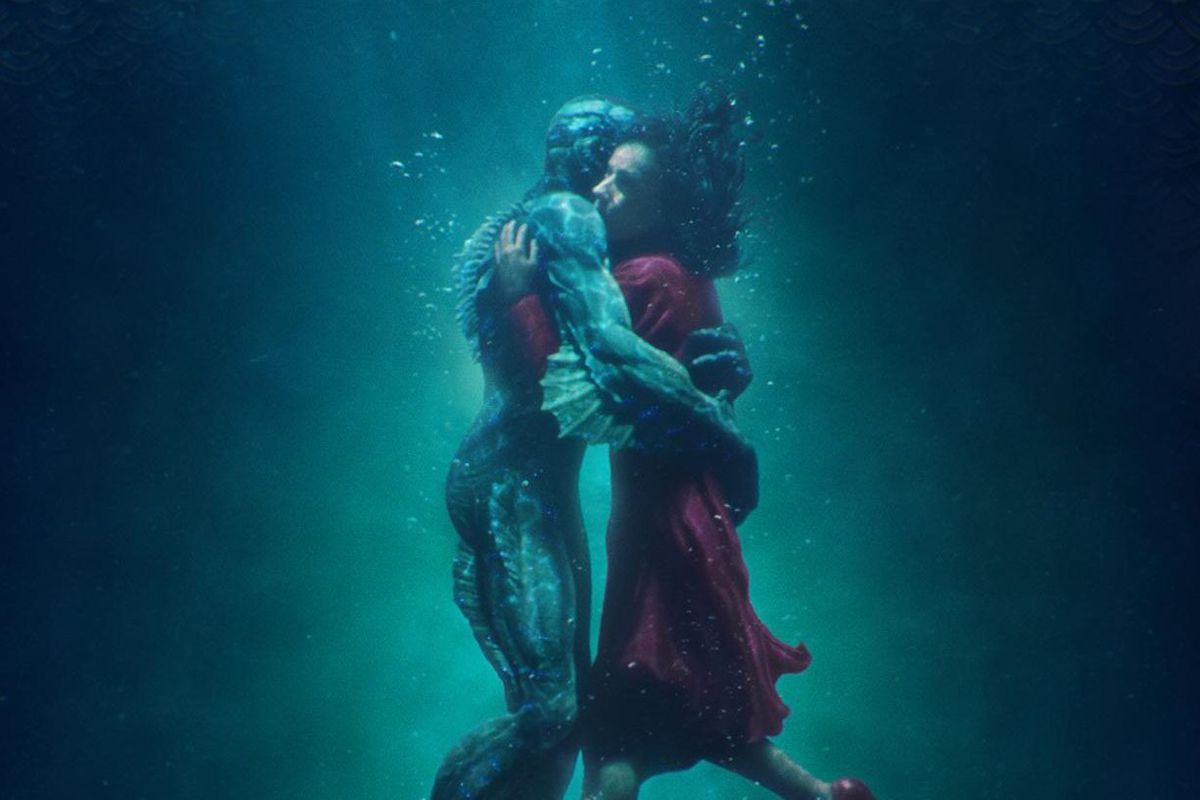
The plot focuses on the unlikely romance between a mute janitor and a humanoid-amphibian creature imprisoned in the top-secret government laboratory where she works.
Thematically, The Shape of Water is as reminiscent of an Angela Carter story (see The Bloody Chamber) as it is The Creature of the Black Lagoon. What elevates The Shape of Water from a generic ‘creature feature’ is Del Toro’s signature Gothic aesthetic and his engagement with socio-political issues relating to gender, race and sexuality.
Elisa’s (Sally Hawkins) only allies – Giles, her closeted homosexual roommate (Richard Jenkins), Zelda, her African-American co-worker (Octavia Spencer) and Doctor Hoffstetler, a marine biologist and Soviet spy (Michael Stuhlbarg) – are outsiders who exist on the margins of Cold War-era Baltimore.
Likewise, the film’s ‘monster’ is a liminal figure whose existence is an ‘affront’ to the socially conservative, prosperous, yet deeply unstable American identity, as embodied by Colonel Strickland (Michael Shannon). This backdrop allows Del Toro to explore a number of issues that are, in many ways, as relevant today as they were in 1962: institutional racism, harassment in the workplace and the expression of dangerous, heteronormative attitudes from people in power.
Interestingly, Elisa’s relationship with the amphibian man (Doug Jones) is never portrayed as transgressive or taboo. Rather, we are encouraged to see their intimacy as natural. Female masturbation is represented in similar terms: Elisa’s daily, self-administered stimulation is shown to be as ordinary as boiling an egg.
Submerged in a sumptuous, aquatic colour palette, The Shape of Water is visually-arresting from start to finish. Sally Hawkins’ wordless, sensual performance recalls the charm of silent cinema, which is heightened by Alexandre Desplat’s whimsical score, while Doug Jones’ skilful body acting encourages us see beyond the ‘gill man’ suit to the individual beneath.
The Shape of Water is a moving narrative about otherness that suggestively interrogates humankind’s capacity for tolerance. Del Toro has affectionately transcended his subject matter by offering up a monster movie with hidden depths.
Cult Corner: Killer Klowns from Outer Space

1988
Directed by – Stephen Chiodo; Charles Chiodo; Edward Chiodo
Starring – Grant Cramer; Suzanne Snyder; John Allen Nelson; John Vernon; Michael S. Siegel; Peter Licassi
Words – Nathan Scatcherd
In the hallowed garden of 80’s sci-fi comedies, Killer Klowns from Outer Space seems like some particularly low-hanging fruit. The name alone is enough to make anybody sneer with derision; maybe at least pique the interest of the ‘ironic viewer’ – someone who hunts down B movie fare not to enjoy it earnestly so much as tear it to shreds, however good-naturedly.
There’s nothing wrong with this, of course (I confess I was drawn to the film with a certain level of detached sarcasm originally), but sometimes a ‘bad’ movie can not only nicely surpass low expectations of quality, but actually reveal itself to be fully in on its own joke.
What I’m getting at is that Killer Klowns from Outer Space feels like a movie which is commonly saddled with the assumption that it’s an unintentionally funny mess; written off sight unseen as the kind of film which is only ‘cult’ due to how bad it is – something more akin to, say, Tommy Wiseau’s singular disasterpiece The Room – as people laugh at the name and perhaps see the occasional clip of the titular ridiculous-looking rubbery clowns (sorry, KILLER KLOWNS) terrorising the citizens of a small town.
However, actually watching the full thing, I was struck by how self-aware it is; a cult gem with its tongue planted firmly in its greasepainted cheek, and fully intentional in its laughs.
The plot concerns our titular alien jesters capturing/killing the residents of Crescent Cove after they land their spaceship (which is of course decked out like a funhouse) in the woods, near a favoured makeout spot for the town’s teen population. Two of said teens (Cramer and Snyder) decide to investigate and quickly discover that, even by the standards of bizarre instantaneous pop-up circuses, things are a little ‘off’. Pretty soon the whole town is in danger, as the killer klowns run amok and feed on their human prey, cocooning them in candyfloss and draining them of blood with curly straws.
They team up with a cop (Nelson) who used to go out with Snyder’s character, setting up a love triangle which never really goes anywhere (to be fair, they’re understandably more concerned with fighting back against the killer klowns than with arguing over romantic pasts and unresolved feelings), and have to contend with John Vernon’s aggressive, dismissive ‘bad cop’ Mooney. He’s a deadpan delight as a bad tempered hard-nose who remains resolutely unconvinced there are murderous clown creatures running around his town, even when he comes face to face with one. Siegel and Licassi amuse as a pair of horny ice cream salesmen who admittedly skirt close to being obnoxious, but are ultimately kind of charming in a goofy, affably dumb way, getting some of the film’s funniest moments (a brief interlude with a couple of ‘sexy’ klown girls who don’t appear to be of the ‘killer’ variety; refusing to leave their ice cream van in the face of certain death as “it’s a rental!”).
Overall, the performances are hardly fantastic, but arguably just the right kind of over the top for a film about murderous intergalactic clown aliens. The film’s real winning feature is its visual inventiveness, playing with the ‘evil circus clowns’ concept to frequently smile-inducing effect (and with some genuinely impressive technical proficiency).
Aside from the aforementioned candyfloss and curly straw method the killer klowns use on their victims, and their funhouse spaceship, there are clever sci-fi repurposes of fairground imagery such as a sentient balloon animal dog; popcorn that eats people and a scene with a deadly Punch and Judy show.
The killer klowns themselves all have their own distinct looks and have an appropriately cartoonish visual style. One could beg the question why anyone would even remotely trust these hideous things, or at least not pay any real attention to them (at first the killer klowns blend into their environment – in one scene one of them amuses a group of civilians with some shadow puppetry before offing them as they’re distracted), but that way madness lies.
Killer Klowns from Outer Space isn’t interested in rationalisation or really grounding itself in any semblance of reality, and rightly so. It is, overall, a deeply silly and frequently very fun romp which aptly tells you what it’s all about with its title.
Oh, and the title theme tune by The Dickies is a thoroughly excellent slice of sweet, sweet cheese:
Good luck getting that out of your head any time soon…
To read more words from Nathan, you can find this and other articles over on –
https://nscat13.wixsite.com/always-watching
The Cloverfield Paradox

Director: Julius Onah
Starring: Gugu Mbatha‑Raw, David Oyelowo, Elizabeth Debicki, Zhang Ziyi, Daniel Bruhl, Chris O’Dowd
Words: Christian Abbott
The Cloverfield franchise, as it seems appropriate to call it now, has been something of a mystery since its debut in 2008.
Director Matt Reeves and producer J.J. Abrams created the original Cloverfield as America’s own Godzilla. The film utilised Abrams concept of the “mystery box”, stories with more questions than answers. To do this they developed an extensive and cryptic viral marketing campaign – websites with riddles, emails between characters and audio files of redacted government documents flooded the web to build anticipation for the film’s release.
When Cloverfield did finally hit theatres the results were mixed, many audience members complained of feeling nauseous due to the filmmaking – the height of the handheld movie craze. It certainly brought a different level of grounded realism to the film, combining the massive blockbuster spectacle with the low budget camera work added to the tone set during the viral campaign. The results were quite unlike anything Hollywood had produced before, for good or ill.
Then, for the next eight years it went largely forgotten, with the exception of a dedicated cult following trying to decipher the universe Abrams and co. had created.
That was until 10 Cloverfield Lane was announced, a repurposed screenplay to continue the Cloverfield brand in a new and different way – a cinematic Twilight Zone of sorts. It was announced mere months before release in an attempted to build similar excitement in the unknown. The handheld filmmaking was dropped and a more star-studded cast was added. The Godzilla action was replaced with a tension filled character study – three characters trapped in a bunker while the world above has been destroyed.
The film was a step in the right direction; the results were a fascinating continuation to Cloverfield in an unexpected way. However, or perhaps appropriately, the film not only answered nothing but actively seems to go against the narrative of the first with seemingly no connections between the two. While the film worked on its own merits, as a brand Cloverfield had little steam. This combined with a shaky final act left the series in a questionable position.
Yet, last year it was announced that a screenplay titled “The God Particle” was being repurposed as a Cloverfield film, similar to what happened to 10 Cloverfield Lane before it. Then suddenly, without ceremony, The Cloverfield Paradox was dropped on Netflix at midnight following a short trailer played at the Superbowl.
This time it felt less like clever marketing, and more like a way to trick people into seeing it before word began to spread of the results.
The first two Cloverfield’s were flawed but engaging science-fiction tales, inventive and intriguing. This latest entry hopes to answer the questions of the original and tie together the franchise as a whole – but it doesn’t work.
The Cloverfield Paradox takes place off Earth and in a space station hoping to solve a previously unmentioned global resource shortage. It features severed limbs writing messages, alternate dimensions colliding, and worms bursting out of stomachs. It all sounds wonderfully insane, but manages to make it all so tedious. There is far too much exposition and it being a screenplay with Cloverfield shoehorned in really begins to show during the final act. It is something of a cross between last year’s Life and Event Horizon, but never matches either in entertainment.
Cloverfield is still a fun little non-franchise that continually surprises with differing results. But perhaps now is the time to finish this project – these screenplays would be better off without Cloverfield attached to them.
Phantom Thread

Director: Paul Thomas Anderson
Starring: Daniel Day‑Lewis, Vicky Krieps, Lesley Manville, Camilla Rutherford, Brian Gleeson
Words: Christian Abbott
Writer, director and cinematographer, Paul Thomas Anderson, has proven that he has his filmmaking down to a science.
His latest work, Phantom Thread, feels like the culmination of Anderson’s oeuvre, weaving together the various genres we’ve seen him perfect before, from screwball comedy to character-study dramas. Anderson’s previous work, Inherent Vice, attempted this consensus of ideas also in a knowing lack of comprehension. Yet, now with his latest, he has secured his position as one of the greatest filmmakers working today.
It is no surprise though that most of the excitement, or bittersweet anticipation, towards the film has come from the announcement that it would be Daniel Day-Lewis’s last. He has re-teamed with Anderson for his final performance – the cantankerous, piercing yet oddly charming Reynolds Woodcock – a dress-maker in 1950s Britain. Day-Lewis has played roles similar to this in the past, yet manages to be completely unrecognisable in the role, transforming himself into a quiet yet imposing figure.
We find him in a state of frustration and unease over the changing landscape of fashion – the burgeoning European world of chic. He lives a life of order and rigorous scheduling with absolutely no deviation. Living and working in his London house, he has a legion of women that put together the dresses he designs on the day to day. Above all, he lives with Cyril, his “old so-in-so”, sister and manager of sorts played brilliantly with a stern cunning by Lesley Manville. It soon becomes clear that Woodcock lives a cyclical life, a rotating door of relationships to which he seduces into his lifestyle then soon tires.
This is where Alma comes into the picture, Woodcock’s latest muse played effortlessly by Vicky Krieps. Again Woodcock finds himself admiring her uniqueness that even she wasn’t aware of, bringing her into his world – yet soon he finds her more of a match than any partner before. Krieps manages to bring this charming earnestness to her performance that slowly transforms into a dominating position of manipulative power. Throughout Day-Lewis and Krieps bounce off one-another with increasing levels of tension, building effortlessly from comedic awkwardness to genuinely disturbing moments of unease.
Aiding this is Anderson’s cinematography throughout, weaving his camera through the corridors of Woodcock’s house with as much grace and decorum as Woodcock himself. His camera often feels invasive and unsettling – providing a different view into one of his worlds than we’ve seen before. Framing characters within frames and locking the camera on the hood of Woodcock’s car as it speeds across town.
Along with this is the score by Jonny Greenwood, orchestral, brooding and menacing – seemingly at odds with the film’s often comedic moments – perhaps reminding us that beneath it all is a wounded man trying in vain to fill a mother shaped hole in his life. This disconnect creates an otherworldly strangeness to the film. There is a lure and intrigue to the bizarre which Anderson exploits in his screenplay.
But, if this is Daniel Day-Lewis’s final performance, then it is the perfect swansong to close on one of cinema’s most illustrious careers.
Must See Movies: February

At Reel Steel we want to make sure you’re getting the most of your cinematic enthusiasm, so each month we put together our short list of some of the best new releases, from popcorn munching explosion fests to the often weird and wonderful.
Take a look at the trailers below and see what you think to this month’s recommendations!
The Shape Of Water
released Friday February 16th, 2018
From master story teller Guillermo del Toro (Pans Labyrinth), comes this other-worldly fairy tale, set against 1960’s Cold War era America.
In the hidden high-security government laboratory where she works, lonely Elisa (Sally Hawkins) is trapped in a life of isolation.
However her life is forever changed when she and co-worker Zelda (Octavia Spencer) discover a secret classified experiment – a mysterious, scaled creature living in a watertank.
With 13 Oscar and 12 BAFTA nominations, The Shape Of Water looks set to be a highlight of the cinematic calendar.
Black Panther
released Friday February 16th, 2018
Marvel Studios’ Black Panther follows T’Challa (Chadwick Boseman), who after the events of Captain America: Civil War returns home to the isolated, technologically advanced African nation of Wakanda to take his place as King.
However, when an old enemy reappears, T’Challa’s position as King and Black Panther soon come under threat from forces outside and within, and he must fight to protect his land and people while being drawn into a conflict that puts the entire fate of the world at risk.
Ahead of the new phase in the Marvel Cinematic Universe, this feature leads into the upcoming Avengers: Infinity War due later this year.
Lady Bird
released Friday February 23rd, 2018
Christine “Lady Bird” McPherson (Saoirse Ronan) is a high school student with a reputation for being on the “wrong side of the tracks”, her rebellious ways are causing major clashes with her mum (Laurie Metcalf), and straining their already rocky relationship.
This indie comedy-drama is a smart coming-of-age tale that depicts pivotal phases in a teenager’s life – a first romance, applying to University, and moving into adulthood.
From writer/director Greta Gerwig comes this highly acclaimed directorial debut, with 5 Oscar nominations including Best Director (making her just the fifth woman in history to receive a Best Director nomination), this is an authentic character story with a cast including Lucas Hedges (Manchester By The Sea, Three Billboards Outside Ebbing, Missouri) and Timothee Chalamet (Call Me By Your Name).
– SPECIAL EVENT –

2018 marks the 30th Anniversary of one of the most iconic animated films to be produced by the world renowned Studio Ghibli – My Neighbour Totoro.
To celebrate this, Reel Steel will present a special 35mm film screening of this animated masterpiece at Sheffield’s historic Abbeydale Picture House.
This now SOLD-OUT event is a rare opportunity to see a Studio Ghibli feature on 35mm –
see our feature film review >here<
Coco

2018
Director(s): Lee Unkrich, Adrian Molina
Cast: Anthony Gonzalez, Gael García Bernal,Benjamin Bratt
Words: Josh Senior.
Pixar movies are generally cinematic high points in any calendar year. Since Toy Story in 1995 the famed animation house has been churning out consistently high quality content on an almost annual basis. They are movies we crave, and movies we adore. They have sparked rivals and pretenders the world over, and yet, Pixar are still really the dominant force in this market; and they do so by remaining relevant, contemporary and also challenging all at once. It’s a difficult task, and one they balance expertly.
Now in their twenty-third year of cinematic dominance, their output can be separated into two distinct strands. They have what we can call their franchise content; consisting of Toy Story 1-3, Cars 1-3, Finding Nemo/Dory, Monsters Inc/University and The Incredibles 1 & 2. These are really Pixar’s building blocks and offer them the chance to venture into more diverse territory in their other films, their second strand if you will.
Titles such as Inside Out, Brave, The Good Dinosaur, UP, Ratatouille and Coco, often tackle larger themes and play out as thoughtful vignettes on life, existence and family values. Big themes for children’s movies, but it’s this that keeps audiences coming back for more. Pixar’s ability to handle elements beyond the realms of fantasy that speak to us directly, is their main strength.
Coco, is a quintessential example of Pixar operating on full emotional capacity. The film follows Miguel during the famous Day of the Dead Festival, who is a music obsessed young boy who comes from a family that strictly forbid any musical activity. Miguel also happens to live in a town that is the birthplace of the world’s greatest Mariachi of all time Ernesto de la Cruz. When Miguel attempts to steal de la Cruz’s guitar, from the singer’s cemetery monument he is magically transported into the land of the dead, and attempts to seek out de la Cruz, thinking him to be his long lost ancestor. Along the way Miguel meets other members of his now deceased family as he finally learns the truth of his lineage and his heritage.
From the offset, this may not feel like ample material for a children’s film. Death and specifically life after death is the main focus here. However, Pixar inject so much beauty and hope into their concept that at no point do you feel any despair about what you are seeing, and for a child this simply plays out as yet another fantastical adventure. Miguel’s adventures take in these heavy themes, and for want of a better phrase, truly give them life. The film tells the story of how we descend from our ancestors, and how traditions are passed down from generation to generation, and how it is important to remember the past in order to forge ahead into the future.
Coco really sits up there with the strongest of these standalone Pixar films, which is high praise when you think of Inside Out and UP as the two standard-bearers. It’s also deeply satisfying, that during the current American presidency, such a film exists starring a Latin American cast and focusing on a festival that takes its roots in Mexico. Pixar’s politics and ideals could not be clearer here. No wall can stop any culture, and with Coco they continue as the trail blazers of animated storytelling.
–
 REEL STEEL
You must be logged in to post a comment.