Mary and the Witch’s Flower

2018
Director: Hiromasa Yonebayashi
Words – Joe H.
The dearly loved Studio Ghibli announced it was stopping production in 2014, alongside director Hayao Miyazaki announcing his retirement, and with the passing of Studio Ghibli co-founder Isao Takahata (director of Grave of the Fireflies and The Tale of Princess Kaguya), you would be forgiven for thinking that the future of this beloved world of animation was uncertain.
With Ponoc translated as ‘midnight’ – the moment of the end of one day and the start of another, it feels as though we’re seeing a new chapter here in this widely celebrated foundation of Japanese animation with this release from the Studio Ghibli successor, the debut film from Studio Ponoc.
Our story follows Mary, as she stays with relatives in a quaint countryside town surrounded by scenic forest over the summer. Through chance and curiosity (and the help of a black cat), she stumbles across what reveals itself to be a magical flower, and is then drawn towards discovering a lost broomstick.
These events take Mary high above the clouds to a school of magic, where following some miscommunication and accidental displays of ability, she finds herself its newest pupil. She is overwhelmed and joyous as the school believe her to be a once-in-a-lifetime magical talent, but as her possession of the witch’s flower is revealed, she finds that all is not what it appears to be in this fantastical world, and is caught up in a historic struggle for power where only her courage and some new found friendships will see her return home.
The animation in this feature is expressive, detailed and beautifully fluid during the more action-filled sequences.
There is slightly more than just the feel of past Studio Ghibli films here, in its story, characters and environments – from Spirited Away to Castle In The Sky, Kiki’s Delivery Service and Ponyo, you can almost point out and reference elements you’ve seen before – whether this is to evoke a feeling of familiarity and draw us into this world, act as a tribute, or simply because these animators (having come from Studio Ghibli) have so much of this ingrained within them that they know nothing other than creating more of the same worlds we’ve all become so attached to, is something which should please fans if not create a yearning for more.
Even the Studio Ponoc logo itself appearing before the film, bears a striking resemblance to that of Studio Ghibli’s – only apart from Totoro, we see a profile of the film’s title character – but for as long as there are those working in this new Japanese animation studio that want to create these worlds for us to escape to, this is all only to be celebrated.
A film which will feel familiar to Studio Ghibli fans, and one to be enjoyed by all. An enchanting world and a heartfelt story.
A Quiet Place

2018
Director: John Krasinski
Starring: John Krasinski, Emily Blunt, Millicent Simmonds, Noah Jupe
Words – Nathan Scatcherd
A Quiet Place is an interesting film to watch at the cinema, specifically.
At the screening I attended, the place was almost full, and as a steady stream of people came in I noticed a lot of popcorn, becoming a little concerned that the film – which features hardly any dialogue, as it characters mostly communicate in sign language – would be ruined by rustling and crunching. Amazingly, and amusingly, most of the popcorn in the room seemed to remain uneaten instead, as people clearly got into the movie and didn’t want to disrupt its wordless stretches (although unfortunately, as seems to be par for the course at the cinema these days, people still kept dicking around with their phones throughout).
Fittingly enough, A Quiet Place is definitely best viewed in, well, a quiet place; it’s a tense, solidly put together monster movie which doesn’t shy away from its B-movie conceit, of blind monsters who hunt based on sound and can pick up on even the tiniest noise, leading our family of survivalists (Krasinski and Blunt as the parents; Simmonds as their deaf daughter – hence their fortunate prior knowledge of sign language – and Jupe as their young son) to lead a life of absolute minimal sound.
The film does a lot with its concept, cleverly making use of long stretches of silence to set up the occasional jolt and imbuing its characters with real affection for one another despite (or due to) not being able to verbalise much, for fear of the slightest noise bringing the creatures to their home.
This tenderness is possibly due in part to John Krasinski and Emily Blunt being married in real life; they look at each other and worry about each other in a way which carries an obvious genuineness, and Millicent Simmonds (who is actually deaf and no doubt helped a great deal to make sure the sign language was perfect on set) is affecting as the daughter who appears to carry some survivor’s guilt, and is desperate to prove herself.
It’s a shame the monsters aren’t more interestingly designed; they seem far more threatening and scary when we don’t actually see them clearly, and when we do they’re somewhat underwhelming, looking like a cross between a praying mantis and a Xenomorph. Still, it’s a fairly nitpick-y complaint, and overall A Quiet Place is a smart, anxious creature feature anchored by a premise it makes inventive use of.
To read more words from Nathan, you can find this and other articles over on –
https://nscat13.wixsite.com/always-watching/
Must See Movies: April
At Reel Steel we want to make sure you’re getting the most of your cinematic enthusiasm, so each month we put together our short list of some of the best new releases, from popcorn munching explosion fests to the often weird and wonderful.
Take a look at the trailers below and see what you think to this month’s recommendations!
Wonderstruck
released Friday April 6th, 2018
Ben and Rose are children who come from two very different worlds, but have much in common – both are hearing impaired, and dream of better things.
Ben longs for the father he has never known, while Rose dreams of a silent movie star whose life she chronicles in a scrapbook. When Ben discovers a note that might lead him to his absent father, and Rose stumbles across an article in the newspaper, both children set out on quests to find what they are missing, which unfold with mesmerizing symmetry.
Two parallel lives set 50 years apart, their paths cross in the same place but at different times.
Based on the critically acclaimed novel by Brian Selznick, who also wrote the screenplay for the film (and whose previous work was adapted by Martin Scorsese for the film Hugo), with Julianne Moore, Michelle Williams and a breakthrough performance from deaf newcomer Millicent Simmonds as Rose, Wonderstruck is a beautiful and imaginative story between time periods from director Todd Haynes (Carol, Far From Heaven).
Marlina the Murderer in Four Acts
released Friday April 20th, 2018
In a remote part of Indonesia, a young widow is threatened by a gang at her home.
As the gang force ownership of her, Marlina embarks on a journey in search of justice in a male-dominated society, as her experiences and actions begin to haunt her.
Beautifully shot and scored with elements of the classic Western as well as traditional Indonesian culture, the film updates and adapts a classic genre in this provocative and uncompromising feminist revenge-Western.
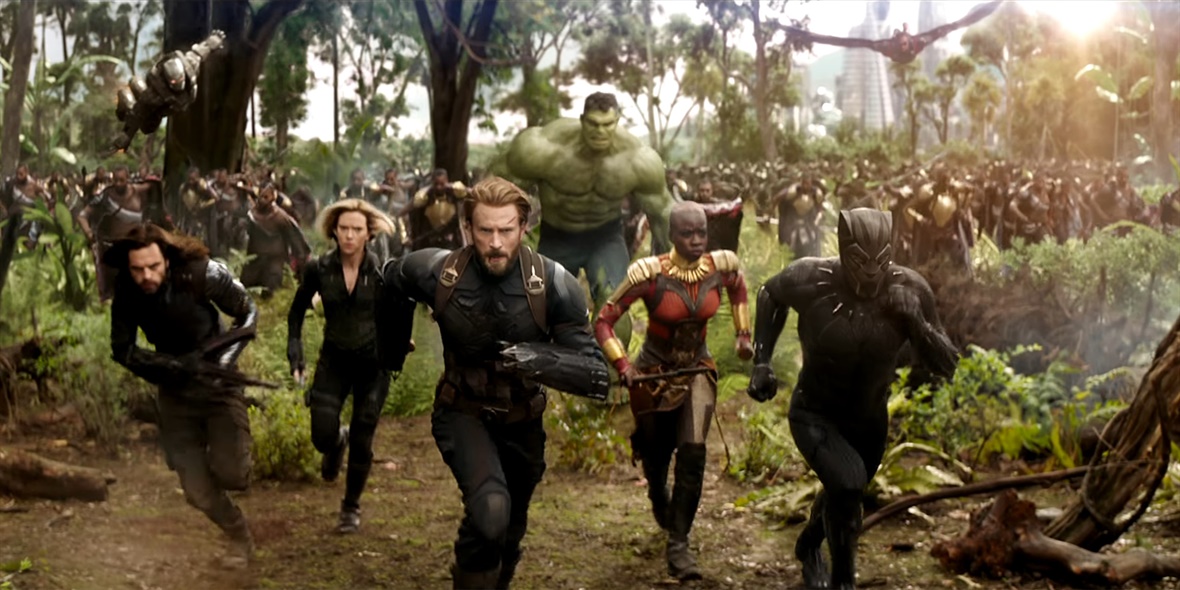
Avengers: Infinity War
released Friday April 27th, 2018
This is it, it has all been leading to this… an entire universe, once and for all.
A journey ten years in the making, Avengers: Infinity War brings together the entire Marvel Cinematic Universe, as The Avengers and their allies must be willing to sacrifice all in an attempt to defeat the all-powerful Thanos.
This will be the last time we will ever see some of these heroes…
Isle of Dogs

2018
Director – Wes Anderson
Starring – Bryan Cranston, Koyu Rankin, Edward Norton, Bill Murray, Jeff Goldblum, Bob Balaban, Kunichi Nomura, Scarlett Johansson, Liev Schreiber, Greta Gerwig
Words – Rhiannon Topham
Only Wes Anderson’s zany aptitude for endearing repartee could enchant an adult audience awaiting an animated film about dogs, with an opening foreword that “all barks have been rendered into English”.
Isle of Dogs, Anderson’s ninth feature film and second venture into stop-motion animation after 2009’s Fantastic Mr. Fox is perhaps the visionary directors most adventurous to date.
Set 20 years from now, the film chronicles the frivolous drama which has descended on Megasaki, a fictional Japanese city governed by Mayor Kobayashi’s dog-hating tyranny. Insisting that an outbreak of dog flu threatens the well being of Megasaki citizens, Kobayashi banishes all the city’s canines to Trash Island, essentially a garbage disposal site appointed as the titular isle of “snout fever” ridden pooches, and volunteers his nephew and ward Atari’s guard dog Spots (voiced by Liev Schreiber) to be the first.
The kind of dystopian junkyard Wall-E would’ve relished in, it is on this perfectly hideous island that we find the narrative’s dignitaries. Bryan Cranston’s alpha stray Chief and his pack of eccentrics, Rex (Edward Norton, demonstrating leadership qualities reminiscent of his Moonrise Kingdom Scout Master Ward), ex-team mascot Boss (Bill Murray), gossip fiend Duke (Jeff Goldblum) and former spokesdog King (Bob Balaban), are making ends meet by scraping their way through trash piles and brawling with other dogs when Atari arrives to rescue his beloved companion Spots, albeit chaotically and in a hijacked plane.
Atari’s quest to find Spots with support from Rex, Boss, Duke, King and some (reluctant) help from Chief is the overarching story, but the politics and corruption spiralling out of control back in Megasaki receive equal attention. By pitting Kobayashi’s preference for cats against the scientific opinion of Professor Watanabe, who insists he is close to finding a cure for dog flu, Anderson has subtly and humorously woven a satirical commentary on the conflict between tradition and modernity, one which employs a Nosferatu-esque henchman and poisoned sushi to maintain an authoritarian status quo and, in an unnecessary cultural misstep, the ingenuity of an American exchange student to dismantle it.
Not content with creating a story which appeals to young and old alike, Anderson has produced one of the most visually stunning animations ever made. For a film that took weeks to make mere seconds of footage, it is an artistic triumph which boasts beauty even some live action features fail to capture. The most minute details are testament to the painstaking production process, such as the billowing wind which brushes through the dogs fur and blows delicate cherry blossoms onto them back in Megasaki; a purely decorative feature, but one which adds a truly astonishing degree of verisimilitude.
Much like its predecessor The Grand Budapest Hotel, the vicissitude in Isle of Dogs taps into the personal fragility hiding beneath the stoic exterior of its main characters as well as wider societal ills, in a way that only Wes Anderson’s toy-box of imagination can portray.
Fantastic Mr Fox

2012
Director: Wes Anderson
Starring: George Clooney, Meryl Streep, Jason Schwartzman, Bill Murray, Michael Gambon, Willem Dafoe, Owen Wilson, Jarvis Cocker, Adrien Brody, Wes Anderson
Words – Rhiannon Topham
“And so it begins…” These are the prophetic words of the titular vulpine as our Fantastic Mr. Fox derails the settled life he has built for his family among a community of animals.
In this character, Wes Anderson donned his eccentricity hat once again to honour one of the most beloved characters created by a supposed hero of his, Roald Dahl, in his first stop-motion animation endeavour, and indeed his only film adaptation to date.
Apologies for pandering to the “all-star cast” cliche, but a lineup led by George Clooney and Meryl Streep with support from Anderson favourites Jason Schwartzman, Bill Murray, Willem Dafoe, Owen Wilson and Adrien Brody, with an excellent cameo role from Jarvis Cocker as the idiosyncratic banjo-playing employee Petey to Michael Gambon’s menacing turkey and apple farmer Franklin Bean, is ensemble worthy of our reverence. And there is something especially humorous about the waspish old farmer Bean telling (the voice of) one of Britain’s most iconic singer-songwriters that his nonsense campfire jingle was “just bad songwriting… you wrote a bad song Petey!”
A cast of puppets didn’t dissuade Anderson from the emblematic aestheticism which has garnered his cinematic oeuvre international reverence, and spurred the expression “that’s very Wes Anderson”.
I think the scene where Franklin Bean emerges at the top of his cellar stairs, shrouded by darkness, lit solely by the flame of an inhaled cigarette, as Mr. Fox and his trusted sidekick Kylie the opossum hide nervously among the apple cider they intend to steal from him, is perfect.
Not only are we treated to that cinematographic perfection, but we also get: the prefatory book cover as seen in The Royal Tenenbaums, and The Grand Budapest Hotel; the binocular point of view shot, also made famous by his succeeding feature in 2012, Moonrise Kingdom; the symmetrical framing composition; the horizontal tracking shot of the main characters progressing through an important and well-choreographed scene. They’re all there, they just look different and aren’t as smooth as his live-action features – but this was an intentional move by Anderson, who said he wanted his viewers to notice and celebrate stop-motion as an art form, and so decided to evade the smooth look of other stop-motion animations such as Coraline in favour of the jerky, stop-start movement seen with Mr. Fox and co.
There are some that say the film doesn’t represent the true spirit of Roald Dahl’s wit and charisma, or indeed the darker aspects to his stories, but on the whole this is a film which brings together the imaginations of two great storytellers, and offers just enough deadpan humour to off-balance the light-hearted enchantment of the story to appeal to young viewers expecting a foxy fairytale, and older fans wanting to appease their craving for some Anderson excellence.
The latest feature from director Wes Anderson
– Isle Of Dogs is released Friday March 30th, 2018
Annihilation

2018 – UK, USA
Director: Alex Garland
Starring: Natalie Portman, Oscar Isaac, Jennifer Jason Leigh, Tessa Thompson, Gina Rodriguez, Tuva Novotny
Words: Josh Senior
It’s safe to say the release of Annihilation has caused some controversy, so let’s address the issue head on.
Paramount’s decision to deny the film a worldwide theatrical release and dump it onto streaming site Netflix has been a universally unpopular one. It marks a change in Netflix’s position in the marketplace, as it’s safe to say Annihilation is their biggest release to date, a film that was produced by a Hollywood studio that has now been sold short.
Netflix’s collective crop of “originals” has thrown up a mixed bag of content, with highlights being films such as Mudbound, Okja and War Machine, but on the whole their forays into cinema have thus far been a tad muted. There’s a disconnect there between the audience and the content, that a cinema usually provides the bridge for, the element of curation. It is interesting that Netflix are able to give film-makers a blank cheque and complete creative control, but this wasn’t the case for Annihilation, a film which has been snatched from the eyes of the masses, now forced to play on laptop and tablet screens for eternity (unless you can catch one of the few cinematic outings it’s managing to get in the UK).
This is a film made for the big screen, Alex Garland’s sophomore directorial effort is a dense and puzzling work of tantalising science-fiction which offers a palate cleanser from the usual genre tropes.
The film follows Lena (Portman) a Biology lecturer and former soldier, who believing her husband Kane (Isaac) has been killed in a covert operation is shocked at his sudden reappearance in her home, after more than a year of being missing. Kane then falls ill, and the two are rapidly whisked into government custody. Lena learns that Kane went missing, along with many others in a mysterious alien dead zone entitled The Shimmer, which is ringed by a psychedelic force field. Nothing comes out, and anything that goes in does not return, and it is expanding rapidly. As Kane’s health takes a turn for the worse Lena bands together with an all-female group of scientists and ventures into The Shimmer, which offers up a surreal and deadly environment filled with dangers, to search for the secrets behind her husband’s condition, and to discover what lies at the centre of this strange new world.
Annihilation is just a pure cinematic delight from start to finish, utilising its unconventional narrative, heavy themes and stunning visuals to mass effect in creating a piece of work that will leave you thinking and pondering for days afterwards.
Portman’s Lena is an excellent conflicted heroine, “a soldier scientist: she fights, she learns” and these are laid bare by the harshness of The Shimmer, it brings her skills as a soldier to the forefront as she battles the various creatures that emerge to attack the group and challenges her understanding of the world around her, and bends her perceptions of reality.
Each of the scientists is dealing with deep personal issues; terminal illness, self harm, addiction and loss, and they look to the mysteries of their setting to provide the answers, and unwittingly it throws up more questions and offers only confusion. This in turn drives straight into the heart of their group dynamic, and the further they progress into their mission the more fractured their relationships become.
The film’s third act takes us into the beating heart of The Shimmer and again challenges our perceptions and asks questions of the viewer, what it doesn’t offer is a stimulating climax – Annihilation succeeds in dangling its themes before your eyes and whipping them away before you’ve had a chance to look closely. The final confrontation that is thrown up is insanely beautiful and intricate all at once, but doesn’t give you the satisfactory ending you’ve been looking for… far from it.
The only detractor is, that even for a film with a run-time of two hours, it still feels a little over stuffed and the character development is at times rushed. Using some clumsy visual storytelling to convey its messages. Considering the genre it exists in and its large themes it could have done with a little more time to burn out at a more relaxed pace. Often some of the elements in the film are not given the time they deserve.
Credit where credit is due though, Alex Garland has crafted something so starkly intriguing that you find yourself wanting to delve back into the world of Annihilation again, and it’s surely a film that warrants repeat viewings to better understand what it’s trying to achieve.
Whether you see it in a cinema, on your laptop or even on your phone (please don’t watch it on your phone), just be glad that it’s here and that you can see it in some way, it really is that good.
> Annihilation is available to watch on Netflix now <
Mom and Dad
Director – Brian Taylor
Starring – Nicolas Cage, Selma Blair, Anne Winters, Zackary Arthur, Robert Cunningham, Olivia Crocicchia, Brionne Davis, Lance Henriksen
Words: Nathan Scatcherd
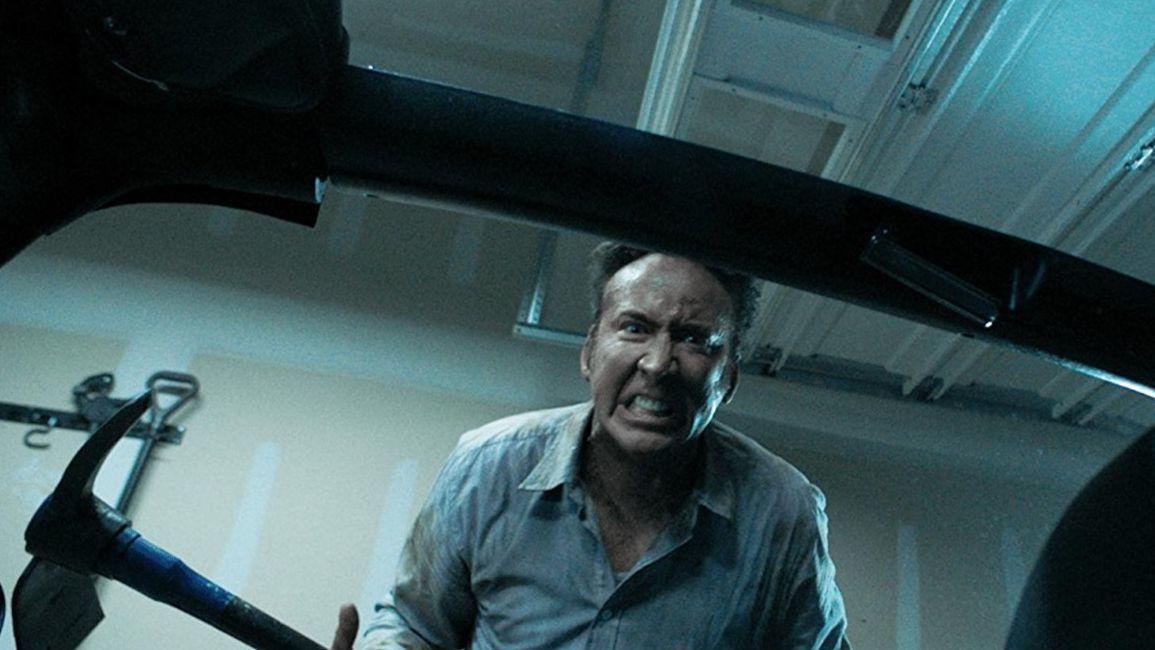
There are fewer things in cinema more wonderful – more at once mystifying and mesmerising – than Nicolas Cage in full-on freakout mode.
Mom and Dad continues this proud tradition of Cage Rage with the story of an unexplained phenomena which drives parents into homicidal rages against their children; Cage and Selma Blair are the parents who turn on their little angels (Anne Winters as the standard spoilt, ungrateful teen and Zackary Arthur as the young moppet son), in a film which has all the makings of a transgressive, pitch black comedy satire.
Unfortunately, the film ultimately undoes itself with a very uncertain tone, shakily trying to balance laughs and terror and not entirely succeeding with either.
Mom and Dad is a film which on one hand, stages a chilling scene of a father in a zombie-like state attacking his own terrified son with a broken bottle, and on the other, features Nic Cage howling the hokey cokey while smashing up a pool table with a sledgehammer. One scene, of a mother who has just given birth and immediately succumbs to the filicidal impulse, promptly attempting to kill her newborn child, would be utterly horrifying if it wasn’t scored with a ‘jokey’ ironic pop song totally undermining the tension.
The film just can’t resist diluting such moments with cheap, lazy nudges at the audience, as though it wants to lean into the fundamental nastiness of its plot but also wants to hammer home the joke (at a couple of points, the film gives up on trusting the audience altogether and outright verbalises its satirical message – the taboo idea of parental duties and responsibilities occasionally giving way to extreme frustration, leading one to perhaps wish their kids had never been born, or that they could just get rid of them permanently).
For every piece of genuinely creepy imagery – such as a crowd of new fathers standing outside a newborn nursery in a hospital, with bloodlust rather than love in their eyes – there is a moment which plays for fairly broad laughs, usually stemming from the Cagemeister himself doing his wonderfully unhinged routine.
In all honesty, he is easily the best part of the film and the whole thing seems to step up a level when he’s onscreen. His titular Dad is interesting in that he actually seems to have a few scews loose before the kid-killing rage overtakes him, and seems to be genuinely enjoying the perverse, violent freedom afforded him by the fact that now he gets to act on the simmering tensions and resentments between himself and his children, suddenly finding those feelings validated as, hey, every other parent out there is doing it too.
Unfortunately, he’s often sidelined so we can follow the children, who are never really given enough personality for us to seriously care about them (at least beyond the base empathy engendered by their horrific situation). Selma Blair is reliably strong as the mother whose bafflement and estrangement from her kids provides at least some semblance of sympathy for her – you know, at least until she starts trying to skewer her daughter with a coat hanger – and once she fully gives in to the craziness, she and Cage becoming a deeply warped double act complimenting each other on the ways they’re coming up with to murder their kids, she really seems to be enjoying herself.
A brief cameo from Lance Henriksen in the film’s third act sets up an interesting dynamic giving way to the film’s most enjoyably gonzo set-piece, a three-generation battle between grandfather, father and son set mostly within the cramped confines of a muscle car, but this is over with far too quickly and ultimately feels like a waste of potential (and Henriksen’s appearance, which could have been a real crowd-pleasing moment among a certain subset of genre movie fans, is spoilt within the film’s opening minutes, during its 70s grindhouse-esque opening credits).
I do however confess to a mildly embarrassing fanboy gasp when a certain comic book writer appeared onscreen, in a cameo as a behavioural expert holding forth on possible reasons for the outbreak of parental rage.
Overall, Mom and Dad suffers from some identity confusion. It can’t decide how tongue in cheek it wants to be, flirting with both genuine nastiness and fairly broad humour in an uneven, unsure way which detrimentally knocks the tone of the whole film. It’s never certain of how to approach its own material, with Taylor’s action-oriented ADD direction – full of lightning quick cuts and a weirdly dated-feeling affectation for dubstep during the film’s ‘intense’ moments – never entirely coalescing with the sense of dread the film shoots for and only occasionally gets right (these fleeting moments of success only further drawing attention to how weirdly disjointed the whole thing is and how limply it hangs together in the end).
Still, it has to be said, it’s always great fun to see Nicolas Cage being, well, Nicolas Cage. ‘You do the hokey cokey and you turn around/that’s what it’s all about’… well said, Nicolas.
Shine on, you fantastic, crazy bastard.
To read more words from Nathan, you can find this and other articles over on –
https://nscat13.wixsite.com/always-watching/
You Were Never Really Here

Director: Lynne Ramsay
Starring: Joaquin Phoenix; Ekaterina Samsonov; John Doman; Judith Roberts; Frank Pando; Alex Manette; Alessandro Nivola
Words – Nathan Scatcherd
Based on the novella by Jonathan Ames, You Were Never Really Here is an unremittingly intense examination of a man not quite so much ‘on edge’ as ‘constantly dangling over the edge by his fingertips’.
Joaquin Phoenix is mesmerising as Joe, a deeply disturbed sad-eyed mountain of a man who rescues children from sex abuse rings with the aid of a hammer. He may save these kids from monstrous predators who would do them harm, but it’s painfully clear that Joe is seriously in need of rescuing himself.
The film has drawn comparisons to Taxi Driver, and these comparisons are somewhat apt (both follow a damaged, suicidal male loner living on the fringes of society; both feature a young girl who sparks a semblance of warmth in said protagonist; both inject their grimy street level sensibilities with moments which – without spoiling anything – are very much open to interpretation in regards to the fractured subjectivity of the protagonists’ POV).
However, whereas Taxi Driver is a slow-burning plunge into a seedy urban underbelly – a grim but steady descent into Hell – You Were Never Really Here is a full-on swan dive, dealing in sheer stomach-tightening, white knuckle intensity and extreme discomfort from its opening scene, constantly holding the tension wire taut. There are points in this movie where it feels difficult to draw breath. It may ostensibly be a psychological thriller or neo-noir character piece, but the way it deals with its themes of abuse, repression and inward, soul-deep desolation leave it feeling closer to an outright horror movie.
Despite some overly showy editing at points, Ramsay has crafted a film of otherwise impeccable control. Almost every second seems tailored to ratchet up the tension and disquiet, aided invaluably by some of the most powerful sound editing of recent memory.
Along with Jonny Greenwood’s haunting, menacing score – with its pulsing synths and percussive stabs – the seemingly innocuous sounds of a coffee pot brewing, or a car wing mirror being adjusted, become like sonic knives to the brain. We stay with Joe throughout, his rage and sadness and paranoia combining into an at times hallucinatory cocktail it’s difficult to sober up from even after the credits have rolled.
Phoenix’s performance really is something to behold; he lumbers like a bear, mumbling and wheezing, his tragic melancholy offset by moments of terrifying brutality. Violence is treated very deftly; we rarely even see it take place, Ramsay instead often choosing to only let us witness its messy aftermath, and what violence we do see is completely robbed of any of the catharsis we might expect from ‘cool movie vigilante’ action. Joe’s early assault on a ring of paedophiles, as he takes down several with his trusty hammer, is shown mostly through security camera footage, and in displaying it in such a detached, choppily edited manner it seems genuinely horrifying rather than gratifying (as many films would no doubt have presented the violent deaths of a bunch of child molesters).
The focus remains throughout not on any potentially dodgy vigilante fantasy, but on the steady degradation of a man’s soul. It is an utterly punishing experience… one I highly recommend.
To read more words from Nathan, you can find this and other articles over on –
https://nscat13.wixsite.com/always-watching/
Cult Corner: The Ship of Monsters

1960
Director: Rogelio A. González
Starring: Eulalio González; Ana Bertha Lepe; Lorena Velázquez; Heberto Dávila Jr.; Manuel Alvarado
Words – Nathan Scatcherd
La Nave de los Monstruos (or ‘The Ship of Monsters‘) is a rare breed; a sci-fi comedy Western romance hybrid (with musical interludes!), displaying contemporary US genre tropes filtered through gonzo Mexican sensibilities to create something truly unique and memorable.
This film has it all – space travel, beautiful women, a robot, cowboys, vampirism, and of course the titular monsters – on a low budget which is more than made up for in sheer charm, bolstered with the kind of boundless creative imagination and enthusiasm necessitated by the combination of big ideas and a small amount of money with which to realise them.
Two women from outer space – the Venusian Gamma (Lepe) and Beta (Velázquez) – are tasked by their queen to capture the males of various planets, so the all-female Venus can be repopulated. Onboard their ship are the abducted monstrous males Tagual (a Martian prince); the cyclopean Uk; the creepy arachnid-esque Utirr, and Zok (who appears to be a human skeleton with the skull of a wolf or dog… not sure how he’s supposed to impregnate anybody, but hey, sci-fi!).
It’s interesting how the monsters of the film are actually innocent victims (at least initially) if you think about it; as Gamma cops to early on, telling Beta to forgive their aggressive nature as they have after all been kidnapped from their respective planets for – presumably forced – breeding.
Anyway, Gamma and Beta arrive in Chihuahua, Mexico, and immediately meet dopey cowboy Lauriano (González), who they decide is to be the Earth male, uh, ‘representative’ for their task. Lauriano and Gamma actually hit it off, which makes Beta jealous as she has taken a particular liking to the amiably dim cowpoke (who has a penchant for spinning extravagant lies about his ‘adventures’ down at the local bar, and occasionally springs into song; usually on the subject of how he longs for true love). This division between our two extraterrestrial ladies leads to the eventual vindictive release of the imprisoned monsters upon Chihuahua, although the film does actually take its time getting there, focusing more on light-hearted comedy mostly stemming from Lauriano’s stupidity, and his attempts to get Gamma to understand the concept of love.
González is clearly having a lot of fun as our foolish yet eminently likeable wide-eyed romantic. Lepe doesn’t get too much to do as, fundamentally, ‘the love interest’, but Velázquez leaves an impression as the scheming, jealous Beta (who as it turns out, ‘vamps’ in more ways than one).
The Ship of Monsters maintains a leisurely, knockabout tone far removed from the ominous, portentous tone of similar US sci-fi efforts involving monstrous threats to the human race; herein lies its real success. It’s simply a joy from beginning to end, never taking itself seriously and displaying an endearingly whacky ‘kitchen sink’ mentality with its aforementioned mashing together of genres. The monster designs are silly in the right, fun way, being obviously cheap in a manner which adds to the B-movie charm. The skeletal Zok is genuinely quite unsettling, with a really creepy voice and a nasty, cracked cackle he’s fond of deploying whenever he’s onscreen.
In fact, my only real complaints about this movie are that, once the monsters are unleashed, it’s actually quite brief and my boi Zok is barely utilised (I assume this is down to the budgetary/technical difficulty of showing him in motion; he really is just a skeleton with a canine skull). He left a real impression on me even though he only really gets to stand around laughing that horrible laugh, and appears to ignominiously fall into a hollow tree trunk during the final battle, never to be seen again. Maybe this means he survives…? I demand a Zok-centric sequel!
Anyone who enjoys monsters, weird genre mashups or fun should get on this one straight away.
To read more words from Nathan, you can find this and other articles over on –
https://nscat13.wixsite.com/always-watching/
Call Me By Your Name

Director: Luca Guadagnino
Starring: Timothée Chalamet, Armie Hammer, Michael Stuhlbarg, Amira Casar, Esther Garrel, Victoire Du Bois
Words – Christian Abbott
Set during the Summer of 1983, “somewhere in Northern Italy”, the summer heat radiates through the frame, you can’t help but want to be there as you watch the breath-taking cinematography and, of course, blossoming romance.
We follow Elio (Timothée Chalamet), a seventeen year old living at home with his parents as they work. Each summer they host a student guest over the season (Armie Hammer) and soon the two spark a friendship which develops into much more.
This is the third entry into director Luca Guadagnino’s “trilogy of desire” – also including I Am Love and A Bigger Splash. Both excellent explorations of the theme in their own right, though Guadagnino has reached a new level with this. This adaptation of André Aciman’s 2007 novel of the same name, Guadagnino has managed to maintain and build upon the intimate details and nuances of the book. He has captured the beauty and raw emotions and translated them perfectly onto the screen with the help of co-writers James Ivory and Walter Fasano.
Sayombhu Mukdeeprom’s cinematography has helped achieve this brilliantly; every shot is sumptuous and elegant. The film is bursting with colour and life, all the food looks mouth-watering, the water enticing and the villa idyllic. Every frame of the film just makes you want to dive in.
Of course though, the true beauty of the film comes from the two lead performances. There is so much natural chemistry between the two, so much passion, joy and feeling. Timothée Chalamet in particular is phenomenal. This young talent has exploded onto the scene this year with this and Lady Bird. The range of emotions displayed are simply incredible, it is hard to not feel what he is feeling and invest yourself deeply into the character. Armie Hammer is also spectacular, he has consistently delivered great performances over the years but this is his finest work yet. His charisma and confidence are palpable. You immediately feel as though you know these characters and want them to succeed.
On top of all this is the instantly classic soundtrack by Sufjan Stevens. It perfectly matches the tone of the film, its calming quality and smoothing imagery. It is raw and elegant. The editing of the music is sharp and sudden, as though skipping to the next track on a playlist – adding to the naturalistic feeling of the film. All the sound of the film is peaceful and natural, the sounds of birds, grass and the wind interwoven with the music creates this timeless quality.
The Oscar nominations are tighter than they have been in years, all the films are deserving in their own ways. But for me, there can only be one winner.
 REEL STEEL
You must be logged in to post a comment.