A Bigger Splash

1974
Director: Jack Hazan
Words – Rhiannon Topham
I can imagine the wave of disinterestedness when A Bigger Splash originally came out. A semi-fictionalised docu-drama about the story behind David Hockney’s famous painting of the same name, it is essentially an hour plus of ‘beautiful’ people doing ‘interesting’ things as they go about their charmed lives in London’s creative scene.
The film is centred around the premise that, when Hockney’s young lover Peter Schlesinger ends things with him, the Bradford-born artist is too emotionally distressed to work. This is an easily mistaken detail, lost amongst the abundance of tanned and toned male friends cavorting in the nude with pale bare arses on full display for all to, assumingly, enjoy.
While it is refreshing to see an uninhibited representation of gay love and sexuality, especially considering the film’s initial production and release in the 1970s, it does feel very voyeuristic watching such gratuitious anatomical exhibitionism in place of narrative or insight.
Hockney is, of course, impossibly charming and it is fascinating to see his process for creating his varied yet distinctive works – especially his mimetic swimming pool collection, influenced by his fascination with California and the artistic backbone of this documentary. There are some standout quotes and musings, such as his finding nostalgia a bit ‘decadent’ yet admitting to always returning to the same places for inspiration or his short stories from childhood.
A thunderous orchestral score adds intrigue and scenes of Hockney’s friends, including fashion designers Celia Birtwell and Ossie Clark, reveal some of the more – dare I say – mundane elements to the eccentric’s life and inner circle. Those who aren’t put off by the salaciousness or ‘structured reality’ feel of the film will enjoy Hockney’s company, particularly his wittism (and comforting Yorkshire timbre amid a notoriously pompous art market).
Once Aurora
Once Aurora
Directors: Stian Servoss, Benjamin Langeland
Words – Rhiannon Topham
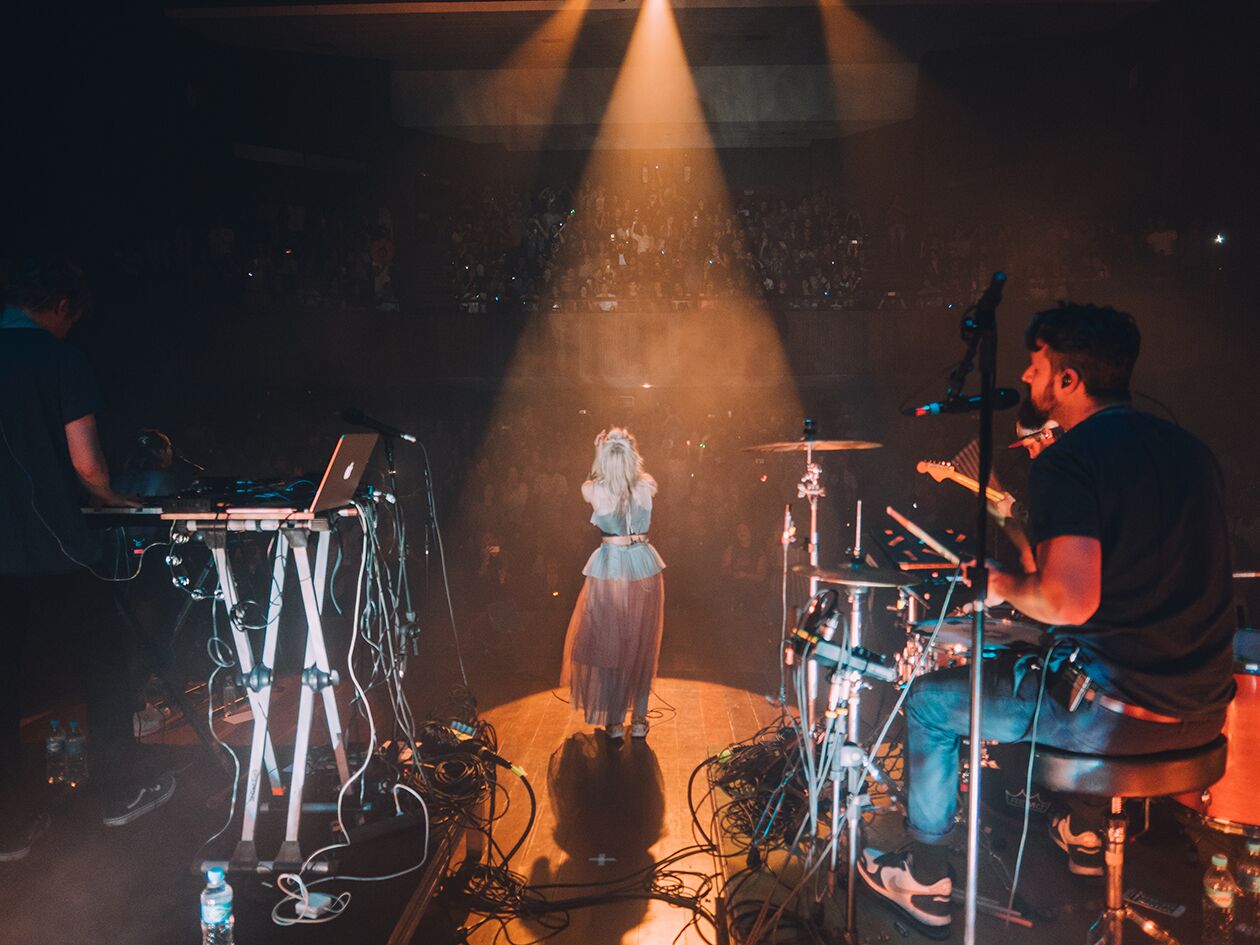
I’d never heard of Aurora Aksnes, or AURORA as she’s known to her fans, prior to this documentary. But having spent just over an hour with her (sort of), I now feel like I know her quite well. We’re roughly the same age, but that’s pretty much where the comparisons end – she has the voice of an angel, admirable dedication to her craft, emotional maturity and capacity for inspiring self-reflection, whereas I call myself ‘cultured’ because I sit and write about films using quasi-intellectual language from time to time.
I should be jealous, but I’m not – because despite her timid nature, Aurora works phenomenally hard to perfect her music, not only to satisfy her own creativity but also out of respect for her fans and those who truly understand her vision for her musical output. She stumbled into fame when she was 16 and a video of her performing a song she wrote at school was posted online by a friend and went viral.
Once Aurora chronicles the years following the release of her debut album, ‘All My Demons Greeting Me as a Friend’, including a massive world tour, increasing pressure from her management, record company and fans to create her much-anticipated sophomore album, and a stultifying lifestyle that makes her question whether she really wants to be an artist at all.
What’s so laudable, more than Aurora’s ability to stand her ground in a room (and industry) occupied mostly by much older men, is the tenderness with which the filmmakers (Stian Servoss and Benjamin Langeland) handle the dissonance between AURORA the energetic stage persona and Aurora the young woman with, at times, quite extreme bouts of anxiety. Several times we see her backstage after a performance, trembling and struggling to gather her breath. She doesn’t like hugs, but embraces her fans regardless. She doesn’t quite understand how to balance being herself with finding her place in the ruthless music industry. These personal sensitivities are addressed so benevolently and authentically it’s impossible not to identify with the overwhelming sense of being lost somewhere between achievement and disappointment.
Behind the scenes, Aurora, the young feminist who is visibly moved by an all-female drum troupe in Brazil, is on a mission to inspire other women with her celebration of ‘queendom’. For the millions of fans who listen to and enjoy her music, especially her ‘difficult’ second album, her dynamism and philosophy to be true to oneself is as uplifting as it is potent.
Details and tickets for screenings of Once Aurora at Sheffield Doc/Fest are available here:
https://www.sheffdocfest.com/films/6721
Dark Suns

Dark Suns
Director: Julien Elie
Words – Rhiannon Topham
Sometimes you watch a documentary and it leaves such a profound imprint on your mind, you kick yourself for having been so ignorant to the subject matter before viewing. Dark Suns, director Julien Elie’s first film in 15 years, is one of those documentaries. A haunting exploration of the thousands of men and women murdered at the hands of Mexican cartels since the 1970’s and the desiccated government turning a blind eye to (or, at the most extreme, supporting) such violent and alarmingly widespread activity, it is emotionally, psychologically and spiritually shattering to watch – made all the more harrowing by the film’s striking monochromatic palette.
An unrelenting investigation into the mass disappearances of women, journalists and activists across various Mexican states, from the populous city of Ciudad Juárez just south of Texas, the location of a torrent of appalling femicides, to the port city of Veracruz on the Gulf where journalists have been – and continue to live in fear of being – kidnapped, tortured and murdered for their pursuit of justice and the truth, it is a daring piece of filmmaking which balances the anger and consternation felt by those affected with the constant need to understand why their pursuits for justice have been deterred and their questions unanswered.
It’s difficult and uncomfortable, because it needs to be. Thousands of people are missing, never to be seen again. Some are thought to have been forced to join cartels or military forces, others vanished without a trace. The most moving element of Dark Suns is the devoted activists and family members of missing relatives who continue to scour the countryside for a morsel of proof of their loved ones’ whereabouts many years after their disappearance, often finding human bones of people long gone. There’s a warped sense of quiescence watching a distraught brother talk of the “crazy” experience of searching for his missing sibling, for which “time is the worst enemy” because the determination to find them never wanes but government support quickly evaporates, from the distant comfort of a cinema seat or similarly safe space.
It can be hard to write about a documentary’s subject matter when you have no experience of it, outside the act of watching events unfold on screen. Dark Suns isn’t a narrative-led film, in the sense that it doesn’t reach a conclusion or resolution at the end – and this is precisely why it is such intense and painful viewing. In most cases, the families featured will never know what happened to their missing relatives because the criminals responsible are allowed to act with impunity. Indeed, we learn from one interviewee working in the law industry that, over the years, he and his team have heard of 50 or 60 femicides, but only one or two cases ended in a conviction. These are the facts driving the documentary, but it’s the moral integrity of the interviews that reach out and grab you, as if shaking you by the shoulders and urging you to pay attention.
Details and tickets for screenings of Dark Suns at Sheffield Doc/Fest are available here:
https://www.sheffdocfest.com/films/6692
Sheffield Doc/Fest 2019

With 2019 marking its 26th year, Sheffield Doc/Fest is the UK’s premier documentary film festival.
Under the tagline “Ways of Seeing”, the festival prides itself in diversity, screening compelling stories from around the world.
See our look at some of the films featured in 2019
– click on the film title to see our review.
> Nomad: In The Footsteps of Bruce Chatwin
European Premiere
The latest feature from director Werner Herzog – a deeply personal film and a fascinating journey around the world, over time and discovery.

> MOTHER
World Premiere
An exploration of relationships, MOTHER is an infinitely moving film.

> Seahorse
European Premiere
A phenomenal story about what makes us who we are.

> Let It Burn
UK Premiere
An observational portrait exploring the lives of those often left behind.

> Dark Suns
UK Premiere
An unrelenting investigation into mass disappearances across Mexico, urging you to pay attention.
See our interview with director Julien Elie >here<.

> Once Aurora
UK Premiere
A coming-of-age music documentary as uplifting as it is potent.
See our interview with director Benjamin Langeland and producer Thorvald Nilsen >here<.
> Selfie
UK Premiere
“a documentary doesn’t only show the good stuff” – a standout film revealing loss and friendship.

> Searching Eva
UK Premiere
A challenging commentary on the understandings of identity.

A unique docudrama presenting a semi-fictionalised account of the story behind A Bigger Splash.
See the full programme for Sheffield Doc/Fest 2019 here:
https://www.sheffdocfest.com/films
Must See Movies: June

At Reel Steel we want to make sure you’re getting the most of your cinematic enthusiasm, so each month we put together our short list of some of the best new releases, from popcorn munching explosion fests to the often weird and wonderful.
Take a look at the trailers below and see this month’s recommendations…
We The Animals
released Friday June 14th, 2019
Manny, Joel and Jonah are three brothers tearing their way through childhood. Their mother and father have a volatile relationship that makes and unmakes the family many times over, often leaving the boys fending for themselves.
Becoming distant from his brothers, Jonah becomes increasingly aware of his desperate need to escape and begins to embrace an imagined world all his own.
We The Animals is a mesmerising adaptation of the award-winning autobiographical novel of the same name by Justin Torres, with documentary maker Jeremiah Zagar as director making his first narrative feature film.
Brightburn
released Friday June 21st, 2019
What if Superman came to Earth, but instead of becoming a hero to mankind, he became something else?
Brightburn is a subversive take on the superhero genre – a different perspective in combining a familiar story with horror.
In Fabric
released Friday June 28th, 2019
In Fabric is a distinctive and haunting tale set against the backdrop of a busy department store, following a demonic dress as it is passed from person to person with devastating consequences.
The latest feature from director Peter Strickland (Berberian Sound Studio, The Duke of Burgundy), is a Giallo-inspired horror and a loving throwback to the bold Italian horror greats.
A stylish and darkly comic take on consumerism, starring Marianne Jean-Baptiste, Gwendoline Christie, Hayley Squires, Fatma Mohamed and Julian Barratt.
– SPECIAL EVENT –

Sheffield Doc/Fest 2019
Taking place at venues across the city June 6th to 11th, Sheffield Doc/Fest is the UK’s premier documentary film festival.
See our own selection of 12 films to see at this year’s festival >here<.
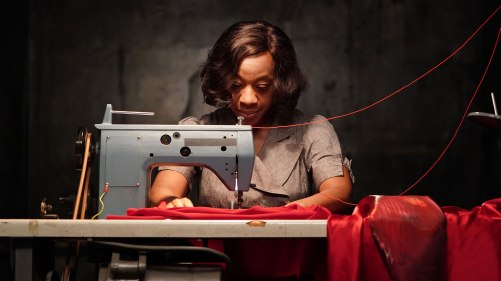
In Fabric + Director Q&A
Tuesday June 4th
The latest film from director Peter Strickland (Berberian Sound Studio, The Duke of Burgundy) is a loving throwback to the bold Italian horror greats, with this Giallo-inspired darkly comic take on consumerism.
A bizarre and audacious story set against the backdrop of a busy department store, following a demonic dress as it is passed from person to person with devastating consequences.
Join him for an in-person Q&A at a special preview screening of this stylish horror at the Showroom Cinema.
Details here:
https://www.showroomworkstation.org.uk/in-fabric-q-a
Booksmart

2019
Director: Olivia Wilde
Starring: Kaitlyn Dever, Beanie Feldstein, Lisa Kudrow, Will Forte, Skyler Gisondo, Billie Lourd, Jason Sudeikis
Words – Toni Stanger
Olivia Wilde’s directorial feature-length debut Booksmart has been compared to other coming-of-age comedies, namely Superbad, and whilst it does draw comparisons to the films that came before it, Booksmart is unique in its own right, as a direct result of it being written and directed by women. It’s a breath of fresh air, following in the footsteps of films such as The Edge of Seventeen and Lady Bird – in a story about female friendship, there’s an uplifting female voice that stands out.
Molly (Beanie Feldstein) and Amy (Kaitlyn Dever) spent their entire high school career following the rules and studying hard so they would get into great colleges. This has led Molly to believe that they’re better than everyone else, but that soon comes crashing down when she realises that the irresponsible students who partied also got into great colleges. “We didn’t have to choose, they did both” Molly exclaims. Deciding that other people need to know there’s more to them than just being smart, Molly and Amy set out to have one wild night before graduating the following day.
Booksmart takes many of the same tropes and narrative beats from a story we’re all familiar with, but it injects it with a woman’s touch. It’s a simple, relatable and entertaining story that invites in some key representation, it celebrates female sexuality in a way that is usually reserved for teenage boys – there’s talk of porn and there’s even masturbation jokes, both topics usually so taboo for female characters that they’re hardly explored in mainstream cinema. Amy is also a lesbian which is naturally part of her character instead of being used as a narrative tool. Molly offers encouragements, telling Amy she’s gonna have so many girls “up her vagina” in college, which directly mirrors the kind of language we usually here from the boys.
We see Amy nervously talking to a girl she likes which is super relatable. There’s even a lesbian sex scene which is full of fumbled awkwardness. It’s so fun and pure at the start, but soon becomes reminiscent of an American Pie gag which is a shame. It would’ve been nice for the comedy to take a back seat here, as it could’ve been a very important win for positive and normal lesbian representation. Overall, the representation isn’t groundbreaking, but it’s a major step forward in how well in it handles its characters.
Full of spectacular one-liners, a memorable karaoke session and a hit soundtrack, Booksmart is a heartwarming celebration of female friendship portrayed with heart and realism. These dorky friends are so close and supportive of one another that they have adorable and empowering compliment wars. As well as lifting each other up, they make references to other powerful women throughout the film, such as Malala Yousafzai, Rosa Parks and Ruth Bader Ginsburg. They even use “Malala” as their safe word. However, the film also shows that friendships can have issues when they have an explosive argument in a standout scene that highlights Feldstein and Dever’s acting talents and chemistry with one another.
Outside of Feldstein and Dever, the rest of the cast are a highlight with every role a perfect fit. Olivia Wilde’s husband Jason Sudeikis appears as the school’s Principal, whilst Lisa Kudrow and Will Forte are Amy’s loveable parents. Santa Clarita Diet’s Skyler Gisondo stars as Jared, a wealthy student who is constantly looking for approval. His quirkiness works exceptionally alongside Billie Lourd’s bizarre Gigi, who plays into some of the film’s best comedy. It’s a role that her mother, Carrie Fisher, would definitely be proud of.
Booksmart seems to restructure the clique system as it’s almost non-existent between these characters. It’s a refreshing take, but definitely seems like a feminist fantasy along with the school’s unisex bathrooms which don’t cause any problems.
Any issues with Booksmart are minor as the overall experience is a triumph. There’s a wonderful stop-motion sequence featuring Barbie dolls which is a truly iconic spin on the classic drug trip which will never go out of style.
Katie Silberman, one of the film’s screenwriters, said high school comedies “are very reflective of the generation they’re talking about, but the stories and the arcs and themes are timeless.” This was definitely achieved with Booksmart, a fun and clever comedy that people will be revisiting and relating to for years to come.
Thunder Road

Director: Jim Cummings
Starring: Jim Cummings, Kendal Farr, Nican Robinson, Jocelyn DeBoer
Words – Toni Stanger
Thunder Road opens with Officer Jim Arnaud (Jim Cummings) delivering the eulogy at his mother’s funeral. It’s a 10-minute scene shot in one long, unbroken take, which is the perfect way to introduce us to this unravelling character. Jim begins talking about how kind and compassionate his mother was, before going off on a tangent about how he regrets being mean to her when he was a child. Jim then delivers what is essentially a performance art piece; singing and dancing along to his mother’s favourite song (‘Thunder Road’ by Bruce Springsteen), only he couldn’t get the song to play through his daughter’s pink boombox, so he’s just flailing about in the silence. This unusual funeral scene is what makes up the short film of the same name that this feature is based on, and it sets the tone for the story ahead.
Thunder Road is a character study above all else. There’s a comedic energy throughout, even during the scenes that explore the more serious problems that Jim faces. Not only has his mother recently passed away, but his estranged wife Rosalind (Jocelyn DeBoer) is filing for divorce and custody of their 10-year-old daughter Crystal (Kendal Farr). The film delivers a very realistic portrayal of a man whose life is falling apart. It impacts his job performance as a police officer and contributes to his already unstable personality. Jim goes around unintentionally embarrassing himself, living almost as a how-to guide for how not to live.
During a Q&A screening at the Showroom Cinema in Sheffield, Cummings explained that he loves films that can make the audience both laugh and cry (he named Inside Out as an example), and he set out to achieve this himself. The long takes throughout the film allow us to be more present during Jim’s bizarre experiences and Cummings’ theatrical style of acting fits the character to perfection and keeps us gripped to the screen. It’s these factors, alongside a fantastic script, that allow us to experience this mix of emotions.
Jim keeps most of his problems to himself, which results in the occasional outburst, going from upset to composed in a matter of seconds is quite unsettling, yet very humorous. It makes Jim rather unpredictable throughout, but overall it’s a good commentary on masculinity and how he tries to suppress the emotions that want to burst out of him. Despite Jim’s flaws and alarming personality, he’s always trying to become a better person and keeps on going for his daughter. His caring side is seen mostly during his time with Crystal and his friend and co-worker Officer Nate Lewis (Nican Robinson). It’s hard to watch Jim struggle as everything around him falls apart.
It’s interesting to note the binary oppositions presented in Thunder Road. Whilst one may associate the job role of a police officer with control, Jim is instead often spiralling out of it. On the flip side of the coin, the police are heavily regarded as the enemy in America, Thunder Road manages to humanise a police officer and, as an American himself, Cummings explained how Republicans might be thankful for that, but in turn Liberals would say “that man should not have a gun” because he’s clearly unstable. There’s a moment where Jim’s in a heated rant with Nate and he ends up drawing his gun without even realising. Jim later apologies saying “I’m sorry if I committed a hate crime against you,” serving as a wider comment on the #BlackLivesMatter movement.
During the Q&A, Cummings revealed that he writes and performs scenes out loud and records them into podcasts so he can listen back and make edits accordingly. Thunder Road is a dialogue and performance driven film, so this writing method really seems to have paid off, especially with him also serving as lead actor and director.
Overall, Thunder Road is a strong debut feature with a lot of heart and humour that invites you into the life of someone who doesn’t have it all together. Cummings says he’s already working on his next feature, which is about a police officer who is tracking down a werewolf.
The Wizard of Oz (1939)

1939
Starring: Judy Garland, Ray Bolger, Bert Lahr, Jack Haley, Margaret Hamilton, Frank Morgan
Words – Christian Abbott
Talking to anyone who has seen their fair share of films, The Wizard of Oz is bound to be among them. For many, it is a fond childhood memory, for others, it is the moment that sparked the wonder and imagination cinema so naturally creates. There is often the twinge of nostalgia when thinking back to it. A moment in time, a feeling once shared, and an era of filmmaking that is truly gone but because of this, will never be forgotten.
Now, 80 years after its initial release, ‘Wizard’ is as beloved and spellbinding as ever.
The story of Dorothy leaving Kansas and journeying through Oz is as well-known as it is imitated. As the decades have passed since it first graced our screens, there are few films to have had the impact this has achieved. Imitation is, after all, the most sincere form of flattery. It is fantastic in the truest sense and otherworldly in its scope.
A little girl being swept away in a storm and waking up in a strange land, it is a moment that resonates to this day. The ground-breaking visuals match the trailblazing vision, from the sepia-toned vistas of Kansas to the Technicolor dreamscapes, the story bounces with imagination.
Though that uncertain path wasn’t just contained to the screen, the history behind the production was just as tumultuous.
The film was originally to be directed by Richard Thorpe, who after only shooting a few scenes, was fired after 12 days. He was succeeded by George Cukor, standing in for 3 days and eventually handed the production over to Victor Fleming. The melting pot of creative leadership didn’t just contain itself to the director chair; it spilled over into the writing staff which consisted of no less than 20 people. The story, derived from L. Frank Baum’s source novel, was adapted by Noel Langley. The screenplay was penned by Langley, Florence Ryerson and Edgar Allen Woolf respectively, along with contributions from the other 16.
The gauntlet of Hollywood excess didn’t end there. After an allergic reaction to the tin makeup, original actor Buddy Ebsen had to be replaced by Jack Haley and Margaret Hamilton was severely burned in a miscalculated use of fire. The entire production is steeped in Hollywood legend and mythology.
The mythology is earned though; the film draws you in from the very beginning. Judy Garland as Dorothy is perfectly cast, her innocence and warmth guides us through the strange and wonderful land of Oz. Her opening song, “Somewhere over the Rainbow”, is as beautiful as it is earnest.
Garland’s Dorothy represents the pure side of Oz, however, to her own admission; it does have its darker sides. The most obvious of which is Margaret Hamilton’s Wicked Witch of the West, an immense performance of cackling, unfiltered evil. This is the standard for all witch performances, the arguable first and unchallenged last word. Though she isn’t alone in memorability, everyone gives it their all. Ray Bolger, Bert Lahr and Jack Haley as The Scarecrow, The Cowardly Lion and The Tin Man, all are now iconic due to their everlasting performances.
Bathed in this sepia-tone, Kansas feels immediately familiar. The choice to use this colour and not traditional black and white gives the setting the sense this is a delicate and warm place – like Dorothy herself. But this is only more impressive when she arrives in Oz and the screen explodes in colour and life, one can only imagine what this must have been like when it originally screened back in 1939.
This is a true milestone in cinema history, 80 years on we are still being amazed and entertained by this legendary work and we will continue to do so for another 80. This is a film that reminds us why we love films, it is pure escapism. Sometimes we need to leave the real worth, get swept up in the storm of cinema and wake up to see the colour.
Vox Lux

2019
Director: Brady Corbet
Starring: Natalie Portman, Raffey Cassidy, Stacy Martin, Jude Law
Words – Toni Stanger
Tonally, Brady Corbet’s Vox Lux feels like an amalgamation of three different films, especially as it is split into a prologue with two main acts. The opening, set in 1999, is very profound as it explores normality turning into devastation through a Columbine-like school shooting – something that has become an unfortunate common occurrence in America. It’s a powerful statement to make; one that grabs you by the throat and then shatters you completely. This is how fast life can end and the film has no trouble reminding us of that.
Celeste (Raffey Cassidy) survives the violent tragedy but is left with a lifelong spinal injury. With the help of her more talented older sister, Eleanor (Stacy Martin), she writes a cathartic song (titled ‘Wrapped Up’) about the incident, which she performs at a memorial event. It’s one of the standout performances of the film and concludes what is a perfect introduction to Celeste’s kind and caring character before the story shifts and takes us on a new journey.
Celeste’s performance catches the attention of a successful music manager (portrayed perfectly by Jude Law) and the first half of the film follows her quick rise to stardom. She grows up in the spotlight of a horrific act of violence that has changed her whole life. She’s introduced to the wild lifestyle of sex, drugs and alcohol as she and Eleanor visit Europe and LA and spend unsupervised time together.
There is narration by Willem Dafoe who explains Celeste’s introduction to this world: “Before the massacre, Eleanor might have never dared to share these more disgraceful aspects of her recreational appetites with her young sibling, but considering all the suffering Celeste had endured, she was surely old enough now to engage in the more pleasurable parts of adulthood also.”
The second half of the film focuses on Celeste in 2017. Now 31-years-old and portrayed by Natalie Portman, she has a daughter of her own (Raffey Cassidy) and is still struggling with the effects of stardom. She has become quite an unlikable character by this point, making the shift from teenager to adult seem tonally inconsistent as we’ve missed out on some key development, it’s perhaps not the direction you think her character will go in, but it makes perfect sense for Celeste to have become a very jaded adult considering everything she’s been through.
Portman remains utterly fascinating in this role, especially carrying a strong Staten Island accent. It’s hard to turn away from how captivating Cassidy and Portman are in how they both portray Celeste throughout her life.
Vox Lux is a unique experience that will have audiences torn, but it’s an intriguing character study on what violence does to an individual. On their own, violence and stardom are big changes for someone to go through, but the combination of both is an even stronger commentary on current society.
Celeste is living Eleanor’s dream, but is a bullet and lifelong suffering a good price to pay for stardom? At one point, Celeste tells her daughter that “It’s like I’m connected to the whole world all the time and I can hear everyone in my head.”
Considering the film’s timeline which starts in 1999, we also see Celeste and Eleanor’s initial reactions to 9/11. It’s another tragedy that further reflects how horrifying life can be and it’s certainly not the last one that the film includes. Dafoe refers to Celeste’s “loss of innocence” during his narration, which is entirely what we see happen to her character throughout the film. We see a kind and innocent girl become a product of the violence that she has witnessed and experienced all around her – it’s like she absorbs it and becomes a monster.
Celeste is a complex character who contains endless multitudes and Vox Lux definitely gets this message across in its second half. Portman said that her character is reflective of our time: “that someone who can say awful things and do awful things can also be charismatic and alluring.”
The score is composed by Scott Walker (who sadly passed away in March 2019) with original songs written by Australian singer-songwriter Sia, the music is one of the film’s highlight and most songs sound true to Sia’s unmistakable style. Unfortunately, some songs are underwhelming, but the rest are enjoyable, catchy and a great expression of the film’s pop tone. Strangely enough, there’s no music over the film’s closing credits which is likely to balance out the fact that music features throughout and ends with Portman performing a 15-minute concert.
Portman said that the concert was physically demanding, but she did get to work again with her husband who choreographed the film (the pair met whilst working on Black Swan).
Overall, Vox Lux is a lot to take in. It’s a very ambitious film and Corbet certainly has his own distinct filmmaking style. It’s hard to know exactly how to feel by the time the credits roll: everything is so spectacular, yet the film itself isn’t necessarily a masterpiece. It’s a very peculiar experience and the tones of pop and violence are heavily interwoven. It’s definitely worth keeping a close eye on what Corbet does next.
Must See Movies: May

At Reel Steel we want to make sure you’re getting the most of your cinematic enthusiasm, so each month we put together our short list of some of the best new releases, from popcorn munching explosion fests to the often weird and wonderful.
Take a look at the trailers below and see this month’s recommendations…
Vox Lux
released Friday May 3rd, 2019
A timely and unique examination of modern celebrity, Vox Lux is a stylish and absorbing modern portrait of a troubled pop star’s rise from the ashes of a national tragedy to global superstardom, featuring a sensational performance from Oscar-winning actress Natalie Portman.
Madeline’s Madeline
released Friday May 10th, 2019
When Madeline joins a prestigious theatre group, director Evangeline knows she’s found her star.
Effortlessly talented, Madeline has an uncanny ability to pour herself into every role, but something isn’t quite right; Madeline’s stopped taking her medication, and her grasp on reality has started to slip.
As fact and fiction blur, Madeline is in danger of losing herself completely.
A mesmerising and distinctively shot film which explores ideas of race and identity, as well as the creative process and the overlap between art and life, alongside the pressures of growing up.
High Life
released Friday May 10th, 2019
In deep space, a group of criminals have volunteered for a mission to avoid imprisonment: investigate a black hole.
Lightyears from earth, they find themselves in an unimaginable situation as they approach their destination – the black hole in which time and space cease to exist.
From director Claire Denis (35 Shots of Rum), starring Robert Pattinson (Good Time), Mia Goth (Suspiria) and Juliette Binoche (Clouds of Sils Maria), High Life explores what it means to be human, and promises to be one of the most daring films of the year.
 REEL STEEL
You must be logged in to post a comment.