The French Dispatch

2021
Director: Wes Anderson
Cast: Bill Murray, Tilda Swinton, Jeffrey Wright, Frances McDormand, Stephen Park, Léa Seydoux, Timothée Chalamet, Christoph Waltz, Owen Wilson, Saoirse Ronan, Adrien Brody, Elisabeth Moss, Liev Schreiber, Willem Dafoe, Edward Norton, Benicio Del Toro, Jason Schwartzman, Anjelica Huston, Henry Winkler
Words – Rhiannon Topham.
I feel the same about sitting down for a new Wes Anderson movie as I do about watching Frasier reruns every weekday morning—a sense of comfort in the familiarity, knowing exactly what you’re going to get because everything that follows is pretty much the same as what’s come before. It’s safe, predictable. For Anderson’s latest The French Dispatch, this manifests in the director’s trademark formula of regular collaborators (Bill Murray, Tilda Swinton, Frances McDormand, Adrien Brody), his dollhouse approach to dissecting architectural structures and his wry, deadpan glimmers of humour delivered through rapid verbosity.
The French Dispatch is an anthology of crazy accounts from the fictional town of Ennui-sur-Blasé and the eponymous publication, headed by American editor Arthur Howitzer Jr. (Bill Murray) who journeyed to France for a holiday and never left. The Dispatch is a supplement to a newspaper in Howitzer’s hometown of Liberty, Kansas, and is Anderson’s homage to The New Yorker magazine. Its roster of American expatriate writers and illustrators report on Ennui-sur-Blasé’s community of intellectuals and nonconformists through sophisticated long-reads and the occasional accompanying comic strip.
The three main stories told throughout the film are narrated by the journalists who wrote them and are to be printed in the latest and last issue of The French Dispatch, owing to the recent death of Howitzer whose will decreed the publication be shut down upon his demise. J.K.L. Berensen (Swinton, in another pair of comical false teeth) is an art critic and lecturer who recounts the tale of convicted murderer and painter Moses Rosenthaler (Benicio Del Toro). Politics writer Lucinda Krementz (McDormand) struggles to uphold her journalistic neutrality as she covers reports on the town’s impending revolution heralded by some spirited students. Finally, the food writer Roebuck Wright (Jeffrey Wright) relates his experience of trying to interview police chef Lieutenant Nescafier (Stephen Park), only to become embroiled in the kidnapping of the comissaire’s son.
This is Anderson’s “love letter to journalists”, and it evidently takes a lot of inspiration from the real people who’ve driven The New Yorker to its great success. It’s hard to predict what past and present New Yorker staff may make of this depiction, but the film was obviously created with the warmest intentions and admiration so you would guess its reception is mostly positive.
It’s possibly his most visually creative live-action feature, and his most self-congratulatory. Yes, we know to expect the usual directory of stars by now, but The French Dispatch is so incredibly stuffed with characters that it’s impossible to feel any sort of attachment with any of them. There’s little to no emotional depth provided at all, and I still haven’t decided whether it blends multiple genres or shirks genre completely. Romance? Hardly. Drama? Too twee. Comedy? Depends who you ask.
Much like some of Anderson’s earlier work such as Moonrise Kingdom and The Royal Tenenbaums, there are the occasional glimmers of melancholy and introspection, bordering on despair. This is treated with the usual languor, befitting of the fictional town name where the Dispatch is based. It’s watchable and largely enjoyable, but by the time the end credits roll it’s hard to pinpoint a particular emotion or opinion about the film at all, either positive or negative.
If you’ve followed Anderson’s filmography and count yourself as a fan, The French Dispatch has everything you want. Just make sure you watch it in a cinema with decent screens, or at least with no one sitting in front of you—because of the director’s proclivity for central framing and symmetry, there are plenty of frames where your focus is brought to the middle of the lower portion of the screen that you might have to crane your head to see.
Last Night in Soho

2021
Director: Edgar Wright
Cast: Thomasin McKenzie, Anya Taylor-Joy, Matt Smith, Diana Rigg
Words – Rhiannon Topham.
Listen, we all feel a bit of nostalgia for bygone eras from time to time. Judging by the current mode of dress and cultural zeitgeist, for many this manifests as a love of all things 90s, a not-too-distant past when ‘things’ were just ‘better’. For Eloise ‘Ellie’ Turner (Thomasin McKenzie), the protagonist of Edgar Wright’s latest Last Night in Soho, everything about London in the 1960s—the music, the fashion, and presumably the romanticisation of living in relative squalor—is a tonic for the overwhelming nature of modern life.
When she moves to London to study fashion just like her late mother and pursue her dreams of becoming a designer, Ellie is still wide-eyed and naive, despite repeated warnings about how London can be, frankly, a bit much. Given her gift (or curse) for seeing and feeling the emotions of the dead, her grandmother rightly worries that living in a city with a seedy story attached to nearly every street might be a struggle. Nevertheless, she moves into her university halls, only to encounter instant friction with her roommate and fellow students, instantly becoming the subject of ridicule from a stereotypically-Mean Girl tribe of her peers. So, with her heart still in the past and her head in some grey area on the space-time continuum, London fails to meet her fairytale expectations and after being there for less than a week she looks for a new place to live.
This brings her to the doorstep of Ms. Collins (Diana Rigg), and the cosy little bedsit on the top floor of her terraced home. It’s like a time capsule of 60s residential modesty, and of course Ellie is hooked. Every night when she goes to sleep, she transports to the swinging 60s and slips into the spirit of Sandy, a young singer and dancer with dreams of becoming the next Cilla Black. The magic of her nocturnal expeditions soon wears off when Sandy’s new beau (Matt Smith), like London itself, turns out to be something that his handsome facade does not suggest. The initial promise of basking in the glamour of Soho nightclubs and making it as a singer crumbles pretty quickly when Sandy is pimped out, revealing the hidden seediness between the walls seeped in cigarette smoke and slick with old man sweat.
That’s all I’m going to say about the plot. What I will highlight as a particular triumph is the demonstration of how spaces are intrinsic to memories and can become characters within themselves. Wright shows that what happens in finite spaces such as underground drinking holes where Ellie encounters the tormented ghosts of London’s past, or way above ground in her bedsit, may not be as prominent as the landmarks and flashy billboards lining Leicester Square but are just as claustrophobic. The only difference is that outside is the heaving body count of the living, but inside are the trapped souls of a horde of apparitions.
However, a fundamental flaw is that it ruins the big plot twist through its repetitiveness. Certain scenes seem almost smug in the way they try to drop hints about how the story will end by repeating the same kind of action we’ve just seen but in a different place, and with a new set of people either not believing what Ellie is saying or treating her with kid gloves or just generally giving her the ‘ick’, lingering slightly too long on specific props or details in a way that says “REMEMBER THIS, IT’S IMPORTANT”. By the time we reach the big reveal, not enough has been said about the ill treatment of women, toxic men, the sex industry and who ‘deserves’ what in life to save the narrative from feeling pretty tonally flat. It’s not enough to look pretty and sound cool if your handling of such heavy subjects as grief, sexism and mental illness gets lost in the doting homage and is veiled with a goofy humour that is particularly mocking of young people today.
The Harder They Fall

2021
Director: Jeymes Samuel
Cast: Jonathan Majors, Zazie Beetz, Idris Elba, Regina King, Delroy Lindo, LaKeith Stanfield
Words: Rhiannon Topham.
The Harder They Fall opens with a clear message: “While the events of this story are fictional… These. People. Existed.” This serves as a dual-action missive for director Jeymes Samuel’s high-action feature debut for Netflix. Not only does this demonstrate how this propulsive revenge Western seeks to reclaim the historic absence or derision of African American people in the genre, but it also encourages the viewer to learn more about these characters outside of the cultural mythology and detached from their associations with the canonised White cowboys we’ve all come to recognise.
The casting couldn’t be much better for the story. Nat Love (played by action-star-in-the-making Jonathan Majors) and his loyal gang featuring the local marshall (Delroy Lindo) and sweetheart Stagecoach Mary (Zazie Beetz) are out for blood. As a child, Nat had a cross sliced into his forehead by Rufus Buck (Idris Elba), who murdered his parents in front of him. After years in prison, Buck’s gang have just intercepted the train transporting him to a new location and freed him so he can be reinstated as the autocrat of the town Redwood. Via bank robberies, ambushes and inevitable confrontations over entitlements to this filthy lucre, Love and Buck are reunited in excellently chaotic, garishly violent fashion.
Buck’s gang includes the calm and collected Cherokee Bill (played by LaKeith Stanfield) and Treacherous Trudy (the immense Regina King). Both of these characters, like any good villain, evidently have very deep-seated secrets from harsh histories and a period of running the gang while Buck was imprisoned. King plays Trudy with such a menace that during a tête-à-tête with Stagecoach Mary involving the peeling of an apple, you half expect said fruit to become a creative murder weapon and not the knife used to peel it.
Other reviewers may be quick to tell you how violent The Harder They Fall is. They’re not wrong, but I also think that’s what the age rating and classification message is for, and it would be more surprising if a 21st century Western was completely void of any violence. All I will say about the bust ups, beatings and blood in this film is that it is done in a way that pays homage to the genre while also showing us something we have seldom if ever seen before – a proper punch up between two women, no silly slapping or moments of hesitation. Just Regina King and Zazie Beetz at each other’s throats. Marvellous.
Via scheming misfires, a bank robbery in an eerie ‘white town’ and some generally slick action soundtracked by a score written by Samuels himself, Love and Buck have their face-to-face in the end, with a reasonably unsurprising twist which nevertheless caps off the drama quite fittingly. Though it seems clear cut at the start, by the end of the film the distinctions between good and bad, morality and immorality aren’t so obvious – what more can you ask of a modern revenge thriller?
Demons (1985)
1985
Director: Lamberto Bava
Starring: Urbano Barberini, Natasha Hovey, Karl Zinny, Fiore Argento, Paola Cozzo, Fabiola Toledo, Nicoletta Elmi, Stelio Candelli, Nicole Tessier, Geretta Geretta, Bobby Rhodes, Guido Baldi, Bettina Ciampolini
Words – Oliver Innocent.
By the time Demons was unleashed in 1985 Italian horror cinema was well-established, boasting some of the most unique, innovative, and extreme films the genre had to offer. Italian horror films were typified by a heady mix of stylish arthouse, gory exploitation, and surreal, dreamlike imagery. They even spawned their own sub-genres, the Giallo (murder mysteries featuring black-gloved killers; a precursor to the American slasher), and cannibal jungle films, as well as taking George Romero’s Dawn of the Dead zombie formula and making it their own.
Just as the new wave of American horror of the late 1960s and early 1970s helped established genre auteurs like Wes Craven and John Carpenter, so too did the Italian horror scene that ran parallel to it. Mario Bava, Lucio Fulci and Dario Argento were Italy’s answer to the likes of Craven and Carpenter; filmmakers who innovated new styles and took the genre in different, hitherto unexplored, directions. Argento became the face of Italian horror with his 1977 aural and visual assault on the senses Suspiria, perhaps the quintessential Italian horror film.
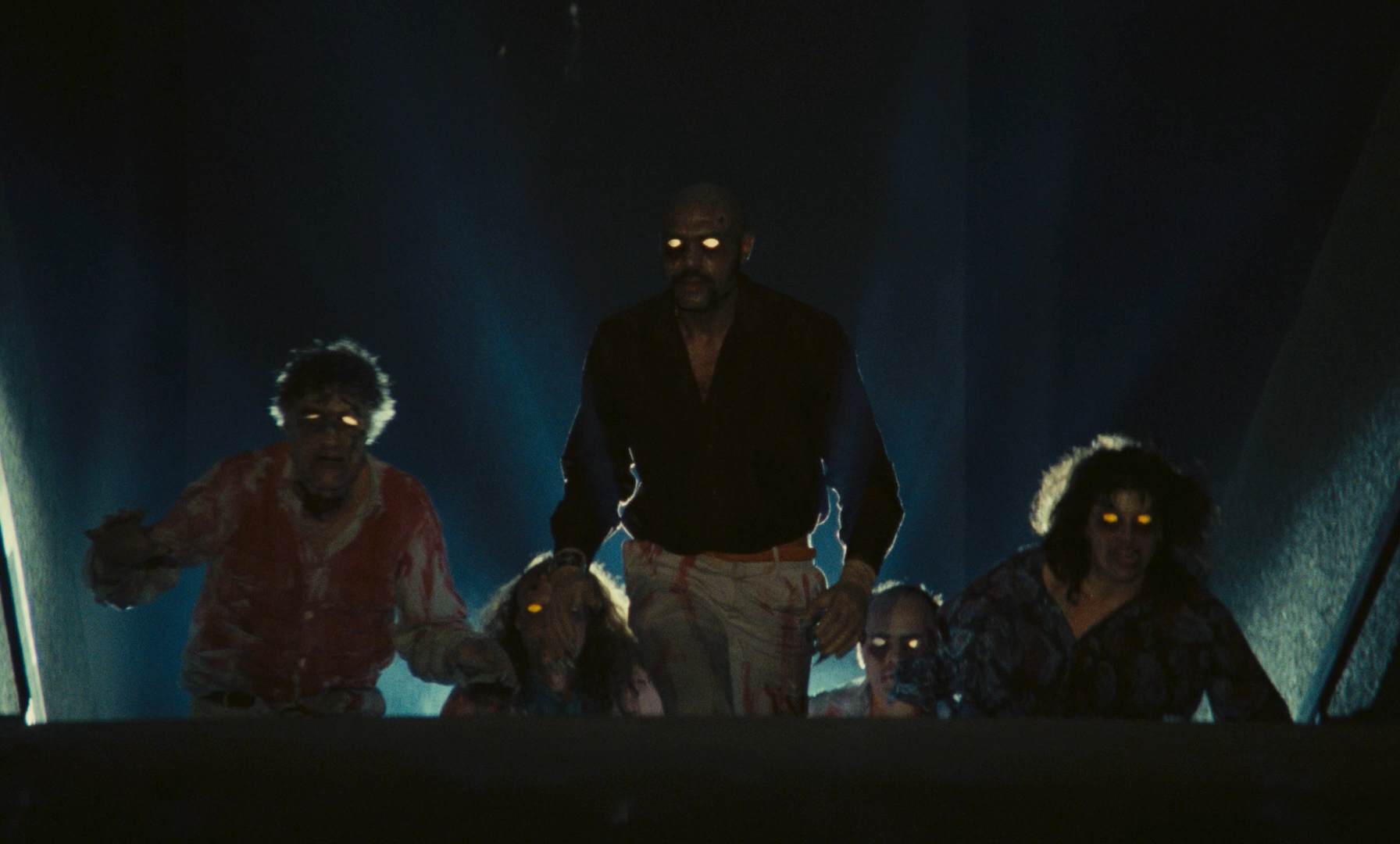
Following a succession of high quality Giallo and supernatural horrors, in 1985 Argento turned his attention to producing. The project was Demons, a variation on the zombie formula in which a horror film screening turns to real horror, as the gloriously menacing looking Metropol movie theatre is overrun by audience members transformed into bloodthirsty demons.
Unlike Argento’s own films, the Lamberto Bava directed Demons feels much more like a conscious attempt at an American style effects-driven horror influenced by the likes of An American Werewolf in London and The Thing. Indeed, Demons more than holds its own with the US competition, delivering bursting ‘bladder’ effects, gallons of gore, and a couple of bravura transformation sequences courtesy of special effects wizard Sergio Stivaletti. The titular demons themselves also impress with their suitably disgusting green skin, long nails, toothy, drooling jaws, and glowing eyes.
Despite this desire to emulate the effects heavy horrors coming out of the States at the time, Demons is still very much an Italian horror film at heart. The minimal plot, lack of explanation, and succession of absurd and gory imagery more than attest to its Italian heritage. There is also that staple of Italian horror, the eye gouging scene, as well as references to Lamberto Bava’s father Mario Bava’s films; the mask in the theatre lobby resembles the one famously nailed to the witch’s face in the opening of Mario Bava’s 1960 gothic classic Black Sunday.
Another characteristically Italian element is the film’s raucous soundtrack. The synth score courtesy of frequent Argento collaborator Claudio Simonetti (keyboard player for progressive rock band Goblin who scored Suspiria) stands out with its insanely catchy yet menacing dance-like beats. Then there’s the pounding heavy metal tracks. Further adding to the film’s cult appeal, these tracks from the likes of Motley Crue and Saxon (plus more mainstream pop hits from Go West and Billy Idol) are the perfect accompaniment to the onscreen carnage.
The best example of this is German heavy metal band Accept’s anthem Fast as a Shark blaring out of the speakers as the hero speeds through the movie theatre on a motorbike, chopping demons to pieces with a katana sword. If there’s a single scene in Demons that perfectly encapsulates the essence of the film, then this is it. Loud, gory, and insane, Demons ranks as one of the most fun, endlessly rewatchable horror films of the 1980s.
Drive

2011
Director: Nicolas Winding Refn
Starring: Ryan Gosling, Carey Mulligan, Bryan Cranston, Oscar Isaac, Christina Hendricks, Albert Brooks, Ron Pearlman
Words: J. Senior
It seems surreal to be talking about Drive, now over a decade on from its original release, as it still feels utterly contemporary and relevant. Nicolas Winding Refn’s first successful picture stateside went on to have a transformative effect for all involved, through the director himself to its stars as well. This ultra-stylish and hyper-cool thriller about a stunt driver who moonlights as a getaway driver laid down a serious benchmark in independent cinema, and its influence is still felt today.
The true appeal of Drive is two fold; first of all it’s a stylistic delight and any cinematography enthusiast’s dream, with its neon bold colours and canny use of film noir effects. The film is instantly recognisable and individual. This is all capped off with a luscious score by composer Cliff Martinez with a few choice tracks by additional artists such as M83, Chromatics, Kavinsky and Electric Youth. The coming together of lighting and sound creates such a distinct pallet and an almost dreamlike canvas for events to unfold over.
Secondly, the narrative keeps you on tenterhooks throughout. What begins as a tense and mellow affair soon shifts gears into an ultra-violent and break neck story which transitions from observation to survival via a robbery gone wrong and one pretty grizzly sequence in an elevator. This differs greatly from the novel on which it was based, where the “Driver” is pretty aggressive and violent from the outset, but here we watch the darker side of Gosling’s character slowly seep out as the danger confronting him escalates.
Drive has acted as a launch pad for all involved, Nicolas Winding Refn went on to continue to produce modest budget but stunning films with his two follow-ups Only God Forgives, again with Gosling in the lead role and The Neon Demon, which caused walkouts at Cannes but went on to receive rave reviews.
Gosling himself has become a global megastar and cultural icon, which is fairly impressive to say his most famous performance prior to this was The Notebook. He has also transitioned over into the director’s chair and his first film Lost River debuted at the Cannes Film Festival. Carey Mulligan, hot off of twee British coming-of-age tale An Education in 2011, also felt the springboard effect after appearing in Drive and has gone onto huge roles in The Great Gatsby, Inside Llewyn Davis, Suffragette and Promising Young Woman. Oscar Isaac has similarly gone onto great heights appearing in Ex Machina, Star Wars and Dune.
All of this has built up a strong cult following around the film. It’s an insanely impressive visual masterpiece, a narrative delight and has such an aura of mystique around it, it has become one of the most impressive independent films of the last decade. To “do a Drive” and become so well reviewed and beloved is what a lot of similar budgeted films aim for upon release, in that aspect however it is truly unique. Close runners Nightcrawler by Dan Gilroy and The Guest from Adam Wingard both have that appeal in terms of their visuals and score and they both deal with similar levels of darkness in their narratives.
Drive still edges out the competition, and although the team involved all may have gone onto untold successes since, this film is still really the barometer that their careers inevitably fluctuate towards when retrospect is applied. I’m certain as well that in years to come, just as we now look back over a decade on, it will still be just as relevant and will not have lost any of the creative impact since its original release. It’s proving a tough one to beat, even still to this day.
Wrong Turn – A Trilogy of Backwoods Terror

2003 – 2021
Words: Oliver Innocent.
In 1996 Wes Craven’s hip teen meta slasher Scream became a box office smash. Following in its wake came a slew of films seeking to capitalise on Craven’s winning formula. Entries like I Know What You Did Last Summer’s modus operandi was to be as teen friendly as possible. A by-product of this was a tendency to jettison the more unsavoury, adult-oriented aspects of the genre. In other words, there was little to no sex, nudity, or graphic bloody violence making it onscreen.
In the early 2000s filmmakers like Eli Roth and Rob Zombie who had been raised on the violent exploitation horrors of the ‘70s and ‘80s crusaded to bring this more dangerous side of the genre back to the forefront. A response to what they saw as the overtly slick and bloodless dilution of the genre, their debut features Cabin Fever and House of 1000 Corpses, were throwbacks to the extreme backwoods horrors of The Evil Dead and The Texas Chain Saw Massacre.
The rural slasher resurgence quickly became a trend itself, even spreading outside the USA to countries like Australia (Wolf Creek) and France (High Tension). One of the most successful entries to emerge from this resurgence was Wrong Turn, a tale of mutant cannibals preying on young adults lost in the woods of West Virginia. Spawning five sequels and a newly released reboot, the Wrong Turn series has become one of modern horror’s biggest, longest running franchises.
Kicking off in 2003 with Wrong Turn, the series gets off to a solid if unexceptional start. It’s an entertaining, fast-paced slasher that benefits from beautiful woodland locations (Canada doubling for West Virginia) and great makeup effects courtesy of Stan Winston Studios (The Terminator, Jurassic Park).
Like many rural slasher films, it’s very derivative, taking much of its inspiration from the classics of the genre, namely The Texas Chain Saw Massacre and The Hills Have Eyes. There’s the old gas station complete with creepy attendant; a cannibalistic inbred family; bone and body parts set decoration; a car crash that leaves the would-be victims stranded in the middle of nowhere; no phone signal. The list goes on.
The main issue with the first Wrong Turn, however, is that it’s a bit too slick of a production for its own good. Well-made but a bit soulless and by the numbers. It just doesn’t have that same down and dirty gonzo bizarreness or trashy shock value that permeates precursors like Mother’s Day or, indeed, contemporaries like Cabin Fever. It almost feels like one of the teen friendly Scream type slashers masquerading as a Texas Chain Saw clone.
The same cannot be said of direct to DVD sequel Wrong Turn 2: Dead End. This time gore and grossness are pushed to the limits as the cast and crew of a new reality TV show fall foul of the cannibal clan. It makes for an interesting dichotomy as the film simultaneously critiques the exploitative nature of reality TV, while wholeheartedly revelling in the excesses of exploitation horror.
Indeed, Wrong Turn 2’s main concern is how far it can push the grotesque over the top violence and sick humour. Images of mutant cannibals pleasuring themselves and a baby using a severed finger as a dummy makes clear the film’s intention to hearken back to the glory days of exploitation horror.
Aside from its exaggerated grotesqueness, the highlight here is hardcore punk legend Henry Rollins’ turn as a retired Marine who takes the law into his own hands. Like something straight out of an ‘80s action film, Rollins goes full on Rambo as he steals the show, blowing up cannibals with explosive arrows.
Once again, the shadow of Texas Chain Saw looms large with references to small town economic collapse and the closure of the local sawmill. Like the mechanization of the local slaughterhouse in Texas Chain Saw, the inference is that unemployment and the subsequent desertion of a once thriving community has led to the ensuing horror. With no jobs or income, the last remaining members of the community must kill to put food on the table.
Continuing in a similar vein to its predecessor, Wrong Turn 3: Left for Dead wastes no time getting to the sex and violence in an opening sequence reminiscent of an ‘80s slasher as a group of teens are brutally slaughtered while fooling around in the woods.
The cannibal behind the slaughter, Three Finger, finally takes centre stage in this entry. Although he appeared in the first two films, this is where he truly becomes the series’ main villain. Like Leatherface and Jason before him, he is the iconic face of Wrong Turn.
This entry’s high concept escaped convicts vs cannibals premise ensures Three Finger has some competition in the villain department. It helps create a different dynamic as Three Finger isn’t just killing innocent teens anymore. In fact, some of the convicts are as bad, if not worse, than him. In a scene reminiscent of controversial Italian video nasty Cannibal Holocaust – another film that posits the question as to who the real villains are – one of them even kills Three Finger’s child and puts his head on a stake.
A refreshing change to the usual teens in peril set up, it’s entertaining, mindless fun seeing Three Finger pitted against a coachload of convicts. Creative kills and a big body count make this a solid conclusion to the original trilogy.
After the third entry, the Wrong Turn franchise followed in the footsteps of Star Wars with the 4th, 5th and 6th entries serving as prequels to the original trilogy. The franchise was then rebooted in 2021.
With their predilection for over the top gore, fast-paced action, and dark comedy, the Wrong Turn films are pure cheeseburger horror; basic and unrefined but incredibly enjoyable.
The 8th

2020
Director: Aideen Kane, Maeve O’Boyle and Lucy Kennedy
Words – Rhiannon Topham.
The 8th is not a comfortable film to watch, no matter what side of the abortion debate you stand on. It is designed to be so, including both sides of the discussion in its incisive look at the landmark national campaign to repeal the Republic of Ireland’s Eighth Amendment, a constitutional ban on abortion introduced in 1983 after the Irish public voted by a 2:1 margin to make the rights of the ‘unborn’ equal to that of mothers and to criminalise all pregnancy terminations in the country. Thirty-five years later, another referendum was held to uphold or repeal the Eighth Amendment.
The documentary, directed by Lucy Kennedy, Maeve O’Boyle and Aideen Kane, most closely follows the pro-choice campaigning efforts of Ailbhe Smyth and Andrea Horan, as well as their dedicated teams of grassroots activists in their singular goal of overturning the Eighth Amendment and forging a new progressive path for Ireland.
Though the primary attention of the film is Ailbhe’s Together for Yes campaign, we are shown opinions from the opposition on the ‘vote no’ side as well. This is not only from footage of protests, marches and television debates with politicians, but also short discussions with members of the public. Young and old, rural and urban, religious and secular, Yes and No—the binary opposite demographics which were vital to winning or losing the referendum are given fair attention.
Early in the film, a young woman holding a placard at a protest and stating firmly that her body is her own is confronted by an elderly woman who contests that her body is not hers because it was made by God. While primarily building momentum by highlighting the tense discussions between the government, the church and prominent campaigners, The 8th utilises the wavering opinions of the public to show just how strained the build up to the referendum was in the real world.
The fundamental transformation in Irish culture from an exclusively conservative society to an increasingly liberal one was achieved through aggressive but necessary civic engagement, as the absurdity of comprehensive reproductive rights for women being a divisive issue at all was unravelled through the fight to legalise abortion. The case of Savita Halappanavar, who died from a septic miscarriage after her request for an abortion following an incomplete miscarriage was denied, further reinforces the very real consequences of inadequate healthcare for women. At the referendum, 66.4% of the Irish public voted to remove the Eighth Amendment—the margin was also 2:1. Three years after the vote, The 8th is a timely and emotive reminder of the importance of democracy and the power of community (local and global) for mobilising change.
The 8th will open in UK cinemas on 25th May, coinciding with the third anniversary of Ireland’s referendum.
Screening details >here<.
Bajo Fuego
2020
Director: Sjoerd van Grootheest
Words – Joe H.
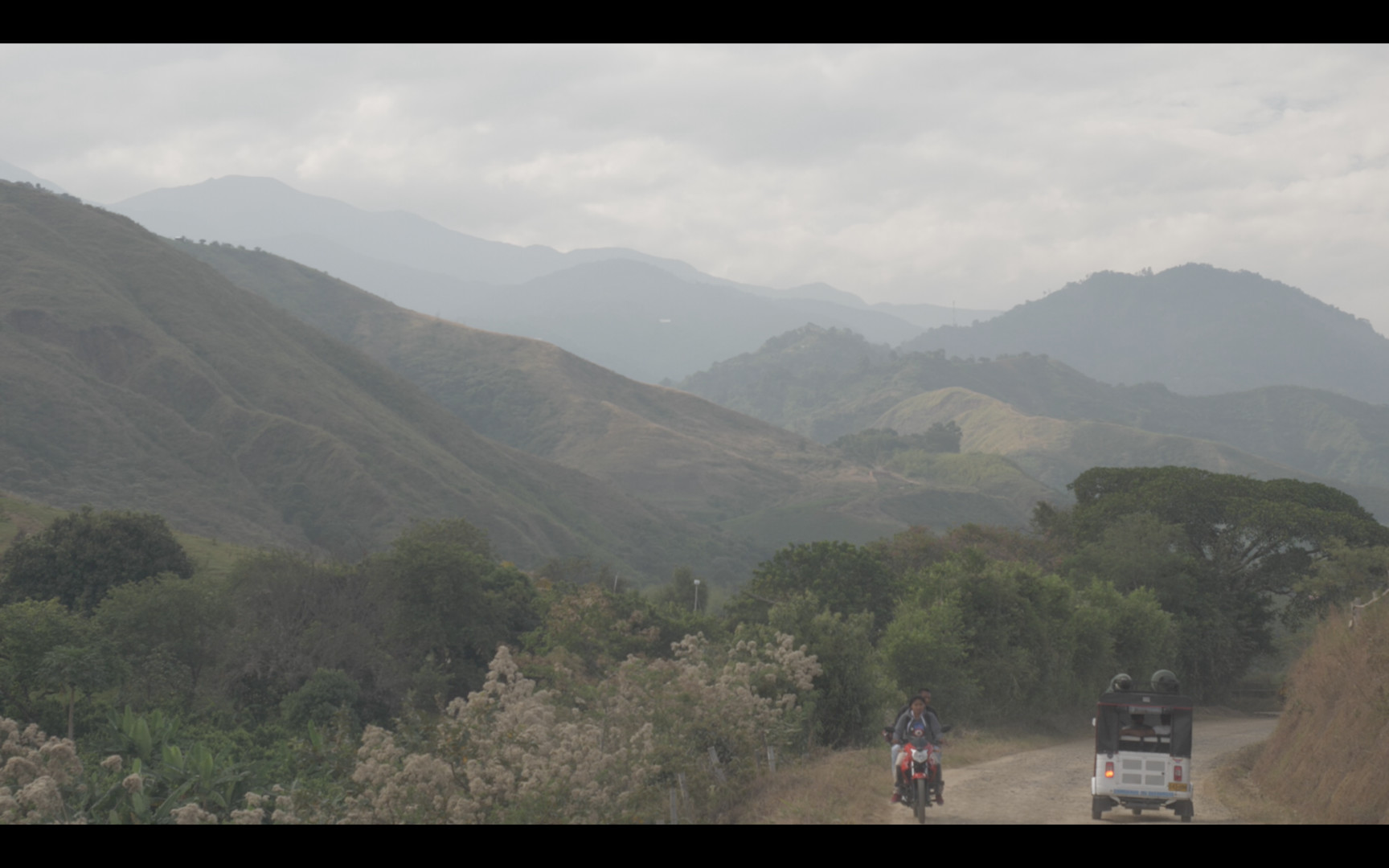
In 2016, the Revolutionary Armed Forces of Colombia (FARC-EP) and the Colombian government signed a peace agreement that was to end the longest armed conflict in Latin America, with the substitution of illicit crops.
Across the region, many people depended on illicit crops, which financed the conflict for decades; the agreement promised rural reform, with the substitution of coca (the plant used in the production of cocaine) and marijuana, through a voluntary substitution program across indigenous territories, to “participate in alternative economies”, such as growing coffee beans and avocado trees.
The farming of coca in these communities is as normalised as growing coffee, except far more valuable in that these families are able to earn a living and sustain themselves. In one moment, we’re in the home of Briceida, as she sits at the kitchen table trimming a marijuana crop plant with a pair of scissors, just as casually as someone preparing a meal.
As the peace process agreed upon begins, the absence of the armed FARC group creates a power vacuum across the region, where various armed groups looking to take control of the territory then begin to move in, bringing threats to people in the community, as some start to arm themselves. As time passes and the promises of government support for the crops transition in the community are broken, tensions rise, and many people become displaced. The election of a new president brings more uncertainty, as new commitments are made, but then never delivered upon.
A union-like strike is organised with people across the region to block the Pan American Highway, to simply demand what was promised to them by the government, which is met with force from armed riot police, as these communities flee under the sound of gunfire.
The film is compelling, with the human cost of a failed peace process put front and centre, and the narrative of events as they unfold told by people from these affected communities. We’re shown how decades of coca farming had become so integral to an economy and a way of living, requiring people’s participation in a government scheme and subsidies to halt it, that simply cutting off production in the “war on drugs” would not solely bring a brighter future; a future which, even though many of these farmers reminisce on the stability of coca farming, still hope for.
The views of these communities are captured intimately, as they express feelings of hopelessness when viewing their government and thinking, that they will not be able to change this situation through democracy. Abandoned by successive political leaders, some even express regret in signing up to the substitution program, knowing what money would have been made through regular harvests, instead now left in limbo, feeling forced to go back to coca.
The promised transformation of these territories, to see new roads and have health clinics, to improve the situation with a fair distribution of land, years after the program was first agreed still shows no sign of starting rural reform. With the program suspended at the outbreak of Covid-19, the government began forced crop eradication, using military force, while not offering any alternative plans to sustain families.
The problems created by the transition process itself is what has hit the poorest the hardest, with still no solution or end in sight. Bajo Fuego is a vital film revealing the desperate situation faced by communities in rural areas of Colombia, uncovering the human cost of a failed peace process.
Details of Bajo Fuego screening at the 2021 Human Rights Watch Film Festival can be found here:
https://www.barbican.org.uk/whats-on/2021/event/bajo-fuego-under-siege-15
Belly of the Beast
2020
Director: Erika Cohn
Words – Rhiannon Topham.
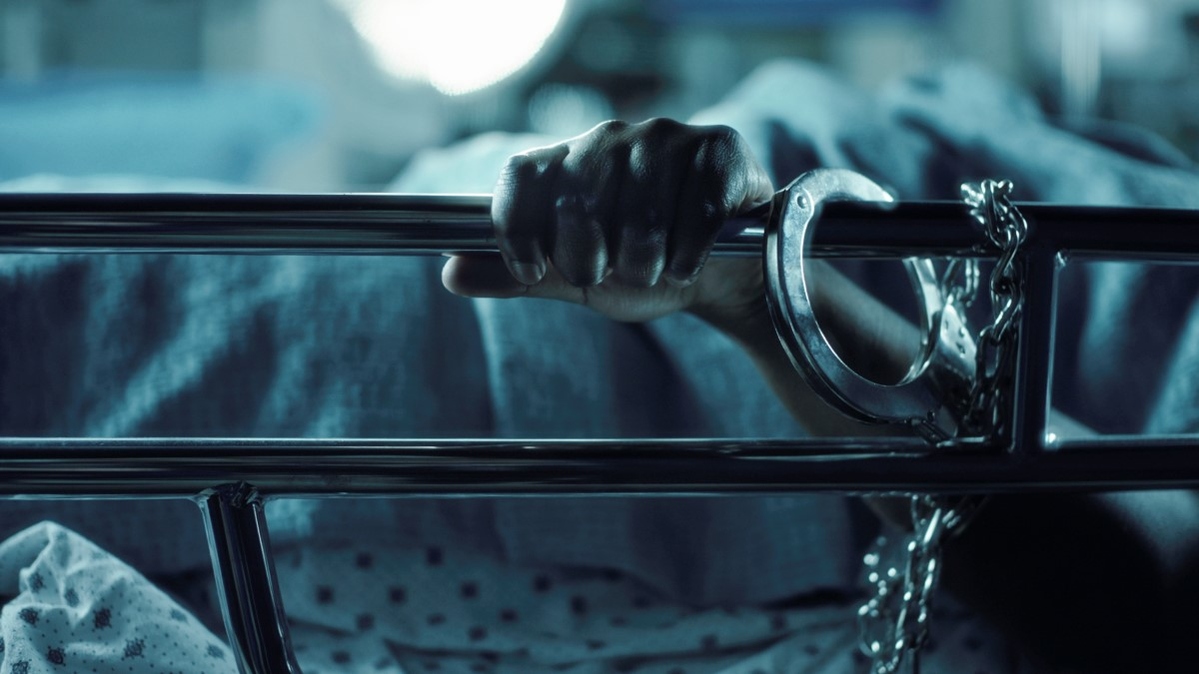
Belly of the Beast explores the grotesque modern-day eugenics happening in California prison systems over the course of seven years. It focuses primarily on the illegal sterilisation of inmate Kelli Dillon, a young mother and domestic abuse survivor who hoped one day to have more children with someone who truly loves her. She is supported by Cynthia Chandler, the first attorney to free someone from prison on compassionate release and the co-founder of Justice Now, a non-profit organisation which provides legal advocacy for the inmates of women’s prisons and has board members who are currently incarcerated.
The stories which come out of the various first-hand accounts featured in the film may sound like something from a dystopian work of fiction, or historical retellings of horrors of pre-enlightened society, but they are not. They come from modern American women, many of whom are women of colour. It’s seems unfathomable that this sort of condemnable behaviour could receive anything but criticism, yet as we know from a history of violence against women generally and Black women particularly, when it comes to the politics of the body anything but the rich white male is ripe for violation.
Director Erika Cohn makes no attempts to ameliorate the lived reality of being incarcerated in the US prison system, which includes the unconscionable opinions of many members of the general public. It is uncomfortable viewing, unflinchingly so. It is hard to watch because you can almost guarantee that its message will not change how swathes of people, not only in America but across the globe, see a woman’s body as something which can be externally controlled without her consent.
The power of Belly of the Beast is in its intimate and empathetic collaboration with currently and formerly incarcerated people who were targeted by the illegal sterilisations. It is so rare to watch a legal drama which actually includes and actively involves the voices of the people who are inside the prison system. The film makes use of whistleblower testimonies, archival footage and talking heads from experts to evenly pace its narrative and although Kelli doesn’t get the happy ending she and Cynthia were hoping for, their work and its documentation by Erika Cohn mean thousands of incarcerated women are now legally protected from the institutionalised abuse of a system and public who show little or no regard for their bodies or their future.
Details of Belly of the Beast screening at the 2021 Human Rights Watch Film Festival can be found here:
https://www.barbican.org.uk/whats-on/2021/event/belly-of-the-beast-12
I Am Samuel

2020
Director: Peter Murimi
Words – Rhiannon Topham.
A directorial debut by Peter Murimi, I Am Samuel documents the story of Samuel, a gay man raised in the Kenyan countryside but now living in Nairobi. It is a truly courageous work which balances Samuel’s love for his traditionally-minded family with his partner Alex and his close community of fellow queer men. Alex is the love of Samuel’s life, yet the culture in Kenya is such that homosexuality is cause for public outcry.
This is a country where being LGBTQ+ is criminalised, and the social stigma of being non-heterosexual is intense, violent; early into the film we are shown video footage of a man beaten in the street because of his sexuality.
Samuel’s parents are poor rural farmers who for the majority of the film do not know he is gay, and who consistently request he marry so that his wife can help around the farm and home. His father Redon, a pastor at the local church, watches on with extreme suspicion when Samuel brings Alex with him on a visit. This leads Samuel to eventually confess the nature of his ‘friendship’ to his father, and by the end of the film his parents reach a compromise by masking the relationship with the pretense that Alex is Samuel’s twin brother.
Alex recounts his own biography earlier in the film, in which his father disowns him because his sexuality offends him. These are so much more than brave decisions. They are matters of life and death.
The direction of I Am Samuel is one of intimacy and empathy; Samuel, his friends and family are allowed the space to be themselves without judgement, a quiet real-time exploration of the human connection guided by Samuel’s reflective narration.
As a viewer, there are moments which make you uncomfortable, and that is the point–the mountain of difficulties faced by Alex and Samuel should force you to check your own relative privilege. Underlying the film’s tensions is a message of hope and optimism, for the perseverance of love over tradition as well as gradual acceptance of alternative family structures to the conservative ideal.
 REEL STEEL
You must be logged in to post a comment.