Dracula: Prince of Darkness

1966
Director: Terence Fisher
Cast: Christopher Lee, Philip Latham, Barbara Shelley, Charles Tingwell, Francis Matthews, Suzan Farmer, Andrew Keir
Words – Scott Burns.
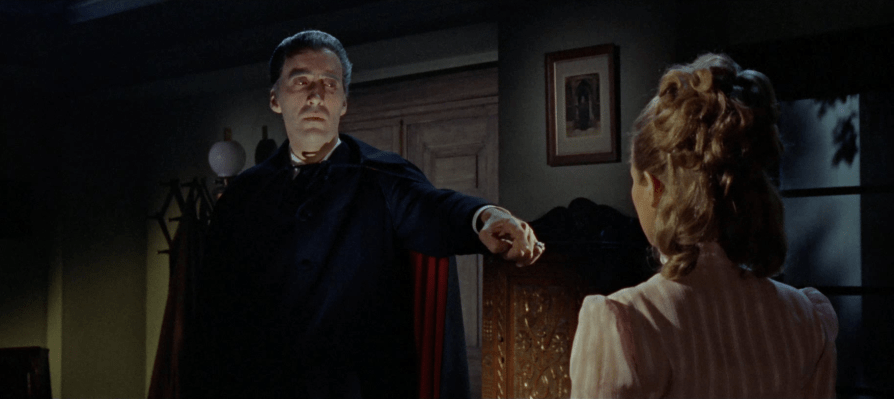
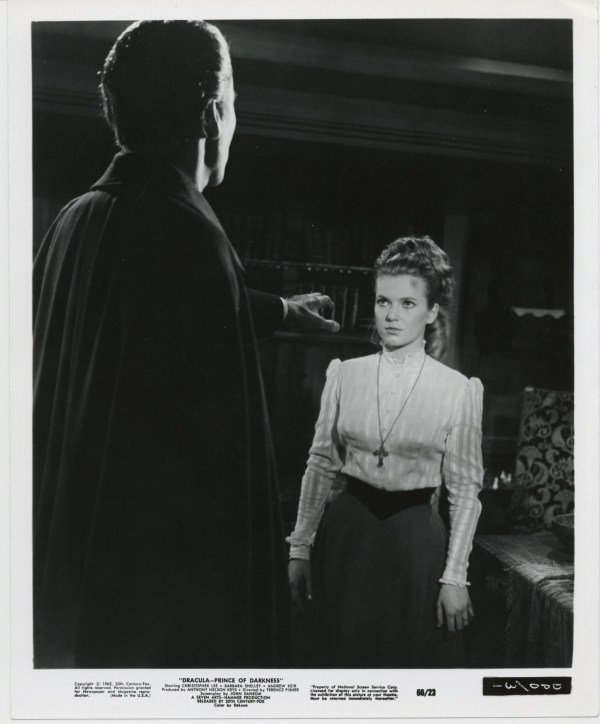
After the success of The Brides Of Dracula (1960), which nonetheless disappointed fans because it didn’t feature the title character (only Peter Cushing’s Van Helsing returned), Hammer reunited with Christopher Lee (who feared being typecast as the vicious vampire) and director Terence Fisher (who was being taken seriously as a major film-maker of the macabre) for a brand-new film resurrecting the Count for more blood-curdling thrills.
After a brief prologue featuring the final scene of Dracula (1958) where Van Helsing (Peter Cushing) destroys the vicious Count, the story begins with four English tourists, Alan and Helen (Charles Tingwell and Barbara Shelley respectively) and Charles and Diana (Francis Matthews and Suzan Farmer), chatting in a pub with monk Father Sandor (played by future Quatermass Andrew Keir) who warns them not to travel to neighbouring Karlsbad. They, of course, travel there anyway but are abandoned by their terrified driver on the road. They are then transported (by a driverless black carriage) to an old castle where they find dinner ready for them, their luggage taken to freshly-made rooms and the old retainer Klove (Philip Latham) ready to serve them. Only Helen seems perturbed by their “good fortune”.
That night, a curious Alan is killed by Klove and his blood is used to resurrect the butler’s master: Dracula, in a feat of gruesome (if strangely charming) special effects. Dracula turns Helen into a vampire and sets his sights on Diana too. Only Charles, with the help of Father Sandor can stop the fiend and send Dracula back to the grave.
Despite the titular villain not making an appearance until the halfway point, the film is never dull, thanks to the usual quality direction from Fisher. Though Cushing was unavailable to play Van Helsing again, both screenwriter Jimmy Sangster (using the pseudonym John Sansom) and Andrew Keir make the character of Father Sandor a capable and worthy adversary to the forces of evil.
Photographed in Techniscope 2.35:1 by Michael Reed with production design by Bernard Robinson, the film looks great and completely authentic with Reed especially effective in his lighting of Helen when she has turned and tries to seduce Diana. The music, again by James Bernard, builds on his work for Dracula, complimenting the atmosphere of the piece, coming to life during the sudden action scenes staged with great care by Fisher.
Lee, at this point in his career, was afraid of being typecast in monster roles and refused a part in The Brides Of Dracula as a result. Charmed back into the role by Hammer boss James Carreras, Lee stipulated that Dracula should be mute for the duration of the film. Lee explained that this decision was motivated by the poor quality of the dialogue but this has been disputed by Jimmy Sangster who claims that Dracula never spoke because “vampires don’t chat”. Lee would appear in a further five films as the Count for Hammer, and finally laid the vampire to rest in the French comedy Dracula And Son (Dracula pere et fils) in 1976.
The rest of the cast are great but special mention must go to Shelley in this, her most famous role. Shelley was a model-turned-actor who, after finding no parts for her in England, became a sensation in Italy. Upon her return to the UK, she found employment at Hammer in the film The Camp On Blood Island (1958) and appeared in Blood Of The Vampire (1958, for rival company Eros) and sci-fi classic Village Of The Damned (1960). After Dracula: Prince Of Darkness, she appeared in the highly successful and popular adaptation of Nigel Kneale’s smash-hit television series Quatermass And The Pit (1967) with Andrew Keir. She worked steadily in film and television until her retirement in 1988. She passed away on the 3rd of January 2021 aged 88.
This film is probably what you imagine when you hear the words “Hammer horror”, namely a snarling Lee with bloodshot eyes and a whirling red-lined cape or the Count biting the neck of a buxom maiden. But what else shines through is the high quality of the film-making thanks to the dedication of Terence Fisher, Jimmy Sangster and the cast and crew. British genre cinema at its best.
–
See details of our upcoming
Hammer Horror weekender
>here<
–
The Gorgon

1964
Director: Terence Fisher
Cast: Peter Cushing, Christopher Lee, Prudence Hyman, Barbara Shelley, Michael Goodliffe, Patrick Troughton, Richard Pasco
Words – Scott Burns.
Featuring Hammer’s first female monster, Terence Fisher’s The Gorgon is a unique and enjoyable monster movie starring both Peter Cushing and Christopher Lee for the first time for the company since The Mummy in 1959.
Cushing appears as Dr. Namaroff, the untrustworthy head of a mental hospital, and Lee as Professor Karl Meister, the savant character who pieces together the mystery.
The story concerns a series of mysterious deaths in the town of Vandorf in the early twentieth-century where all the victims have been turned to stone. When young artist Bruno Heitz is wrongly implicated as the killer of the latest victim his father, Professor Jules Heitz (Michael Goodliffe) travels to Vandorf to clear his son’s name. What he discovers is a terrified population and a conspiracy of silence by the authorities represented by Dr. Namaroff and Inspector Kanof (Doctor Who alumnus Patrick Troughton). When he too falls victim to the Gorgon, named Megaera of ancient Greek mythology (although she was actually one of the Furies not one of the Gorgons: Stheno, Euryale and Medusa), his death is investigated by his other son Paul (Richard Pasco) and his professor, Meister. Paul further complicates matters by falling in love with Carla (Barbara Shelley) who is coveted by Namaroff, inspiring one of Hammer’s characteristically kinetic fight scenes. Paul and Meister must fight the authorities to uncover the truth and slay the monster before anyone else is transfixed by the Gorgon’s glare.
Terence Fisher was probably Hammer’s most important director. He entered the film industry fairly late in life (he was affectionately known as “the oldest clapper boy in the business”) but quickly rose to become assistant director, editor to finally become a director with his first film A Song For Tomorrow (1948). With Hammer he directed the pivotal double hit of The Curse of Frankenstein (1957) and Dracula (1958) and the company became known for its horror movies exclusively. Although seen as a journeyman in a disreputable genre in the UK, in Europe he was considered one of the great fantasy film-makers. It took a while but his talent was finally acknowledged in his own country with retrospectives at the National Film Theatre. He also has the honour of being chosen by Martin Scorsese (when the director was invited by the BFI to select his favourite British films) and being namechecked by Quentin Tarantino as one of his favourite British directors. He died in 1980 aged 76.
The film was the result of a public appeal for new scripts and based on a submission by John Llewellyn Devine. Despite Llewellyn Devine’s inexperience as a screenwriter, the company responded to the rare female monster and the script was extensively re-written by John Gilling (director of The Plague Of The Zombies). However, the script was reworked further by executive producer Anthony Hinds. Gilling, who retains his credit, was appalled by the changes. Despite this, the film moves at a fast pace thanks to Fisher’s fat-free direction, making sure the subject is treated seriously and never slides into camp, and the performances, especially Pasco and Cushing, are strong. James Bernard contributes a strong score reminiscent of his previous work for Hammer but with an eerie, almost ethereal quality, provided by an electronically-treated voice, belonging to soprano Patricia Clark, that emphasises the mysterious and monstrous female at the heart of the film. The production design and cinematography by Bernard Robinson and Michael Reed respectively are of the usual high standard, especially the creepy lighting in the empty house that the Gorgon uses as its lair.
Reviews were mixed as usual with many praising the atmosphere and suspense as well as the quality of the performances, and the film (in a double-bill with The Curse Of The Mummy’s Tomb) did very well in the UK and the United States where it was released by Columbia Pictures. The film doesn’t have the largest fan following but remains a fun entry in the Hammer horror catalogue.
–
See details of our upcoming
Hammer Horror weekender
>here<
–

Crimes of the Future

2022
Director: David Cronenberg
Cast: Viggo Mortensen, Léa Seydoux, Kristen Stewart, Scott Speedman, Nadia Litz, Tanaya Beatty, Lihi Kornowski, Welket Bungué
Words: C. Abbott
–
“Surgery is the new sex.” A line that feels quintessentially David Cronenberg. It punctuates the very heart of his latest work, and first sci-fi horror in nearly 20 years, Crimes of the Future. It’s an explosive fusion of technology, sensuality, brutality and our slow decline of basic human instincts. Essentially, it is a culmination of a lifetime of filmmaking, harking back to his work in Videodrome (1983), Crash (1996) and of course his 1970 short which shares the same title as the new release, though is squarely independent from it.
Set in a strange future, humanity is rapidly adapting to its synthetic environment. Evolutionary progress is running rampant, causing a divide between people in the classical sense, and the birth of a new species. There are transformations, mutations and mutilations – the “new sex”. Saul Tenser, played with a claustrophobic intensity by Viggo Mortensen, is a celebrity performance artist that is praised for his open-surgery artwork. He finds himself caught between the old and this uncomfortable new, in a brutalist landscape that blurs the line between the technological and the physical.
The visual landscape seemingly calls back to other seminal works, with bizarre, wheezing breakfast chairs straight out of the pages of HR Giger, a melding of body and tech that comes from the world of Tetsuo: The Iron Man (1989) and a synth soundtrack that is pulled from the glorious depths of the 1980s. For the latter, Cronenberg’s frequent collaborator returns, Howard Shore, providing a heavy electronic rhythm that perfectly pulsates throughout the film.
Though, what audiences will be immediately struck by, and remember long after leaving the cinema, is the consistent gore. It’s strangely hypnotic as intended, with humans no longer feeling pain in this world, they open themselves up in a deeply intimate way. Saul literally enters an “inner beauty contest,” with the physical form becoming indistinguishable from the soul itself. As he opens himself up to the orgasmic awe of his audience, the thrill they derive from it is both disturbing and enlightening.
Léa Seydoux’s alluring Caprice, Saul’s artistic partner, shares these performances with him, with the two in sync with their desires, no different from the sexually charged and often disturbed relationships at the core of Cronenberg’s filmography. Sex is everywhere here, and also completely absent. Children are no longer born, they are an “invention” by altered humans. Saul himself admits to not performing the “old sex” well. The intimacy we understand has all but vanished, instead only fetishized mutilation remains.
The entire film appears to be a statement on how technology is changing, not only society, but the very core of humanity. The more we allow tech to enter our lives, dictate it, the further we drift away what it means to live a human experience. Could our synthetic world take us away from our most basic instincts? Cronenberg seems to suggest it isn’t out of the question.
–
Dog Soldiers

2002
Director: Neil Marshall
Starring: Emma Cleasby, Kevin McKidd, Liam Cunningham, Sean Pertwee
Words: Scott Burns.
.
“Six Men. Full Moon. No Chance.”
Making a long-overdue appearance on UK Blu-ray and streaming is Neil Marshall’s lad’s-mag inflected and gore-soaked horror debut Dog Soldiers from 2002.
The story is simplicity itself: a bunch of raw squaddies and their superiors, Cooper (Kevin McKidd) and Wells (Sean Pertwee), are on a training mission in the Highlands when they discover another group of soldiers, actual Spec Ops ones, have been butchered by something that dwells in the woods. Only Ryan (Liam Cunningham), the Spec Ops unit commander, whom Cooper has met before, has survived but is gravely injured. Chased by something fierce and fast which kills one of the men and wounds Wells, they bump into local Megan (Emma Cleasby), and travel to a lonely house in the woods (as usual, a bit of horror movie knowledge would have come in handy here) to get help, only to find themselves alone and surrounded by ravening werewolves. The lads (and lass) must use every bit of their training to survive until sunrise, but who will survive…and what will be left of them?
Inspired by John Carpenter and John Landis, Marshall wrote a genre-literate script which crackles with dark humour (mostly coming from the resolutely working-class attitudes of the main characters), “splatstick” violence (guts are spilled, especially those belonging to Wells who has to fight a dog for his intestines), macho attitudes are tested (Spoon, played by Darren Morfitt, has a deathless final line, spat into a snarling werewolf snout, that could have come from North East institution Viz Comic), conspiracies are laid out (the real reason for the “training mission”) and pop-culture is referenced. Apart from the usual movie-centric werewolf lore, there are nods to Aliens (“Remember, short controlled bursts”), Zulu (“Know what this reminds me of? Rorke’s Drift”) and The Matrix (“Where is Spoon?” “There is no Spoon”.) as well as very British references like Esther Rantzen and her novelty television show That’s Life (upon seeing his guts Wells deadpans “Sausages”)!
It’s some fun if you’re in the right mood, but for many, Dog Soldiers is nought but a blip in British Film History(TM).
So why look back upon this title? Because the Blu-Ray of Dog Soldiers (released from Second Sight) almost didn’t happen in the form it is in now. When a Blu-ray edition of the film was first released, the elements necessary for a good transfer of picture and sound were missing, presumed lost. The first releases ended up using two beaten-up prints and Marshall was unable to correctly grade the film to his vision. Only after the original camera negative (the film was shot on 16mm) was discovered could a proper 4K restoration, with Marshall’s approval, take place.
Such is the fate of many other independent movies where haphazard archiving and storage is seemingly the norm. Dog Soldiers is one example of a film that would have existed on a sub-standard digital form for new and existing fans to discover and enjoy were it not for the tireless work of companies (Vertigo Films) and boutique labels (Second Sight) trying to make these films look and sound as good as possible.
In today’s world of streaming, where movies can be removed from a service or altered beyond the vision of the makers (remember the aspect ratio slip-ups of shows like The Simpsons and Buffy The Vampire Slayer?), having a physical copy of a film in the form of a negative AND a digital “print”, approved by the director and cinematographer if possible, of ALL FILMS, not just the studio-made heavy-hitters and the “classics”, is absolutely crucial to the future appreciation of cinema. The treatment of a much-loved, financially-successful genre flick like Dog Soldiers should ask pertinent questions about the state of indie film archiving and restoration.
–
Press Eject: The Video Nasties Saga
.
Words: Scott Burns.
.
The Eighties: Margaret Thatcher, the Falklands War, David Hasselhoff. But what about the good stuff?
Well, there was Rik and Ade, Factory Records, the Summer Blockbuster (if, like me, you were of an age in single digits) and films on video were available uncut and uncensored to the discerning. Well, for a short time anyway…
Home video was a technological revolution, especially in the UK where sales and rentals of video recorders were extremely healthy. The ability to record television transmissions and replay them at will was incredibly enticing to sports-obsessed Brits.
Alongside this, a cottage industry blossomed. As Hollywood was initially sceptical about the format (not to mention the threat of piracy), small companies sprang up to fill the content void. Also, small video rental stores were opened up and down the country where, for a modest fee, one could hire a film on videocassette and keep it overnight to watch. The usual genres ruled the roost: action; cartoons; thrillers etc.
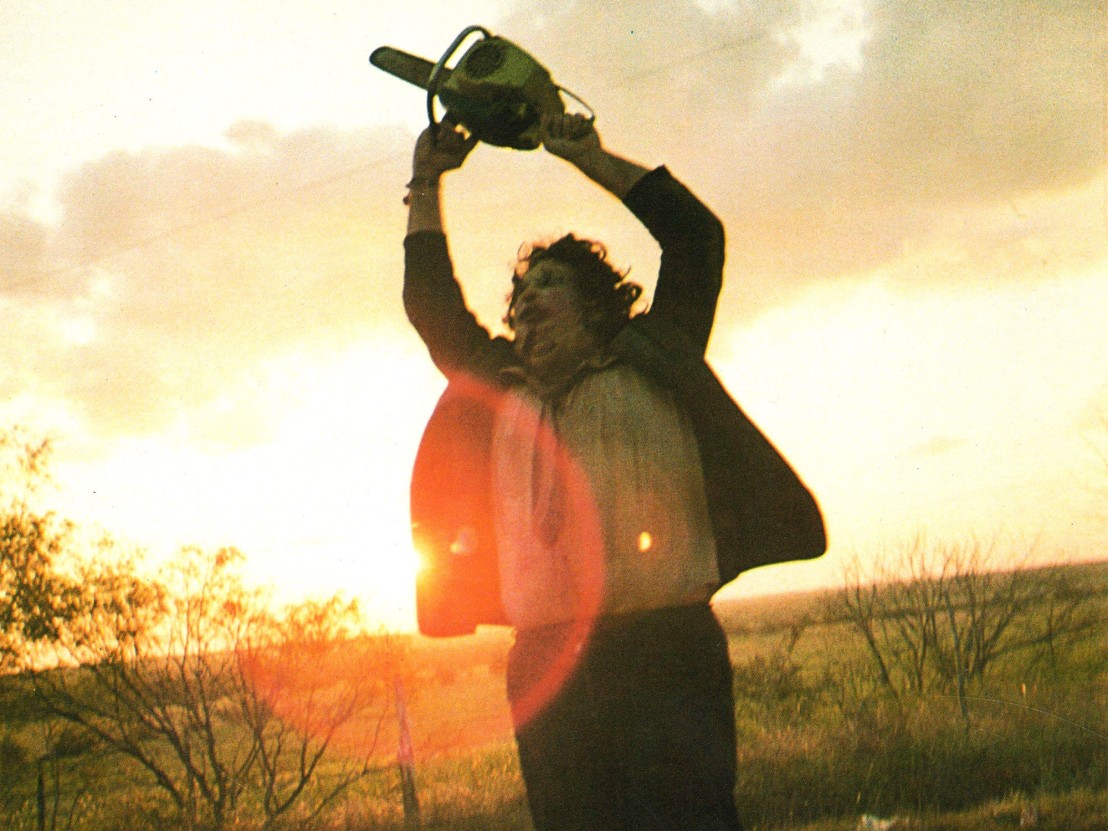
But, above these, the horror genre reigned. Brits were used to seeing their gory gut-spillers in editions heavily cut by the British Board of Film Censors (BBFC) in cinemas. Sometimes, the BBFC would refuse a film a certificate if they felt that it was too controversial for the British public. The films most affected by this attitude were the extreme horror movies coming out of Europe (mostly Italy) and the US (most famously, The Texas Chainsaw Massacre was refused a certificate despite being passed by the Greater London Council with an ‘X’ rating).
But video did not fall into the remit of the BBFC and thus did not have to be pre-approved by the Board to be released. The floodgates were opened and a tidal wave of extreme, gory horror washed over the country. Films cut for cinema (Sam Raimi’s extraordinary The Evil Dead) or banned outright (Ruggero Deodato’s horrific Cannibal Holocaust amongst others) or those never even seen by the Board were bought by small companies at festivals and sales events and made available to the general public. These films would be advertised with especially gruesome poster artwork and it was this that first attracted the attention of the “moral majority”.
After a successful campaign against gory posters the censorious forces, led by national “Clean-Up Media” campaigner Mary Whitehouse, turned their attention to the actual films themselves. Thanks to a national campaign, boosted by hysterical headlines from the press, the Conservative government promised to look into the issue. Enter Graham Bright, an ambitious Conservative back-bencher who tabled a Private Members’ Bill looking into the video industry.

At the same time there was action by the authorities that seemed incredibly overzealous prompting the video industry to beg them for clarity. So the Department of Public Prosecutions (DPP) prepared a list of 72 potentially impoundable titles so video dealers and the shops they supplied knew what films not to stock. Over the months, 33 films were dropped from the list leaving 39 still considered problematic by the authorities. But the full “nasties” list remains definitive for horror fans obsessed with seeing them all. Bright’s bill became the Video Recordings Act 1984 which brought video films into the remit of the BBFC (which had changed its name to the British Board of Film Classification), who would routinely tell distributors not to submit certain “nasty” titles. Those that did re-submit usually found their films cut to shreds or refused a certificate, disappointing horror fans.

Throughout the eighties and nineties horror films and their supposed effects on people remained a controversial issue but attitudes changed in the new millennium. The BBFC became much more liberal in terms of previous policy and much more open to scrutiny by the public. As a result many films thought beyond the pale were released in trimmed versions (including the controversial “Cannibal” films, especially their scenes of animal cruelty and slaughter, and the still-problematic I Spit On Your Grave) or completely uncut (one of the first successes being The Evil Dead). Films that were considered corrupt and evil by the powers-that-be were now released upon the British public and society survived (or to put it better, society remained as complex and unpredictable as usual).
One film, Wes Craven’s harsh debut picture The Last House On The Left, was resubmitted by Anchor Bay UK and cut by 18 seconds by the BBFC. Anchor Bay UK appealed the decision but the verdict was that the Board were too lenient and doubled the amount of cuts. To recoup costs, Anchor Bay UK had no choice but to release a censored edition of the film to the public (although, seemingly to troll the BBFC, a step-through gallery of screen-grabs of the deleted sequences was passed and included on the DVD). The film was then released completely uncut by the Board a few years later, prompting bemused reactions from anti-censorship campaigners.
While the BBFC has still rejected “nasties” more recently, with two examples being from the deliberately-controversial “Naziploitation” genre, Love Camp 7 and The Gestapo’s Last Orgy, other films still remain cut (I Spit On Your Grave for sexual violence, the “Cannibal” films for cruelty to animals) but many “nasties” are now available to the British public, as the director intended.
–
Daleks’ Invasion Earth 2150 AD

1966
Director: Gordon Flemyng
Words: Scott Burns.
The ambitious sequel to 1965’s Dr. Who And The Daleks and based on the popular William Hartnell-era story, The Dalek Invasion Of Earth by Terry Nation, Daleks’ Invasion Earth 2150 AD sees a returning Peter Cushing as the time-travelling grandad facing his deadliest enemies again in widescreen and full colour.
Also returning were director Gordon Flemyng, producer Max J. Rosenberg, screenwriter/producer Milton Subotsky (again assisted by David Whitaker who gets a credit this time around) and Roberta Tovey, the young actress who plays Susan, apparently at Cushing’s request. Roy Castle and Jennie Linden were committed to other projects so they were replaced by Jill Curzon as the Doctor’s niece Louise and Bernard Cribbins (who would later in life become a major character in modern Doctor Who) as beat cop Tom Campbell.
After failing to stop a robbery, Campbell runs to a nearby Police Box to raise the alarm and, wouldn’t you just know it, stumbles into the TARDIS, the occupants of which are about to head off on another adventure. They arrive in London 2150 AD to find the city utterly destroyed and the people hiding from the conquering Daleks and their zombie enforcers the Robomen.
Following the plot of the serial, Dr. Who and his companions join the weakened resistance, led by Dortman (Godfrey Quigley) and Wyler (future Quatermass actor Andrew Keir), to foil the Daleks plan to destroy the molten core of the Earth and use the planet as a giant spaceship. Thrills and surprisingly violent spills ensue.
Even though Dr. Who And The Daleks was a disappointment at the box office, the huge success on television of The Dalek Invasion Of Earth, with its imagery of Daleks patrolling around the Palace of Westminster and Trafalgar Square melting the minds of fans up and down the country, perhaps inspired Subotsky, Rosenberg and exec. producer Joe Vegoda to have another go. The film even repeats the startling moment where a Dalek emerges from the river Thames.
Despite being set in 2150, the London of the film has evolved surprisingly little. No skyscrapers, flying cars or robotic butlers here, just ruins that perhaps reminded the parents of the little ones watching the film of the destruction caused by the Blitz. The city is virtually identical to the London of 1966. Another bizarre inclusion is the heavy product placement for Sugar Puffs (as part of a finance deal with the Quaker Oats company who promoted the film heavily with a competition, the top prize of which was a full-size Dalek), along with Del Monte tinned fruit and other retro favourites. No doubt this contributed to the increased budget: we get more Daleks; more action (a chase between the Daleks’ flying saucer and a clapped-out van) and more scope (more location shooting), outspending the studio-bound first film.
Speaking of the Second World War, the film bears some resemblance to the events in Nazi-occupied France with the resisting forces made up of ordinary people fighting against an authoritarian invasion with improvised explosives and found weapons. The Robomen obey their new masters without question, destroying and enslaving their fellows. There’s also opportunistic profiteers who prey on the situation, like the character of Brockley (Philip Madoc) who sells food at a premium to starving slaves. At one point, our heroes Wyler and Susan are betrayed to the Daleks by two women for a sack of vegetables.
All this plus a surprising seam of eye-opening violence, where people are blown up, microwaved with laser rifles and sprayed by the Daleks’ fire extinguisher gun sticks, not to mention the odd stabbing of a Roboman and starving slaves being beaten and whipped. There’s also a lot of inventive Dalek deaths too. Seeing the supposedly-indestructible metal marauders getting blown up, tumbling into mineshafts and, my personal favourite, crushed like a soda can by powerful magnetic forces is immensely enjoyable. The BBFC’s reaction at the time? A ‘U’ certificate (upgraded to a ‘PG’ for the new restoration).
Alongside the crowd-pleasing violence and dark ideas, the pantomime comedy of the first film also makes an unwelcome return with Cribbins doing some tonally-inconsistent comedy schtick (in a scene that follows a brutal failed attack on the Dalek saucer) as a disguised Roboman.
Remastered in 4K by StudioCanal and returned to British cinemas, serving as an introduction for the unfamiliar and the nostalgic enjoyment of fans, Daleks’ Invasion Earth 2150 AD, like its predecessor, deserves to be seen on the biggest screen possible. Yes, you might see the strings holding up the Dalek saucer as it hovers over a Papier-Mache cityscape but surely that’s part of the fun.
Dr. Who and the Daleks (1965)

1965
Words: Scott Burns.
.
Produced in 1965, two years after the first transmission of the legendary BBC show (broadcast the same day as the assassination of John F. Kennedy) which followed the adventures of The Doctor (William Hartnell), his granddaughter Susan (Carole Ann Ford) and her teachers Ian Chesterson and Barbara Wright (William Russell and Jacqueline Hill respectively), the film promised what the television couldn’t yet provide: vivid colour; fast paced action and widescreen thrills.
Shot in Technicolor’s 2-perf widescreen format Techniscope (rather than the more common, and cheaper, Eastmancolor) in 2.35:1 aspect ratio, Dr. Who And The Daleks (note the abbreviated “Dr.” as opposed to the TV series’ “Doctor” Who) was produced by Milton Subotsky and Max J. Rosenberg, written by Subotsky and an uncredited David Whitaker (who wrote the novelisation of the TV serial for the beloved Target series of books) and based on the original television script by Dalek creator Terry Nation.
Peter Cushing, previously a character actor for television and film who’d had a mid-career boost when he appeared in the super-successful Hammer horror double bill of The Curse Of Frankenstein and Dracula, was cast in the role of the mysterious Dr. Who, playing the character as a sort of dotty favourite-Grandad rather than the curmudgeon portrayed by William Hartnell on TV and inventor of a Police Box shaped time machine called TARDIS, rather than an alien Time Lord.
Also changed were the character dynamics between the crew of the TARDIS: instead of being whisked off into time and space against their will, Ian and Barbara (played by entertainer Roy Castle and Jennie Linden respectively) are a couple and Barbara is also related to the Doctor. Susan (played by Roberta Tovey) remains the Doctor’s granddaughter but is significantly younger than her television counterpart.
The story of the film is along the same lines as the second serial of the shows’ first series: The Daleks. The Doctor and his crew travel to the planet Skaro where they encounter the squawking, genocidal pepper-pots in their metal city and get embroiled in a battle against them with the peaceful Thals.
This writer first saw this film aged around 8 years-old. A big Doctor Who fan, who watched it every week (first with Tom Baker as the eponymous character and then with Peter Davison). I was also a fan of the Daleks but, thanks to the BBC never repeating the old black-and-white shows from the Hartnell era, I had never seen the serial with their first appearance. This film, and David Whitaker’s fantastic novelisation, filled in the blanks. It also helped that it was gripping, funny (in a pantomime way) and, like the series, unapologetically violent, with many characters suffering screaming deaths whether by the Daleks weird fire-extinguisher guns (after laser/fire guns were deemed too brutal by the BBFC) or by the terrifying monsters that roam the forest. The performances are good with Cushing warming to playing a sweet old gent after years of playing snide, pompous villains and Roberta Tovey impressive as the little girl who is precocious without being annoying (well, not too annoying).
Even though the series was immensely popular and the country was gripped by “Dalek Mania”, the film was only a modest success, largely because it opened the same week as Disney’s Mary Poppins. It would, however, be followed by a much more ambitious sequel Daleks: Invasion Earth 2150 AD with Cushing and Tovey returning in their roles. Subotsky and Rosenberg had much more success with their company Amicus which specialised in horror pictures, usually anthology movies like Dr. Terror’s House Of Horrors and Tales From The Crypt.
It was a film made to be seen on a big, wide screen – now returning to cinemas as part of StudioCanal’s 4K restoration series of classic films – hopefully your chosen theatre sells Kia-Ora, Black Jacks and Smith’s Crisps for the ultimate nostalgia buzz.
.
MEN

2022
Director: Alex Garland
Cast: Jessie Buckley, Rory Kinnear
Words: Carly Stevenson.
.
Alex Garland’s third film, following Ex Machina (2015) and Annihilation (2018), makes effective use of the trappings of folk horror to explore the reproduction of misogyny.
Jessie Buckley plays Harper, an abuse survivor who retreats to the countryside to heal after witnessing her husband fall or jump to his death from an upstairs window. Her staycation takes a sinister turn when she encounters a series of unsavoury characters in the local area: first, she meets Geoffrey, the host of the Airbnb in which she is staying, who jokingly chides her for eating “forbidden fruit” (an apple from a tree in the garden), reminds her not to flush tampons down the toilet, addresses her as ‘Mrs Marlowe’ and tactlessly asks “where’s hubby?”.
Harper shrugs off these microaggressions and heads for the woods, where she happens upon an abandoned railway tunnel – a glaring yonic symbol if ever there was one. In what is perhaps the most well-orchestrated scene in the film, Harper stands in the entrance of the tunnel and listens to the sound of her voice echoing. Her solitude is soon invaded by the appearance of a figure at the other end of the tunnel who seems to run towards her. Spooked, Harper flees to higher ground, only to encounter a naked man loitering in the verdure. Anyone familiar with fairy tales will know that women are not safe in the woods and there’s more than a hint of Red Riding Hood here.
Indeed, the film is replete with fairy tale imagery. Pay attention to the axe by the fireplace early on – it becomes significant. These run-ins serve as a reminder of what women and people of marginalised genders know instinctively: nature offers no shelter from the threat of male violence.
Arguably one of the most interesting issues Garland explores in Men is the reality that women’s interactions with the natural world are routinely interrupted by this familiar terror. Garland’s reimagining of the Green Man as a symbol of primordial masculinity speaks to this.
The film’s central device – every man Harper meets is a different incarnation of Rory Kinnear – drives home the message that patriarchy is pervasive and self-replicating.
Some reviewers have criticised this method as unsubtle, but I’m not convinced it needs to be. The rendering of an exaggerated type of maleness as theatrical seems entirely appropriate in this context.
The forms Kinnear takes embody the all-too-recognisable guises of misogyny: an aggressive adolescent boy who feels entitled to Harper’s attention, a policeman who dismisses her concerns about a naked stalker, and a predatory vicar who blames her for her husband’s death while groping her knee (he later quotes from W.B. Yeats’s sonnet ‘Leda and the Swan’ – a small detail that hints at the bigger picture). The scenes with the vicar are particularly unnerving in that they highlight the role Christianity plays in perpetuating myths about women.
Garland merges Christian and pagan symbols to show how patriarchy is sustained by multiple power structures and belief systems. It is no coincidence that the leering face of the Green Man lurks in the most patriarchal of spaces – a church. Significantly, the opposite side of the altar features a carving of the sheela na gig – a hotly contested grotesque of female carnality. Make of that what you will.
The final part of this review contains spoilers.
Men culminates with a Cronenbergian body horror sequence in which Harper bears witness to the violent, mutated rebirth of all the men who have terrorised her, including her abusive late husband. Even in death, he demands unconditional, self-sacrificing love. A surreal exploration of the cycle of male violence, Men bears some resemblance to Darren Aronofsky’s Mother! (2017). Both films lean heavily on religious symbolism to make a point about gender and power. The key difference is that Harper emerges from her ordeal with a sense of agency. Unlike Mother!, Harper breaks free of the cycle.
The Innocents
Director: Eskil Vogt
Cast: Rakel Lenora Fløttum, Alva Brynsmo Ramstad, Sam Ashraf, Mina Yasmin Bremseth Asheim, Ellen Dorrit Petersen, Morten Svartveit
Words: Rhiannon Topham.
The Innocents, from Eskil Vogt (frequent writing collaborator of Joachim Trier, and director of 2014 drama Blind), begins with a small act of cruel curiosity. Our protagonist Ida (Rakel Lenora Fløttum) is roused from her slumber in the back of her family’s car by the sounds of her older sister, the severely autistic Anna (Alva Brynsmo Ramstad). After making sure that their parents aren’t looking, Ida leans over to her sister and pinches Anna’s leg to see if she will react. She does not, so Ida retreats, somewhat disappointed.
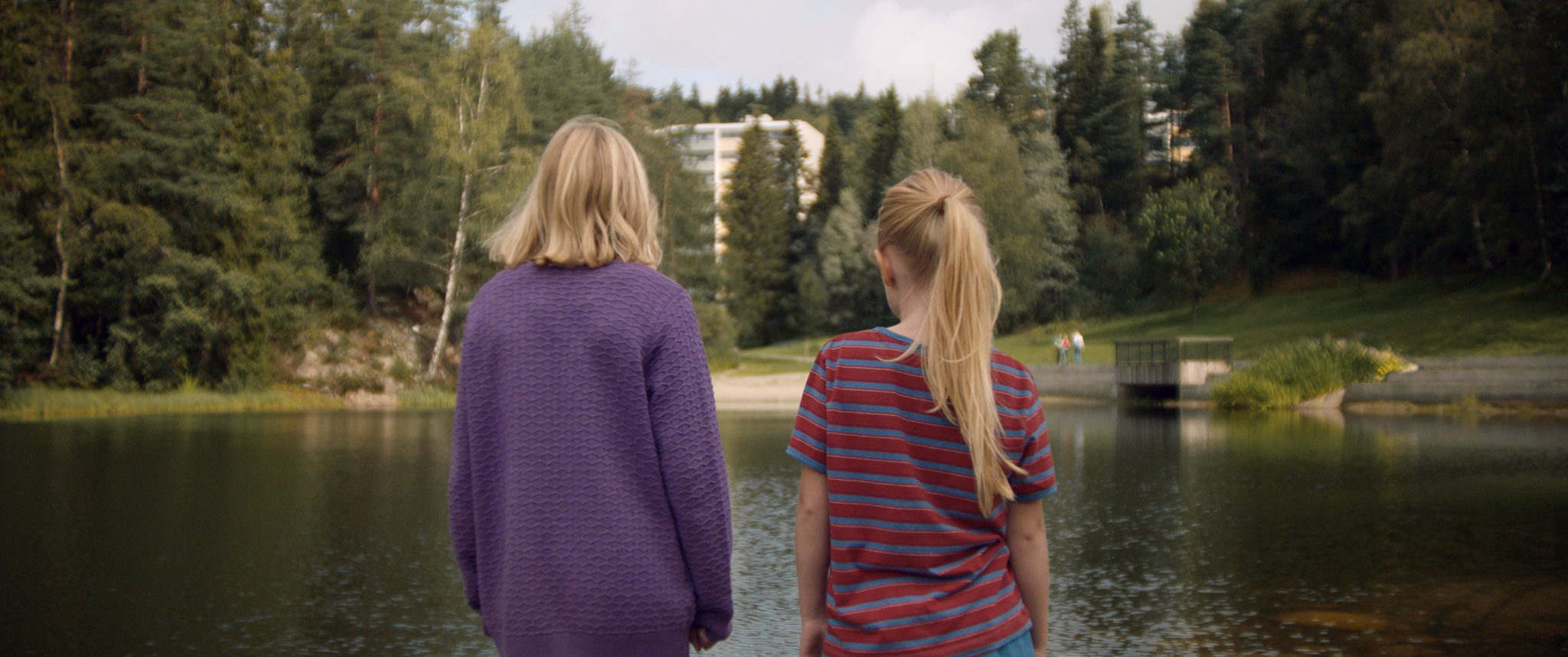
This idea of seemingly childish and outwardly harmless experimentation is tested again and again throughout the film. Ida’s family have moved to a new, featureless residential estate of high-rise apartment buildings and a central communal space. It is summer break when they arrive, so there aren’t many other kids around for Ida to meet and play with. On this first day, Ida goes for a wander, stopping to squish a worm under her foot in the mud by a lake. As she looks up, she sees a young boy staring at her from across the way. This is Ben (Sam Ashraf), who Ida will quickly strike up a friendship with, the two bonding over their shared loneliness and mutual interest in attacking insects and other small animals.
As the days drag on, Ida spends more time playing outside and is trusted to watch over Anna. She’s clearly bored and restless. There is one silver lining: the neighbouring woodland supplies all kinds of wonders for Ida and Ben to explore. One day, Ben demonstrates a special trick he’s been working on—he can make a bottle cap veer off in a different direction when Ida drops it from a height. This telekinetic ability escalates as Ben starts to realise the full extent of his ‘talents’—and it has extremely sinister consequences.
While Ida starts to clock on to Ben’s increasingly sadistic forms of supernatural entertainment, Anna meets a fellow young inhabitant of the housing development, a sweet girl called Aisha (Mina Yasmin Bremseth Asheim). Unlike Ida, Aisha can communicate with Anna—because she’s telepathic. Through Aisha’s gentle encouragement and support, Anna gradually regains her ability to speak.
There’s a push and pull throughout the narrative, as we see the struggles of social exclusion through Ida’s nascent morality. She is initially drawn to Ben because he reflects the desperate craving for attention and sense of rudderlessness that she also quietly feels. But Ida recognises right from wrong, and she, Anna and Aisha realise they have to do something to stop Ben’s ballooning psychopathy from reaching catastrophic levels. Ida’s eventual role in this is hinted at from the start, nipping the bare skin of her sister’s leg in the back of the family car—she knew it was wrong, that’s why she did it only after confirming that her parents were looking the other way. There are moments when Ida’s own blithe naivety sways daringly close to fiendishness. But she is ultimately brought back to a place of empathy when she learns (through Aisha’s telepathic translations) that Anna can in fact feel pain and has untapped talents of her own.
The Innocents puts a new spin on our idea of kids “play fighting”. Their true selves are hidden from the adults around them (themselves complex and multi-layered characters), but it is when they are together that they learn their most valuable lessons. Friendship, boundaries, whether to use your powers for good or evil, one’s own capacity and tolerance for cruelty and malice.
Part of the intensity and brilliance of this is that the origin of the children’s abilities is never explained. To do so would detract from the force of Ben’s fury, and how these “innocent” characters can or should cope with their eventual loss of innocence as the story develops. It’s challenging and inventive cinema—with some of the best child acting you’ll see this year.
–
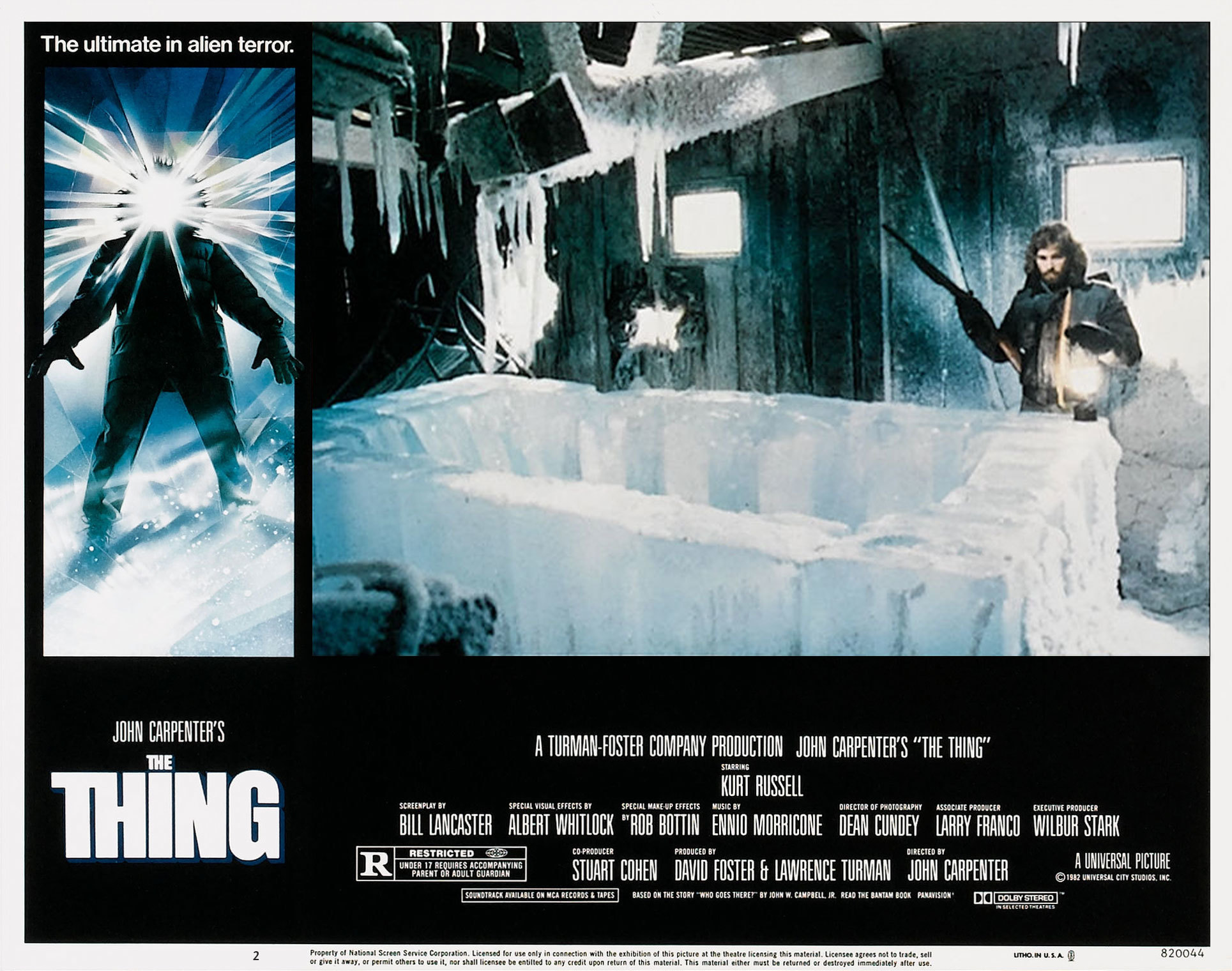
Blade Runner & The Thing; one day in 1982.

1982
Directors: Ridley Scott, John Carpenter
Words: Oliver Innocent.
.
1982 was a milestone year for American popular cinema, with a slew of future classics dominating the box office.
Steven Spielberg was the undisputed king with his family-friendly E.T. the Extra Terrestrial achieving the highest grossing film of the year. He also had big success with Poltergeist, the haunted house horror hit he produced also earning a place within the top ten grossing US films.
Established franchises Star Trek and Rocky also took the box office by storm with Star Trek II: The Wrath of Khan, and Rocky III proving exceedingly popular with audiences.
Two of the standout films of the year, both released on the same day – June 25th, 1982 – were initially commercial and critical failures. On paper, Ridley Scott’s sci-fi noir Blade Runner, and John Carpenter’s sci-fi horror The Thing should have both been huge successes.
Scott’s 1979 science-fiction film, Alien was a massive hit, and an instant classic of the genre. Likewise, Carpenter’s 1978 horror Halloween was one of the most successful independent films ever, birthing the slasher subgenre and spawning countless imitators.
Unlike Alien and Halloween, Blade Runner and The Thing are both adaptations. Blade Runner is based on Philip K Dick’s 1968 novel Do Androids Dream of Electric Sheep?, and The Thing on the 1938 John W Campbell Jr. novella Who Goes There? with the first film adaptation of the story being the 1951 cold war B-Movie The Thing from Another World. But despite links to established properties, neither film gelled with the cinema-going audiences of the summer of 1982.
Appearing amidst the popcorn-friendly likes of E.T. and Rocky III, it’s easy to see why Blade Runner didn’t initially connect with audiences. Ambiguous, slow-moving, and melancholic, it sits in stark contrast to the mainstream feel-good thrills audiences had been made accustomed to.
Predominantly visual rather than story-driven, it’s a film that wholly envelops you in its world without explaining its world to you. Scott simply drops you off in 2019 Los Angeles with Harrison Ford’s Deckard on the hunt for bio-engineered killer replicants, and lets the story unfold from there with staggering visuals and amazing production design.
Indeed, the world of Blade Runner is expertly crafted, melding the melodramatic, stylistic trappings of film noir (perpetual darkness and rain) with the futuristic visuals of science-fiction (flying cars, holograms). This is all simultaneously kept grounded and believable with an overarching lived-in, grungy aesthetic (crumbling dilapidated buildings, nothing looking new and shiny despite being set in the future), courtesy of vfx master Douglas Trumbull (who previously worked on Stanley Kubrick’s 2001: A Space Odyssey, and Spielberg’s Close Encounters of the Third Kind) alongside designer and concept artist Syd Mead. Perfectly accompanying this visual aesthetic is Greek musician, Vangelis’s ground-breaking electronic score, at once ambient and aloof, and emotional and driving.
It is not, however, just a case of style over substance. Blade Runner deals with such lofty themes as life and death, moral ambiguity, existentialism, and what it really means to be human. These themes are best exemplified by the aptly named Roy Batty, a replicant with such a desire for more life (replicants are only designed to have short lifespans) that he will do anything, including murder, to attain it. Batty is a show-stealing turn from cult Dutch actor Rutger Hauer, delivering a manic, almost Shakespearean performance with one of the most iconic, emotionally impactful monologues in cinema (tears in rain).

Arguably more accessible and narrative driven, The Thing instead proved a difficult sell due to its gory special effects, doom-laden atmosphere, and nerve-shredding, paranoic horror. Ironically, all the elements that initially turned audiences off are what make the film such an effectively disturbing viewing experience.
Remaking one of his own favourite films, it would have been easy for Carpenter to make a rehashed, modernised love letter to The Thing from Another World. Instead, Carpenter looked to the source novella for inspiration. A more faithful adaptation of the original story, Carpenter’s The Thing centres on a research team in Antarctica trapped with a shape-shifting alien able to perfectly imitate other organisms. This shifts the focus from the monster-on-the-loose format of the original film to a paranoia-fuelled, psychological horror where the monster could be anyone.
Bolstered by twitchy, unpredictable performances from the excellent ensemble cast, including Kurt Russell in one of his best roles, the audience, like the characters themselves, never knows who to trust.
Adding another level of audience discomfort are special makeup effects artist, Rob Bottin’s truly grotesque practical effects. Still more than holding up 40 years later, Bottin’s expertly crafted effects are the real star of the show. The slimy, twisted, surrealistic, monstrous creatures repel and fascinate in equal measure, at once otherworldly and entirely convincing.
Since their initial underwhelming critical and commercial performances, both Blade Runner and The Thing have gone on to become cult favourites, finding a new lease of life on home video. Testament to their ever-increasing popularity is the sheer number of releases both films have garnered. Multiple incarnations on VHS, Laserdisc, DVD, Blu-ray, and now Ultra HD Blu-ray have been rabidly collected by new and old fans alike. They have also both proved highly influential with some of today’s biggest filmmakers; Guillermo del Toro and Quentin Tarantino citing them as personal favourites.
While The Thing led the way for effects-heavy body horror like David Cronenberg’s The Fly (itself a remake of a 1950s sci-fi horror B-movie), Blade Runner influenced the cyberpunk aesthetic (blending of low and high tech) of Japanese animes such as Akira and Ghost in the Shell.
Their influence has also spread to music. The 1980s-obsessed electronic music subgenre, Synthwave takes heavy inspiration from Vangelis’s Blade Runner soundscapes, not to mention the film’s visuals. John Carpenter’s scores are also cited as direct inspirations by many of the scene’s artists.
Both films also scored belated second entries. While The Thing got a mostly forgettable prequel, Blade Runner was gifted a more worthy successor, the excellent Blade Runner 2049, itself a new standard for stunning sci-fi visuals.
The 25th of June 1982 was then, in retrospect, an important day in the history of cinema, even if most critics and audiences didn’t realise it. Two science-fiction films released on the same day to a frosty reception proved this wasn’t necessarily a death knell in the long run, having over time become recognised as two of the most ground-breaking and influential films in the history of the genre.
.

 REEL STEEL
You must be logged in to post a comment.