Too Beautiful: Our Right To Fight – Director Q&A

Maceo Frost may be “100 percent new to this whole world” of successful documentary making, but following the glowing reception at the world premiere of his new film Too Beautiful: Our Right to Fight, you’d be forgiven for assuming he were a master craftsman with decades of practice.
Too Beautiful is the personal story of a world-class boxer from Cuba who has trained for decades in the hope of one day competing in the Olympic Games. But the long standing ban on female boxing in Cuba has meant that Namibia Flores Rodriguez has never been granted the recognition she deserves.
You can see our full review of the film >here<.
The day after its premiere at Sheffield Doc/Fest 2018, we sat down with Maceo and Namibia to discuss the response to the film, the process of making it and what’s in store next.
Maceo Frost: [about the experience of being at a film festival] “I’m really enjoying it. A lot more than I thought I would be. I was a little bit drained from all the hard work, you know? Actually, surprisingly enough, I felt like I got a lot of energy from it and it feels nice. It’s like a release, do you know what I mean?”
Reel Steel: “do you think that’s because it’s been so well received?”
MF: “yeah, definitely. I got some really nice compliments that hit me really deep. Somebody asked me like “how old are you?” – I’m 27 – “how could a 27 year old white male go to Cuba and make a film and tell this story of women, of black women, and understand?”
They told me they had no idea what I looked like or anything, and they were really surprised and they were really happy about that fact. That to me was really nice, that they loved it that much and they felt that it spoke to them that much, as women. So I felt really proud.”
RS: “I think it’s difficult to watch it and not feel something, you’d have to be pretty stone cold not to feel something from it. How did you come across Namibia in the first place and what inspired you to make the documentary?”
MF: “so I quit my job. I was fed up with it. I was helping others – actually I was working in films, so it wasn’t that terrible, but I was helping other people finish their projects and I was like “I’m not doing my own projects.”
So I booked a trip to Cuba because I Googled my name and my name just popped up as like this street in Cuba. I started researching and it turns out that this Cuban freedom fighter was called Antonio Maceo, so I decided on going. I was there one week doing street portraits and just meeting people, and I met this producer named Victor who had gold teeth. I’d heard about him because he has a reputation in Sweden, like “if you go to Cuba, there’s this one guy, he’s Swedish but he’s not Swedish anymore” you know? And “he produces films, you should meet up with him.” So I find the guy, and we talk, we’re like “we wanna do something”, he’s like “you know what? I get my ass kicked in the gym everyday by this lady named Namibia, you should meet her.” So he introduces us, we become friends, we start filming a little bit and slowly through that we decided “ok, let’s make a short”.
But as a lot of these things go, it never winds up being what you expected it to be in the beginning. Through the years it just grew. At first it was like “two minutes, wow! Let’s edit it … oh, it’s ten minutes now! Ok, let’s film a little bit more, let’s make it thirty – boom, it’s forty five! It’s a little bit too long but maybe it can be a fifty five minute?” We go back to it and we’re like “fuck, it’s one and a half hours long now! We have to make it shorter!” So it kind of grew naturally into the film that it is today.”
RS: “how did you get backing for it?”
MF: “I was showing the film, the first version which nobody had seen, to some friends and they sent it out to some agencies. Then I started getting commercial work from just like “oh, that looks nice!” … so I saved up some money that I used in order to keep editing and pay for editors and to turn it into something more.
Then I managed to get funding from another company in the States that were like “we want you to go back” and afterwards we had made it around thirty minutes and we felt it had the potential to become longer so that’s when I was shopping around trying to get funding for it and I had the worst luck ever. Like, the computer crashed in the middle of showing people the film and the sound was bad and the edit wasn’t that good … and then I called a friend of mine named Raymond, the executive producer at Revolver who was like “I will try, give me two weeks”. But he calls me back like eight hours later and he’s like “boom – we got Adidas”. Apparently Nick from Adidas, his girlfriend had shown him the film like the same week like “this is the stuff you should do!” And then this miracle happens when we call him and ask if they wanna be a part of it and they were like “let’s do it. The fact that women can’t compete and there’s no support for them in Cuba, the ones who box, in 2018, that’s insane”. I think it also fit really well with their whole value of empowering people.”
RS: “How did you decide what to include in the final film?”
MF: “it’s so hard! It’s the cliche of killing your darlings, which in the beginning you don’t want to do. You put everything in it and then show it to people and they’re like “yeah, that doesn’t really add to the story”.
Then you have to decide whether that is something that “I don’t care, I want that shot to be in there, that’s my filmmaking”. Sometimes if there’s like ten people saying that this shot is not needed, maybe they’re right! So it’s a collaboration. And especially making sure that everything that’s in the film is true to the story and honours the story of the Cuban women that wanna fight, and Namibia.”
RS: “Namibia, why did you agree to take part in the film? Why did you want to do it?”
Namibia Flores Rodriguez: “in the beginning? Because he wanted to make something and I said yes. We didn’t have any plan about the movie but after he came back and I could see that people could see what I do, that people could see that in Cuba we’re boxing and training and maybe we can go to the Olympic Games and we can go to competitions.”
MF: “we’ve been talking a lot about it, and I think the film is a victory by itself. You know? It’s something that you [Namibia] have been saying a lot but it also had some motivation for you [Namibia] to be in the film, it pushed you a little more to want to fight.”
RS: “have you been back to Cuba? What’s the situation like in Cuba now?”
NFR: “it’s the same, nothing has changed for the moment. The girls that train that you saw in the film, they train at different gyms now.”
RS: “you said the film was originally going to be a short which grew, how did the film evolve in your mind? Was it just because you enjoyed filming or you noticed there was something important happening?”
MF: “I’d say definitely because it was something important. We made a short that we put online that got posted pretty much everywhere. I can’t remember if it’s like one and a half million views or two million views on the different platforms that it was on, so I felt “ok, we did as much as we could with the short, so how can we focus more on the problem?” and that’s when we realised that we had to make it into something longer so that hopefully people will know more about it and there will be a change. But also I think that Namibia’s story is so interesting and fascinating, and I think that inspires a lot of people.
I had people walk up to me and be like “I just saw the teaser, and I felt that if she can do it, if she can go on with her day, I can go on with my day”. So I think that’s like one of the underlying messages, you know? It empowers people.”
RS: “There’s a scene that I really liked when Namibia is running through the streets and then she stops and plays football with some kids on the street. Did that just happen?”
MF: “the girls were there playing football and we were filming the running, and we were like “oh there they are playing, come on let’s go!” They just showed up from nowhere!”
RS: “how was the whole process of filming for you [Namibia] between training and your job? Was it difficult?”
NFR: “I liked it because it’s about me, it’s about the thing that I do. It’s about boxing, it’s about selling cookies, it’s about talking with my friends … it was easy for me.”
MF: “I definitely felt that. Because some people when you film, they change when you put the camera on them, but to us it was super natural.”
RS: “is that because of the way the film came about?”
MF: “yeah, I think so. There was no pressure. We would just hang out and film, you know? Namibia is super organised and is really easy to work with. She’s always early and is always organised. She should actually get credit as one of the producers because she helped out with a lot of stuff!”
RS: “how did you decide on music?”
MF: “when walking around in Cuba, you hear drums and music everywhere. Like people just dancing and stuff. You walk down the street and there’s a door open, and somebody’s having some sort of ritual, with ten people dancing and all this cool stuff, and it’s crazy. So just by being so prevalent in this environment, I was like “we need that in the movie.”
I’m a drummer myself, I love rhythm, and there’s something tribal about drums, there’s this sort of energy that like … ever since the dawn of mankind when we were beating a rock with a stick you know, there’s something so tribal that’s deep inside us. So there’s a lot of percussion in the movie and a lot of singing and chanting too. What people don’t know is that Namibia – you know in Cuba, people are assigned like different gods. Do you [Namibia] have Ogún?”
NFR: “Changó”
MF: “Changó. So Changó is like the warrior spirit?”
NFR: “The warrior? Yeah.”
MF: “Exactly, so like the warrior spirit. And there’s all these different chants for all these different spirits, so we had a choir singing the chants of Changó and that music is in the film in the most powerful parts.
So there’s all these things that we did that people would never know. But we know, and the people in Cuba will know. That [Changó] is a really good one to get and not a lot of people have that one. So it’s really special.”
RS: “what’s the reception been like in Cuba? Have people in Cuba seen the film?”
MF: “not yet, no. But we have a plan so that it’s spread out through Cuba … because the more people in Cuba that see it, I think that would be the most powerful.”
RS: “what happens now then?”
MF: “for now, we’re gonna enjoy the release, show it at more festivals and we want it to blast out online to a large audience, that’s what we’re working towards. I want as much people as possible to see it. My next project is about two guys from the hood who want to get rich by selling toilet paper, and during this process they realise they can save the world. That’s my next movie.”
You can see Too Beautiful: Our Right to Fight at Sheffield Doc/Fest, info and tickets available here:
https://sheffdocfest.com/films/6523
When The War Comes

2018
Director: Jan Gebert
Words: Josh Senior
When the War Comes is a startling look at the rise of neo-fascism in Slovakia, and in particular the young paramilitary group ‘Slovak Recruits’ and their firebrand leader Peter Švrček. The Recruits are a small group of young men who style themselves as radical patriots, and protectors of Slovakian freedom.
Director Jan Gebert was offered unprecedented access to the group over a three year period and we see them conducting military training in the forest, clashing with law enforcement and coming under fire for their right-wing political values.
The film is an unsettling look at a figure who is part narcissist, part comedian. Švrček is an almost pantomime figure in the mould of other alt-right statesmen such as Donald Trump, Nigel Farage et al. His personal goal with The Recruits is to enter into the political arena to advance his views on society.
We begin with witnessing how Švrček and his band of followers recruit new young men to their cause, and their methods of training in the Slovakian wilderness. They force the men through gruelling physical regimes which feature punishments and ridicule in abundance. However, the men seem to thrive off the camaraderie and Švrček’s charisma. He can be their friend one moment and their tormentor the next.
Throughout he works hard to raise the profile of his movement, performing comical political stunts and giving interviews to keep The Slovak Recruits in the public consciousness. We see the effect this has on those around him and how they begin to imitate his routines and behaviour.
The parallels with Nazism are frightening, The Slovak Recruits parade in military uniform and hark back to Slovakian heroes from decades gone past, they are also anti-refugee, LGBTQ+ and any other minority group you can think of. Yet despite their surface level tomfoolery we need to remember that they are a group of intelligent educated young men who are far more calculated than they appear.
Švrček’s influence is so allencompassng that when he suggests to the other leaders of The Recruits that they abolish elections for 25 years so that he can remain as the Chairman he is backed with unanimous support. There is no discussion and the collective will is to follow Švrček and his ambitions without question.
You can laugh at this film, but it’s the kind of nervous laughter you hear when people are beginning to take the person they’re watching seriously; whether he’s getting a precession of men to swear allegiance to his cause by touching a silver axe or dancing drunkenly in the middle of an empty dance floor. Characters like Švrček are endemic of a Western society that has now accepted political awakenings like Brexit and Trumpism as part of everyday life.
The political swing to the right has produced more characters like this the world over, and it’s important that a mirror is held up to them now, hopefully before they can exert any further influence on global politics and history. Be afraid, be very afraid.
You can see When The War Comes at Sheffield Doc/Fest, info and tickets available here:
https://sheffdocfest.com/films/6462
Home Games
2018
Director: Alisa Kovalenko
Words: Josh Senior
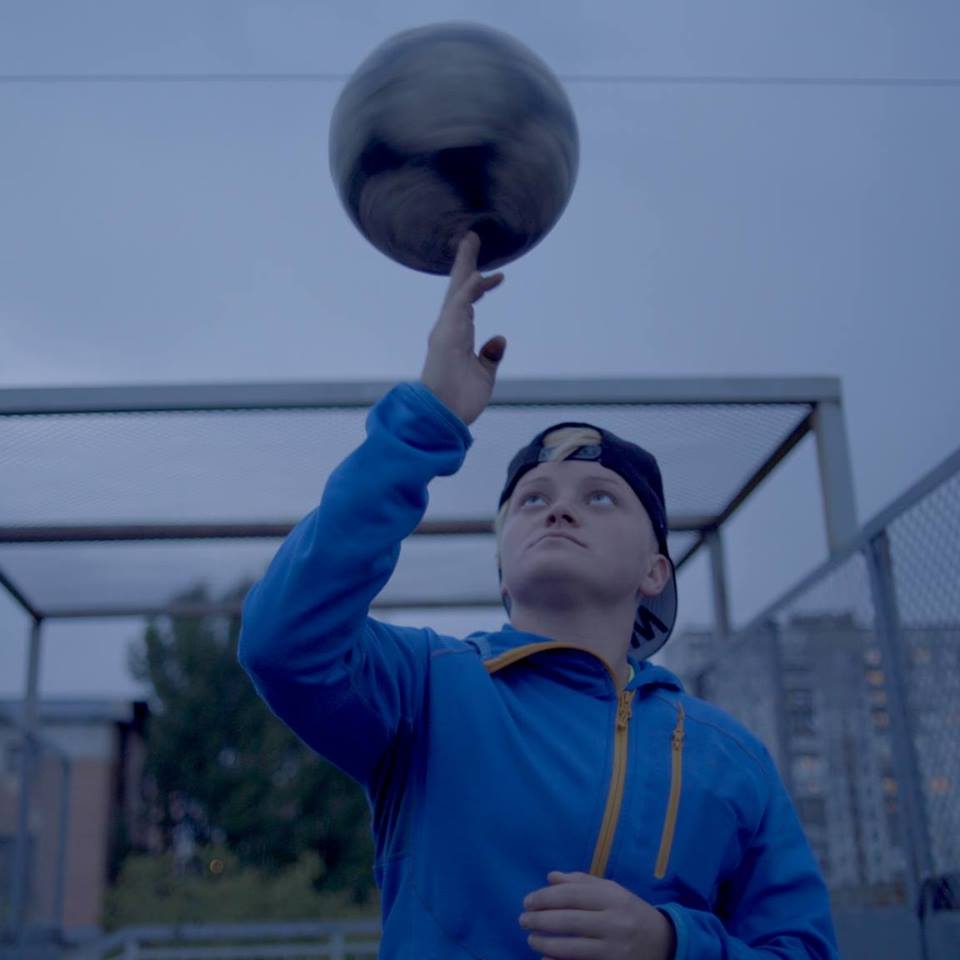
Home Games is the debut feature length documentary from director Alisa Kovalenko. In her film we follow the plight of Alina Shilova, a gifted footballer who is also living on the margins of society in Kiev, Ukraine. Kovalenko spent two years practically living with Alina and her family as they endured a traumatic series of events.
Alina, is one of the most talented women in Ukrainian football, and yet her talent is barely recognised. During her youth she was disguised as a boy so she could play in school tournaments and she continues to struggle into adulthood; to juggle her passion for the sport with the harsh reality of real life. Alina’s Mother doesn’t feature much at all in the film, and she has left Alina to care for her younger siblings Renat and Regina. They live with their Grandmother and the children’s lay about Father in a squalid one bedroom apartment in an old Soviet high-rise block.
When she isn’t training, Alina must provide for her dependents, working odd shifts delivering newspapers and battling against an ever rising mountain of debts in a desperate attempt to keep her family afloat.
Although the film is about football, the sport itself is almost the backdrop with the human story really driving the narrative forward. Football provides Alina with her escape, she is closed off emotionally from the world having also endured a disastrous childhood, and expresses herself on the pitch where she is physically combative and highly skilful.
These moments are bittersweet though, as Alina cannot devote enough time to her hobby to make a success of it. Her family always come first but at the detriment of her dreams. When tragedy strikes, she is forced to stop playing for a period and it looks unlikely that she will ever be able to fulfill her life’s goal of playing for the Ukrainian women’s team.
It’s in this moment however that the family rally together and decide to make the best of their situation and move forwards. There is a glimmer of hope for Alina and her family, experly captured by Kovalenko who shows us the warm and touching moments between Alina and her siblings, who even at the worst of times provide emotional and loving support for one another.
Home Games is a stark and effecting work of documentary filmmaking that opens its eye on a society without a voice and people struggling to survive in crippling destitution. An at times tender and delicate film that always has an emotional kick to the stomach lurking in the wings.
Bruce Lee & The Outlaw

2018
Director: Joost Vandebrug
Words – Christian Abbott
One of the most wonderful things about documentary film is the feeling of discovery – discovery in knowledge and understanding, not just for the viewer, but also the filmmaker behind it. This was the feeling when walking out of Bruce Lee & The Outlaw, the debut film from photographer, visual storyteller and director Joost Vandebrug.
This is a story of intimacy in hardship, looking at the lives of people living in poverty and in the streets – or the tunnels, beneath Bucharest. After the collapse of the Communist regime in Romania, many children were made homeless and alone. Many of these children made a new life under the dubious guidance of Bruce Lee, a modern Fagine character that both helps and harms these children that know nothing else.
The film was shot over the course of six years, beginning as a photography project for Vandebrug; it soon became a life-consuming mission to document the lives of these forgotten masses. Quickly, Nica, a young 12-year-old boy reveals himself as the protagonist of the film, slowly becoming a consistent voice in this strange world.
Getting to see Nica grow from boy to man becomes the emotional lynchpin that holds it all together. We see him rise and fall and rise again as he struggles with his relationship, both with drugs and Bruce Lee, which often blur into the same issue.
Vandebrug found a way to make sense of the chaotic nature of the story; often the film feels claustrophobic and disorientating in these tunnels, as they should. It was with his small, analogue camera that he has managed to give a raw and honest look into this world.
It’s clear that the journey here is a deeply important one to Vandebrug, after pouring so many years into this work, the dedication and attachment to it shows, often the children bring him into the journey too, sometimes without choice.
This is an incredibly personal work from a filmmaker that is bound to become hugely influential in his work, and it’s exciting to see where he will go from here.
★★★★
– During Sheffield Doc/Fest 2018, we spoke to Joost Vandebrug and Andrea Cornwell, the director and producer of Bruce Lee & The Outlaw.
The film is an emotionally intimate look at the lives of the children living in the tunnels beneath Bucharest and their enigmatic leader – Bruce Lee. It was a long, six year shoot that explored the lives of these forgotten children.
Q:
The film began life as a week-long photography project after a chance encounter with a boy, Costel.
Did you have any idea then what this project would eventually become?
Joost:
I never expected it to be a film at all. It was an encounter; I came across this community where I met this boy, Costel. I was there as a photographer and I asked if I could take a portrait of him.
I was shooting on small analogue cameras at the time and in Bucharest there were plenty of photography shops to develop my photos, I would take these back to Costel and I did this a few times. We chatted a little bit and I think it took a week; he wanted to show me where he lived. This is when I went down into the tunnels for the first time, it was a scary moment.
Q:
So, this is when you first met Bruce Lee, what was it like?
Joost:
I think Costel had already asked Bruce Lee if I could go down into the tunnels, because people couldn’t just go there. I was scared of him at the time, and the tunnels. These people have nothing and I had this little camera. I would say I was worried they would steal but I couldn’t blame them, it was just one of those things.
It was only after coming back two or three times that I got to know Bruce better. I soon realised he was not a tyrant. There was a trust that developed between us. It was clear that I would never have been able to make this film without him. Whatever you think of him after seeing this film, you’ll love him, you’ll hate him but all I could do was go in with an open mind and trust him like he trusted me.
Q:
It was at this point you met Nica, the protagonist in many ways for the film, how did this come about and how did his voice change the direction of your work?
Joost:
At first Nica was just one of the kids in the tunnels, he was very funny, very jumpy. I was just filming the situation there, but he always kept appearing. Nica went through the strongest, most difficult time. He was 12 when I met him and 18 when I finished – an incredibly important time.
As a filmmaker, or as a storyteller, I knew that would be an important way to tell the story. To him he was just a boy living in the tunnels, everything was normal to him. It was beautiful watching him grow during my time there and I knew it was the best way to tell this story as a whole through him.
Q:
Do you think the long shoot, over six years, has changed you as a visual storyteller?
Joost:
Yes, very much. When I talk about this film I talk about it as a classic coming of age story. People think of it as Nica’s but it was also mine. I was 28 when it began and now I’m 36 so it has been a big part of my life.
Andrea:
What Nica goes through in the film is so powerful and so dramatic, Joost was there in this really intimate location with a young boy during the most important days of his life, it would change anyone that experience.
Joost:
Yes that is true, I think I dealt with what Nica went through as a person; I just dealt with it as anyone else would. I didn’t have three or four films under my belt, I could only react and that’s what I did.
Q:
What did you want your role to be in the film, did you want to directly engage with the people you were filming or did you want to hang back and not participate?
Joost:
There is no way around it, at one point I took Nica to the hospital. I saw Nica needed to go there so I took him. I intervened in the film because I knew I had to. To me there wasn’t a doubt in my mind; I hope anyone else would do the same. I directly changed the lives of the people I was filming because I was just there, you can only participate when you do something like this.
Q:
You’ve said that the film is in “stark contrast” to the local media surrounding the events of the film, could you speak a little more to that?
Joost:
Well, first of all, when I first got to know this group, they were anonymous. But because Bruce Lee was such a character, people started to notice him. Romanian TV tends to be quite sensational, it’s just the language of how they tell their stories and I used that in the film to show people how it was being presented to others. It gives the film an outside perspective.
Q:
What could you say about the editing process of the film, what did you want the film to say?
Joost:
It took two years and during that time I went back and filmed again. When I started filming I was just a photographer, I was just collecting footage and there was so much of it. I started just collecting all the material. It wasn’t until the editing process that a story began to emerge through it. I knew there were certain things that had to be in the film but it was getting to them that was the hard part.
Q:
Noomi Rapace (Prometheus, The Girl With The Dragon Tattoo) is attached to the film as a producer, how did that come about?
And, I think I noticed The Girl with the Dragon Tattoo on a TV screen during one scene of the film, it seems like a poetic coincidence.
Andrea:
Yes, you did see that. It is a poetic coincidence, it was genuinely playing on the TV while Joost was filming, but we thought it was a rather beautiful and strange moment.
Noomi has an association with Joost through his photography work, and have been friends for a while. She’s also got a connection to the subject matter as she has recently discovered some Roma heritage; she’s talked about this a bit in recent interviews. She’s been a really strong ally for Joost and the film – from watching material to also helping us raise the funding for the edit phase. She will be helping us promote the film going forward too.

Room For A Man

2018
Director: Anthony Chidiac
Words – Rhiannon Topham
Room for a Man takes biographical filmmaking to the nth degree. Young gay Lebanese director Anthony Chidiac explores how his identity is situated in his long family history of traditionally masculine men and grapples with the complexities of intimacy and personal relationships.
At home with his mother in their apartment in Beirut, Anthony builds a narrative of loneliness and rejection around the solace and symbolism of his bedroom – this finite area is his safe haven from the familial hostility he endures, and his only space for autonomous self-expression.
When Syrian builders are brought in to renovate his room, they don’t just strip away the decadent facade Anthony has plastered to the walls. The refurbishment also marks the dismantlement of Anthony’s isolation, a personal turning point which takes him to Argentina and reunites him with his estranged father.
Room for a Man differs from other documentaries in that there isn’t an obvious point to it. It is many things: a personal essay, a commentary on gender and sexuality outside of the Western scope, a beautiful experimentation of light, tones and textures from the almost velvety roughness of the Argentinian mountains to the fragmented plaster on the barren walls of Anthony’s bedroom. But it is not a film with a standout purpose – it doesn’t set out to achieve anything, and that’s not a criticism.
Any art which is rooted in the personal story of the creator runs the risk of getting a bit Catcher in the Rye, a bit egotistical and vapid. This is a deeply personal film, yes, but Chidiac manages to evade the traps of self-absorption by interweaving his own quest for belonging and acceptance with the accounts of the Syrian builders, for example, who feel as psychologically lost as he does, and the adventures of his own father, who has travelled far and wide in his quest to fill the void of inertia.
For The Birds

2018
Director: Richard Miron
Words – Rhiannon Topham
“These birds have taken their toll on everybody.”
No, this isn’t a quote from a Hitchcockian film set, but from Richard Miron’s directorial debut, For the Birds about Kathy Murphy, a woman living in Ulster County in rural New York with her husband and almost 200 ducks, chickens and turkeys.
The film, which was nominated for a Doc/Fest New Talent award, is somewhat surreal. Kathy loves her birds. Everyone knows that. She wants everyone to know that. Long-suffering husband Gary knows that, and he likes “to look at them and stuff”, he just wishes they were “a little further away”. Which is entirely fair – he has been sharing his home with a deluge of loud and agitated birds for years.
But, when Kathy’s fowl family come to the attention of a local animal sanctuary, things get pretty sour pretty fast. The animals are severely overcrowded, are living in their own waste and have little access to water – but Kathy loves them like children and goes berserk when she realises the sanctuary volunteers aren’t just keeping the birds temporarily while they receive the necessary treatment, but are planning to remove them from Kathy’s custody all together. What follows is a long and arduous custody battle with the concerned volunteers, a conflict which eventually reaches court and attracts the attention of national media.
It’s an impressive chronicle of an anthropological anomaly – especially for a debut. Kathy is startlingly self-aware but content with who she is, contrary to the beliefs of her critics and her perturbed husband who thinks she’s failed in her one job to be a model housewife and paragon of domesticity. The story is almost comical but in a pitiful way; to hoard a population of birds the size of a small village is bizarre, yes, but the physical and emotional strain the situation causes to everyone involved becomes unexpectedly tragic.
The film lets the subjects frame the narrative for themselves, which doesn’t just concern Kathy’s attachment to her birds, labelled a “prime example of the hoarder phenomenon”, but also questions the value of loyalty and philosophical distinctions between human and animal relationships (albeit in unique and eccentric fashion).
You can see For The Birds at Sheffield Doc/Fest, info and tickets available here:
https://sheffdocfest.com/films/6482
A Northern Soul
2018
Director: Sean McAllister
Words – Rhiannon Topham
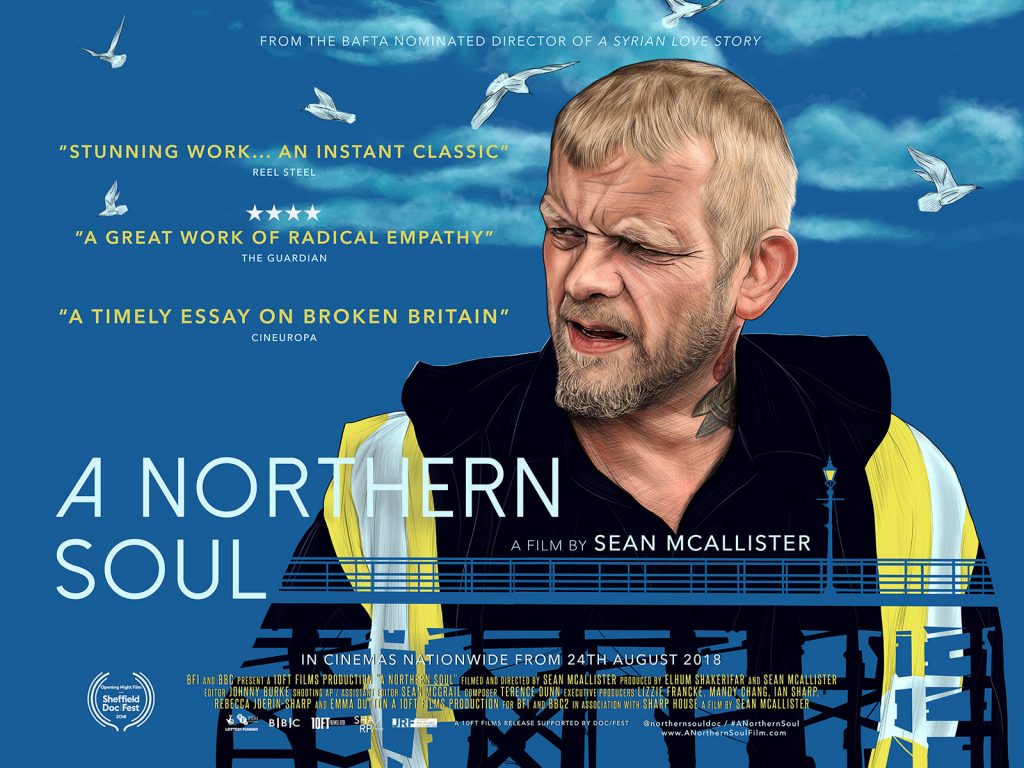
Sean McAllister returns to his native town of Hull in his new documentary A Northern Soul, a story which is reminiscent of the hardships depicted in his previous work A Syrian Love Story.
McAllister brings the same kind of authenticity and sincerity to this instant classic, which honours Steve, the titular Northern soul, as much as it celebrates the Yorkshire grit and perseverance.
When McAllister moves back to Hull, he meets Steve Arnott at the opening of a new wine bar and gallery space near the docks. To say Steve is struggling puts it lightly. He works absurdly long hours, sometimes from dusk ‘til dawn, as a warehouse worker for next to nothing in wages like his fellow “high-vis prisoners”, and a solid chunk of the pittance he earns goes into paying off his massive bank loan.
But Steve’s true passion is to start his Beats Bus, a portable music studio bringing hip-hop workshops to children in the most deprived areas of Hull.
Despite the deepening destitution of his financial and occupational position, Steve emits an irresistible amount of energy and belief in the potential of his Beats Crew which is ultimately what keeps the project alive. Steve’s story is the epitome of what happens when a city is forced to reconcile the confusion of Brexit and enormous political tensions combined with the promise of a revived local identity following Hull’s City of Culture award.
Between the tragedy and sadness are some amazingly funny moments, often courtesy of Blessing, a young Beats Crew recruit and a sure-fire future star in the hip-hop game. McAllister balances this with the stark reality that Hull, like many other towns and cities across the country, felt the strain of government budget cuts and increasing austerity.
McAllister’s ability to build a rapport with those involved in the film is so fundamental to its power, because without it, he wouldn’t have been able to document the relationships that emerge and flourish throughout the film, nor would he have captured the commonalities of everyday working class life that resemble reality more than the sensationalised images portrayed in a stigmatising popular media.
Stunning work.

“Stunning work… An instant classic”
– Reel Steel
See our interview with director Sean McAllister from Sheffield Doc/Fest 2018:
reelsteelcinema.com/2018/06/11/a-northern-soul-director-qa/
A Northern Soul is available on Digital and DVD now
What Is Democracy?
2018
Director: Astra Taylor
Words – Rhiannon Topham
What is it that makes life worth living?
Is it justice? Freedom? Wealth? The ability to climb the social ladder?
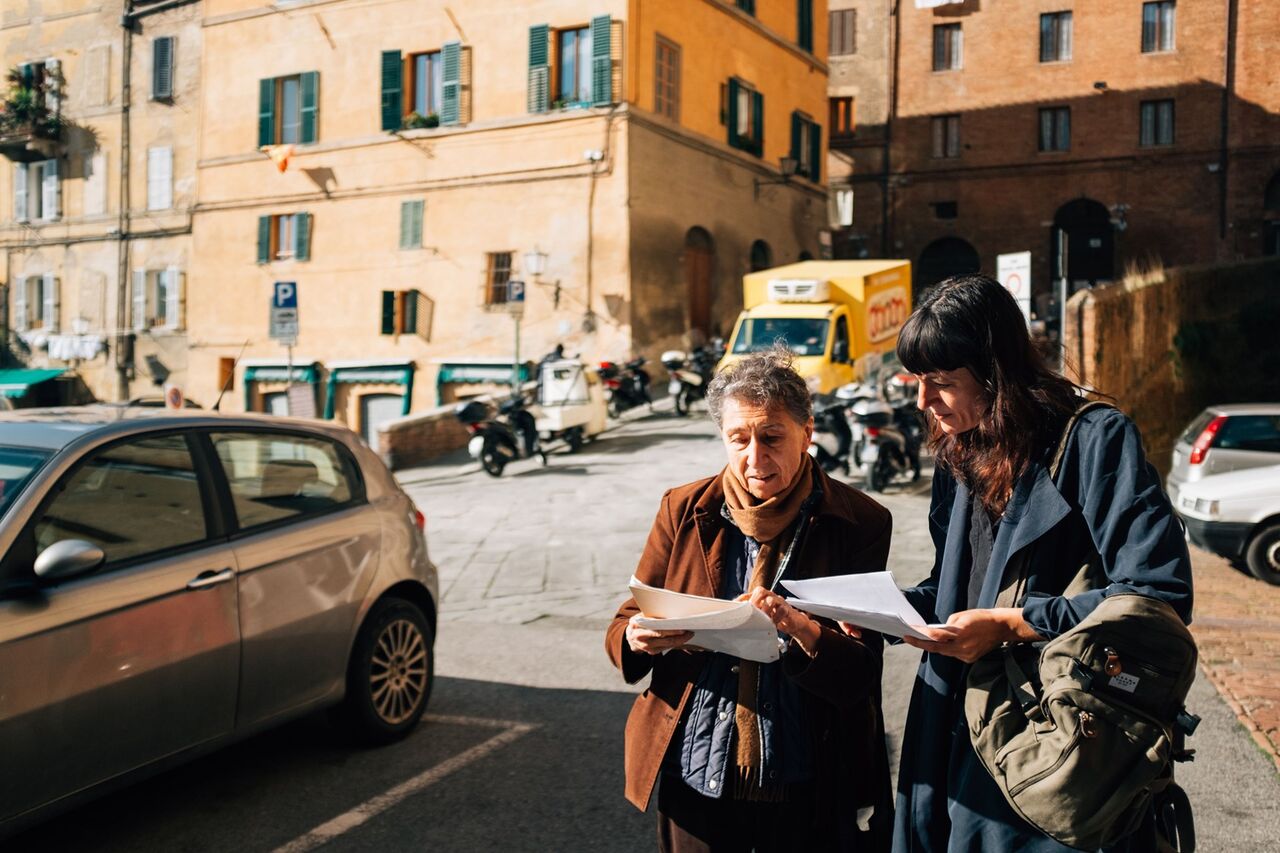
These are the questions Astra Taylor seeks to answer in her filmatic cultural essay, What is Democracy?.
The most apt word to describe her work seems to be ‘timely’, but the theoretical inspiration for the film predates the vicissitudes of modern society and actually draws on the teachings of ancient Greek philosophers. Democracy, it seems, has always been contested and disrespected, and it’s this historical despotism which Taylor explores in this thought-provoking documentary.
From Plato’s Academy in Athens to Miami in Trump’s America, What is Democracy? explores the fundamental global injustices which have contributed to such a “shattered, dismembered” society. It’s an uncomfortable reminder (and, indeed, an education for many) that the idea of democracy is experienced differently by repressed cultural groups in comparison to the privileged, for example.
Black communities in the US following Trump’s election, working-class Greek citizens in the aftermath of the country’s financial crisis, and refugees fleeing war torn countries receive particular attention and diversify the conversation about the illusion of democracy as the safety blanket for austerity and oppression.
One of the most interesting abstractions offered by the film is the potentiality of rule by technocrats as a solution to the failures of traditional democracy. Taylor’s ability to tell such an insightful story through a melange of interviews with politicians, historians, thinkers and members of the public truly makes the viewer wonder whether human rule by algorithms would really be that bad – after all, we have been pretty consistently awful to one another since time immemorial.
Asking what democracy is in a time when international news hints at “all out assault” on the integrity of the institution itself seems like risky business.
Hearing the accounts of this film, it looks as if democracy is going to be overthrown by corrupt oligarchs or completely abolished if the voices of frustrated majorities of disadvantaged citizens are eventually heard. But only by taking such a precarious approach could Taylor create this climacteric tour de force, and for that, we should all be in reverence of.
You can see What Is Democracy? at Sheffield Doc/Fest, info and tickets available here:
https://sheffdocfest.com/films/6460
Boys Who Like Girls

2018
Director: Inka Achte
Words – Rhiannon Topham
Mumbai teenager Ved is struggling with his exams. His father is an abusive drunk who threatens to send him off to work on a farm in rural India unless he improves his grades. But Ved loves to dance, and he finds solace in a vital but severely underfunded boys’ club run by Men Against Violence and Abuse (MAVA). The club aims to foster healthier masculinities among Mumbai’s young boys, challenge stereotypes about men and women, and contribute vital male support to the gender equality movement.
Boys Who Likes Girls was filmed in the aftermath of the horrific gang rape in Delhi. Social workers at MAVA ask the boys why the Delhi victim was abused the way she was, and their instinctive response is “because she’s a girl”.
The overarching theme of the documentary, a potent message that men need to be ‘saved’ from toxic masculinity too, is particularly poignant not just in India, but on a global scale in the wake of the #metoo movement.
Director Inka Achte is sensitive to the complex gender dichotomies which are enforced by different cultures and is careful not to belittle any cultural customs or traditions. She doesn’t attempt to vilify the young boys participating in MAVA’s workshops because of their consensus that women who aren’t draped head to toe are “greedy”, for example, or when Ved tells his mother to “complain later” and get on with preparing dinner when she starts talking to the film crew about the family’s drunken patriarch.
She instead reminds the viewer that these are teens who have been socialised to believe that gendered behaviour is normal and to be expected, and that they have ample opportunity to break free from these societal confines with the right guidance from groups such as MAVA.
It’s a documentary that should be shown in schools across the world to educate youngsters about the benefits of treating one another with compassion rather than ferocity. Ved begins the documentary an awkward teen desperately trying to avoid succumbing to the self-fulfilling prophecy bestowed on him by his hostile home life by forging a more salutary path for himself – a sentiment with international resonance.
Boys Who Like Girls is a masterclass in ethnographic film-making and a life lesson in solicitude.
You can see Boys Who Like Girls at Sheffield Doc/Fest, info and tickets available here:
https://sheffdocfest.com/films/6419
Too Beautiful: Our Right To Fight
2018
Director: Maceo Frost
Words – Rhiannon Topham
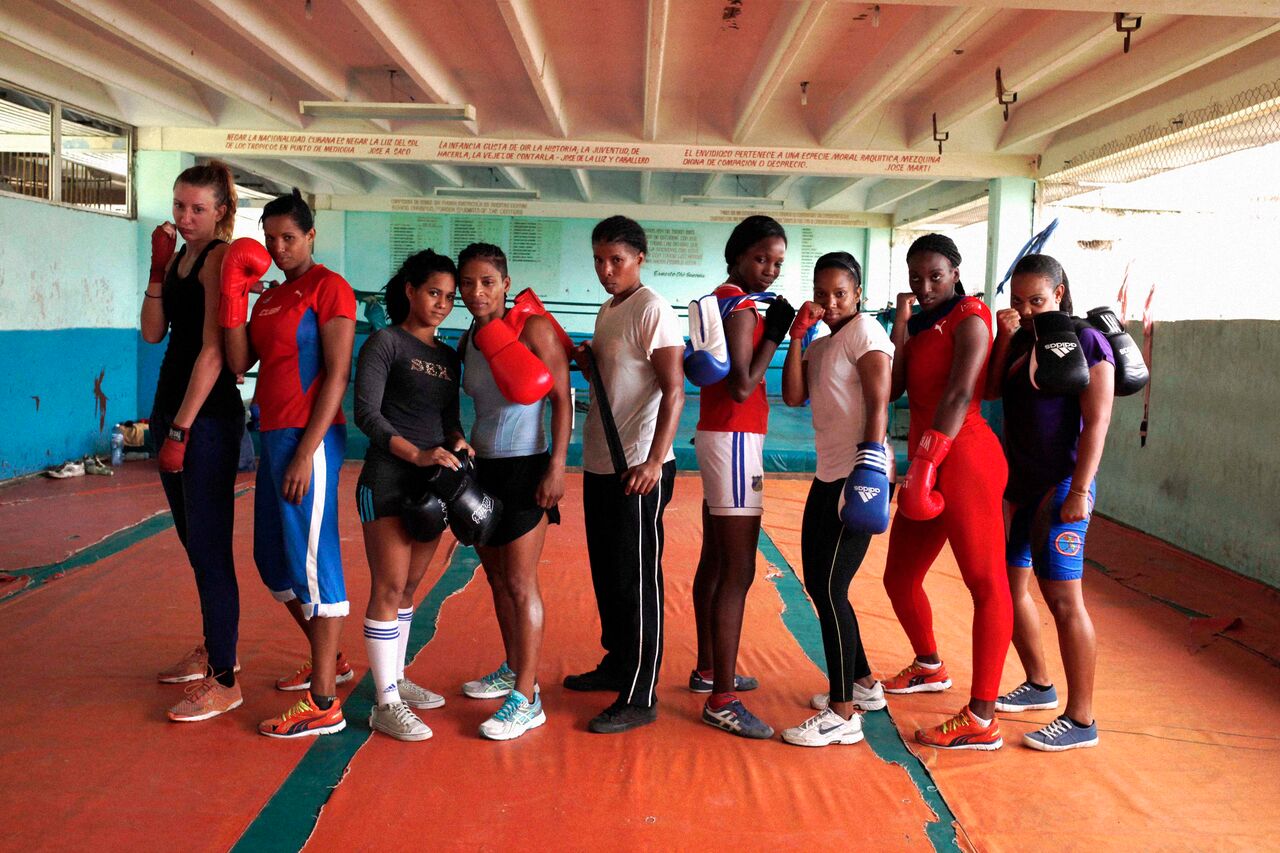
Namibia Flores Rodriguez, the subject of Maceo Frost’s new film Too Beautiful – Our Right to Fight, opens the powerful and personal documentary about her vigorous struggle to lift the ban on female boxing in Cuba with some of the misogynistic comments she’s received.
In Cuba, women are forbidden from the sport, which is considered as “too strong” for their gender and poses a serious risk to their beauty. The ban was influenced by the late Vilma Espin, wife of leader of the Communist Party of Cuba and current president Raul Castro, who thought boxing violated the physical and mental integrity of her fellow Cuban women. Namibia’s response? “If I want to get hit in the face, that’s my problem.”
It’s this kind of champion spirit that provided Namibia with the light to emerge from her darkest moments. From a childhood of immense adversity, when she was told by her grandmother that the only sport for her was “to clean and do the housework”, Namibia followed her non-conformist dreams to become an athlete – the best female boxer the world has ever seen, in fact. She’s an exceptional boxer because she’s got the signature Cuban coordination, her eccentric coach boasts – Cuban’s are inherently good dancers because they absorb the rhythm of their mother’s dancing from the womb, apparently, and Namibia is “100% Cuban”.
But the situation in Cuba is such that her world-class boxing prowess has never contributed to the national Olympic medal table or been iconicised like that of her male peers. Not only do current Cuban Boxing Federation rules dictate that she train alongside male athletes, in the famous El Trejo boxing club in Havana no less, but, at 39 years old, the film captures Namibia as she is only one year shy of the official age cap for the Olympic squad.
Namibia is adored by her friends, who turn to her strength of character for guidance. Her coach regards her as a daughter and source of great inspiration to Cubans, her fellow female boxers venerate her as the embodiment of courage and perseverance, and as viewers witnessing her remarkable power and self-belief, we become transfixed by her astounding quintessence.
As cars from pre-1950’s America line the streets of Havana, joviality mingles with tragedy and hardship dances with ambition but Namibia never loses her sense of pride for her home nation. Frost’s beautiful storytelling paints a soul-stirring picture of gender in Cuba, where women are defying the boxing prohibition to fulfil their fanatic passion for boxing and proving that, yes, Cuban women are beautiful, but they are also strong, with an ardent zeal for emancipating their own struggles as well as Cuba’s. Scenes of Namibia’s humble everyday life selling cakes door-to-door are stunningly interwoven with the intense physical assiduity she exerts to be the best at her sport.
But the most moving and symbolic moment of the film comes when Namibia stops mid run to play football on the street with a group of young girls, exemplifying the empowering message of the film. The juxtaposition of her anatomical and social potency with such sensitivity and determination to liberate the women of Cuba is a firm reminder that womanhood is not confined to one narrow definition or image.
You can see Too Beautiful: Our Right to Fight at Sheffield Doc/Fest, info and tickets available here:
https://sheffdocfest.com/films/6523
 REEL STEEL
You must be logged in to post a comment.