Halloween (2018)

2018
Director: David Gordon Green
Starring: Jamie Lee Curtis, Judy Greer, Andi Matichak, Will Patton, Haluk Bilginer, Virginia Gardner, Nick Castle, James Jude Courtney
Words – Daniel McMonagle
40 years since Michael Myers stalked the autumnal suburbs of Haddonfield, the masked maniac returns with style in a horror movie that sets out to recontextualize the franchise whilst retconning all of its previous sequels.
In choosing to ignore every sequel to the original 1978 movie, Director David Gordon Green, with writing partners Danny McBride and Jeff Fradley, serve up a movie that balances moments of pure horror, gory kills and wry humour, all done in a lean 105 minutes. There are a few moments of questionable logic and simplistic characterisation from the supporting cast, but Jamie Lee Curtis’s triumphant return as Laurie Strode, the character that jump-started her career, is everything you’d hope it would be. Her character trajectory takes a Sarah Connor (of Terminator 2) turn, as she is reconfigured as a PTSD survivor / the ultimate badass grandma who will go to any length to ensure the safety of her family. Living in isolation and estranged from her daughter and granddaughter, Laurie is plagued by the terror of Michael Myers’s inevitable return.
What makes this sequel interesting is Laurie’s role as a matriarch. Her fraught relationship with her daughter and granddaughter – a theme rarely explored in horror – is genuinely touching. In addition, the idea of Michael Myers ultimately becoming Laurie’s prey subtly subverts the original movie, as the hunter becomes the hunted.
The best thing about this film is John Carpenter’s masterful reworking of the iconic, original score. There’s been a welcome resurgence in synthesiser-led scores in recent years (examples include Dredd, Drive, The Guest and Stranger Things) and Carpenter himself has made a successful comeback as a musician alongside his son Cody Carpenter and Godson Daniel A. Davies. With Halloween (2018), Carpenter proves that he is still the ultimate composer of horror themes.
The only thing that is missing from this sequel is Dean Cundey’s majestic cinematography. Despite the great use of lighting, the camera work seems a little hectic at times and there are some moments of confusion caused by the camera looming too close to actor’s faces. This may be intentional, but it doesn’t help establish a sense of place like the original film did. Having said that, there’s a fantastic moment when Michael Myers returns to Haddonfield at night and embarks on a killing spree that is achieved in one intense, effective tracking shot. Another notable moment involves Myers lurking in the darkness as a motion sensor light flickers on an off.
Gore fans will definitely get satisfaction from the gruesome deaths. We see heads being pummelled into walls or with a hammer, bodies impaled, and, in one unnerving sequence, Myers casually drops a handful of extracted teeth over the door of a ladies bathroom stall, to the horror of the character within.
The filmmakers know how to utilise the figure of Myers and the audience are given plenty of iconic moments. They wisely steer clear of the clichéd killer backstory trope, which is one of many problems with Rob Zombie’s interpretation of the character. There is a recurring motif in the new movie involving two hapless journalists and a bizarre Dr Loomis type of character (Dr Twoomis?) who attempt to get Myers to speak, which draws attention to precisely what makes him so frightening in the first place: the silence, the lack of motivation, the absence of some traumatic past that might ‘explain’ his psychosis. He is still the same brutal and impenetrable killing machine he was in the original film.
Halloween (2018) reignites our affection for the original film and paves the way for more female-fronted narratives in the horror genre (Jamie Lee Curtis recently boasted on Twitter that it is currently the biggest horror movie opening with a female lead). The title sequence, which features a deflated pumpkin slowly re-forming itself, tells us everything we need to know about this movie and what it aims to do. Halloween (2018) is a gnarly crowd-pleaser – a perfect choice of film to see on the 31st October.
See our retrospective feature on the original 1978 Halloween film here:
https://reelsteelcinema.com/2018/10/01/halloween-1978/
Mandy
2018
Director: Panos Cosmatos
Starring: Nicolas Cage, Andrea Riseborough, Linus Roache, Ned Dennehy, Olwen Fouéré, Richard Brake, Bill Duke.
Words – Nathan Scatcherd.
Mandy is probably not the film you think it is.
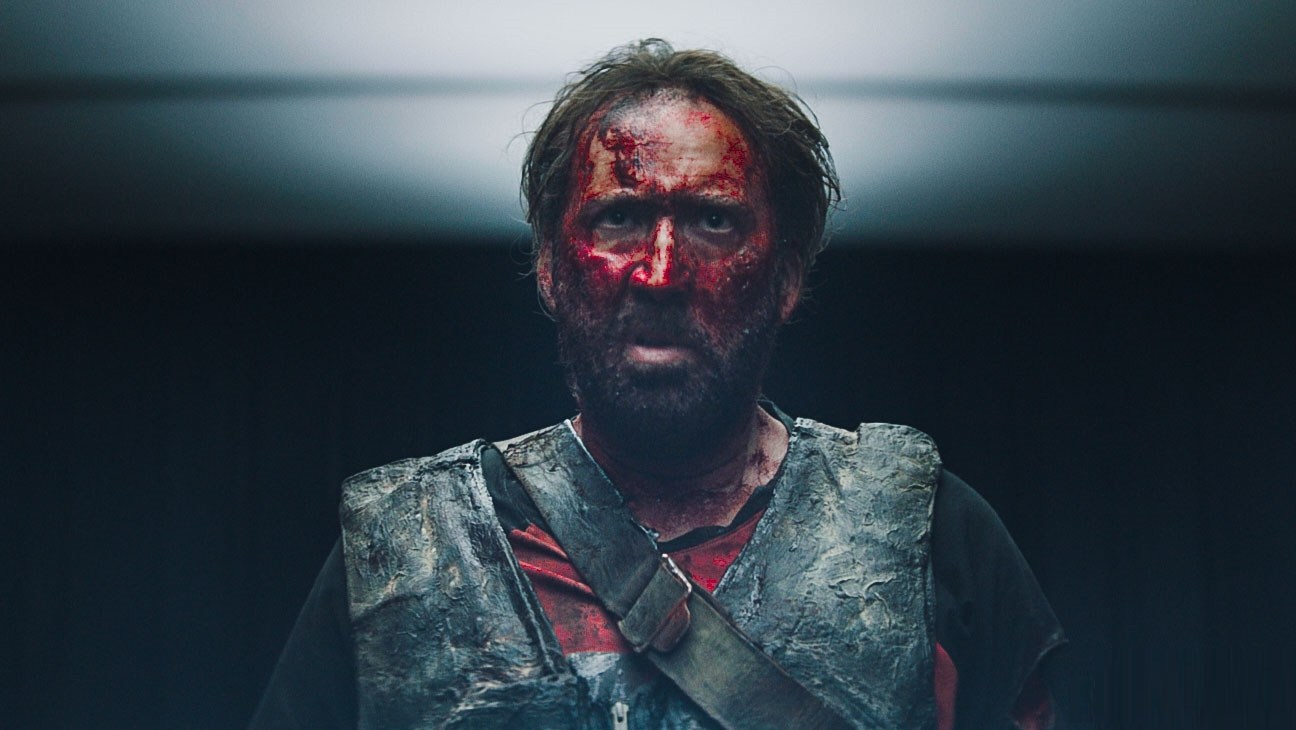
The trailer suggests an all-out, balls to the wall, grand opera Cage-ocalypse; a B-movie thrill ride with perhaps not a lot on its mind, but heavy on self-aware insanity, mostly stemming from the gonzo charms of its lead actor. And while Panos Cosmatos’ follow-up to Beyond the Black Rainbow does indeed have its fair share of classic Cage Rage moments and brief patches of coal black humour, the overall tone is not one of glorious, joyful blood-soaked fun, but rather a faint melancholia. This is perhaps the most dour, patiently paced film to ever feature a scene in which two men duel each other with chainsaws.
This may sound like a knock against the movie, but it is meant wholeheartedly as a compliment. Cosmatos is still very much a visual director, using minimal characterisation and concerning himself more with atmosphere – somewhere between Lynch and Jodorowsky – than lots of dialogue or a particularly complex narrative. The film looks amazing, like a hellish dark fantasy comic book come to life, full of deep, vivid colours and several eye-popping trip sequences.
It is, like Beyond the Black Rainbow before it, suffused with winks and nods towards pop culture Cosmatos is clearly in love with; here, it’s Dungeons and Dragons, Frank Frazetta, Clive Barker, The Texas Chainsaw Massacre.
But the crucial decision has been made to hinge this very simple, straightforward revenge thriller/horror story not on the undeniably appealing idea of Nic Cage wielding a big axe, but instead on the agony of loss and the ultimate lonely futility of revenge.
Whereas another film would tell this same story with a gleeful, winking detachment, revelling in its own inherent silliness and allowing Cage’s well-cultivated persona to do the heavy lifting, Mandy takes the much more difficult road of injecting some actual pathos into its midnight movie trappings. It manages to deftly walk a knife’s edge between gory tongue in cheek excess and unexpectedly poignant emotional beats, and most of this is down to Cage’s absolutely assured performance.
He is Red Miller, a lumberjack living in the Mojave Shadow Mountains with his wife (a haunted, doomed Andrea Riseborough – the titular Mandy). A very Manson-esque cult led by the megalomaniacal Jeremiah Sand (played by Linus Roache, absolutely oozing off the screen) try and fail to indoctrinate Mandy into their number, and when she embarrasses Sand, he responds with horrific action of the occult, witnessed by Red.
The sad-eyed, bruised man-bear affect Cage gives the character in the film’s opening stretch snaps entirely; a switch is flipped and he becomes the very personification of unhinged, single-minded vengeance, pausing briefly on his warpath only to pick up more weapons, snort coke or drop acid.
However, the film is never overtaken by its central performance. Cage modulates himself with real skill, matching the film’s baroque fantasy setting rather than distracting from it; living and breathing inside this surreal world rather than unmooring it.
Everything is heightened, from the colours to the music to the staging, and what may at first seem like stunt casting makes perfect sense in context – Cage is simply the one actor around who could convincingly make this performance work in the exact way it needs to. He is furious, sad, tired, racked with anguish; an extended scene in which he downs a bottle of vodka while screaming and crying hysterically plays initially as slightly funny, especially considering he is at the time wearing a pair of tight briefs and a t-shirt emblazoned with a tiger’s face. Then it turns horrifying, Cage’s convulsive physicality really selling just how much of a wreck this guy is, before finally becoming simply a little upsetting, and ironically sobering, as we see him move from heartbroken grief to apoplectic rage and back again in two minutes. He is fantastic in this movie, and not in the kind of ‘ironic’ way he and his performances generally seem to be perceived nowadays.
Of course a lot of viewers will be drawn to the film purely because of his involvement, expecting something on the level of Vampire’s Kiss or Deadfall in the ‘Nic Cage off the chain’ stakes. Hopefully that wins the film a few fans who wouldn’t have thought to watch it otherwise, and hopefully audiences will judge Mandy on what it is, rather than what they are expecting (or, far worse, feel entitled to) based on the trailer.
Either way, it feels destined to become a cult classic and, judging from the extremely enthusiastic audience I saw the film with, it has already very much found its acolytes.
Mandy is probably not the film you think it is. It’s even better.
–
Cult Corner: Beyond The Black Rainbow

2010
Director: Panos Cosmatos
Starring: Michael Rogers, Eva Allan, Scott Hylands, Marilyn Norry, Rondel Reynoldson
Words – Nathan Scatcherd
To celebrate the release of the beautifully insane-looking Mandy on October 12th, this instalment of Cult Corner is looking at director Panos Cosmatos’ previous film, the bewitching and bewildering Beyond the Black Rainbow.
A trancey, druggy sci-fi horror you don’t so much watch as sink into, Beyond the Black Rainbow is very much on the self-consciously ‘arty’ side, which will understandably turn off a lot of viewers at the gate. Indeed, its deliberately slow, laborious pace and reliance on the general weirdness of its imagery has led some to decry the film as an empty exercise in artificiality.
It certainly isn’t shy about its inspirations, drawing liberally from Lynch, Kubrick and Jodorowksy (as well as non-cinematic influences such as Moebius comic books and lots of LSD). But for the patient viewer with an interest in any of the above, Beyond the Black Rainbow is an appealingly delirious, unsettling experience, simulating the queasy discomfort of a nightmare (or, more appropriately, a bad trip).
Its story – of a young woman with apparent psychic/telekinetic powers (Eva Allan) being observed in a prison/laboratory by the nefarious, skin-crawlingly creepy Doctor Barry Nyle (Michael Rogers) – is a straightforward, slow burn, bolstered by the thick bad dream-logic atmosphere of dread conjured by the imagery in nearly every frame.
This is very much a film concerned with mood over narrative, setting up a simple story of ‘trapped, more-dangerous-than-she-looks lab rat vs. creepy scientist/warden’ and allowing the ambience to do the heavy lifting.
BTBR’s themes of psychotropic experimentation and the dark underbelly of the Baby Boomer New Age movement make for sequences of intense hallucinatory force, and Cosmatos revels in an overriding commitment to sheer sensation* over particularly nuanced narrative or character beats (an extended trip/flashback sequence is particularly horrifying in a frazzled, darkly beautiful way). That said, Rogers’ central performance as Doctor Nyle is brilliantly slimy, and every second he’s onscreen – much of the film’s runtime – is spent in equal parts revulsion and fascination.
Special mention must be made of the pulsing, droning synth goodness of Sinoia Caves’ soundtrack. Conforming to the current trend of 80s-inspired soundtracks, this is one of the better ones; alternately spacey and claustrophobic synthesiser music providing a constant, at times almost meditative backdrop to the strangeness unfolding on screen. It goes a long way in forming the dark heart of this impressively patient, creepy, uncomfortable movie.
*It’s telling that one character – who makes a brief but crucial appearance – is actually referred to as a ‘Sensationaut’ in the film’s credits.
see the trailer for Mandy, the latest feature from director Panos Cosmatos here –
The Little Stranger

2018
Director: Lenny Abrahamson
Starring: Domhnall Gleeson, Ruth Wilson, Will Poulter, Charlotte Rampling
Words – Carly Stevenson
Faithfully adapted from the 2009 gothic novel by Sarah Waters, The Little Stranger is an elegant haunted house drama set against the backdrop of postwar Britain.
Beginning in the summer of 1948, the story is narrated by Dr Faraday (Domhnall Gleeson), a country physician who finds himself embroiled in the affairs of the Ayres family after he is summoned to examine their maid Betty. Faraday (whose forename is withheld throughout) discovers that Betty’s ‘illness’ is in fact terror: she believes Hundreds Hall, the Ayres’ dilapidated family estate, to be haunted by a malevolent spirit. Encouraged by Caroline Ayres (Ruth Wilson), Faraday becomes a regular guest at Hundreds Hall and his growing intimacy with the family offers him a unique perspective on the lives of the fading gentry.
It becomes clear that all three members of the Ayres family are haunted by the past in some way: Mrs Ayres by the death of her youngest daughter, Rod (Will Poulter) by the physical and mental pain of war and Caroline by the life she could have led if she weren’t trapped by the weight of ancestral responsibilities. Stifled by the oppressive walls of Hundreds Hall, Caroline’s days are devoted to running the estate and looking after her wounded brother. Although Rod is the master of the house on paper, it is Caroline who keeps everything in working order. Ruth Wilson’s accomplished performance is the highlight of this sombre drama and her awkward relationship with Faraday is central to our understanding of both characters.
The film makes it clear that Faraday is more in love with the house than he is with Caroline, however, Caroline’s own sexuality is more mysterious. In one scene, she and Faraday attend a local dance together, where she recognises a female friend and spends the evening dancing enthusiastically with her instead, subtly hinting at the possibility of a secret and unacknowledged longing. Faraday, too, has a secret: as a child, he broke off a piece of ornate, plaster border at Hundreds during a May Day party that he attended with his mother, who was part of the workforce of the house during its golden years. This memory reveals that The Little Stranger is a story of possession, in both senses of the word.
As Hundreds Hall cracks and crumbles amidst societal change (the introduction of a Labour government, the rise of the welfare state and the birth of the NHS all occurred during this period), so do its inhabitants, who are plagued by violent and seemingly supernatural occurrences in the house. There is a claustrophobic atmosphere of decay and stagnation in this film that gradually worsens as the plot unfolds, creating moments of prolonged tension and discomfort. The Little Stranger is by no means a horror film, but rather, it is a ghostly story for times of austerity.
Halloween (1978)

1978
Director: John Carpenter
Starring: Jamie Lee Curtis, Donald Pleasence, Nancy Kyes, Charles Cyphers, Kyle Richards, P.J. Soles, Tony Moran
Words – Oliver Innocent.
John Carpenter’s Halloween proved to be a huge hit at the box-office, establishing its young filmmaker as one of the top genre directors of the era. With its simple tale of babysitters stalked by a masked assailant Halloween took horror by storm. Thanks to its solid shocks, memorable score, and iconic villain, it’s now considered one of the landmarks of horror cinema.
Halloween marks itself out as something special right from the get go with an unsettling title sequence. The camera slowly moves towards a Jack-O’-lantern against a black background while showcasing Carpenter’s instantly recognisable piano and synthesiser-based score; a score that’s up there with John Williams’ theme for Jaws in terms of eliciting a sense of primal terror with a simple yet effective repetition of notes.
If the titles are an unsettling mood-setter then the opening scenes are an aggressive statement of intent. Forcing the audience to look through the killer’s eyes via a prowling POV shot as he murders his sister is a bold move but Carpenter pulls it off. The tension keeps building as the camera goes from voyeur to stalker and finally attacker, placing the viewer in an unnerving position. Carpenter doesn’t stop here though. No, even as you’re still reeling from the first kill he hits you with another shock as we discover the killer is actually just a young boy.
Cut to 15 years later and straight into another tense sequence as Myers makes his escape from a mental institution on a dark and stormy night. This is where we’re introduced to Myers’ doctor, Sam Loomis, expertly played by veteran actor Donald Pleasence. No stranger to over-the-top roles, Pleasence had already cemented his genre credentials playing a wild outback drunk in the nightmarish Aussie shocker Wake in Fright, and an eccentric police detective in London Underground-set cannibal slasher Death Line.
Pleasence draws on these earlier roles to deliver marvellously melodramatic lines such as “he had the blackest eyes; the devil’s eyes”. It is in this way that the character also acts as a device, passing his own fear on to the audience as he imbues Myers with an almost supernatural menace, elevating him to mythic status as a being of pure evil.
The audience finally gets some respite from the unrelenting tension as we’re introduced to Laurie and her high school friends. Although their ‘70s fashions and lingo may seem dated now, it doesn’t make them any less likeable. Especially when compared to the vacuous teens that would come to populate slasher films in Halloween’s wake. No, these are fun, vibrant characters who are full of life; something which gives their later fates even more poignancy and impact.
Playing lone survivor Laurie, newcomer Jamie Lee Curtis obviously made a good impression, quickly becoming the go to scream queen before breaking the typecast and emerging as a big Hollywood star.
Once darkness descends on the town of Haddonfield the tension rarely lets up. The last half of the film unfolds like a combination of nightmare and funhouse ride as Myers picks off the ill-fated teens one by one. It’s where Myers ceases to be a man and becomes The Shape. Donning a blank white mask, his face appears an emotionless inhuman visage. Further dehumanised by his silence, there’s simply nothing human to relate to. He’s a child’s nightmare made flesh; the monster lurking in the closet or behind the sofa, the archetypal ‘boogeyman’.
This section of the film is built around long drawn out build-ups punctuated by short, sharp shocks. The tense build-ups owe a debt to Alfred Hitchcock as Carpenter proves himself a more than worthy heir to the master of suspense’s throne. Utilising space and darkness to maximum effect, he frames scenes so there’s always an empty space The Shape can suddenly lunge out from or a dark corner where he can materialise.
The sudden jolts meanwhile are more akin to those found in contemporaries Jaws and Carrie, which saw audiences flying out of their seats with a disembodied head popping out of a boat and a hand thrusting from the ground, respectively. Unlike these movies where the big shock moments act almost like the icing on the cake, they are an absolutely integral aspect of Halloween, central to its success as a scary movie.
It’s the apotheosis of the jump scare-based horror movie, its shocks surprising, unrelenting, and utterly crowd-pleasing. It’s also a definite blueprint for much modern horror, particularly the propulsive jolts of James Wan’s Insidious and The Conjuring.
Halloween is a simple movie with a simple goal; to build tension and make you jump. That’s why it works so well. Lacking a high budget or special effects, Carpenter instead focuses on what he does have at his disposal – namely camera, lighting, composition, sound and music – and uses the weapons in his arsenal to maximum effect. It’s almost like Pure Cinema filtered through an exploitation popcorn movie.
This all culminates in a fantastically creepy ending where Loomis, after shooting The Shape numerous times until he falls from the top floor of a house, looks down only to discover the boogeyman has gone. It then cuts to a montage of places where the evil has been, scored by both The Shape’s signature heavy breathing and Carpenter’s eerie soundtrack.
For a film as jump scare-laden as Halloween, it subverts expectations by opting to forgo the then in vogue Carrie-style shock ending, instead favouring something far more unsettling. Good doesn’t prevail; the evil is still out there. In fact, it’s everywhere.
_
Must See Movies: October

At Reel Steel we want to make sure you’re getting the most of your cinematic enthusiasm, so each month we put together our short list of some of the best new releases, from popcorn munching explosion fests to the often weird and wonderful.
Take a look at the trailers below and see this month’s recommendations…
First Man
released Friday October 12th, 2018
A first-person account of the story of NASA’s mission to land a man on the moon, focusing on Neil Armstrong (Ryan Gosling) and the years between 1961-1969, based on the book by James R. Hansen.
From director Damien Chazelle (Whiplash, La La Land) comes a story exploring the sacrifices and the cost on one man and on a nation, through one of the most defining moments in history.
Mandy
released Friday October 12th, 2018
Taking place in 1983, a couple with secluded and peaceful lives at their cabin by the woods have their existence destroyed by a sadistic cult leader, setting off a phantasmagoric journey filled with bloody vengeance and laced with fire.
With a final film score from the late Johann Johannsson (Sicario, Arrival), Mandy is a visceral tale of revenge and looks set to be one of the most memorable cinematic experiences of the year.
Halloween
released Friday October 19th, 2018
40 years ago on halloween, Michael Myers murdered three people. Following that horrific night, he was sent to an institution where he has remained in captivity.
He returns now in this latest film in the franchise, which will not only see the return of Jamie Lee Curtis in one of her most iconic roles, but also that of John Carpenter (director of the original 1978 Halloween film) as Executive Producer and once again creating the film score (his first soundtrack in over 15 years).
See our retrospective feature review of the original landmark 1978 film >here<.
– SPECIAL EVENT –

The Yorkshire Silent Film Festival brings a special ‘dystopian’ themed double-bill screening to Sheffield’s Abbeydale Picture House.
The iconic Brazil (1984) and Fritz Lang’s influential masterpiece Metropolis (1927) with a live soundtrack performance.
Sunday October 21st, details here:
facebook.com/events/2095592350758544/

The 10th edition of Sheffield’s annual horror film festival, Celluloid Screams returns for 2018 with a selection of horror films from around the world, along with the annual secret film screening and special guest Q&A’s.
Taking place October 18th – 21st.
Details here:
The Rider
2018, USA
Director: Chloé Zhao
Starring: Brady Jandreau, Tim Jandreau, Lane Scott, Lilly Jandreau
Words: Josh Senior
This debut film from Chloé Zhao marks the arrival of an exciting new voice in American independent cinema, with a story of immense emotional depth. The Rider is a pensive and subtle study of masculinity in 21st Century America and also a touching look at how our goals and motivations can sometimes conflict with progress.
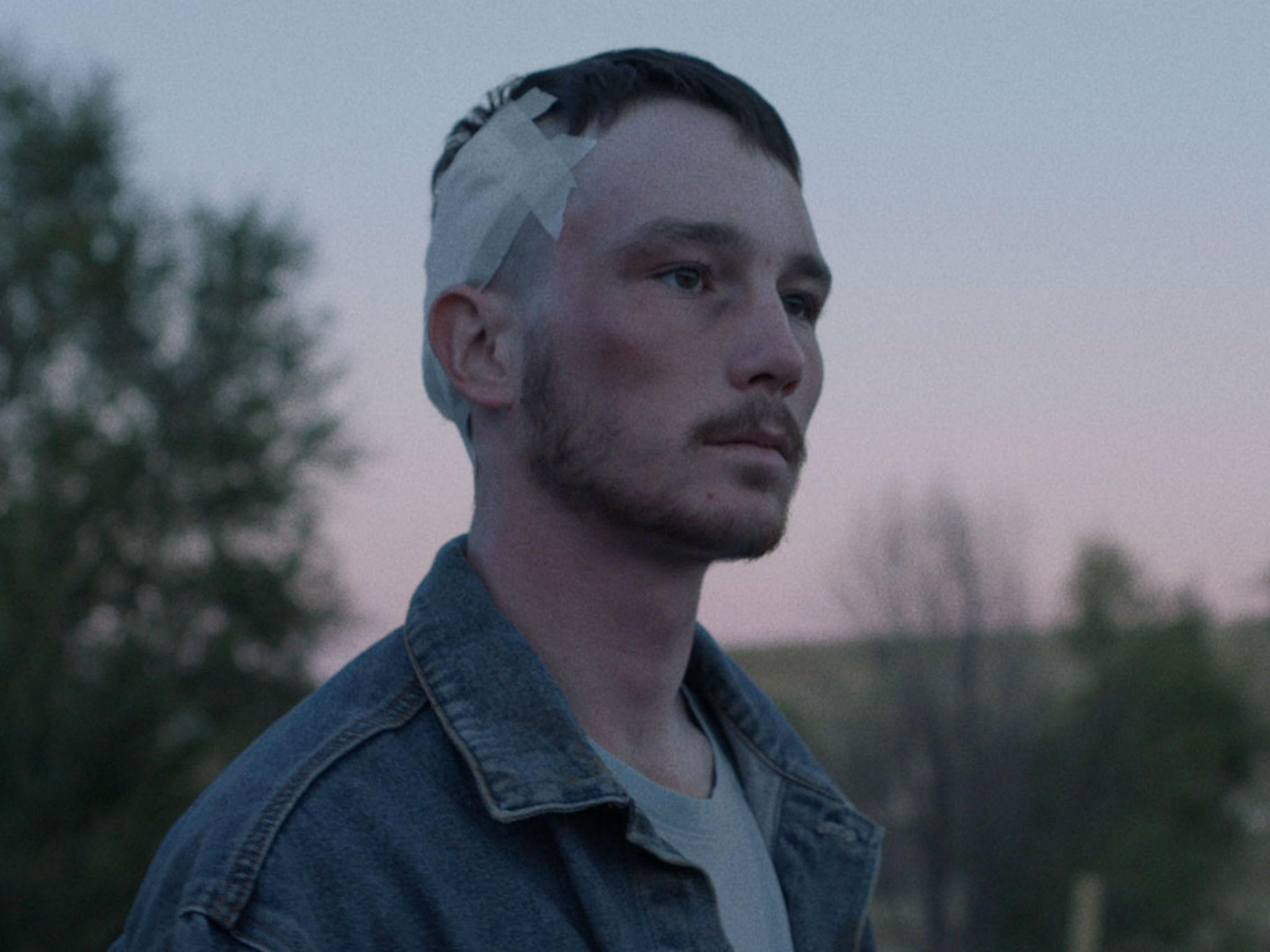
In the film we follow Brady Blackburn (Brady Jandreau) who has recently returned home from hospital after suffering a severe head injury while riding a horse in a local rodeo competition. Brady is somewhat a local celebrity, renowned for his prowess on horseback and also his ability to connect with horses and tame the ones that are seemingly impossible to ride. However, he does not feel emotionally or physically ready but there is an expectation that he will get straight back into buck riding, and continue to be revered among his peers a “real man”. Add to this that his Father is a gambling addict and along with his autistic sister Lilly, the family are struggling financially, and are forced to sell their last prize horse. Brady is then faced with a moral conundrum, to risk dying or walk away from the only life he’s ever known, into a future of financial uncertainty.
The film is essentially a docu-drama; Brady, his Father and sister are a real family unit who live off the land and work with horses for a living. Brady was really thrown from a horse in 2016, suffering a fractured skull and the film we see on screen is simply an enhanced fictionalised version of the life he endured post-injury. Zhao lived on the Reservation where the Jandreau’s lived throughout production and this emotional closeness is conveyed expertly. Lane Scott, a former bull rider who suffered a severe brain injury, leaving him speechless and wheelchair bound, also appears in the film and is seen in several touching scenes with Brady who tries to communicate with his friend, by pretending they’re out riding horses together to get through to him.
Zhao’s eye for framing and capturing the raw natural beauty of the her locations is stunning, big rumbling skies of thunder clouds are juxtaposed against rusting farm equipment and outdated electrical appliances. She sweeps in on the mundanity of every day life, just as Brady does as he whiles away his days sticking labels on tins in a supermarket to make ends meat.
The build in tension is slow but also palpable, Brady’s indecision is so well observed, and while he is cool on the surface we can really see the fire burning behind his eyes. As he approaches his final decision towards the film’s end you really do inch forward to the edge of your seat, begging him to make the right choice, before it’s too late. All the emotions here are real, and they all rise to the surface, in a film that is truly one of the outstanding releases of 2018 so far.
Cold War
2018, Poland/France/UK
Director: Pawil Pawlikowski
Starring: Joanna Kulig, Tomasz Kot
Words: Josh Senior
Pawel Pawlikowski returns to cinema for the first time in five years following on from the Oscar winning Ida, another film shot in his trademark gorgeous monochrome. In Cold War he turns his eye on Post-WWII Europe to tell a story of obsessive and destructive love.
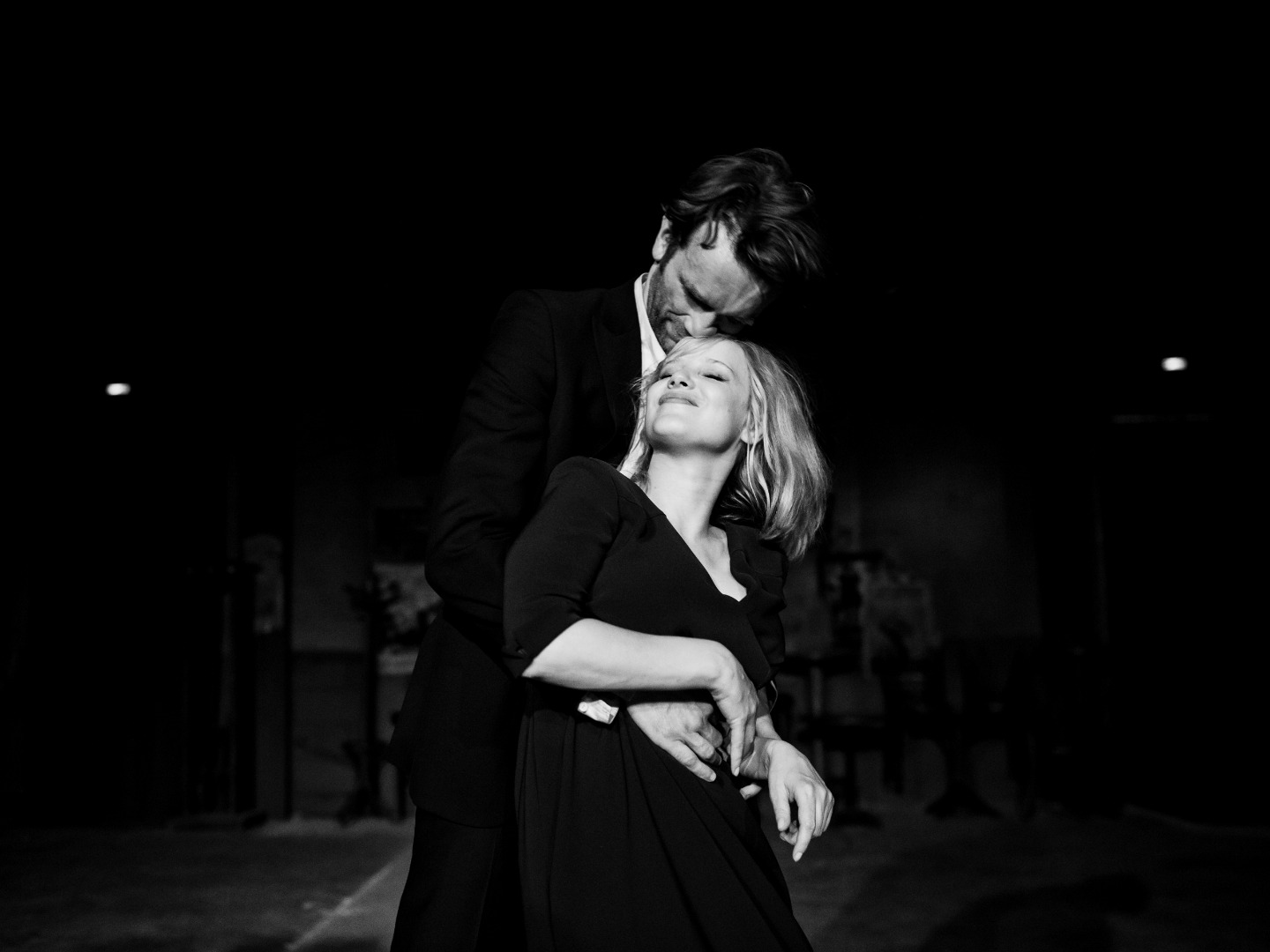
We follow Zula and Winter (Kulig and Kot) who meet during their period of service in the Soviet Media machine, producing traditional works of Polish folk music to be toured around the USSR for the eyes of politicians and moguls alike. Zula joins the company as a dancer and Wiktor is a composer, they quickly fall into a passionate love affair. However, when Wiktor deserts for the safety of Western Europe, Zula remains behind in Poland and the two begin a fifteen year long-distance relationship only crossing paths a handful of times, sometimes in happiness and other times in tragedy. They rarely spend more than a few years together at a time before either their conflicting goals in life, or the Cold War itself drives a wedge between them.
Pawlikowski presents the film as a collection of snapshots, only giving us detail when the couple are together, and leaves us to fill in the details of their time apart with our own imaginations. The result being that we fly through the short run time, wrapped up in the intense but ultimately futile attempt by both Zula and Wiktor to live in happiness. They are often forced to live apart for long periods of time and the trauma they endure in these periods looms large over them when they do eventually find each other again.
The film draws its power from its basis in reality, the main characters being based upon the directors own parents, their traits and flaws feel very real and genuinely authentic, down to their mannerisms and the way in which they deal with the hardships of life. The resultant combination of the sumptuous cinematography and flawless character study culminates in yet another iconic and unforgettable moment in Pawlikowski’s career, a truly stunning work, and a film which will surely run close at the Oscars in 2019.
BlacKkKlansman

2018
Director: Spike Lee
Starring: John David Washington, Laura Harrier, Adam Driver, Topher Grace
Words – Josh Senior
Spike Lee seems like the only director that could have come to the mind of producer Jordan Peele when he set about the task of adapting Ron Stallworth’s manuscript Black Klansman for the big screen. The cinematic serendipity of the subject matter and the current political climate in the United States of America, makes this film the perfect firebrand for a troubled period in modern history.
Ron Stallworth (John David Washington) is made the first African American member of the Colorado Springs Police Department and immediately sets his sights on tackling crime, however he is initially stuck on desk duty, his hiring a seemingly political move from those above him. He still has to endure all the prejudice he has lived with throughout his life and he feels stuck. That is until he is asked to go undercover at a student Black Power rally, where he meets the vivacious Patrice (Laura Harrier), and the fires of uprising begin to burn within him.
He turns the investigation on its head and makes contact with the local chapter of the Ku Klux Klan, impersonating a white racist via the telephone and recruiting Jewish detective Flip Zimmerman (Adam Driver) to attend meetings on his behalf, in order to gain information about the group’s activities. Events snowball out of control and Ron/Flip between them become a popular member of the chapter attracting the interest of Grand Wizard David Duke (Topher Grace), who’s arrival in Colardo Springs accelerates white hatred towards the African American contingent of the town and pushes Ron to his mental and moral limits.
Spike Lee puts an obvious spin on the tale of Ron Stallworth, however his storytelling here is perfect. BlacKkKlansman is very much (without irony) a black comedy in terms of genre, the film is fresh and fun but is also never far away from reminding us of the horrors of American society, neatly linking the events onscreen back to events of the present day. The film neither forgets its roots, nor forgets what it is trying to preach to its audience. Washington and Harrier both shine in their first major roles, and the supporting cast of actors including Adam Driver and a revelatory Topher Grace (last seen in anything of note, in Spiderman 3) give Lee’s film a professional sheen. A real high-point in Lee’s filmography which tackles its subject matter with charm and a knowing eye.
The Predator

2018
Director: Shane Black
Starring: Boyd Holbrook, Jacob Tremblay, Olivia Munn, Sterling K Brown, Thomas Jane, Keegan-Michael Key, Trevante Rhodes
Words – Nathan Scatcherd
When Shane Black was announced as the director of the new film in the Predator franchise, it seemed like a simultaneously strange and fitting choice. After all, he’s mostly well known for placing his quip-heavy, machine gun paced smartass dialogue in distinctly comedic settings; but then, he has a particular intimacy with the series, having appeared in the first movie all the way back in ’87.
The idea of a Predator movie balancing dark humour with good old-fashioned spine-ripping action, propelled by Black’s signature witty character interplay, was an appealing one. It still is an appealing one… but unfortunately, the film we have doesn’t quite realise the vision.
The Predator has individual moments which work well, and some interesting concepts which could have been really compelling if fleshed out properly. The film’s main issue is not a lack of new ideas, but quite the opposite – it feels bloated to the point of nigh-incomprehensibility, spinning the plates of various barely related subplots in a choppily edited, manically paced mess of sheer ‘stuff’.
A new upgraded species of Predator! A motley crew of mentally ill military hardcases! Our hero’s autistic son, who figures out how to use Predator technology and becomes their target! Shady government types! Olivia Munn’s intrepid scientist! Predator dogs!
Studio interference and reshoots on this film have been common knowledge for a while now, and they really show. The plot is a mess, the whole film playing less like a single cogent storyline than a bunch of scattershot subplots, none of which are allowed the time to feel cohesive or engaging. It’s hard not to suspect that this is the result of mashing together three or four drafts of the script and simply hoping some of it would stick.
Even on a technical level, The Predator is occasionally shockingly bad. It has an over-reliance on CGI blood and gore effects which rob the action scenes of any impact. The much ballyhooed ‘upgraded’ Predator, the result of gene-splicing in an attempt to create the ultimate version of the species, looks like a video game character in any shot where it’s seen clearly, and remains less interesting than the ‘classic’ Predator in every way.
The film’s action is honestly baffling in how terribly it’s shot and edited. The confusing blocking and geography of some sequences – particularly one towards the end, a forest face-off clearly intending to evoke the first movie, and thereby some goodwill – makes it very difficult to follow what’s happening, and who it’s happening to. One character’s death happens so quickly and feels so inconsequential that I actually didn’t realise he had died until another character mentioned it later.
Yes, there are a couple of things to like; the film has fun with nods to the other instalments in the series, repurposing a couple of well-known lines from the original and giving a huge knowing wink as it does so.
As this is a Shane Black movie, the dialogue makes for some amusing moments (particularly a gag about the factual inaccuracy of calling a Predator a ‘predator’; it’s both funny and makes a good point I’d never personally considered). Everybody is clearly having a blast in this movie, with Keegan-Michael Key and Thomas Jane in particular getting in a couple of good jokes, in between bouts of running around shooting and swearing at each other. Sterling K Brown as an amoral government agent steals every scene he’s in, and I would bet money on there being a draft of this film’s script somewhere with Olivia Munn’s scientist as the lead. I would also bet it’s a superior movie; Munn brings smarts and a sense of humour to the role, which play off well against the other characters.
However, the film makes some weird choices in regards to the young, autistic son of Boyd Holbrook’s ‘hero’. The portrayal of autism here seems to be coming from a place of positivity and acceptance, which is of course a good thing, but the film almost goes so far to the extreme of venerating this character (simply for having autism) that it only succeeds in propagating the ‘othering’ of people on the spectrum.
In the world of The Predator, autism is treated as a kind of superpower, something the Predators admire and want for themselves in their splicing experiments… yeah, I’m not making any of this up. Ultimately they want to kidnap an autistic child so they can take his autism. Yikes. The film’s general treatment of mental health – with the scarred military team referring to themselves as ‘Loonies’ and ‘retarded’ – is cavalier to the point of feeling a few years out of time, and the film’s unsure tone makes certain intended jokes at the expense of how ‘crazy’ these guys are just feel mean-spirited instead of funny.
There is also of course the current scandal overshadowing the film’s release, regarding Shane Black casting a registered sex offender (Steve Wilder) in this film without having told other cast members.
Olivia Munn spoke out about it, the scene between her and Wilder was cut, and she subsequently seems to have been thrown under the bus and made to feel like a troublemaker. This has been more of a talking point so far than anything that actually happens in the movie, and makes any hopes one might have of a direct sequel under Black’s direction seem even more optimistic than the film’s cringeworthy wet squib of a ‘teaser’ ending.
 REEL STEEL
You must be logged in to post a comment.