Irene’s Ghost – interview with director

A moving film exploring loss and relationships, Irene’s Ghost is a standout documentary.
We interviewed director Iain Cunningham at the Showroom Cinema in Sheffield about this deeply personal story.
See our full review of the film >here<.
Reel Steel: I read that this film was inspired by the birth of your daughter — what was it about that which made you want to make this film?
Iain Cunningham: So, just a kind of potted history of the film: my mum passed away when I was three and it wasn’t something that was talked about so growing up, my mum was just this figure in my imagination really until I was 18 and I was given some of her things. Then I knew a bit more about her but not a great deal. I think I just sort of boxed it away, and then when I had my own daughter, my own child — I think firstly having a child in itself made me think back to my own babyhood and the fact that I didn’t know who my mother was really at that point when I had my own child. And then as she grew and you could watch the world through a child’s eyes, through my daughter’s eyes, I saw that a three year old is pretty well formed emotionally, and you start to realise the impact it would have made on me as a child and also what impact it would make if I were to suddenly disappear out of her life and how difficult that would be for me to come to terms with as a parent.
RS: Is it true you didn’t see a picture [of your mother] until you were 18?
IC: Yeah!
RS: I’m curious as to how, making the film, you’ll have been surrounded by all of these things you’ll have never seen before and all these people you’d never met before. How was that, was it quite overwhelming?
IC: It was, the first person that I found really was my mum’s best friend and I went into her house and she had albums of photographs, and some of them had me in it. To go into a complete stranger’s house and find they’ve got pictures of your whole family is a strange thing. And the same with my cousin on my mum’s side of the family — I didn’t have any connection with my mum’s family so to see these lives that are going on which you’re a part of but have no knowledge of is a kind of interesting thing. And also I think to find these memories — that was what I first wanted to do, was to harvest these memories to try and build a picture of her. There’s memories of us all in our friend’s heads and in our family’s heads that aren’t quite us but are us and that was a really interesting thing.
RS: Is that why you decided to make it semi-animated?
IC: I think yeah, that’s part of it. There is no one truth to who you are and what your life is, you’re a collection of these things. I think animation is a creative thing, it allows you to sort of say ‘we’re not quite in the world of the real here, but there are real elements’. It’s part also because a lot of the things I had in my head about my mum were quite fantastical and sort of imagery that a child might think of, so it lent itself to animation.
RS: Without giving anything away, were there any significant points during the process of making the film? Or was it all very significant?
IC: Well it all felt very significant. I don’t know how an audience feels about what’s significant and what isn’t. It starts as this sort of emotional detective story and there were lots of emotional discoveries and then some of asked questions that you then had to find out. I don’t mind giving things away — there were discoveries about where she worked, it was a simple thing but she worked in a tights factory which was quite funny to me, I thought it was quite a funny thing. And then she had this particular illness, and that became a focus of the film because people described it in a different way and almost everybody that I spoke to couldn’t really say what it was and what had happened, and that was very confusing to me about why it was like that.
So she had something called postpartum psychosis, and that was the discovery that I made during the making of the film. I don’t think my dad even really know. So piecing that together was the major factual find that was a surprising thing. But just emotionally, making that connection to my mum was the most important thing and that was through lots of people’s stories.
RS: Do you think, or do you hope, that the film is going to make any kind of impact in terms of informing people about this illness?
IC: Absolutely. Very early on, we got in touch with a charity called Action on Postpartum Psychosis and I met with ladies who had experienced this illness and recovered and families, and that really helped to fill in the picture for me, about what my dad and my mum must have went through. We’re working with them on screenings, someone from Action on Postpartum Psychosis is going to be there to talk to people afterwards if they want to know more about it. Sometimes we’ve had people with lived experience giving their own version of their illness as part of the Q&A. It’s not as rare an illness as people think — it’s one in 500 births which are affected by it, so it’s important to know about it because it happens in the days after births and often the families don’t know about it or know what’s going on and struggle to know what to do.
RS: It’s interesting that you talk about a lived experience, because usually when you talk about a lived experience it’s something that is kind of well documented. Whereas her life, you didn’t really know about did you? So what do you think about your mum now — is she completely different to what you thought she was going to be?
IC: I don’t know, just from talking to people, when you lose a parent at a young age, you do fill the gap a bit with something fantastical. I don’t know why that desire is to do that. But actually she was just a normal person like we all are, with extraordinary parts to her and ordinary. The important thing was that I felt like I knew her as my mum. At the beginning of it she was Irene, she wasn’t my mum, and now that’s just a natural thing for me to say that and feel that so that’s a really special thing.
RS: How was it making something that’s so personal — do you feel comfortable marketing it in that way?
IC: No, is the short answer! When I first started making it, I had a camera and my background is in documentary so it was very easy for me to pick up the camera and do some filming, and I hadn’t really thought about me being part of the story, it was just something I wanted to do about my mum and about her. Gradually, I became more part of the story and that’s when I started to feel a bit more comfortable. When I started to want to make it into a bigger film and make animation and that kind of thing, you need to raise money and to do you need to do things like pitching to people and to funders, and I was quite uncomfortable doing that about such a personal thing at the time as it’s quite difficult for me to talk about. So yeah, that was a tricky thing. But luckily there wasn’t too much of that.
Now I’ve gone through the process, I don’t feel uncomfortable talking about it because it’s a story that I want to share. I want to tell the story, and I think it’s a story that relates to a lot of people where there might be mental illness or it might be some other issue that’s in a family that people find hard to talk about. So seeing a film or reading an article can give people a way in to having that conversation, so I think it can be a very useful thing.
RS: Do you think it was the process of making the documentary that made you more comfortable?
IC: Definitely, in lots of ways. Firstly, I think it was a therapeutic thing to do, for me. It’s had that impact. Secondly, the process of doing something and being surrounded by something for five or six years, eventually you become more comfortable talking about it. Just that exposure has done that. That’s the personality of most documentary makers, they’re curious people and they’re comfortable talking about those things that are uncomfortable for others to talk about.
RS: Was it always going to be a feature length?
IC: I thought about it as a feature length film. I don’t know why, because I hadn’t ever done anything like that before. Not necessarily feature length, but definitely longer than a short. But I didn’t really know what I was doing when I started so I didn’t really know where it would go.
RS: But then when you started gathering more material, it made sense for it to be a feature?
IC: Yeah, I knew enough about filmmaking as my background as I said is in documentary television, to know that at a certain point of filming, where I felt that filming was going, could support that length of time. And I don’t think I would have gone to funding bodies if I didn’t think that, I would’ve just made it for me and my family.
In Fabric

2019
Director: Peter Strickland
Starring: Marianne Jean–Baptiste, Fatma Mohamed, Leo Bill, Hayley Squires, Gwendoline Christie, Julian Barratt, Steve Oram
Words – Nathan Scatcherd
The latest film from Peter Strickland (Berberian Sound Studio, The Duke of Burgundy), In Fabric is a wonderful oddity – bizarre, horny, blackly hilarious in tone and one of my favourite cinema experiences so far this year. This is the only movie I’ve ever seen to deal with both an evil dress and the trancelike power of washing machine maintenance, two things I never knew I needed in my cinematic diet until Strickland gave them to me.
The plot focuses initially on Sheila (Jean-Baptiste, immensely likeable in her embodiment of quiet, tired decency), a lonely single mother who comes across a striking red dress. The dress seems perfect… almost too perfect.
Sure enough, it soon transpires that there’s something very wrong with not only the dress itself – which seems to cause serious harm to anyone who comes into contact with it – but also the department store it came from, or more specifically, the offputtingly creepy staff who work there and appear to be involved in… well, something Not Good.
Fatma Mohamed is an absolute delight as the wilfully obtuse, cryptic saleswoman who assures Sheila that “your date will compliment you” as she almost forces the dress into poor Sheila’s hands.
Not to give any more specific plot details, the narrative is less single-minded and more meandering than it first appears, with a midpoint turn plunging proceedings into even stranger and more tantalising places.
In Fabric is a tonal miracle, managing to balance offbeat horror, ‘Euro-trash’ inspired sleaze and absurd comedy in a way which feels completely organic and keeps things captivatingly unpredictable. There are moments here which are genuinely funny even as you get the sense that something terrible is going on just underneath the surface. It also features some of the best sound design I’ve heard all year (Strickland mentioned during a Q&A screening that he is interested in ASMR, a phenomenon which personally fills me with a kind of nebulous, vague anxiety; this works to excellent effect here).
The film has been compared to giallo cinema if only in terms of visual style, and while there is certainly a valid comparison to be made there, the overall effect is more as if a British kitchen sink drama stumbled into some dark corner of the universe and ended up melding with a Lynchian fever dream.
It is an utter delight.
Searching Eva

2019
Director: Pia Hellenthal
Words – Rhiannon Topham
Social media sensation Eva Collé pronounced privacy a defunct concept when she was 14. By 17, she’d left her small Italian town and troubled family life behind in search of something more liberating. Now 25 and living in Berlin, she’s challenging expectations and dismantling the box our patriarchal society tried to cage her in.
The model, sex worker, and feminist purposely lives her life as a spectacle for others to watch and enjoy – or, as we frequently see through onscreen questions and comments from anonymous followers, criticism and outright condemnation.
Pia Hellenthal’s character study of this enigmatic afflatus, Searching Eva, follows Eva’s uncensored escapades around Berlin, Italy, Mexico and Greece, meeting family, friends, clients and potential roommates with often eye-opening frankness.
Voice over provided by Eva introduces her observations of the world and her own position within it, as a woman, as a sex worker, as a body and spirit. We learn more about her and gain some insight into how her mind works, but never really understand who she is. And that’s the point; she, just like everyone else, is a work in progress, a mass of matter trying to navigate the complex matrix of political, social, and economic structures which hold so many of us back.
Having said that, the literal full-frontedness in Searching Eva will, undoubtedly, be the cause of great disdain for many viewers. Reader: there’s boobs and there’s bush. This is because, in an age of female censorship on platforms such as Instagram, Eva is still making sense of her body, a form which has endured a tumultuous life and is now a spectacle for all to critique – she’s too skinny or she’s just right, she’s a freak or she’s an inspiration, she’s a source of guidance or a caveat of all that’s wrong with the world.
No ordinary portrait of a young modern woman, Searching Eva is a challenging commentary on understandings of identity, gender, and sexuality, framing these concepts to be in desperate need for re-evaluation in the dichotomous performative digital era of forced transparency and dubious privacy.
Seahorse

2019
Director: Jeanie Finlay
Words – Rhiannon Topham
Storytelling is at its most powerful when it contextualises macro societal topics in small but intimate ways. Making public the personal and private brings nuance and sensitivity to lived experiences that are otherwise only accessible via the not-always-sympathetic news media or – an even more terrifying space – social networks.
Jeanie Finlay’s Seahorse is at once individual and universal. Freddy, a 30-year-old transgender man, has decided he wants a baby, and to carry the child himself. This means coming off testosterone and enduring the physiological rollercoaster of a body and mind competing against one another, browsing sperm donors online and then undergoing excruciating artificial insemination sessions. The first attempt fails, his partner ends things, and attenuating levels of testosterone takes its toll in every possible way.
The moment Freddy spots the little blue cross on his pregnancy test confirming a positive result, all the doubts and frustrations melt away, albeit temporarily. Freddy himself admits, despite the extensive research and preparation, he was still relatively naive. He is fortunate enough to have a network of supportive peers and immediate family members, and is resolute enough to set boundaries with those who have a negative opinion of his choices. This safe space of acceptance and belonging is why viewers never learn Freddy’s ‘dead’ female name, and the notion of autonomous identity the reason we never learn of his baby’s name, either.
Finlay’s direction situates Freddy’s phenomenal life and story among quotidian details – walking the dog, going to the gym, he and his partner’s matching slippers – to distance axiomatic desires to create life from parochial expectations of transgender experiences. A particular scene in which a more conservative member of Freddy’s family starts a folderol discussion to use biology as a pretence for the pregnancy’s abnormality exemplifies the disconnect between ‘common knowledge’ and the actualities of identity. In another, Freddy reads through a lengthy document given to him by a midwife and crosses out all of the gendered pronouns; ‘pregnant mother’ becomes ‘pregnant person’ and ‘she’ becomes ‘they’.
The moment one gives birth is incredibly personal, and although you know Freddy’s child is coming, the moment they arrive is a remarkable moment to witness. It’s interesting that as soon as the child is born, the midwife announces “it’s a boy!” – Finlay presents this without protest and without controversy, instead letting father and child immerse themselves quietly in the beauty and pain of this most natural of occurrences.
Details of Seahorse at Sheffield Doc/Fest can be found here:
https://www.sheffdocfest.com/films/6701
Let It Burn

2019
Director: Maíra Bühler
Words – Christian Abbott
“Everything around me is saved, but few can save me.”
This is a line that comes from one of the residents of an apartment building in Downtown São Paulo, a building that is inhabited by people with a shared addiction – Crack Cocaine. The residents of this self-contained community live lives of struggle, of pain and of love.
The subject of addiction is an often covered topic in the media. It is how we deal with this issue that is often the question. Yet, here that isn’t the question. If there is one, it is why do we cast aside these people and look at them as anything less than human?
All too often, we turn a blind eye to these issues, rather to sweep them under the rug than to face them head-on. The reason is simple, it is too painful. The answers do not simply come from tighter laws or more enforcement; the answers come from deep within the human condition and the heightened awareness of our own problems.
Let it Burn goes beyond the mainstream journalistic approach to the subject. This isn’t a series of statistics and anecdotal interviews. Director Maíra Bühler intimately explores the lives of these residents over the course of five months. She gets to know them, understand them and even become a part of their accepted world. This claustrophobic apartment building they all share can at times feel like a loving home or a self-imposed prison.
Yet, Bühler’s camera never feels intrusive, it doesn’t judge, make assertions or condone. It simply humanises people that desperately need it. There is a tragic feeling from this unique perspective. An often wrongly or misguidedly vilified group is made human once more and it is all the more painful to watch because of it.
There is often a question on what Documentary truly is, what it should be – is it to state facts or to tell a story?
This represents the very best of the craft, it lives in its subject, breaths it and shows us a side of a well-known story we rarely see.
Details of Let It Burn at Sheffield Doc/Fest can be found here:
https://www.sheffdocfest.com/films/6679
Dark Suns – director interview

Dark Suns is an unrelenting investigation into mass disappearances across Mexico, urging you to pay attention.
See our feature review of the film >here<.
We interviewed director Julien Elie following the film’s UK Premiere at Sheffield Doc/Fest 2019.
Reel Steel: My first question really is where the motivation to make this film came from – I’m hesitant to say ‘inspiration’ because that sounds a bit more … optimistic —
Julien Elie: — Well as I always tell people, I think the first idea for the film came into my mind more than twenty years ago when I read about the first wave of killing women in Northern Mexico. I was at home reading French newspapers and there was this long article about the first killing of women. In those years we knew nothing about it, I think it was in 1997 something like that, but I think the first wave started in 1994 so there were maybe a few killings but not much in the media. And I was of course really shocked, but more than that I think as a filmmaker I wanted to know “what is happening to those girls, and why are they killing them?”. So I really wanted to make a movie about it, but in those first years I was making my first two films so I was pretty busy and I didn’t know much about Mexico because I’d travelled there maybe two times and I really liked the country but I didn’t know much about it. So I thought, honestly, that there’d be better filmmakers in a better position [to make it].
I really thought that I was not the right person to do it because I could barely speak Spanish and I didn’t know much about it. A few years passed but I was still really attracted to the subject and what was happening and I was really shocked. I was surprised that the investigations were going nowhere … besides some protests but nothing happened.
A year passed and then starting in 2000 and something, I started travelling to Mexico a lot and the country really started to inspire me and give me a lot of ideas for films, especially as I worked for many years on a fiction movie script – and I still haven’t made it, I hope to one day, I haven’t made it for various reasons – and I also went there a lot for doing photos. I really fell in love with the country, with the people, the food, the culture, the history of the country and also – I think that in every corner of Mexico there is something mysterious. It’s an astonishing country.
Meanwhile I saw this wave of violence exploding in the country, spreading to every zone, every part of the country, and at that time I told myself “maybe I should go back to my project”. And just a few words about the inspiration – I was going to Mexico for a few days and on the plane I read a book by Sergio Gonzalez Rodriguez, which is the opening quote of the movie where he talks about exterminating the people but also exterminating the memory of the people … he wrote a book that’s the first investigation about the killing of women in Mexico, it’s 700 pages or so. He’s one of the first to really dig out the facts and went to Juárez many times.
His book is much more than journalist work, he has some … has some talent as a novelist. I was really stunned by his writing and I told myself ‘I would like to do a film the same way he’s done this book.’ I approached him and he helped me a lot, he gave me a lot of tips. He is probably the first person who told me ‘why don’t you open your film to all manifestations of violence in the country?’ because it would be interesting to do a portrait of what’s happening. So my main inspiring is the book, and motivation the wave of killings some years ago.
RS: Why do you think the interviews, the people featured, agreed to be involved? Is it the nature of the crimes, is it some kind of closure?
JE: At first it was surprising for me because I knew nobody there. The first month of investigations was really hard because I tried to get in touch with those people and it’s not so easy, because most of them live — I will say in particular about Dark Suns is that every single person you see on the screen lives with threats and fear – everybody. You know sometimes you watch a documentary and there are those specialists and they talk about their situation but you know that they’re safe, they’re really far from it. But everybody in this film, the lawyers, the journalists, the mothers of course – everybody. So of course it was difficult to approach them, but it was long work to gain their trust. But we became friends easily. It was long work but little by little we became friends. I went to visit them a lot. Those people, they live in fear and with threats everyday, but what can they fear about talking?
Nothing can happen to them more than what’s happening to them now. So they want to talk further about what you’re doing and how you’re going to tell your story, this is really important for them because the media in Mexico, like everywhere – there’s a lot of journalists risking their lives everyday, but the main media group, they don’t talk about this. Or if they talk about this situation, they say, like the government does, that if people are killed it’s because they have something to do with a crime organisation, which is completely false. So of course they want to make sure that you’re going to tell their story and not the government’s story.
RS: You’ve talked about the kind of trust you had to build to speak with these people. What were the other challenges you faced? It seems kind of obvious given the nature of the film, but in terms of making it …
JE: Well, there were a lot of challenges, of course. The first one, it’s really personal, but Dark Suns is my first film in more than 15 years. So that was, for me — it was really hard, to go back to making films and to gain your own trust and film people also. I produced the film myself, to give myself the freedom to do the film I wanted to do, but it was a lot of work and to begin with was really hard. And of course I decided to do a really not-easy movie. It was probably the worst movie to do in my situation! I mean, it’s dangerous, risky — not just for the people in the film and myself, but also there was a big danger to — the scope is so large, but that’s what I wanted to do, it was really important to me.
But it’s really difficult to do and you can make it wrong, and I was really afraid at first about how I was going to tell this story, mix the disappearances of people in the 60s in Mexico and those of today, how to make the links if there are any, how you can show them, how you can tell the story of the disappearing girls in Ciudad Juárez 25 years ago and those of today. And some journalists were telling me ‘oh no, you cannot mix that, you cannot talk about those girls of Ciudad Juárez and those today’ because it’s so different. But I convinced myself it was not so different, because for me — I don’t know if the guilties are the same, but the victims are always the same, and that was obvious when I saw the photos of those girls in Ciudad Juárez and those of today, they look the same. So there are some patterns but also the victims are the same.
I think I’m maybe bit far from your question. The different challenges, the third one of course — the first one was doing this film 15 years after [my last one], the second one about the scope of the story, but the third one was the security of everyone in the film: the characters, the crew and myself. There’s no preparation, there’s nothing that can make you avoid those risks. But we did a lot of work, we received a lot of help from many journalists and activists in the country who know everything about what’s going on so they could tell you ‘don’t take that road, don’t go there today’. But still, of course, it’s not 100 percent safe and you can prepare as well as you can or as you wish, but still you need some luck. I’m convinced about this. I heard many times in Mexico, ‘it’s gonna happen, or it’s not gonna happen’. You can be really prepared, you can go with 15 policemen around you, which we weren’t doing of course, you can take many measures, but it’s a country where everybody’s at risk.
Of course, any tourist will go there and they won’t see the danger and the chances of something happening to them are really, really low but for people living there, for people living in Mexico or the people investigating this it can be really dangerous.
RS: It’s quite a long film. How did you go about deciding what to keep in it? Did you have to cut some things out?
JE: It was torture, really. I think — I know for a lot of filmmakers, or for all filmmakers, editing is a hard process but for most of them, they really enjoy it but for me I don’t! It was a long process. Fortunately for me I worked with a really great editor in Montreal, but still, it’s not our first language so to tell this story in Spanish, with all this nuance and different scales of emotions and everything was really hard to do, to make those choices. I really did not want to make a film of two hours and a half because I know people are now used to seeing films of 75 minutes, no more. And the truth is, I don’t much like going to see long movies!
But I was certain about something; when we started on the movie, that there was no other way to tell this story than with this large scope, meaning it’s going to be long. But it meant a lot. I know there are probably people who think it’s 15 minutes too long, but for me I wouldn’t cut it by five or two minutes because the repetition of the violence and those stories are really important, and at the end, this is the portrait that we wanted to do. And just about the choices that we made.
We’d done maybe 44 interviews with characters, and in the movie there’s 28. They are incredible stories, and some of the best are not in there for editing reasons. This is really hard, because we had a testimony from a woman, I’m thinking of a particular case, she’s not in the movie and her story is devastating and she was great on camera and everything was perfect, but it was just that her story arrived a bit late in the film so we just cut it out. So it’s a really hard process to do this, but you have to stick to it. Each story at the end of the film means something, and that was the main choice. The meanings of those stories in the end, and the portrait at the end.
RS: Did you find that the film and the process of making it — did it affect you personally?
JE: Yeah, of course. I suppose. I think I’m a funny person but I did a really sad movie, and I don’t know why! But yeah, of course it affected me a lot. During the shooting was really hard, going back home or worse shooting in the morning — some days when you were going to specific, dangerous places some days I was really nervous and scared. You have nightmares, you don’t sleep well or you don’t sleep enough. So now, to present the movie, it means a lot, especially in Mexico.
We presented the movie nearly 30 times in the last few months at different festivals and the reaction from the people has been incredible. I mean, some people come into my arms at the end of the movie and they don’t say anything. They wait for me — normally young people, it happens always with youngers — they come to me, and they just want to cry in my arms and that’s it, then they go. So it’s not over, you know? I mean, with me, I gave my movie to them and they receive it and then after they give me something also. And it’s not over yet the movie will be released nationally in Mexico in September/October, so I’ll be back there to do the promo of the film and it’s probably going to be the same.
So it’s affected us a lot. I can just say a word about Ernesto Pardo who’s one of the directors of photography of the film. He’s used to those situations because it’s his country and he’s done a lot of other movies in the same way, so it was not his first experience. And he told me after the movie — he lives in a small village in the mountains with his wife and daughter, and he stayed in the house for two months, with them. He refused projects, he just stayed with them. He told me he asked himself if he would move away from Mexico to protect his daughter. So it’s affected everyone.
RS: Are you still in touch with anyone?
JE: Yeah, of course. Of course. The characters, I don’t see them much, but most of them came to see the movie in Mexico. Yeah, we stay in touch. Most of them are very happy and proud of the movie, that was really important for me. I was really scared about that, it was a big concern. The reaction of the public has been incredible, the press also, but most importantly, the people in the film.
RS: I was going to ask that next, about the reaction to the film in Mexico. Has there been any backlash from certain people?
JE: No, everything has been above my expectations. We present the movie, we did a screening with 1,500 people, it was completely full. A whole theatre in Mexico City and everybody stayed until the very end. The press, the articles and reviews have been very good, and from writers, poets, everybody — the reaction has been impressive. I was really scared, because as a foreigner, it’s dangerous to do this kind of project. When you asked me about challenges, I should include also the challenge of being Canadian and doing a portrait of people in Mexico. I asked some people why nobody had done this kind of movie before in Mexico, or even books doing, because there are a lot of books and films about this situation but they’re also focused on one thing, you know? Most of them focus on Narco traffic. But to do that portrait, I had the impressive nobody had done it before, and most people told me ‘it’s because we’re too close to it’. As a foreigner you have the opportunity to have some distance.
RS: What’s the reaction when you take it elsewhere? I couldn’t believe what I saw, from people’s testimonies in the film. Do you find when you take the film to the UK, for example, are people maybe … ignorant about it? About what’s happening in Mexico?
JE: I think most people are aware of what’s happening, but I think most of us receive only pieces through the media —
RS: We don’t know the full scope of it?
JE: Yeah, people say ‘oh, I heard about those women who were killed 20 years about’, ‘oh yeah, the 43 kids who disappeared four years ago’. I think most of the viewers have a good sense of what’s happening, but they don’t join the dots together. Most of the time the reaction is the same in every country. We’ve been in many countries, presenting the film around the world; in South America, Europe. But most of the time, the reaction is the same. People are totally shocked. But in Mexico, the reaction is not so different. Something that surprised me a bit – the difference is not so huge. In Mexico, they know those stories, but not so much. Those things immigrants, slavery in the North of the country, they don’t know that. So they’ve heard about this and that, and of course they’re much closer than you and I but — really it’s surprised me how the reaction has been the same around the world on some scale, and of course in Mexico the reaction is much stronger emotionally, but the reaction has been the same.
Details of Dark Suns at Sheffield Doc/Fest 2019 can be found here:
https://www.sheffdocfest.com/films/6692
Once Aurora – director interview
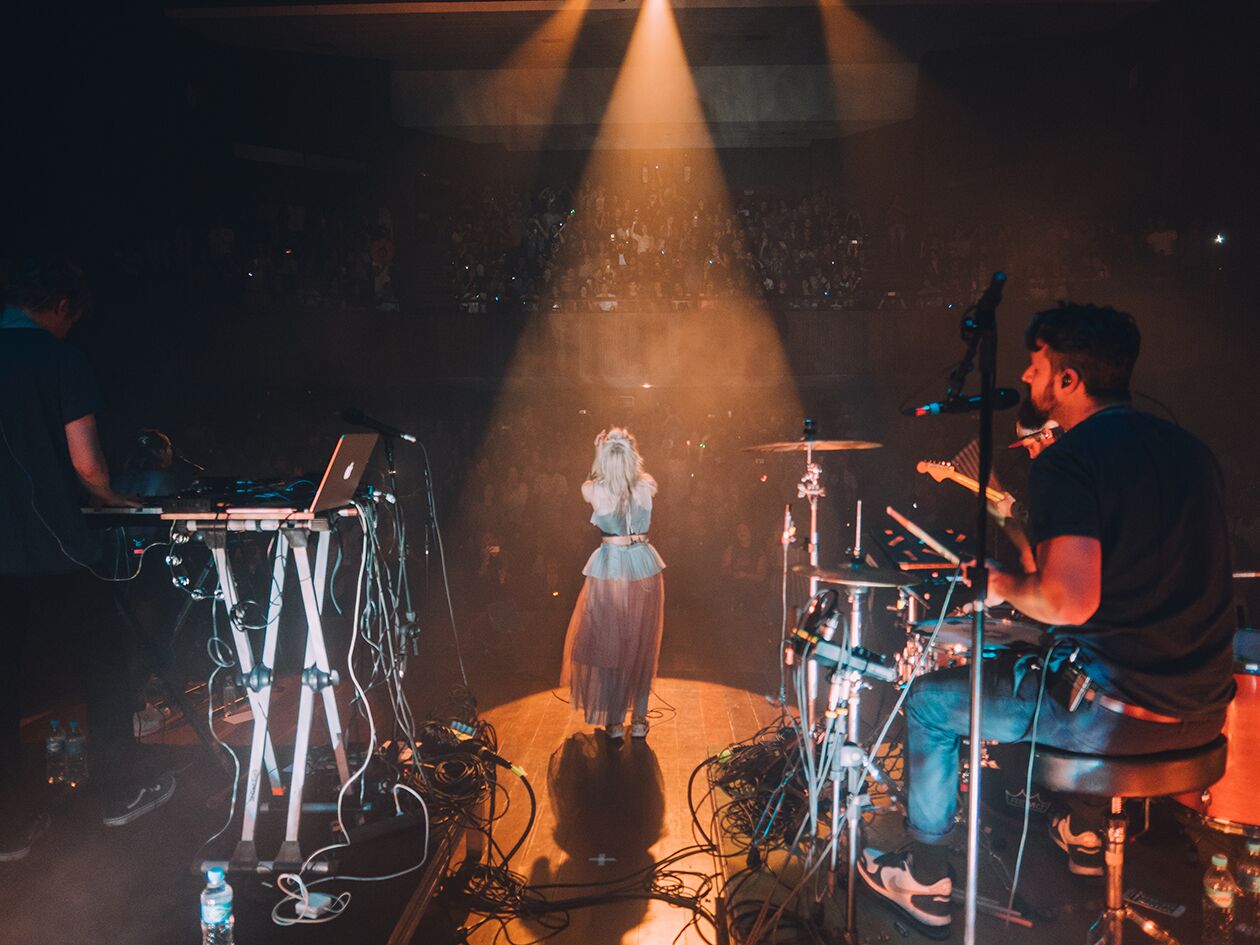
Once Aurora is a coming-of-age music documentary that’s as uplifting as it is potent.
See our feature review of the film >here<.
We interviewed director Benjamin Langeland and producer Thorvald Nilsen following the film’s UK Premiere at Sheffield Doc/Fest 2019.
Reel Steel: What’s the reception been to the film so far?
Thorvald Nilsen: It’s been good. It’s been screened at eight festivals, something like that, and the film has won some awards, played to some amazing audiences. I guess we’re quite enthralled.
Benjamin Langeland: It’s a bit overwhelming, the response. The discussions that the film seem to inspire with people — yeah, I’m impressed! We did good.
RS: What are the kind of discussions that people have been having?
BL: It’s the themes in the film…
TN: I think it’s not only the broad themes, but more like the personal themes, people saying that it’s affected their lives to see AURORA’s journey and things like that. It’s not only a political conversation, but also people are emotionally invested in seeing someone really, really working on their artistic integrity.
BL: Yes, and sort of finding a way to use your strangeness or your different-ness to turn that into your strength, and there’s something very positive in that. And I think that we’ve had some different reactions in Norway, where people seem to focus more on the darkness of the stuff, whereas in other places there seems to be more of a positive message that has been sent across. I just had a conversation that sort of pointed at that; because Aurora is more of a household name in Norway, they sort of see her more than they see the journey in the film. It’s a different way to watch something when you sort of feel like you have a relationship to this person instead of being introduced to our story.
RS: Is it a distance thing? So people in Norway are closer to it —
TN: Or maybe they have too much prejudice about her — maybe not prejudice, but predetermined views of her. And then the film — basically I think that the film maybe works best for people who don’t know her, because it’s a way to get to know her. Because if you know her from before of course you get to know her even better. But in Norway she is kind of strange!
BL: For a Scandanavian, yeah.
TN: Yeah, she’s kind of eccentric for us. People from the valleys see her like “woah, why is so so strange?”
BL: “Why does she talk like that?”, “What’s the deal with her arm thing?” But we designed the film for people that didn’t know Aurora, and that was something that we were quite firm on because we had early collaboration with the main Norweigan broadcaster on television and I think they wanted a film for the Norweigan audience and that made us very clear on what we did not want to do, the narrative of her story to this point. We wanted to drop the audience into the moment of when we came in, and have this story of her being discovered as a backdrop, and the music industry as a backdrop of a bit more personal journey and relationship-focused narrative than the broader —
TN: — Yeah, and get to know her rather than present the artist myth. The beginning of the film is more deep to the core of what she loves and what’s important to her, that music – it never dies. It’s something I guess speaks more to what she’s about than what the world thinks of her. Because we could have kind of all these record executives and lined up this interviews saying ‘she’s so amazing’, ‘she’s a musical genius’ —
BL: — The mansplaining version.
TN: The mansplaining version, yeah! But we wanted people to find that out themselves, and that makes it stronger.
RS: It makes it stand out from other music documentaries because they could be like ‘she is the person, she’s from here and she does this’ whereas this film is more personal. How did it come about? Did you know her before? And why did you decide to make a film about her?
BL: I certainly knew of her, we’re from the same small town in Norway. The few people that are different tend to stand out in small places!
We were sort of bumping into each other at certain theatres and cultural events. While the other guys in my town, I was off doing other things and she was as well. She was way younger than me but she had some older sisters who were about my age, but it wasn’t until I started working at a company in Bergen called Flimmer Film where there was this guy who became my co-director on this who was extremely fascinated about AURORA and used her song as lullabies for his then baby daughter. And he started conversing with Thorvald and I came into it saying ‘oh, guys, I’m not sure. I think she will trick you or there will be something here that’s not pure unless there is somebody there to call her bullshit and call your bullshit’ so I wanted to sort of balance it out. I think that was also for the access of it – they knew who I was and it was easier for me. But I was a sceptic in the beginning, and Stian was the driving force at the very start.
It felt weird having someone that you work with making a film about someone that you know without being a part of it.
TN: We did some music videos for her manager a year before that, so we knew him as well. So we had kind of different angles or different meeting points so we knew them and I think they knew us. It’s been a great collaboration.
RS: Why do you think she agreed to do it? Like what we were saying about it not being a typical exposé, why do you think she agreed to be a part of it?
BL: I think she wanted to communicate certain things. It changed over time but I think that it actually became important to her to have a way of communicating things that she perhaps couldn’t do on stage while she was working, and trying to show us something. She is a storyteller and she’s living her life as a character in a story in many ways. I think that she has another sense of reality in many ways and she wanted to share that.
TN: I also think that she felt that she was in the middle of a chaotic thing – the crazy touring, you know? I think it was the first day that you [Benjamin] were shooting, some of the reflections from that part have been really important for the film. The first conversations that you had with her on camera, she had so much that she wanted to share. I think that was also maybe because she’s been on tour for a couple of years and she’s basically been on this journey that she didn’t decide on doing, you know? Suddenly these guys come in and ask questions and it was like ‘oh, wow’.
BL: Like real questions as well, not like the ‘where do you get your inspiration etc’, it was a conversation. It wasn’t with the pressure of having to perform in many ways – she’s sitting down on the floor, literally, with us for an hour or two hours before a show, and Stian is a wonderful guy and she knew me so it was sort of a safe zone. And we became that for her, and I feel quite bad for not being with her anymore because there was a moment when she was going through a really rough time. And people, when you’re working with them, they’re looking at you differently, they’re looking for you to bring what you bring to the table, but she suddenly realised ‘now there are two guys here who are looking at me, not at the performer, not the artist’ and she felt that she was being seen even though everybody’s eyes were on her all the time, it was for different reasons, with certain agendas. Whereas we were there for the reality, for the truth, for her truth.
TN: And she knew that, when they were there, there’d be a film in two years. For this interview for instance, we are maybe a bit more nervous because we know that we have to say something smart for these ten minutes or whatever —
BL: — But if you were talking to us for three years, we could be like ‘OK, I can say some stupid shit’.
TN: Yeah, she let her guard down. That’s the magic of documentary, I guess.
RS: What was — how did you navigate the fan frenzy? There are certain scenes when fans just flock to her, and even as a viewer I find it quite overwhelming. So to be in amongst that, how did you go about dealing with it?
BL: That is when the filmmaker in you really awakens. That is one of those situations when you really feel the pressure around you. It sort of like a war photographer; you get this adrenaline and you just want to get in on camera. But also trying to keep Aurora’s point of view of it all, trying to be in the midst of it and try to experience what Aurora is experiencing, both the highs and the lows. For us it was mostly exciting, and then people starting asking ‘who are those guys and what is going on here?’
TN: The fans would actually post pictures of Ben and Stian say ‘there’s a documentary’ and it became a part of it —
BL: — The tapestry of Aurora’s life!
TN: Yeah, all over the Instagram accounts.
BL: You get to a point where you — it doesn’t take long before you get to a point where it’s exhausting, even though you’re just witnessing it. It’s draining you of energy, because it is something you have to respond to. It must be the most difficult part of it, but at the same time it’s like a drug, you know? It’s hard to just [clicks fingers] when it’s all quiet. That was one of the weirdest moments, when you close the door and boom: silence. That must be weird, living with that.
RS: It puts into perspective though. In this film, it shows that Aurora’s actually quite timid in herself, for example saying she doesn’t really like hugging people but then all these fans excitedly ask ‘can I have a hug?’ and she’s like ‘umm, OK’. Why and how did you decide what scenes to keep in? Such as the scene where she’s having a panic attack, why did you decide to keep those scenes in? Was it to show how difficult it can be?
BL: I think that was the one time where we sort of … really just went there. Just to show it, so you didn’t have to show it all throughout and make it a tragedy, but just have that one moment in the film. We stayed in that moment for quite some time; it’s one of the longer scenes and there’s no dialogue, it’s just Aurora in a bathroom and I think that helped us broaden the perspective and show a bit of the backside of it all and not have to constantly remind the audience: ‘this is tough, this is hard’. We just put it there and it becomes a part of this really quick, intense experience of the film which I feel is gone like this [clicks fingers]. But those moments, they stick out and it becomes — my idea is that, and my hope is that people realise that that moment is a part of it all.
It’s not a direct result of anything that’s going on in the film, it’s a direct result of her life and of how she’s living. So that moment will occur and recur, and it will always be a part of it. When you give so much, I think you will always end up in that bathroom at one point or another. So I think that is one of the most real moments and it’s true to what we experienced. We have on the cutting room floor many dark, sad moments but it’s too tempting to put those in, to show ‘oh my god, they’re killing her’. So we tried to narrow it down to: what is the one moment that we need to have in it so that we can have a more balanced film throughout and not just hammer in the point of ‘oh my god, look at this terrible industry’ because it’s more complex than that.
RS: Was she involved in the filmmaking process? Obviously she had to be, to a certain extent —
BL: — she never knew we were filming …
TN: Not in the filmmaking process but of course in talking to her in knowing when we could film her, for instance. But we didn’t show her anything until the very end.
BL: She didn’t really care that much, and I think was because there was a trust and she liked what we were doing and how we worked. She liked that we never were rude to anybody to get to that moment when we would film, and when we were filming in public we were very polite and tried not to step on anybody. But she kept on informing the film without explicitly saying anything because the film became more and more like her. She is in the DNA of the film because it became such a close relationship and it is a collaboration because she knows what she’s doing in front of the camera and she knows who’s behind the camera. But that depends on trust and it takes a lot of time to get to that point.
TN: I guess I also kind of informs the stylistic choices in the film; the sound editing and everything. Trying to depict her world and seeing her world through her eyes, and that’s something that I’m really proud of.
RS: It’s interesting that you mentioned trust because of the way she manages her music …
BL: She shows little trust.
RS: Yet she trusted you with this.
BL: I think that it is us being really open about ‘we are standing here in your shoes along with you’. So instead of trying to put the camera on her, we tried to navigate the world through her eyes so that she always felt that we were a part of her team even though we were talking to people around her. She never had any doubt that we were along for her journey, and being really truthful and respectful as to what that means to her, not our point of view. We weren’t there to speculate, or to give any sort of ‘this is what WE think she’s feeling’. None of that. We were trying to feel along with her, and we felt so much with her that we were sad when she was sad and we felt her victories and we were cheering for her, as filmmakers.
In a way — in fiction, you have your character that you’re rooting for and you can show certain things like ‘oh, that might of been a bad decision’, but you’re still with that character, you don’t go over to that other character that made a bad decision. You stay with that character. And I feel that she had faith in us doing that.
TN: And of course when she came with suggestions saying ‘maybe you should come be a part of this’ and we think ‘OK, maybe that’s not so interesting but we can be a part of that’. So to have this trust and openness in listening to each other’s ideas as well.
BL: And time, it all comes back to time. You need to take your time, and you need to develop your personal relationships within that story you’re trying to tell. I cannot stress that enough. You need to be visible even though you’re not visible in the film. You need for there to be trust, and you need to make mistakes as a person within that universe and make a fool of yourself, or go and have a beer and talk to people and to be friends with people. I think it’s so important to have that access and to be true to what — you need to know them on a more personal level. It’s not like you’re just filming and then going home. You try to develop those relationships so that when you get to the editing process you feel like you can represent them, because it’s just as much about what you’re not seeing as what you are seeing, and you need to have an idea about how the characters navigate outside of what you’re seeing on the screen. Then you need to have a feeling about how that will move.
Details of Once Aurora at Sheffield Doc/Fest 2019 can be found here:
https://www.sheffdocfest.com/films/6721
Nomad: In The Footsteps of Bruce Chatwin

2019
Director: Werner Herzog
Words – Christian Abbott
For half a century now, Werner Herzog has been captivating audiences with his unique, humorous and acerbic perspective. He, like so few other filmmakers, draws you into the worlds he creates, the stories he shares and the lands he explores with a masterful eye and solemn tone. Now, he returns looking at another individual that once had a similar pull.
Three decades after the death of writer/adventurer Bruce Chatwin, Werner Herzog dives deep into his enigmatic life, from the times their paths crossed, to his lasting legacy. This is a tale of shared curiosity and the relentless search for meaning.
Bruce Chatwin was a passionate seeker of knowledge, from travelling the globe to meeting and researching ancient tribespeople and cultures. The overlaps with Herzog are obvious.
Yet, this is a journey that goes deeper and more personal than that, Herzog; in a career that is ever expanding, knew Chatwin in the twilight years of his life. Through many encounters, the two realised they were driven by familiar questions: Who are we? Why are we here? Where did we come from? Where are we going?
As Herzog states himself “Bruce has used his career as a writer to explore this, I have done the same as a filmmaker”. These are questions that permeate this film.
Often when it comes to Herzog’s canon, it is he himself that draws our attention as much as it is his eclectic subjects. Herzog here is now examining a man that has a true personal connection with him and a lasting legacy. Like Chatwin’s literature which inspired it, Herzog has broken this down into eight masterful chapters and, piece by piece, he assembles a narrative that is humanistic and heart-breaking.
The physical absence of Chatwin is felt throughout, from pictures to footage to voice, there is an everlasting longing for this presence, from the friends and family he has left behind to the very film itself. The use of excerpts and interviews with historians, family and the people he inspired both heighten and examine this. Expertly, Herzog has captured his feeling. His own personal longing for his friend is painful and it shows.
It doesn’t linger or dwell though, there is so much to unpack and in eighty-nine minutes there is a lot to see and explore. This journey isn’t just between these two great men, but a global one from pre-history to our modern world. A familiar comedic tone uplifts and helps celebrate Chatwin’s life, because it is worth celebrating and enjoying as he did for forty-nine years.
As the years roll forward, we lose the connection we once had. Chatwin was deeply concerned that the once great aboriginal and native cultures of the world were disappearing fast. He used his time on Earth to try and help preserve them and if he couldn’t, document them so that we could remember. Herzog here has given Chatwin, his friend, the most beautiful gift to continue his legacy and ensure we never forget Bruce Chatwin.
Werner Herzog’s latest film will be an Arena, the iconic BBC Arts documentary strand.
Arena: in the footsteps of Bruce Chatwin will broadcast in the autumn on BBC Two.
BBC Arts Arena

MOTHER

MOTHER
2019
Director: Kristof Bilsen
Words – Rhiannon Topham.
We often talk about documentaries being ‘personal’ and ‘intimate’, about their power and capacity to move us in unexpected ways. They are, after all, often based in the lived experiences of people across all walks of life – whether or not we are familiar with their personal story, the collective conscience of the communities they live in or the circumstances that unfold on screen, these people reflect something about the world around us, about the way we empathise with and treat other people. This is what MOTHER, directed by Kristof Bilsen, represents.
In Thailand, Pomm works as a caregiver at a centre for Europeans with Alzheimer’s. The relationship she has with her patient Elisabeth transcends the emotionally unattached caregiver-patient connection we picture in such clinical environments, as Pomm’s deep-seated affection for Elisabeth is rooted in the kind of maternal, familial fondness she misses in her own life. Yes, it’s Pomm’s job to care for Elisabeth. Yes, it’s her duty as her caregiver to put her to bed at night, for example, and attend to her needs. But it’s Pomm’s execution of these tasks that Bilsen illuminates with such poignancy – her nursing of Elisabeth with such loyalty and tenderness, treating her not as a victim and patient but a friend to whom she can extend her admiration through aid and relief.
Away from work, Pomm is separated from her three children; her two eldest live a four hour drive away with her mother, and her youngest even further away with her ex-partner. This is the cause of great strain for all involved, and many mothers – not just in Thailand, but globally – will relate to and sympathise with Pomm’s determination to maintain two jobs in order to provide for her children and atone for her absence. The pathos one feels for this personal turmoil is given an extra dimension when Pomm’s own footage of her time with her children is woven in, further unpeeling the idealistic veneer of motherhood as an uncomplicated or inherently perfect experience.
Pomm’s experience almost directly contrasts that of Maya’s, a Swiss woman with Alzheimer’s who is set to move to Thailand to become a patient at Pomm’s centre. Pomm herself reflects on the financial privilege her patients and their families have available to them, but she bares no resentment for this and instead respects them as human beings with a chronic neurodegenerative disease, with families who are contending with the dichotomy of keeping their loved one close by or sending them elsewhere for professional assistance to oversee their condition and administer the best possible care.
Witnessing Maya’s fugue and deteriorating comprehension of her surroundings is painful viewing, especially towards the end during a devastating Skype meeting between the home manager and Maya’s husband, Walti – Maya can no longer make sense of computers and struggles to register Walti’s virtual presence, but to him this was a successful interaction.
Set to the backdrop of such an idyllic part of the world where thousands of wanderlust-hungry travellers descend every year, MOTHER forces the viewer to question what bliss looks like to us; a luxury getaway is the typical image of Thailand, but, in this humble care centre where cultures collide, the sanguine relationships between those present, both in body and in spirit, is infinitely moving.
★★★★★
Selfie
Selfie
Director: Agostino Ferrente
Words – Rhiannon Topham
The ‘film within a film’ method of movie making, where the story is portrayed through the lens of a mobile phone camera as an eyewitness account, is at risk of becoming hackneyed. It does however, lend itself well (and make a lot of sense) to documentaries, especially in the drama/crime genre.
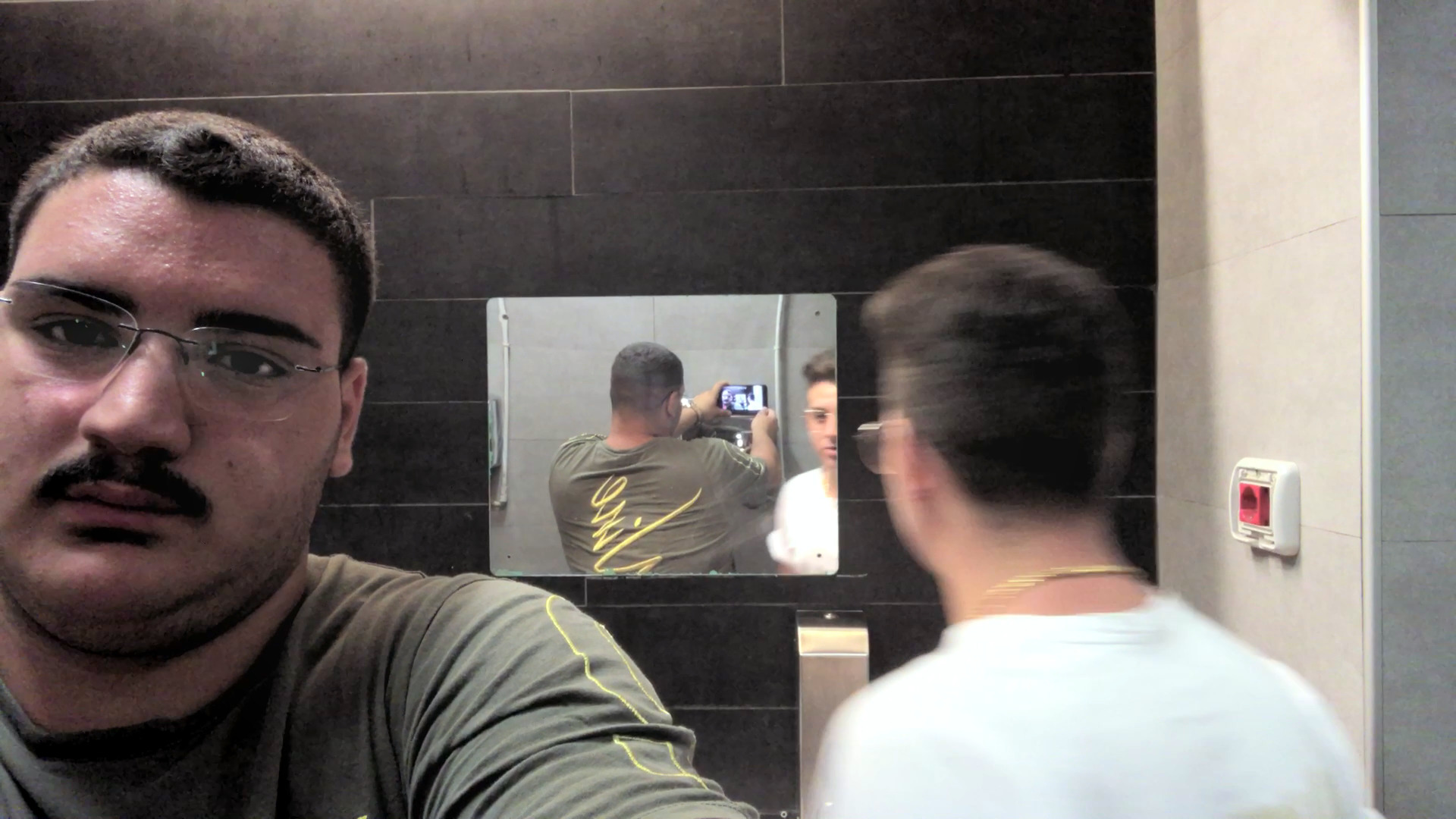
Agostino Ferrente’s Selfie, as the name suggests, employs the front-facing phone camera to chronicle the lives of two young men, Pietro and Alessandro, as they navigate and socialise in their rough Neapolitan neighbourhood of Rione Traiano. The smart but timid Pietro wants to be a barber but suffers from a painful sense of ennui in his struggle to find work, whereas buoyant best friend Alessandro gets by on his wages from working in a bar and lets Pietro cut his hair (but not without a few jabs and quips). The boys are grieving: one of their friends, Davide, was shot and killed by a policeman, and the incident has been distorted by the media to favour the officer responsible.
This is where Selfie’s more personal approach to capturing footage is most effective. By weaving together these moments of visceral confidentiality, the film reveals the lived realities that tourism promotional material purposely ignores; Rione Traiano is Camorra territory, where crime is commonplace and many of the local boys fall into ‘pushing’ drugs as a source of income. Pietro and Alessandro’s friend Checco, for example, did this briefly but chose a different path (and, luckily, came out unscathed). Another notes that those involved in the drug trade have two enemies: the police, and the competition. The latter are the real threat, he says, as they will show no hesitation in their bellicose attempts at governance.
The bitterness and heartache of losing a friend, combined with the ever-present gang intimidation, manifests itself in the friends’ approach to filming the documentary itself. The musing “a documentary doesn’t only show the good stuff” encapsulates this perfectly. Pietro and Alessandro have insecurities and personal struggles – such as Pietro’s overeating as a coping mechanism for his grief, and Alessandro’s jealousy of his buddy’s moustache – but their offerings of support in their times of need is the real backbone to this artistic endeavour. Their willingness to show vulnerability, genuine and uncompromising, counteracts the hypermasculinity and lawlessness lurking at every street corner.
Details and tickets for screenings of Selfie at Sheffield Doc/Fest are available here:
https://www.sheffdocfest.com/films/6662
 REEL STEEL
You must be logged in to post a comment.