IT Chapter Two

2019
Director: Andy Muschietti
Starring: Jessica Chastain, James McAvoy, Bill Skarsgård, Bill Hader, Isaiah Mustafa, Jay Ryan, James Ransone, Andy Bean
Words – Carly Stevenson
Twenty-seven years after the events of It (2017), Pennywise returns to terrorise the people of Derry, Maine. With the exception of Mike Hanlon, the disbanded Losers Club have moved on and forgotten their oath to come home if It returns and finish what they started.
Initially, the grown-up ‘Losers’ are reluctant to fulfil their promise, but after an encounter with Pennywise/It opens up a floodgate of repressed memories, it soon becomes apparent that there is no outrunning the past. They must reunite and face It together, one last time. In order to defeat this shape-shifting entity, they must descend into the subterranean sewers beneath Derry – a sustained metaphor for the unconscious – and perform the Ritual of Chüd. Yes, it is as ludicrous as it sounds, but in the best possible way.
Like many of King’s stories, It is concerned with childhood trauma, and Muschietti’s adaptation adheres closely to this. As adults, the Losers are burdened with feelings of fear, remorse and shame, which It draws sustenance from.
The film opens with an upsetting scene in modern-day Derry, which involves the violent persecution of a gay couple by a group of thugs. The attack culminates with the thugs throwing one of the men over a bridge, where he is killed by It. This sequence introduces a theme that resurfaces later in the plot: Derry is a town frozen in time. As Richie Tozier’s flashback reveals, attitudes towards homosexuality were hostile in 1989 and, clearly, things have not changed much since then. This, the film implies, is why It thrives in Derry: there is more than enough fear to feed on.
With a running time of 169 minutes, It Chapter Two is almost as long as the 1990 TV miniseries, which Muschietti affectionately homages. While the film is never tedious, it is indulgent. Visual effects are deployed liberally at every opportunity and while the continual cutting between past and present offers more opportunity for character development, it noticeably slows down the pace. Non-linear storytelling can be an effective device, but it often works better on the page.
While It Chapter Two lacks the sleekness and simplicity of its coming-of-age predecessor, it is hard not to be impressed by the brilliant casting and the sheer boldness of Muschietti’s take on a cult classic.
The film is essentially one long Ghost Train ride that embodies what Stephen King identified as ‘the Gross-out’ in his hierarchy of scares. In his own words, ‘the Gross-out’ is characterised by ‘the sight of a severed head tumbling down a flight of stairs, […] when the lights go out and something green and slimy splatters against your arm’.
It is fair to say that It Chapter Two is perhaps more effective as a comedy than a horror film, in that there just as many laughs as there are frights. However, there is something appealing about a film that does not take itself too seriously, even when dealing with serious themes.
Hail Satan?
2019
Director: Penny Lane
Words – Natalie Mills
Who ARE The Satanic Temple, and why should we care?
Introduced at a recent Q&A screening as “the best Satanic recruitment video we’ve ever seen”, Hail Satan? is part documentary, part call to arms. Cue some fantastic clips of gobsmacked American newsreaders and some of the nicest people you will ever meet (spoiler: it’s the Satanists).
Hail Satan? is a one-stop introduction to The Satanic Temple – founded in 2013 and home to a new, altogether more woke breed of Satanist. This gleeful, thought-provoking documentary shares dozens of personal stories from TST members, alongside some of the most newsworthy highlights of the temple’s brief but active time on earth.
So what is The Satanic Temple – a supernatural cult, or the best trolling of organised religion since Pastafarianism?
Members go litter picking with pitchforks, hand out menstruation products (Menstruatin with Satan), and give dry socks to the homeless. Their 7 core tenets are filled with reasonable, compassionate, common-sense values. Can you be a socio-political, religious AND performative movement all-in-one?
Obviously, TST do not actually believe in Satan. We see plenty of historic footage of the damage ‘Satanic Panic’ caused; innocent people having their lives ruined for playing Dungeons & Dragons. At the After School Satan Club, organisers ask a complainant not to swear in front of the kids. It’s as if you can be a Satanist and be a good person.
Many members are ex-religious, and want to be the “exact opposite”. For them, atheism isn’t enough – it lacks any shared iconography, a history, ridiculously grandiose statues. Plus, everyone in TST has a cool name and looks like they’re from Underworld. “This makes life fun,” explains one member. There is a mischievous sense of purpose.
Early on, we’re introduced to charismatic co-founder Lucien Greaves, who took on the role of spokesperson to ensure Satan was “properly represented”. He approaches situations with quiet amusement – and sometimes a bulletproof vest – smiling, “I’m very excited about it” when threatened with hellfire. There are a great many angry mobs in Hail Satan?, and I’m not sure which chapter of the Bible says it’s cool to say “you people should be shot” to anyone you disagree with.
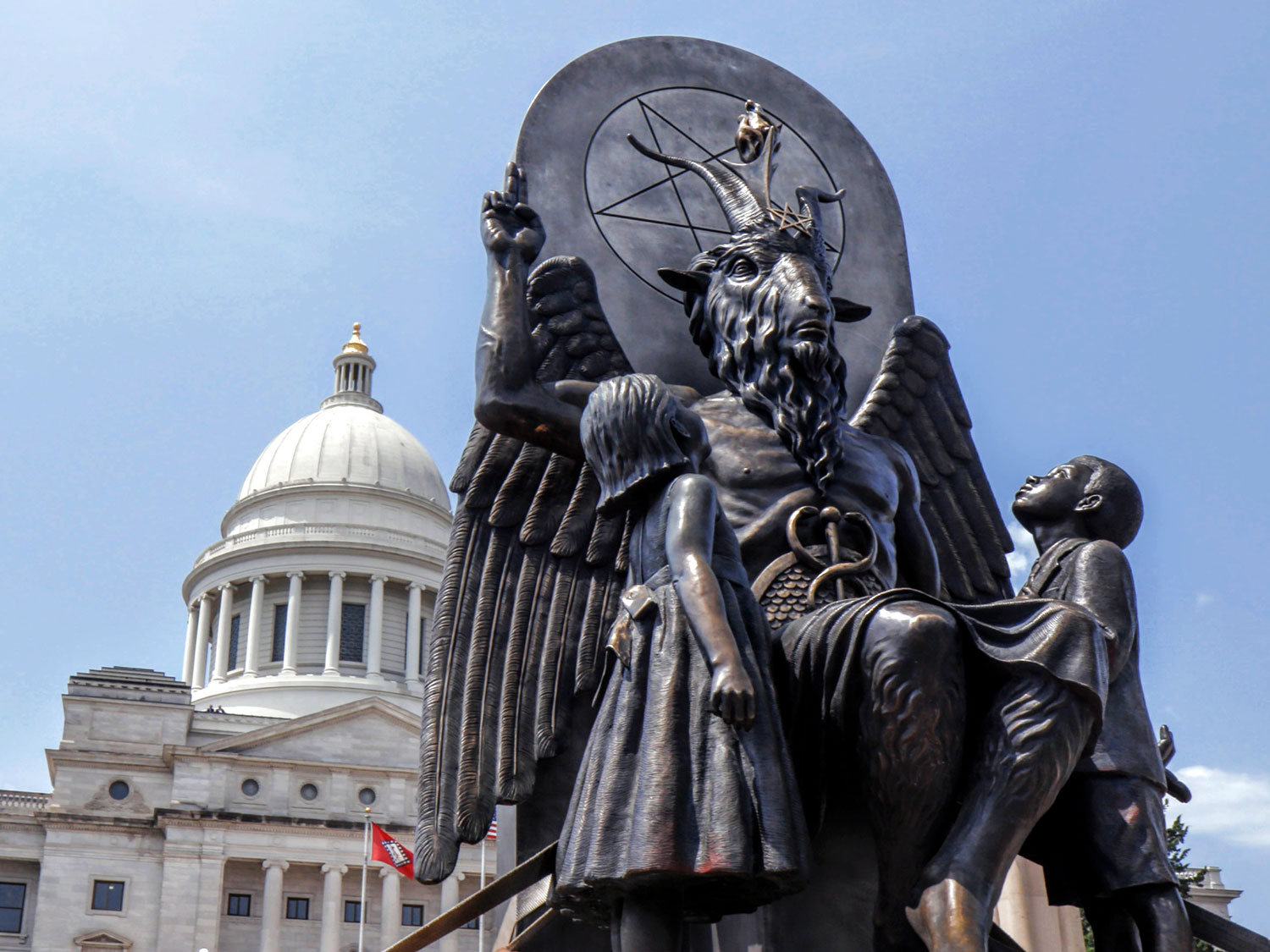
A highlight is Lucien doing his best troll face and devil horns next to a newly erected monument of the ten commandments. A battle of two statues becomes a main plot point for Hail Satan? – if one religion can erect a statue, why can’t TST erect their own statue of the demon Baphomet? This is exactly what happens, and hilarity ensues.
The Baphomet statue’s torso is based on Iggy Pop. Although only temporary, its erection spurs many enraged Christians to protest, complete with ‘HONK IF YOU’RE AGAINST SATAN’ placards.
Their pursuit of equality and separation of church and state repeatedly gets them into trouble, including a significant amount of death threats. Newsworthy moments include telling the Westborough Baptist Church that their dead relatives are now gay in the afterlife (and love Satan). They give as good as they get, with one member saying the moment they “really became a Satanist” was down to the catholic church; covering up the exact horrible things they accused Satanists of.
Another big personality of Hail Satan? was Jex Blackmore, the radical ex-leader of the Detroit sector of TST. Explaining, “activism itself is a Satanic practice”, her theatrical rituals included smashing tube lights and slamming pigs heads onto spikes. Apparently calling on followers to release snakes into the White House and kill Trump was just too rebellious for The Satanic Temple, and got her fired.
A Q&A screening at the Showroom Cinema ended with two co-founders of TST over Skype, looking like a pair of vampires at a ball game. They had trusted director Penny Lane to give an honest portrayal, after seeing her work on the anti-vax movement. Since the film was made, they’ve been working on an ordination programme, and the lawsuits are ongoing.
So what’s next for The Satanic Temple, self-described as “A non-theistic movement, aligned with Liberty, Equality and Rationalism”?
Although Trump is more of a “mindless opportunist” than a theocrat like Pence, there has been a huge surge in membership since he came into power. More people are accepting that TST do have positive values, and the opposition is just a vocal minority who can’t/won’t take a joke.
TST continue to counter the regression of human rights and rise in nationalism, with a co-founder saying he hoped, “extremes die out before anything too early-20th century can happen”.
Must See Movies: September
At Reel Steel we want to make sure you’re getting the most of your cinematic enthusiasm, so each month we put together our short list of some of the best new releases, from popcorn munching explosion fests to the often weird and wonderful.
Take a look at the trailers below and see this month’s recommendations…
It: Chapter Two
released Friday September 6th, 2019
Twenty-seven years after our group of young friends defeated Pennywise, he has returned to terrorize the town of Derry once more.
Now adults, they have long since gone their separate ways – however, kids are disappearing again, so the group return to their hometown.
Damaged by the experiences of their past, they must each conquer their deepest fears to destroy Pennywise once and for all… putting them directly in the path of the clown that has become deadlier than ever.
re-visit our review of the first It movie >here<.
Ad Astra
released Friday September 20th, 2019
Astronaut Roy McBride (Brad Pitt) travels to the outer edges of the solar system to find his missing father and unravel a mystery that threatens the survival of our planet.
His journey uncovers secrets that challenge the nature of human existence and our place in the cosmos.
The Farewell
released Friday September 20th, 2019
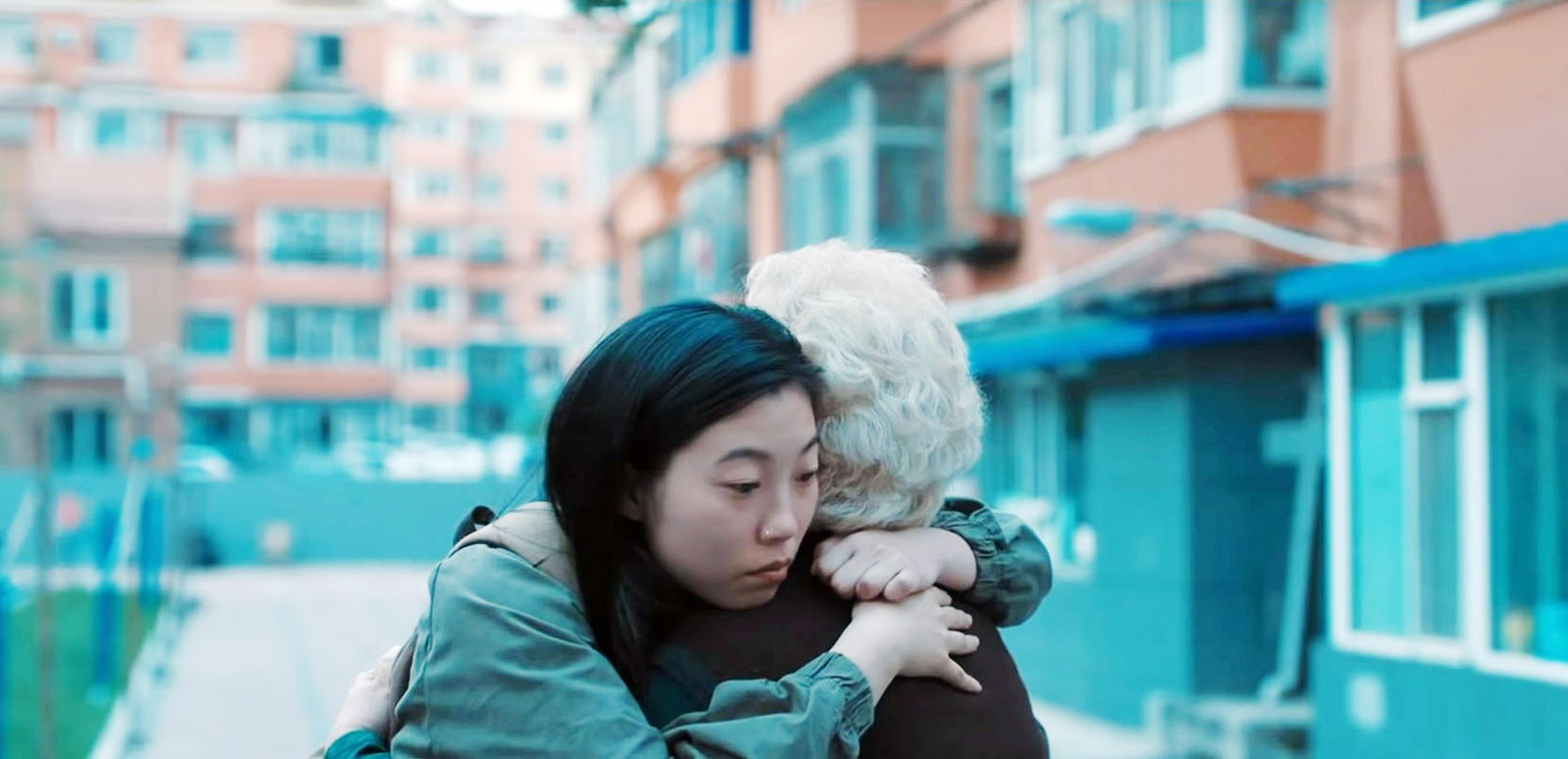
In this uplifting comedy-drama, the headstrong Chinese-born, US-raised Billi reluctantly returns to her hometown in China to find that, although the whole family knows their beloved grandmother, Nai-Nai, has been given mere weeks to live after being diagnosed with terminal cancer, everyone has decided not to tell Nai Nai herself.
To assure her happiness, they gather under the joyful guise of a wedding, uniting family members scattered among new homes abroad.
As Billi navigates a minefield of family expectations, she finds there’s a lot to celebrate: a chance to rediscover the country she left as a child, her grandmother’s wondrous spirit, and the ties that keep on binding even when so much goes unspoken.
Blade Runner

1982
Director: Ridley Scott
Starring: Harrison Ford, Rutger Hauer, Sean Young, Edward James Olmos, Daryl Hannah
Words – Nathan Scatcherd
Unquestionably one of the greatest and most influential sci-fi films of all time, Blade Runner takes on a whole new dimension this year, specifically in November.
Yes, Ridley Scott’s future-noir classic is set in November 2019; and though we aren’t quite at the point of flying cars yet, this is the one and only month in which to contemporaneously experience Ridley Scott’s seminal masterpiece.

Though an adaptation of the 1968 Philip K Dick novel Do Androids Dream of Electric Sheep?, Blade Runner has so fully become its own beast that the source material is often judged next to the film, as opposed to the other way around.
Though the film is seen today as an essential example of sci-fi moviemaking, it’s worth remembering that the version looked upon as such today – known as ‘the Final Cut’ – was not the first iteration to actually be released.
Blade Runner had a somewhat tortured life until the Scott-approved Final Cut of 2007 (as the only version he had complete artistic control over); from its initial, compromised 1982 release to the US broadcast cut, then the Director’s Cut; all before that Director’s Cut version was further restored and remastered into the version today considered the ‘true’ cut of the movie.
From its opening shot, Blade Runner offers an arresting, enveloping view of Los Angeles in 2019 as a perennially rain-soaked metropolis of shimmering neon and vast, smoke-belching industrial towers. This fantastic set-design is complimented by Vangelis’ score, an otherworldly collection of sweeping synths which proved a benchmark in electronic soundtrack music. Both of these elements go a long way to lending the film’s plot – a noir-flavoured meditation on humanity and artificiality – a strange dreamlike quality, its central question of what it means to be alive rendered in ethereal, mythical terms.
Harrison Ford was already Indiana Jones and Han Solo by the point he starred in Blade Runner, but it was here, as titular ‘Blade Runner’ Deckard, that he showed a different side to his persona; a tiredness and resignation behind the cool, steely exterior.
The late Rutger Hauer brings a weird magnetic coldness to his performance as Roy Batty, the Replicant who lusts for a life he is incapable of holding onto. His iconic speech at the film’s climax is rightly remembered for its poetic summation of the impermanence of memory, and the fragility of all things.
It is a perfect ending to one of science fiction cinema’s most powerful and enduring films.
Vita & Virginia

2019
Director: Chanya Button
Starring: Gemma Arterton, Elizabeth Debicki, Isabella Rossellini, Rupert Penry-Jones, Peter Ferdinando, Emerald Fennell
Words – Carly Stevenson
Adapted from Eileen Atkins’s play of the same name, Vita & Virginia explores the relationship between the Bloomsbury intellectual Virginia Woolf and the aristocratic poet and novelist Vita Sackville-West.
Drawing heavily on their personal correspondence, Vita & Virginia emphasises the eroticism of epistolary exchange. Letters inform much of the dialogue and the heady, high-brow dialogue between the two women is a form of foreplay that anticipates their inevitable sexual encounter.
Elizabeth Debicki gives a compelling performance that re-shapes conservative images of Woolf as a sexless, humourless snob. Her Woolf is inquisitive, playful and alert to everything except her own sexuality, until she meets the immaculately-dressed androgyne Vita Sackville-West (Gemma Arterton).
The sexual tension is palpable from the lingering looks and stolen glances, however, as other reviews have noted, some of their scenes together feel like a heterosexual translation of queer desire.
Nevertheless, the camera work is exquisite, the locations are transporting and the soundtrack effectively communicates the modernity of the Bloomsberries, whose tangled lives are only briefly addressed here (they drift in and out of scenes with very little to do). That being said, the focus is, as it should be, on Vita and Virginia: their intimacy and the words they used to articulate it.
Must See Movies: August

At Reel Steel we want to make sure you’re getting the most of your cinematic enthusiasm, so each month we put together our short list of some of the best new releases, from popcorn munching explosion fests to the often weird and wonderful.
Take a look at the trailers below and see this month’s recommendations…
Apocalypse Now: The Final Cut
in cinemas Tuesday August 13th, 2019
Director Francis Ford Coppola’s Apocalypse Now celebrates its 40th Anniversary, with a screening of a new, never-before-seen and restored version of the film, entitled APOCALYPSE NOW: FINAL CUT, remastered from the original negative in 4K.
The film follows Army Captain Willard (Martin Sheen), a man sent on a dangerous and mesmerizing odyssey into Cambodia to assassinate a renegade American colonel named Kurtz (Marlon Brando), who has succumbed to the horrors of war and barricaded himself in a remote outpost.
A classic and compelling Vietnam War epic, Apocalypse Now is a haunting journey into madness that has fascinated generations of movie lovers.
Screenings include a pre-recorded Q&A, where Francis Ford Coppola and acclaimed filmmaker Steven Soderbergh (Solaris, Waking Life, Haywire) discuss the huge undertaking of restoring Apocalypse Now and why the time was right for Coppola to do this now, forty years after the original version.
Once Upon A Time… In Hollywood
released Wednesday August 14th, 2019
Quentin Tarantino’s provocative ninth feature film takes place in Los Angeles in 1969.
As the 70’s shuffle closer, things are changing in Hollywood.
The suits are out, and the free-spirited, long-haired hippies are rolling in.
Our two leads, Rick Dalton (Leonardo DiCaprio), former star of a western TV series, and his long-time stunt double Cliff Booth (Brad Pitt), are struggling to make their way around an industry they hardly recognize anymore.
But Rick has a very famous next-door neighbour… Sharon Tate.
Once Upon a Time… In Hollywood is a star-studded fairy-tale fantasy tribute to Hollywood’s golden age with a classic soundtrack.
Pain & Glory
released Friday August 23rd, 2019
A veteran film director, struggling with his own physical and mental decline, recalls experiences from his past: growing up in the 60’s, the feeling of his first desire, the pains of heartbreak, and the discovery of cinema.
Pain and Glory takes us on a journey of self-reflection, through the passions and pleasures of creation.
Prolific Spanish writer-director Pedro Almodóvar (Julieta, The Skin I Live In) returns with an evocative, semi-autobiographical film with career-best performances from regular collaborators Penélope Cruz and Antonio Banderas.
– SPECIAL EVENT –

Star Wars (1977)
Bank Holiday Monday August 26th
This August Bank Holiday Monday will see a rare screening of one of the most iconic and influential films of all time take place at Sheffield’s historic Abbeydale Picture House – Star Wars.
Released in 1977, the global impact of Star Wars (Episode IV – A New Hope) was something that not just cinema but the world had never seen.
An unforgettable adventure across the galaxy, Star Wars became a worldwide cultural phenomenon that literally changed the future of the adventure movie genre.
Come and see where it all began…
Hosted at Sheffield’s historic Abbeydale Picture House – a Grade II listed 1920’s Picture Palace Cinema, bringing the sense of occasion to match one of cinema’s most influential films.
Details here:
Against The Tides

Director: Stefan Stuckert
Words – Rhiannon Topham
Beth French is one hell of a woman. Not only is she an accomplished athlete, but she’s an accomplished athlete living with the long-term neurological condition Myalgic Encephalomyeliti (ME, otherwise known as Chronic Fatigue Syndrome) who was wheelchair bound for a time during her teenage years. Not only is she a single mother, but she’s a single mother who balances her individual passion for swimming with part-time work and homeschooling her autistic eight-year-old son, Dylan.
Against the Tides follows Beth in her pursuit to tackle one of the world’s most extreme endurance challenges: Oceans Seven, a trial which crosses treacherous sea channels and straits and has hitherto only been completed by five people. It took these victors their whole lifetimes to finish the trial, but Beth wants to be the first person to do it within one year.
Each swim offers distinct dangers — warm water and swells in one place, heavy ship traffic and cold water in another. Sharks are an ever-present threat which Beth cannot face while menstruating, and in one particularly tense scene, a tiger shark circles Beth and her crew during the Hawaiin leg of the challenge.
However, a more pressing influence in this doc and Beth’s journey as a whole is her relationship with her son, who becomes more uneasy with every swim. The tension between maternal duty and personal desire eventually comes to a head, and Beth is faced with the predicament of chasing a dream she’s had for a long time, or giving her vulnerable child the care and attention he needs.
The outcome of the film isn’t perhaps what the filmmakers — or Beth, for that matter — initially imagined. The challenge gets off to a promising, albeit physically and emotionally demanding start, but then financial difficulties and rifts in her team amalgamate with Beth’s increasing concern for her son, and a yearning sense to be with him instead of the malicious marine life that await her in the open water.
Because of this, the film comes to somewhat of an abrupt end, though it does have a bittersweet note of familial potency. Family is, after all, the inspiration for so much of life’s big choices and challenges; just as they are the reason for personal compromises and dilemmas of responsibility.
Midsommar
2019
Director: Ari Aster
Starring: Florence Pugh, Jack Reynor, Vilhelm Blomgren, William Jackson Harper, Will Poulter, Ellora Torchia
Words – Carly Stevenson
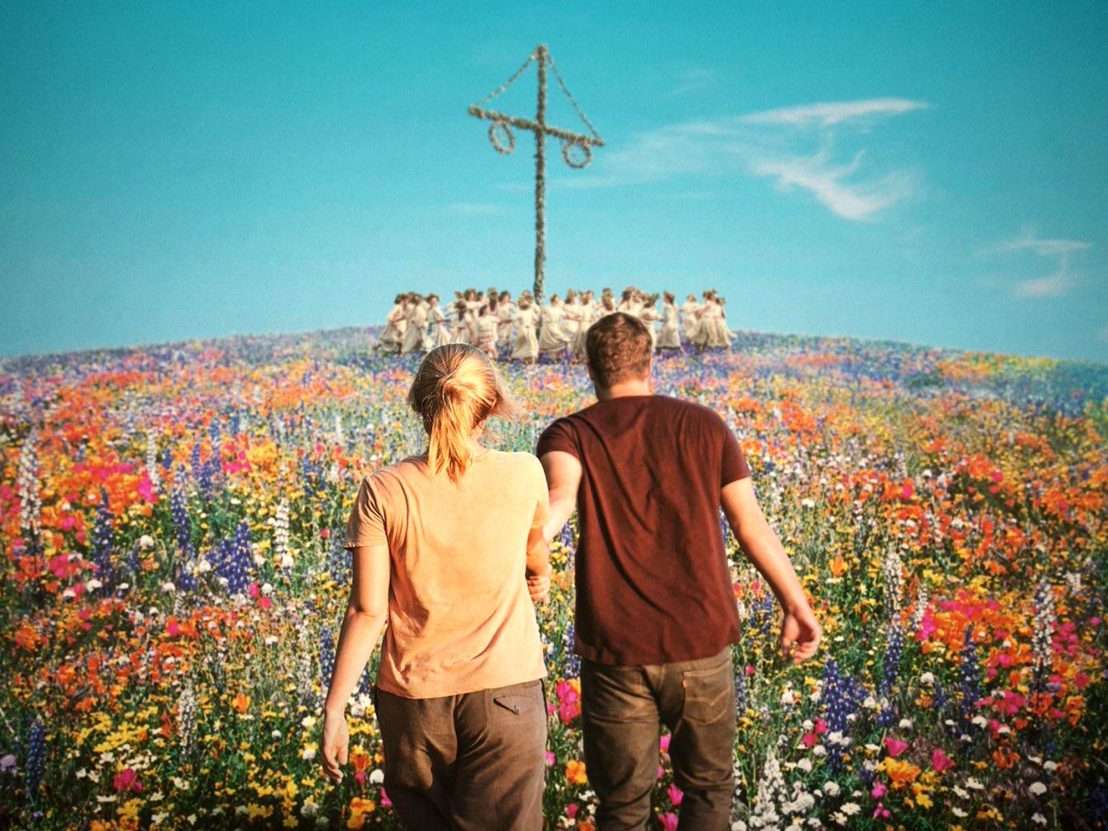
Set amidst a solstice festival that occurs every 90 years, Midsommar follows a group of anthropology students as they embark upon a ‘research trip’ to rural Sweden at the invitation of Pelle, a fellow postgrad and native of the clandestine Hårga community. What was supposed to be a ‘boys only’ excursion is interrupted when Dani, traumatised by a recent family tragedy, decides to tag along, much to the dismay of her emotionally unavailable boyfriend and his ‘friends’.
Upon arriving at the commune, the locals warmly welcome Pelle and his friends by offering them psychedelics, which causes Dani to hallucinate about her dead sister. Unfazed by Dani’s anxiety, Christian, Mark and Josh begin to enjoy the pageantry. The idyll soon curdles into a nightmare when the group witness an unsettling ceremony that culminates with the ritual senicide of two villagers. From this point on, Midsommar descends into a fully-fledged folk horror.
This film produces two distinct forms of terror: firstly, an immediate, physical compulsion to recoil from the graphic violence (exacerbated by disorientating, trippy visuals and over-saturated lighting) and secondly, a lingering sense of unease that stems from Aster’s ability to blend the comic and the disturbing.
This carnivalesque quality reminds us not to take Midsommar too seriously. The paraphernalia of occultism is mostly ornamental; the main concerns of the film are dysfunctional relationships and the effects of grief. Aster himself affirmed this in interviews by stating that the film was inspired by a bad breakup. Indeed, what is most frightening about Midsommar is not the grisly deaths or unnerving rituals, but the ordinary ways in which toxic relationships (romantic and platonic) can chip away at one’s identity.
In contrast with Hereditary (2018), Midsommar foregoes supernatural shocks and instead delivers an entirely predictable ending. However, this is not a criticism; on the contrary, the cathartic power of this film is down to Aster’s use of convention. The only disappointing thing about Aster’s engagement with horror traditions is the way he posits the disabled body as a site of horror.
As Emma Madden’s article in The Guardian argues: ‘How can a new wave of horror truly surface when the same damaging tropes are still being used?’ (10 July 2019). Aster’s problematic depiction of disability in Midsommar does not diminish his achievements; however, it is worth asking why it was necessary to include a character like Ruben – whose deformity is the result of inbreeding – in the first place, if not for shock value.
Reviews of Midsommar have been quick to point out its resemblance to The Wicker Man, but few have discussed the ways in which the former is in dialogue with the latter. Jordan Peele’s audacious claim that Midsommar ‘usurps’ The Wicker Man is legitimate, in that the debt Aster owes to Robin Hardy’s classic is substantial, but so are the ways in which Midsommar departs from and moves beyond its iconic predecessor.
The academic rivalry between Christian and Josh is significant in this respect, as their dispute over who gets to write their thesis on the Hårga community raises interesting questions about originality. Aster may riff on the imagery and themes associated with The Wicker Man (and indeed other films in the genre, such as Blood on Satan’s Claw) but he does so with refreshing self-awareness.
Must See Movies: July

At Reel Steel we want to make sure you’re getting the most of your cinematic enthusiasm, so each month we put together our short list of some of the best new releases, from popcorn munching explosion fests to the often weird and wonderful.
Take a look at the trailers below and see this month’s recommendations…
Midsommar
released Friday July 5th, 2019
Dani (Florence Pugh) and Christian (Jack Reynor) are a young American couple with a relationship on the brink of falling apart.
But after a family tragedy keeps them together, a grieving Dani invites herself to join Christian and his friends on a trip to a once-in-a-lifetime midsummer festival in a remote Swedish village.
What begins as a carefree summer holiday in a land of eternal sunlight takes a sinister turn, when the insular villagers invite their guests to partake in increasingly unnerving and viscerally disturbing festivities.
From Ari Aster, director of last year’s standout horror film Hereditary, comes a dread-soaked cinematic fairytale where a world of darkness unfolds in broad daylight.
Only You
released Friday July 12th, 2019
Elena (Laia Costa – Victoria) and Jake (Josh O’Connor – God’s Own Country) meet by chance on New Years Eve, fighting for the same taxi.
But, instead of going their separate ways after a shared ride, they soon fall into a passionate relationship.
Within weeks they are living together, and not long after they talk about starting a family.
But, as the seasons pass, reality catches up with them. Falling in love was the easy part, but can they remain in love when life doesn’t give them everything they hoped for?
A raw but sensitive take on the agony of what it means to face the reality of not being able to start a family.
The Dead Don’t Die
released Friday July 12th, 2019
In the sleepy small town of Centerville, something is not quite right.
The moon hangs large and low in the sky, the hours of daylight are becoming unpredictable and animals are beginning to exhibit unusual behaviors. No one quite knows why. News reports are scary and scientists are concerned.
But no one foresees the strangest and most dangerous repercussion that will soon start plaguing Centerville: the dead don’t die – they rise from their graves and savagely attack and feast on the living – and the citizens of the town must battle for their survival.
The greatest zombie cast ever disassembled, including Bill Murray, Adam Driver, Tilda Swinton, Chloë Sevigny, Steve Buscemi, Danny Glover, Caleb Landry Jones, Rosie Perez, Selena Gomez and Tom Waits.
Written and directed by Jim Jarmusch (Paterson, Ghost Dog: The Way of the Samurai, Only Lovers Left Alive), this is the independent filmmaker’s thirteenth feature and his newest foray into genre film, standing as not just a humorous and sometimes scary subversion of the genre (with a nod to George A. Romero’s seminal film, Night of the Living Dead) but also a tribute to cinema itself.
The Dead Don’t Die is a raucous and satirical glimpse at American habits and desires at the end of the world – a comically terrifying state of the nation addressed in truly original style.
Irene’s Ghost

Director: Iain Cunningham
Words – Rhiannon Topham
Irene’s Ghost is one of those films that leaves you feeling like a more compassionate person. In this visceral tale of discovery and closure, director Iain Cunningham endeavours to find the truth about the mysterious death of his mother, Irene, when he was just three years old.
Very much rooted in his childhood community in Nuneaton, Cunningham uses photographs to piece together a collective memory of his ‘quiet and artistic’ mum, encountering old friends and hitherto unacquainted family members to uncover the titular enigma’s early life and friendships, her courtship and domestic life with Cunningham’s dad, as well as the distinctly parochial aspects of her life, such as her employment in a hosiery factory.
Irene was, by all accounts, a normal person. But her sudden death, and the emotionally fraught build up to it, has always been off limits to Iain and his family — it was an unspoken rule that nobody mention Irene. By mixing animation with filmed footage, Cunningham manages to create a unique and delicate portrait of his mum which embraces the fantastical delusions of a young bereaved boy (he imagines her as the moon or as the wind blowing doors open around the house) while also addressing the historical reality of Irene’s life and death.
Cunningham was inspired to make a documentary about his mum after the birth of his daughter, and it was musings about how losing a parent at such a young age could impact a child for the rest of their life. After his father remarried, Cunningham was raised by his step-mum and the mystery shrouding his birth mother provoked an emotional disconnect — he couldn’t initially call her ‘mum’, she was just Irene, who he didn’t even see a photograph of until he was 18.
Where Irene’s Ghost really strikes a chord, though, is the way Cunningham approaches his dad; hesitantly at first, but then as the investigation progresses both men become more open with one another and the topic of Irene becomes notably less tense. Cunningham doesn’t dictate what the viewer should think about this or how they should perceive the story, but rather presents a number of questions about familial relationships, our access to and ownership of memories, and changing perceptions towards mental health issues.
See our interview with director Iain Cunningham >here<.
 REEL STEEL
You must be logged in to post a comment.