TENET (spoiler-free review)

2020
Director: Christopher Nolan
Starring: John David Washington, Elizabeth Debicki, Robert Pattinson, Kenneth Branagh, Aaron Taylor-Johnson, Michael Caine, Clémence Poésy, Fiona Dourif, Himesh Patel
Words – Daniel McMonagle
2020 has been one of the cruellest years for cinema on record. Unlike many films rescheduled, shelved and sold off to streaming services, the latest feature from Christopher Nolan is too big and expensive to go straight into the digital land of video on demand. With the ongoing pandemic, Tenet has been seen as the film to save the reopening of cinemas…
Fortunately, Tenet exceeds expectations and delivers everything audiences could want from a film of this magnitude. Returning collaborators such as cinematographer Hoyte Van Hoytema and production designer Nathan Crowley have crafted what looks and sounds like the most “Nolan” film experience yet. With bombastic scenes running back and forth, we follow the unnamed protagonist played very charismatically by John David Washington, accompanied by Robert Pattinson and Elizabeth Debicki, as they try to prevent the start of World War 3 by a Russian Oligarch played with absolute venom by Kenneth Brannagh.
Time has always been one of the principle themes of Nolan’s films. With Tenet, he explores the concept of time running back and forth on itself as the protagonist is thrust into a world where the future can communicate with the past. Like a lot of key time travel plots, the characters get to explore past events they previously experienced. Reverse footage never looked so exciting than it does here as explosions invert and bullets fly back whilst character motivations and plot twists are unveiled in a non-linear fashion due to the nature of time travel.
Nolan’s films have often been criticised for their heavy reliance on exposition. However, Tenet is actually less exposition-heavy than its closest relative film Inception. We are thrust into events along with the characters and are forced to pick things up as the plot charges along. Razor sharp editing and a propulsive score by Ludwig Goransson ensure a relentlessly up-tempo pace.
Nolan has always expressed an interest in the Bond movies, and we have previously seen hints of this with Inception and the Dark Knight trilogy. Tenet is as close to a Nolan ‘Bond movie’ as we’re ever likely to get, he has taken everything that’s great about James Bond such as globetrotting exotic locations, high stakes plotting and action scenes and given them a science fiction twist. The film is set against the backdrop of some truly outstanding scenery that IMAX takes maximum advantage of. As far as the action scenes play out, this is Nolan’s best work yet. Tenet is full of shoot outs, chases and espionage, all helped by a complete reliance on practical effects.
On first viewing, the plot may seem convoluted and, at times, difficult to follow. However, Tenet is undoubtedly the best movie-going experience of the year that demands multiple viewings.
Cinema Paradiso

1988
Director: Giuseppe Tornatore
Starring: Salvatore Cascio, Marco Leonardi, Jacques Perrin, Antonella Attili, Pupella Maggio, Enzo Cannavale, Isa Danieli, Leo Gullotta, Agnese Nano, Leopoldo Trieste
Words – Christian Abbott
“The old movie business is just a memory”, a line which summates so much feeling through nostalgia, perfectly capturing the essence of this film. The old movie business may indeed just be a memory now, but it is here that its power lives on, and its legacy and impact will never be forgotten.
Released over three decades ago, cinema has changed profoundly since this time, but the power of the cinematic remains true.
A story following the life of a now renowned filmmaker, Toto, as a message to return to his hometown sparks the memories of his upbringing both in and around his beloved Cinema Paradiso. It’s a timeless tale of childish naivete and young love, between him and cinema. It’s a perfect foundation to explore cinema’s glittering lure.
There is something uniquely wonderful about films that capture this unique love of cinema. Perhaps, this is because it is a rare display of genuine appreciation for the art form of the cinema itself, or, more likely, it is because those that appreciate film with the same youthful infatuation that Toto has for the projection room, sometimes need nothing more than two hours of cinematic self-indulgence.
From writer and director Giuseppe Tornatore, it is clear this was crafted by a loving hand; there is scene after scene of people gathering, laughing, cheering, and celebrating the sheer potential of the big screen. People brought together into a dark room to share in its emotions, cinema is a truly unique experience and this champions it like no other.
There are consistent low-angle shots of Toto, as he is transfixed by the screen; the projectors beam of light above him, Tornatore creates a mythic feeling. In conjunction, Ennio Morricone provided an angelic score, a soundtrack to cinema itself, and one of his absolute finest pieces in a career of consistent greats.
There is a lesson Toto learns in his young life, that sometimes you need to step away from something to truly appreciate it, as hard as that may be. We may all take the cinema for granted, after all, it has always been there and through works like this, it always will be. But like Toto, when you take a step back things become clear, and through his eyes, through the lens of Tornatore, we see that cinema should never be taken for granted, because its effects both on the personal and on the public can never be fully understood, though Cinema Paradiso is the best understanding of why we will always go to the cinema.
★★★★★
See details of a forthcoming 4K restoration and cinema re-release here:
https://arrowfilms.com/news/cinema-paradiso-returns-to-uk-cinemas-this-month/
Seven Samurai

1954
Director: Akira Kurosawa
Starring: Toshirô Mifune, Takashi Shimura, Keiko Tsushima, Yukiko Shimazaki, Kamatari Fujiwara, Daisuke Katô, Isao Kimura, Minoru Chiaki, Seiji Miyaguchi, Yoshio Kosugi, Bokuzen Hidari, Yoshio Inaba
Words – Christian Abbott.
All great films can be traced back to other works of art from decades past. The cynical would say that nothing is original anymore, but what it truly shows is that art, and especially cinema, is a never ending cycle of inspiration and reinterpretation. Often, this comes at the detriment to the previous work, as it slowly becomes overshadowed by the piece that exists because of it.
Arguably, one of the most obvious examples of this is when it comes to The Magnificent Seven (1960). Almost everybody knows of this film and understands its cultural impact, but some may not realise what inspired it. To take nothing away from John Sturges’ classic re-imagining, one shouldn’t forget the original, as its impact reaches far beyond its Hollywood remake – it defined and helped create genre-fiction as we know it today.
Released in 1954 by legendary filmmaker Akira Kurosawa, Seven Samurai was the result of years of research and heavyweight talent coming together. The result was one of cinema’s most impressive and enduring ensemble casts, and a cinematic eye that is still sharper than most.
An old samurai in need of work is hired by a town to protect them against a series of bandits. To do this, he enlists 6 more samurai’s to protect and supply the town with aid. The sequence of events is a familiar one to modern audiences, but it is told so expertly, with genuine ingenuity and cinematic innovation that it still can hold its own against any modern action blockbuster.
From the initial hire, through building a team, holding the bandits back piece by piece and ultimately leading to a massive battle still excites now. Sometimes you need nothing more than a classic tale of redemption and honour; and this is that film.
Kurosawa’s editing and Asakazu Nakai’s cinematography have been written about at length and their impact can be felt across cinema. But understanding it is one thing, to see it yourself is another. The sweeping shots, silhouetted framing and persistent, gilding changes from wide and close-up captivate in a way only cinema achieves.
Seven Samurai has good company in Kurosawa’s canon for reinterpretation. The Hidden Fortress (1958) and Yojimbo (1961) were both famously re-worked into Star Wars (1977) and A Fistful of Dollars (1964), respectively. Great work inspires future great artists, which in turn inspire more.
Today, the words remake and reboot feel tainted by consistent failure – the mere mention of a remake can turn audiences away and actively annoy others for perceived disrespect to the original work.
Yet, the legacy and history of Seven Samurai stands as a testament to its merits. Without it, so much of cinema we enjoy and define ourselves by wouldn’t exist. So many great filmmakers wouldn’t have seen 7 samurai warriors protect a small village, inspiring them to create stories that will inspire us.
This is truly a milestone in cinema and should never be side-lined or forgotten. Kurosawa’s filmography is a catalogue of greats, but Seven Samurai stands alone. For a reminder of why cinema is great – watch Seven Samurai.
–
Parasite

Director: Bong Joon-ho
Starring: Kang-ho Song, Sun-kyun Lee, Yeo-jeong Jo, Woo-sik Choi, Park So-dam, Jeong-eun Lee, Hye-jin Jang, Ji-so Jung
Words – Rhiannon Topham
Rarely does a film defy all cinematic conventions and pull it off flawlessly. Even more rare is for a film to please so many different genres, yet seem almost completely genre-less.
There is so much to say about Parasite, none of which should be discussed openly in a one-way format such as this: it is highly recommended going into this film without any prior knowledge of what it is or where it will go. So how to go about describing this artistic feat, aside from the obvious statements that it is undeniably Bong Joon Ho’s masterpiece, and easily one of the best films in decades?
Let’s start with painting as simple a picture as possible. Whereas Bong’s previous films, the irreverent Okja and dystopian future incision Snowpiercer, focussed on alternative realities, the social skewering in Parasite is distinctly tangible.
The Kim family live in a small semi-basement and all struggle to hold down employment. They rush around their squalid home trying to connect to free WiFi and leave their windows open when the fumigators spray the streets to try and clear the stink-bugs moving in.
One day, the Kims are visited by son Ki-woo’s friend Min-hyuk, who gifts them a mysterious rock which is said to bring wealth to those who possess it. When Min-hyuk suggests Kim-woo pretend to be a university student and take over his job tutoring the daughter of the wealthy Park family, what follows is an opportunistic snowballing plot devised by the Kims which is equal parts genius and dangerous, rational and absurd.
By exploiting the credulous Park matriarch, using a creative variety of props from underpants to peaches, the Kims find a way for each of them to secure work within the concrete walls of the Park’s modernist mansion, a risky endeavour which involves usurping the family’s loyal housekeeper.
After all of the Kim clan have secured their posts in the Park home, the latter depart for a camping trip to celebrate their son’s birthday. While they’re away, the Kim’s spend the night in the luxury of their employers’ home, enjoying the kind of food and beverages they would seldom have access to back in their semi-basement. This marks the transition into the film’s second act; the Kim’s gestation period has been successful, remarkably so, and the rug is about to get violently pulled from under them.
Bong’s commitment to the nuances of social reality allows Parasite to not only traverse the audience’s constantly changing expectations (are the rich going to use their wealth and resources to outsmart the poor? Are the Kims going to overthrow the house?) but also shift gears from jaunty comedy to a white-knuckle thriller as faultlessly as Ki-taek turning corners on a busy road, smooth and confident as the ignorant but judgemental Mr Park looks on haughtily from the backseat.
As the story unravels and your jaw gradually makes its way to the floor, you quickly come to realise that it’s hard to distinguish who the ‘bad guys’ are here—an intentional move which speaks to the title of the film. There are the haves, basking in their fortune in the comfort of their sun-lit houses in the hills, and the have nots, confined to chthonic basements and subservience to the thankless demands of their employers.
Everything here is ‘metaphorical’, to steal a frequently recurring term from the film, but it is also everything you could ever want from a film: suspenseful, beautiful, at times hilarious, and always compelling.
Godzilla (1954)

1954
Director: Ishiro Honda
Starring: Akira Takarada, Momoko Kochi, Akihiko Hirata, Takashi Shimura, Fuyuki Murakami, Sachio Sakai
Words – Rebecca Kirby.
It took fifty years for the original, uncut version of Ishiro Honda’s “Godzilla” (or Gojira) to receive an official release for western audiences. In that time the films powerful message has not diminished.
“Godzilla” may be the first Kaiju (literally translated as strange creature) movie and it might feature a man in a rubber suit crushing a miniature version of Tokyo, but this is so much more than the standard B movie creature feature western audiences were accustomed to. Made less than a decade after atomic bombs were dropped on Hiroshima and Nagasaki by the USA, Godzilla explores a very complex set of emotions.
With an air of dread and a bleak theme, “Godzilla” embodies the destructive atomic realisations of the Japanese nation, the worlds first post apocalyptic society. It’s a window into the soul of a nation that had its psyche crushed in unimaginable horror, rebuilding under US occupation and trying to come to terms with its past and future.
Director Ishiro Honda, who had been drafted into the Japanese Imperial Army during wartime, not only witnessed the firebombing of Tokyo in 1945 but also saw first hand the aftermath of the atomic bomb in Hiroshima. It’s clear to see how this influenced Godzilla‘s scenes of devastation in Tokyo, full of haunting visions of a city on fire.
The film was considered so bleak, particularly for American audiences, that the version released to western audiences in 1956, “Godzilla, King of the Monsters!” was re-edited to remove around forty minutes of footage, including some key plot points and to incorporate twenty minutes of new footage featuring Raymond Burr as an American reporter. This version was dubbed into English and featured a more uplifting final statement from Burr.
Originally conceived under the working title of “The Giant Monster from 20,000 Leagues Under The Sea“, the initial creature designs were very different from the Godzilla we now know and love. The original outline featured a giant octopus, while later a gorilla or whale inspired creature was considered, with the monster to be christened Gojira – a combination of the Japanese words for gorilla (gorira) and whale (kujira) before settling on the now iconic dinosaur inspired design.
The Godzilla suit was constructed from latex and molten rubber over a frame built from bamboo, wire and metal mesh. Weighing over 200 pounds, the suit was so heavy that performer Haruo Nakajima would pass out after only three minutes inside and lost 20 pounds during filming. Godzilla’s distinctive cry was created by composer Akira Ifukube by running a leather glove along a stringed instrument after recordings of various animals were dismissed.
Opening with the destruction of a small fishing boat by a unknown force off Odo Island, itself a reference to the Lucky Dragon 5 incident in 1954, where a Japanese trawler was caught in the radioactive fallout from a US nuclear test at Bikini Atoll, “Godzilla” spells out its intentions from the start.
When a further incident causes destruction on Odo Island, killing nine people and dozens of farm animals in the process, the Government sends paleontologist Dr Yamane to investigate. Dr Yamane discovers giant radioactive footprints along with a long extinct trilobite, before he has the opportunity to glimpse the terrifying Godzilla himself. He concludes that Godzilla is an ancient sea creature whose habitat has been disrupted by the hydrogen bomb tests conducted in the area.
After a plan to destroy Godzilla by using depth charges fails, the government seeks advice from Dr Yamane on how to kill the monster. Dr Yamane insists that having survived the H-bombs, Godzilla cannot be killed and the only course of action is to study him to understand how he has survived the nuclear blasts and even grown stronger as a result.
Emiko, Dr Yamane’s daughter seeks to break off her engagement to Dr Serizawa, a colleague of her father, in order to marry Hideto Ogata, a salvage ship captain that she is in love with. When Emiko visits Dr Serizawa he reveals to her the secret project that he has been working on. This demonstration causes Emiko to flee in horror without breaking off her engagement.
After Godzilla emerges in Tokyo Bay and devastates Shinagawa Ward, a further plan to kill him is put into action involving electrified fences and military force but this too fails. Tokyo suffers further destruction and hospitals are filled with casualties.
–
A distraught Emiko reveals the existence of Dr Serizawa’s research, a superweapon named the Oxygen Destroyer, to Ogata. Together they approach Serizawa to persuade him to use this against Godzilla. Serizawa is reluctant to use the Oxygen Destroyer as he fears it falling into the wrong hands but after seeing the aftermath of the devastation of Tokyo he finally agrees to its use.
Before boarding a Navy vessel to plant the Oxygen Destroyer in Tokyo Bay, Serizawa burns his notes so the weapon cannot be replicated. Once the ship has reached its destination, Serizawa insists on deploying his creation alone, deliberately cutting off his own oxygen supply in the process.
The Oxygen Destroyer succeeds in killing Godzilla and the film ends with a sober and grim warning from Dr Yamane that the continuation of nuclear testing would risk the emergence of more Godzilla’s.
It’s perhaps worth noting here the contrast between Dr Serizawa, who would rather sacrifice himself than allow his invention to be used for war, with the initial celebration in the US of the “father of the atomic bomb” J Robert Oppenheimer, who would appear on the cover of Time magazine in 1948. Ironically, Oppenheimer would appear on the cover of Time once again in 1954, the same year Godzilla was released, when he was stripped of his security clearances after suggesting that controls should be placed on the development of nuclear power.
Ultimately, the death of Godzilla is not seen as something to celebrate, the film never shying away from the fact that man is responsible for creating this monster. While his path of destruction must be stopped, Dr Yamane serves to remind us that Godzilla is also a victim of mankind’s nuclear ambitions, an unintended but inevitable consequence of the human disregard for the natural world.
Considering the current state of the planet’s climate and the continued stock piling of nuclear weapons by the world’s superpowers, it seems that in the nearly 70 years since Godzilla was first unleashed, we have still yet to learn those lessons.
_
Portrait of a Lady on Fire
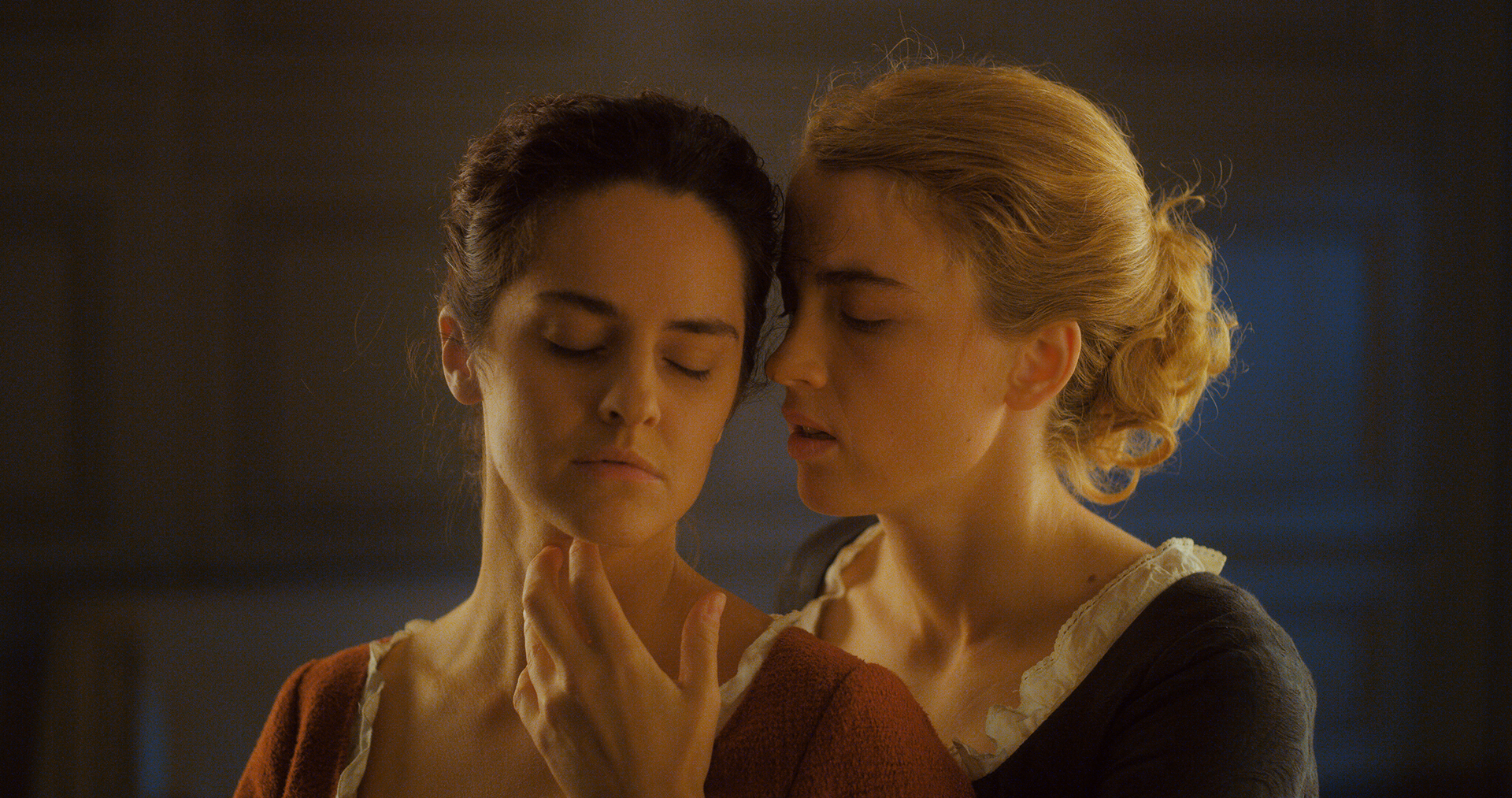
Director: Céline Sciamma
Starring: Noémie Merlant, Adèle Haenel, Luàna Bajrami, Valeria Golino
Words – Rhiannon Topham.
Describing a film as a ‘historical drama’ conjures particularly priggish dress, dialogue and narrative, none of which is typically original or disruptive to the staid all ways of the genre.
Céline Sciamma’s Portrait of a Lady on Fire, however, is not one of those historical dramas. There is still a plentiful of corsets and petticoats, and there’s at least one character who’s a countess, but there is also something else: a genuine, recognisable sense of human desire, embroiled with obsession, fear, and of course, lots of sexual tension.
Set in Brittany in 1760, Portrait recounts a tale of forbidden love. When we first meet Marianne (Noémie Merlant), a painter now posing for her class of female students, it would almost be befitting for her to turn, look down the lens of the camera, and do a Fleabag: “This is a love story.”
We then go back in time to unravel the slow burning and passionate romance that flourished during Marianne’s brief stay on the northern coast of France. It was here where she was drafted by an Italian noblewoman to paint a portrait of her elusive and reclusive daughter, Héloïse (Adèle Haenel), which will then be shipped off for approval from her betrothed, an unknown but wealthy man based in Milan.
Marianne’s stay is under the guise of companionship to Héloïse, who has just returned from a convent following the death of her sister. Not only is she mourning the loss of her sibling, but she also vehemently opposes this engagement and has sabotaged the attempts of previous portraitists by refusing to sit for them. Marianne is to accompany Héloïse on her walks to the seafront by day, and then privately paint her from memory by night.
Sciamma establishes the essence of forbidness from the outset, keeping Héloïse’s face hidden from both Marianne and the viewer until a pivotal moment when suddenly her physiognomy is brought to the fore for all to see, like the rediscovery of a masterpiece thought lost or destroyed.
Initially there seems to be a relative froideur between the two women, who are, beneath the pretence of amity, basically strangers. Marianne is both perplexed and transfixed by Héloïse’s mysteriousness, and on the surface one could mistake the latter’s distance as mere pretentiousness or formality. But the truth is all in the sly, yet often obvious, stolen glances; the slow-burning infatuation of discovering something new about someone every time you look at them, and the sheer pleasure and confusion of savouring those moments to yourself and then, in this case, eventually having to share those memories with an unknown other elsewhere on the continent.
There have been plenty of obvious comparisons between Portrait and Blue is the Warmest Colour. What’s distinct and profound about this story is that there’s no immediate attraction or lust; an easy narrative device that male directors so readily employ in retelling relationships between women. Rather, this is about seeing and being seen, the corporeal as much as the spiritual and emotional, and this goes beyond the romance.
This notion speaks directly to the central theme of repressed womanhood: Héloïse is to be married to someone she has never met, and is to sit for a portrait which successfully sells her as a suitable wife; her doting maid, Sophie, is forced to make a historically significant choice about an unwanted pregnancy, a momentous decision which Marianne later depicts on canvas; and Marianne’s very profession is a display of defiance, during a time when women were either heavily restricted in their access to creativity and art or were shut out completely.
Reversing the male gaze has never been done with quite the grace and poignancy as shown in Portrait of a Lady on Fire, and every element works in harmony to create something so subjectively accessible and objectively beguiling, from the chemistry between the all-female cast to the masterful direction and prophetic script, and the opening scene in Marianne’s studio to the climactic grand finale in the opera house.
★★★★★
–
Babyteeth

Director: Shannon Murphy
Starring: Eliza Scanlen, Toby Wallace, Ben Mendelsohn, Essie Davis
Words – Rhiannon Topham
Our first flame is usually a clumsy affair, defined more by how awkward everything is than any real or lasting affection. The majority of these ‘relationships’ end swiftly with the heartbreaking realisation that things seldom last forever; but for Babyteeth’s 16-year-old Milla (Eliza Scanlen), this has particular poignancy as she knows that her first love is probably going to be her last.
Milla has an unnamed form of terminal cancer, for which her doting parents, the gifted pianist Anna (Essie Davis) and psychiatrist Henry (Ben Mendelsohn), bestow a great deal of anguish that Milla does not share. When 23-year-old Moses (Toby Wallace) charges into Milla on a train platform, nearly tossing her onto the tracks, a tempestuous and often dangerous romance ensues. In addition to the age gap, and rather predictably, these two darlings are completely different in almost every possible way; Moses is a drug taker and dealer who has been exiled from the family home, whereas Milla lives in a leafy middle class suburb, attends a girls only school and plays the violin.
Scanlen strikes a subtle balance in negotiating Milla’s amorphous emotions, moving from fury to acceptance to vulnerability and back again. Mendelsohn and Davis are also on fine form, each bringing a different quality of helplessness to their parenting responsibilities as well as nuances in how they distract themselves from the reality that their baby will probably never get better and the kindest thing to do would be to let her savour what life she has left, no matter how questionable those choices may be.
Despite Milla’s displays of defiance, the good days are woven in with the bad and we are reminded of her frailty at several key stages of the film, marked out by chapter titles such as “It didn’t feel like a love story that day” and “What the dead said to Milla”, an especially delicate scene of introspection where Milla is allowed some space to breath outside of Moses’ raucous nature and the deafening clamour of her parents walking on eggshells.
As a debut, Babyteeth is a compelling tragicomedy of family, love and acceptance. It is by no means the first teenage cancer indie film, yet this consummate cast keep this one from crossing into cliche on the well-trodden ground of coming of age romcoms, interjected by overtly concerned and covertly struggling parents.
★★★★
Saint Maud
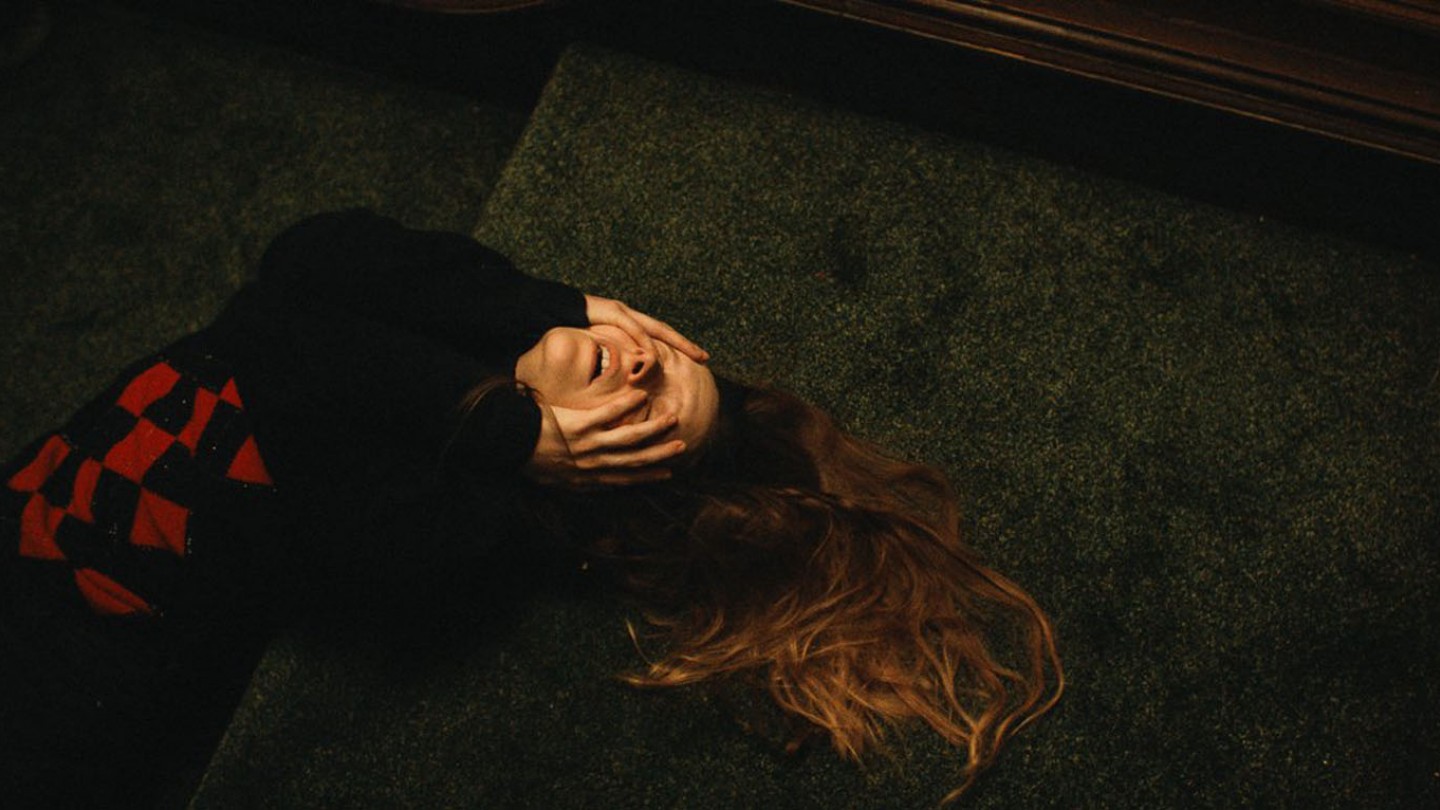
Director: Rose Glass
Starring: Morfydd Clark, Jennifer Ehle
Words – Rhiannon Topham.
It takes a very rare beast of a directorial debut to make you wince, laugh and question the capacity of the human mind in less than 90 minutes.
Rose Glass’s Saint Maud, a sinuous saga of madness and torment respects the many religion-inspired films in the horror genre, but suggests a surprising range of stylistic and narrative inspirations, from Lynn Ramsay’s grit to Edward Hopper’s loners in diners.
Maud (Morfydd Clark) is a palliative nurse in a dilapidated seaside town who we first see crouched in a corner covered in blood. As far as first impressions go, it’s about as menacing as it can get. When she’s drafted to care for Amanda Köhl (Jennifer Ehle), a former dancer and choreographer now rendered housebound by illness and disability, the initial apprehension between the two eases into admiration and intrigue before regressing to outright repulsion; Maud for Amanda’s decadent lifestyle and coterie of hedonistic creatives, Amanda for Maud’s myopic opinion of how life should be lived.
Maud is a character of extremes; self-destructive in one ‘life’ and ascetic in another. Her obsequious quest to strive in her newfound piousness is juxtaposed with Amanda’s lucid, albeit anaesthetized, compos mentis. Maud’s religious conversion has granted her a moxie seemingly absent in her past, when, it transpires, she wasn’t a Maud at all. The fresh Maud persona is one she has crafted to support her search for the ‘greater purpose’ God has planned for her, an unassailable transcendental goal which swallows her whole and greedily possesses her in mind, body and spirit.
Maud’s nascent life of righteousness comes to an abrupt end when she is removed from her post as Amanda’s carer. Where to go when you are stripped of your purpose in life? All of her feelings of jealousy, confusion, virulence and an almost psychedelic bodily experience of spirituality reach fever pitch as she succumbs to the darker forces chipping away at her sanity and she becomes mimetic of the hellish creatures depicted by William Blake in a book gifted to her by Amanda.
As an addition to the horror-Renaissance of recent years, Saint Maud is an alarmingly accomplished debut by a talented and — dare I say it — innovative director to get excited about. Glass has clearly wasted no time on narrative trumpery with this, and at a tidy 84 minutes, all the key proponents harmonise perfectly to create an unnerving atmosphere in which neither Maud nor the audience are sure what our Saint will do next.
This is no average God-fearing horror; it is the fragility of the human mind that is the most frightening.
★★★★★
–
–
Wuthering Heights (2026)
2026
Director: Emerald Fennell
Cast: Margot Robbie, Jacob Elordi, Hong Chau, Shazad Latif, Alison Oliver, Ewan Mitchell, Amy Morgan, Charlotte Mellington, Owen Cooper, Vy Nguyen, Paul Rhys
Words – Carly Stevenson.
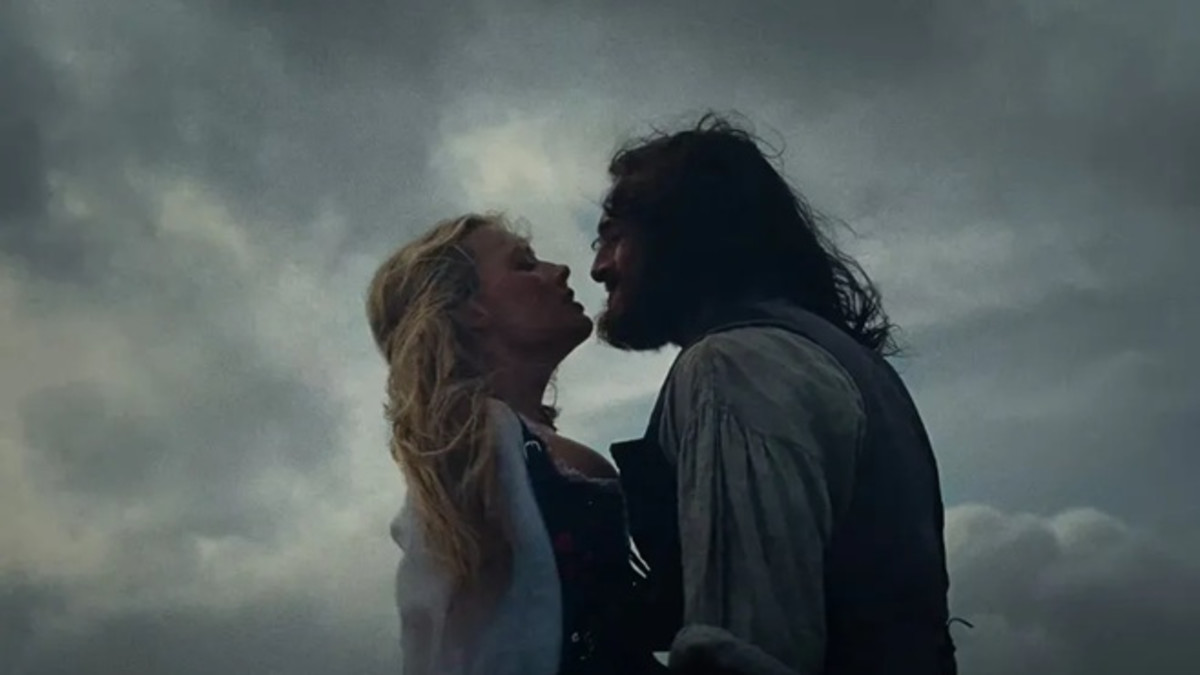
Emerald Fennell’s highly contentious reimagining of Emily Brontë’s novel sparked heated online debate long before its theatrical release, and the discourse has only intensified in the wake of a successful opening weekend. However, despite performing well at the box office, “Wuthering Heights” has received a torrent of hostile reviews from critics and cinema-goers alike. While some of Fennell’s choices are certainly questionable (most notably, the whitewashing of Heathcliff), there is much to admire in this idiosyncratic fever dream of a film.
Linus Sandgren’s cinematography captures the gothic setting with painterly prowess – especially in the shots of the titular house flanked by jagged rocks – and the anachronistic costumes look like a haute couture collection inspired by Tim Burton. Andy Gent’s stop motion title sequence featuring intertwined tendrils of hair (a nod to Cathy’s locket in the novel) is a particularly nice touch. With its striking visuals and Charli xcx’s haunting, atmospheric soundtrack, you would be forgiven for thinking “Wuthering Heights” is closer to a music video than a feature film. Style over substance? Probably. But it’s hardly the only adaptation guilty of this. Robert Eggers’s Nosferatu (2024) – a remake of an adaptation of Dracula – springs to mind. Whether you love or loathe “Wuthering Heights”, I think it’s fair to say that Fennell is being held to a different standard compared with her male counterparts.
The most common criticism of Fennell’s adaptation is that she completely ignores the issues of race and class, which are as fundamental to the plot as they are to Heathcliff’s character development. Yet, perhaps we should be relieved that she decided to ‘stay in her lane’. Someone as privileged as Fennell can have little to say about the impact of poverty and discrimination on a person’s psyche. While casting a white actor (Elordi) to portray a racially ambiguous character is indefensible, I think it’s important to note that Heathcliff’s behaviour in the novel reinforces racist stereotypes held by many readers at the time. As in Shakespeare’s Othello, characters insinuate that Heathcliff acts the way that he does because of his race. If Fennell had cast a person of colour as Heathcliff in this highly eroticised adaptation, the optics might have been uncomfortable. Consider the implications of presenting a modern audience with a ‘wild’, ‘uncivilised’, violent, libidinous, obsessive, jealous, vengeful outsider who seduces a married white woman. A different director could navigate this issue with tact and nuance, but it’s beyond Fennell’s purview.
In interviews, Fennell has said that she wanted to distill the feeling she had when she read the novel as a teenager. Viewing the film through this lens allows us to appraise it for what it is: a personal, emotional response to the story that leans heavily on wish-fulfilment. Rather than trying to encompass every theme in the novel, Fennell hones in on one particular aspect – the masochistic nature of the central character’s relationships – and runs with it. The bold choice to emphasise the latent eroticism of the novel at the expense of other themes has proved divisive, but at least Fennell has tried to do something different to previous adaptations.
In Fennell’s own words, “Wuthering Heights” (stylised in quotation marks) is a sister or cousin to the original text, not a twin (paraphrased from an interview with Fennell on the Ask Penguin podcast). As such, it takes significant liberties with the source material, but this is also true of Francis Ford Coppola’s Bram Stoker’s Dracula (1992) and Guillermo del Toro’s Frankenstein (2025). Both Coppola and del Toro bring romance to the forefront in their adaptations, but somehow it’s ‘astonishingly bad’ when Fennell does the same (The Independent).
For all its provocation, “Wuthering Heights” is less transgressive than the 1847 novel it is based on. This is partly because the main characters have been defanged, presumably with the intention of eliciting our sympathy. But if you take the cruelty out of a story like Wuthering Heights, what are we left with? This film gives us the answer.
–
–
Tekkonkinkreet
2006
Director: Michael Arias
Starring: Kazunari Ninomiya, Yû Aoi, Yûsuke Iseya, Kankurô Kudô, Min Tanaka, Rokurô Naya, Tomomichi Nishimura
Words – Joe H.
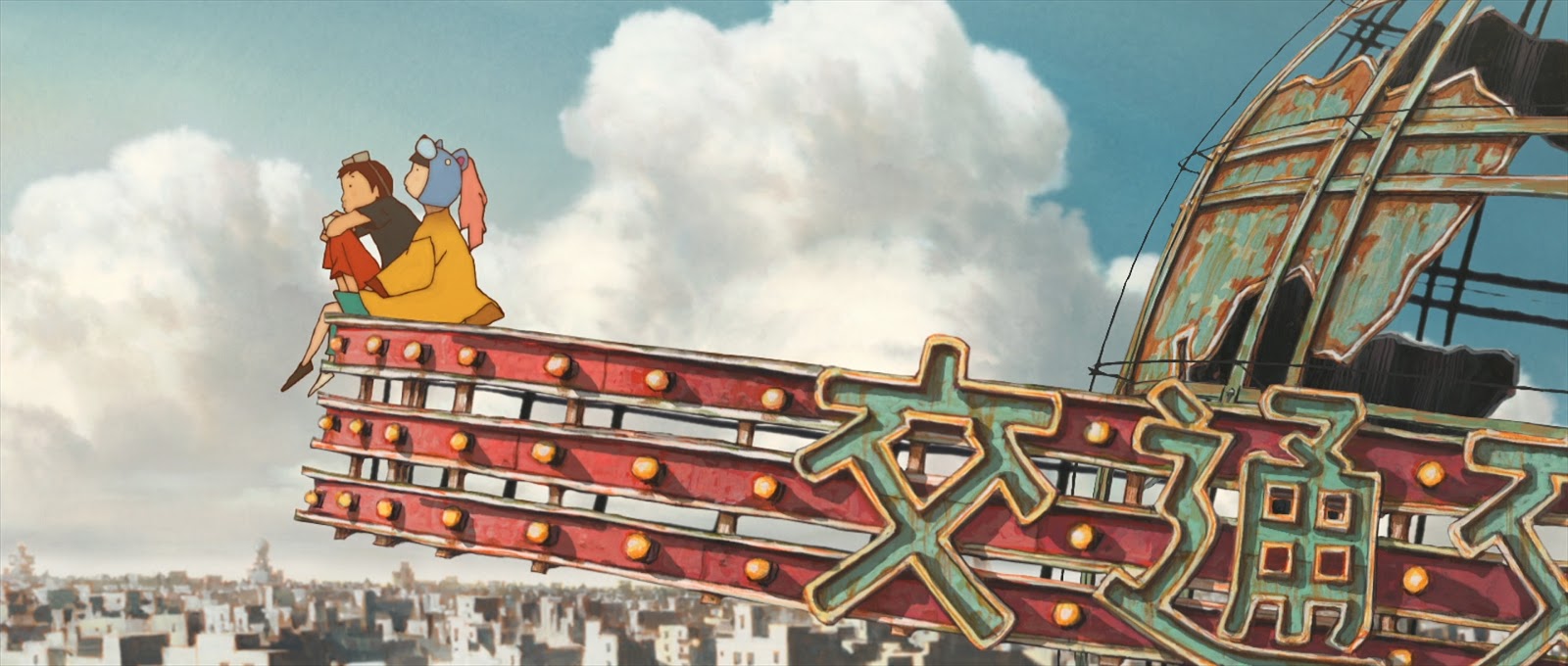
Tekkonkinkreet is based on the popular original Japanese manga series ‘Black & White‘, written by Taiyo Matsumoto. The title Tekkonkinkreet is a play on the Japanese words for ‘concrete’, ‘iron’ and ‘muscle’, referring here to the steel and concrete landscape in which this animated tale takes place.
The story follows two street orphans, ‘Black’ and ‘White’, who watch over Treasure Town, a decaying metropolis where life can be both gentle and brutal. The street-smart youngsters roam their territory like superpowered vigilante stray cats – this domain is their playground – doing their best to defend it from the different villains and factions vying for control to impose their own intentions on the district – from local gangs, to old-world Yakuza wanting to see a return to a time there once was, real-estate developers intent on raizing the district to the ground, and other-worldly assassins set loose to take the pair out of the equation – all threatening to destroy the very soul of the city.
As events unfold, we see an exploration of relationships with our two protagonists as well as in the opposing criminal mob, and how people can be inexplicably tied to a time and place. Stories intersect, as a metaphysical conclusion draws near in this tale of survival, deciding the fate of a city hanging on the brink of disaster.
At times this is a dark, bleak and brutally bloody tale, but delivers moments of tenderness as it explores the relationships between its characters and reveals something compelling. This is in no small part in turn to a key component of this film: its score.
Produced by British electronic music duo Plaid – who find their home on Warp Records, among other long-standing artists such as Flying Lotus and Aphex Twin – the score serves the deeper themes of the film while driving the larger elements of the story. As the story begins, the music has an analogue, old-world feel, as we are introduced to Treasure Town and its inhabitants’ way of life in the opening scenes. As events develop, instrumentation gives way to a more modern sound of synths and breaks, with futuristic electronica adding weight and momentum to action, while a more melancholy tone serves to carry the various internal and physical conflicts. As a metaphysical turn brings different elements of the story to a conclusion, a combining of the old forms and new sounds take over, delivering a soothing and harmonious end.
The beauty of the visual landscape in this animation is only matched by its music, a score which elevates the events of the story, and exists with a life of its own beyond the confines of the film.
The debut directorial feature from Michael Arias – previously a co-producer of the Wachowskis’ animated anthology The Animatrix, along with previous credits including work as a visual effects artist on feature films such as The Abyss, and Studio Ghibli’s Princess Mononoke – drawing on his background in animation and VFX to deliver a faultless blend of hand-drawn and computer-generated animation, produced by the renowned Studio 4°C.
A standout tale of conflict, relationships and resolution – touching upon faults in present-day society – presenting characters and a multifaceted action plot in a poetic and evocative story.
–
Frankenstein

2025
Director: Guillermo del Toro
Starring: Oscar Isaac, Jacob Elordi, Mia Goth, Christoph Waltz, Charles Dance
Words – Carly Stevenson.
When I heard that Guillermo del Toro was set to adapt Frankenstein, I was ecstatic. Who better to capture the spirit of Mary Shelley’s groundbreaking Gothic novel than the director of Crimson Peak (2015) and The Shape of Water (2017)? As anyone familiar with del Toro’s filmography will know, his empathy for so-called monsters – whether human or non-human – is one of the hallmarks of his style, so this project felt inevitable.
While by no means a faithful adaptation, del Toro’s Frankenstein is a love letter to the source material and its cinematic legacy. The two-act structure – an echo of Shelley’s epistolary narrative – allows the spectator to see events from the perspectives of both the Creator and his Creation, thereby drawing attention to the potential unreliability of their respective accounts.
Oscar Isaac is delightfully over-the-top as the titular Victor Frankenstein and Mia Goth brings a compelling sense of whimsy to the often-underdeveloped character of Elizabeth, but it is Jacob Elordi’s beautiful performance as ‘the being’ that stands out. Sad-eyed, articulate and capable of gentleness as well as brutality, Elordi’s creature is a far cry from what audiences have come to expect from this role.
Unsurprisingly, Kate Hawley’s costumes are exquisite. Elizabeth’s beetle-inspired dress – a gesture to the theme of metamorphosis and a nod to her love of nature – deserves a special mention. Equally impressive is Tamara Deverell’s elaborate set design. Every backdrop – from Victor’s laboratory to the hand-built ship used in the Arctic sequences – enhances the Gothic atmosphere and ensures the spectator’s total immersion in this highly-stylized world.
The laboratory scenes have the same Grand Guignol quality we see in Crimson Peak, and the film does not flinch from the vivid viscera of anatomy. It feels significant that del Toro – an advocate for practical effects – devotes so much screentime to the craftsmanship that goes into building a ‘monster’.
The decision to set the film in the 1850s (as opposed to the late 1700s, when the events of the novel take place) reflects del Toro’s interest in war as a backdrop to internal conflict. Throughout, Dan Laustsen’s cinematography evokes the visual culture of European Romanticism, most notably in the shot of Elordi’s creature framed against an Arctic horizon vista – an allusion to the sublime landscapes depicted in paintings such as Caspar David Friedrich’s Wanderer Above a Sea of Fog (1818). As in all of del Toro’s films, Catholic imagery looms large throughout, reminding the audience of the theological implications of Victor’s Promethean ambitions.
For all its aesthetic and thematic complexity, the dialogue was, at times, rather on the nose; we don’t need to be told that Victor is the true monster. Moreover, I’m not convinced that endowing the being with supernatural strength and immortality adds anything to the story.
Nevertheless, the film’s departure from Shelley’s novel is, perhaps, its greatest strength: by emphasising the themes of forgiveness and redemption, del Toro encourages us to see Victor and the being through a lens of, in his own words, ‘radical grace’ and ‘radical hope’.
–
Together
2025
Director: Michael Shanks
Cast: Alison Brie, Dave Franco
Words – Christian Abbott.
Body horror attracts a certain kind of audience member. Few, if any, casually dabble in this highly charged and polarising subgenre. Fewer still would consider it a tenable option for a date movie.
Yet, Together attempts to bridge that gap and fuse two seemingly incompatible sides into a whole. That, in essence, is what theatrical debut filmmaker Michael Shanks is trying to get across; in his own words, it’s a “communal audience experience”.
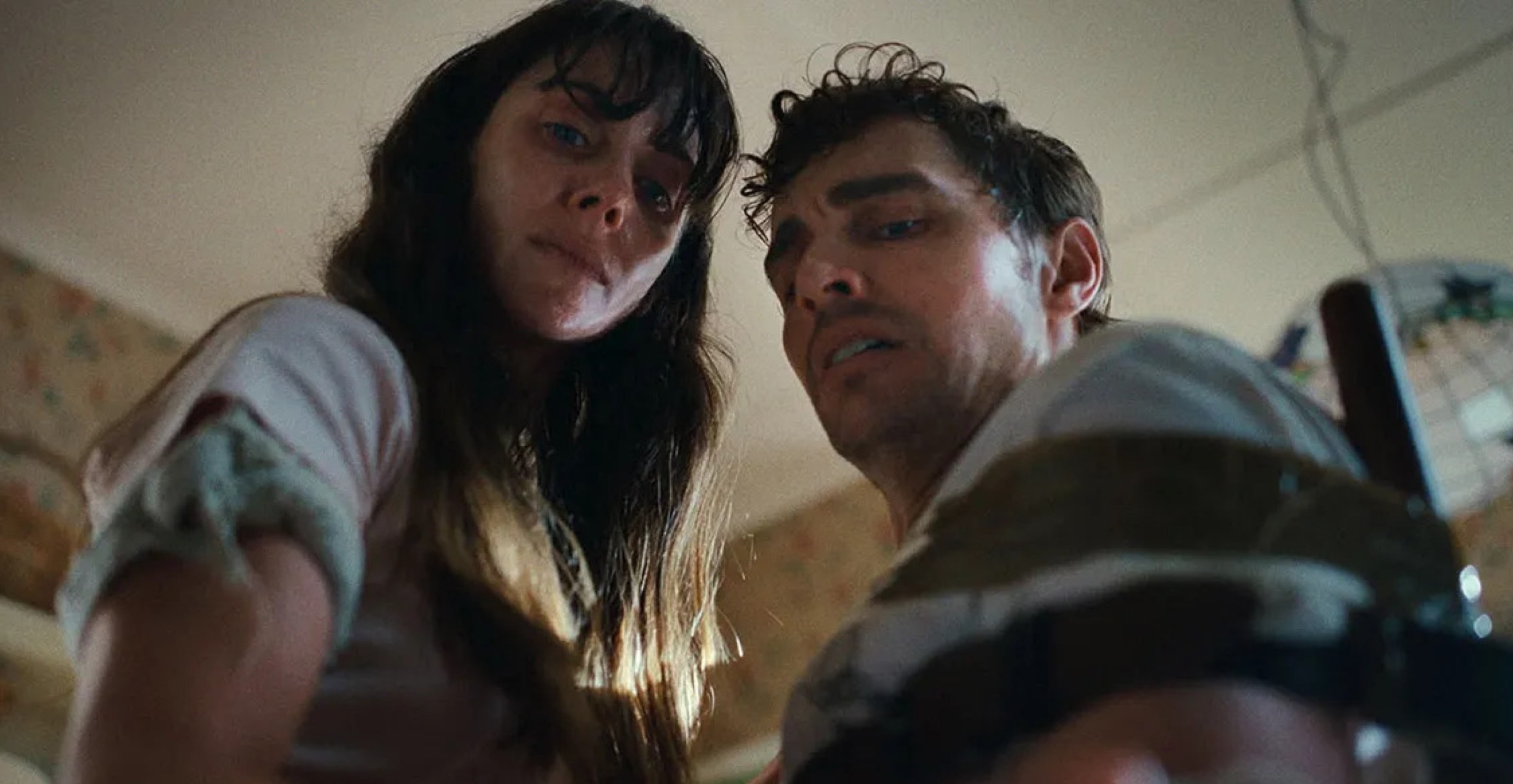
It follows the real-life married actors Dave Franco and Alison Brie as a slightly dysfunctional couple that moves to the countryside. Soon after, they encounter a mysterious and Lovecraftian force that finally brings them together.
Wearing its influences on its sleeve, the initiated will kick back and bathe in the film’s gloriously on-the-nose references to everything from John Carpenter to Junji Ito. Almost to its detriment does the film lean into its genre trappings as it clumsily gets the plot into motion.
The first act doesn’t get proceedings off to a good start. Stilted dialogue, familiar tropes, and contrived sequences are all signposted to get the characters into their twisted fate. Still, the chemistry between Franco and Brie pushes the audience onwards; their little glimpses and body language reveal real intimacy, regardless of what the script wants us to believe.
It isn’t until the halfway mark when the narrative finally asserts itself. The laboured setup takes a backseat and the glorious body horror can begin. It’s no surprise that Shanks admitted the ‘hallway scene’ at the heart of the narrative was the one he originally wrote. From this point onwards, there’s a continual escalation as the plot uncoils until its (albeit obvious) satisfying conclusion arrives.
The visuals have an uncomfortable crunchy feel to them, in what Shanks called “dry and painful” rather than the shiny and slimy aesthetics one might expect in The Thing (1982) or The Fly (1986). The blending of real puppets and visual effects delivers this year’s answer to The Substance. While Together never reaches the gory highs of director Coralie Fargeat’s 2024 treat, it certainly sticks a similar landing. When the credits roll, fans of the subgenre will be left smiling all the same.
–
–
Nausicaä of the Valley of the Wind (1984)
1984
Director: Hayao Miyazaki
Words: Ben Matthews.
Nausicaä of the Valley of the Wind began life as a serialised manga within the pages of Animage, a monthly magazine edited by eventual Studio Ghibli co-founder Toshio Suzuki. It was created by Hayao Miyazaki, who was then seeking work after the underwhelming box-office reception to his first directorial work, Lupin III: The Castle of Cagliostro.
The Nausicaä installments quickly became a selling point for the magazine, Miyazaki’s first exposure to wide critical acclaim. A feature length anime adaptation was quickly commissioned, with an early form of Studio Ghibli coming together for the production; Miyazaki led the team as director, Isao Takahata served as producer, and Joe Hisaishi was drawn in as the film’s composer.
Nausicaä takes place on a unique version of earth, in theory a utopia despite it constantly bordering on the opposite. It is recovering from an apocalyptic reset referred to as the ‘Seven Days of Fire’, the disaster of a nuclear war. Traces of humanity have survived and been scattered far and wide, where a society has begun to be somewhat reformed from various relics of our industrial and information age. Nature appears to thrive but below the surface it rots. Called ‘the sea of decay’, its reach grows and threatens to reset what civilisation the humans have built for themselves.
Nausicaä, a young princess of a small peaceful community, cares for and communicates with the natural world without the contempt held by others in her tribe. When the technologically advanced Tolmekian Kingdom invade and occupy the valley of the wind, clear notions of good and bad become confused, as both sides come under threat from the increasingly dangerous natural world.
The film remains a sort of outlier in Miyazaki’s filmography, for existing distinctly as science-fiction, embracing the manga it’s based on, but also acting as a precursor to the fantasy and narrative conventions with which Studio Ghibli would eventually become renowned for.
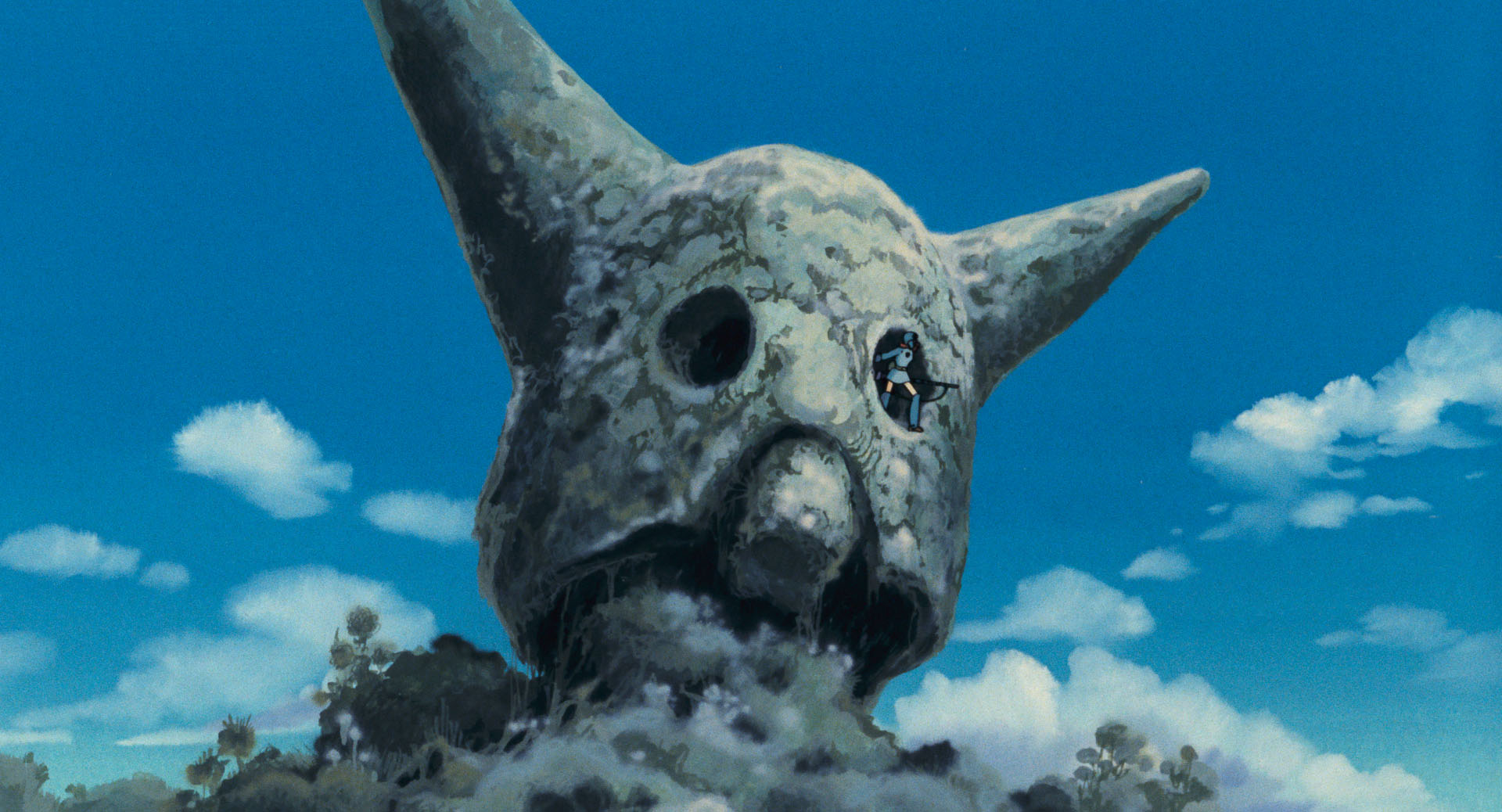
In terms of sci-fi influences, the feudal conflict depicted is reminiscent of the one at the centre of Frank Herbert’s seminal sci-fi novel Dune. Narratively too, the idea of a young messianic figure braving and harnessing the harsh environment is remarkably close to the path taken by Paul Atreides. The name given to the Ohm’s (the giant fictional arthropod’s seen in Nausicaä) was even derived from the Japanese translation of sand worm.
French animator René Laloux’s 1973 film Fantastic Planet similarly appears to have inspired the tone of Nausicaä, from its otherworldly creature and world design, through to its use of a frenetic and tense, Jazz-inspired score.
Hisaishi’s work couldn’t feel further from the grandiose music he would create for Miyazaki and Ghibli down the line. His score here alternates between the moments of peace and quiet as Nausicaä navigates an underground cave or glides through clouds, through to the pulsating synth beats soundtracking one of the quick-cut and ferocious action scenes.
A sequence shows an encounter between Nausicaä and an aggravated Ohm, who serves as the sea of decay’s guardian. For the most part it plays out like a typical chase scene with the scale and speed of something from Star Wars or Raiders of the Lost Ark, but there are also early signs of Miyazaki’s aversion to violence and its impact.
Its climax doesn’t see Nausicaä heroically destroy the creature or rescue her mentor like some kind of superhero, instead it ends on a much more nuanced and somber beat. Miyazaki poses the question, “who made such a mess of this world?” throughout the film, in a surprisingly nihilistic way which doesn’t particularly point fingers at any particular aspect of humanity. Instead, he pins it on an inherent flaw of humanity, in which we are doomed to repeat mistakes of the past. In a world only just recovering from a man-made wipeout, they come dangerously close to undoing every effort they’ve made since.
This kind of environmental message has been explored in different ways in all of Miyazaki’s films since Nausicaä, but none feel as hopeless or damning towards humanity as this. The film’s heart is Nausicaä herself, in typical Miyazaki fashion, a young character at odds with the adults who have built the world around her. She’s probably most comparable to Ashitaka in Princess Mononoke, but traces of her character can be seen in nearly every Miyazaki protagonist since.
A large part of why Nausicaä and Miyazaki’s wider filmography hold up so well 40 years later, is because he always explores unavoidable aspects of adolescence, and issues that will never be locked to one particular generation and their circumstances. It’s notable in all his work but particularly strongly here, with its pointed and mature exploration of a topic only growing increasingly pressing with time.
Receiving a positive initial reception in Japan, the film has only garnered further acclaim in the forty years since release. Outside of its clear influence on Ghibli’s ensuing work, Nausicaä’s DNA can be seen in Western science-fiction (notably recent entries in Star Wars and Denis Villeneuve’s two-part take on Dune) as well as further anime coming later down the line.
It remains a unique touchstone in Miayazaki’s career, and a fascinating first feature for the developing Ghibli team. Its production followed an ethos that would become integral to the success and legacy of their later work, “to offer a sense of liberation to present day young people, who in a suffocating and overprotective and managed society, find their path to self-reliant independence blocked.”
–
ENO

2024
Director: Gary Hustwit
Director of Programming: Brendan Dawes
Archive Producer: Alex Wilson
Words: Ben Matthews.
An early moment in Eno shows the artist himself explaining one of his approaches to generative art. He gives instruction to a keyboard software, such as notes to be used and the chance they have of repeating, but from there the program gives the piece the power to continue indefinitely. Though he initiated the process, he’s not completely responsible for where the part might end up going.
He demonstrates this initially to highlight an aspect of his current process, and how the technique is used in his various art installations and his app Bloom. But throughout the film he explores how generative technology has been part of his process for decades, in various different forms. One example shows how an Omnichord loop helped produce part of Deep Blue Day, but in smaller ways it looks at how the time of year or his temperament has altered a piece of music independently of his control.
It’s the idea of a completely fluid approach to art that really stands out in Eno, and while it’s named after him the documentary never limits itself to his history and his music. It’s more concerned with the idea of where it all comes from; the factors that informed his art and the ways in which he has tried to control it.
Eno is the first documentary made about, and in collaboration with, Brian. With full use of his extensive archive, it lets his story unfold in a natural way, with help from generative technology trained to make each screening unique while still retaining the necessary mystery that has surrounded his persona for five decades. It is appropriate that the only way to approach this documentary would be to adapt some of his own ideas, in regards to the structure and content of the film itself.
A result of the ‘brain one’ algorithm, created in collaboration by director Gary Hustwit and digital artist Brendan Dawes, means that any version of the film seen is unique to the individual screening. Sequences are divided by the screen filling up with flashes of different file names and enigmatic coding, indicating brain one’s process of selection to create an emotional throughline. The structure feels complete and satisfying, but it’s exciting to speculate what parts were left out of the screening and which parts may be making their screening debut.
The film runs off an impressive piece of hardware called b-1, which takes the appearance of an old-style editing deck with two reels alongside a selection of simple manual controls. It has been used at screenings to generate this “live” documentary, creating the finished result to be shown straight to the screen with limited interference by its operator and the film’s director.
This technology helps create a conversational feeling between the audience and the subject that’s rare to find in a traditional biographical film. A retrospective documentary about any artist inevitably draws on nostalgia; whether it stems from the audience’s relationship with their work, or from the artist looking back on their own life and career.
Eno goes out of its way to avoid this. brain one helps to create the feeling of a current living exploration of Brian Eno and his work. There are references to his legendary collaboration with David Bowie and Talking Heads, as well as his career with Roxy Music and his celebrated solo discography, they never feel any more integral to the film or Brian Eno than the segments showing something as seemingly trivial as him discussing the inspiration of a seascape or watching Fela Kuti videos on Youtube. Nothing feels obviously inconsequential, and you don’t feel dissatisfied at the end of its average 90 minute runtime.
If this is your introduction to Brian Eno, you might not be able to give the exact details of his life and career, but you will be able to explain his ongoing approach to art, which is ultimately more important to understanding him as a person.
–
Strike: An Uncivil War – director interview

–
Strike: An Uncivil War explores the events leading up to, and the devastating aftermath of, the battle of Orgreave. It was the most violent altercation during the miners strikes of 1984-1985, where hundreds of striking workers were met with unnecessary violence and force from paramilitary trained police officers.
Now in its 40th anniversary, the strikers are yet to see any real justice or parliamentary acknowledgement. Made up from extensive archive footage and interviews with many of the workers from Orgreave and members of the unions, it’s an extremely well-crafted and important film. Strike gives a voice to this silenced community, and will hopefully usher in a new understanding of the strikes and what these people were really standing up against.
–
–
We had the pleasure of discussing the film with its director, Sheffield-born Daniel Gordon (known for the BAFTA-winning documentary Hillsborough), who seeks to tell the true story of what happened at Orgreave in 1984.
–
Ben Matthews (Reel Steel): What were your experiences with coming to understand Orgreave and the miners strikes, do you think there’s an issue surrounding awareness of it?
Daniel Gordon: Yeah, there is a huge issue around awareness of it. Anyone under 40, maybe even a bit under 50, doesn’t really know. I’m just over 50 so I grew up with it. My mum grew up in Fircroft, and when she was sixteen she came to live in Sheffield so I grew up knowing all about it. I grew up in Manchester but as a Sheff Wednesday fan I used to come watch them all the time, so during that whole year I was very aware of it. Earlier there were the steel strikes in Sheffield, so I sort of understood those a little bit but they were in the background, in terms of Sheff Wednesday fans going to watch who was on strike, both in the steel strike in 1980 and then the miners strike in 1984.
I’ve always known about it, and I knew there was something very very wrong with everything that was going on. I wasn’t really old enough to understand everything. I thought my main impetus to make this came after I made Hillsborough. There was an obvious understanding from me that there was Hillsborough, but then there was Orgreave before that and the miners strike as a whole.
In the late nineties, when I was in the Workstation with Chrysalis, we did a pitch to Channel 4 about a series on strikes, and doing a six part series and a film on each one. The miners strike was obviously going to be the lead film on that, because it was still quite raw then, only 15 years or so after the strike. There’s a line in this, ‘part of history forgotten’, and they certainly feel like they’ve been forgotten. If you go on any of their Facebook pages where they’re all having chat and very intense conversation amongst themselves, then it almost feels like noone outside of that group has ever been listening.
So I think the film will certainly raise awareness, along with other things that are going on for the event. It’s remarkable, in eight days time it’s the 40th anniversary. Hillsborough took many thousands of football fans and 27 years to get justice, and these guys have been waiting 40 years now and still no real justice has arrived for them.
BM: Were you approaching Hillsborough with this background in mind, and for you was it a similar process?
Daniel Gordon: With Hillsborough we had a section, it didn’t make the film, about the miners strike and trying to go back in time from ‘89 to ‘84. To see the militarisation of the South Yorkshire police during that period. In the end it got cut, there’s too many things to put in. I had in mind there was something I needed to do with the miners strike. I needed to come and revisit that.
The problem was, when we finished Hillsborough and it came out in 2016, I just felt like we needed to be making something from Orgreave, but there was this hint from the Conservative government at the time that there was going to be this inquiry, something like the Hillsborough Independent Panel that happened in 2012. I felt it was going to be something I could carry on researching but I’d have to park because legally I wouldn’t be able to do anything. And they shut that down within a year, by which time I’m on to other projects. So it’s taken the best part of 7 or 8 years to finish.
There’s a bit in this film, which shows a crush within Orgreave, which is quite reminiscent of the crush at Hillsborough. It obviously stopped because the police lines parted and the horses came in, and that’s what stopped the pressure. The similarities, for me, are quite clear. Hillsborough is never mentioned within the film but the similarities are very clear. I’ve come to see this film as a bit of a prequel to Hillsborough. If you’ve seen Hillsborough you’ll need to watch this, because without this there is no Hillsborough.
BM: What was the process like when making this, of connecting those who were at Orgreave? Is there quite a big community still between those workers and the unions?
DG: There are, and there’s also people who have never spoken before. They’ve all had a really difficult relationship with the media; The BBC especially. Near the very beginning this was being developed in association with the BBC, it’s not ended up as a BBC project.
I can get people’s trust because of the projects I’ve done, especially because of Hillsborough. As research goes, one thing leads to another. For me, it was important to speak to as many people as possible. Even before we commit to film them. I’ve been working on this on or off for the best part of 7 years, it’s been intense for 2 years where we’ve been figuring out who connects with what. There were a lot of times when we had interviewed them and then found them in the archive.
We did that in Hillsborough, there’s a guy called Brian Anderson we randomly found on some archive footage afterwards when he’s at the Hallamshire Hospital. We thought just because of that archive we wanted to go and find him. The same thing happened with this.
The magic really is when you interview people and you find them in the mass of people at Orgreave. Don and Jackie, who were in the archive quite a bit, and who are are a lovely couple. Jackie wrote a book back in ‘85 which we knew about. I didn’t realise how much archive there was of them out there, and it was really lovely to get the archive and try and weave that into the story.
BM: In those two years while you were intensely focusing on this film, were you visiting Orgreave as it is now? Is there much of a sense of community or commemoration?
DG: There’s nothing left of the plant itself. People living there have no idea of what it used to be. It’s really difficult to get your bearings in Orgreave. We eventually found the original railway bridge that they were chased over, as some went down the bankings. I did go there a bit, and we went to a few mining communities where people live.
We really tried to get a personal relationship going with the people we were interviewing. I did a film about twenty years ago about a greyhound track up near Barnsley, a place called Goldthorpe, which was ex-mining. You could see the social devastation that was brought upon by the end of the strike. You could see that twenty years ago, it’s probably worse now.
You can see within the last few scenes what’s happened to an awful lot of communities. People forget that these guys weren’t just striking for money or for better pay or working conditions, they were striking to keep their jobs and to keep their communities. What they feared would happen, did happen, but in an even worse way than they had thought.
BM: I saw a poster yesterday near Division Street for the upcoming rally taking place for the 40th anniversary.
DG: The rally used to be over at Orgreave. They would meet at a pub and march to where it was, and then march back. Over the years they’ve relocated it to Sheffield city centre. A sign of the times. Like last year, they met at the city hall and marched to Devonshire green because that’s the most they [surviving miners] can do now.
It’s 40 years on, and most of the people in our film have very serious health issues. They’re doing a slightly longer march this year because it’s the 40th anniversary, but also because a lot of the actual miners won’t be able to do it. And I think that’s what’s really concerning people, that there’s still no justice for these people. An awful lot of them aren’t here, and very soon more of them won’t be here to see, hopefully, some sort of inquiry or something that they can look at as justice for what happened to them.
It’s going to be quite an interesting weekend. We’re all gonna go. We’ve got the rally on Saturday, and the premiere on Sunday.
BM: That works out nicely. Are you excited for the premiere?
DG: It’s going to be great. I mean, the Crucible has 600 odd seats. It’s going to be massive. We are the #1 selling film at DocFest so far. And then two days later it’s going to be nationally released. It’s looking like an amazing takeup for this film, which will be absolutely staggering. I haven’t had a documentary film distributed in the cinema to this extent before. It’s taken me by surprise really.
BM: There’s so many heartbreaking accounts of the events included in the film, it’s great that some of them will be able to see the documentary as a type of social justice.
DG: We held a preview for a couple of miners recently, and the nice thing that they said was whenever another miner is talking, it’s as if they’re talking for them. Even if they’re only in it a couple of times, they feel like they’re in it a lot because everyone is speaking for them. They all had the same experience and same feelings of loss and trauma. It’s a brutal film at times and very emotional, especially the last half hour which is a real gut wrench.
For the premiere, I really want to feel that with a big audience. There’s something about seeing any film in a cinema, but watching your own with a paying audience will be very different. It’s going to be quite a raw event, let’s put it that way.
–
Strike: An Uncivil War premieres at DocFest Sunday June 16th, at the Crucible Theatre:
https://www.sheffdocfest.com/film/strike-uncivil-war
Her Name Was Moviola
2024
Director: Howard Berry
Words: Ben Matthews.
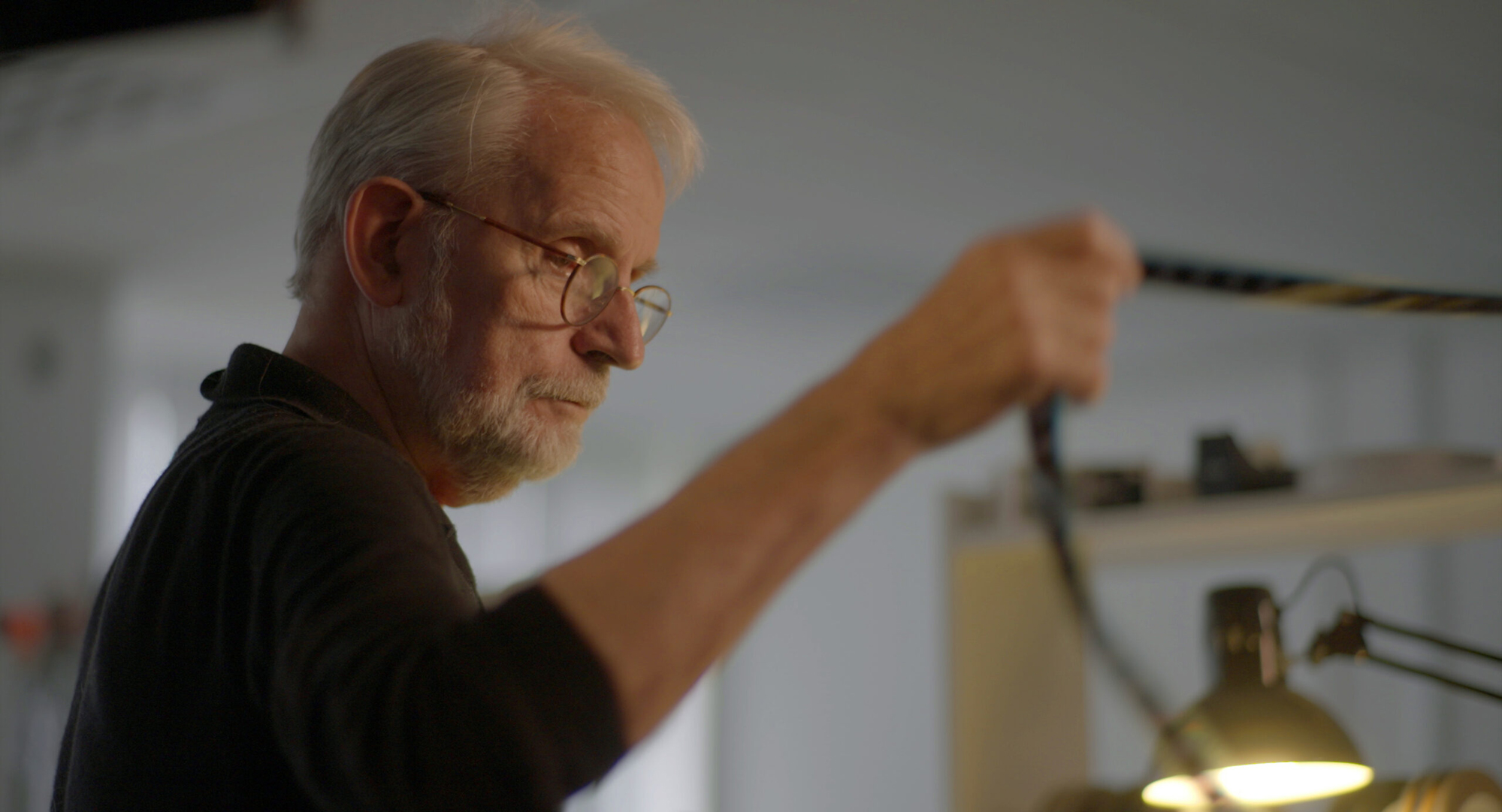
Walter Murch’s Her Name Was Moviola is as much a testament to the role of a film editor as it is to the obsolete machinery it’s named after. Murch, a renowned sound editor who’s worked with Francis Ford Coppola on many of his greatest films, uses the documentary format to break down the technical process of traditional film editing.
Using the rushes from the production of a modern film (2013’s Mr. Turner, directed by Mike Leigh), Murch and his team create an edit using only the hundred year old Moviola. They run into a plethora of issues which are all overcome in really surprising ways, such as sourcing an extinct type of tape used to indicate the physical length of a reel from the Pixar archive, and travelling to Stanley Kubrick’s estate to borrow his personal Steenbeck editing table. In this sense the film acts as a demonstration but not necessarily an endorsement.
The entire process is fascinating, and the documentary draws on a team of experts to explain the difficulties once faced by this department in contrast to the streamlined digital softwares that are industry standard now. It is compared to practising surgery before anaesthetic; it does the job but it’s not necessarily pleasant.
The title alludes to an anecdote from Murch, who’s wife had once expected him to be having an affair where he was really just inseparable from his work as editor. It’s easy to imagine having this weird working relationship with the machine. The Moviola is pedal operated and requires the editor to stand next to it, and be in constant engagement with it. It’s reminiscent of early industrial machinery.
Halfway through the documentary the team come to miss the plush sofas and huge LCD screens of a modern editing suite. In direct contrast, Murch can barely hear the dialogue from the Moviola and has to edit off of expression alone in some cases.
It would be very easy to lyrically lament this age-old process, but instead the premise is used to highlight the artistry required from the editor themselves, regardless of the equipment used. Murch defends his editorial decisions constantly. Explaining everything from the importance of a simple cut during conversation, to how an extended pause can entirely alter the meaning of a scene.
In an industry where a film is increasingly seen as a product more than it is an expression, the art of editing could very easily be reduced to merely sequencing footage to create narrative. Her Name Was Moviola succinctly demonstrates the influence which a good editor can have.
–
Her Name Was Moviola had its World Premiere at Sheffield DocFest 2024:
https://www.sheffdocfest.com/film/her-name-was-moviola
Twin Peaks: Fire Walk with Me (1992)

1992
Director: David Lynch
Cast: Sheryl Lee, Pamela Gidley, Eric DaRe, Ray Wise, Mädchen Amick, Phoebe Augustine, Heather Graham, Chris Isaak, Moira Kelly, Peggy Lipton, Jürgen Prochnow, Michael J. Anderson, Frank Silva, Harry Dean Stanton, Kiefer Sutherland, David Bowie, Kyle MacLachlan, David Lynch
Words – Ben Matthews.
Despite it currently standing as one of the filmmakers most successful creations, the way the original run of Twin Peaks ended left David Lynch feeling a lot of the same frustrations he felt during his early career, where his vision was tarred by commercial influence. The first season combined Lynch’s surreal sensibilities with TV writer Mark Frost’s more formulaic approach to crime drama, to create something that could speak to middle America while also hold its own as a definitively Lynchian expression.
Set in the fictional North American logging town of Twin Peaks, the series follows the FBI’s Special Agent Dale Cooper’s investigation following the murder of popular but troubled schoolgirl Laura Palmer. For the most part, it functions as an exceptionally well written procedural, focusing on the emotional aftermath of the death, and the dark underbelly of the seemingly wholesome community.
The key question the series poses is “who killed Laura Palmer?”, and Lynch, famously aversed to spoon-feeding an audience, was never going to make the answer easy for anybody. The demand for a straight answer grew with the show’s popularity, so much so that the network demanded it be answered definitively to satiate the audience. Lynch left the show during this period, the fun of it being taken out by a premature and cynical reveal. He returned to direct the last two episodes of the second series, which managed to recapture some of his initial interest in the project, but this was ultimately in vain as the show was cancelled and its popularity among the masses waned.
This didn’t mean Lynch had finished with this story. He explained, “I couldn’t get myself to leave the world of Twin Peaks. I was in love with the character of Laura Palmer and her contradictions: radiant on the surface but dying inside. I wanted to see her live, move and talk. I was in love with that world and I hadn’t finished with it. But making the movie wasn’t just to hold onto it; it seemed that there was more stuff that could be done”.
After many failed attempts to bring it back in some way, he was eventually given the go-ahead on a feature film continuation of Twin Peaks, a neatly marketable prequel, exploring the last few days in Laura Palmer’s life. Events which audiences knew well from the rigorous investigation of the series, but had never seen through any kind of flashback. Frost had also abandoned the project, leaving David Lynch to create his own version of Twin Peaks, free of the constraints of a network and a co-creator. With this being the case, it was never going to be as simple as what many would have expected; Fire Walk with Me is free of the confines of a prequel or sequel, instead it being a distillation of the show’s ideas through the unfettered mind of its creator.
Lynch subverts expectation within a few seconds of Fire Walk with Me, opening on the harsh screen of an untuned television set, with an uncannily familiar but wholly new theme from the late great Angelo Badalamenti. The opening credits roll before the TV is destroyed and audiences are thrown into the investigation of murdered teen Teresa Banks, in the town of Deer Meadow.
The case runs in parallel to that of Laura Palmer, which we saw play out in the opening episodes of Twin Peaks, what’s lacking in this location is the innate warmth that Lynch brought to the town and its people. Deer Meadow’s coffee is two days old, the diner’s waitresses and town sheriff’s inhospitable, the douglas fir scarce and lacking that beautiful deep green colour.
We are eventually introduced to Laura Palmer (again played by Sheryl Lee) and Donna Hayward (this time portrayed by an incredible Moira Kelly); Badalementi’s renowned theme from the series plays in full as the two walk to school, but this moment of slight levity is abruptly cut for some of the most heart wrenching sequences in Lynch’s whole career. His early films focused on the loss of innocence, and I don’t think he’s embodied the idea better than in Fire Walk with Me. It’s more earnest than anything seen previously in the show, seemingly written as a classic tragedy, exploring the stark duality of Laura Palmer free from the conventions of a procedural in which she has already died. This type of torment seems to come natural to Sheryl Lee; Lynch uses her scream like it’s a special effect throughout their work together. The Pink Room, a seedy basement underneath the Bang Bang bar, is a great representation of Lynch’s fascination with the darkness inevitably at the heart of any “idyllic” rurality. This is juxtaposed by the following scene, where Laura and Donna share a rare tender moment, the hangover of a night you’d rather forget.
The inherent nature of Fire Walk with Me being a prequel means that we know what’s waiting for Laura at the end. Clocks are constantly used to remind us of the inevitable; dates are fixated upon like an FBI case file. Ray Wise is able to flip the switch on Leland Palmer, warping any of his season one scenes which saw him as a grief-struck parent. Fire Walk With Me’s horror is not simply derived from the inherent absurdity of the town, it holds up just as well as a depiction of an abusive father and a lonely child. There are exchanges between the two that don’t need a “Black Lodge” explanation, it can be viewed as more of a psychological horror than a supernatural one.
It is as if Lynch and co-writer Robert Engels put every effort into dramatising these last days in Laura’s life with the intention of audience upset, the dark paired with the light to create a devastating impact. The films Lynch made after were closer in style to Fire Walk with Me as opposed to Eraserhead or Wild at Heart. His LA trilogy (Lost Highway, Mulholland Drive, and Inland Empire) feels particularly close; a trio of female focused stories exploring tragedy in the face of beauty. Twin Peaks may have altered television forever, but Fire Walk with Me changed the entire context of which it is based. It represents a turning point for Lynch’s career, and for the show itself which returned to air 25 years later.
–
–
The Boy and the Heron

2023
Director: Hayao Miyazaki
Words – Ben Matthews.
The Boy and the Heron is potentially the final release from anime director Hayao Miyazaki, and though for a time The Wind Rises (2013) was credited as his closing accomplishment, it doesn’t come anywhere near as close to this in its feeling of absolute resolution and closure. Following the release of that film, Miyazaki publicly announced his retirement from directing, before returning to direct an exclusive short film for the cinema at the Ghibli museum in 2018. After the positive experience of working on Boro The Caterpillar, he began the storyboards for what would eventually become The Boy and the Heron.
His Studio Ghibli co-founder and career-long producer, Toshio Suzuki, said that Miyazaki’s main motivation with the project was to create a parting gift for his grandson. To say “Grandpa is moving on to the next world, but he’s leaving behind this film”. It takes its Japanese title from the novel, How do you Live?, but bears little resemblance to its actual story, allowing Miyazaki to explore this question in his own unique way, taking influence from the books he enjoyed as a child, as well as his own recollections of the time.
Mahito fills the role of Miyazaki’s protagonist here, a young Japanese boy struggling with the devastating loss of his mother during the second world war. This atmosphere of universal grief is central to the film, and while it isn’t exactly new thematic ground for the director, he explores it in a way which feels entirely different to how he has before. The depiction of post-war Japan is largely lifted from his own recollections of it, being born in 1941 and growing up in a period of tragic loss. For this reason Mahito is one of the more mature Miyazaki leads, not undergoing a full coming of age during the film itself, undergoing more of a reaffirmation of his age and place within an uncertain world.
It is after his mother’s death that he moves to the agricultural home of his new step-mother, Natsuko (his mother’s sister). While struggling to adapt to his new home and family, Mahito’s attention turns to a grey heron which stalks the grounds of the house, eventually following it into a tower built by Natsuko’s grand-uncle, a portal to a world cohabited by both the living and the dead.
The split between the grim reality of post-war Japan and the magic of the realm found within the old tower, feel almost symbolic of the two distinct halves of Ghibli itself; the influence of Isao Takahata’s realism in the real world (Miyazaki’s mentor and Studio Ghibli co-founder), and the unmistakable Miyazaki fantasy found within the tower. It almost feels redundant to say that the fantasy is astonishing, it’s as grand in scale as Princess Mononoke, but feels more internally focused like an earlier film such as My Neighbour Totoro. There are few sequences devoted to Mahito running around exclaiming his shock as Chihiro does in some of Spirited Away’s more horrifying opening scenes. Instead it achieves more of the atmosphere felt at the end of that film, particularly during the melancholic train journey shared by Chihiro and No-Face.
Miyazaki presents the scenario in a beautiful way, but makes no effort to hold the viewer’s hand while explaining the intended emotion. This is only ever enhanced by a masterful Joe Hisaishi score, being of a much grander scale than some of the more minimalist work he’s known for. His contribution to a Miyazaki film should never be understated, it’s the two creatives working in combination that conjure some of the most memorable moments.
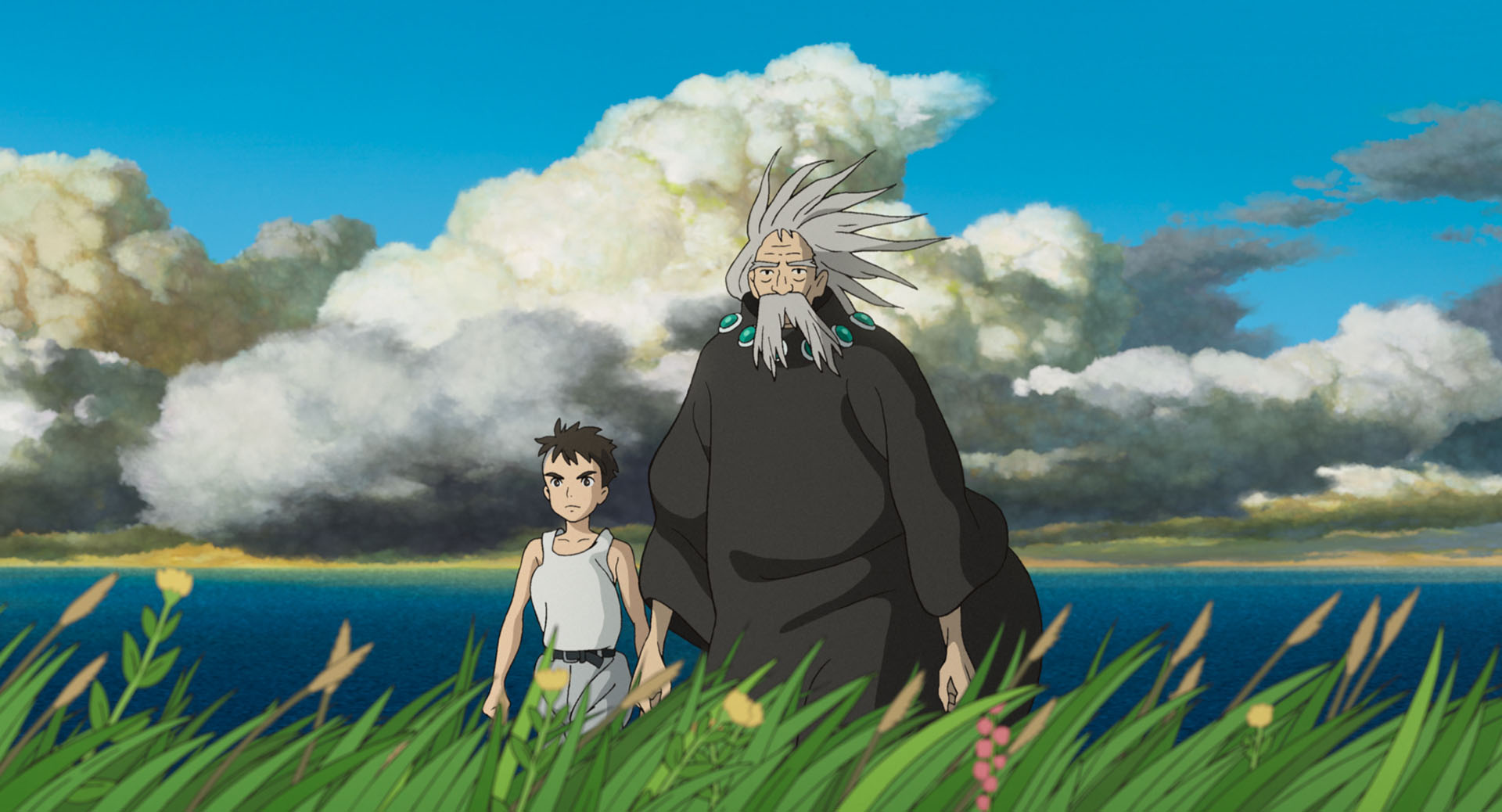
While Mahito serves as the film’s central figure, the great-uncle emerges as a poignant reflection of Miyazaki’s own introspections and anxieties. Acting as a lonely wizard at the centre of his own world, he worries about the legacy of his creation. He sees Mahito as a hopeful candidate for taking his place after his death, with him being of his bloodline and possessing the attributes necessary for the task.
It’s no coincidence that this dynamic is reminiscent of the one we have seen play out in real life between Miyazaki and his son Goro. He is an important current figure in his fathers studio, having directed a few films including Earwig and the Witch, the controversial 2020 film released by Studio Ghibli which broke away from the previous aesthetic of 2D animation. While showing enthusiasm in his work as a director, his ambition seems to lie more in landscape architecture and design, having contributed to Ghibli’s own Japanese theme park and museum.
The film’s climax explores Mahito’s rejection of the offer, as he wants to write his own story with his family in the real world. One of the great gifts to any animator is their total control of all aspects of film language, Miyazaki’s work is perhaps where this can be appreciated the most. The wizard’s building bricks being the source of an entire world acts as a neat symbol of this craft, and one which he is protective of, as the consequences of when it falls into the wrong hands prove to be disastrous.
In combination with each other, Mahito and his great-uncle create the perfect self-inserted voice for Miyazaki, from someone looking back on their own life and contemplating the legacy they will ultimately leave, as well as someone still coming to terms with a lifetime of personal losses.
_
When discussing a great ageing filmmaker, such as Miyazaki, you can begin to trace their life through their work. For most filmmakers the two seem to become blurred; The Boy and the Heron brings to mind Kurosawa’s Dreams, Scorsese’s The Irishman, Spielberg’s The Fablemans.
It is one achievement to have directed a classic film, but a reflective late career masterpiece is able to project them into another echelon of artists entirely. This is particularly true when discussing Miyazaki’s early work with Studio Ghibli, in direct relation to The Boy and the Heron. His path from being a technically ambitious young animator, to being the first recognised auteur in his medium, is nothing short of legendary.
_
_
 REEL STEEL
You must be logged in to post a comment.