View From The Night – Batman v Superman: Dawn of Justice

2016/USA
Director: Zack Snyder
Starring: Ben Affleck, Henry Cavill, Jesse Eisenberg, Amy Adams, Gal Godot
Words: R. Topham
For some time, Marvel films have been ruling the roost, so when the first trailer for the live action showdown of the world’s greatest heroes (who are most notably DC comics based) was released, it seemed auspiciously gritty and thunderous. Then the second trailer came and things went south pretty fast. Batman v Superman: Dawn of Justice had to be staggeringly exceptional in order to live up to the high standard set by Christopher Nolan’s Dark Knight trilogy, rarely have cinematic icons been re-imagined so soon after their previous iterations, and because his solemn and hyperrealist spin paved the way for the latest additions to the superhero portfolio such as Netflix’s Daredevil and Jessica Jones. And despite the criticism, Man of Steel wasn’t terrible. Loosely based on Frank Miller’s The Dark Knight Returns, and also serving as the building block for the now entitled DCCU (DC Cinematic Universe) it was always going to be an uphill task bringing these two juggernauts onto the screen. The title characters are both iconic in their own right, and it was nigh on impossible to anticipate this film without a basic understanding of their profiles as outlined in the comic books and previous blockbusters. They are heroes that have transcended generations, and so this film was always going to be a big deal, regardless of director and casting choice. This is a new film in a whole new timeline, so is an origins story and a revamp of the characters we know and love all rolled into one, can it truly live up to the hype? No it can’t…
Firstly, the opening scene of a young Bruce Wayne and his parents is an overload of every death-related cliche possible for a 12A film: the reflective voiceover, the slow motion macro shot of the bullet leaving the chamber, the silent scream blocked out by angelic music, the flagrant lack of wounds on the victims and blood at the scene of the crime. It’s grating, but it’s an accurate snapshot into the quality of the remainder of the film – poor.
The first hour is essentially pointless. It provides context that either turns out to be completely irrelevant or could be trimmed and summarised more concisely in a ten minute sequence, and rehashes scenes from the climax of Man of Steel as a flashback then haphazardly references them throughout the rest of the film without marrying the two storylines together smoothly. The first time you see the Batmobile, it’s supposed to be a “woah!” moment because it combines the ingenious technology of a vigilante Inspector Gadget with a suave brutality. But when the Batmobile is revealed during a chase after Lex Luther’s cargo, it’s an ostentatious display of CGI that feels like an extremely long and tawdry commercial selling a racing video game.
For a two and a half hour action film to be justified, especially in the superhero genre, it has to be filled with action. The moment Batman and Superman come head to head and finally have their pivotal battle is probably the most disappointing and lacklustre fistfight you’ll ever see on screen. Thereafter, the narrative of their squabble comes to an abrupt end (even though this should be the central theme of the film, as the title would suggest) and attention turns to Lex Luther’s Kryptonite-fuelled monster Doomsday, which bares its chest and roars like a slimey Godzilla.
The perpetually controversial casting of Ben Affleck proves to be a blunder. Maybe it was the immense pressure weighing down on him, a) because he had big shoes to fill and b) because of that unforgettable Daredevil travesty, but he plays Batman with a frigidness best described as an homage to Terminator. That is not a compliment. Affleck succeeds, to a certain extent, at reflecting the inherent rage Bruce Wayne simultaneously struggles with and thrives on. But Affleck is no Batman, no matter how many hours he racks up in the gym. And poor Jeremy Irons was set up to fail, because the Alfred character is now synonymous with his predecessor, Michael Caine, so his performance was ill-fated from the start.
But one of the most upsetting flaws, of which there are many, is that Batman uses guns. A defining trait of Batman’s moral conscience is that he is fundamentally against the use of guns. Though Batman did use firearms in the early days of Detective Comics, he has not been shown with one since 1939, when his origin story of his parent’s death was introduced. Fellow sceptics have been quick to point out that Batman is not explicitly against killing people, and has in fact killed in every live-action film adaptation, but in Batman v Superman he seems unperturbed about killing, keen almost. This may have been a deliberate decision to ameliorate Superman’s status as the ultimate good guy, but nevertheless, it dishonours and besmirches Batman’s persona.
The only remaining factors that can salvage this wreckage is Hans Zimmer casting his magic with the music and the subtle hints of Christopher Nolan’s touch as executive producer. Jesse Eisenberg was the perfect choice to play Lex Luther, and it’s not his fault he’s a talented actor cast into a promising role in a film ruined by a post-production massacre and tired script.
So there we have it. After a long wait, now we know that the credibility of the Batman franchise was resuscitated by Christopher Nolan, only to be tortured again by Zack Snyder.
_
_
Perhaps unsurprisingly, Batman v Superman was a big talking point at Reel Steel HQ, and as such we have another analysis from one of our writers, which can be viewed by clicking >here<
_
Must See Movies: April
We here at Reel Steel care about cinema, and as a result we care that you, our readership are going to see the very best that cinema has to offer.
Victoria
Released April 1st, 2016
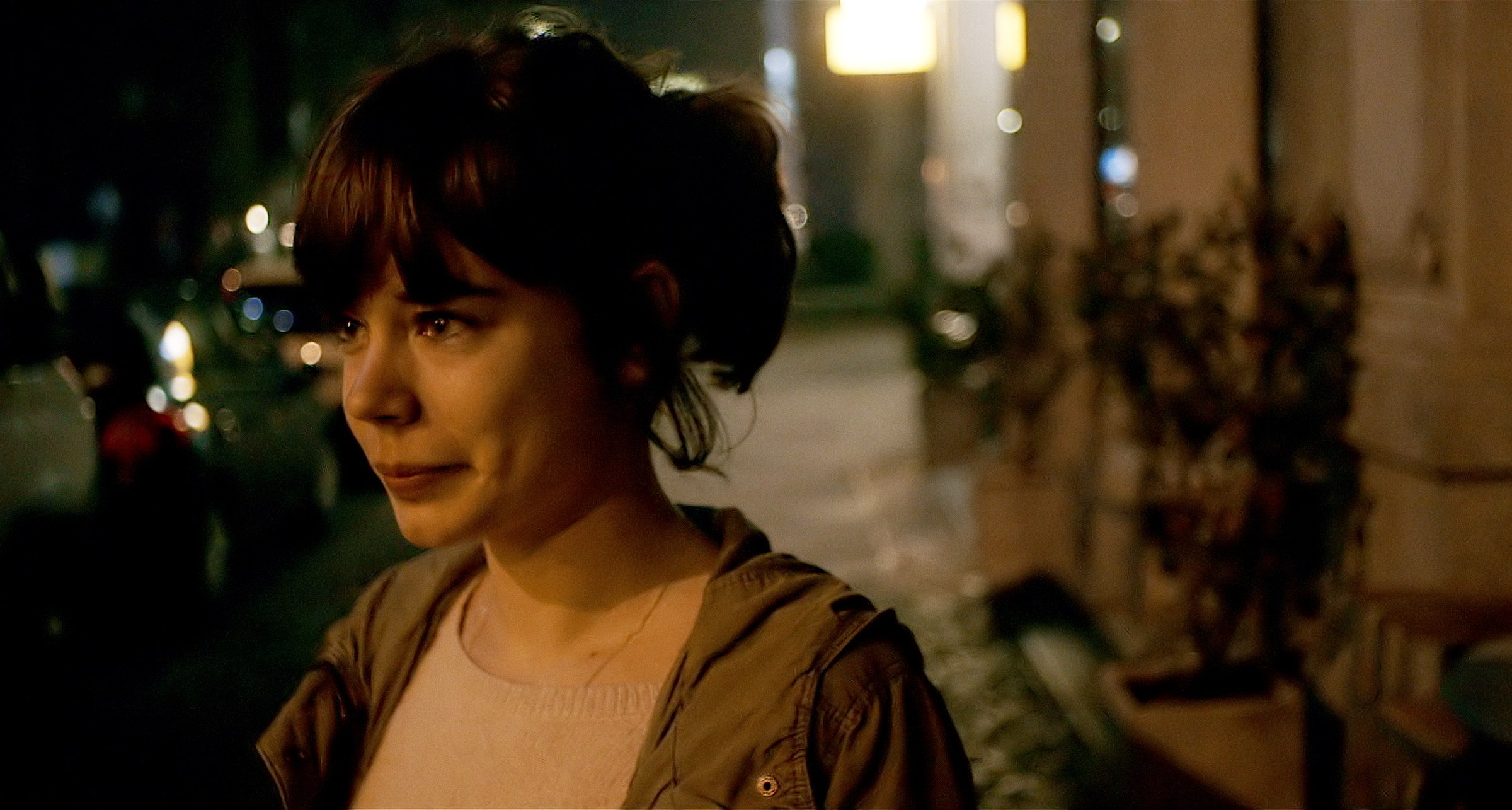
This is a gripping one-take thriller following a young woman from Madrid who falls in with a group of four friends while on a night out in Berlin.
Things go from good, to bad, to worse over the course of this 2 hour journey through which we see brilliantly how the central character has to react to fear and exhaustion.
There’s incredible use of music here too.
Eye in The Sky
released April 8th, 2016
A well-reviewed thriller about drone warfare at the Toronto Film Festival last year, before the sad and premature passing of Alan Rickman.
Eye in The Sky will be the last time this great actor will be seen on our screens (his voice is to be heard in the upcoming Alice Through the Looking Glass) and one hopes that the reviews are accurate, and that this proves to be a fitting final performance. With support from Helen Mirren and Aaron Paul, we hope this is as good as Andrew Niccol’s fantastic drone warfare drama Good Kill, and asks some of the same complex moral questions of its subject.
Midnight Special
released April 8th, 2016
Midnight Special sees director Jeff Nichols once again united with regular collaborator Michael Shannon (Take Shelter) in a story that encompasses science fiction, as Shannon’s character aims to protect his specially empowered son from the attentions of various law enforcement groups and a cult.
The supporting cast of Kirsten Dunst, Joel Edgerton, Adam Driver and Sam Shepard only serves to raise expectations for this film.
Anomalisa

Anomalisa – 2016 (UK)
Starring: David Thewlis, Jennifer Jason Leigh, Tom Noonan
Director: Charlie Kaufman & Duke Johnson
Words: J. Wood
Michael Stone is a middle aged man depressed with the emptiness of his life. Arriving in Cincinnati to give a speech about Customer Services in a faceless hotel you quickly notice that Michael sees and hears everyone as the same. Following an ill-fated reunion with an old flame and a loveless conversation with his partner and son he hears and sees Lisa, the one person who stands out to him in the world, and her presence sets off an unprecedented chain of events within Michael. This all happens in a stop motion animation movie and in some ways the film proves to be Charlie Kaufman’s greatest achievement.
The main thing to say about the film is that the way the film’s animation is done is really something truly special, the likes of which I have not seen before. For a film so steeped in artifice, where the puppets appear to have a feature where their faces are interchangeable, there is a realism about the film that at times makes you forget that this is in fact an animation. Some have made comparisons with Team America: World Police simply because both films contain both puppets and a sex scene, yet this is a lazy and churlish comparison to make. The use of puppets really is a boon when it comes to the surroundings of the film, as the artifice only adds to the blandness of the whole thing, meanwhile there is something deeply unsettling about seeing the same face over and over. Only Charlie Kaufman would use a rare disorder like The Fregoli Delusion as a key yet unexplained plot point to a film, signposting it only by the name of the hotel, and still make it work as part of the film’s innate mix of the strange and the mundane.
Elsewhere the film is very good at telling a human story, yet with episodes of uncharacteristic weirdness that only serve to enhance the film. Much of this success comes thanks to the voice work of David Thewlis, who somehow embodies Michael with the dejected and detached qualities without relying on posture that actors playing such characters so often need. Meanwhile Jennifer Jason Leigh gives a wonderfully complex essaying of Lisa, with her hotchpotch of wariness, excitement, fear and naiveté all coming together to make a perfectly judged character. It is astonishing to see the progression of these characters throughout the middle act of a film that brings them together in the most human of ways; through sex. Some will consider the sex scene to be one of the movie’s standouts and although I thought it to be done both effectively and tastefully, when it could so easily have become unintentionally comedic, the sequence before it in which a coy Lisa comes out of her shell with an almost sorrowful rendition of Girls Just Wanna Have Fun is the real moment in which the film’s aims and intentions both became clear and fully worked for me. Later on in the film there is a nightmarish sequence as Michael’s newly discovered utopia begins to fall away in nightmarish fashion which is the movie’s most memorable moment, yet the fleeting moments shared between Michael, Lisa and Cyndi Lauper are the film’s pinnacle.
It is unfortunate that the sense of momentum that the film gains throughout its middle act cannot be maintained to the conclusion. The use of Tom Noonan’s voice as everybody else in the film begins as a genuinely unsettling device that creeps up on you until the moment of realization that everyone not only looks the same but speaks with the same voice, with no intonation allowances given for age or sex. After a while however you begin to relax into the idea and, save for one sequence this quickly lost its ability to unnerve me. The film takes one or two forays into ill-advised comedic instances, a misunderstanding between a toy shop and a sex shop is something out of a second rate British sitcom whilst jokes coming from fleeting images outside hotel windows do not good comedy make. Ultimately the film seems unsure of how to wrap its narrative up, and so the final act is not quite as tightly put together as the film has previously been. While this is still an astonishing cinematic achievement it just feels a touch disappointing that it has not attained the heights it could.
Having carefully considered for some time my thoughts on the film I concluded that Kaufman just did not care enough about the aspects I cared about most. Put simply he is too icy cold and logical a filmmaker and writer with regards to the human elements of the story. The film does such a good job at creating Lisa as a redemptive character for Michael, and builds their relationship so well, that I really did not approve of the narrative swirls. I did not care for the vaguely concocted mental health related path taken when I had grown to care so much and so quickly for the two central characters. While I understand that this was not the filmmakers’ aim I just found it a shame that so much good character development, the like of which you rarely see in a live action film, went sadly to waste. There is still no way that I will not recommend Anomalisa highly, for it is a film the likes of which you will not have seen. I would just suggest going in with tempered expectations and a detached frame of mind as the best course of action.
10 Cloverfield Lane
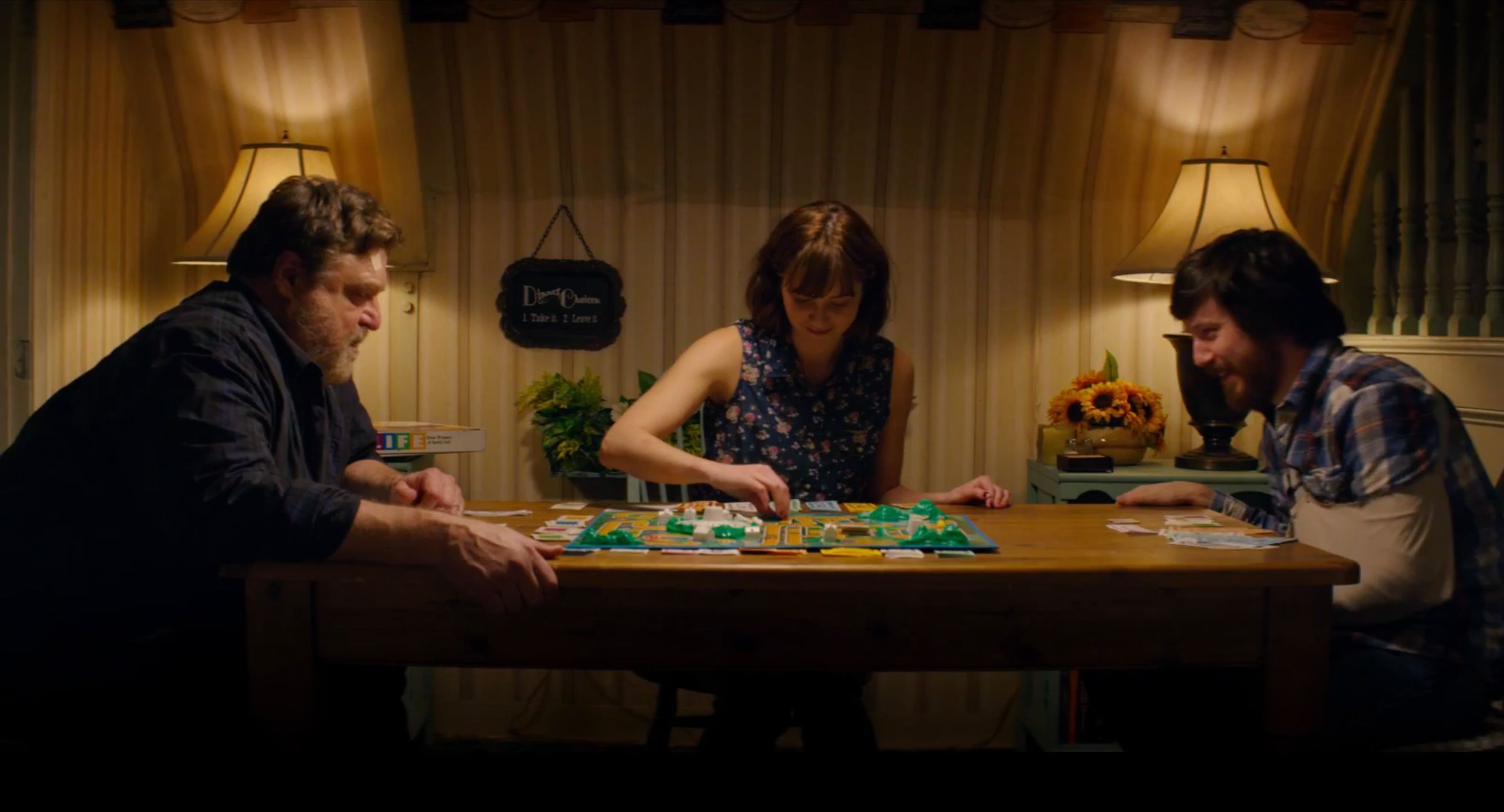
10 Cloverfield Lane – 2016
Starring: Mary Elizabeth Winstead, John Goodman, John Gallagher Jr.
Director: Dan Trachtenberg
Words: R. Topham
First thing’s first – do not go to see this movie expecting it to be a sequel to Cloverfield. It’s not. The only comparable factor is the potential of human extinction at the hands of otherworldly monsters seeking destruction. Aside from that, 10 Cloverfield Lane is a far more thrilling watch than its counterpart, with a plot twist Christopher Nolan would be proud of.
As a viewer, you’re on edge from the very beginning. We’re introduced to Michelle (Mary Elizabeth Winstead) as she’s packing her belongings to flee her apartment – but why? She leaves what appears to be an engagement ring behind – but why? She takes a bottle of whiskey with her instead – but WHY? To amplify the sense of impending doom, the opening sequence develops into The Shining-esque birds eye view shots of the protagonist’s car driving along a deserted country road, teamed with haunting orchestral music. It’s textbook tension.
The predominant theme is fear and its debilitating effect on sanity. 10 Cloverfield Lane makes excellent use of sound and body language to create and carry the agitated mood rather than semantics: anytime the menacing thud of Howard’s (John Goodman) steps could be heard coming down the stairs, a close up of Howard clenching his fists anxiously when he senses conspiracy early on, and Michelle grasping her sketchbook tightly when talking to Emmett (John Gallagher Jr) about regrets, to name but a few examples.
However, there are valuable lessons to be learned from the inhabitants of 10 Cloverfield Lane, especially in terms of trusting those around you. Howard has been living in fear of a chemical or nuclear attack for so long (whether it be from the Russians or the extra-terrestrials), he’s made it his mission in life to be prepared for such an occurrence, and in his own words, “crazy is building your ark after the flood has already come”.
It is, also, refreshing to see a female stand her ground so ferociously in a sci-fi film. Similarly to slasher/horror film You’re Next, 10 Cloverfield Lane doesn’t necessarily defy the genre conventions as a whole, but the female protagonist who succeeds through logic rather than sexuality is still a relatively underrepresented character. Praise must also be given to John Goodman, who brings brazenness and veteran realism to the role of the neurotic and extremely creepy Howard.
A slightly bizarre and surreal addition to sci-fi that expertly snowballs the drama until the calamitous ending; for his directorial debut, Dan Trachtenberg nailed it.
The Witch

The Witch – 2016
Starring: Anya Taylor-Joy, Ralph Ineson, Kate Dickie, Harvey Scrimshaw, Ellie Grainger, Lucas Dawson
Director: Robert Eggers
Words: N. Scatcherd
The title card for The Witch actually reads as The ‘VVitch – A New England Folktale’. This should give you some idea of both how straight-faced the film is, and also of how much it really grounds itself in its grimy, miserable setting of 1630s New England wilderness. The old-fashioned spelling of ‘witch’ aside, the film’s meticulous attention to detail ranges from the clothes to the ‘ye olde worlde’ 1630s dialogue, full of its doomy utterances of Hell and damnation.
The story follows a family evicted from their Puritan plantation for “the sin of pride”, and forced to eke out an existence of exile in the surrounding woodland. Ralph Ineson is William, the surly father who constantly opines that God will deliver the family from their hardships if they work hard, while their humble home is tended to by his wife Kate (Dickie) and their children – teenage Thomasin (Taylor-Joy); Caleb (Scrimshaw); and twins Mercy and Jonas (Dawson). However, when the youngest child disappears, eyes turn to the deep, dark woods – and then to within the family itself, as religious hysteria and accusations of witchcraft threaten to tear them apart far quicker than any supernatural happenings.
Some marketing for the film may lead one to believe that they’re in for a thrill a minute, jump scare-heavy endurance ride. Instead, the film actually uses some genuinely creepy sound design and clever editing tricks to constantly keep the viewer on edge. The film seems more interested in keeping you uncomfortable rather than allowing any of the catharsis of a quick ‘boo!’ scare, and it works admirably. Some of its most effective and unsettling scenes don’t involve any direct witchcraft stuff at all, but draw dread more from the growing atmosphere of paranoid mistrust and resentment in the family, which of course builds to a blood-splattered climax which – even when it arrives – is smart enough to know what to show, and what to infer.
The performances are very good, with Ineson in particular having a knack for the strange, off-kilter dialogue, and Kate Dickie bringing some palpable fear, doubt and sorrow to her role, as a mother who seems to be losing her husband, her children and her faith in God all at once. Taylor-Joy is very compelling as Thomasin, who is first blamed for the disappearance of her brother, then accused of being evil altogether. The mounting intensity of these accusations really showing in her increasingly haggard physicality, and the expressiveness of her face (her eyes seem capable of going wider than should be possible) and she remains a magnetic presence throughout.
While a subject like a malevolent witch living in the woods may sound hokey, The Witch maintains a tone of sombre-faced seriousness by throwing itself into its religious themes, and remembering that the best horror films imply more or as much as they show outright.
London Has Fallen
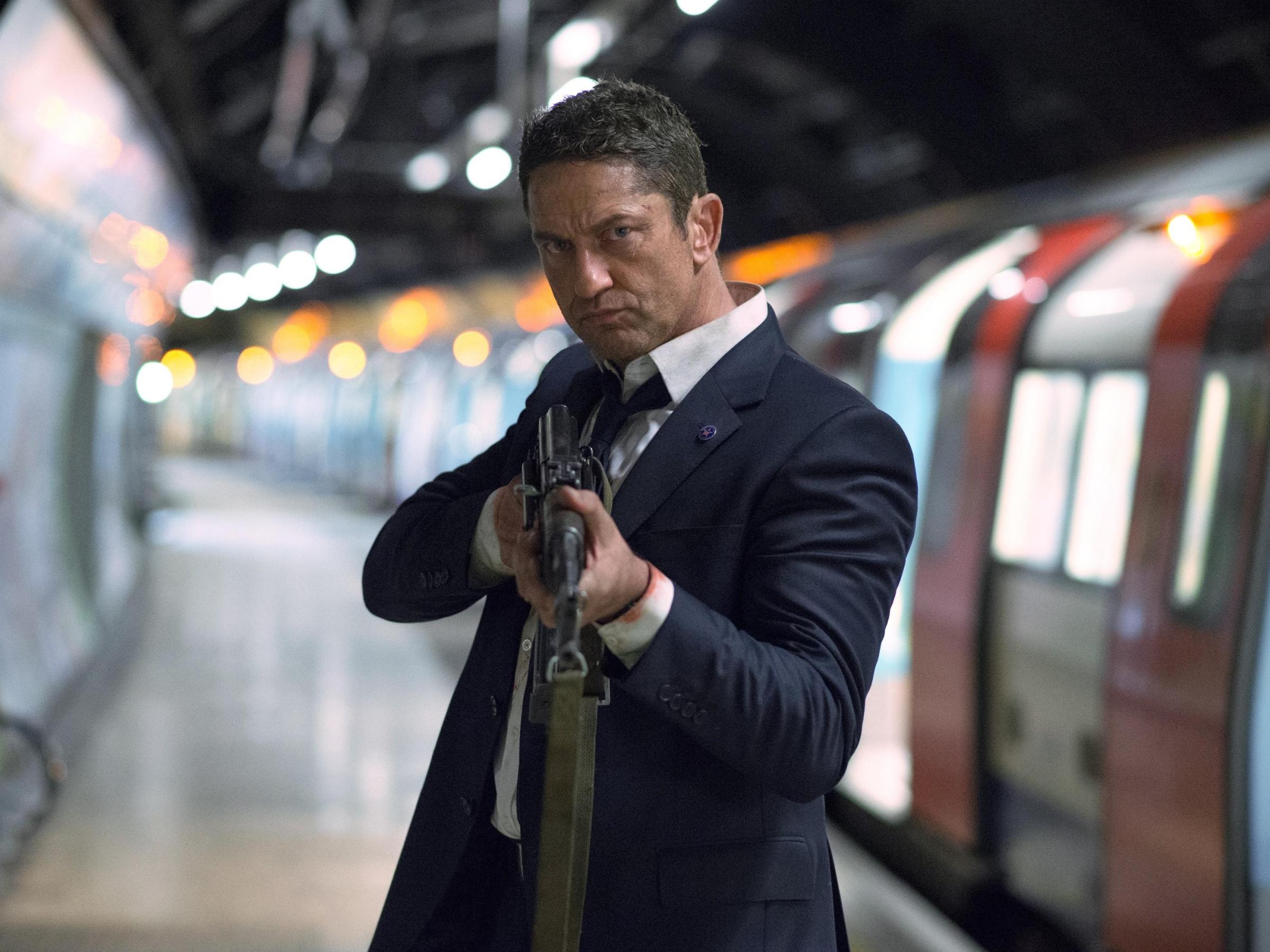
London Has Fallen – 2016
Starring: Gerard Butler, Aaron Eckhart, Morgan Freeman, Angela Bassett
Director: Babak Najafi
Words: C. Abbott
Following the increasingly bizarre Hollywood trend of featuring London at the forefront at any opportunity possible, this is one occasion that choice will make you cringe and beg for American soil. The cringe factor resonates throughout, held barely together with boring, flat cinematography, dull uninspired characters and a lacklustre plot that will leave you scratching your head and questioning your life choices. Picking up two years after the White House was subjugated to a devastating terrorist attack, The President (Aaron Eckhart) now has to face a new international crisis.
Opening with a lazy montage of news reports serving simply as exposition and to layout a poorly constructed chronological framework, it truly sets a tone. Yet it is only when the line “bourbon and bad choices” is uttered by are hero Mike Banning (Gerard Butler) that we, the spectators of this crime against genre fiction truly understand what we are about to witness. With a script that seems to be the insipid patriotic lovechild of Oliver Stone and Mel Gibson, the nationalism is high and the logic is low. Xenophobia fuels the cause-effect of the narrative and borderline racist slurs run rampant. At a time when Hollywood is carefully orchestrating a new, progressive image, this brings that image into blinding question. Cruising from one gun fight to another with little regard towards reason, these sequences are vehicles of questionable intent. After Banning offers a terrorist a chance to return to “fuckheadistan” there is a palpable sense of unease that goes beyond the acceptance that 90% of the British services have been taken over by insurgents. There is a sense that this film is promoting hatred and misinformation.
When it comes to these action sequels, often the case is the special effects are only point held up as a saving grace. Yet, not only is this a redundant point when special effects are generally at such a high standard, but it isn’t even true here. The special effects are abysmal. CGI helicopters weaving between tower blocks added in post is one thing, car bombs that defy physics is another. It is impossible to invest in characters that are not only one dimensional but also surrounded by events that are produced in terrible green screen.
Any level of creativity and joy that probably wasn’t put into the first film is gone, replaced by the Hollywood machine seeking to churn out a quick buck. This corporate investment of a sequel is as unwanted as it is unwatchable. No-one asked for this follow up, the characters didn’t deserve it; the narrative didn’t require it and the audience didn’t ask for it. The results are dull as dishwater, subpar trash that will be forgotten to the dustbin of history. Do not watch this.
Trumbo
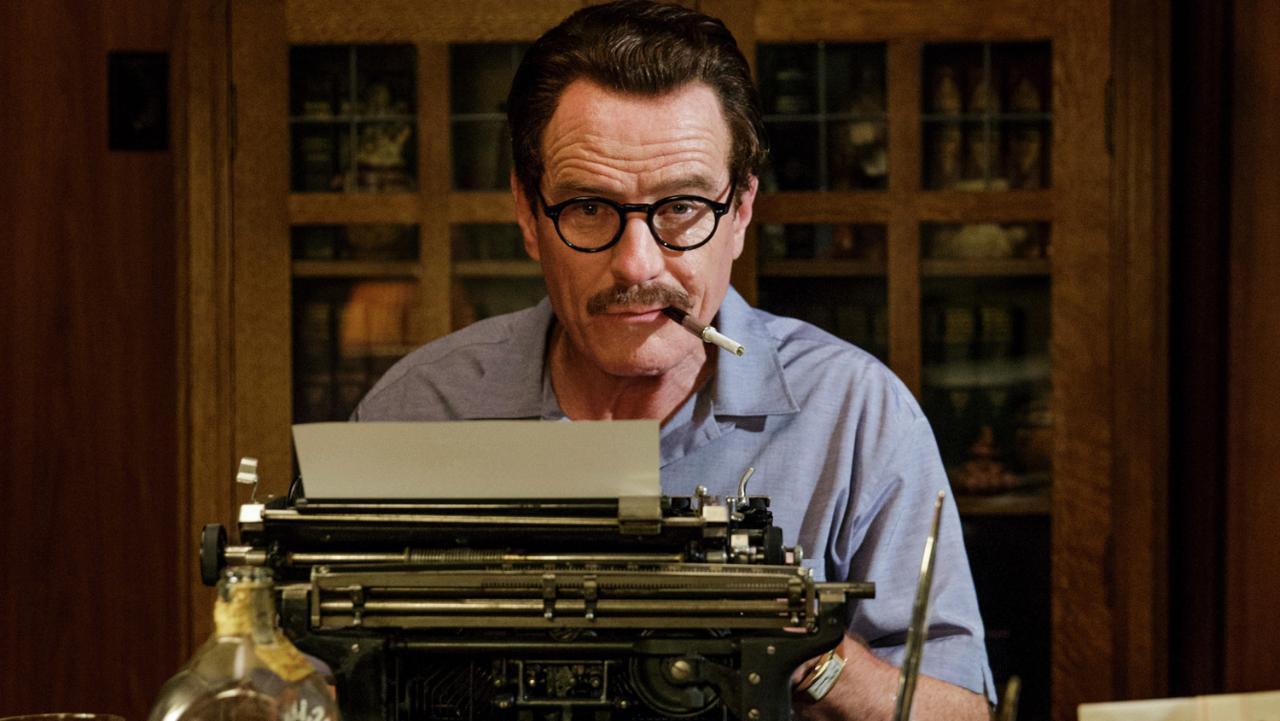
Trumbo – 2015
Director: Jay Roach
Starring: Bryan Cranston, Diane Lane, Louis C.K, Helen Mirren
Words: B. Halford
With the Cold War between the United States and the Soviet Union in full swing, the House of Un-American Activities Committee turns to Hollywood looking to expose and blacklist people suspected of communist sympathies. Amongst those suspected is screenwriter Dalton Trumbo (Cranston) who takes to writing screenplays under pseudonyms as he battles the political witch-hunt.
Whilst director Jay Roach is probably best known to the public at large for his comedy films which include the Austin Powers films, his collaborations with Sacha Baron Cohen and Meet The Parents (2000), the other face to his work is political dramas produced for television with Game Change (2012) and Recount (2008). Here that aspect is brought to the big screen in an effort that still feels better suited to television, but in most other aspects is a very satisfying, if flawed, film.
Given the prominence in Hollywood’s history itself (admittedly, not its proudest period), the era of the Hollywood Blacklist and the investigations into Communist activities in Hollywood has been a well-explored topic but Trumbo is still able to give the film an entertaining spin. Some of this is through the round of impersonations that the cast give to iconic Hollywood stars of the period. Whilst some pass a little too close to unconvincing parody (such as David James Elliot’s minor role as John Wayne)
Ultimately, this brings it all to Bryan Cranston’s performance as Dalton Trumbo. By perhaps luck, or most likely design, Cranston bares something of a similarity to the famed screenwriter in appearance and in voice, allowing him to slip into character very naturally. You seldom get the feeling that Cranston is consciously acting, which is only a good thing, whilst his dialogue as Trumbo allows for a great deal of standing on the proverbial pulpit and preaching to the masses, in equal parts a brave idealist and a self-righteous prig avoiding the temptation to overly proselytise in Trumbo’s favour.
The film’s only major problem is its own televisual nature. Given Roach’s earlier work in making politically-themed films for television and the film’s lower budget, the film ultimately does come away looking a little less polished than its big name cast may suggest and its ticking-the-boxes approach to covering Trumbo’s career and lifestory does also give off the feeling of a made-for-television film, even if the subject is fascinating and gives us insight into such Trumbo-penned classics as Roman Holiday (1953) and Spartacus (1960).
At times Trumbo teeters towards being over earnest but on a subject that does somewhat forgive such leanings and the engaging screenplay and game performances d stop the film from feeling too dry and academic. Trumbo will probably never be realised as anything more than a possible highlight in the careers of Jay Roach and Bryan Cranston, one highlight of many. Chances are it won’t endure and in truth, it doesn’t reach the heights of those same classic movies it namechecks throughout. However, as a depiction of a fascinating life at a fascinating time in history, the film lives up to what it promises.
Dad’s Army

Dad’s Army – 2016
Director: Oliver Parker
Starring: Toby Jones, Bill Nighy, Michael Gambon, Catherine Zeta Jones
Words: B. Halford
It’s 1944 and in the final months of World War II, German forces initiate Operation Cobra, sending a spy over to the United Kingdom to spy on British forces. Meanwhile, in the small English town Walmington-On-Sea, the local division of the Home Guard (known colloquially as Dad’s Army) are shaken by the arrival of a glamorous reporter (C. Jones) in town.
The history of British sit-coms being adapted to the big screen is a shaky one indeed. When discussing the history of British cinema, the multiple transitions from the small screen to the big are regarded as something of a national nadir, with Holiday On The Buses (1972) actually being something of a short-hand term for the absolute worst in British comedy films. With Dad’s Army being a popular favourite of the time, it also received an adaptation in 1971 which was rather warmly received even if it was never as loved as its parent. This time around, little has changed. This new Dad’s Army is far from terrible but decidedly lives in the shadow of the far superior TV series.
Perhaps the thing that became the main talking point upon the film’s announcement was the casting. Given the higher-than-average age of the main cast, the major roles are populated by some of British cinema’s old guard and the performances contain a mixture of actors doing dorect caricatures of the original roles (Toby Jones’ Captain Mainwaring) to actors simply sticking to the style for which they’re best known and reinterpreting the role (in particular Bill Nighy playing Seargent Wilson as Bill Nighy). As such, the performances will probably not resolutely upset or thrill anyone in regards to authenticity however Tom Courtenay does manage to provide a fresh spin on Clive Dunn’s iconic role of Jones, both making it his own whilst also not playing into his usual mode.
On the other hand is the film’s approach and differences to the show at large. One of the issues when it comes adapting something into a film, especially a TV show is to how to make it different. Often times, an increase in budget means an increase in scale and this is true of Dad’s Army. It may not be a Spielbergian World War II drama, but the staging is far grander than on its parent show and so it loses some of that friction, tension and energy much as how the first series of Blackadder, which its larger scale and budget falls flat against its cheaper but snappier successive series. In introducing a larger threat than on the traditional series, it detracts from something of the parochial charm of the show and also breaks some cardinal rules including the appearance of Mainwaring’s till-then-never-seen wife, though ably played by Felicity Montagu.
In all honesty, Dad’s Army is best taken in the spirit of an affectionate tribute piece. The films’s attempts at recapturing the magic and strength of the TV series is decidedly lacking but you can till tell there is definite love there and an attempt to get back to that same feeling. When the film also drives towards something more ambitious in the film’s closing act feels somewhat half-baked but you always feel that the filmmakers are trying and much like the bumbling fictional characters they have attempted to revive for the big screen, there is still something awkwardly endearing about their honourable failing.
Grimsby
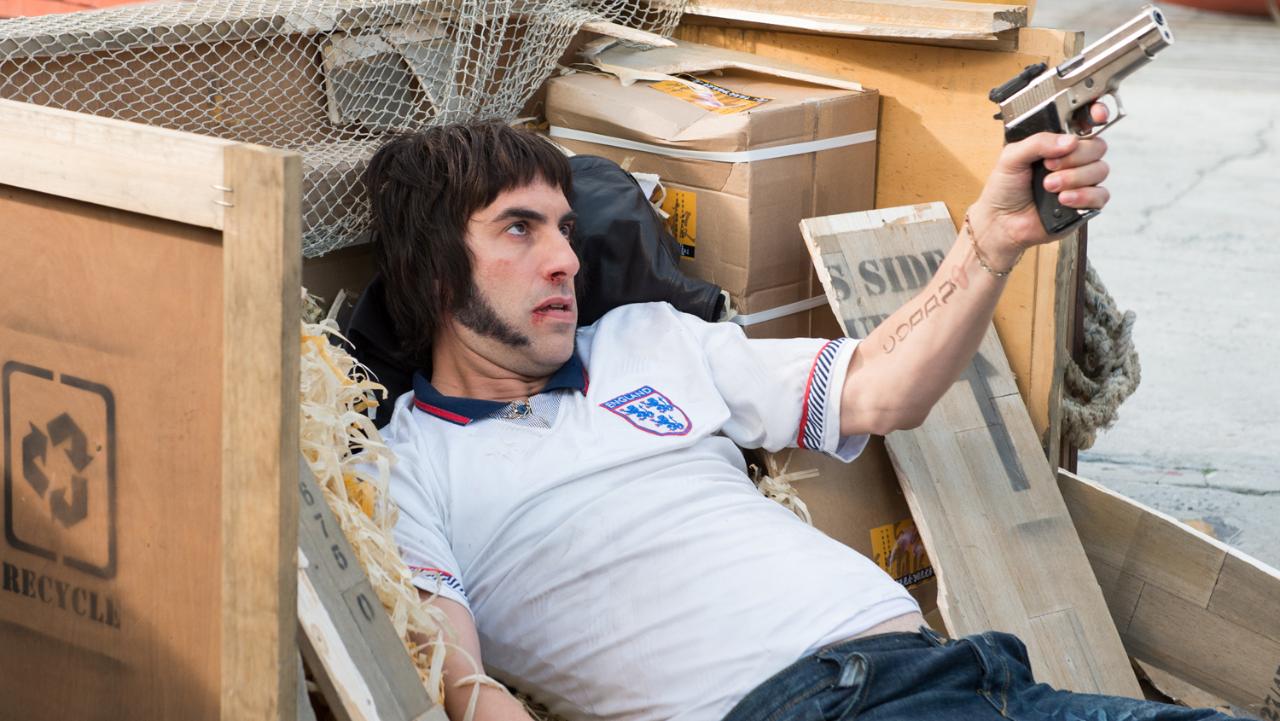
Grimsby – 2016
Director: Louis Leterrier
Starring: Sacha Baron Cohen, Mark Strong, Isla Fisher, Rebel Wilson, Penélope Cruz, Gabourey Sidibe
Words: C. Abbott
This is a film that manages to achieve something few do – to declare itself utterly redundant from the opening scene. We as an audience are immediately set the tone for what is one of the most vapid and revolting films in recent memory. Feeling more like Malcolm McDowell in A Clockwork Orange being subjugated with the horrors of war and famine, Grimsby too feels as though you are witnessing a war crime you can’t escape from.
Basing itself around the tired formula of a bromance/buddy film, the world’s greatest spy (Mark Strong) has to team up with his brother (Sacha Baron Cohen) from the aforementioned town. We’re told hilarity ensues – it doesn’t. At a mere 83 minutes long, this should be a short, snappy comedy with a fast pace of laughs and gags. The results are a tiresome drag with flat humour and uninspired characters. As with the modern trend of weak comedy film, note: The Hangover Part 3, Grown Ups 2 and The Vacation, what they lack in creativity and wit, they make up for in gross out moments that are simply put in to trigger a reaction. Grimsby manages to top them all with an extended sequence that takes place entirely within an elephant’s uterus. Enough said.
While not being able to describe this as a hateful or evil film, it is certainly a depressing and repugnant one. After the umpteenth joke around fellatio or certain sexually transmitted diseases, you’ll need a cold shower to cleanse yourself from this vacuous filth. This is a comedy that should appeal to no-one. The jokes are non-existent across the board, it is neither a clever spin of the spy film, a mockery of social class or even recognisable to the people of the real Grimsby town. The films of Sacha Baron Cohen have only been getting weaker since the brilliant Borat and Bruno, this is an all-time low. If The Dictator was disappointing, then this is a calamity.
The performances feel forced and at times as though the actors simply do not what to be there. Mark Strong looked more pained rather than mean throughout, yet what he is doing here in the first place is anyone’s guess. Director Louis Leterrier shows absolutely zero comedic flair here and doesn’t make up for it in the action sequences. Coming from The Transporter franchise we know he has a grasp on creating fun and engaging set pieces. Yet here the action is made up of headache inducing editing that serves more to confuse rather than entertain. Perhaps to hide what can only be weak choreography and special-effects.
This creation deserves to be forgotten, cast out and ridiculed. It is a shameful entry into the genre and an ever more consistently terrible next project in the filmography for Cohen. This worthless rubbish will leave you with a feeling of emptiness and longing for any kind of joy. Utter garbage.
Spotlight

2015/ USA
Director: Tom McCarthy
Starring: Mark Ruffalo, Rachel McAdams, Michael Keaton, Brian d’arcy James, Stanley Tucci, Liev Schreiber, John Slattery
Words: J. Senior
So with one fell swoop, and another night of scandalous amounts of glitz and glam, this years awards season has drawn to a climactic end.
However, as is typical, The Academy Awards tended to stray from the script layed down by The BAFTAS and has instead this year given its most coveted prize to Spotlight, in place of The Revenant which took top billing on this side of The Atlantic.
I think it’s fair to say that this is a breath of fresh air from all of the overwhelming news we’ve had about Leo finally bagging his first Actor’s Oscar and director Alejandro González Iñárritu going for a rare back-to-back director’s award. The fact that Spotlight has won in the face of a film that has proved such an artistic juggernaut is completely staggering. Spotlight isn’t a high piece of art, the actors didn’t spend nine months out in the wilderness filming it or experience anything as arduous as the cast of The Revenant did. However, Spotlight differs in the fact that it is a film that matters. It is a film about a real, modern scandal, that still openly effects millions of people to this day.
The story begins in 2001 when the new editor of The Boston Globe Marty Baron (Schreiber) assigns the paper’s investigative team Spotlight, to investigate child sex abuse cases in the Catholic Church from the 1970’s and 80’s. These cases had been covered in smaller columns but never directly addressed in the intervening years. Baron’s singular belief in the importance of the story pits The Boston Globe at war against the Boston Archdiocese, two of the city’s largest institutions, and sparks a social and political war.
The Spotlight team is made up of Walter Robinson (Keaton) the team’s editor, Michael Rezendes (Ruffalo), Sacha Pfeiffer (McAdams) and Matt Carroll (d’arcy James). Each gives an incredible yet refined performance in this story. We see how each member deals with the crimes they uncover on a religious and personal level. How the unexpected weight of the story begins to lay down on them all, as they uncover more and more atrocities and realise, that their story is one of global importance. What began as a method of boosting The Boston Globe’s waning readership eventually morphs into a moral quest to hold The Catholic Church to account for its actions. With the help of an enigmatic lawyer Mitchell Garabedian (Tucci) they attempt to break down the systemic levels that The Church has in place in Boston, and we see how the American Judicial System was twisted in an attempt to cover up a large number of child abuse cases.
The important thing to remember with this film, is that challenging The Catholic Church in Boston is an incredibly difficult thing to do. Boston is one of America’s largest Irish settlements and The Catholic Church does not take a passive stance within the city, it has eyes and ears everywhere, at all levels of bureaucracy. As one of the victims in the film says “when a priest comes to your house and asks you do to something, how can you say no? It’s like saying no to God”. It makes for an all the more upsetting story, and shows simply how malicious these priests were, by using religion as a gateway to fulfilling their criminal desires. What begins as a story about a few crooked priests blows up into a full blown scandal and even is described at one point as a psychiatric phenomenon.
The truly great thing about this film is the performances from all of the leading players involved. It’s a tough subject that they are tasked with addressing here and each plays their part to perfection. No one takes centre stage and each actor simply plays their part without frills or fuss in a singular bid to give this story the retelling it deserves. You almost get the feeling that the cast began to take on the burden of the real Spotlight team, weighed down by the gravitas of the story they were writing. Each of them is believable, and no one tries to steal focus. Films based on real life and current events have rarely been so true to the story they were inspired by.
Mark Ruffalo probably gets the plaudits if you have to pick one of them out, but that is more down to his character than anything else. Michael Rezendes is, if we can call him this, the comedic member of the team. He isn’t afraid to kick down doors to get the information he needs, and he interrogates people with his happy-go-lucky nature. At one point he waits at the entrance to a legal archive all night to make sure he is the first person to gain access the next morning. He is driven and completely selfless at the same time. The other characters are a little bit more complex and withdrawn, but Rezendes is on the surface and completely up front with his emotions. Ruffalo gets a good monologue towards the end of the film as tensions run high, that you’ll have seen at all the Awards ceremonies. That isn’t to say he out acts anyone, but he does put in a memorable display.
Spotlight may be an unexpected winner all told, but it’s actually less so than you may think. The Academy Awards love to shell of the Best Picture Award to films that show America at its best. Now, it is clear to see that the film isn’t positive in its portrayal of Boston in the 70’s and 80’s. But, it is an incredible example of Americans coming together to solve a problem in their own society. The only way it could be more patriotic is if Michael Keaton ran around waving a giant Stars and Stripes as he chases leads and hounds lawyers. For that fact alone, it makes it a more likely winner than The Revenant, which is a staggering artistic effort but says little about the world in a wider sense.
I think it extends beyond pro-Americanism and is really pro-humanity. It is a film about people doing the right thing in expense of their own lives. It is something that we should all aspire to, and it gives the film an incredibly worthy punch. Unlike other films of recent years that have followed a similar veign like Argo for example. We can forgive Spotlight its schmaltzy American values for the simple fact that is not just a film for America. It is a film about the human spirit in its purest; free of ego, personal gain or selfish achievements. For that fact, and that fact alone. It deserves its Oscar and will truly live longer in the memory than the others than ran against it this year.
 REEL STEEL
You must be logged in to post a comment.