Hidden Figures

2016 – USA
Director: Theodore Melfi
Starring: Taraji P. Henson, Octavia Spencer, Janelle Monáe
Words: Christian Abbott
This is another necessary tale untold by Hollywood which is now getting its due. And that is very much the case; this is a story of inherent merit from its important narrative to more than capable filmmaking. Based on the non-fiction novel of the same name, this is the story of the African American women who’s invaluable, and crucial work, ensured America the top spot in the space race and humanity a transcendent milestone.
The three leads, Taraji P. Henson, Octavia Spencer and Janelle Monáe respectively all bring the accumulative talent of impressive careers. Together, they have all the chemistry and acting power needed to guide us through a story with a smile on our faces, despite the terrible situations of prejudice and racism they find themselves in. That is of course the main driving obstacle of the film – the times.
We are brought back to 1963, a time when women such as these could only dream of a workplace without discrimination. With that said, there isn’t a sweeping backhand to all the white men and women they work with. Kevin Costner plays the project chief Al, who is as subtle in performance as he is in compassion. A defining moment of the film is when he smashes the sign from the door of the segregated bathroom. Alongside him is Kirsten Dunst’s Vivian, the easy to hate co-worker, though even she is awarded a depth characters such as this rarely afford. The biggest surprise was Jim Parsons’ Paul, the quasi-antagonist of the film. Stepping out of his one-note and irritating role of Sheldon in Big Bang Theory, it’s more than pleasing to be allowed to hate his character.
Tying it all together is the, now promising, work of director Theodore Melfi. Being only his second theatrical release it’s an impressive piece of work. There is however a level of schmaltz and generalisation of issues that holds the film back from being considered great, but it is an endearing if sometimes earnest effort. It flows at a steady rhythm; the pace never falters making it a blend of entertainment and important awareness to the people who had to suffer against injustice.
This is a film that should be used to educate, so that we may keep standing up to such basic failures in humanity.
Jackie

2016 – USA / France / Chile
Director: Pablo Larraín
Starring: Natalie Portman, Peter Sarsgaard, Greta Gerwig
Words: Christian Abbott
This is an imperfect but deeply intimate picture, emotional from start to finish, elevated by a career best performance from Natalie Portman in the title role of Jackie Kennedy. This is one of the great untold tales from Hollywood; the story of Jackie Kennedy’s life has always been glimpsed upon at the side-lines, fleeting, and focused rather on her glamorous image than that of her personal life. This tale is one told immediately after the assassination of JFK, in the three subsequent days following, watching as Jackie Kennedy has to deal with the loss of her husband, console her children, deal with the press and face the prospects of her own future and the legacy of her husband.
Director Pablo Larrain keeps the proceedings tight, there is little deviation from the core narrative and the little we do get comes in the form of a conversation between Jackie Kennedy and her priest played by John Hurt. With the benefit of foresight these scenes have added emotion in the knowledge of the passing of the great John Hurt. They are moments concerned with faith and our place in life, often being the more intriguing parts of the film, offering insight into the mind of a hopelessly lost woman in an elegant way. This is an elegantly told story from start to finish, it can be shocking and heart-breaking but it is consistently riveting and engaging.
In other moments such as this we see a re-enactment of Jackie Kennedy’s ‘The Tour of the White House’ which uses vintage cameras to achieve the effect of feeling period accurate, something which is incredibly impressive and hard to accomplish. The film is filled with interconnected sequences such as these, which leads to its biggest flaw – the editing. At 99 minutes long it is surprising to say it feels too short, adding an extra 15 minutes would allow scenes to breath. Often sequences are cut in such a way that it becomes confusing to follow; we jump around back and forth at such a pace that moments don’t feel appreciated and character placement is questionable.
However, the shots we do have are all beautiful, shot on film by Stephane Fontaine (Rust and Bone, Captain Fantastic), every shot has style, coupled with the set and costume design, it deserves all respective Oscars.
A personal highlight was the score by Mica Levi whose only previous work has been Under the Skin, and the unusual strange feeling it brings is perfectly suited. Yet, above all else, it is Natalie Portman’s performance that deserves the awards. The level of emotion she commands throughout the film is astonishing, rivalling her work in Black Swan.
The film as a whole is a great achievement and will garner a level of prestige is deserves.
Cult Corner: Stone

1974 – Australia
Director: Sandy Harbutt
Starring: Ken Shorter, Sandy Harbutt, Hugh Keays-Byrne, Vincent Gil, Roger Ward, Helen Morse, Rebecca Gilling, Dewey Hungerford
Words: Nathan Scatcherd
Few films have the kind of honest, DIY, punk committal to an underground or ‘fringe’ lifestyle as this Aussie biker gang movie from 1974. The film is a real labour of love from director Sandy Harbutt, who also wrote the script, produced, designed costumes and indeed appears in the film as the head of our biker gang antiheroes, The Gravediggers. After several of the Gravediggers are mysteriously bumped off, titular cop Stone (Ken Shorter) approaches the gang and joins them in an initially uneasy, temporary capacity to help them find the people responsible. However, in time-honoured ‘cop on the inside’ fashion, he begins to find his loyalties torn as he develops a kind of camaraderie with these violent outlaws.
While the plot is ostensibly about the Gravediggers finding whoever has murdered their boys (in as much as the murders are the inciting incidents kicking off the story) it’s never the real focus. The film is far more interested in showing the day to day lives of these self-described outsiders who find fellowship and community in each other, riding fast bikes and preaching a life of true, pure freedom from mainstream society, even as such a lifestyle frequently threatens their own lives.
The film clearly finds these characters fascinating (and they are – take for instance Vincent Gil’s ‘Doctor Death’, who dresses like some demented heavy metal vampire, sleeping in a coffin and praising Satan at the funeral of one of the Gravedigger’s fallen comrades); and this often manifests itself perhaps inevitably as a kind of veneration of their wild lifestyle, as we find ourselves as oddly charmed by these characters – with their code of honour and strangely endearing acceptance of each other as social exiles – as Stone himself becomes.
However, the blackly cynical gut punch of an ending seems to subversively undercut any admiration or fondness we may accrue for these characters. There’s a reason they exist on the fringes of society; they’re too violent, too uncompromising, too extreme to exist anywhere else.
The film’s low budget ($192,000) no doubt helped its air of authenticity. It looks slightly grainy, dirty; an almost documentary style look at biker culture, with the whole production steeped in ‘the real thing’ (for instance, one story details how a crowded fight scene was filled out by real bikers as extras, all paid in weed and booze).
Stone is also arguably one of the first films to prove that Australia could make films just as engaging and exciting as anything coming out of the States or Europe, and indeed three of its stars – Hugh Keays-Byrne, Vincent Gil and Roger Ward – went on to appear in Mad Max. Interestingly enough, there is a member of the Gravediggers referred to as ‘Bad Max’, and you can just imagine George Miller watching Stone, hearing that name, and having a kind of epiphany.
The rest, as they say, is history, but the legacy of Stone lives on forever (as can be seen in the terrific documentary, Stone Forever).
2017 Oscars and BAFTA’s in review

We’ve rounded-up our reviews of films from the past year that have made the shortlist to pick up awards this season
– click on the film title to see our review.
We will be adding more reviews of award nominated films as they get their UK release.
Oscar nominated
Best Picture
BAFTA winner:
Best Film
Best Director – Damien Chazelle
Leading Actress – Emma Stone
Original Music
Cinematography
BAFTA winner
Oscar nominated
Best Animated Feature
BAFTA winner
Outstanding British Film
BAFTA winner
Outstanding British Debut
Oscar nominated
Special Effects
Oscar nominated
Best Actor – Viggo Mortensen
Oscar nominated
Supporting Actor – Michael Shannon
you can see all the BAFTA Film Award winners here –
bafta.org/film/film-award-nominees-2017
the Oscars will take place on Sunday February 26th, and you can see the full list of Oscar nominated films here –
bfi.org.uk/news-opinion/news-bfi/features/oscars-2017-nominations-full
and our own selection of the best films of the past year can be seen in our >Best Films of 2016< review
_
Must See Movies: February

At Reel Steel we want to make sure you’re getting the most of your cinematic enthusiasm, so each month we put together our short list of some of the best new releases, from popcorn munching explosion fests to the often weird and wonderful.
Take a look at the trailers below and see what you think to this month’s recommendations!
LEGO Batman
released Friday February 10th, 2017
The team behind the LEGO Movie bring us a solo adventure with the Dark Knight, as he battles to save Gotham from the Joker and learns to work with new sidekick Robin.
A perfect balance of entertainment for kids with enough satire for an adult audience too.
Moonlight
released Friday February 17th, 2017
An extraordinary coming-of-age drama, Moonlight tells the story of Chiron across three moments in his life – first as a pre-teen boy bullied at school, then as a teenager coping with his mother’s drug problem, and finally as a transformed adult but still haunted by the past.
This is a powerful story that explores identity.
Hidden Figures
released Friday February 17th, 2017
This is the remarkable true story of three African-American women working as mathematicians in a segregated area of NASA, and their role in the mission to see the first American astronaut successfully orbit the Earth.
In the history of scientific development, this is an incredible untold story in the race for space.
– SPECIAL EVENT –
Taxi Driver
in cinemas Friday February 10th, 2017
Widely regarded as one of the greatest films of all time, a special 4K restoration will be released in cinemas across the UK.
A career defining role for Robert De Niro as Travis Bickle, a Vietnam war veteran with a disturbed outlook of the world he sees around him through his life as a New York Taxi Driver.
The collaborative working of director Martin Scorsese, Robert De Niro, screenwriter Paul Schrader, cinematographer Michael Chapman and legendary soundtrack composer Bernard Herrmann was a momentous coming together in creating what came to be one of the most iconic films of the 20th Century.
See our feature on the film’s soundtrack >here<
Taxi Driver screenings in Sheffield –
http://www.showroomworkstation.org.uk/taxidriver
_
Taxi Driver soundtrack

Taxi Driver – 1976
Director – Martin Scorsese
Soundtrack Composer – Bernard Herrmann
Words – Joe H.
As a 4K restoration of Martin Scorsese’s influential masterpiece is released in the UK, we take a look at one of the film’s standout features – its soundtrack, via the special 40th anniversary release featuring the complete film score on vinyl for the very first time.
Bernard Herrmann earned himself a cinema veteran status with his iconic soundtrack work on features which have come to be considered some of the greatest films of all time – with Citizen Kane, North By Northwest, The Day The Earth Stood Still and Mysterious Island, to notable Hitchcock films such as Vertigo and Psycho.
In Taxi Driver, the central character carries a warped perception of the world around him, as his mental state zig zags and becomes increasingly irrational as the story progresses.
Herrmann compliments and accentuates this journey with a score which draws you in – its light and smooth jazz feels as though it belongs in a classic Hollywood romance, but then a change in tone will suggest something ominous lurks beneath the surface, a representation of the conflict and internal struggle within the film’s anti-hero.
This is set from the opening scene, as a New York taxi cab makes its way through the city streets at night, the soundtrack accompaniment hits you in waves, going from from soft and smooth to loud and sudden – against a close-up of the eyes of the central character and his out-of-focus point of view of the city, setting a feeling of two tones struggling against each other, which we proceed to witness portrayed with our main protaganist.
Herrmann composed a blend of sounds and tones in creating a suspenseful film score that carries the listener from the film’s opening, to its climactic end.
This music by Bernard Herrmann was his final score before his death on December 24th, 1975.

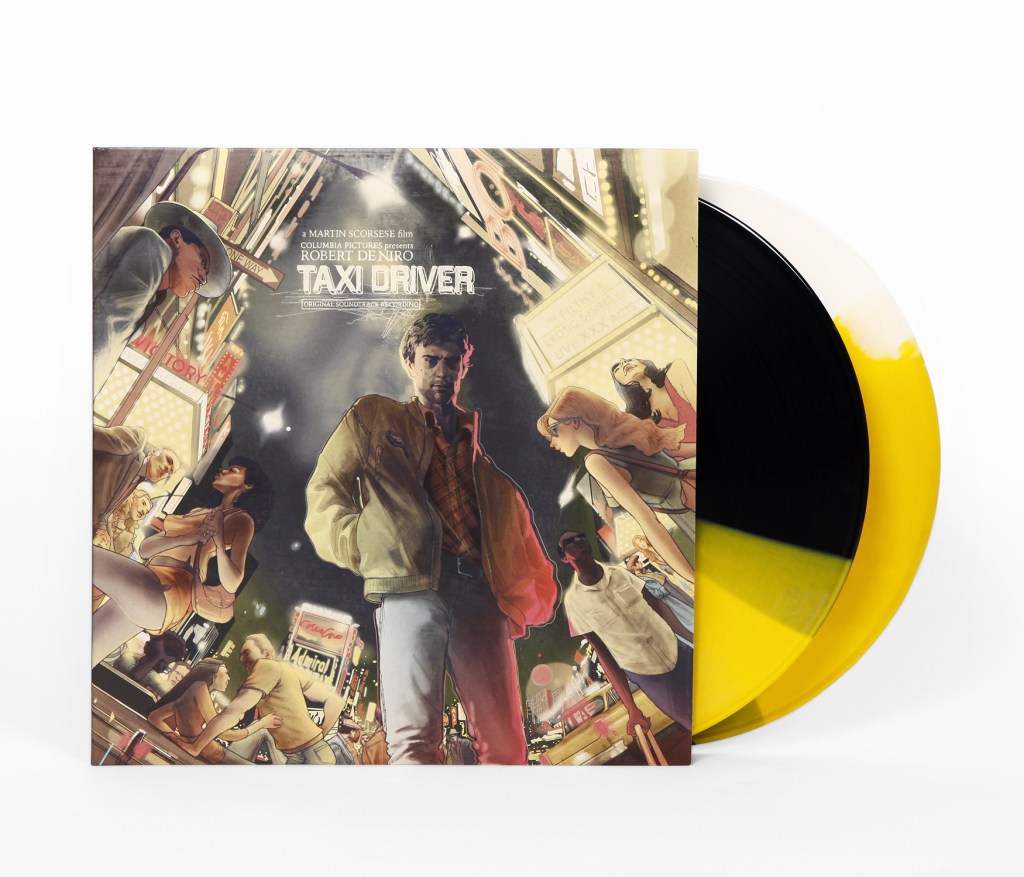
Marking the 40th anniversary of this seminal film, Waxwork Records released a deluxe double LP featuring the vinyl debut of Bernard Herrmann’s complete original score, plus the remastered original 1976 soundtrack.
Waxwork Records worked with director Martin Scorsese on this 40th Anniversary release to which the director provided new, in depth, and exclusive liner notes.
The first disc presents Bernard Herrmann’s score, while the second disc has the complete and remastered original soundtrack from the film.
There are two versions of the release – a limited “Taxi-Cab” version featuring two tri-coloured LPs that are yellow, black and white (the colours of a New York taxi), and the full-coloured yellow release.
Included is a 4-page booklet featuring director liner notes by Martin Scorsese specifically for this release on working with Bernard Herrmann.
There’s everything here to please both fans of the film and vinyl collectors.
Soundtrack released via Waxwork Records (also available through UK record stores) –
waxworkrecords.com/products/taxi-driver
Silence
2017 – USA, Taiwan, Mexio
Director: Martin Scorsese
Starring: Liam Neeson, Andrew Garfield, Adam Driver
Words: Christian Abbott
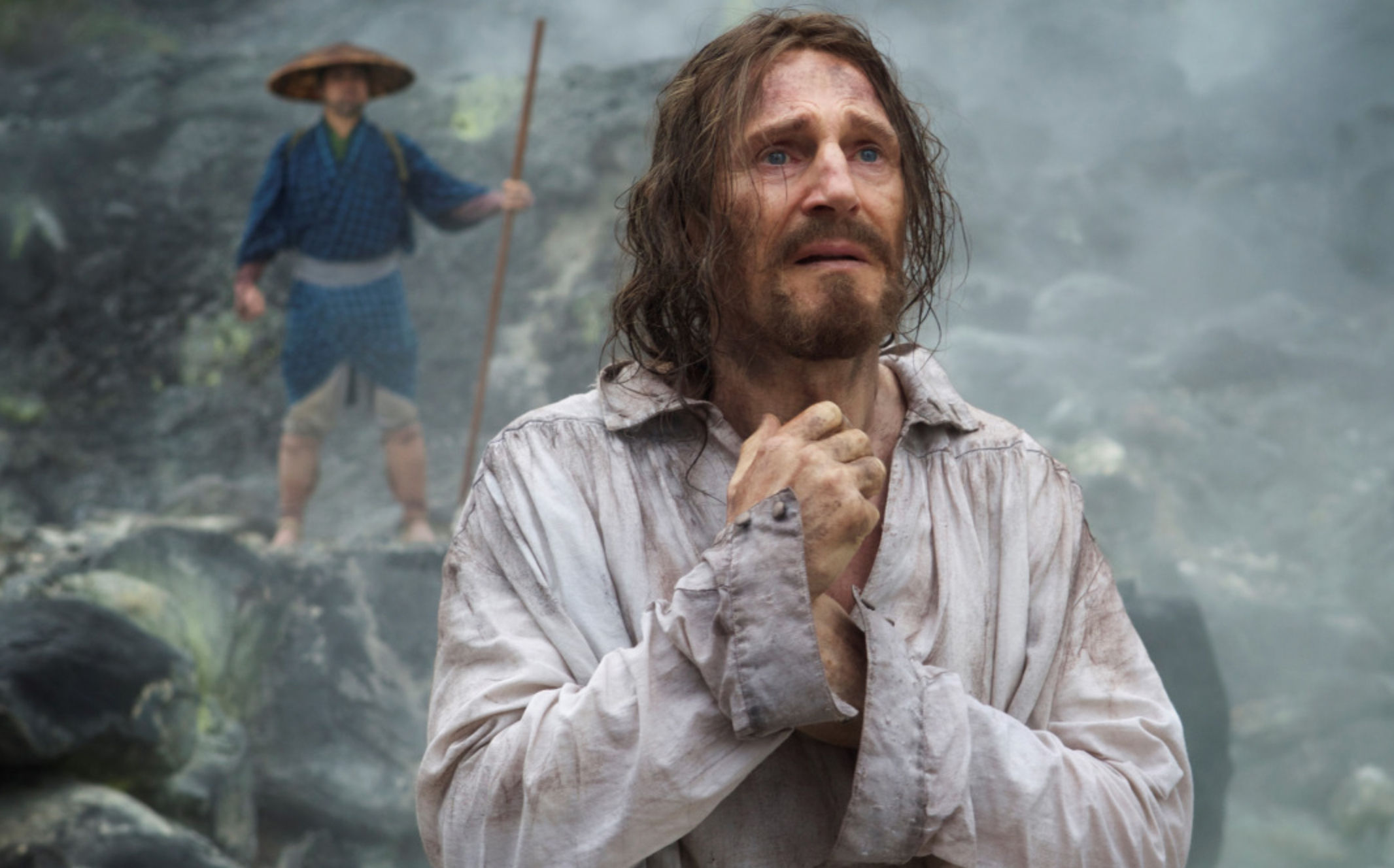
It all began in 1966, when Martin Scorsese first read a novel of historical fiction by Japanese author Shūsaku Endō, from which this film is adapted. A story of two Jesuit Priests, Rodrigues (Andrew Garfield) and Garupe (Adam Driver), journeying to Japan to seek their former mentor, Father Ferreira (Liam Neeson), at a time when Christianity was outlawed and its followers persecuted. Writing the script began just over two decades later and with it a similar journey – a deeply personal, spiritual exploration of a man’s faith, or as it were, all men’s faith.
Perhaps there has never been a more apt title – Silence, the emptiness, the longing, and the feeling of needing to grasp something, anything. Silence binds this work, it is comforting and deafening. There is many a time during the epic quest into the unknown when silence is used to reflect upon things, the intimacy it can provide when confronted with immeasurable torment. This of course is something which breaks it, moments of extended, brutal violence that are shocking but never gratuitous. These are moments which are used sparingly and to great effect. There are many expository shots of landscapes harsh and beautiful, untouched that clash against the misery of man. One such moment is during a scene set on a rocky, ocean attacked beach. Christian men are crucified and drowned slowly by the incoming tide. The moment is unforgiving – men, women and children watch on without uttering a word, faithful until the end. The only thing breaking the silence is the voice-over narration from Rodrigues whom is lamenting the needless murder of these men, asking why the faithful should suffer. Rodrigues never stops questioning because he never receives an answer. Only silence.
This is just one of many beautiful and devastating moments in one massive work of dedication. It’s a challenging yet rewarding experience. It cuts deep into the questions and frustrations we all go through, religious or not. This has been described as Scorsese’s most personal film to date, which seems like an obvious statement. It’s a work that can only come from a personal, singular vision – one that has proven to not win over everyone, yet that doesn’t seem the point. It’s a film we should struggle with, talk about and challenge ourselves with; after all, works like this come so rarely.
Split

2016 -USA
Director: M. Night Shyamalan
Starring: James McAvoy, Anya Taylor-Joy, Betty Buckley, Haley Lu Richardson, Jessica Sula
Words: Nathan Scatcherd
It’s no secret that M. Night Shyamalan has become something of a joke in recent years. Having helmed the effectively creepy The Sixth Sense and the nicely understated superhero origin story of Unbreakable, he quickly began a rough streak of films which range from well-intentioned but stupid (Signs) to embarrassingly self-fellating (Lady in the Water) to… well… whatever the fuck The Happening was. However, hidden inside even his biggest misfires has always been a weirdly endearing fondness for, and proclivity towards, trashy B-movie fare.
Aliens, superhumans, killer trees, woodland monsters (sort of); there’s definitely a fondness for the more ‘low brow’ elements of ‘genre’ film-making (yeah, that’s a silly term but it has its uses), and he always appears to approach such material with a wide eyed sincerity. And with Split, he appears to have fully embraced a kind of twisted, genre bending, exploitation movie style which has drawn apt comparison to the full throttle excess of Brian De Palma. But is it any good? Well… you could say I’m kind of split on that one. HA HA HA KILL ME HA HA HA.
The story concerns a man (James McAvoy) who kidnaps three teenage girls (Anya Taylor Joy, Haley Lu Richardson and Jessica Sula) and locks them up in a basement; the reason for which feels like kind of a spoiler in and of itself, so I’ll keep it vague (I’m aware some of the marketing is upfront about the reasoning, but honestly the less you know in this case, the better. Split is, more than a lot of recent films, best experienced with as little knowledge as possible). This man is ostensibly called Kevin, although he is also a prim English woman called Patricia; a burly, stern man with OCD called Dennis; a lisping nine year old called Hedwig; an upbeat, extrovert fashion designer called Barry; as well as at least nineteen other personalities in one body.
Kevin has Dissociative Identity Disorder, or to be precise, a heavily fictionalised and ‘schlocked-up’ version of the (real life, and almost entirely different) disorder*. The resultant performance(s) from James McAvoy are certainly entertaining to watch, as he flits between personalities before our very eyes, although Betty Buckley is arguably the film’s MVP; as Kevin’s psychotherapist, she exists essentially as an exposition machine, but she sells the occasionally clunky script even when it really isn’t doing her any favours. Taylor-Joy is a darkly beguiling onscreen presence, although flashbacks to abuse in her character’s childhood feel misjudged and threaten to quite seriously derail the film at points.
The resulting overall tone is kind of a mess, but in a fascinating way. It’s sinister and funny; over the top and deadly serious; and when it kicks into full on horror mode, Shyamalan displays a deft knack for ratcheting up tension, although I did find myself wishing the final act would hurry up a bit. Some of Shyamalan’s editing and shot choices feel strangely ‘off’; like he wanted to show off a camera movement or a cross-cut, but forgot to attach a thematic point to any of it.
Oh, and in true Shyamalan style, there’s a twist (come on, you knew there would be). I don’t mention this for any other reason than to reiterate that you would be doing yourself and the film a disservice to look into it too much, and risk potentially spoiling it for yourself accidentally. The Big Reveal is handled kind of clumsily, but damn, I genuinely did not see it coming.
Although it has notable issues, Split is certainly an encouraging step up from Shyamalan’s recent slew of dreck. As backhanded as that sounds, I have to admit a certain relief in seeing that the man still clearly has some talent and vision. However Split comes to be remembered in his overall filmography, it is with renewed interest that I – and no doubt many others – will be watching his work in the coming years.
*There is certainly debate to be had regarding the film’s sensationalising of DID and the possible stigmatising effect it will have for those who really do have the condition. The argument could be made that it works as an intriguing – and admittedly effective – springboard for science fiction/horror storylines, but the inescapable fact is that it doesn’t exactly help to dispel the all too common notion that mental health issues inherently equal violent or otherwise negative behaviour.
Cult Corner: Frankenhooker
1990 – USA
Director: Frank Henenlotter
Starring: James Lorinz, Joanna Ritchie, Patty Mullen
Words: Oliver Innocent
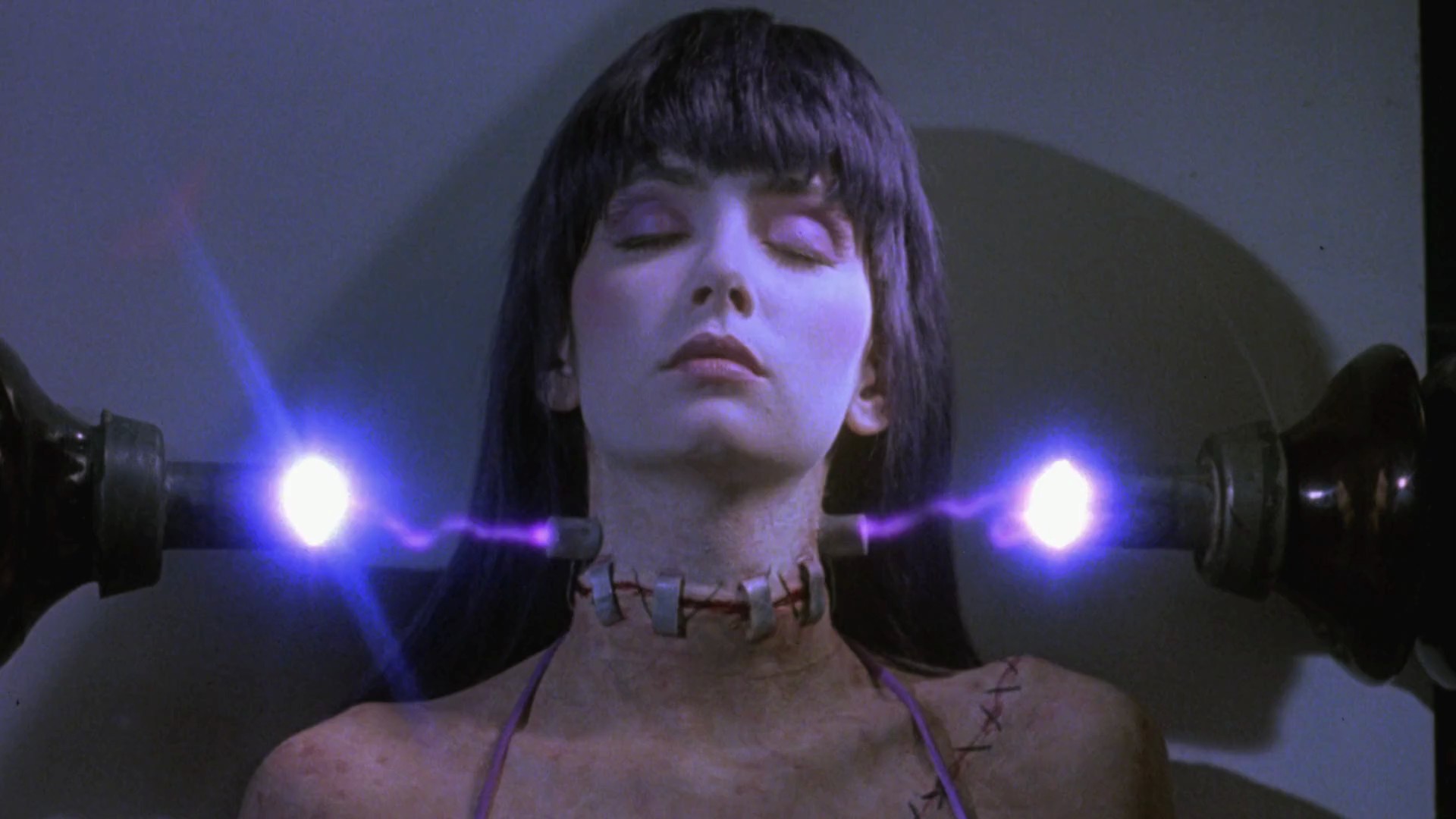
By the time Frankenhooker was released in 1990, director Frank Henenlotter was already something of an exploitation legend, having unleashed the iconic (not to mention truly demented) trash classic Basket Case and it’s even weirder sequel on unsuspecting genre fans. Although undeniably nasty, frequently crude and oftentimes mind-numbingly bizarre, they were offset by a fantastic streak of black humour which meant that, no matter how deep they loitered in the gutter, they remained surprisingly endearing. Frankenhooker saw this black comedy come to the fore while the nastier elements took a step back. More easily digestible than Henenlotter’s previous movies but at the same time in no way diluted (merely toned down), this “terrifying tale of sluts and bolts” as it’s poster so eloquently proclaims could very well be Henenlotter’s masterpiece. It’s certainly a contender for one of the best comedy horror films of the ‘nineties, rubbing shoulders with the likes of Braindead and Bride of Re-Animator (with which it would make a great double bill, both films being about mad scientists creating women from dead body parts).
Coming across like the scribblings of a bored schoolboy hitting puberty, the plot concerns one Jeffrey Franken (a marvellous comic performance by James Lorinz), a science geek with a thick New Jersey accent, and his quest to resurrect his girlfriend after she is inadvertently killed by Jeffrey’s remote control lawnmower. With only her head left, nicely preserved in an oestrogen-based concoction, naturally Jeffrey goes cruising round the streets of New York eyeing up the body parts of prostitutes to (re)create his perfect woman. After literally blowing up a roomful of street walkers when they ingest his newly created drug, Super Crack, Jeffrey attracts the unwanted attention of the girls’ moustachioed, gold chain-wearing, muscle-bound pimp Zorro, finally brings back his girlfriend, and then has to try and stop her ensuing sex and violence fuelled rampage.
It is telling that Jeffrey doesn’t seek to simply rebuild his girlfriend exactly as she was in life (a little overweight), but instead seeks to indulge in the male fantasy of creating a perfect woman by only selecting the very best, most aesthetically-pleasing body parts from beautiful ladies of the night. Hilariously un-PC, it’s a film that speaks to one’s inner immature schoolboy. Elements such as exploding prostitutes, blood, guts, nudity, monsters made from merged body parts, and ultra badass pimps only goes to further this notion. Of course, with such distasteful and absurd subject matter there’s always the risk of either causing great offence or descending into laughable hokum. Incredibly, Frankenhooker avoids both these pitfalls through not taking itself seriously and displaying great comic verve which invites you to laugh with the picture, not at it. It’s also clear that, even though the effects aren’t the most sophisticated, the acting’s a bit hammy, and like it’s namesake it’s a hodgepodge of ideas and imagery sewn together from other horror films, it’s obviously so lovingly made and downright funny it’s more charming than seedy, always staying on the right side of bad taste. As if to reassure anyone who is still feeling a little guilty at enjoying a film where prostitutes blow up and women are created for the pleasure of men, the tables are turned at the end of film when (spoiler alert) Jeffrey (objectifer of women, destroyer of a roomful of prostitutes) is completely emasculated as his severed head is transplanted onto a woman’s body.
La La Land

2016 – USA
Director: Damien Chazelle
Starring: Ryan Gosling, Emma Stone, John Legend, J.K. Simmons
Words: Joe H.
The film genre of the musical is one which is quite often dismissed before it is even explored, with many people saying “I don’t like musicals” when the first film of its type that springs to mind is Mamma Mia, rather than the great films of old starring the likes of Gene Kelly, Fred Astaire and Ginger Rogers.
La La Land seeks to entertain modern audiences while at the same time paying tribute to classic Hollywood cinema.
We follow the story of Mia (Emma Stone), an aspiring actress, and Sebastian (Ryan Gosling), a jazz musician, struggling to get by while pursuing their dreams in Los Angeles.
The two meet in a series of chance encounters, and find one another each holding a passion which their life is centred around – with Sebastian for the music and history of jazz and dreams of opening his own club, and Mia who seeks to live out her life-long ambition of becoming an actress.
As we follow our central characters along their developing relationship, their story shows both the joy and pain of pursuing your dreams in life, conveyed superbly through captivating musical moments.
Against the doubt that some can feel with musicals, the song and dance numbers here don’t feel forced, or even as though a scene has been setup for the sole purpose of breaking into song, but they emerge from a situation fluidly, and don’t hit the typical assumption when it comes to musicals that every song and dance number is a camp, over-the-top bombastic routine – there are short and intimate duets, just as there are equally larger set pieces with fantastic choreography.
LA is the backdrop to this story, and it’s a landscape with an elusive magic, being a city more closely associated with the film industry than any other in the world, it’s an iconic place yet its lack of distinguishing features (aside from the famous HOLLYWOOD sign) makes it less visually distinctive than other major cities (e.g. Paris, New York, London) – highlighted by our on-screen duo when looking across the city from a hillside before their first dance number with the line “it’s not much to look at”, and repeated again towards the end of their story, implying that there’s so much more to the city than its appearance would suggest.
One of the few landmarks, the Griffith Observatory, is used when a scene from the James Dean classic Rebel Without A Cause is featured as a setup for one of the more entrancing scenes, but it’s a city that seems to be all things to all people.
Ryan Gosling and Emma Stone are both on stunning form, acting their way effortlessly in and out of the musical numbers, sparked through a conversation or an everyday situation that gives a reason to sing and dance – it makes you want to be in it, and rarely will you see a film that leaves you with a joy filled energy and has you tapping your feet as you watch.
This is a film that makes you genuinely feel good.
La La Land is the follow-up feature to the Oscar nominated Whiplash from writer and director Damien Chazelle, who along with soundtrack composer Justin Hurwitz, has created something truly special here – a film that gives a reason for the musical to exist again.
 REEL STEEL
You must be logged in to post a comment.