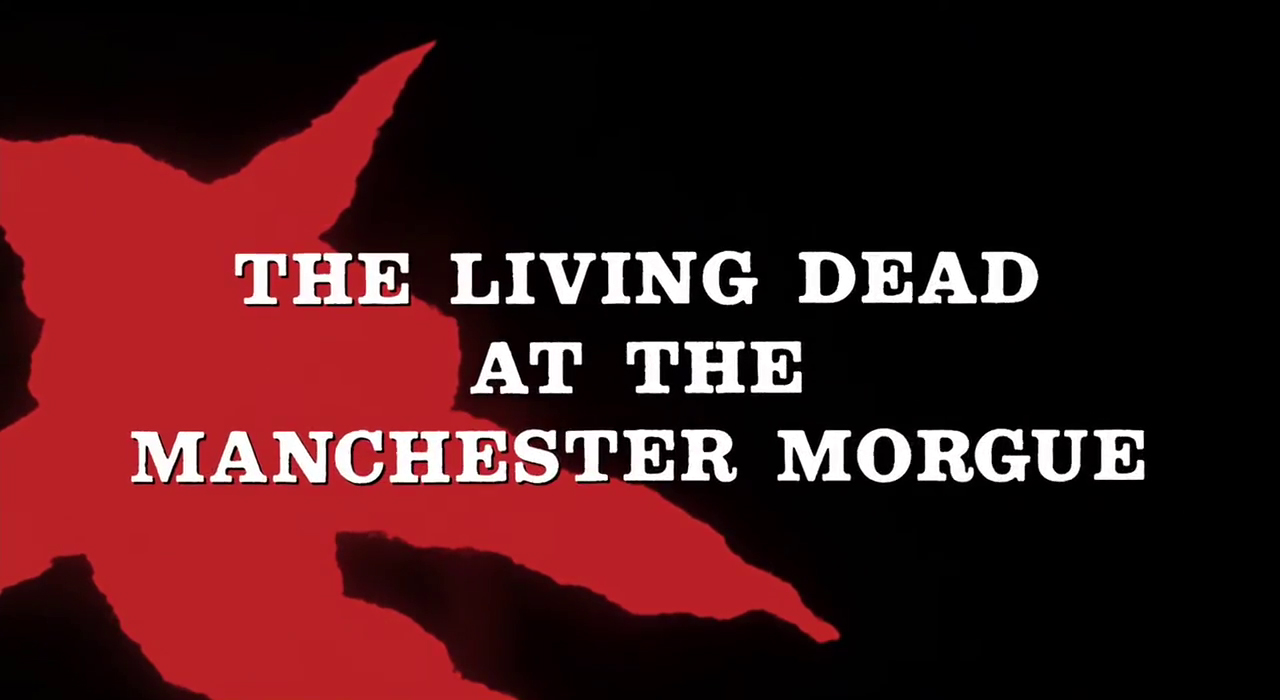
The Living Dead At The Manchester Morgue (1974)
1974
Director: Jorge Grau
Cast: Ray Lovelock, Cristina Galbó, Arthur Kennedy, Aldo Massasso, Jeannine Mestre, Fernando Hilbeck
Words: Scott Burns.
The shadow of George A. Romero’s ground-breaking film Night Of The Living Dead is long indeed, inspiring hundreds, perhaps thousands of zombie movies from 1968 to the present-day. Of this impressive number, only few are good and fewer still are must-sees. Jorge Grau’s horrific The Living Dead At The Manchester Morgue (No profunar el sueno de los muertos) is definitely in the latter category and one of the first to admit a connection to Romero’s genre-defining shocker.
Grau, an avant-garde filmmaker in his native Spain, made his first horror picture in 1973 with Ceremonia sangrienta aka: The Legend Of Blood Castle (1973), a variation on the bloody exploits of the Countess Bathory. That film was an international success (it was released in the US as Blood Ceremony) and the director was tasked with making another.
The film concerns George (a nod to Romero?) Meaning, played by Eurocult actor Ray Lovelock (Live Like A Cop, Die Like a Man), an antique dealer in a cosmopolitan city (London? Manchester? No, Sheffield) populated by unhealthy, miserable people (the sight of passers-by wearing face-masks is particularly jarring post-COVID), dead animals and ignored streakers.
Travelling up north, he meets Edna (Cristina Galbo, The House That Screamed), a young woman who crashes her car into his motorcycle. Edna is on the way to re-connecting with her sister Katie (Jeannine Mestre), and George browbeats her into giving him a lift. They ask for directions at a local farm where an experimental pest control technique, using sonic radiation, is being tested.
The trip turns sour when Edna is attacked by a stumbling, aggressive man. Later, the same man menaces Katie and kills her husband Martin. The murder brings out the local bobbies, led by a nameless Inspector (five-time Oscar-nominee Arthur Kennedy), who immediately takes a dislike to George, a representation of everything he hates about the modern world, to the point of blaming him for the murder.
Later, George and Edna discover that Martin’s killer is Guthrie, a vagrant who drowned and was declared dead weeks earlier – are the dead coming back to life to kill the living? And does it have anything to do with the pest control machine? The answer to both, of course, is yes.
Surprisingly, this Italian/UK/Spanish co-production was largely shot in Derbyshire (the memorable St. Michael and All Saints Church, with the “This Is God’s Acre” sign, is in Hathersage if you plan on a post-film pilgrimage. Little John is apparently buried there!). Grau brings a palpable menace to the usually cosy rural villages and quiet forests, thanks largely to the films’ experimental score, mixing synthesised drones with heavy breathing and the grumbling groans of the re-animated dead.
After the tense, suspenseful first half, the remainder of the film is crammed with show-stopping gore from special-effects wizard Gianetto Di Rossi. Eviscerations, slashings and stabbings ensue, splashing blood around with ghoulish glee and going much further than Romero’s classic.
Indeed, the flesh-tearing carnage proved problematic in the UK when the film was submitted to the BBFC and the board removed 1 minute and 27 seconds of footage to qualify for an “X” certificate. The film would be made available on UK home video in two editions: the first from LVC and entitled Don’t Open The Window which featured the cut R-rated edit; and the full, uncut edition from VIP entitled The Living Dead. The latter landed on the infamous Video Nasties list and was taken out of circulation until it was re-submitted to the board in 1987 which added a further 26 seconds of cuts to the “X” rated print. All those cuts would finally be waived in 2003 when the film was submitted again and has been uncut ever since.
Apart from the bloodshed, what else stands out about this film is the still relevant environmental aspect, regarding pollution, pesticides and other chemicals damaging the eco-system, as well as a general mistrust of science (the “cleaner” but crueller sonic alternative is more destructive) and business.
The film’s most pointed political statement is in the depiction of the Inspector: a foaming-mouth fascist with a license to kill and an attitude to people that even Dirty Harry would consider aggressive (Spain was still ruled by the authoritarian Franco government when the film was being made).
This cult classic is as frightening, ironic and thrilling as the best of zombie cinema.
–
Nightmare City (1980)

1980
Director: Umberto Lenzi
Cast: Hugo Stiglitz, Laura Trotter, Maria Rosaria Omaggio, Francisco Rabal, Sonia Viviani, Eduardo Fajardo, Stefania D’Amario, Mel Ferrer
Words: Scott Burns.
From legendary jack-of-all-trades filmmaker Umberto Lenzi (1931-2018. His career comprises many different genres and sub-genres from violent politziotteschi to giallo, cannibal gore controversies to slasher movies), this is one of his rare excursions into zombie horror; Nightmare City (Incubo sulla citta contaminata) aka: The City Of The Walking Dead.
After news of a radiation spill at a power plant, television reporter Dean Miller (Mexico’s Hugo Stiglitz, Night Of 1000 Cats) and his crew arrive at an airport to interview a scientific advisor. Then, a military plane makes a surprise landing. The door to the plane opens and out pours a bunch of badly-burned, armed to the teeth, mad-eyed loonies who start attacking the police, the army and the press. It seems that they were exposed to the radiation and driven to kill and drink the blood of their victims.
When Miller tries to break the story, he is taken off the air on the orders of General Murchison (Mel Ferrer, a one-time Mr. Audrey Hepburn) who is desperately trying to contain the escalating situation. Meanwhile, Shelia (Maria Rosaria Omaggio, Cop In Blue Jeans), a sculptor, is troubled by visions of widespread murder and violence. As she imagined, the authorities are soon overwhelmed by the vampiric, radioactive masses and Miller flees to try and rescue his wife Anna (Laura Trotter). Who will survive the bloodshed?
A co-production of Spain, Mexico and Italy, the film is perhaps closer to George A. Romero’s other apocalypse movie The Crazies (aka Codename: Trixie) from 1973, as it features contaminated/diseased living hooligans rather that the stumbling undead. As a result, Nightmare City is often referred to as the first “running zombie” movie (a claim Lenzi would repeat at every opportunity). Not only do they run but they also operate machinery, land planes, use tools and fire guns in their rip-roaring radioactive rampage.
Stiglitz jogs through the movie with nary a change of expression, Trotter does her best with what she’s left with but the Golden Ham must go to poor, old Mel Ferrer as a five-star General with one-star dialogue. Thankfully, Lenzi’s muscular direction cuts away the fat with the thrills and spills moving at a rocket pace with plentiful, if not entirely convincing, gore and action unburdened by logic and good taste as only the Italians could provide.
But, seriously folks, let’s not forget that the film, with its twist ending and themes of precognition, is a sincere request not to ignore the dangers of atomic power… well, at least that’s what Lenzi seems to think. You might disagree but you’ll certainly be entertained.
Heavily cut by the BBFC (by over three minutes) but passed complete in 2003 and released in the US as The City Of The Walking Dead, Nightmare City was lauded by the likes of Tarantino and Eli Roth and is the subject of a possible remake (special effects legend Tom Savini is rumoured to direct).
–
Eraserhead (1977)
1977
Director: David Lynch
Cast: Jack Nance, Charlotte Stewart, Allen Joseph, Jeanne Bates, Judith Roberts, Laurel Near, Hal Landon, Jennifer Lynch
Words: Ben Matthews.
“Some inane, bizarre person with a disturbed mind wrote that film and I did not enjoy it.”
This is an example of one audience reaction to a screening of Eraserhead in New York’s Greenwich Village, in 1977.
The film’s journey to the monolithic cult status it holds now began there as a midnight feature, a route shared by underground classics such as John Waters’ Pink Flamingos (1972) and George A. Romero’s Night of the Living Dead (1968). Though Eraserhead seemed different from the start. Romero and Waters can slowly be understood from repeat viewings of their work and the numerous recorded interviews in which they shed light on what they wanted to make and how they made it, but it seems difficult to imagine that anyone can come close to understanding Eraserhead as its director intended.
In 2007, at a guest lecture for BAFTA, David Lynch stated that Eraserhead is his most spiritual film. It’s the first feature he ever directed, exploring ideas surrounding fatherhood, reproduction, and isolation through a surreal and often terrifying lens. It’s hard to gauge exactly what somebody such as Lynch could mean by that answer, famous for his distaste of public analysis and criticism, but it can be assumed that the spirituality referenced comes from how much of his own spirit and his self he managed to capture in the project.
Lynch’s career in art stems from an early interest and clear talent with painting. His artistic sentiments seem to have been almost instinctual from the start. It was a canvas oil painting of flowers, that was lightly rippling from a draft in his studio, that first sparked the idea of filmmaking in his mind. His first foray into this medium, Six Men Getting Sick (1967), can only really be shown in an art gallery as a projection onto a sculpted screen. And though he became undoubtably more cinematic, you can see that at heart he will always see himself as an artist, rather than pigeonholing himself as just a director.
Looking back, it almost seems like an impossibility that Eraserhead could have turned out as anything other than what can only be described as a David Lynch film. Though this might not have always been the case, with Eraserhead’s turbulent production which at times left him feeling as though filmmaking could be a lost cause. It took four whole years to make, stopping and starting frequently due to funding issues and Lynch’s own confessed self-doubt and perfectionist approach to his output. It’s a miracle it was even completed, let alone that it would go on to be a success.

–
Centring on dad-to-be Henry Spencer, Eraserhead explores the often-unexplored parts of the human condition and paternal anxiety, feelings that many are often too frightened to share, let alone make a film about. Henry lives in a sparsely populated nether realm version of Philadelphia, where the streets are silent besides the low drone of machinery, and in place of decoration there are only mounds of dirt and dead tree branches.
This nightmare version of the city is not too dissimilar to Lynch’s own experience there. He once described it as a city full of intense fear, “There was violence and hate and filth. But the biggest influence in my whole life was that city”. Henry is polite and naively optimistic about his future in this wasteland, but as a result of both his city, his people, and his inhuman child, we see his slow degradation as a human, leading to him committing one of the most horrific acts possible.
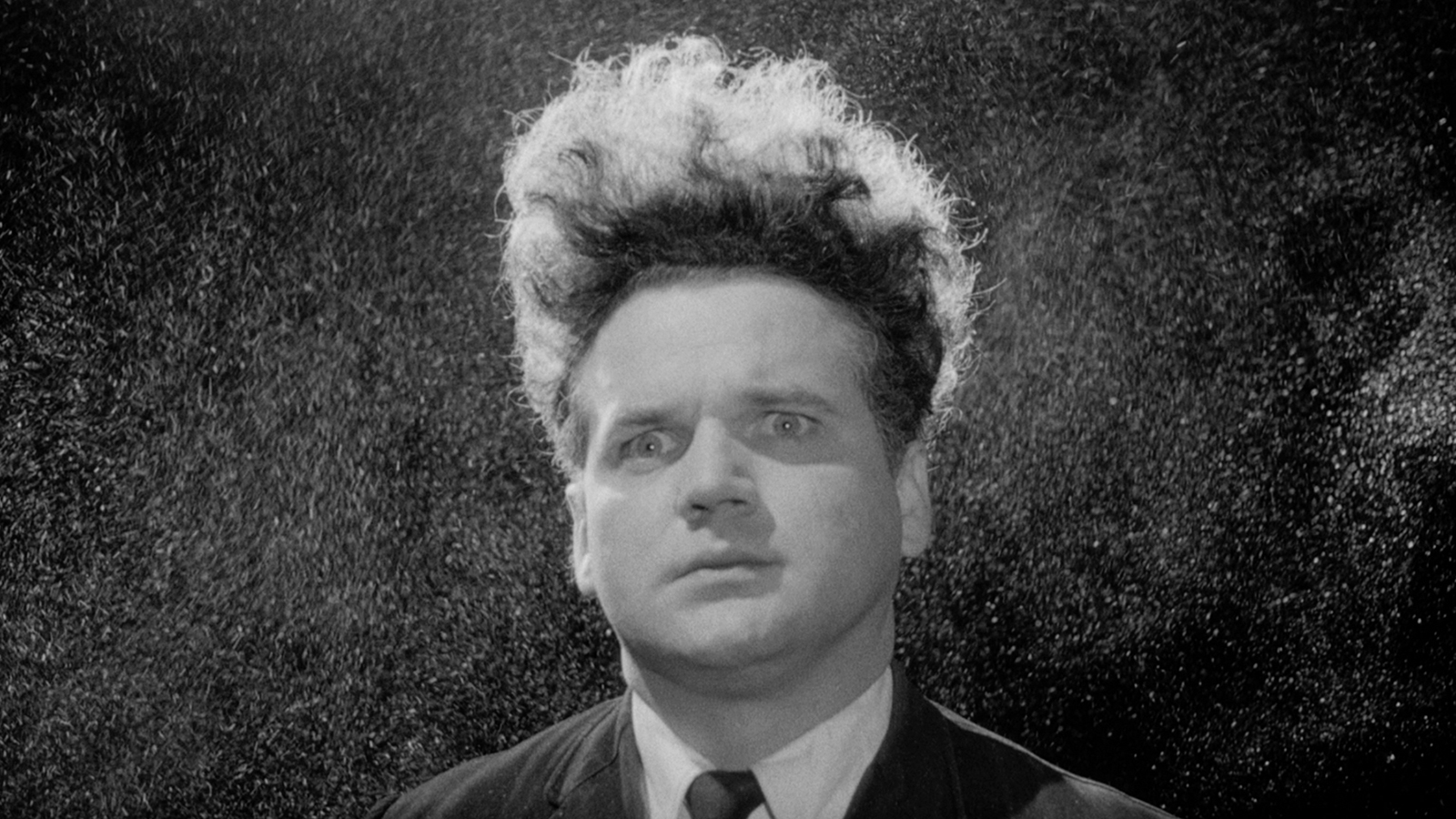
Frequent collaborator and future “She’s dead, wrapped in plastic!”-er Jack Nance plays the role of Henry, contributing a significant part of the film’s iconography with his Karloff-esque hair, consistently stunned expression, and pocket protector. His dedication to the project meant that he maintained the boxy haircut for the numerous years it was in production, so as to maintain continuity.
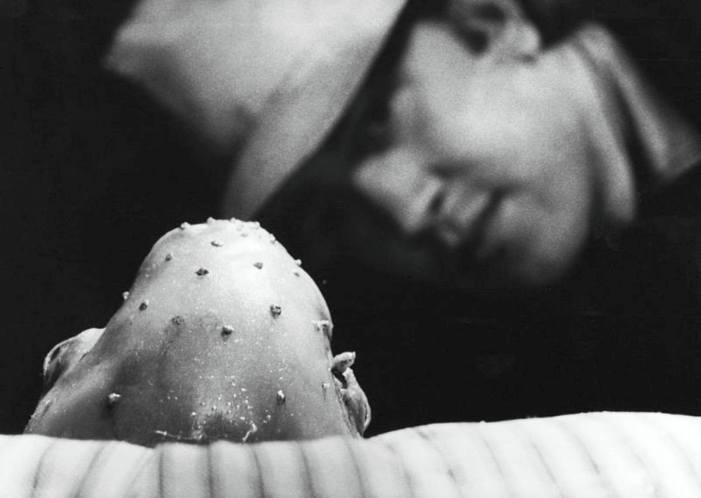
Nance’s main counterpart comes in the form of the baby (nicknamed Spike by the director), pulled off using some of the most terrifying puppet work put to film. There’s something uncanny there, its pained eyes and stunted breathing, created to look alien but also not implausible. Theories have quietly raged on for decades, trying to piece together how it was achieved, but nothing concrete has or likely will ever come to light, due to a contract ensuring the film’s cast and crew never discuss the production in public.
Lynch has since explained part of the macabre research he undertook to achieve the texture for the child: “I once had this dead cat. A vet gave it to me. I took it home. It was a real experience. I got all set up for it in the basement. And I dissected it. I put it in a bottle, but the bottle had a real small hole in it. The cat went in like a Slinky, but it got rigor mortis in there.” This animal look, combined with the use of distorted baby screams as its voice, make for some of the film’s most harrowing sequences.
–
Lynch deconstructs the American dream in Eraserhead, as he does in his wider filmography. Stalwarts of conservative Americana are warped to his own sick vision; a sit-down dinner where miniature “man-made” chickens start twitching and oozing blood, a marriage which falls apart after the birth of a grotesque and wicked child, and a world in which a human head could be used as just a resource with which to create pencil erasers.
Eraserhead’s influence in this regard is impossible to overstate, and without the artistic career which it helped launch, the current cult cinema landscape would be all the bleaker. When Lynch was asked to expand on his 2007 “Eraserhead is my most spiritual film” statement, he simply declined, and its likely he never will elaborate on that. Its endurance comes as a result, a film made by an artist to be contemplated and debated by audiences for generations.
–
–
–
The Wicker Man (1973)

1973
Director: Robin Hardy
Cast: Edward Woodward, Christopher Lee, Diane Cilento, Britt Ekland, Lindsay Kemp, Ingrid Pitt
Words: Adam Janicki.
Characterised by conflicting belief systems, Folk Horror is in a current resurgence with Midsommar (2019), The VVitch (2015) and Men (2022) among some of the best recent examples. The Wicker Man, alongside The Witchfinder General (1968) and Blood on Satan’s Claw (1971), is one of the first examples of the folk horror sub-genre.
Costing only $750,000 to make over 7 weeks, The Wicker Man was an independent production with a disastrous distribution history, only making $180,000 worldwide. During the editing of the film the studio changed hands and the creative team lost control, the directors’ 102 minute cut was chopped to 87 minutes on the advice of legendary producer, Roger Corman, the remaining footage was presumed lost. Over the years some footage from Corman’s print has been released, providing further character context and rearranging events over an increased period of time. The longer cuts also include a sex scene between two snails serenaded by Christopher Lee, who believed the ‘Snail Cut’ to be too short, suggesting a further 25 minutes were missing from the intended theatrical release.
The plot of The Wicker Man is simple; Sergeant Howie, a puritanical police officer from the Scottish mainland flies to Summerisle to investigate an anonymous report of a missing local girl named Rowan Morrison. Howie’s investigation becomes increasingly frustrating as the islanders, amidst their May Day festival preparations, withhold information from the Sergeant.
Summerisle is a pagan community famous for its bountiful produce, the locals, in Howie’s estimation, live a sinful lifestyle in service of false gods, all to ensure their produce continues to grow.
First time feature director, Robin Hardy, gives a simple visual style to the film. Hardy’s early career saw him directing hundreds of television documentaries, and The Wicker Man has the documentary feel of a hidden community being explored by outsiders. Aside from a handful of odd moments involving snails, questionable dancing and Scooby Doo chases, the style works.
The thanks given to the fictional Summerisle community in the opening credits furthers the realism, and as a result Howie becomes an immediate sympathetic character and safety net for the viewer. Summerisle is so colourful and eye-catching that showing the island as it appears – with help from set dressers stapling flowers to bushes and shipping palm trees to Scotland – is an effective presentation.
Sergeant Howie, stoic and god fearing, exudes all that is good, irremovable from his police uniform, he is a source of authority that gives us a feeling of normalcy. Although Howie’s strict beliefs may be less prevalent in 2023, he is recognisable and relatable in comparison with the residents of Summerisle, and as a result we also feel his frustration.
Edward Woodward is so perfect as Howie it is hard to imagine him in another role, there is never any doubt that Howie is a real person, fed up with the islands’ nonsense and who wants to get the hell out of there. And the best part about Howie is that he never budges an inch, there is no character arc, Howie is tied to the logic that there is an easy and obvious answer just out of view, devout and steadfast to a fault.
Ruler of the island and namesake of the community founder, Lord Summerisle, played by Christopher Lee with charm and humour is the direct counter to the stuffy police officer. Summerisle, with his manor house, towering frame and aristocratic English accent is elevated far from the other locals and, similar to Howie, feels like a fish out of water in many ways. He is the definition of the charismatic leader present in all cult communities, but with a self-awareness that adds some satirical humour and raises questions around motivations. Summerisle and Howie as figureheads of opposing ideologies are what make the ideas raised by The Wicker Man work so well, and make it such an interesting horror movie.
The other notable characters exist to lend colour to the community of Summerisle, or to test Howie’s resolve. The school teacher, Miss Rose, and the landlords’ daughter, Willow, have the most memorable scenes of Howie’s peaking frustration.
It’s these encounters that test Howie, pushing him from relatable and sympathetic to blind and self-righteous; with his disregard when wiping a lesson from a blackboard, your frustration with him begins to equal his own with the town. The rituals we see, along with the music, inspired by historical songs and accounts are equally pleasant and ominous, helping build a world with fun bawdy pub songs, but also with a beetle tied to a pin; strangling itself as it walks a shrinking circle.
The Wicker Man is a fascinating and horrifying film that generates fear through real social anxieties. Script writer, Paul Shaffer, used Nazis as a reference point for what people can do when controlled by an ideology and the script is perfect, simple and open-ended enough to posit questions that linger with the viewer.
In 2023 The Wicker Man has a punk rock, anti-establishment feel, the dominant message being to question authority and deny ideologues. Existential fear and nihilism are also present in how any behaviour can be justified under a philosophy.
The ending is an all-time great; iconic, shocking and genuinely scary, “Oh, God! Oh, God, no!” Is etched into the the mind of any viewer.
Standing strong 50 years later, The Wicker Man is one of the most unnerving and realistic horror films ever made.
–
A new 4k restoration of The Wicker Man will be released in UK cinemas on June 21st.
Christine (1983)
1983
Director: John Carpenter
Starring: Keith Gordon, Alexandra Paul, John Stockwell, Harry Dean Stanton, Kelly Preston, Robert Prosky, Christine Belford
Words: Adam Janicki.
In 1982 John Carpenter released The Thing, a taxing passion project that signified his first critical failure for a feature film. Looking for immediate work, he accepted the job of adapting Stephen King’s novel, “Christine”, a then national best seller. Working to a lesser budget than on The Thing and with a cast of mostly unknown actors, it seemed Carpenter wanted to try something different. This did not stop Christine becoming a critical and commercial success, taking $21M over a budget of $10M and providing an iconic character in a film that might not be as well remembered as it should be.
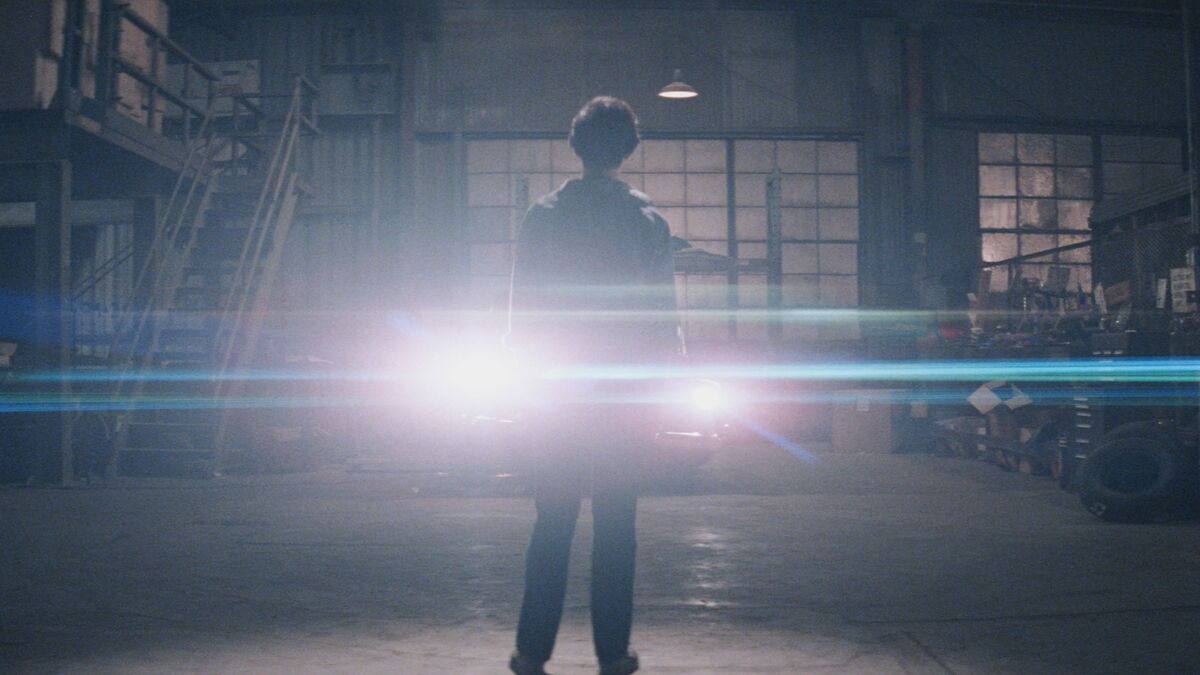
The film follows Arnie Cunningham, a teen at the bottom of the social ladder with the usual adolescent issues of parents, bullies and girls. Arnie does however have his driving license, and when on the market for his first car he finds a wreck of a bright red 1958 Plymouth Fury for sale, and it’s love at first sight. As Arnie rebuilds the Fury, named Christine, he gains some self-confidence and with it comes the attention of Leigh, the new girl at school. But it soon becomes apparent that Christine is not impressed with the rival affections of Arnie’s new love interest.
There is an instant synergy between John Carpenter and Stephen King. The story is close enough to John Carpenter’s Halloween in setting and characters that you can see why this may have felt like an easy job following the difficulties of The Thing. Retreading a few of the King and Carpenter tropes; youth in revolt, sex, virginity and creepy locals, Carpenter sets up a town full of believable and entertaining characters. Focusing heavily on story in the first half, Christine feels like the rare 80s slasher where you feel genuine affinity for all of the potential victims in the film.
Arnie is perhaps the least likeable of the bunch, although you never hate him you can’t help but cheer for his bullies or wonder why his two main companions, Dennis and Leigh tolerate him. However, Arnie is never the true focus in the story so the unease around his character always feels deliberate, and Leigh and Dennis fill the protagonist roles as the perfect movie teens giving the viewer someone to root for. Fun side characters include the old man with the shovel from Home Alone, tobacco chewing scrapyard owner, Darnell, and Harry Dean Stanton as Officer Junkins, presumably named for his desire to send Christine to the junkyard, all of which add humour and colour to the surrounding town and story.
Throughout the first half Christine is quiet but ever present, seething and idling away in the background, communicating through rock and roll via her radio when someone tries to break in or when Leigh gets too close to Arnie. As Christine is restored and Arnie’s persona changes, we see Carpenter use the toolset he developed on earlier films, treating Christine like a two tone Michael Myers, her scenes on the hunt are some of the best in any slasher film. Alongside the direction, the stunt drivers and the effects team manage to give Christine a personality that is a treat to watch, holding her own against more famous movie monsters, Christine deserves a spot in the slasher hall of fame. Unfortunately, these scenes are the highlights of the film and too few throughout, almost at odds with the more reserved first half.
Accompanying the change in tone, the visuals and sound shift in character. The 50s rock radio is replaced with Carpenter’s usual synthesiser. Again, similar to Halloween the music adds strength to the villain, giving Christine a powerful presence that feels inescapable and full of rage. The contrast and swing between these two types of sound give the sense that the car is enjoying herself in the violence, making for an entertaining but shallow second half. Considering the score, visuals and effects it is a surprise that Christine is not more fondly remembered for these moments, the film holds up against the majority of the 80s slasher films but lacks some of the exploitative elements of more popular cult features.
The problem with Christine, however, is the fact that it feels like its two halves don’t gel together well. Although the characters and premise are strong they are eclipsed by Christine at all times. Christine’s impact on the characters feels abrupt, and the deaths feel lacking in impact despite the time invested in the characters. Either due to a lack of a strong protagonist or some missing connective tissue, the climax feels underwhelming despite how enjoyable it is to watch, preventing the film sitting among the top tier Carpenter films. Despite the pacing issues and unsatisfying ending, an iconic movie monster and some great chase scenes make this a memorable King adaptation and a worthy entry in Carpenter’s catalogue, although Christine doesn’t sit on top of the pile, the film definitely earns some love for Christine as a character and for the kill scenes.
–
Videodrome
1983
Director: David Cronenberg
Cast: James Woods, Debbie Harry, Peter Dvorsky, Jack Creley, Sonja Smits, Leslie Carlson, Julie Khaner
Words: Adam Janicki.
Throughout the 1980s David Cronenberg had one of the best directorial runs in science-fiction horror cinema. Videodrome (1983), the second of these releases – preceded by Scanners (1981) – was a commercial flop, failing to make back an estimated budget of $6 Million.
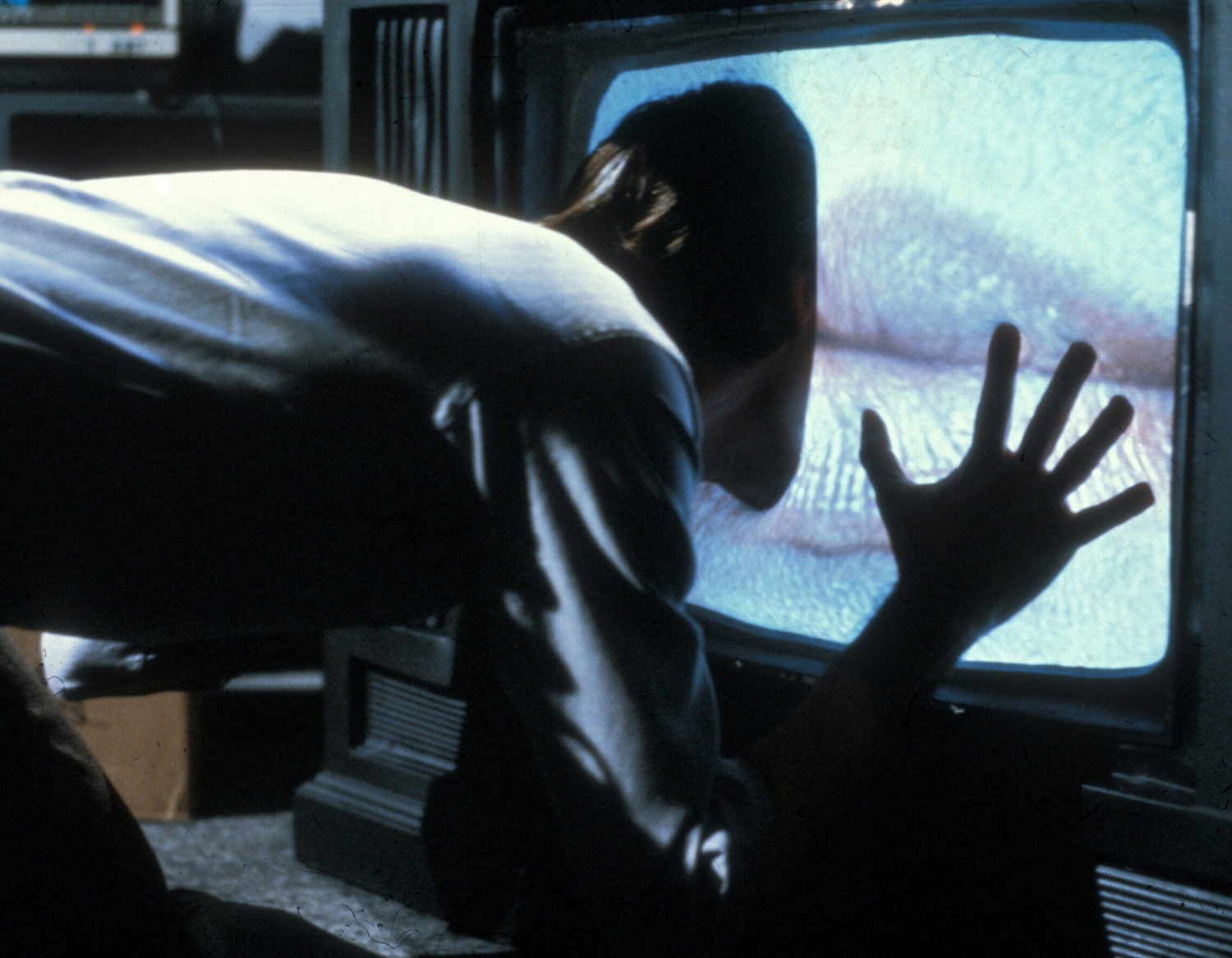
However, 40 years on from the initial release, Videodrome is now seen as one of the most prescient and influential science-fiction movies of all time. Written and directed by David Cronenberg with the backing of Rick Baker’s special effects team, Videodrome sends James Woods’ protagonist down a dark, 80s tech rabbit hole filled with hallucinogenic tumours, stomach vaginas and the usual technological body horror to be expected from a director who owns the genre. Videodrome sits somewhere between Network (1976) and Wall-E (2008) as an absurdist commentary on over consumption and mass media.
The story follows Max Renn, the president of a subterranean television network on the lookout for extreme new content. When Max is introduced to a pirate signal broadcast known as ‘Videodrome’, he searches for the source of the signal in hope of acquiring it for his own network. As Max’s obsession deepens, the lines between Videodrome and reality blur as his mind and body start undergoing changes that can’t be explained. Max reaches out to a local media prophet named Brian O’Blivion, who he believes may have some understanding around the cause of the Videodrome signal.
Max Renn is not likeable, he has no real moral barometer and is driven only by the promise of new, profitable content, the more shocking and cheap the better. Woods plays him with his trademark sleazy charisma but the overall feeling is of stale cigarettes and dirty pizza crusts dipped in coffee. When Max meets pop rock hall of fame and Blondie front woman, Debbie Harry’s Nicki, it doesn’t take much convincing to press lit cigarettes to her skin following some limp attempts at protest.
However, this is testament to James Woods, he makes Max unlikeable but compelling and engaging to watch, the perfect person to follow down the increasingly bizarre rabbit hole. The mystery behind the Videodrome signal paired with Max’s disposition are more than enough to suck you in and bring you along for the ride.
Max’s investigation introduces him to a few notable characters along the way, the absolute highlight, and topping the list of Cronenberg character names is Brian O’Blivion, although Barry Convex – the head of evil Specsavers – comes second in the Videodrome name rankings. O’Blivion is a media prophet who delivers the main ideas of the film in the form of cryptic, doom laden monologues from a television screen, he will only appear on television via a television screen. Every O’Blivion monologue delivers quote worthy lines to equal Seth Brundle’s insect speech in The Fly (1986), another of Cronenberg’s notable body-horror tech nightmares. Cronenberg is always at his best when asking the viewer to engage with his ideas, and deciphering O’Blivion’s “retina of the minds eye” philosophies makes Videodrome worthy of multiple viewings.
Rick Baker, the previous year’s Oscar winner for An American Werewolf in London (1981) has the job of bringing Cronenberg’s visions to life. Every effect in Videodrome is practical which on viewing feels like a necessity, Cronenberg presents them all with a clinical, matter of fact style that shows events as they appear to the characters. The practical effects have a tactile aspect, giving the viewer a literal image for the concepts delivered by O’Blivion, so that when Videodrome implants an idea, the viewer has a perfect representation of how it works. It doesn’t hurt that the effects are excellent, pulsating and grotesque; one image in particular is among the most memorable in science-fiction cinema. The use of practical effects combined with Cronenberg’s ideas are what make Videodrome so effective as a film with big ideas worth engaging with.
Videodrome is as relevant today as when it was written, if not more so with the growth of mass media. Cronenberg anticipated and commented on both the Video Nasty censorship that was to come a year or so after the release of this film, but also the impact and scope of media consumption. The 80s tech aesthetic and the focus on video tapes might give it away but replace those with smart phones or the internet and Videodrome could have been written this year.
The fears around the increasing requirement for stimulation are today being played out on social media feeds, no plot, no budget, the same praise Max awards the production of Videodrome. O’Blivion even manages to predict user names and tailored online personas with the idea that there will be a new synthesis of technology with the private life, Videodrome with the New Flesh.
The intelligence behind the script and the skill with which Cronenberg, Woods and Baker bring those ideas to life make this one of the best science fiction movies of the 80s, a decade with some stiff competition. The ideas and the way in which they are presented will generate discussion after the credits and bring you back for further viewings. Videodrome is a dark and entertaining social commentary that gets better each time you watch it, with some of the most memorable and iconic imagery in science fiction horror.
–
–
see our
40th Anniversary
screening
of
Videodrome
in our
‘Screen Horror‘
presentation
>here<
–
The Evil Dead (franchise)

1981 – 2023
Words: Oliver Innocent.
–
Evil Dead is a franchise built on blood, sweat, tears and determination. Unusual in a series encompassing four (soon to be five) feature films and a three season TV series, the core creative group of director and producer Sam Raimi, producer and actor Bruce Campbell, and producer Rob Tapert have been involved with every entry.
This lends the Evil Dead saga a consistency in quality, care, and respect of its roots severely lacking in other franchises that continue with no creative input from their original creators.
Following their 1978 proto-Evil Dead short film, Within the Woods, Raimi, Campbell, and Tapert unleashed the original The Evil Dead in 1981. While the familiar setup (remote cabin location, demonic possession, characters picked off one by one) may be nothing new, the execution certainly is.
Raimi’s dynamic, experimental camerawork, the atmospheric sound design (the unnerving, constantly howling wind), and the handmade demon makeup and stop-motion effects set The Evil Dead apart from its contemporaries. Its predilection for pushing the genre’s extremes to the max also helped it stand apart from the crowd. A heady cocktail of uncomfortably drawn-out tension, jolting jump scares, and scenes awash with bloody gore, The Evil Dead remains an intense viewing experience to this day.
The film’s cult status is further bolstered by introducing viewers to B-movie legend, Bruce Campbell’s most iconic character, Ash. While underdeveloped here, Ash would become the face of the franchise in the next instalment, 1987’s Evil Dead II.
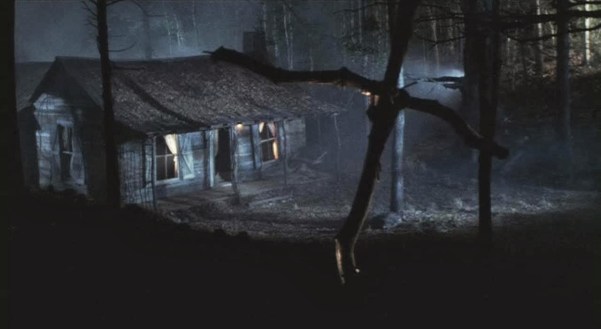
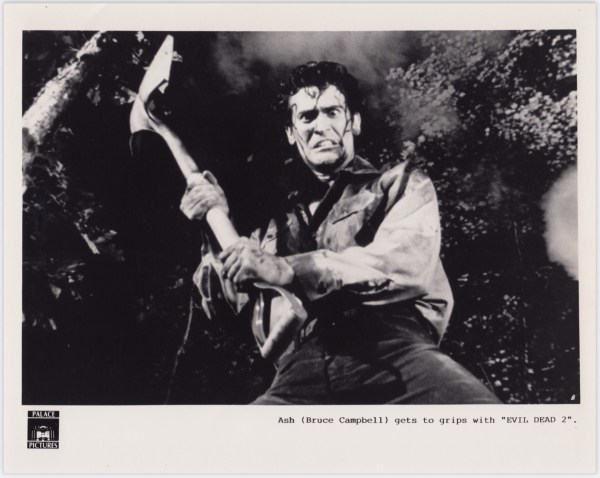
Bigger and bolder than its predecessor, Evil Dead II is one of those rare sequels that is as good as, if not better than, the original. A larger budget, more professional acting, and refined effects certainly contribute to this, but it’s the shift in tone that really stands out.
Where the original was a full-blown bloodbath of a horror film shot through with a streak of black humour, Evil Dead II brings this humour to the fore. This radical change from horror to comedy-horror works in the film’s favour. It’s such a different beast that, despite it being almost a remake of the first film, it performs just as well as a standalone entity as it does part of the wider Evil Dead series.
Evil Dead II’s wonderfully silly, gross-out slapstick comedy really allows Campbell’s Ash to shine this time. Carrying the first half of the film almost singlehandedly, Campbell endears Ash to the viewer by allowing him to be the butt of the joke. Apparently, Raimi relished torturing Campbell, finding it amusing to put him through all manner of hell. And it’s hard not to side with Raimi when laughing at Campbell smashing through plates and furniture, fighting his own hand, and getting sprayed with gallons of multi-coloured goop.
Continuing the tradition of torturing Bruce Campbell, 1992’s Army of Darkness sees Ash catapulted back to medieval times, forced to do battle with an army of deadites led by an evil version of himself. This second sequel veers even further towards comedy, jettisoning much of the horror and gore of the previous entries.
Ash, despite his monster-battling prowess, appears even more of a bumbling fool here, thinking himself above the medieval folk, even though it’s his stupidity that unwittingly summons an army of the dead. Like a stylised cartoon character, Ash spouts a plethora of cheesy one-liners (‘Yo, she-bitch, let’s go!’, ‘Hail to the king, baby’) in a pastiche of ‘80s action film machismo a la Schwarzenegger and Stallone.
Army of Darkness proves the series can work outside the confines of both the cabin setting and the horror genre as it turns the Evil Dead into a fish-out-of-water comedy, set against a backdrop of swashbuckling sword and sorcery spectacle. Indeed, some of the film’s biggest influences are the stop-motion epics of Ray Harryhausen, in particular the iconic skeleton battle of 1963’s Jason and the Argonauts serving as the basis for Ash’s climactic confrontation with a legion of skeletal knights.
After Army of Darkness, the closest we got to another Evil Dead (outside of homages like Bloody Muscle Body Builder in Hell AKA The Japanese Evil Dead) was Raimi’s Drag Me to Hell in 2009. Although nothing to do with the franchise, it very much feels like an Evil Dead film in spirit, with its merging of gross imagery, jump scares, and offbeat comedy.
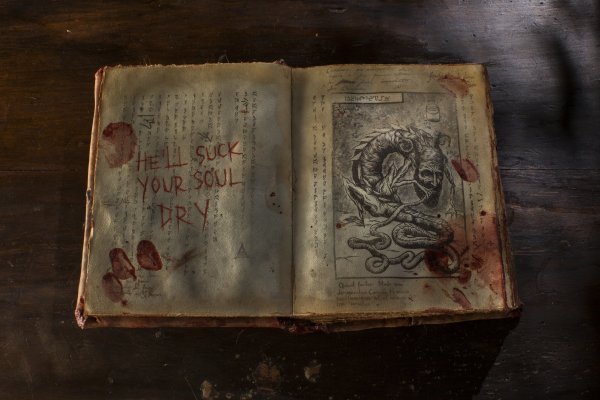
Following a 21-year hiatus, the Evil Dead officially returned with an inevitable remake in 2013. The success of the 2003 The Texas Chainsaw Massacre remake led to a slew of horror classics being re-booted for a new generation. While many of these new takes failed to live up to the originals, the Fede Alvarez-helmed Evil Dead remake is a more than worthy re-imagining.
The antithesis of Army of Darkness’s goofy humour, Evil Dead sees the series go back to its extreme horror roots. Serious scares and impressive practical gore effects are in-keeping with the spirit of the original, as is the cabin in the woods setting and the book of the dead / demonic possession setup.
However, it’s clear that more modern horror influences have crept in. The jerky, spider-like movements and croaky vocalisations of the deadites are obviously indebted to the evil spirits of J-horror films like The Grudge (unsurprising given that Raimi was such a fan of Ju-On: The Grudge (2002) that he and Tapert produced a remake in 2004). The bloody atrocities of torture porn (the Saw and Hostel films) can also be seen in the lingering, gore-drenched close-ups of nails being extracted from flesh, and stretching, snapping tendons.
Following a fantastic, blood-drenched finale culminating in one of the most impressive chainsaw kills committed to celluloid, Ash appears for an extremely brief post-credits cameo teasing his return to the franchise. Fans didn’t have to wait long as the small-screen spin-off, Ash vs Evil Dead was released in 2015.
Made with real love and respect for fans of the original trilogy, Ash vs Evil Dead blends the gross-out comedy gore of Evil Dead II with the goofy slapstick and one-liners of Army of Darkness. Although sadly cancelled after 3 seasons, the series remains a fitting send-off for Campbell’s Ash.
Outside the main franchise, the Evil Dead has been kept alive with numerous video games (many featuring voice acting from Campbell himself) and comic books. Making-of documentaries and non-fiction books like The Evil Dead Companion and Campbell’s autobiography, If Chins Could Kill: Confessions of a B Movie Actor, have provided fans with a wealth of behind-the-scenes info.
However, it’s the sheer volume of home video releases, from VHS, DVD, Blu-ray, to 4K Ultra-HD that shows just how enduring the Evil Dead legacy really is. No matter how many copies they already own, fans will continue to rabidly collect each new release. People just can’t get enough of the Evil Dead.
.
.
Evil Dead Rise (2023), directed by Lee Cronin, is released in the UK and US on April 21st
–
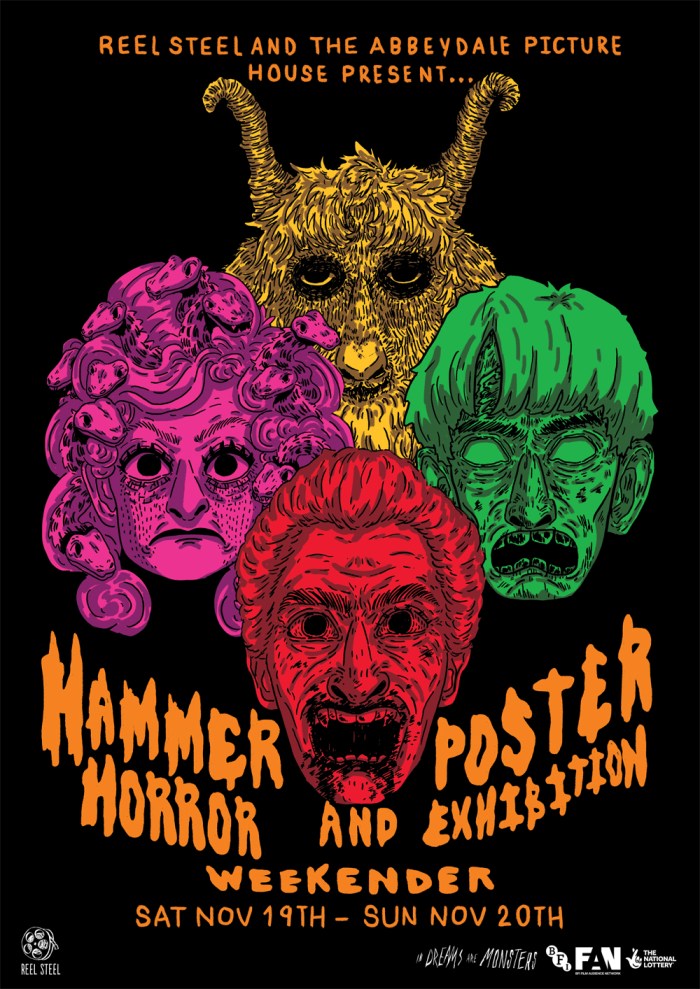
Hammer Horror retrospective

Words: Scott Burns.
Founded in 1934, Hammer Films was a genre-film studio specialising in B-movies made with low budgets but impeccable standards. After making successful movies in several genres, mostly lurid thrillers, the studio would become a household name when it produced a series of Gothic horrors based on classic literature.
Beginning with The Curse Of Frankenstein in 1957 and continuing with Dracula (aka: Horror Of Dracula) in 1958, the studio had a couple of hit movies here, in Europe and across the pond, starting a chain reaction of similar films being produced all over the world, notably the series of Edgar Allen Poe adaptations from American International Pictures, starting with Roger Corman’s The Fall Of The House Of Usher in 1960; also Riccardo Freda’s The Mill Of Stone Women (1960) and the films of Mario Bava in Italy, and the films of actor Paul Naschy in Spain.
The films were typified by strong performances from the likes of Peter Cushing and Christopher Lee, both of whom became cult superstars as a result, a pushing of the boundaries of sex and violence then permissible in British cinema (usually in the form of wanton sexuality and lots of bright red fake blood, nicknamed “Kensington Gore”, the liberal use of which would bring Hammer into constant trouble with the BBFC), and solid film-making from industry veterans like Terence Fisher, utilising fantastic cinematography and production design as well as outdoor location filming (quite rare in genre cinema).
The Curse Of Frankenstein and Dracula were directed by former editor Fisher who brings a high-energy and pace to the pictures, focussing on performance and atmosphere as well as dynamic photography and editing. The scripts, by Jimmy Sangster, were well-crafted, unpretentious and unapologetically mainstream. These were not art movies but entertainment for the masses, and the masses ate them up, responding to the universal narrative of Good vs. Evil and enjoying the gruesome thrills.
This was the Hammer “formula”, and Reel Steel are presenting a quartet of their later works, all fine examples of the company’s dedication to making quality low-budget cinema for the widest audience imaginable.
See screening details
>here<
–
See our retrospective feature on
The Plague of the Zombies (1966)
>here<
See our retrospective feature on
The Devil Rides Out (1968)
>here<
See our retrospective feature on
Dracula: Prince of Darkness (1966)
>here<
See our retrospective feature on
The Gorgon (1964)
>here<
–
–
The Plague of the Zombies
1966
Director: John Gilling
Cast: Brook Williams, Andre Morell, Diane Clare, John Carson, Jacqueline Pearce
Words – Scott Burns.
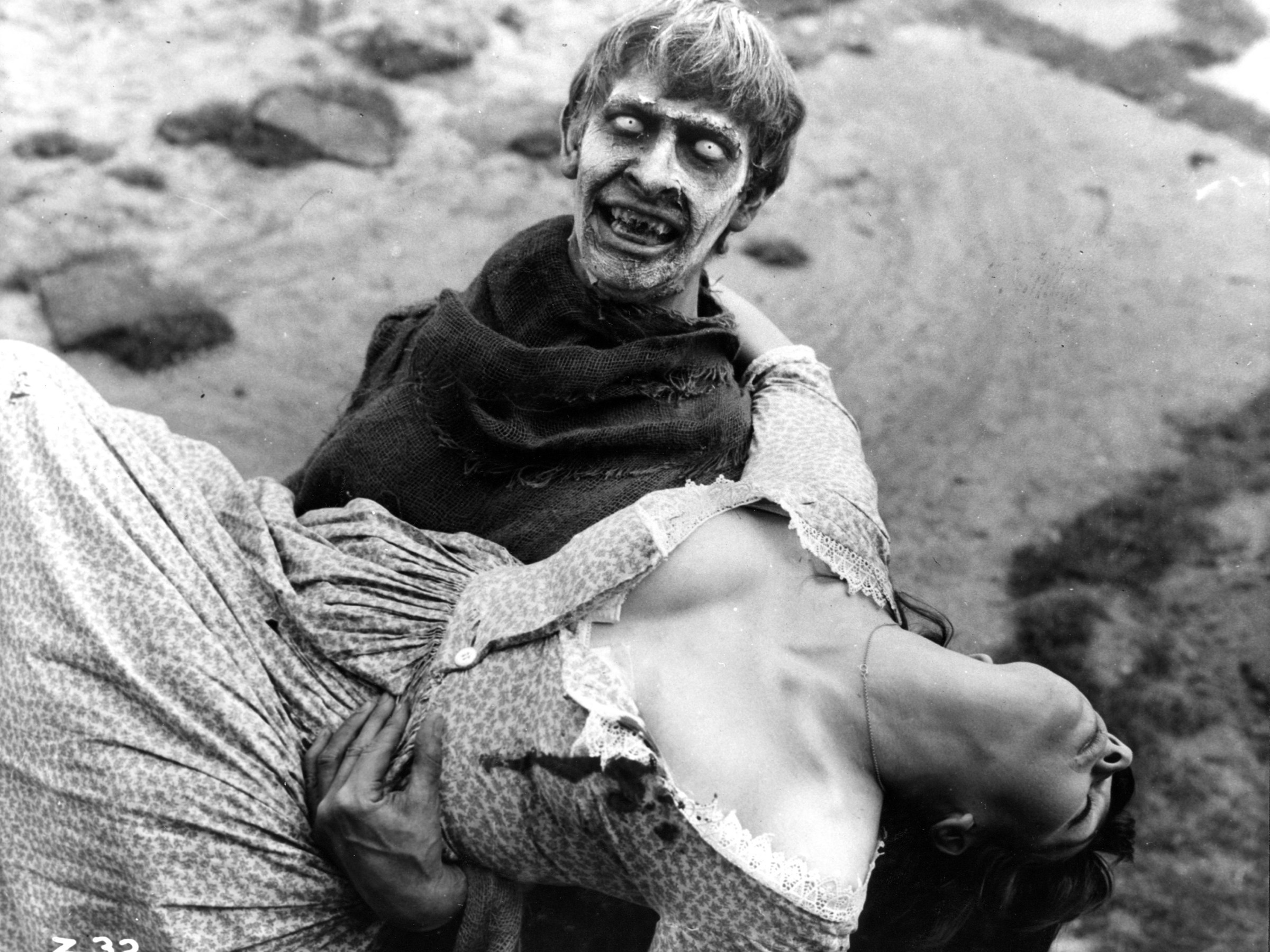
Hammer’s zombie movie (released two years before George A. Romero and John A. Russo’s Night of the Living Dead) remains a strong contender in the living dead sweepstakes and is a fan favourite despite the lack of recognisable stars and without being based on a classic story.
After a string of mysterious deaths in a Cornwall mining town, Dr. Peter Thompson (Brook Williams) calls upon his former teacher Sir James Forbes (Hammer mainstay Andre Morell) for help. Forbes and his daughter Sylvia (Diane Clare) travel to the town where they run into of a bunch of loutish upper-class fox hunters (who disrupt a funeral procession) and an angry, scared local population. Thompson and Forbes investigate claims that the recent dead have been spotted near the local tin mine, owned by the squire Clive Hamilton (John Carson), a strange idea confirmed when Sylvia sees a grey-faced man carrying the dead body of her friend and Thompson’s wife Alice (Jacqueline Pearce). But the truth is even more terrible: the dead are being brought back to life, via Voodoo ritual, to become slave labour for the squire’s mine. Only Forbes can stop this evil from claiming more lives.
Directed by John Gilling, who rose through the ranks to become a director having been with Hammer since the 1930s, and written by Peter Bryan from a story by Bryan and Anthony Hinds (originally pitched to Universal as The Horror Of The Zombie, but rejected for being too gruesome). Gilling wrote a couple of films for Hammer (including The Gorgon) and graduated to directing. His first film for the company was The Shadow Of The Cat (1961) and his association with Hammer continued with The Pirates Of Blood River (1962) until The Mummy’s Shroud (1967). He had a reputation for being combative with his actors, crew and his bosses. Although not as famous as his Hammer contemporary Terence Fisher, his films are comparable in quality of craftmanship. He died in Madrid in 1984 aged 72.
Andre Morell had worked with Hammer before, most notably as Dr. Watson to Peter Cushing’s Sherlock Holmes in Terence Fisher’s adaptation of The Hound Of The Baskervilles (1959) as well as roles in The Camp On Blood Island (1958) and The Shadow Of The Cat. Known for being particularly acerbic to people he took a dislike to, Morell has a fantastic presence to rival Cushing or Christopher Lee. Here he plays a rational man forced to confront and defeat the supernatural and he turns in a great performance. He became a household name after appearing in the must-watch television sensation Quatermass And The Pit as Professor Bernard Quatermass. Other notable films he appeared in include The Bridge On The River Kwai (1957) and Ben-Hur (1959). He died in 1978 aged 69.
Another Hammer icon appears in this film, the character actor Michael Ripper. He became a sort of totem for the company appearing in more films than Cushing or Lee, usually in a small role (here he is a policeman). His last appearance in a Hammer film was in the comedy That’s Your Funeral in 1972. He worked steadily until retiring fully in the nineties. He died in 2000 aged 87.
The treatment of zombies in this film is closer to that seen in White Zombie (1932) and I Walked With A Zombie (1943): a recently dead man re-animated by black magic to do the bidding of a powerful Voodoo priest. The zombies’ blank-eyed stare and rotting features pre-figures the ghouls in Sam Raimi’s The Evil Dead (1981) and wear muddy smocks like medieval serfs. Gilling gets the maximum scare effect out of them, especially in a creepy dream sequence where Thompson is surrounded by walking corpses, who have clawed their way out of the grave in the town cemetery.
The Plague Of The Zombies adds an element of class warfare with the aristocratic Hamilton and his bully boy, fox hunting friends (not the first time screenwriter Bryan used fox hunting as a symbol of upper-class privilege as seen in his script for The Hound Of The Baskervilles) using Voodoo to exploit the working classes. This was a common trope in Hammer movies where the villains were usually aristocrats who dabbled in the dark arts or arrogantly pursued power or knowledge at the expense of human life. The most disturbing scene in the film sees Hamilton’s friends, still wearing their fox hunting red jackets and brandishing horse whips, using playing cards to decide which of them will ravish Sylvia first.
A superb B-movie (it played in a double-bill with Dracula: Prince Of Darkness) and a huge fan favourite, it is almost a pity Hammer never returned to the zombie idea until their seventies swansong The Legend Of The Seven Golden Vampires (1974). But this unique movie still has the power to send a shiver down your spine.
–
See details of our upcoming
Hammer Horror weekender
>here<
–
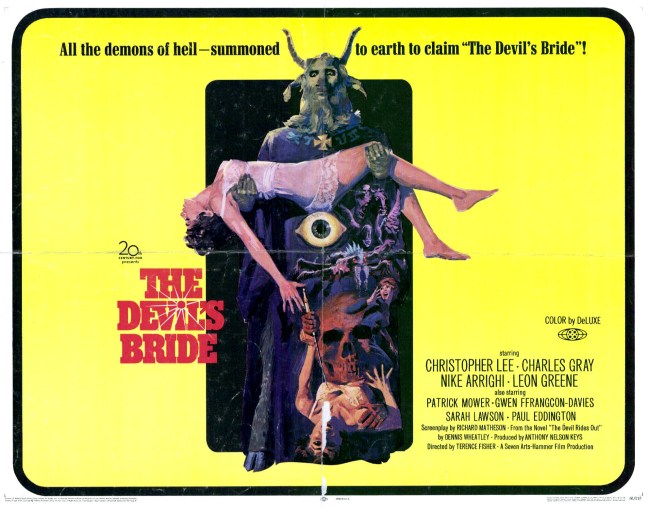
The Devil Rides Out
1968
Director: Terence Fisher
Cast: Christopher Lee, Nike Arrighi, Patrick Mower, Charles Gray, Paul Eddington, Sarah Lawson, Leon Greene, Patrick Allen
Words – Scott Burns.
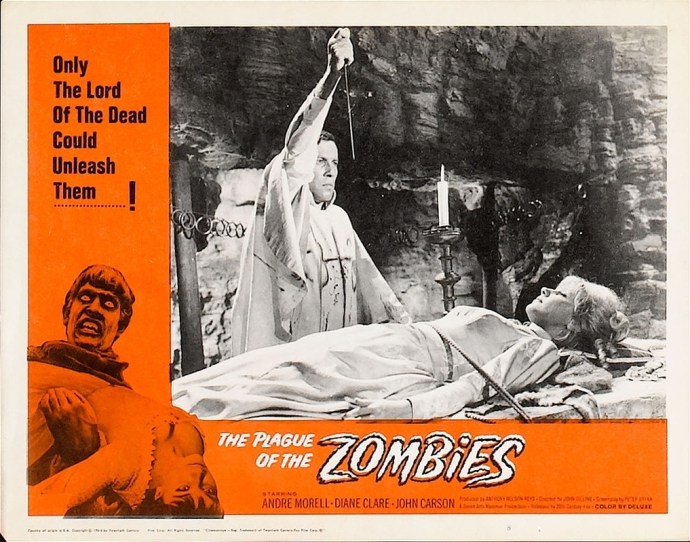
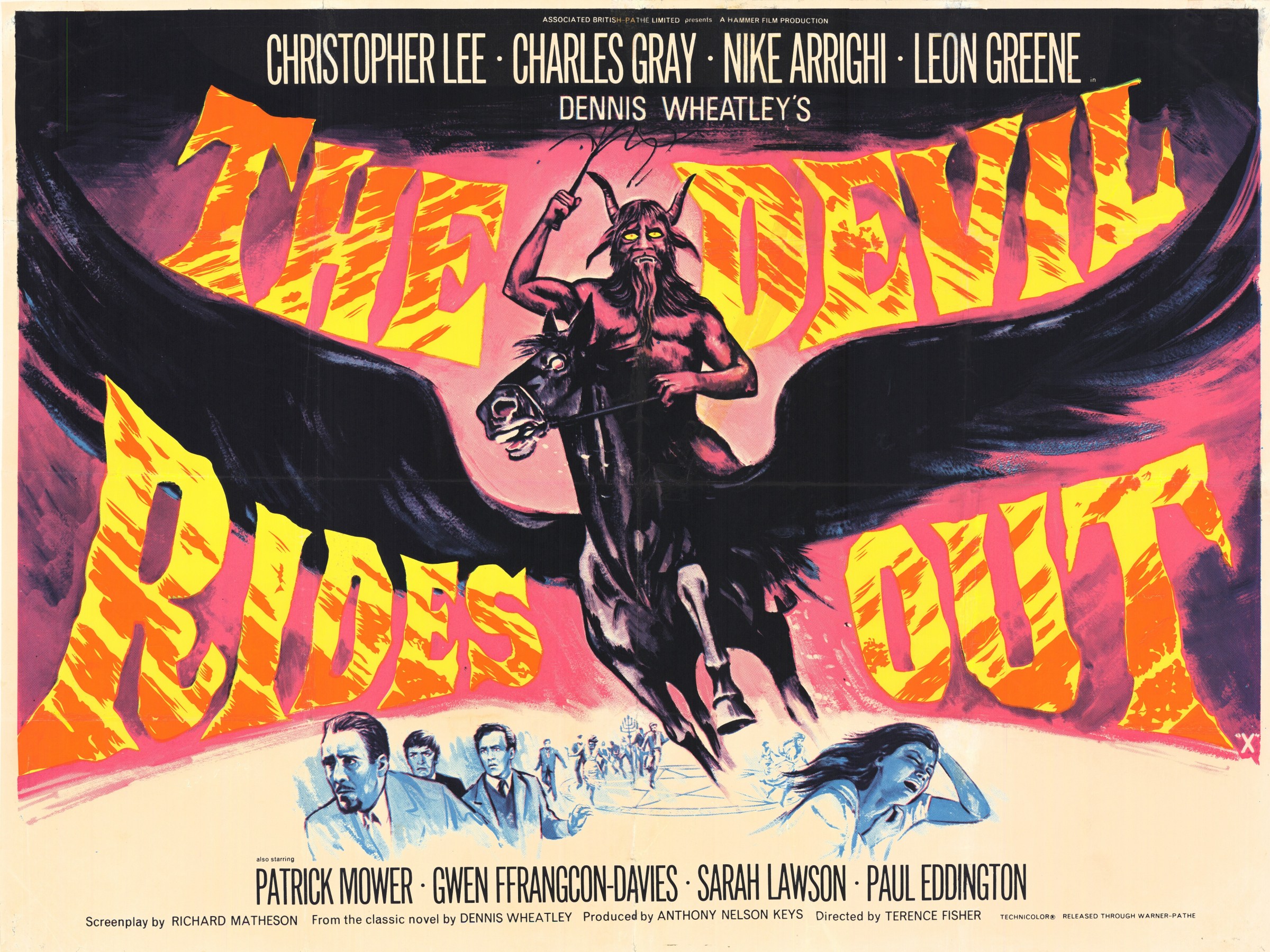
Based on the popular novel by Dennis Wheatley, starring Christopher Lee in a fantastic performance and directed by the legendary Terence Fisher, who had helmed the incredibly-successful Frankenstein and Dracula movies that made Hammer the name for horror movies around the world, this film should have heralded a brand-new era for the company.
Lee stars as the Duc de Richleau, a student of the occult and adept at white magic, who, with his friend Rex Van Ryn (played by Leon Greene and dubbed by Patrick Allen), drops in on old friend Simon (Patrick Mower) who is throwing a party for a social group he wants to join. Richleau discovers to his horror that the group is steeped in dark magic and attempts to stop Simon and his friend Tanith (Nike Arrighi) from being “baptised” by the group’s leader, the powerful dark magician Mocata (a fantastic Charles Gray). Mocata, determined to grow his coven, unleashes the forces of Hell to return them to him, leaving only Richleau and his extensive knowledge of the dark arts to fight back.
Hammer were approached by Lee, a fan of Wheatley, to make the film, believing it could be a huge success for the company and a change from the classical Gothic stories that had been their bread and butter for the past few years. The Gothic horror market had become saturated with films from other independent producers both home and abroad, thanks to Hammer’s popularity. The company agreed, resulting in a rip-roaring horror thriller from start to finish, directed by Fisher with his usual seriousness and attention to pace.
Lee, who considered this his favourite of all his Hammer appearances, is rarely better as Richleau, a dedicated warrior against evil. Greene is good, if somewhat subdued, as Rex Van Ryn, the action man contrasting Richleau’s more cerebral character who leaps into fights and car chases to protect his friends, putting aside his natural scepticism when the gates of Hell open. Also on the side of the angels is Richard and Marie Eaton (played by Paul Eddington and Sarah Lawson respectively), who become involved at the behest of Richleau, Marie’s uncle. Representing the dark side is Gray’s Mocata, an outwardly polite gentleman who can mesmerise and control the unready and can summon monsters and phantoms (even the Angel of Death) to attack his enemies.
The task of adapting Wheatley’s novel fell to author and screenwriter Richard Matheson, a veteran of film and television whose work includes several episodes of The Twilight Zone, and the acclaimed adaptations of the work of Edgar Allen Poe directed by Roger Corman (themselves inspired by the success of Hammer’s gothic horrors in the States) as well as the writer of the hugely-influential novel I Am Legend. A better writer could not have been found and Matheson’s script distils Wheatley’s narrative with wit and imagination, keeping the cracking pace of the best pulp fiction. With all this talent, the movie couldn’t fail and indeed became another success for Hammer both in Europe and the United States (where it was released as The Devil’s Bride), thrilling audiences with terrifying special effects beyond anything Hammer had attempted before.
However, the company did not continue in the same vein, reverting back to the Gothic form for more outings for Dracula (featuring an increasingly fed-up Lee) and Baron Frankenstein well into the Seventies. Even though the company made interesting and effective films like Frankenstein Created Woman (1967), Countess Dracula and Dr. Jekyll And Sister Hyde (both 1971), as well as the odd noble failure like The Legend Of The Seven Golden Vampires (1974, a co-production with Shaw Brothers of Hong Kong), their output seemed positively antiquarian next to the likes of The Exorcist (1973) and The Texas Chain Saw Massacre (1974). They did make one other Wheatley adaptation: To The Devil… A Daughter (1976), but the film so offended the author that Hammer were banned from making any more films based on his work. A pity Hammer never took the initiative to show the world that there was more to them than cleavage and Kensington Gore.
–
See details of our upcoming
Hammer Horror weekender
>here<
–
 REEL STEEL
You must be logged in to post a comment.