The Living Dead At The Manchester Morgue (1974)
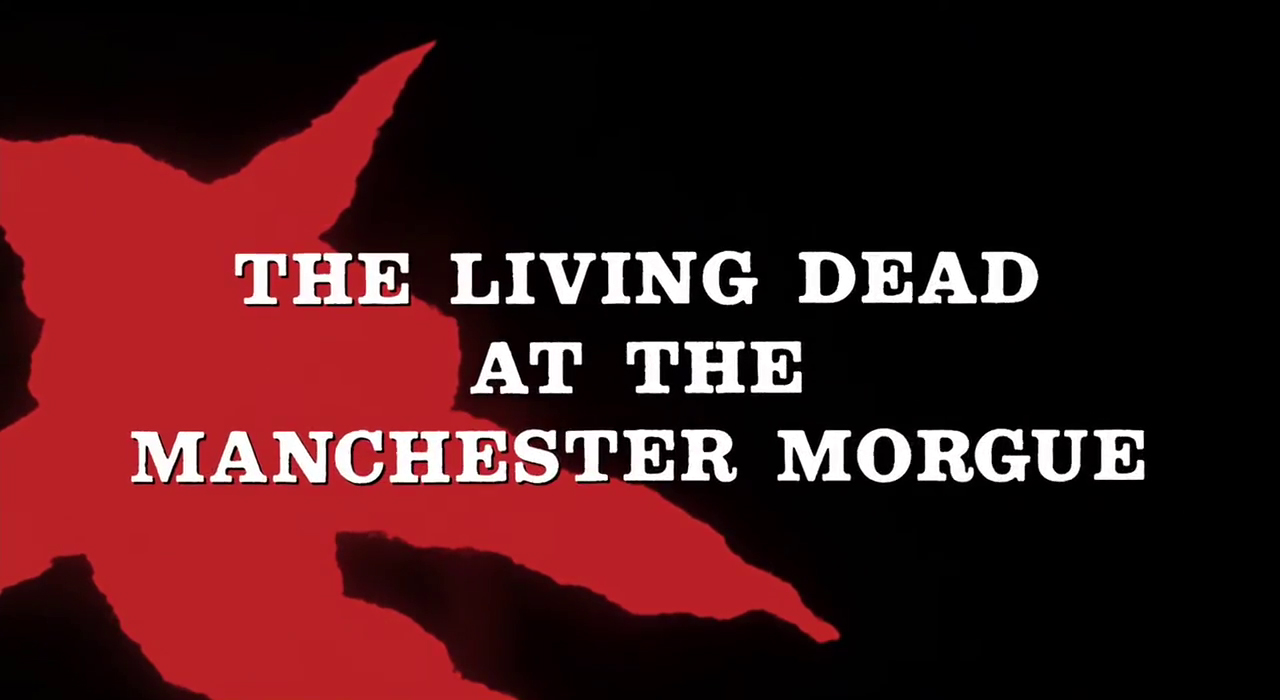
1974
Director: Jorge Grau
Cast: Ray Lovelock, Cristina Galbó, Arthur Kennedy, Aldo Massasso, Jeannine Mestre, Fernando Hilbeck
Words: Scott Burns.
The shadow of George A. Romero’s ground-breaking film Night Of The Living Dead is long indeed, inspiring hundreds, perhaps thousands of zombie movies from 1968 to the present-day. Of this impressive number, only few are good and fewer still are must-sees. Jorge Grau’s horrific The Living Dead At The Manchester Morgue (No profunar el sueno de los muertos) is definitely in the latter category and one of the first to admit a connection to Romero’s genre-defining shocker.
Grau, an avant-garde filmmaker in his native Spain, made his first horror picture in 1973 with Ceremonia sangrienta aka: The Legend Of Blood Castle (1973), a variation on the bloody exploits of the Countess Bathory. That film was an international success (it was released in the US as Blood Ceremony) and the director was tasked with making another.
The film concerns George (a nod to Romero?) Meaning, played by Eurocult actor Ray Lovelock (Live Like A Cop, Die Like a Man), an antique dealer in a cosmopolitan city (London? Manchester? No, Sheffield) populated by unhealthy, miserable people (the sight of passers-by wearing face-masks is particularly jarring post-COVID), dead animals and ignored streakers.
Travelling up north, he meets Edna (Cristina Galbo, The House That Screamed), a young woman who crashes her car into his motorcycle. Edna is on the way to re-connecting with her sister Katie (Jeannine Mestre), and George browbeats her into giving him a lift. They ask for directions at a local farm where an experimental pest control technique, using sonic radiation, is being tested.
The trip turns sour when Edna is attacked by a stumbling, aggressive man. Later, the same man menaces Katie and kills her husband Martin. The murder brings out the local bobbies, led by a nameless Inspector (five-time Oscar-nominee Arthur Kennedy), who immediately takes a dislike to George, a representation of everything he hates about the modern world, to the point of blaming him for the murder.
Later, George and Edna discover that Martin’s killer is Guthrie, a vagrant who drowned and was declared dead weeks earlier – are the dead coming back to life to kill the living? And does it have anything to do with the pest control machine? The answer to both, of course, is yes.
Surprisingly, this Italian/UK/Spanish co-production was largely shot in Derbyshire (the memorable St. Michael and All Saints Church, with the “This Is God’s Acre” sign, is in Hathersage if you plan on a post-film pilgrimage. Little John is apparently buried there!). Grau brings a palpable menace to the usually cosy rural villages and quiet forests, thanks largely to the films’ experimental score, mixing synthesised drones with heavy breathing and the grumbling groans of the re-animated dead.
After the tense, suspenseful first half, the remainder of the film is crammed with show-stopping gore from special-effects wizard Gianetto Di Rossi. Eviscerations, slashings and stabbings ensue, splashing blood around with ghoulish glee and going much further than Romero’s classic.
Indeed, the flesh-tearing carnage proved problematic in the UK when the film was submitted to the BBFC and the board removed 1 minute and 27 seconds of footage to qualify for an “X” certificate. The film would be made available on UK home video in two editions: the first from LVC and entitled Don’t Open The Window which featured the cut R-rated edit; and the full, uncut edition from VIP entitled The Living Dead. The latter landed on the infamous Video Nasties list and was taken out of circulation until it was re-submitted to the board in 1987 which added a further 26 seconds of cuts to the “X” rated print. All those cuts would finally be waived in 2003 when the film was submitted again and has been uncut ever since.
Apart from the bloodshed, what else stands out about this film is the still relevant environmental aspect, regarding pollution, pesticides and other chemicals damaging the eco-system, as well as a general mistrust of science (the “cleaner” but crueller sonic alternative is more destructive) and business.
The film’s most pointed political statement is in the depiction of the Inspector: a foaming-mouth fascist with a license to kill and an attitude to people that even Dirty Harry would consider aggressive (Spain was still ruled by the authoritarian Franco government when the film was being made).
This cult classic is as frightening, ironic and thrilling as the best of zombie cinema.
–
 REEL STEEL