Eraserhead (1977)
1977
Director: David Lynch
Cast: Jack Nance, Charlotte Stewart, Allen Joseph, Jeanne Bates, Judith Roberts, Laurel Near, Hal Landon, Jennifer Lynch
Words: Ben Matthews.
“Some inane, bizarre person with a disturbed mind wrote that film and I did not enjoy it.”
This is an example of one audience reaction to a screening of Eraserhead in New York’s Greenwich Village, in 1977.
The film’s journey to the monolithic cult status it holds now began there as a midnight feature, a route shared by underground classics such as John Waters’ Pink Flamingos (1972) and George A. Romero’s Night of the Living Dead (1968). Though Eraserhead seemed different from the start. Romero and Waters can slowly be understood from repeat viewings of their work and the numerous recorded interviews in which they shed light on what they wanted to make and how they made it, but it seems difficult to imagine that anyone can come close to understanding Eraserhead as its director intended.
In 2007, at a guest lecture for BAFTA, David Lynch stated that Eraserhead is his most spiritual film. It’s the first feature he ever directed, exploring ideas surrounding fatherhood, reproduction, and isolation through a surreal and often terrifying lens. It’s hard to gauge exactly what somebody such as Lynch could mean by that answer, famous for his distaste of public analysis and criticism, but it can be assumed that the spirituality referenced comes from how much of his own spirit and his self he managed to capture in the project.
Lynch’s career in art stems from an early interest and clear talent with painting. His artistic sentiments seem to have been almost instinctual from the start. It was a canvas oil painting of flowers, that was lightly rippling from a draft in his studio, that first sparked the idea of filmmaking in his mind. His first foray into this medium, Six Men Getting Sick (1967), can only really be shown in an art gallery as a projection onto a sculpted screen. And though he became undoubtably more cinematic, you can see that at heart he will always see himself as an artist, rather than pigeonholing himself as just a director.
Looking back, it almost seems like an impossibility that Eraserhead could have turned out as anything other than what can only be described as a David Lynch film. Though this might not have always been the case, with Eraserhead’s turbulent production which at times left him feeling as though filmmaking could be a lost cause. It took four whole years to make, stopping and starting frequently due to funding issues and Lynch’s own confessed self-doubt and perfectionist approach to his output. It’s a miracle it was even completed, let alone that it would go on to be a success.

–
Centring on dad-to-be Henry Spencer, Eraserhead explores the often-unexplored parts of the human condition and paternal anxiety, feelings that many are often too frightened to share, let alone make a film about. Henry lives in a sparsely populated nether realm version of Philadelphia, where the streets are silent besides the low drone of machinery, and in place of decoration there are only mounds of dirt and dead tree branches.
This nightmare version of the city is not too dissimilar to Lynch’s own experience there. He once described it as a city full of intense fear, “There was violence and hate and filth. But the biggest influence in my whole life was that city”. Henry is polite and naively optimistic about his future in this wasteland, but as a result of both his city, his people, and his inhuman child, we see his slow degradation as a human, leading to him committing one of the most horrific acts possible.
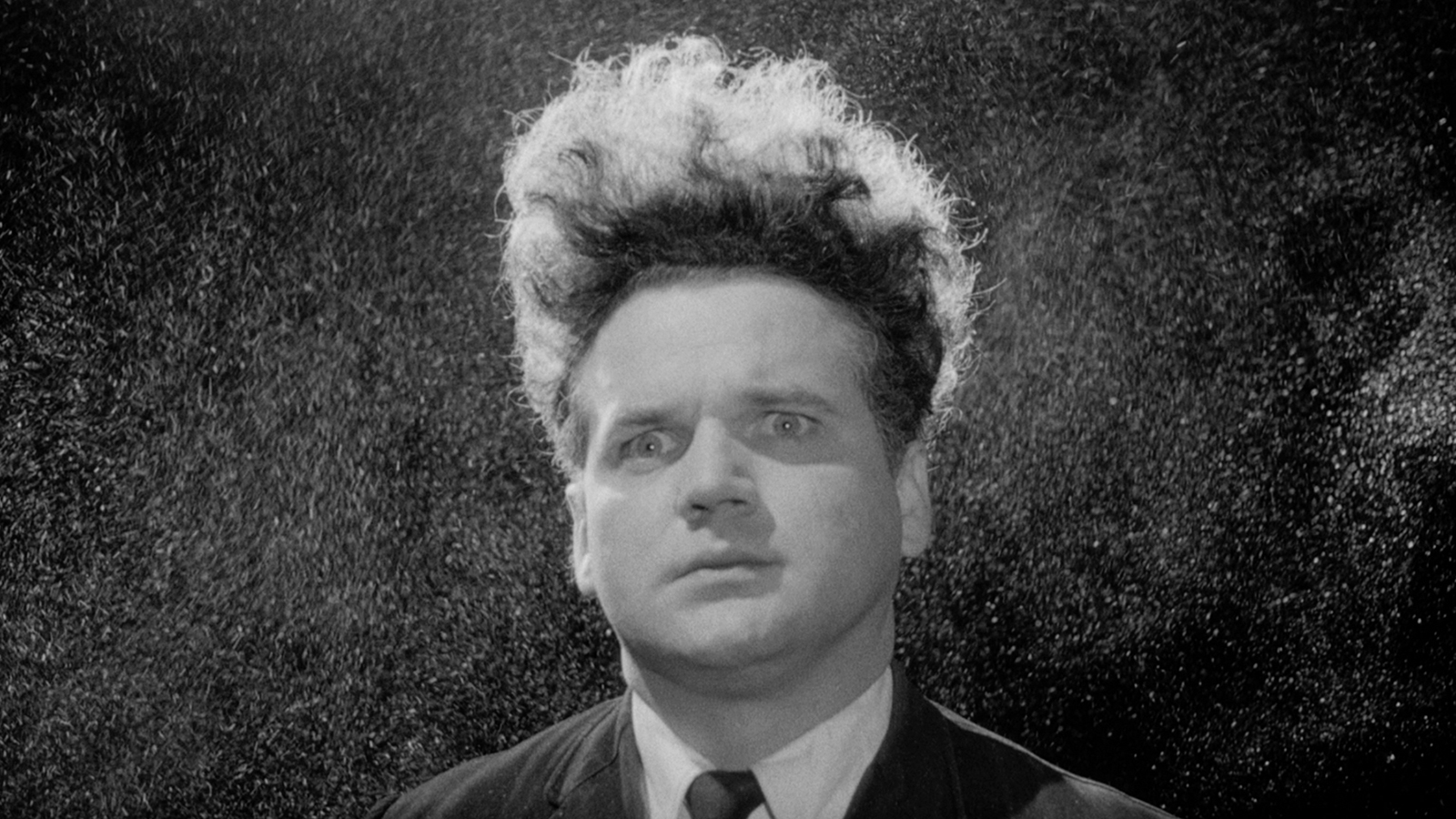
Frequent collaborator and future “She’s dead, wrapped in plastic!”-er Jack Nance plays the role of Henry, contributing a significant part of the film’s iconography with his Karloff-esque hair, consistently stunned expression, and pocket protector. His dedication to the project meant that he maintained the boxy haircut for the numerous years it was in production, so as to maintain continuity.
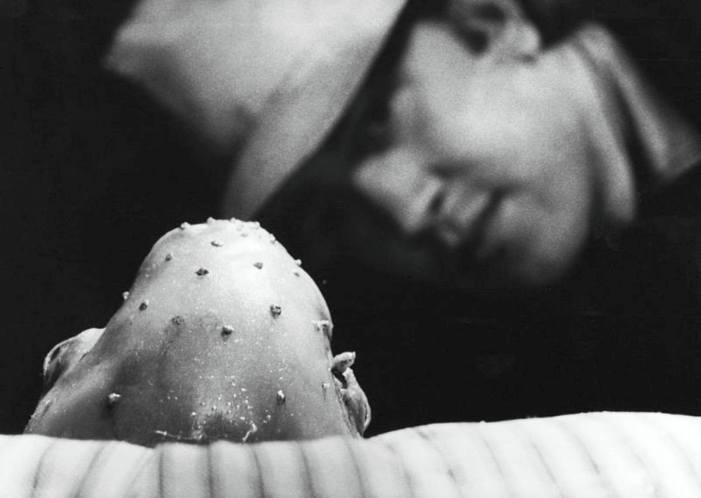
Nance’s main counterpart comes in the form of the baby (nicknamed Spike by the director), pulled off using some of the most terrifying puppet work put to film. There’s something uncanny there, its pained eyes and stunted breathing, created to look alien but also not implausible. Theories have quietly raged on for decades, trying to piece together how it was achieved, but nothing concrete has or likely will ever come to light, due to a contract ensuring the film’s cast and crew never discuss the production in public.
Lynch has since explained part of the macabre research he undertook to achieve the texture for the child: “I once had this dead cat. A vet gave it to me. I took it home. It was a real experience. I got all set up for it in the basement. And I dissected it. I put it in a bottle, but the bottle had a real small hole in it. The cat went in like a Slinky, but it got rigor mortis in there.” This animal look, combined with the use of distorted baby screams as its voice, make for some of the film’s most harrowing sequences.
–
Lynch deconstructs the American dream in Eraserhead, as he does in his wider filmography. Stalwarts of conservative Americana are warped to his own sick vision; a sit-down dinner where miniature “man-made” chickens start twitching and oozing blood, a marriage which falls apart after the birth of a grotesque and wicked child, and a world in which a human head could be used as just a resource with which to create pencil erasers.
Eraserhead’s influence in this regard is impossible to overstate, and without the artistic career which it helped launch, the current cult cinema landscape would be all the bleaker. When Lynch was asked to expand on his 2007 “Eraserhead is my most spiritual film” statement, he simply declined, and its likely he never will elaborate on that. Its endurance comes as a result, a film made by an artist to be contemplated and debated by audiences for generations.
–
–
–
 REEL STEEL
You must be logged in to post a comment.